
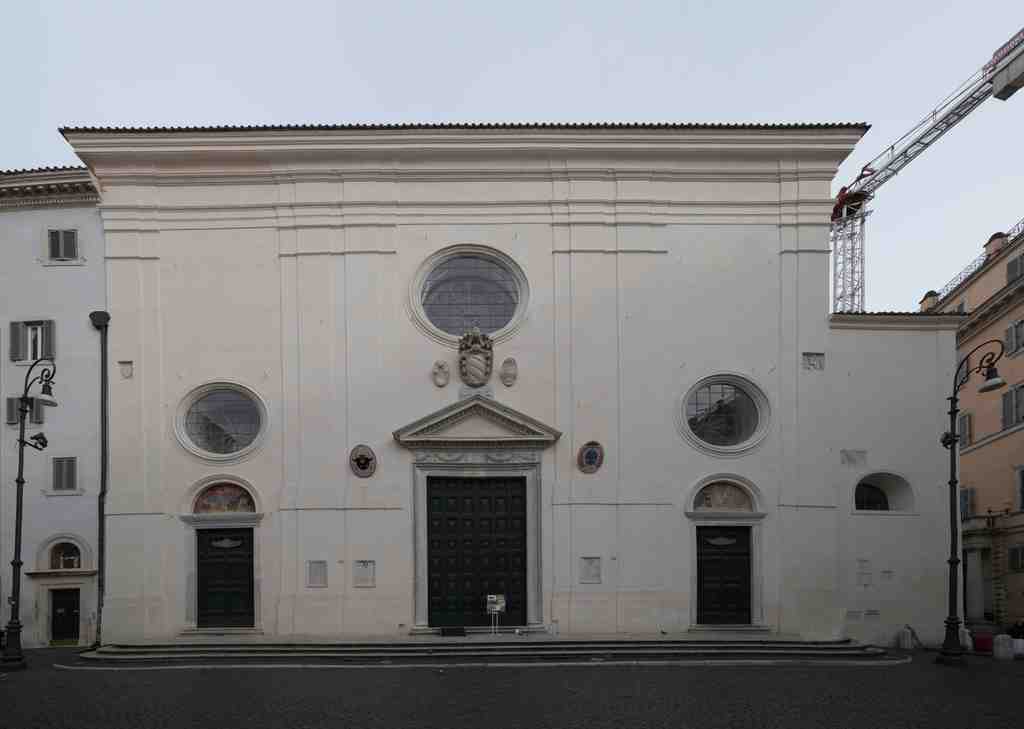
You’re looking for a large, pale building with an almost flat, simple Renaissance-style façade marked by three round windows and a tall central door, right at the heart of the small piazza-if you see a charming little elephant statue balancing an obelisk nearby, you’re in the right spot!
Alright, let’s step back for a moment and let the magic of Santa Maria sopra Minerva sweep you through centuries of Roman twists and turns. Close your eyes for a second and imagine-beneath your very feet, the ground once trembled with footsteps of ancient Romans who came not to worship the Virgin Mary, but to pray at a grand temple dedicated not to Minerva, as legend had it, but actually to the Egyptian goddess Isis. Confusing the Romans is practically a historical tradition here! They named the spot 'sopra Minerva'-meaning 'above Minerva'-which, if you ask any goddess, is a pretty lofty claim to fame.
Now, you may have noticed that while every other medieval church in Rome seems to have gone through the Baroque equivalent of a 17th-century game show makeover, this one is unique; It’s the only major church in Rome where you’ll still find original Gothic architecture-just walk inside and look up: blue arched vaults sprinkle you with golden stars and fiery red ribbing, all thanks to a romantic 19th-century revival that wanted to honor its true colors.
Back outside, there’s an elephant in the piazza-no, I haven’t lost my marbles. Take a look: Gian Lorenzo Bernini, the master of marble drama, designed this unforgettable little elephant in 1667. He’s carrying a much older Egyptian obelisk on his back, snatched from the Dominicans’ own garden and once a proud marker at the temple of Isis. Legend says the composition was inspired by a strange old novel where elephants stroll around with obelisks on their backs-no wonder Romans first nicknamed it “Piggy,” but eventually “Pulcino della Minerva” stuck, which means “the Chick.” Yes, even the mighty can end up with a cute nickname.
Let’s glide back in time to the Middle Ages-by the 8th century, the ancient temples had mostly crumbled. Pope Zachary, a clever sort with a knack for re-inventing real estate, gave this land to nuns from Constantinople, who dedicated it to the 'Virgin of Minervum.' Flash forward to 1255: women’s convent out, Dominicans in! These tireless friars made this their headquarters and built the soaring, starry nave you see now, modeling their church after another Gothic marvel in Florence.
But history here loves a bit of drama: in 1431 and again in 1447, with Rome swirling in chaos and rival families turning the streets upside down, this church doubled as Conclave Central. Cardinals were locked inside for days, tensions high, as they argued and prayed over who would become the next Pope. And let’s not forget: the Dominican convent here became the seat of the infamous Holy Office-the Inquisition-where even Galileo was made to recant his “heretical” belief that the Earth revolved around the Sun. Talk about a tense staff meeting!
The Minerva has witnessed everything from secret conclaves to fierce floods (look very closely at the façade for little marks showing how high the waters once rose-65 feet above the nearby Tiber!). Inside awaits a treasure trove: a brilliant marble statue of Christ by Michelangelo to the left of the altar-he must have had a “chisel in one hand, genius in the other” kind of day-glistens in the soft light. Keep exploring and you’ll find masterpieces like Filippino Lippi’s colorful frescoes and the resting places of giants: St. Catherine of Siena, whose body is here (well, most of her), the painter Fra Angelico, and even two Medici popes.
The story keeps going: in the Renaissance, the Dominicans ran a prestigious college here-later to become the world-famous Angelicum University. Through revolutions and occupations, suppressions and returns, the Minerva and her Dominican friars have never given up their spot at the crossroads of faith and learning.
So, whether you’re marveling at Bernini’s whimsical elephant, feeling the hush of history behind these sturdy walls, or imagining the brilliant blue-and-gold Gothic ceiling overhead, Santa Maria sopra Minerva is much more than a quiet church. It’s a living time machine-a place where gods, popes, scientists, and humble friars have all left their mark. And if you hear an echo of hushed voices, or maybe a clever elephant’s triumphant trumpet as you wander-well, don’t worry, it’s all part of the magic of Rome.
Wondering about the interior, list of cardinal-priests from santa maria sopra minerva or the gallery? Feel free to discuss it further in the chat section below.




