
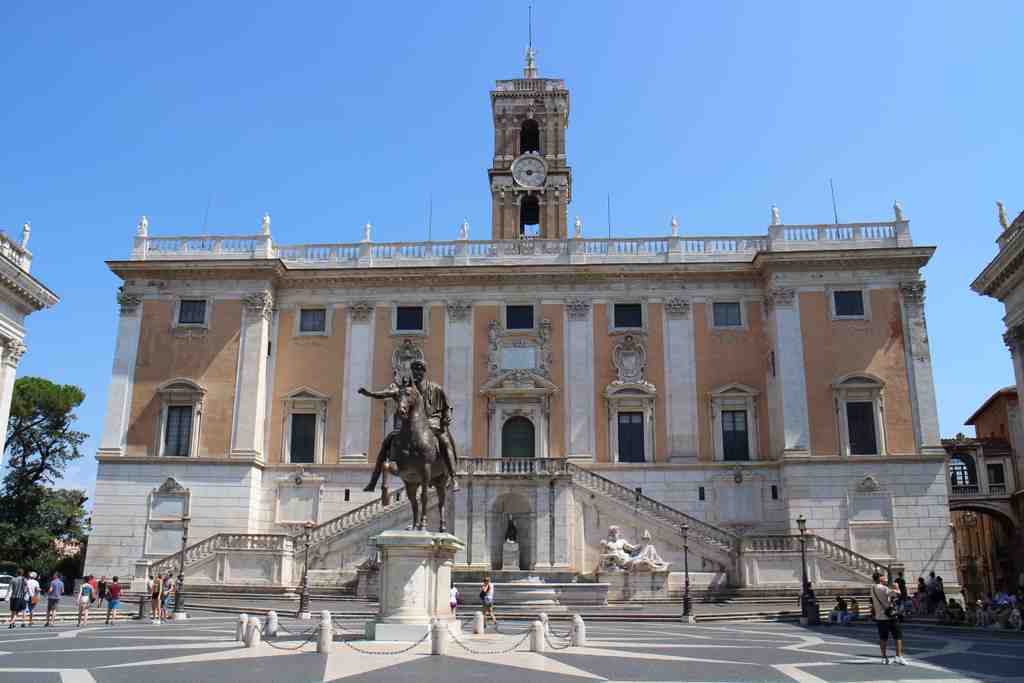
To spot the Senatorial Palace, look for the grand ochre-colored building with a dramatic double staircase and a tall clocktower in the center of Piazza del Campidoglio-just ahead of you.
Now, let’s step back in time to when this hill was not crowned by fancy Renaissance architecture, but by ancient Roman ruins and legends. Imagine the echo of footsteps of those who came before, trampling over the remnants of the Tabularium and the ancient temple of Veiove, where this impressive palace now stands. After the chaos that came with the fall of the Western Roman Empire, the hill turned from Imperial hands to Papal control-until, get this, a dramatic local uprising in 1144 handed the keys to the people and gave birth to the city’s new government.
So, the Palazzo Senatorio isn’t just your average historic building-it's the oldest city hall still in use anywhere on Earth! Construction began in the 1100s and 1200s, using the sturdy bones of old Roman buildings like a giant architectural sandwich. The uneven hills were such a headache, they had to use the ancient foundations just to keep the whole palace from sliding down into the Forum. Every stone here could probably tell a story, if it weren’t too busy holding everything up!
Over the centuries, trouble brewed and battles raged; at one point, a powerful Corsi family fortress was knocked down by the pope himself, clearing the way for the city’s new leadership to shine. The halls of this palace have witnessed political wrangling, secret deals, and the rise and fall of powerful families, including the mighty Colonna-imagine medieval intrigue echoing off these walls.
Skip forward to the 1500s and imagine a voice echoing through the piazza: “Michelangelo, we need you!” That’s right-the legendary artist, sculptor, and, let’s face it, probable overachiever, was called in to remake the square and the palace under Pope Paul III. Michelangelo’s genius is right before your eyes: the double staircase elegantly sweeps up to the entrance like a marble red carpet, and he designed the monumental setting for both the humble city clerk and the grandees of Rome. The façade you see, completed after Michelangelo by Giacomo Della Porta, is a masterpiece in its own right, with elegant proportions and powerful symmetry.
Don’t forget to gaze upward! The tower crowning the top is called the Torre della Patarina-built between 1578 and 1582 on the ruins of a previous, lightning-blasted medieval tower. There’s even an old war trophy up there: a giant bell known as the Patarina, hauled here all the way from Viterbo. They say the bells still ring out for special occasions-mayor elections, city anniversaries, even the historic abdication of a pope.
Approach the double staircase and you’ll see a trio of monumental statues. At the summit, the goddess Roma holds court, with two ancient river gods seated on either side-one representing the Nile, the other the Tiber, both recycled from a temple dedicated to Serapis on the Quirinale. Forget recycling bins; Rome’s been upcycling statues since before it was cool!
Inside, things only get grander. Imagine sweeping into the Giulio Cesare Hall, where once (and still!) vital decisions for Rome’s future are hammered out. High on the walls, the banners of Rome’s ancient districts line up like a parade of colorful history, and in the center stands a giant marble statue of Julius Caesar, the city’s ancient superstar. These echoing halls have seen emperors, popes, senators, and revolutionaries-rumor has it, you could feel history breathing down your neck if you stood there alone at night.
Galleries and meeting rooms are filled with treasures-a 16th-century Flemish tapestry here, the busts of Republican heroes there, flags that have survived battles and centuries. There’s a secretive feel to the mayor’s study in the tower of Niccolò V, with views sweeping over the city and paintings of fortune, battle, and even a mysterious draped statue of an unknown queen or goddess, uncovered only in the 1950s.
And don’t miss the Protomoteca-a collection that packed too many celebrity busts into the Pantheon before they found their forever home here, alongside conference rooms where Rome’s leaders still gather to shape the city’s fate.
So as you stand here, surrounded by centuries of power, rebellion, and Renaissance flourishes, remember: you’re not just looking at a palace, you’re witnessing the living, beating heart of Rome’s story. And hey-if you hear a bell overhead, know it might just be history itself, chiming in to say hello!




