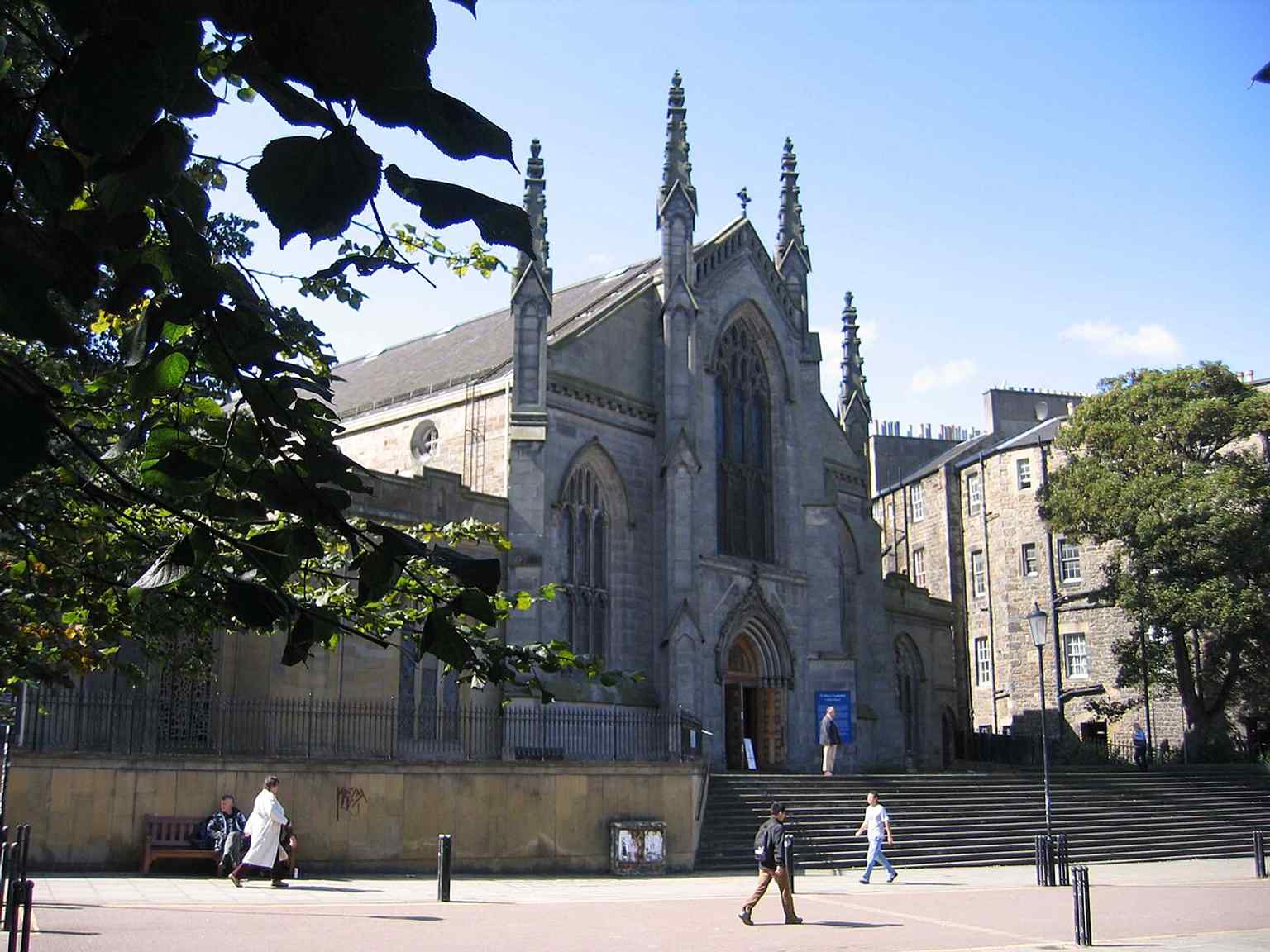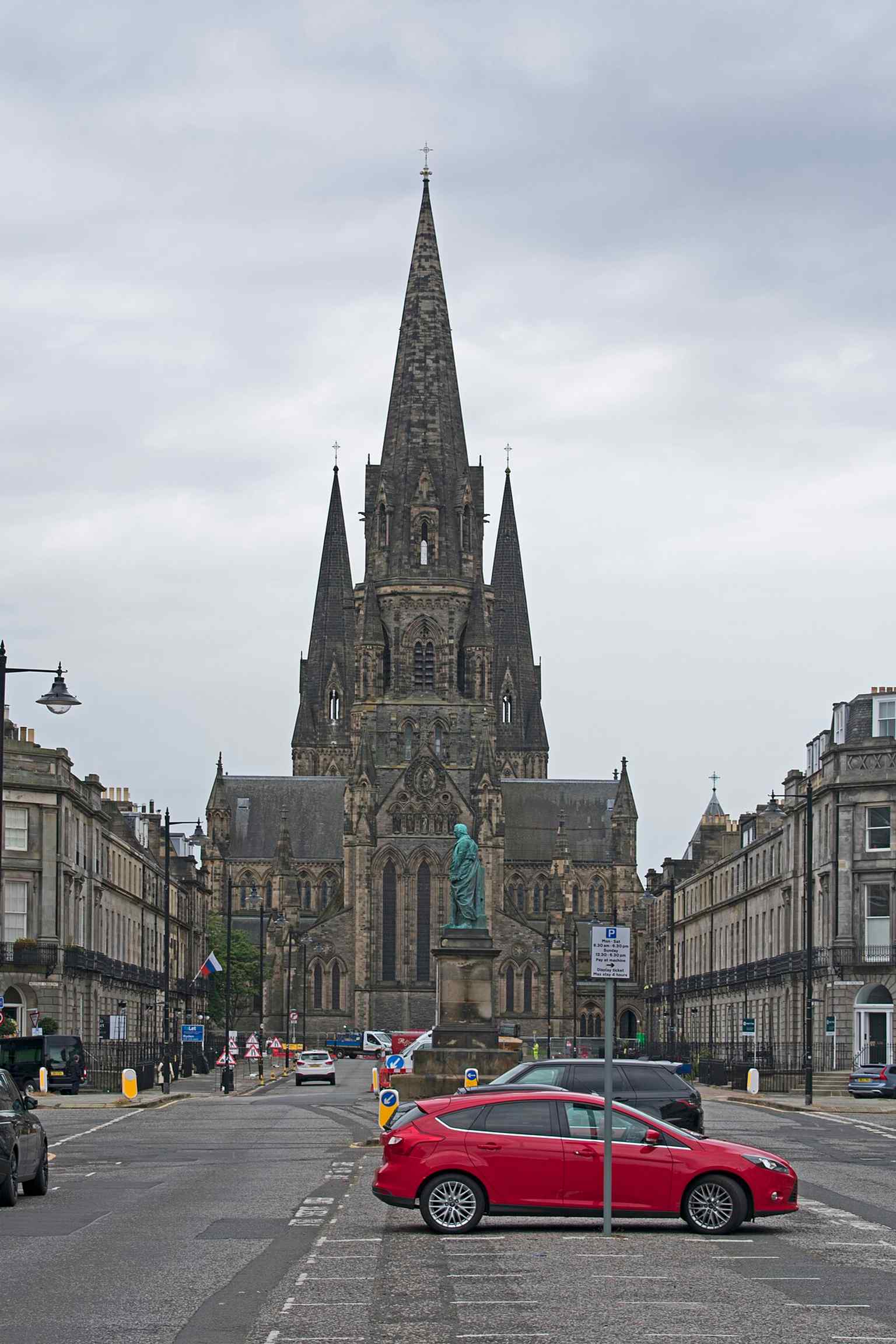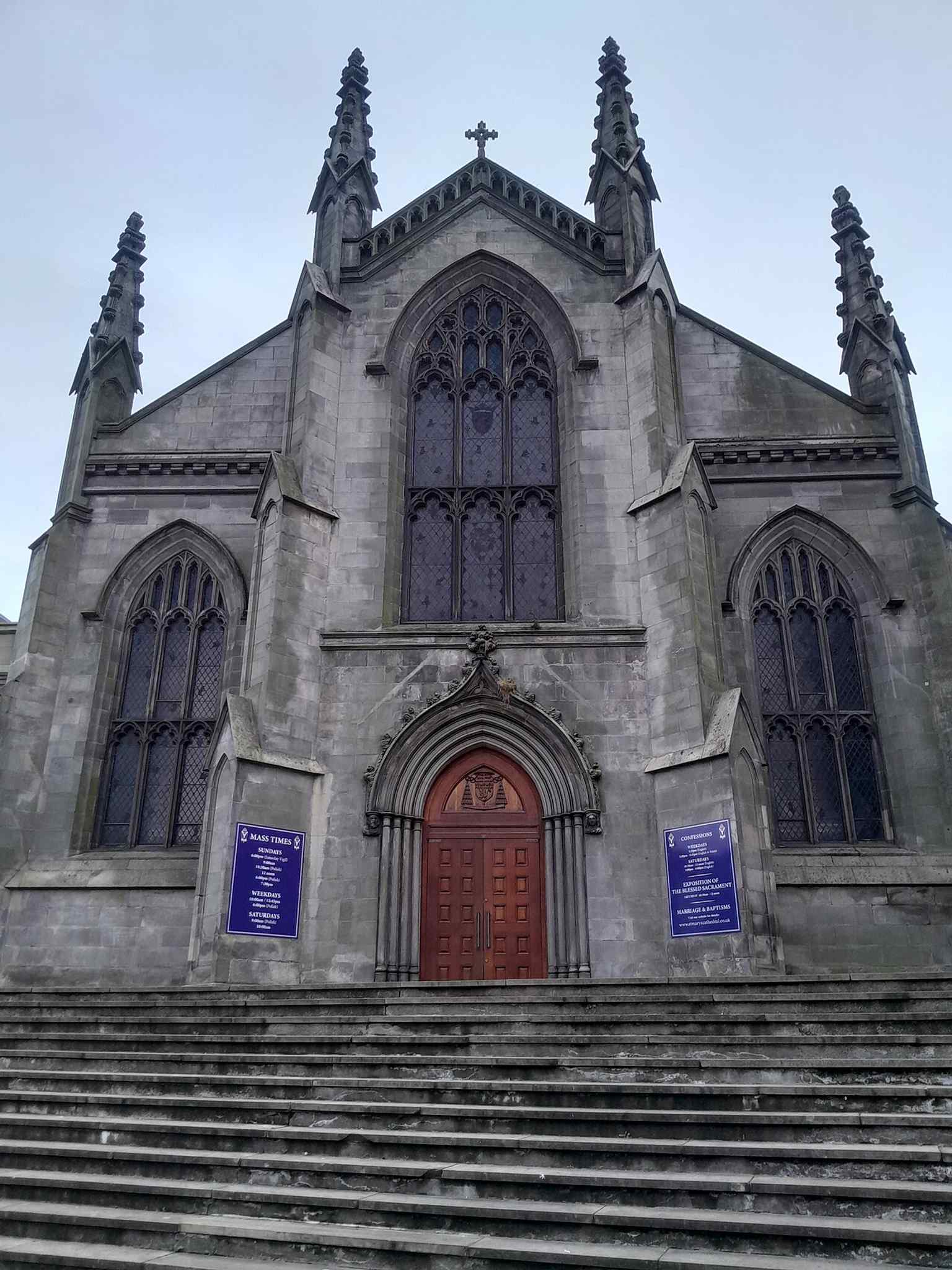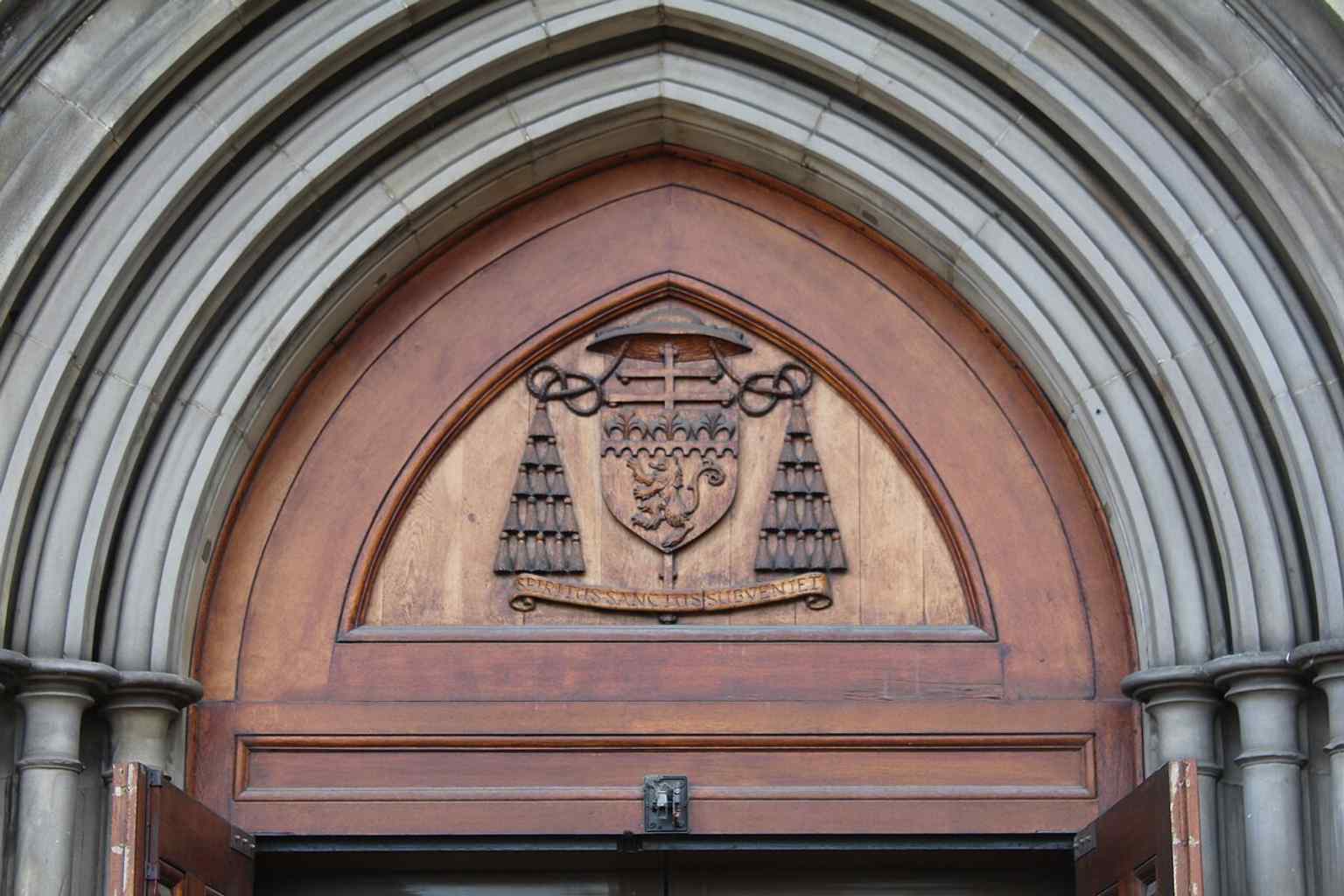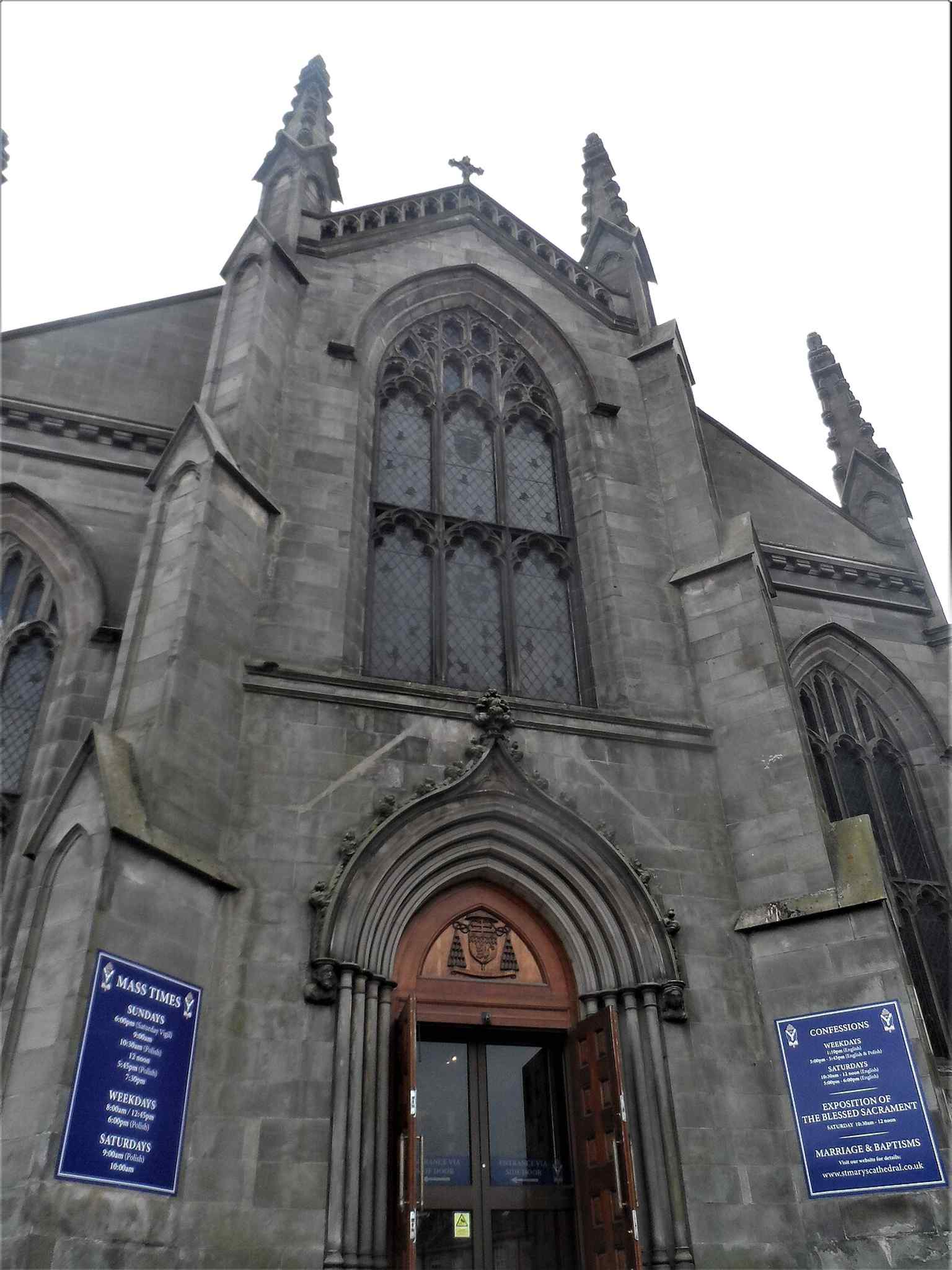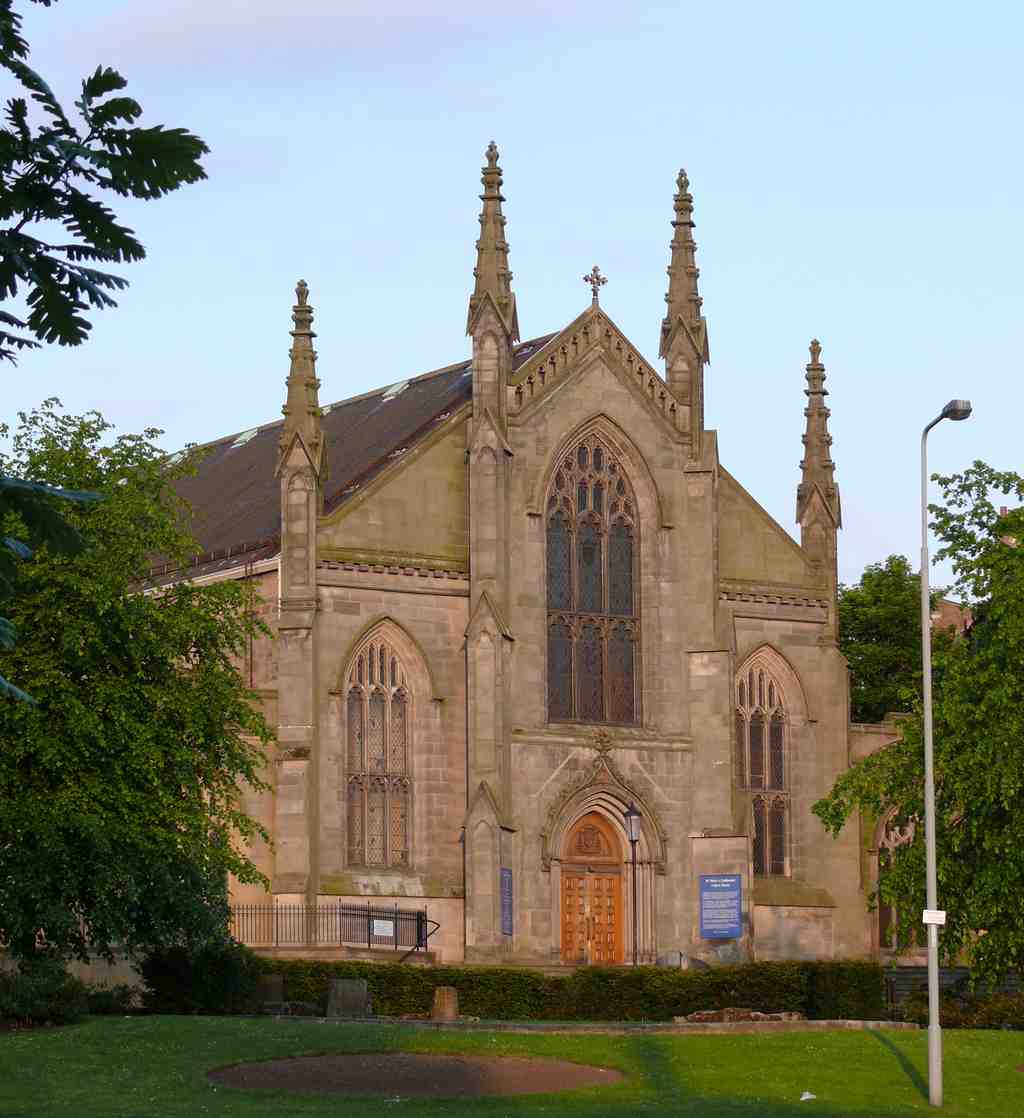
On your left, look for a pale sandstone Gothic front with a deep pointed porch and twin slender spires, the centre filled with tall vertical window tracery.
This is St Mary’s Metropolitan Cathedral, and it shows you an Edinburgh that official histories can miss. Exile, belonging, and sanctuary come together here, in a building that quietly asks who is allowed shelter, who is granted honour, and who finally finds a spiritual home in the capital.
James Gillespie Graham designed the first version of this church in eighteen thirteen and eighteen fourteen, in the neo-Perpendicular Gothic style you can still read in those upright lines and pointed forms. It replaced an earlier Catholic chapel in Blackfriars Wynd, a place that had merely been tolerated in a country that did not fully recognise the Catholic faith. So this was not just a new church. It was a public sign that something in Edinburgh had shifted.
Bishop Cameron, who founded St Mary’s, gave the building one of its first great public moments. When he died in February of eighteen twenty-eight, people buried him in the vaults below, and his funeral became the first public Catholic funeral of a bishop in Scotland since the Reformation. Beneath the stone, then, lies one of those old Edinburgh truths: the city keeps its arguments with the dead very close.
The detail locals tend to savour is this: in eighteen thirty, this cathedral briefly became a church of royal exile. The deposed Charles the Tenth of France came here with his family to worship. His son, the Comte de Chambord, was confirmed here too. For a moment, this Edinburgh church stood at the crossing point of faith, defeat, and European politics. Their stay left behind a monstrance, a vessel used to display the consecrated host, as a small but vivid souvenir of a fallen monarchy seeking dignity in a foreign city.
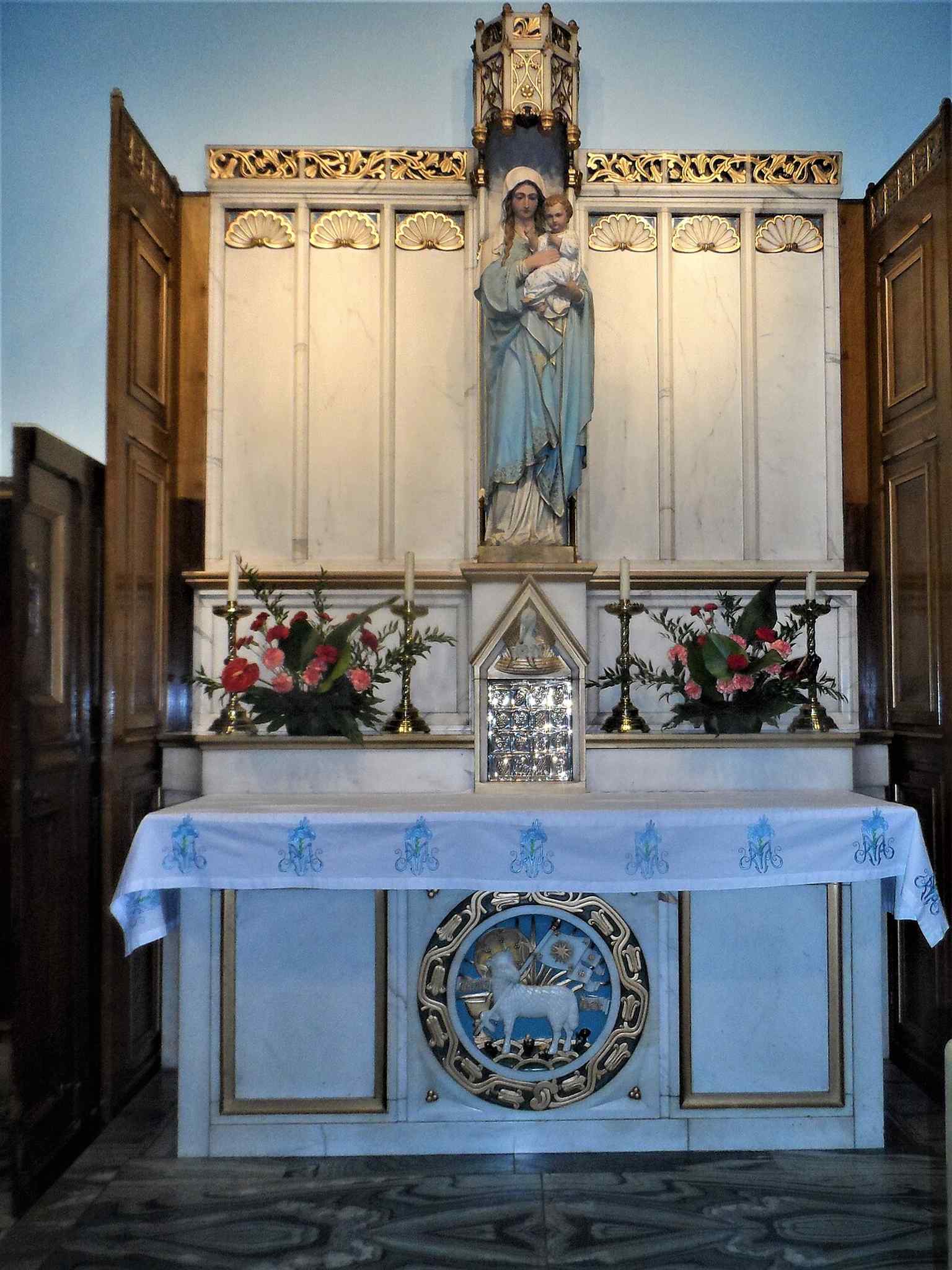
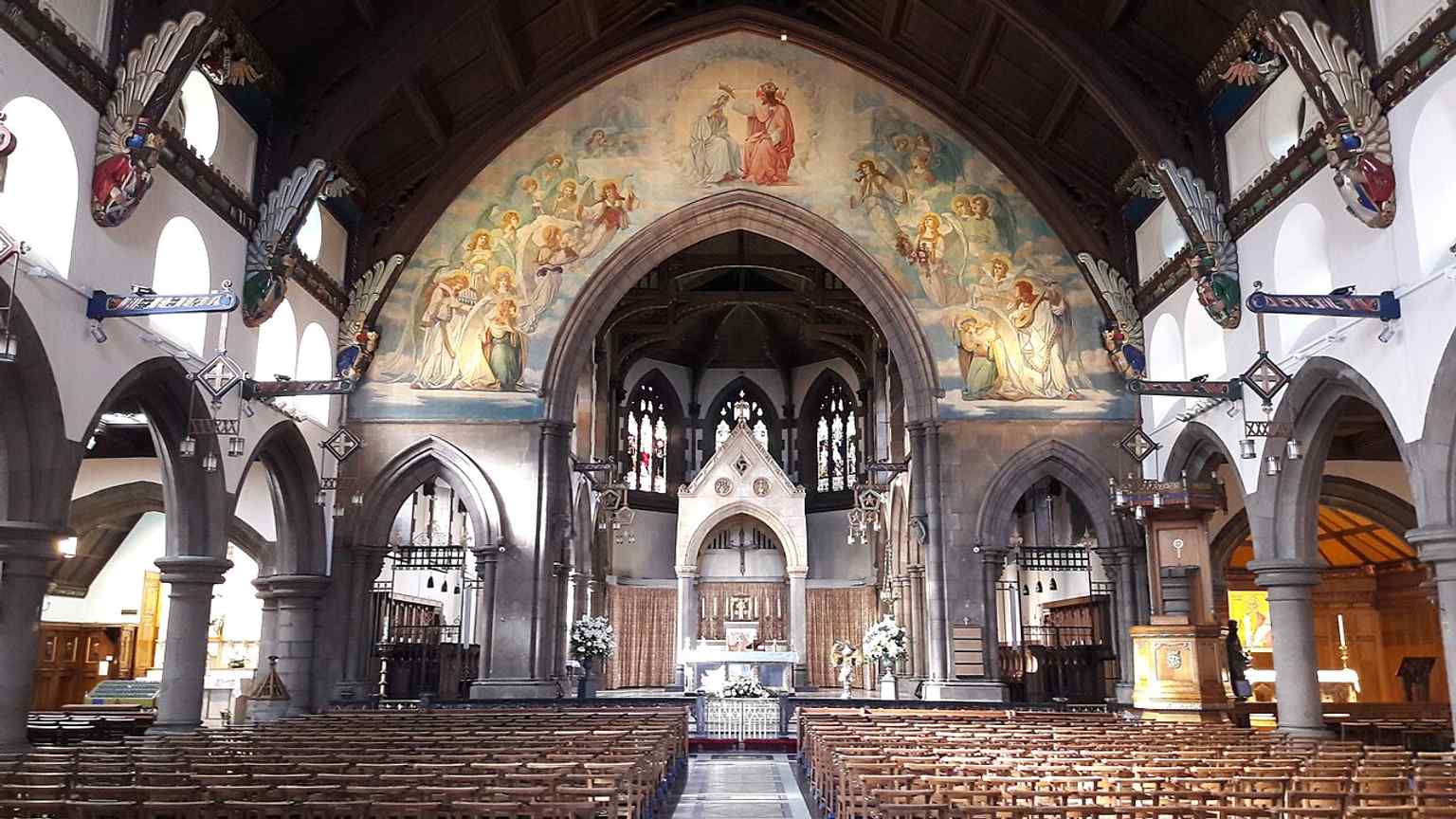
If you glance at the image on your screen, you can see the interior’s long nave, the central hall of the church, and the richly rebuilt atmosphere it gained over time. That richness came by stages. After the Theatre Royal next door caught fire in eighteen ninety-two, John Biggar reshaped the cathedral, cutting arches through the side walls, adding aisles, and extending the sanctuary by three bays. Reid and Forbes later raised the roof in nineteen thirty-two, and Scott Morton filled that higher ceiling with vivid carved angels. The front you see so clearly now only opened up in the nineteen seventies, when tenements in front were demolished and T. Harley Haddow designed the larger porch. The unobstructed view feels original, but it is really the result of loss and rebuilding. You can see that open frontage well in the app image too. St Mary’s then grew from parish church into national stage. In eighteen seventy-eight it became the pro-cathedral, meaning the acting cathedral, of the restored Archdiocese of Saint Andrews and Edinburgh. In eighteen eighty-six it took full metropolitan status. Then came Saint Andrew. In eighteen seventy-nine, Archbishop Strain received a large relic of the apostle from Amalfi, and the Marquess of Bute gave a silver-gilt shrine for it. On Saint Andrew’s feast day, people carried that relic in procession around the cathedral with soldiers, schoolchildren, and altar boys. Another relic arrived from Pope Paul the Sixth in nineteen sixty-nine, with the greeting, “Peter greets his brother Andrew.” By the time Pope John Paul the Second visited in nineteen eighty-two, the shrine had been built into the altar itself, not merely placed on it. He prayed there, linking this church to the first visit of a reigning pope to the United Kingdom.
From here, the story turns from sacred authority to learned authority. In about nine minutes, at the Royal College of Physicians of Edinburgh, we meet another institution that claimed the right to guide lives, this time through medicine rather than ritual. If you want to return inside later, the cathedral generally opens from half past eight until half past six, staying open until half past seven on Saturdays and half past eight on Sundays.