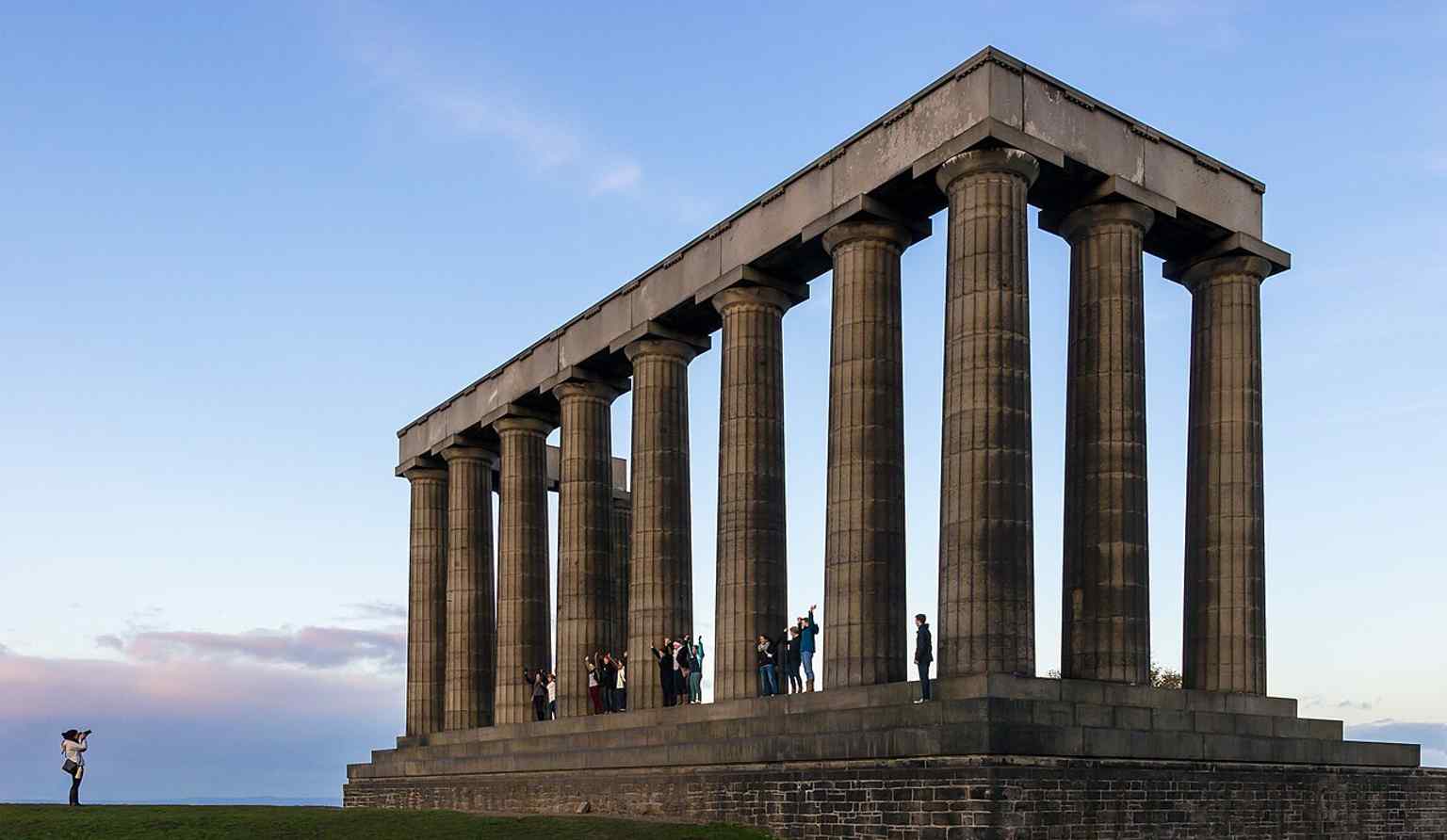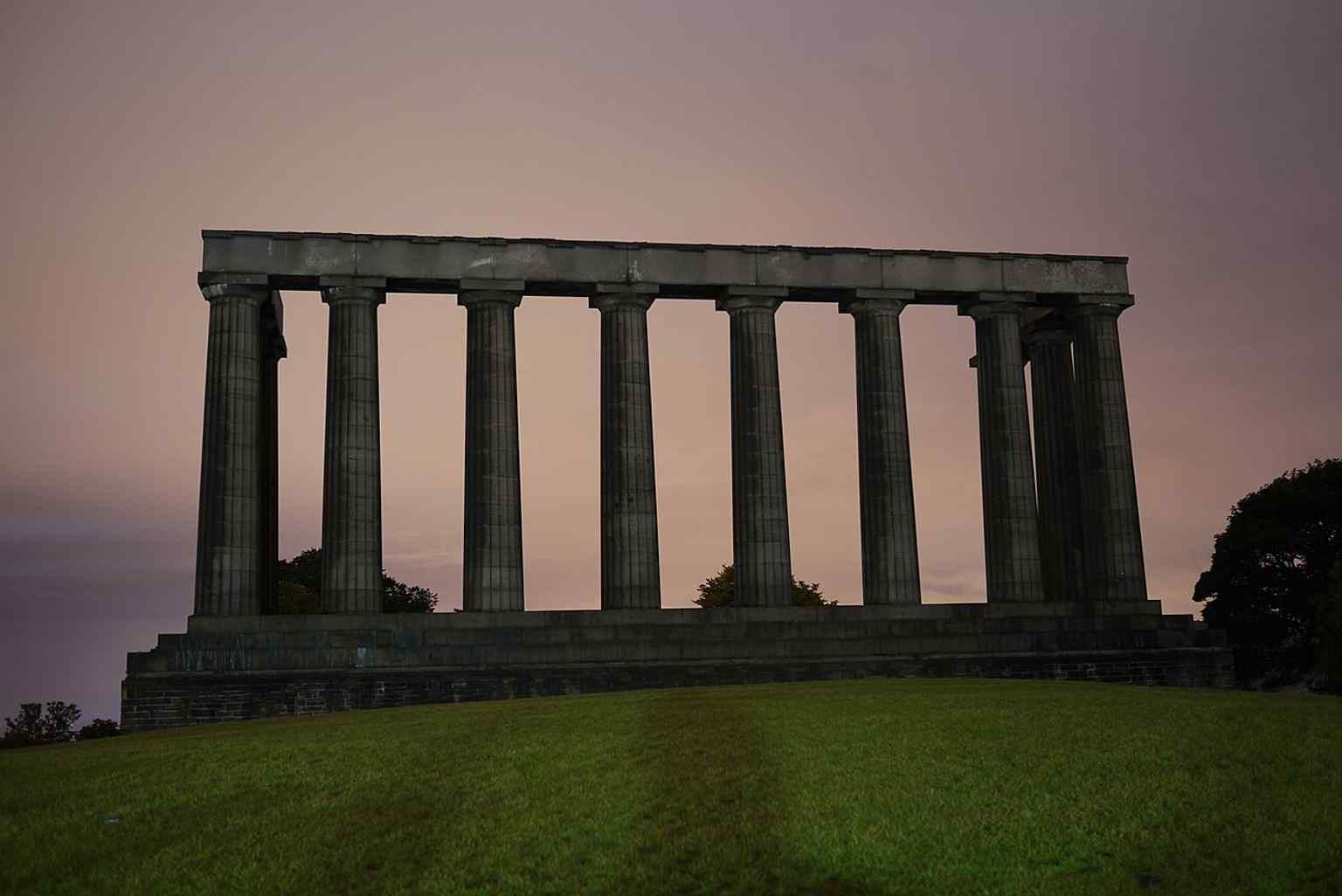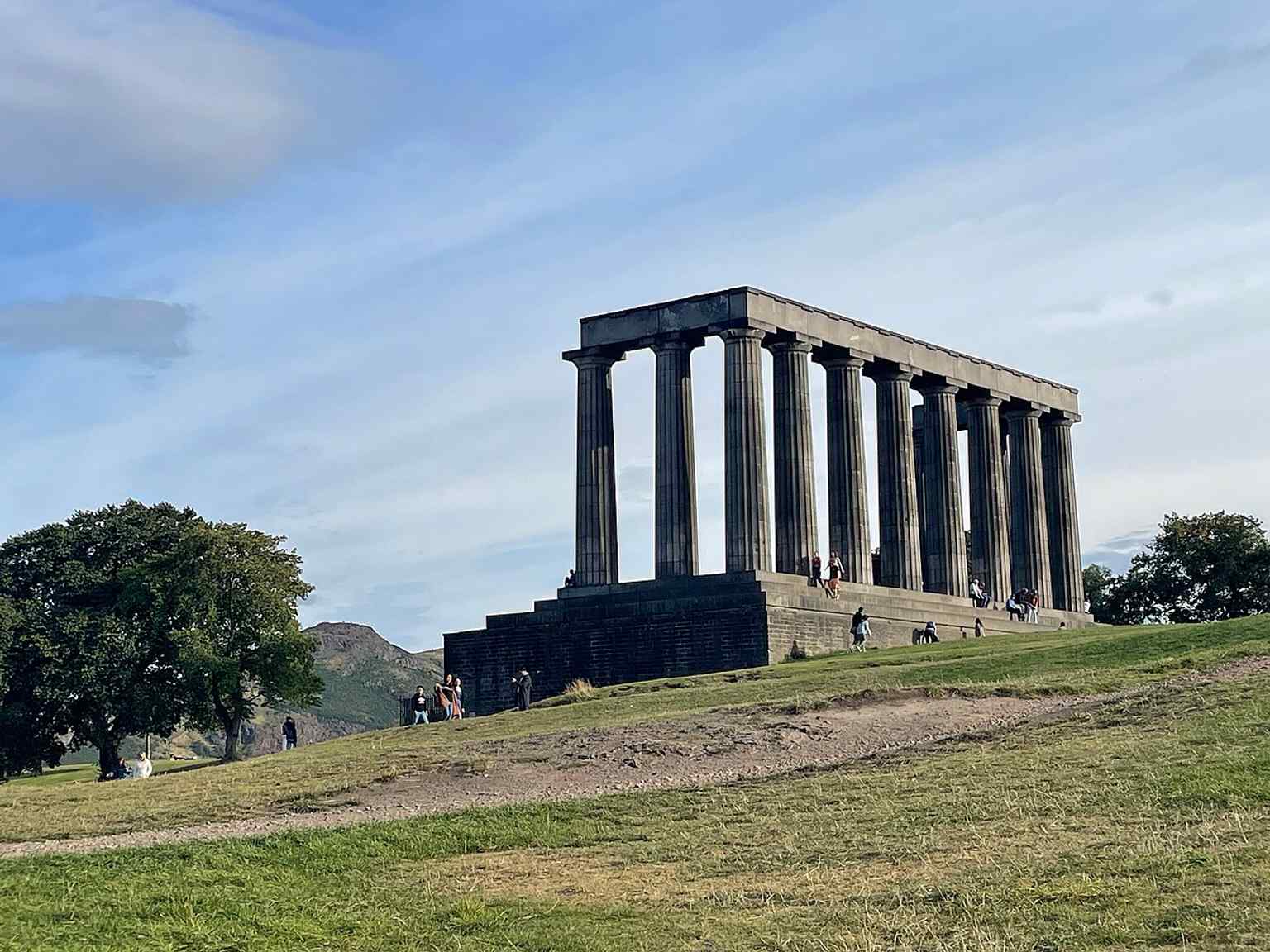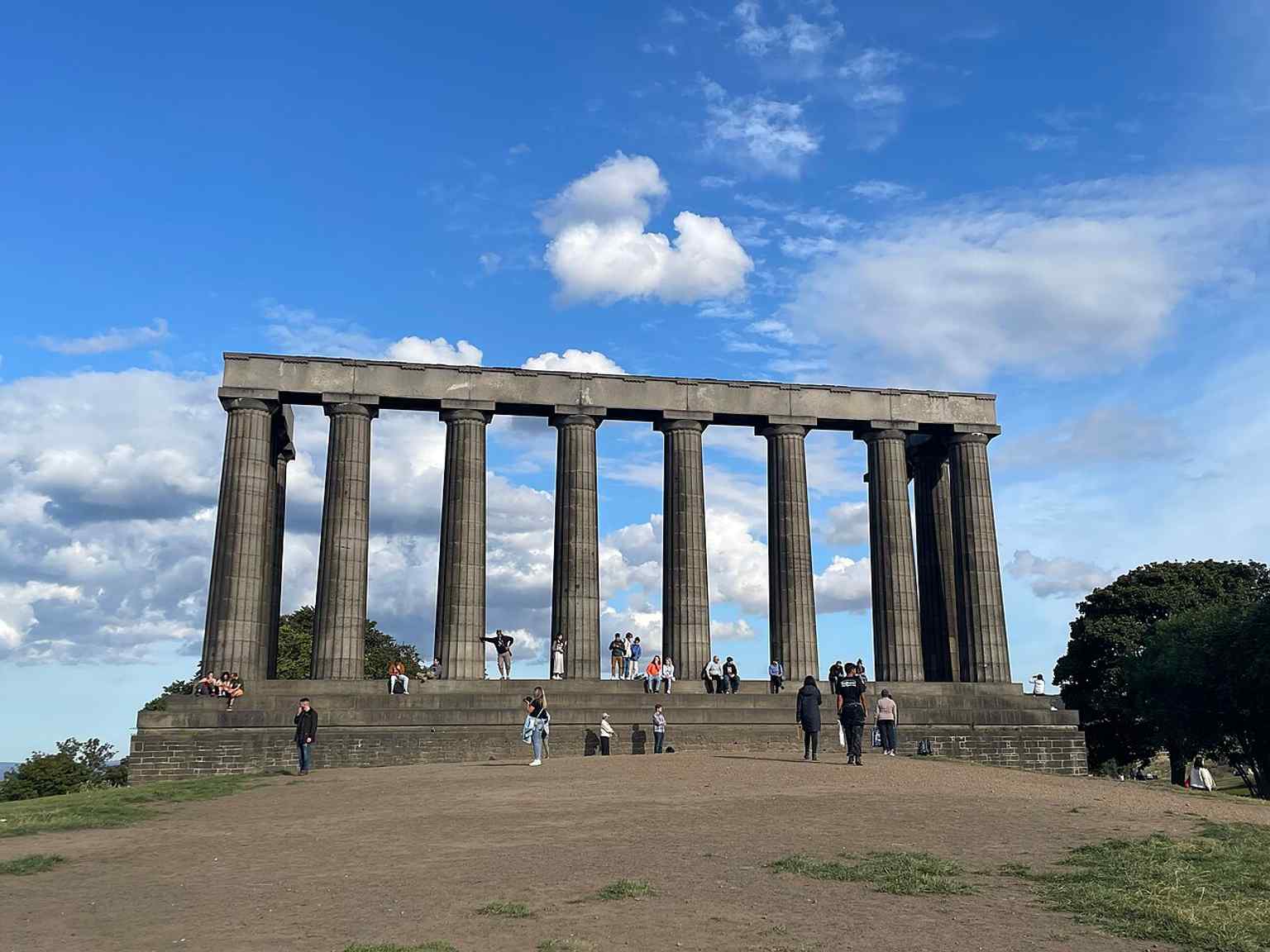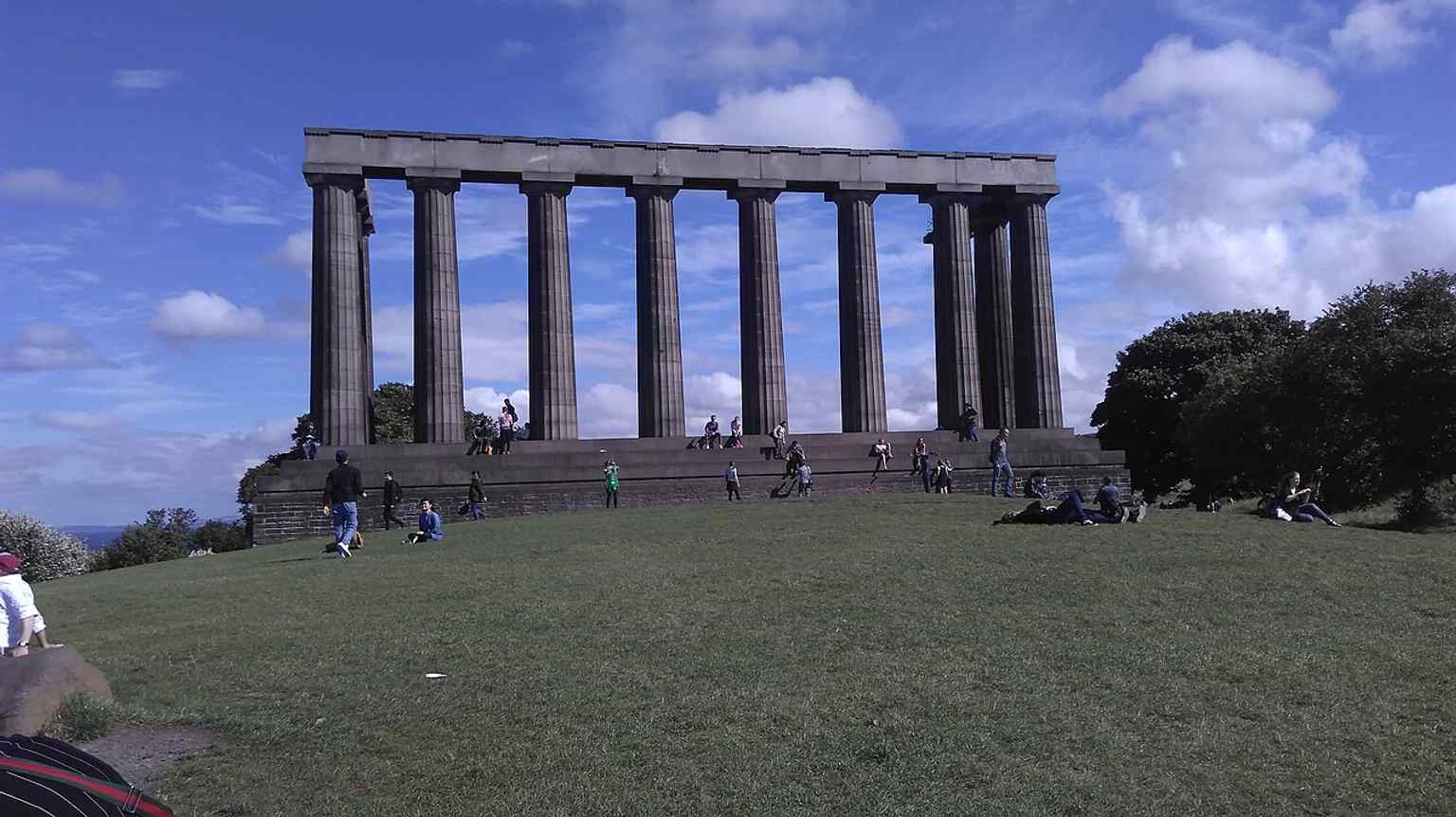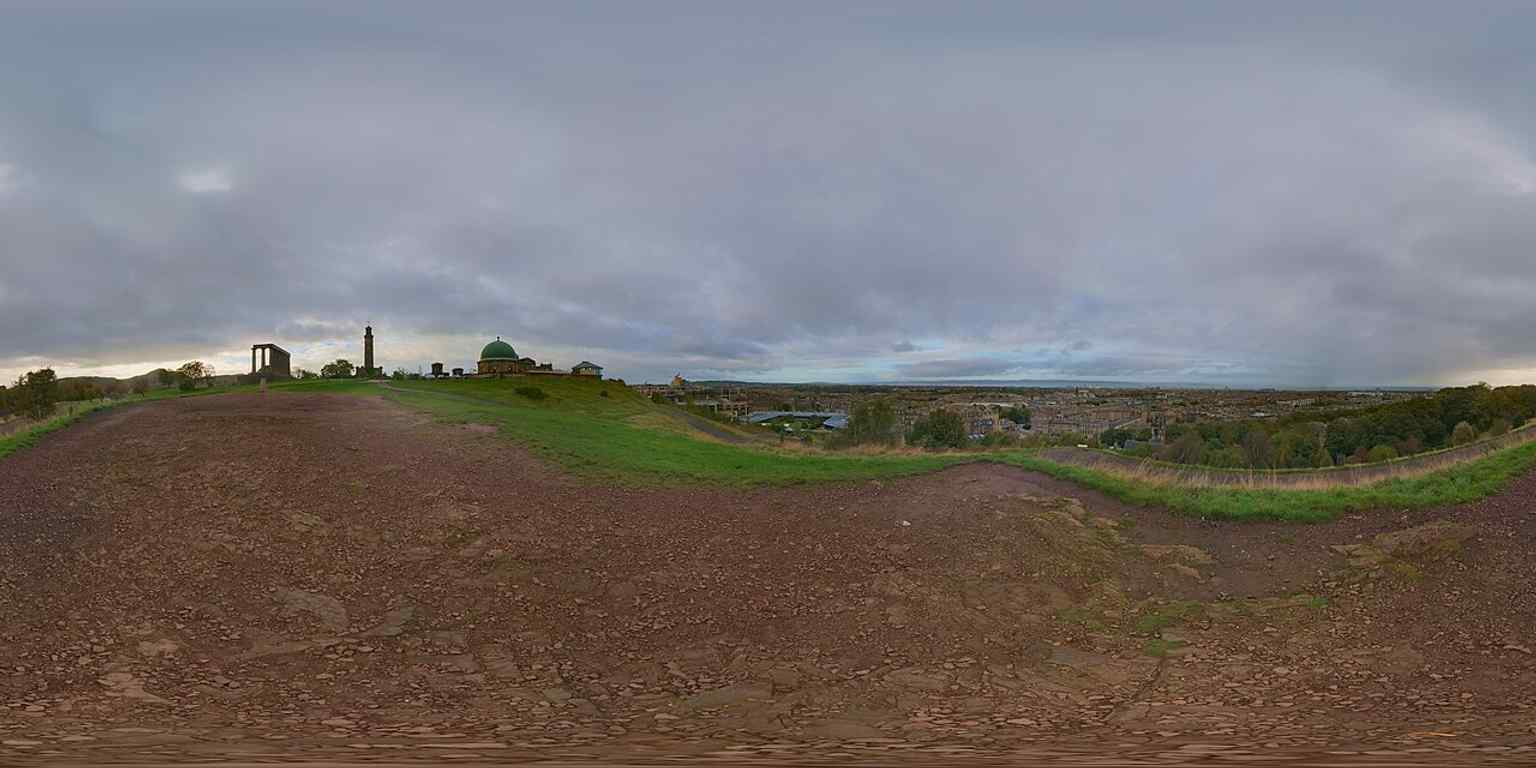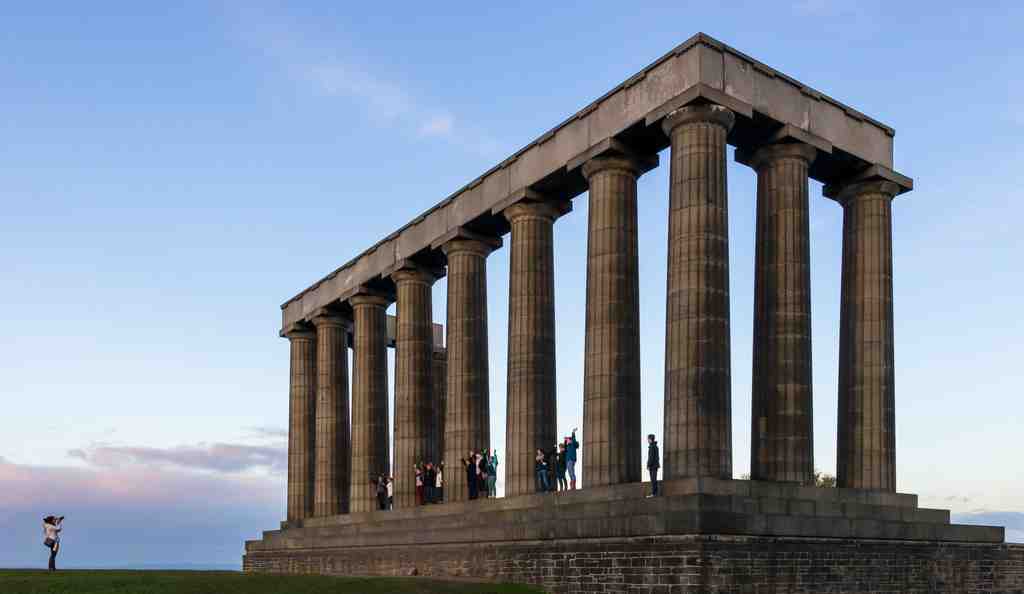
On your left, look for a long row of pale sandstone columns shaped like the front of a Greek temple, capped by heavy stone lintels and left famously unfinished like a Parthenon cut short.
This is the National Monument of Scotland, a memorial to Scottish soldiers and sailors killed in the Napoleonic Wars. Across Europe, after those wars finally ended, grief and patriotism often joined forces in stone. Here in Edinburgh, remembrance did not settle for a plaque or a statue. It reached for antiquity, for permanence, for something that might place Scotland among the great civilizations of memory.
The plan was grand from the start. In eighteen sixteen, the Highland Society of Scotland called for a national memorial. By January of eighteen twenty-two, supporters proposed nothing less than a facsimile of the Parthenon in Athens, at a cost of forty-two thousand pounds, which would be well over four million pounds in present money. Calton Hill, rather than The Mound, won the argument. You can see why: this crest makes the city feel like it has its own acropolis.
If you glance at the image in the app, you can see William Henry Playfair’s intended elevation, all disciplined completeness and classical confidence. Playfair worked with Charles Robert Cockerell, but one of the most curious figures in the story was Thomas Bruce, the seventh Earl of Elgin. He strongly backed the scheme and even offered fragments from the Parthenon as models, which is a deliciously awkward irony, since he was already controversial for removing those sculptures from Athens in the first place.
Then came ceremony on an imperial scale. On the twenty-seventh of August, eighteen twenty-two, during George the Fourth’s visit to Scotland, the six-ton foundation stone was laid here with full theatrical flourish. The Duke of Hamilton led a procession of masonic lodges and dignitaries up the hill. The Scots Greys and the Third Dragoons escorted them. Cannon answered from Edinburgh Castle, Salisbury Crags, Leith Fort and ships in Leith Roads. Sir Walter Scott, who supported the appeal, helped turn that royal visit into a spectacle of tartan and identity.
Now, take a moment and study the columns in front of you. Notice how raw the incompletion feels. Do they seem like ruins from a lost world, or a promise that simply ran out of breath?
Money, alas, is a harsher judge than taste. After sixteen months, subscriptions had raised only sixteen thousand pounds, roughly a million and a half in present money, far short of the target. Work finally began in eighteen twenty-six under the builders William Wallace and Son, then stopped in eighteen twenty-nine. Playfair wrote to Cockerell with weary bluntness: “Our Parthenon is come to a dead halt.”
And there was even more ambition tucked inside the dream. Beneath the monument, planners imagined catacombs - underground burial chambers - creating a “Scottish Valhalla” for eminent Scots. A memorial church, a mausoleum, a national shrine: all of that evaporated with the funds.
So Edinburgh laughed, a little cruelly. “Scotland’s Folly.” “Edinburgh’s Disgrace.” “Scotland’s Pride and Poverty.” Yet the joke turned inside out. Because it never finished, the monument became one of the city’s signature images: noble, embarrassed, theatrical, unforgettable. Later generations proposed completing it as a memorial to Queen Victoria, a Scottish Parliament, even a gallery, but none of those schemes ever took hold. In two thousand and eight, conservators did what the city has often done with its impossible dreams: they stabilised it, realigned a shifted lintel, repaired the joints with lime mortar, and let the unfinished form remain.
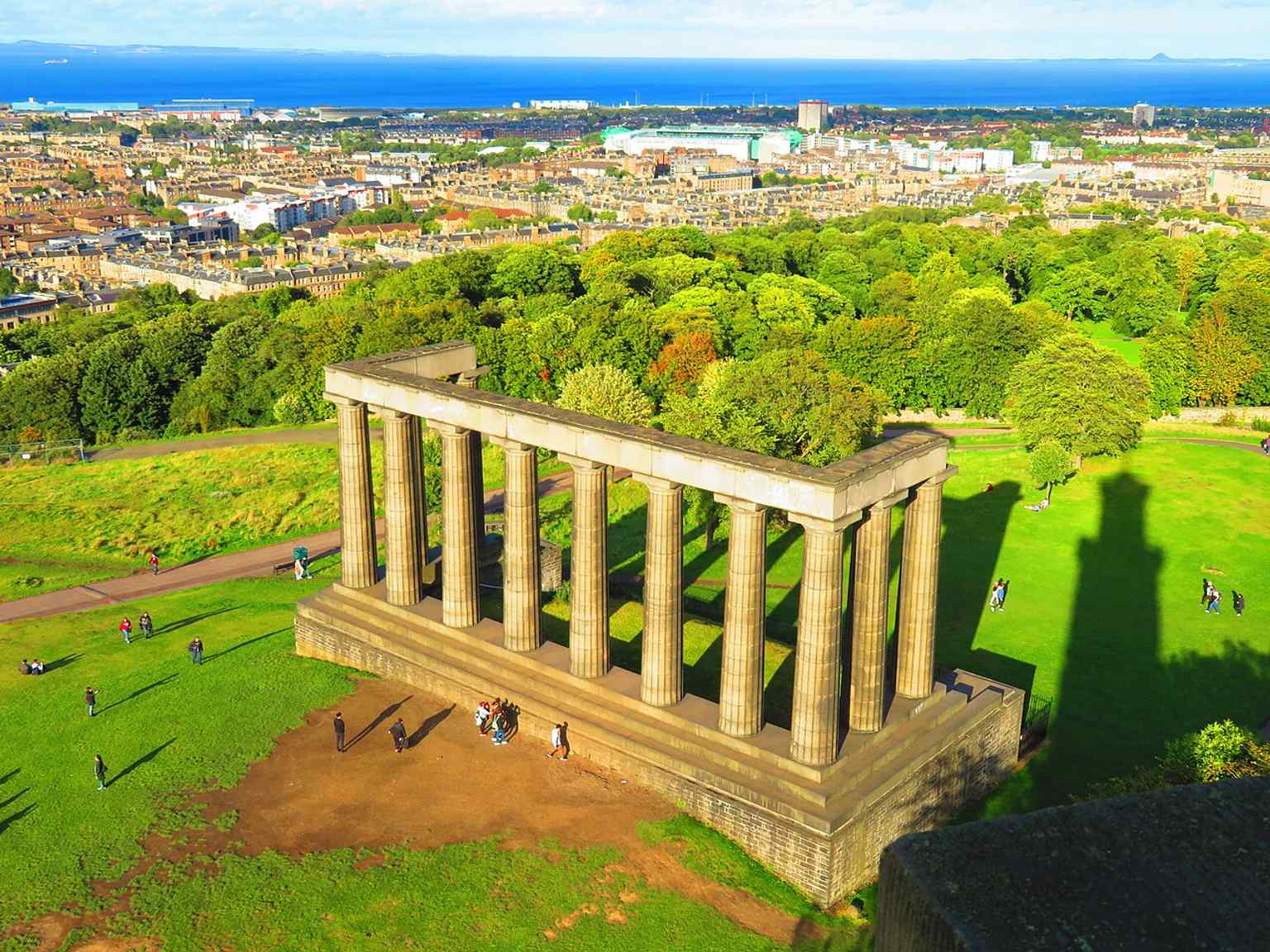
If you look at the aerial image in the app, you can see how completely it commands Calton Hill and the skyline beyond. Failure, in Edinburgh, sometimes acquires the dignity of destiny.
In a moment, we’ll continue to Nelson Monument, only about a minute away, where another marker on this hill measures memory in a rather different way. And fittingly enough, this monument never really closes; you can visit it at any hour.