
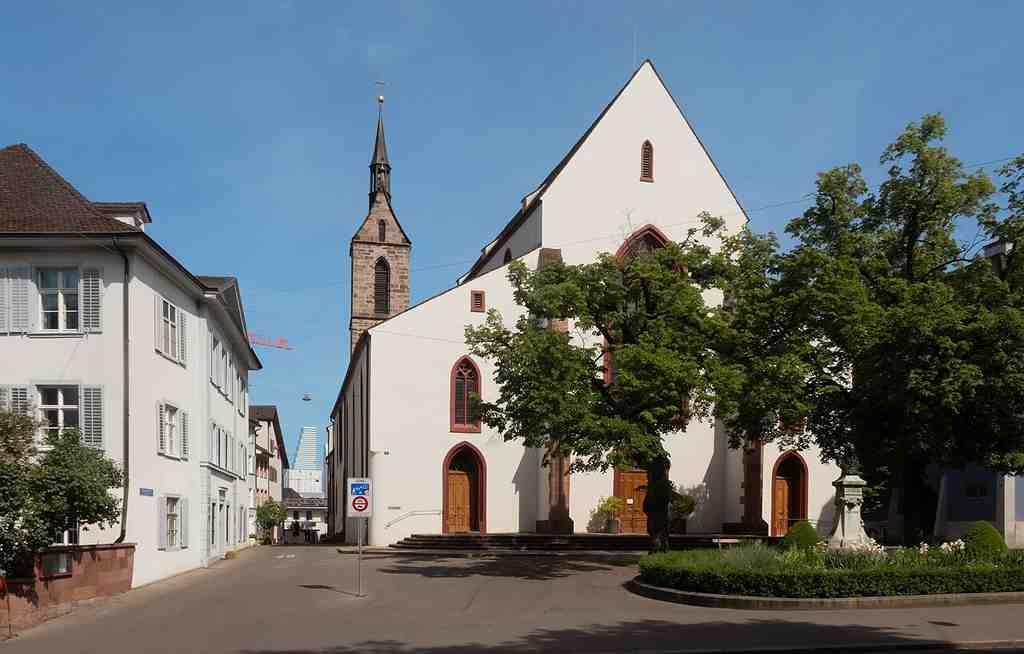
On your right, St. Peter’s Church appears as a pale stone church with a long, sturdy hall, a steep roofline, and a tall tower beside the choir capped with a small roof turret.
St. Peter’s feels less like a single chapter than a whole stack of them. This hilltop church began, most likely, in the ninth century, and it may have started as a burial church. Even the nearby lane name, Totengässlein, keeps that memory alive. So before this was a place for sermons and parish life, it was already a place where Basel brought its dead, said farewells, and tried to place grief in order. That is a very old human habit... and this church has held it for a very long time.
The building standing here now carries scars and repairs. In thirteen fifty-six, Basel’s great earthquake damaged it badly, and the church had to rise again. The long main hall was finished before thirteen eighty-eight, and the choir, the more sacred eastern end where the altar stands, took on its later form after that rebuilding. The tower went up from about twelve seventy onward, then gained its little roof turret in fifteen oh one and fifteen oh two. Piece by piece, century by century... Basel kept mending what mattered.
What I like about St. Peter’s is how quietly it shows change without pretending nothing changed. This church did not flip from Catholic to Protestant in a blink. In fact, it resisted the Reformation for quite a while. Only in fifteen twenty-nine did the city council appoint Paul Phrygio, a humanist scholar, as Basel’s first evangelical preacher here. So this was not only a change in worship. It was a shift in who held authority, who spoke, and who shaped public life. Same church, new voice.
And still, older layers stayed put. The church chapter survived in an unexpected form because its sixteen clerical posts gradually turned into professorships at Basel’s university, founded in fourteen sixty. That is such a Basel move, if you ask me: turn church offices into university jobs and keep going. The chapter lasted all the way to eighteen thirteen.
Inside, the story keeps folding back on itself. After the Reformation, many wall paintings were covered in whitewash. Then, in nineteen twenty-seven, Rudolf Riggenbach uncovered medieval paintings again in the Eberler Chapel. That chapel had once served as a heating room, which is about as unromantic as it sounds, until restoration in nineteen thirty-nine and nineteen forty gave it back some dignity. A man named Mathis Eberler had commissioned that chapel’s decoration around fourteen seventy-five as a personal memorial space, so even its rediscovery became part of its meaning.
If you look at the image in your app, you’ll see the bronze bust of Johann Peter Hebel, baptized here in seventeen sixty and remembered outside the church centuries later. One more life added to the ledger.
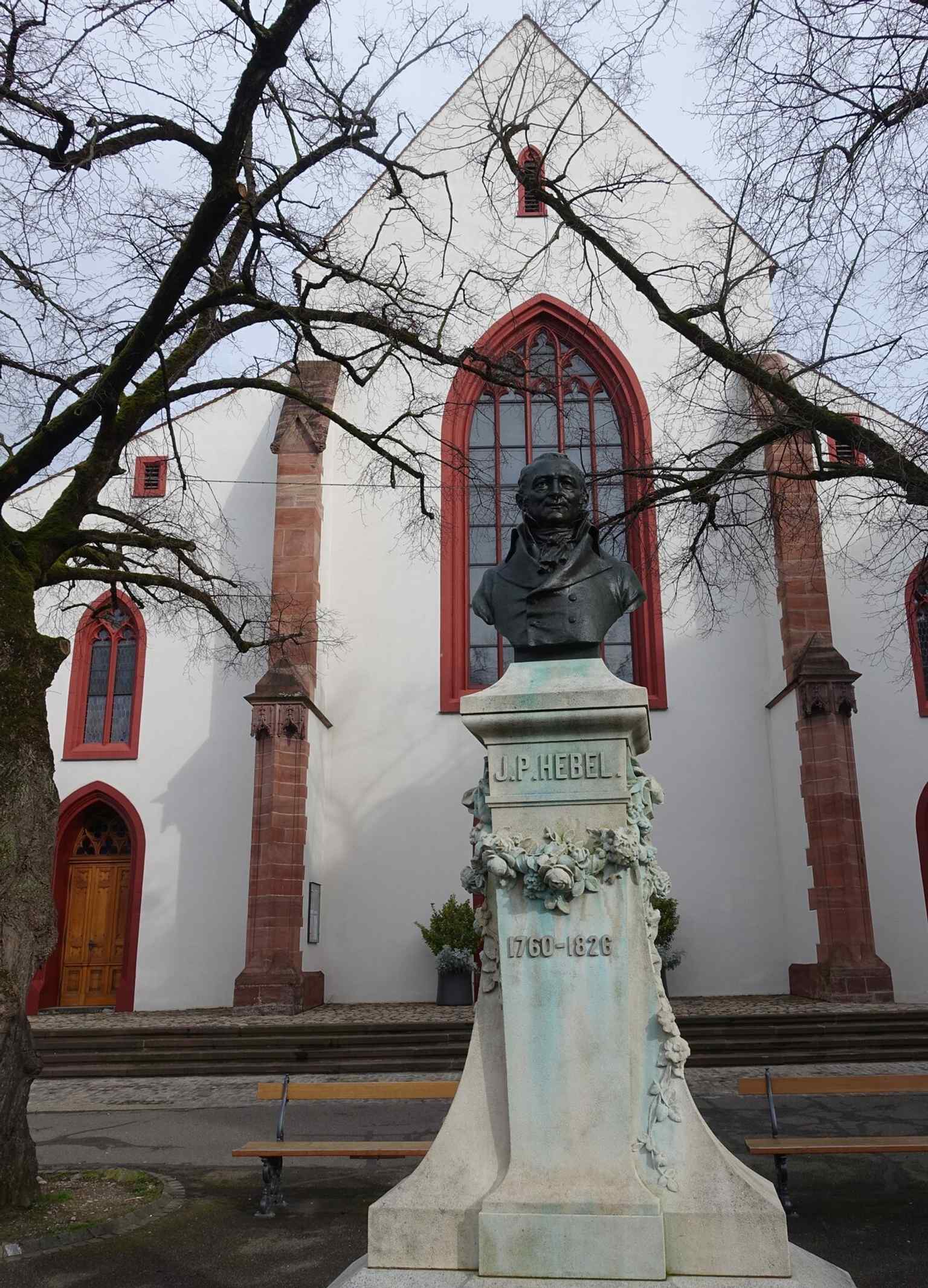
Even the outer wall remembers scholars: the Bernoulli family, giants of Basel mathematics, have epitaphs here. A burial church, a parish church, a scholarly church, a Reformed church... St. Peter’s never stayed exactly the same, but it never stopped being useful to the city’s memory.
From here, we’ll head toward the Middle Bridge, about five minutes away, where all these separate threads finally meet the river.





.jpg)