
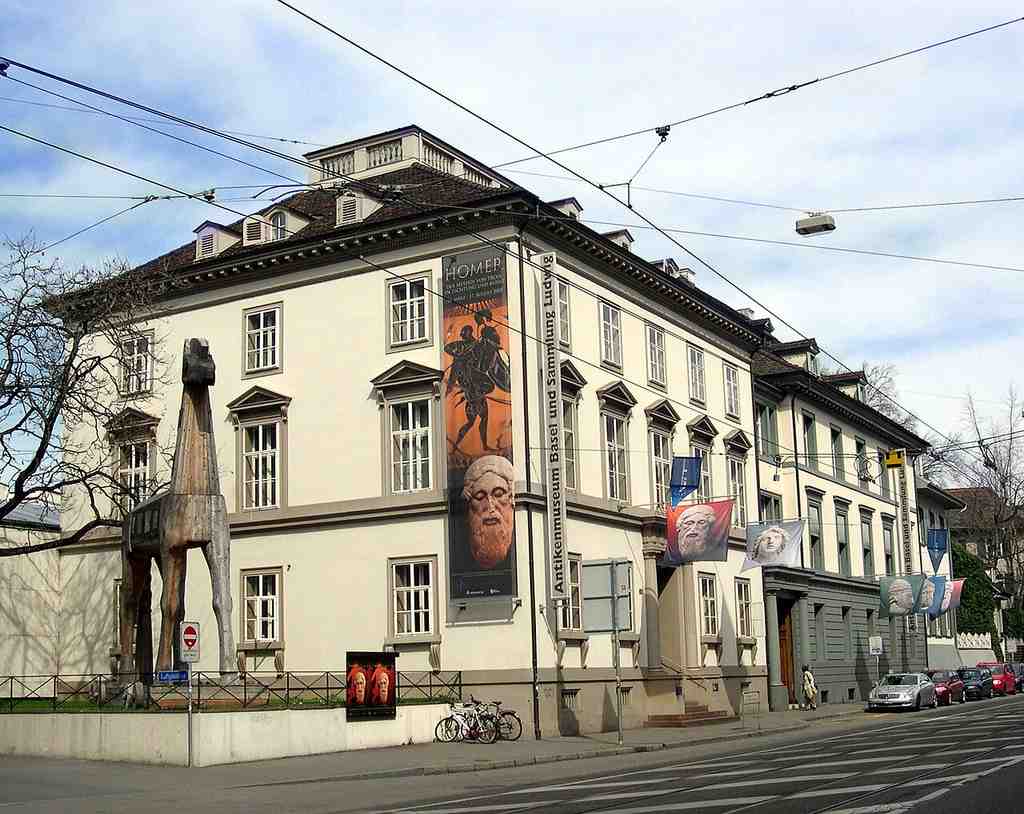
Look for the pale stone façade with its straight neoclassical lines, tall rectangular windows, and a dignified entrance set into a calm, orderly frontage.
This museum tells a very Basel story. Some of the city’s quietest builders never laid a single brick. Collector couples and donor couples kept handing over private passions, and little by little those passions became public memory.
At first, Basel owned ancient objects almost by accident. When the city bought the Amerbach cabinet in sixteen sixty-one and created its public collection, a few antiquities came along for the ride. But for a long time they sat neglected, while plaster casts of famous ancient sculptures stole the limelight. Those casts moved into the Augustinergasse museum, then into their own display at the Kunsthalle in eighteen eighty-seven. The original ancient pieces got split up in eighteen ninety-four between the Historical Museum and the Art Museum, and by nineteen twenty-seven even the sculpture room had closed. In other words... the ancients were here, but mostly waiting in the wings.
The real turning point came in nineteen sixty-one, when Basel gathered those scattered objects into a dedicated antiquities museum. About three quarters of what visitors saw came from private collections. Then, in nineteen sixty-six, the museum opened here in a neoclassical house designed by Melchior Berri in the eighteen twenties, paired with a modern hall lit from above. If you peek at the app, you can see how those interior galleries still use careful lighting and thematic rooms to make ancient life feel close, not dusty.
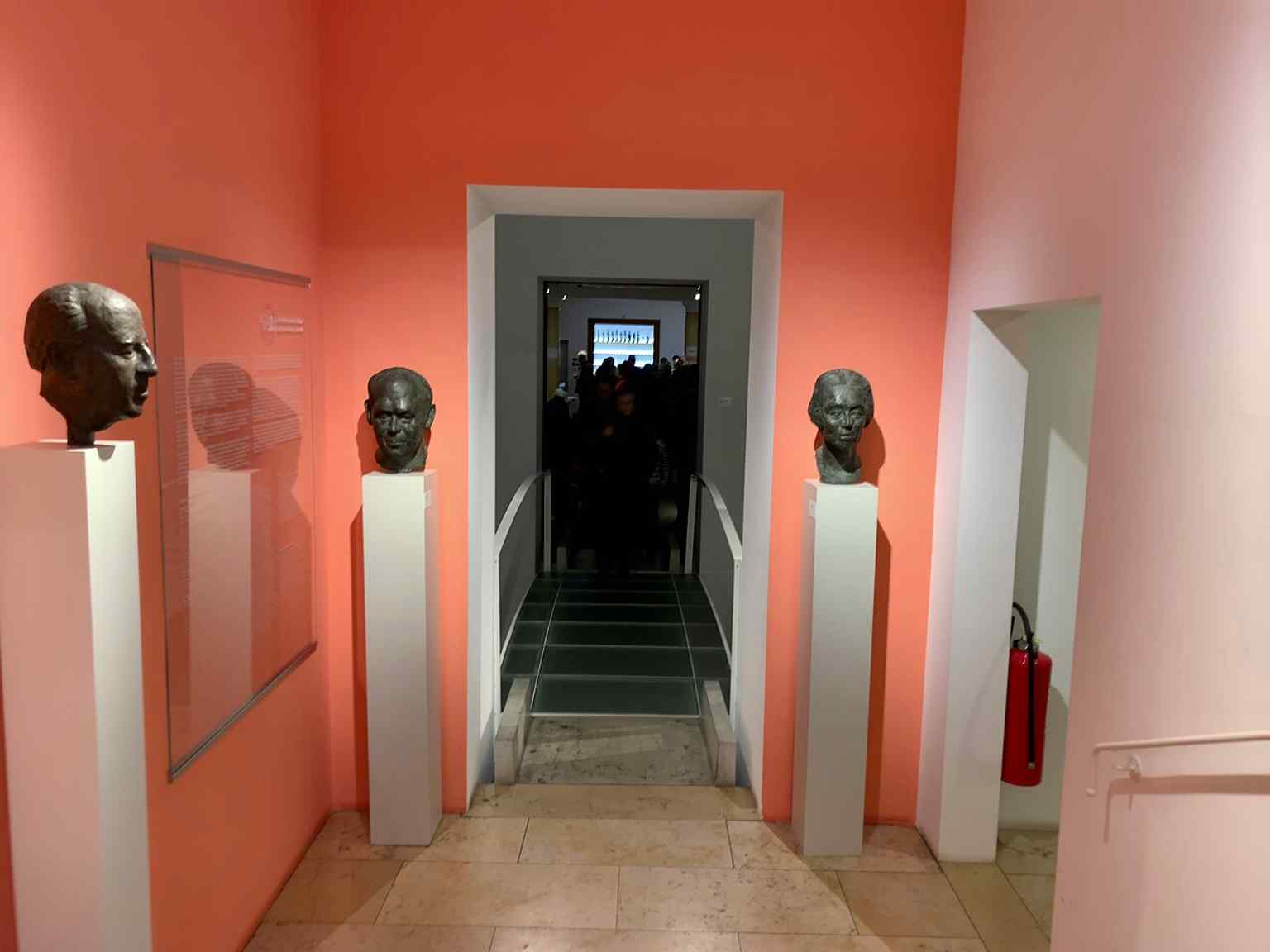
One couple gave this place its emotional core. Rudolf Emil Gsell-Busse, a lawyer who later ran Roche, and his wife Margarethe loved Greek art with real devotion. Their collection came here in stages, first as a long-term loan in the nineteen sixties, then again in the nineteen eighties. After they died, their daughter Daniela Schlettwein-Gsell and then their granddaughter Eleonore Pierrette Schlettwein chose to turn that family treasure into a permanent gift. That is the move Basel makes again and again: private desire, public trust.
Another donor couple changed the building itself. In nineteen eighty-one, Peter and Irene Ludwig from Aachen donated a major collection of antiquities. The museum had to expand into the neighboring Berri building at St. Alban-Graben seven, and it reopened in nineteen eighty-six with its fuller name: the Museum of Antiquities and Ludwig Collection.
Inside, this is still the only museum in Switzerland devoted entirely to the ancient Mediterranean world: Egypt, Greece, Etruria, Rome, the Near East, and Cyprus, spanning from the fourth millennium before Christ into late antiquity. Sculpture and ceramics lead the conversation, with strong holdings in Greek vases, bronzes, terracottas, and gold jewelry. A later Egyptian department opened beneath the courtyard in two thousand and one, and the department for the Orient, Cyprus, and archaic Greece followed in two thousand and two, shaped again by collectors such as Peter and Elisabeth Suter-Dürsteler, and Hans and Trudy Bosshard-Wirz.
There is even a local legend in plaster. The museum’s sculpture hall, once a university teaching collection, now holds more than twenty-two hundred casts, including an almost complete Parthenon sculptural ensemble. Its star reconstruction is Achilles and Penthesilea, pieced together in Basel by director Ernst Berger and sculptor Willi Walter from fragmentary Roman copies of a lost Greek original. Not bad for a city that knows how to make absence work overtime. You can get a feel for that curatorial style in another gallery view on your screen.
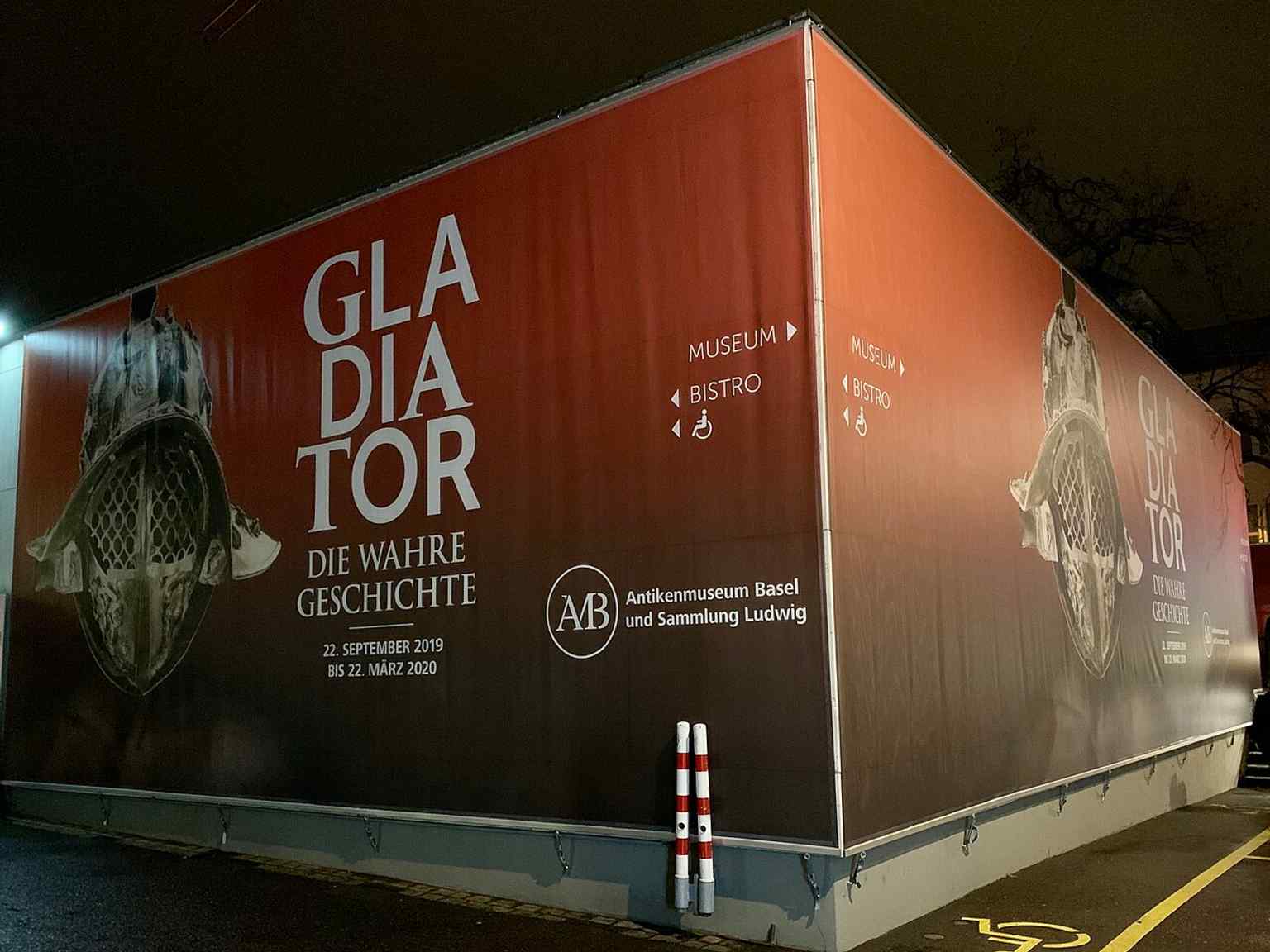
And one more thing matters here: these objects are not just beautiful; they are witnesses. Since twenty twenty-three, the museum has carried out systematic research into where the objects came from, tracing whether any pieces connect to Nazi looting, colonial extraction, or illicit excavation. By March twenty twenty-six, researchers had identified six objects with clear signs of problematic acquisition.
In a moment, we leave imported marble, clay, and bronze for local fiber, water, and craft... because Basel did not only collect knowledge, it learned to manufacture it. The Basel Paper Mill is about an eleven-minute walk from here.
If you want to come back inside, the museum is closed on Monday, usually opens at eleven from Tuesday to Friday, stays open late on Thursday and Friday, and opens at ten on Saturday and Sunday.





%2002.jpg)
%2006.jpg)
%2004.jpg)
%2010.jpg)