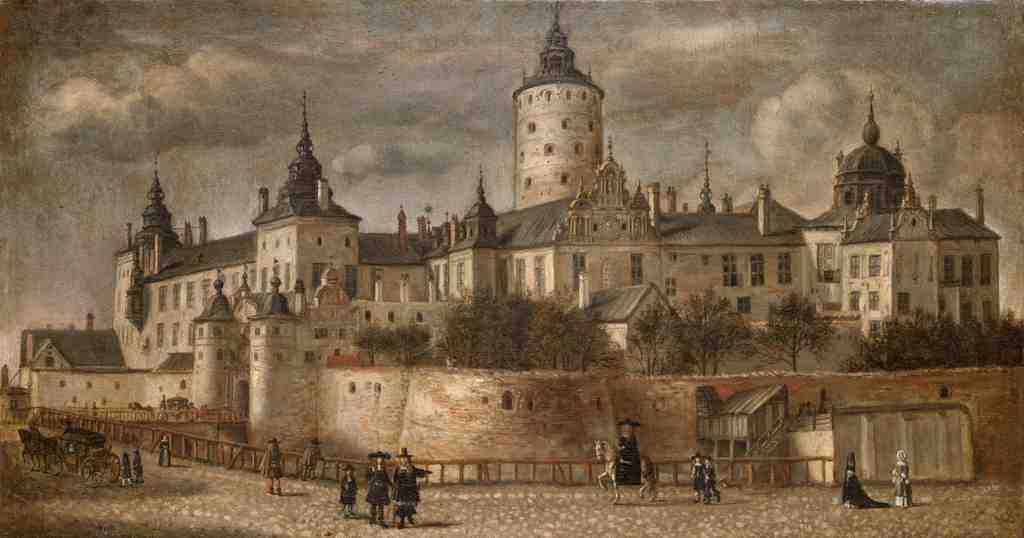
On your left, look for the pale stone palace wall with its long rectangular facade, evenly spaced windows, and heavy rusticated base: that grand exterior stands over the vanished stronghold of Tre Kronor.
Tre Kronor began as a fortress before it ever became a palace. Here, at the narrow passage between Lake Mälaren and the Baltic, control of water meant control of the kingdom. Long before royal banquets and ceremony filled these rooms, this height on Stadsholmen held a stone defense tower - a kastal, meaning a compact medieval keep - whose oldest parts date to the mid-thirteenth century.
That first tower was brutally practical. It measured about fifteen meters across, with walls four meters thick. The entrance sat on the second floor so enemies could not easily force their way in, and below lay a dungeon reached only through a hatch in the floor. Royal power in Stockholm started like this... not as elegance, but as vigilance.
Over time, the fortress spread into a ring wall, courtyards, towers, apartments, archives, chapel, and great hall. By the late sixteen hundreds it worked almost like a small city within walls, with about sixteen hundred people living or laboring here: guards, servants, clerks, craftsmen, and courtiers pressed together around the crown.
If you glance at the image on your screen, you can see how Tre Kronor once dominated Stockholm’s ceremonial life, even before the present palace took its place. But that splendor rested on older struggles. In fifteen twenty, when King Christian the Second attacked Stockholm, Christina Gyllenstierna held this fortress in defiance for so long that she became a symbol of Swedish resistance. Tre Kronor was not only where rulers slept. It was where rule had to be defended.
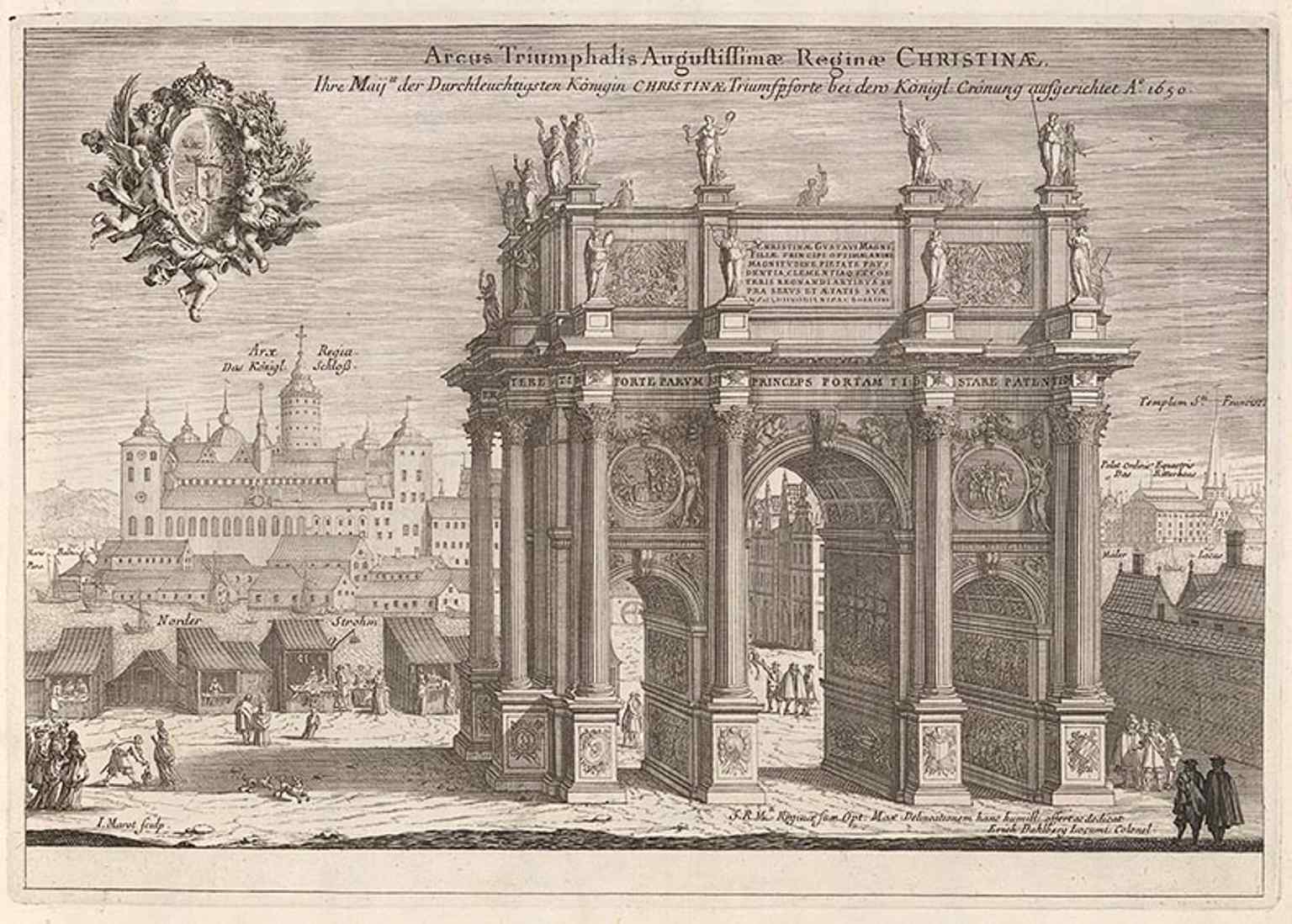
Gustav Vasa remembered that lesson. He strengthened the defenses, dug a moat, added outer walls and gun positions, and even tore down part of the nearby church’s eastern choir so the castle’s cannons could fire more freely. That small fact tells you a great deal: here, military need could even reshape sacred space.
Then came the fire of sixteen ninety-seven. A woman named Margareta Karlsdotter smelled smoke near the stairs to the great hall and sent a fire guard up to investigate. By then flames had already caught under the roof.
The disaster exposed something painfully human: a caretaker had secretly run an illegal tavern in the attic and used a stove without permission, while the fire watch failed at the worst possible moment. Servants hurled books and papers from windows to save them, but most of the royal library and archives died here anyway. A large part of Sweden’s memory turned to ash with the building.
So when you look at today’s palace, you are also looking at an absence. What lies below still shapes the story above ground.
Now we move to the church that gave sacred weight to royal authority... Stockholm Cathedral waits just ahead.