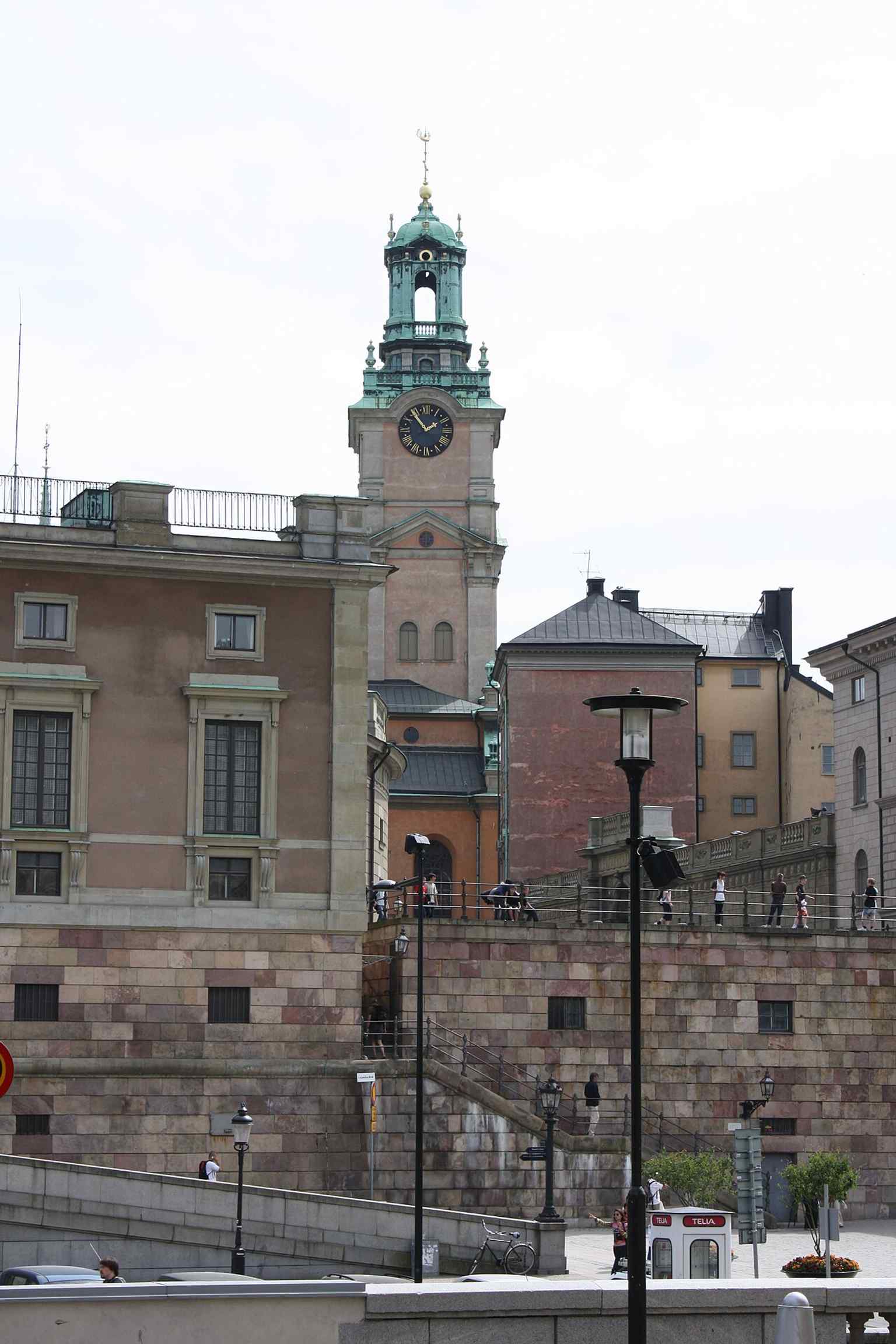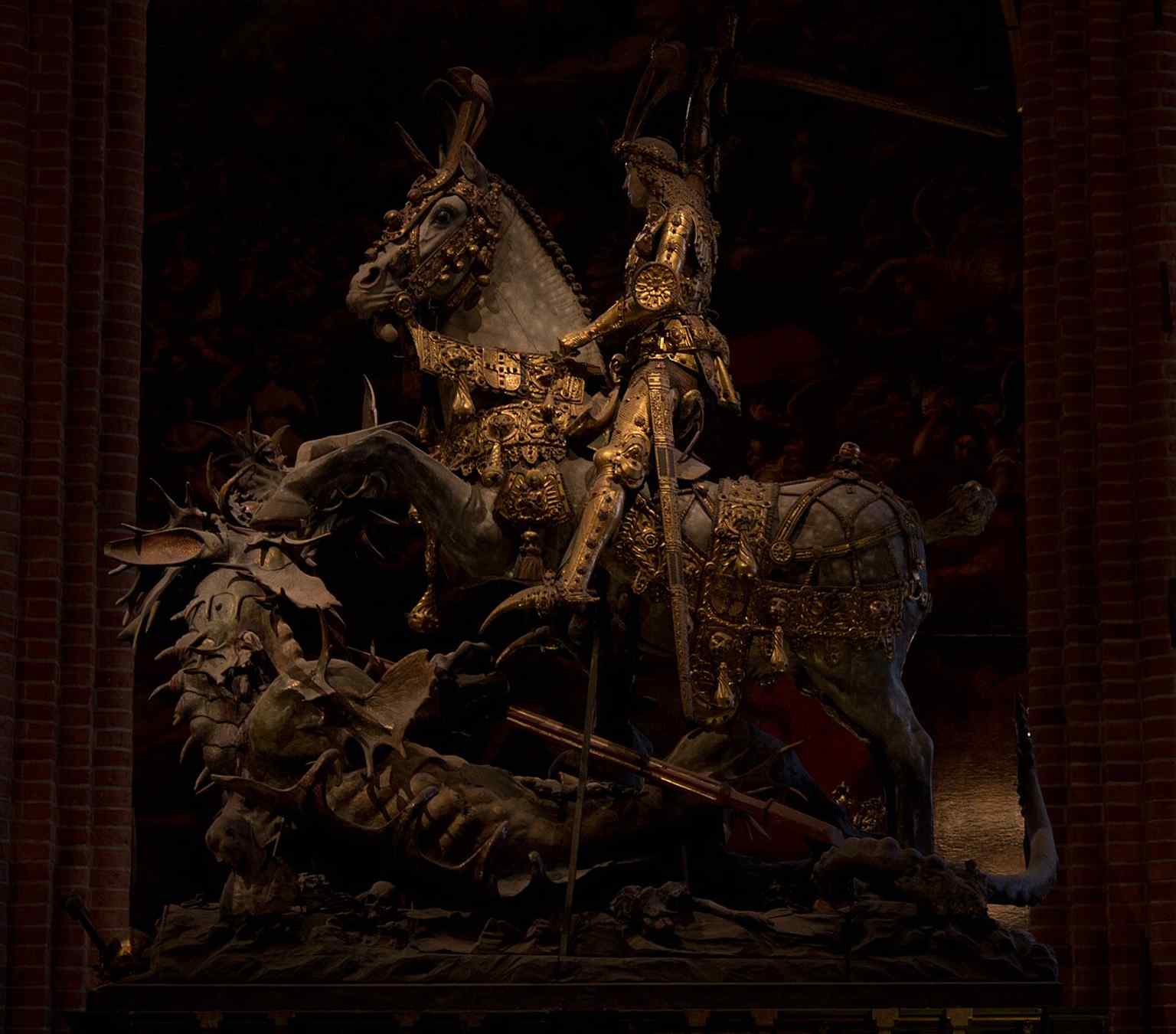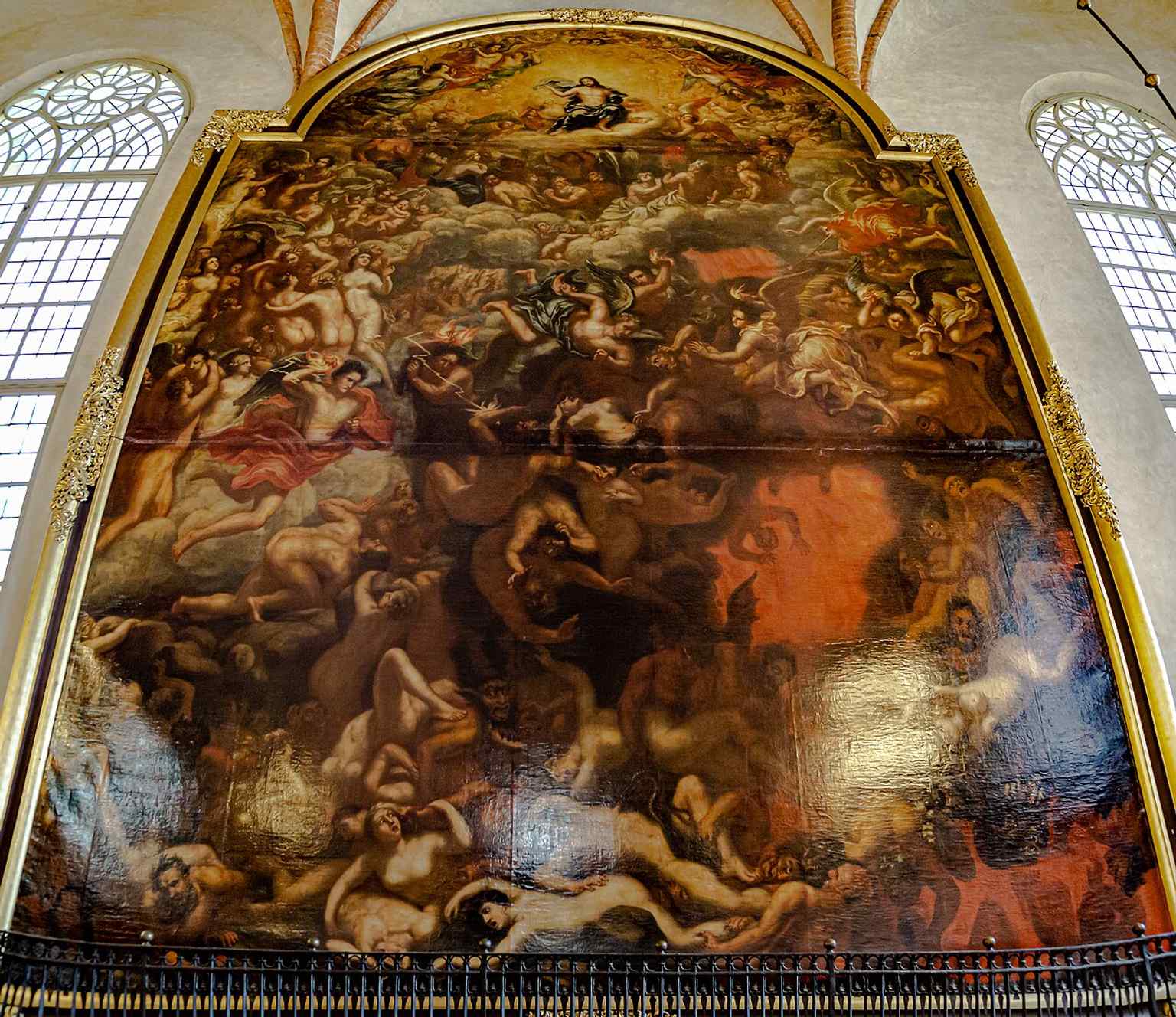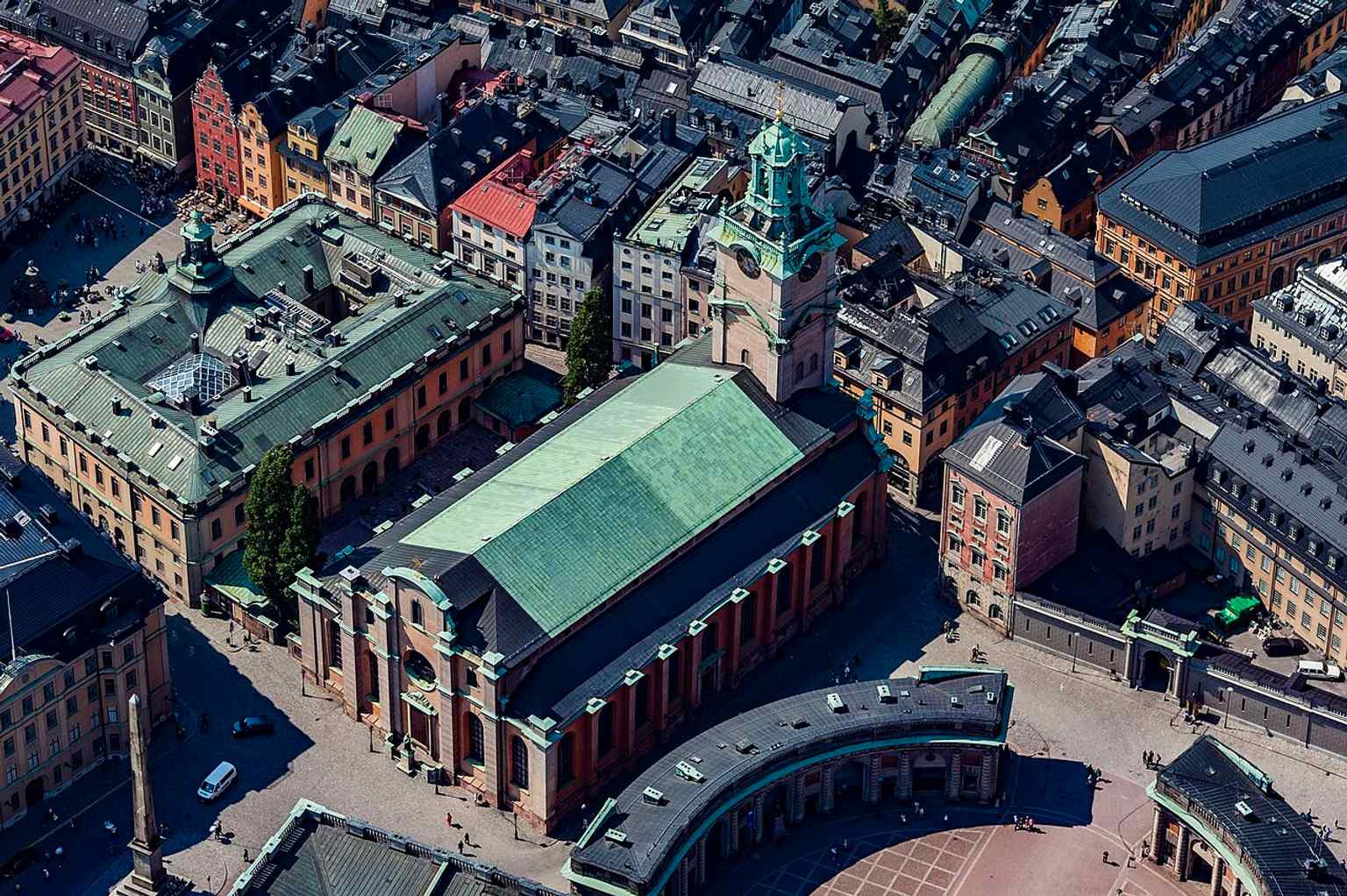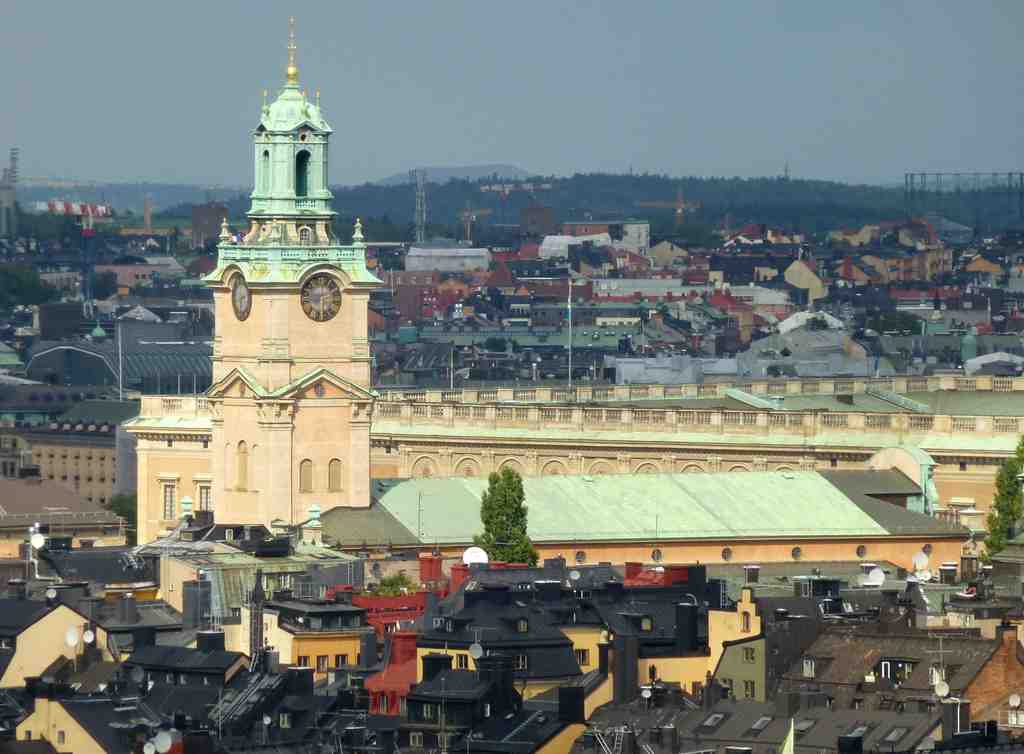
On your right, look for a pale plastered church with a tall square tower, a dark lantern rising from its top, and broad baroque wall strips laid over an older brick body.
This is Storkyrkan, Stockholm’s Great Church... and for centuries it has stood exactly where the city’s deepest authorities pressed against one another. Palace, government, market, and altar all met here. That made this church more than a place of prayer. It became a civic sanctuary, a coronation setting, a cathedral, and a ritual partner to power.
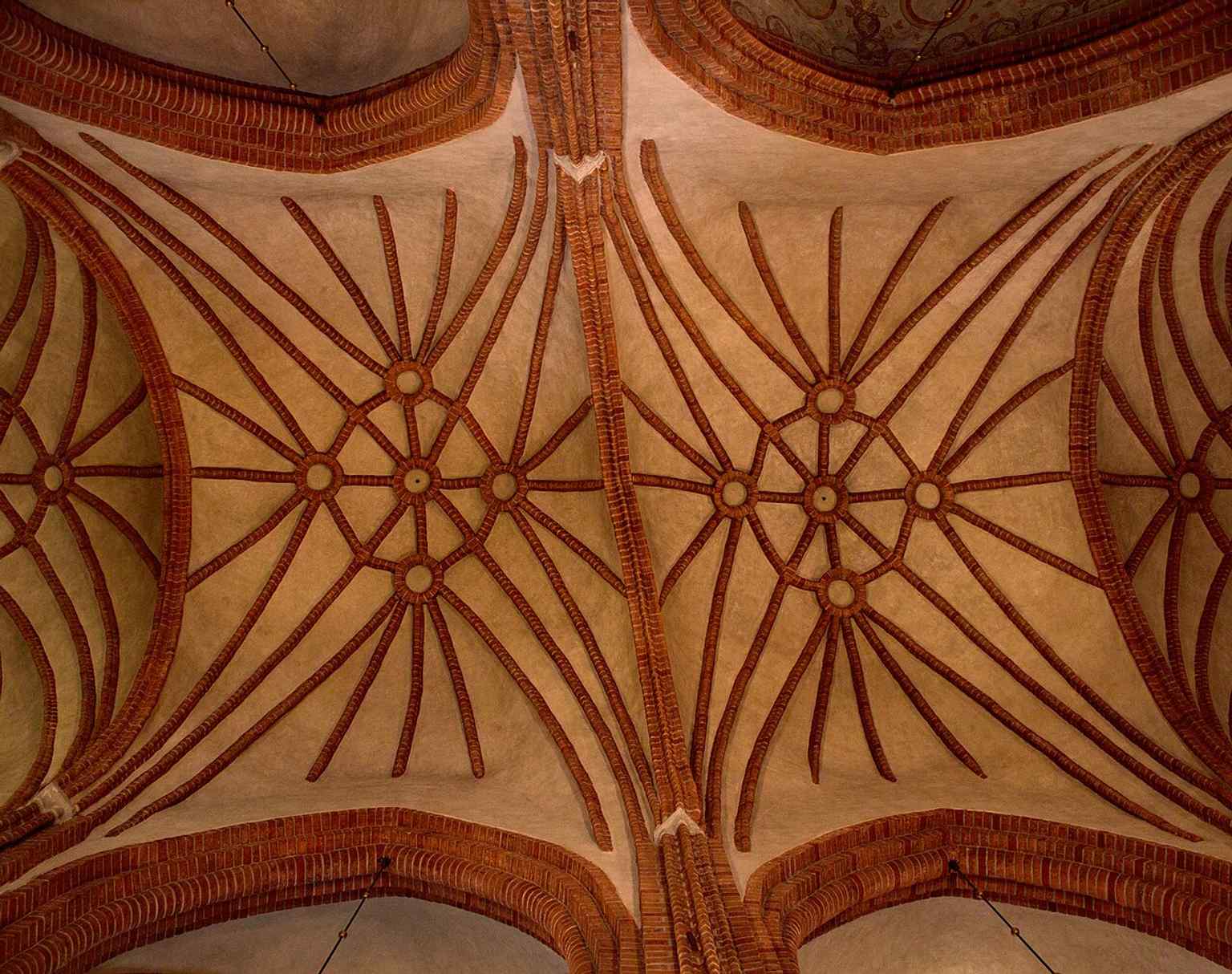
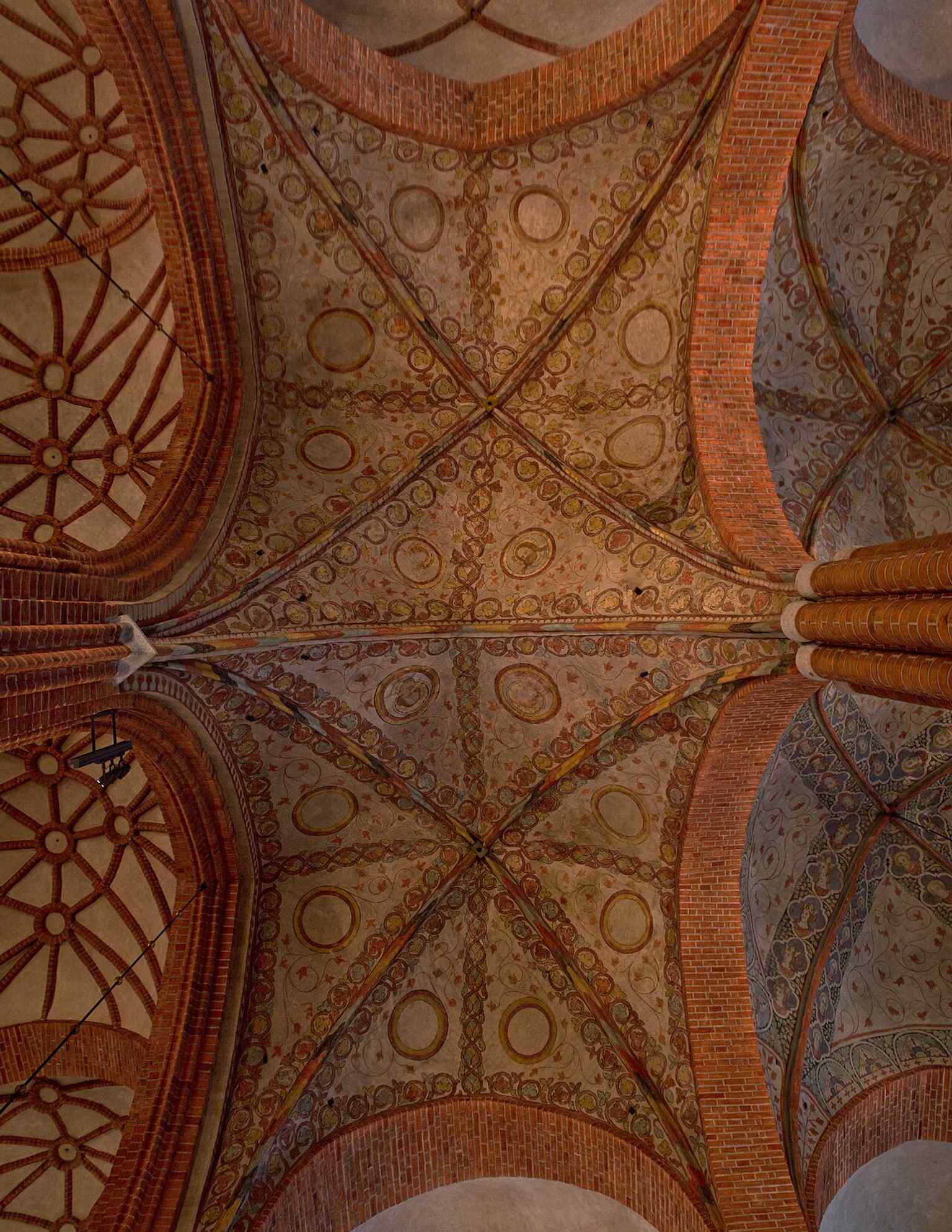
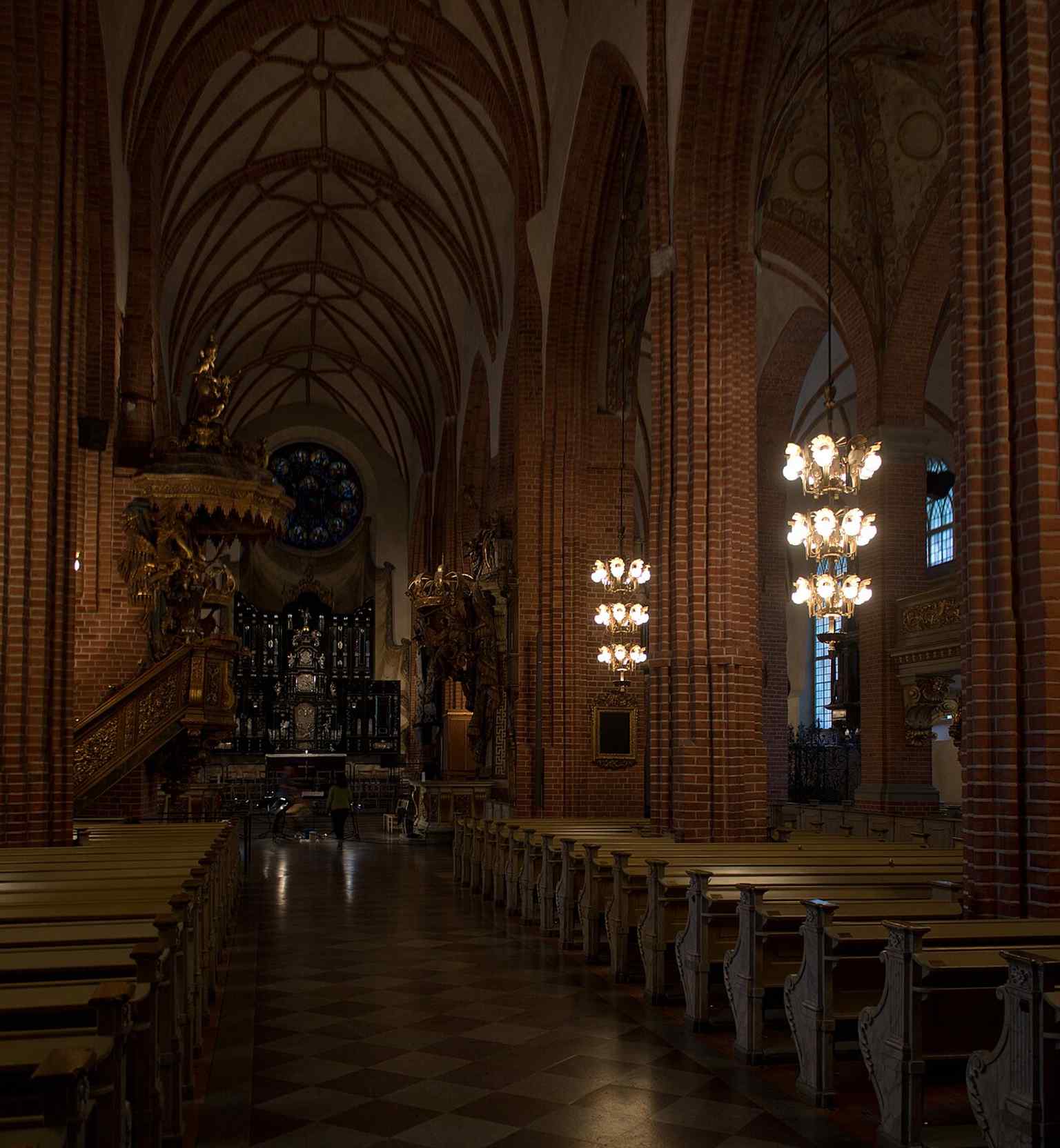
Tradition says the first church here rose in the twelve sixties through gifts from Birger Jarl. For about four hundred years, this was Stockholm’s only parish church, known simply as the town church, or Bykyrkan, and also as Saint Nicolai after Saint Nicholas, protector of sailors. That dedication mattered in a trading city shaped by merchants and ships. What you see now carries many centuries at once: a medieval church enlarged through the thirteen hundreds and fourteen hundreds into a five-aisled hall church - meaning a broad interior where the side aisles rise almost as high as the central space - then wrapped in a baroque exterior in the seventeen thirties so it could speak more fluently with the royal palace beside it.
If you glance at your screen, the aerial view makes that placement unmistakable: Storkyrkan sits between the palace and the old commercial heart, almost like a stone hinge in the city plan.
And inside, power did not merely visit... it performed itself. Kings and queens were crowned here from the Middle Ages onward. Magnus Eriksson and Blanka of Namur were crowned here in the thirteen thirties. Gustav the Third held his coronation here in the seventeen seventies. The last coronation in this church came in eighteen seventy-three, for Oscar the Second and Queen Sofia. Royal weddings followed the same pattern, including those of Carl the Sixteenth Gustaf and Silvia, and later Crown Princess Victoria and Daniel. Even the modern opening of parliament still begins with a service here, binding state ritual to sacred space with remarkable persistence.
This church also served the clergy as their meeting chamber during the old estate parliament. So when laws, monarchy, and faith gathered in Stockholm’s core, Storkyrkan was not background scenery. It was one of the rooms where the kingdom explained itself.
In nineteen forty-two, when Stockholm became its own diocese, this church took on cathedral status as the bishop’s seat. Yet its older identity never disappeared. It remained the Great Church of the city before it became the cathedral of the diocese.
One man brings that turning point into focus: Olaus Petri. He preached here in the fifteen twenties as Sweden’s Reformation began to take hold. In the church cellar, he had reforming texts printed, including the first Swedish translation of the New Testament in fifteen twenty-six. Here, the Mass was heard in Swedish for the first time. That is a profound shift to imagine: not just a change in doctrine, but a new language of authority, spoken aloud where crowns had been blessed.
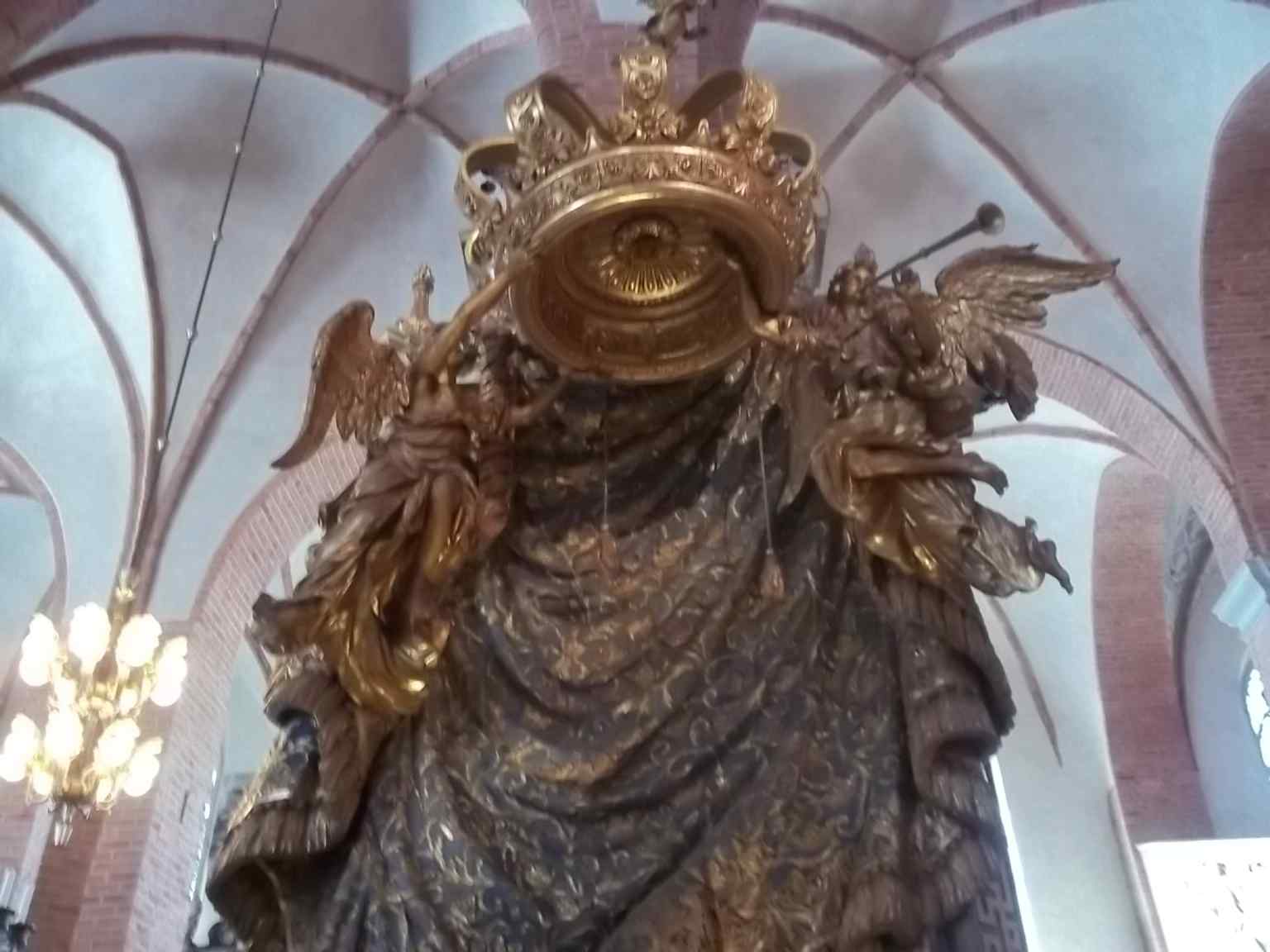
If you look at the image of the royal seats, you can see how the church still stages that old relationship between throne and altar.
At the next stop, we narrow from this great institution to the community and church authority around it... and to the arguments that made belief a public struggle. If you want to go inside later, Storkyrkan is generally open every day from nine thirty in the morning until five in the afternoon.