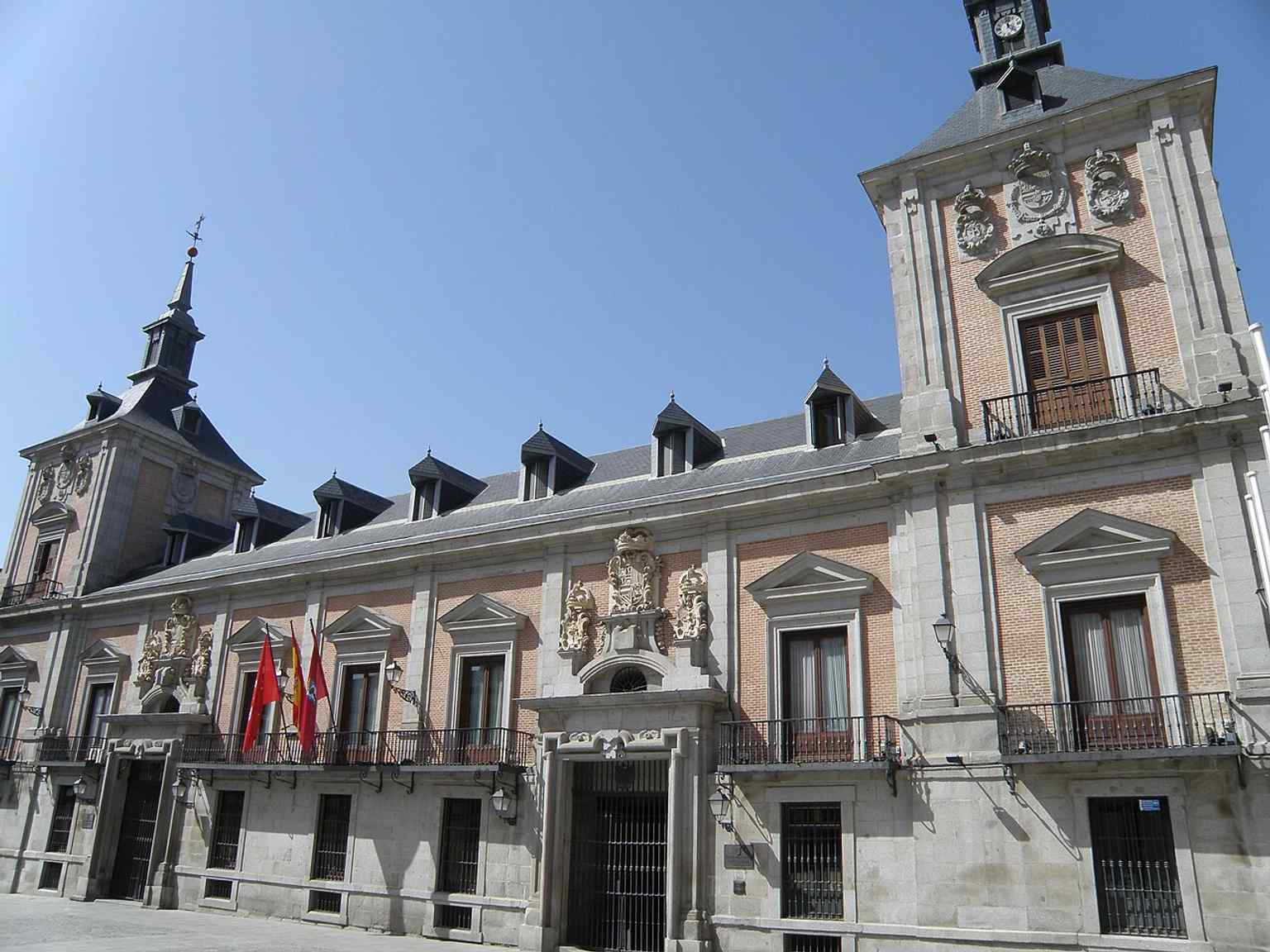
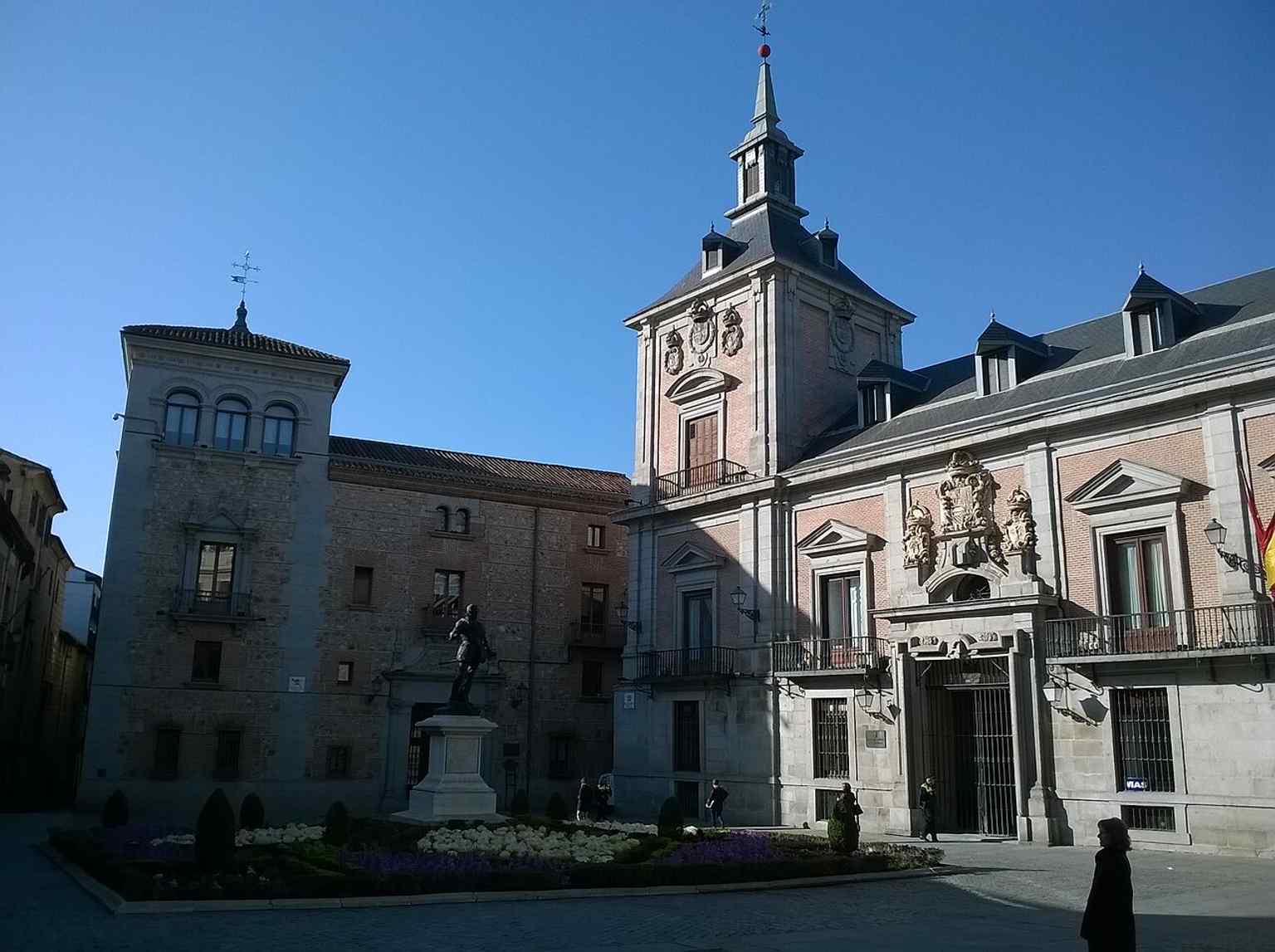
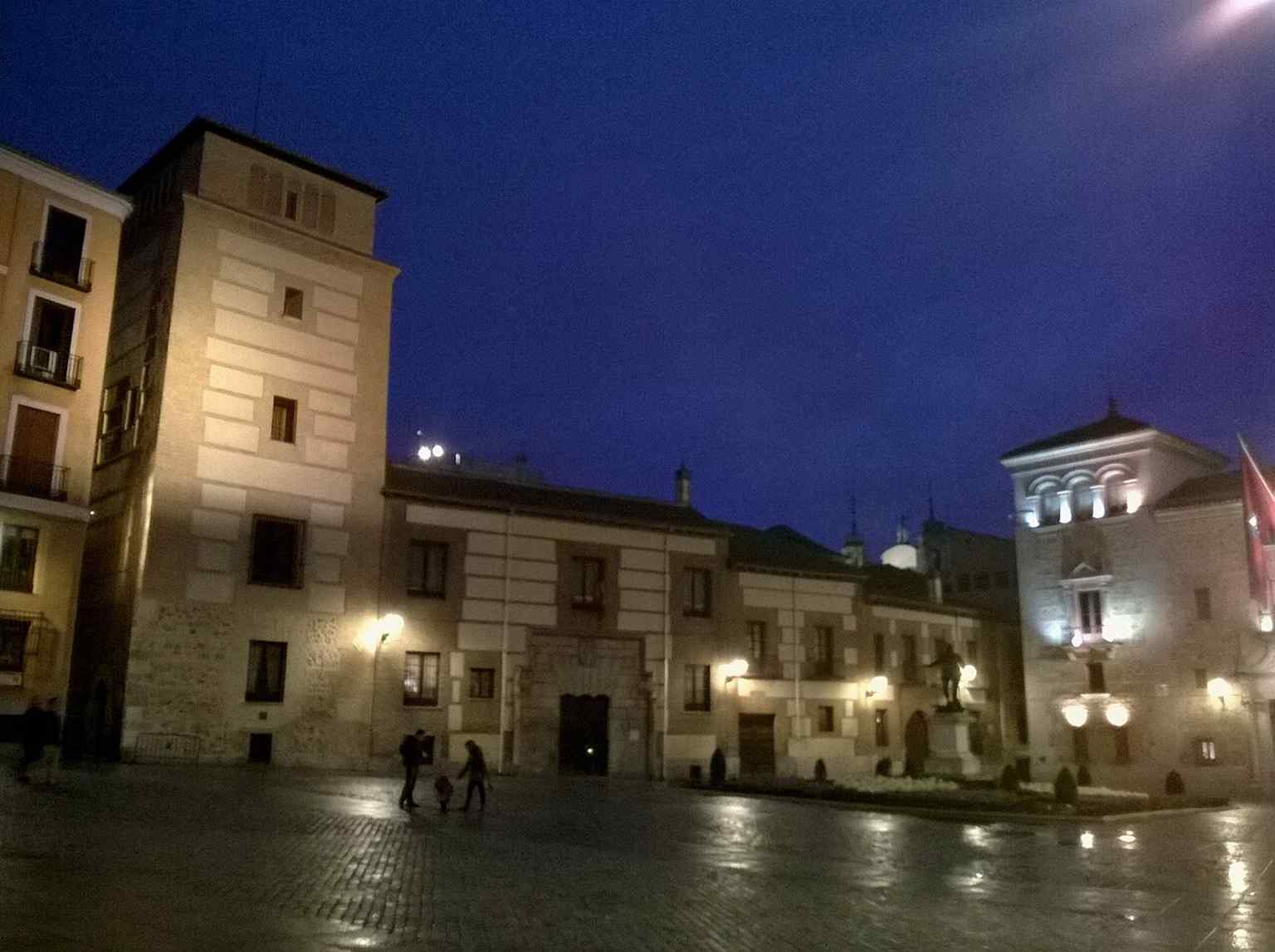
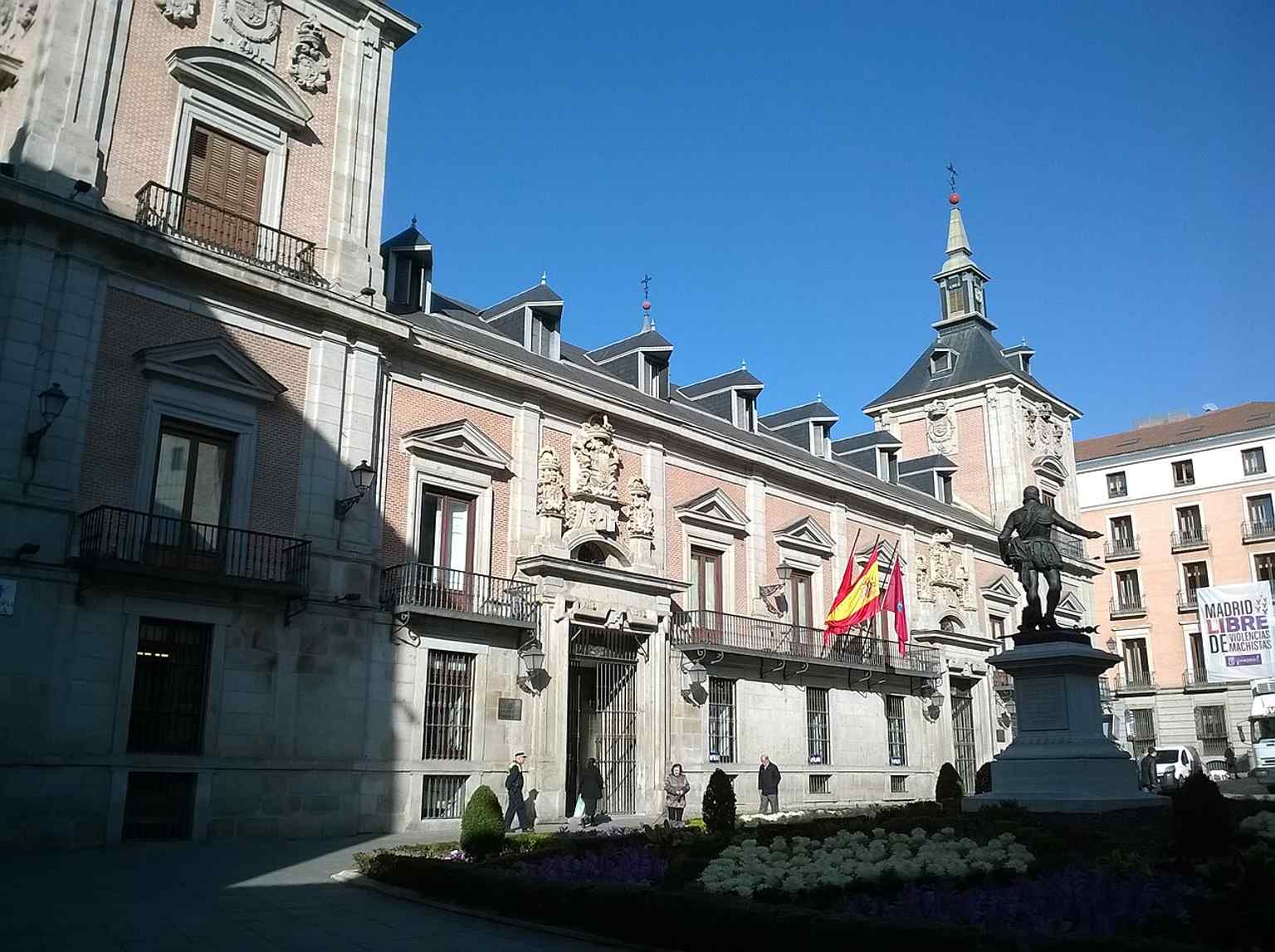
This square looks like a compact stone room open to the sky, framed by a red-brick medieval tower, pale carved palace facades, and a raised enclosed passage linking two civic buildings.
This is Plaza de la Villa, and if you want to understand Medieval Madrid, this is one of the best places to stand still and let the city explain itself. Back then, government, religion, and neighborhood life lived shoulder to shoulder. Nothing here was oversized. Power worked at close range.
For a long time, people called this place Plaza de San Salvador, after the church that once stood nearby on Calle Mayor. Here is the local detail most visitors miss: Madrid’s town council did not begin in some grand marble chamber. It first met in the church portico... basically under a porch. Not exactly imperial swagger, but very Madrid.
From this square, three little streets still slip away along the old medieval layout: Codo to the east, Cordón to the south, and Madrid to the west. If you glance at the image on your screen, you can see how snugly the plaza fits into that earlier city, tucked beside Calle Mayor like a surviving pocket of the old map.
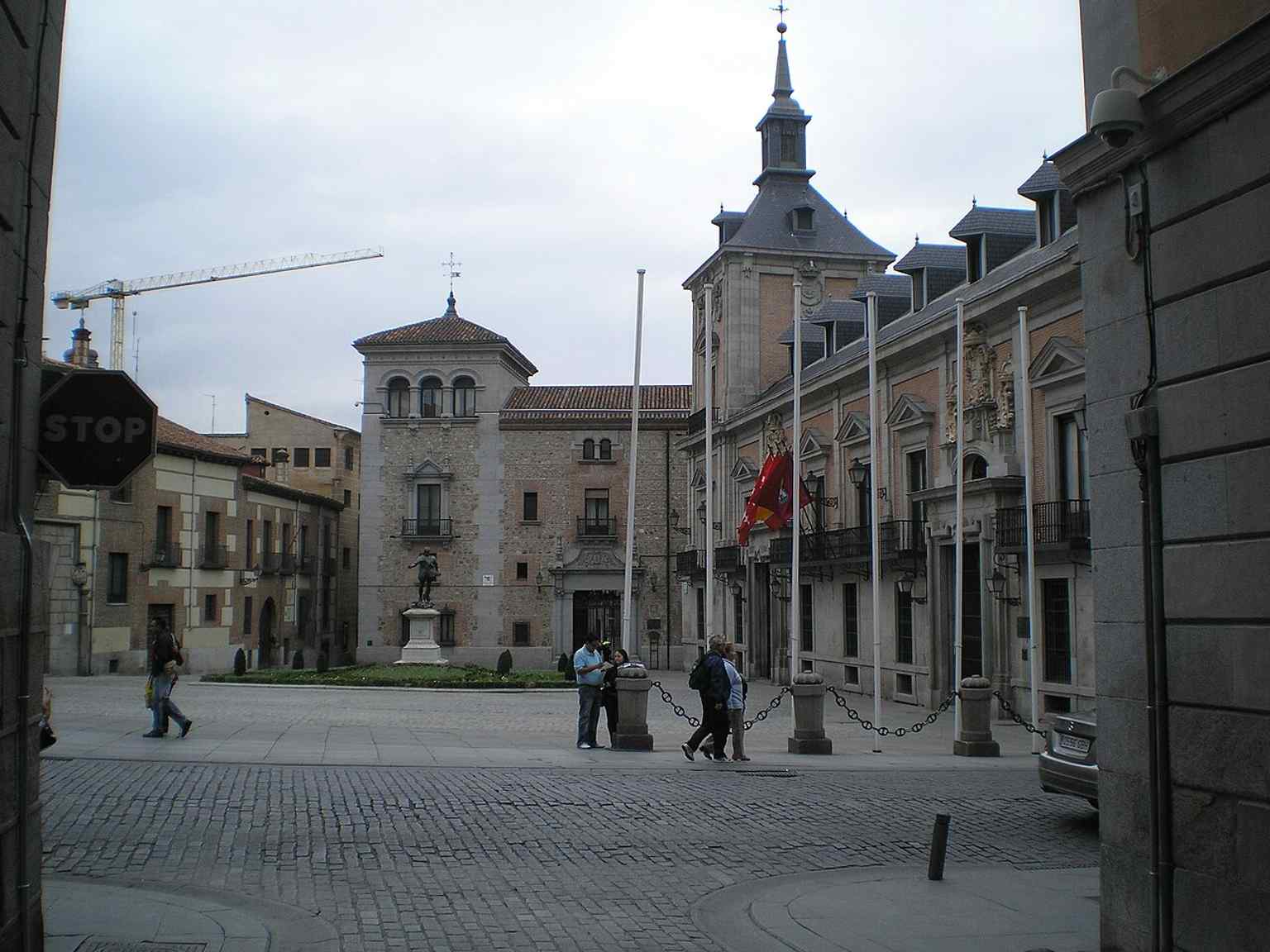
Now look at the buildings around you. They form a tidy timeline. On the eastern side stands the Casa y Torre de los Lujanes, the oldest surviving civil complex in Madrid, built in Gothic-Mudéjar style, which mixes Christian Gothic forms with brickwork and details shaped by Islamic craft traditions. Notice the tower and the old family shields on the pointed doorway. The Lujanes were an important local family. Madrid, being Madrid, tells two stories about one famous guest here: after the Battle of Pavia in fifteen twenty-five, King Francis the First of France was either imprisoned in that tower... or simply lodged there under guard. Same tower, very different mood. In the nineteenth century, because it was one of the tallest points around, workers even used its roof for an optical telegraph line to Aranjuez. Before wires, messages traveled by visible signals from rooftop to rooftop.
On the southern edge, the Casa de Cisneros arrived in fifteen thirty-seven. Benito Jiménez de Cisneros, nephew of Cardinal Cisneros, commissioned it as a palace in Plateresque style, meaning stone carved with the delicacy of a silversmith’s work. Tradition says Antonio Pérez, secretary to King Philip the Second, spent time here as a prisoner. A palace and a prison... that pairing turns up in Madrid more often than you might expect.
Then on the western side, the Casa de la Villa gave the city a proper municipal home. Juan Gómez de Mora designed it in the seventeenth century, and builders finished it in sixteen ninety-three after a long, patient campaign. City officials did not plan it only for ceremony; they also meant to house the jail. Authority liked everyone close at hand.
And in the middle, the square gained its bronze admiral in eighteen ninety-one. Álvaro de Bazán stands with half armor, a general’s baton, and one boot on a Turkish flag. If you check the monument image, you can catch the theatrical confidence Mariano Benlliure gave him. His unveiling drew Queen Regent María Cristina, Infanta Isabel, Antonio Cánovas del Castillo, ministers, generals, the whole civic parade. Even this intimate square knew how to become a public stage.
Hold this place in mind as we continue. What comes next will seem larger, grander, and more official, but not newer in spirit. Those later monuments grow out of spaces like this one. When you’re ready, head toward Almudena Cathedral, about a six-minute walk from here.