
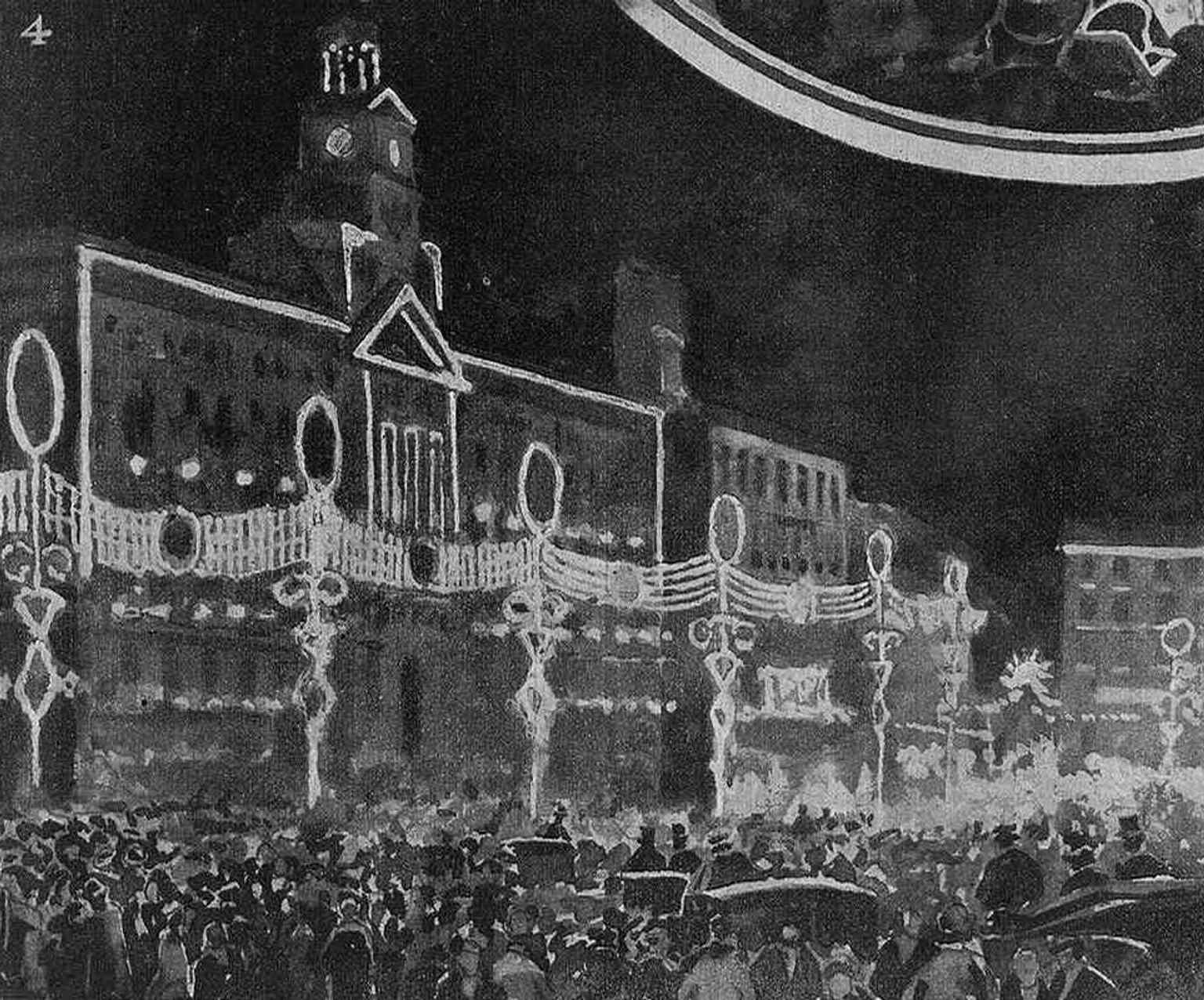
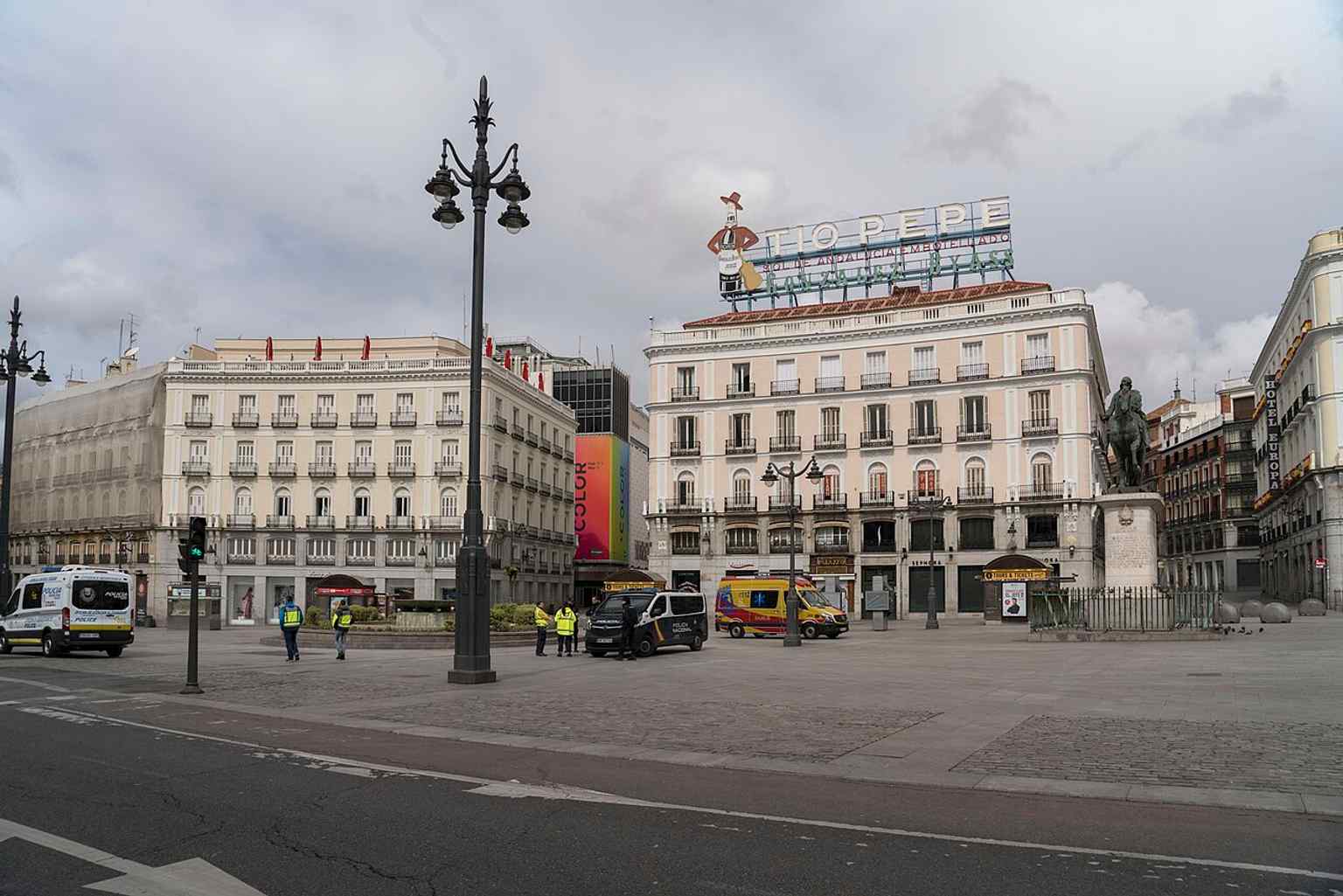
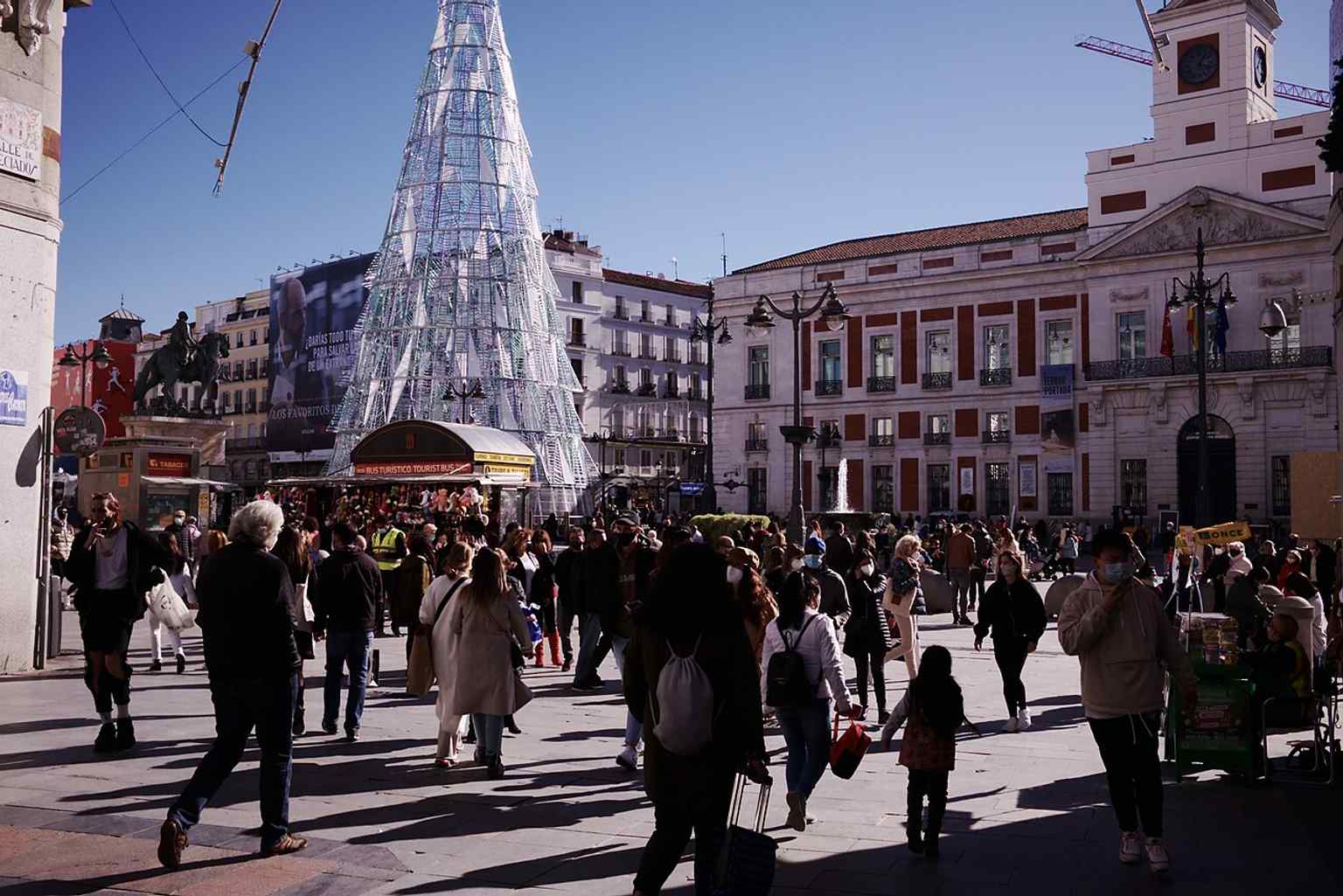
Ahead of you, Puerta del Sol opens as a broad semicircular stone plaza framed by uniform cream façades, with the red-brick Real Casa de Correos and its clock tower as the unmistakable marker.
Picture José Rodríguez de Losada for a moment: a watchmaker from León, living in London, deciding that Madrid deserved a better clock. That sounds a little niche, I know... but in this square, public time became public pride.
Sol began as something much plainer than the stage you see now. In the late medieval city wall, this was one of Madrid’s gates, named for a sun emblem set above the entrance because the gate faced the sunrise. As the city spread, the gate lost its original job. Then, in the eighteen hundreds, Madrid cleared away houses and former convents, kept the line of the Real Casa de Correos, and shaped this open semicircle you’re standing in now. A gate became a plaza; a threshold became the city’s front room.
The Real Casa de Correos, straight ahead, is the oldest major building here. French architect Jaime Marquet gave it form between seventeen sixty-six and seventeen sixty-eight. Later it served as the Ministry of the Interior, and under Franco its cells became a feared place for political prisoners. Today it holds the Presidency of the Community of Madrid. That’s Madrid for you: one façade, several lives.
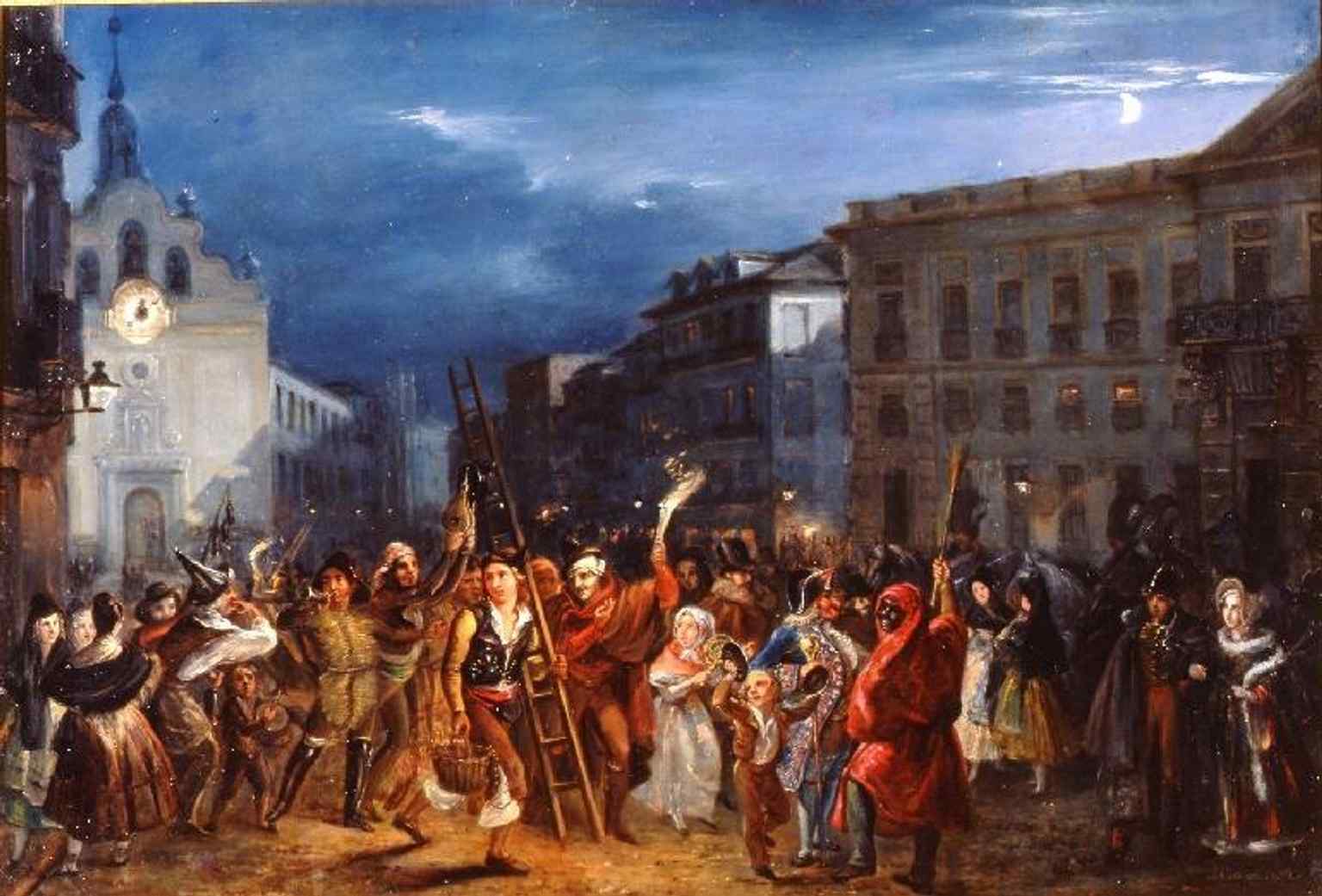
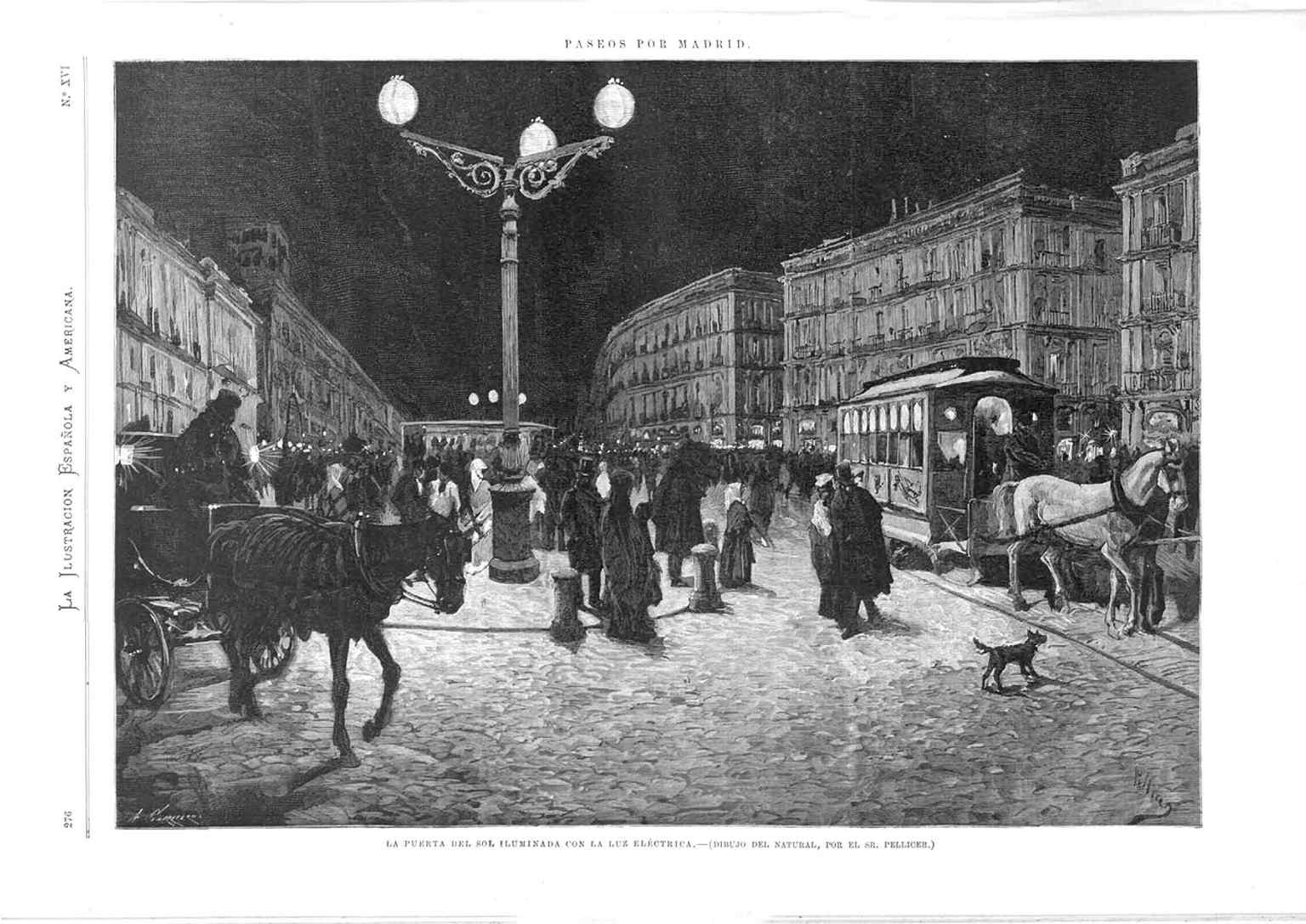
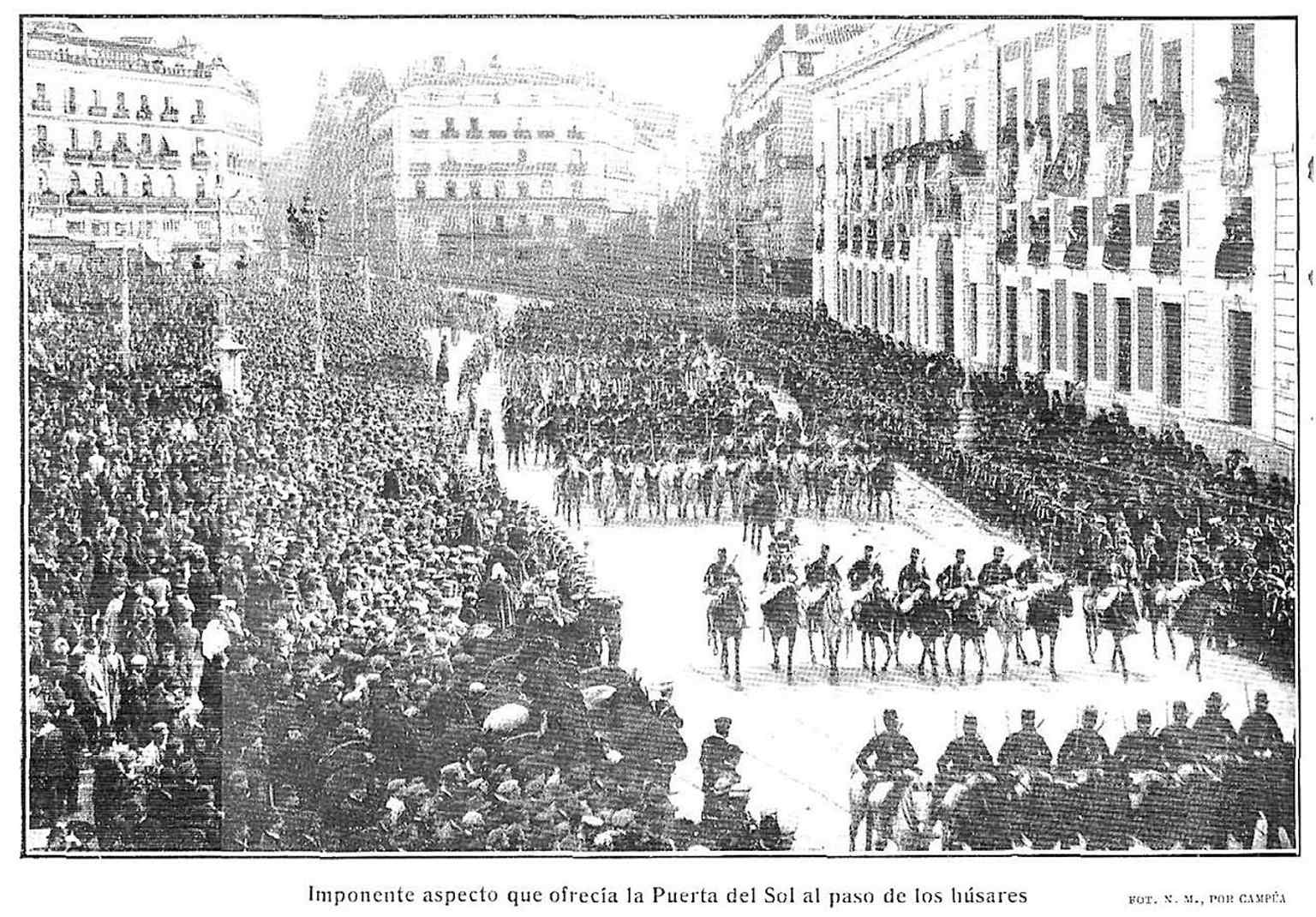
If you want, glance at the before-and-after image in the app; it shows just how much this place widened from a tighter nineteenth-century square into today’s civic stage.
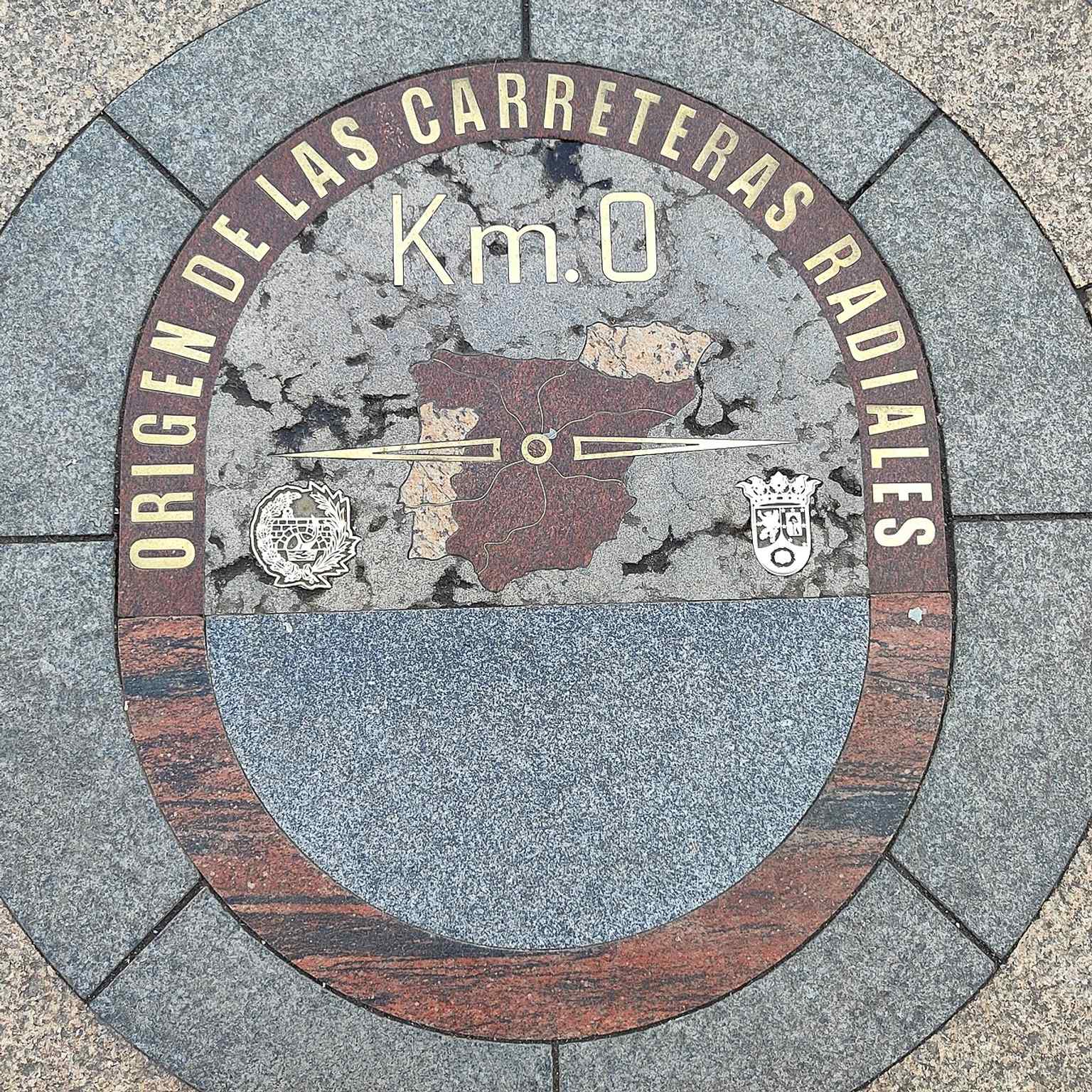
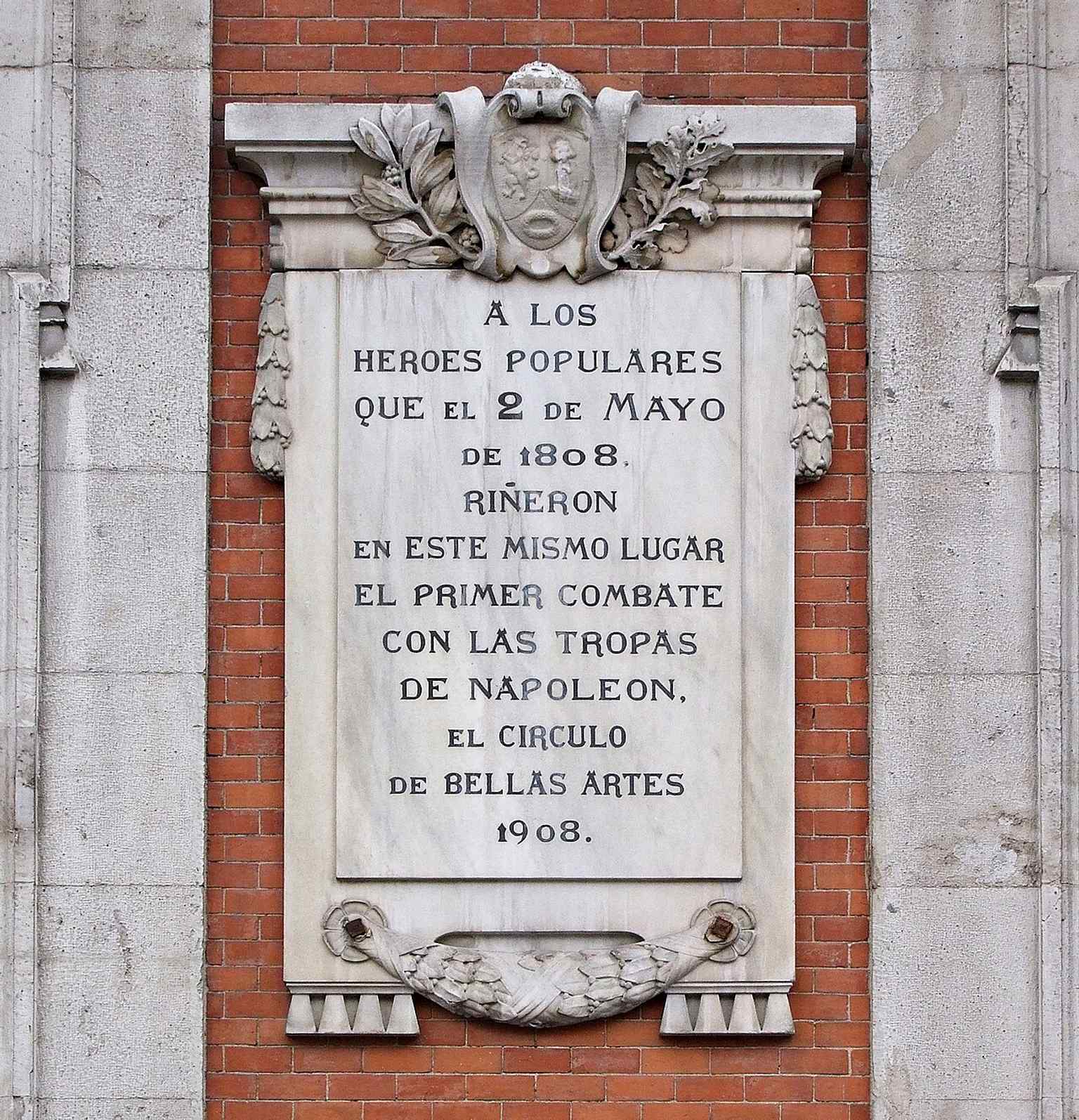
Now, somewhere near the Casa de Correos is one of Spain’s smallest big-deal landmarks: Kilómetro Cero. Installed here in nineteen fifty, it marks the starting point of the country’s radial roads. Officially, distances fan out from here. Emotionally, plenty of people still treat Sol the same way... as the place where plans begin. If you check the plaque image on your screen, you’ll see how modest the marker is for such a grand national claim.
Take a second and notice what people do in this square. Some pause to get their bearings. Some wait for a friend. Some photograph a symbol and move on. Even now, Sol still works like Madrid’s shared starting line.
And then there’s that clock. Before Losada donated the current one, the earlier clock had a rotten reputation for running late. Not charmingly late, either. So late it embarrassed the city and even delayed departures from the square. Losada’s replacement opened in eighteen sixty-six, inaugurated by Queen Isabella the Second, and Madrid grabbed onto it with both hands. Since nineteen sixty-two, its New Year’s chimes have carried the ritual of the twelve grapes into homes across Spain. In nineteen thirty-eight, during the Civil War, a shell even struck the clock and failed to explode, as if the thing had decided it would keep going no matter what.
That’s the trick of Sol: it turns ordinary routines - checking the hour, meeting a friend, starting a trip - into ceremony. When you’re ready, head on to Plaza Mayor, about seven minutes away, and we’ll see how Madrid gave public life an even grander set of walls.






%20Puerta%20del%20Sol.jpg)


