AudaTours logoAudaTours

Stop 13 of 16

Plaza de Cibeles

headphones 04:20 Buy tour to unlock all 18 tracks

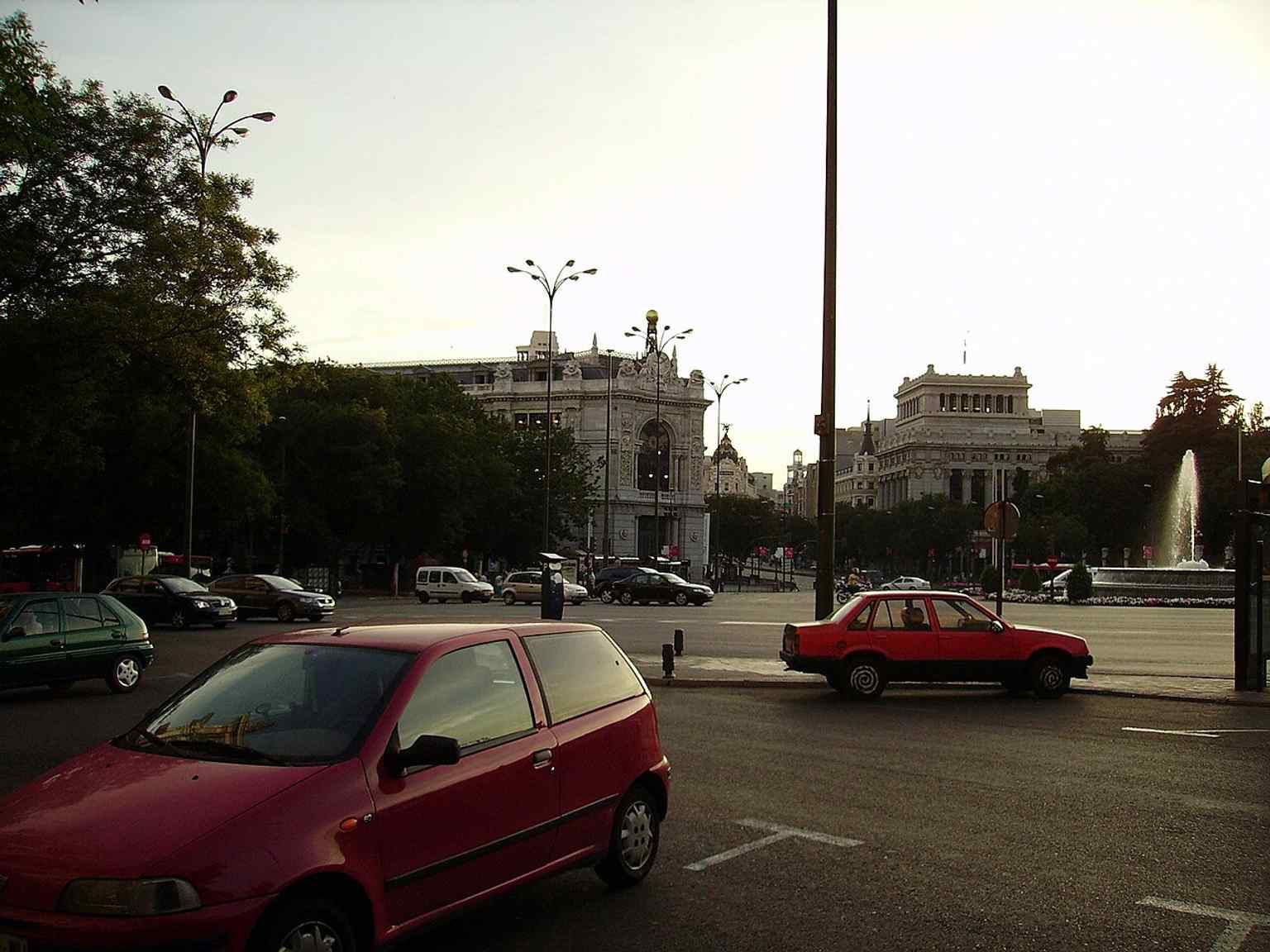
On your left, Cibeles Square opens as a broad circular junction of pale stone, centered on a white marble fountain where a seated goddess rides a chariot pulled by two lions, with the ornate white Palace of Cibeles rising behind.

This is the place where Madrid presents itself to the world. Sol may measure the nation from Kilometer Zero, but Cibeles is the city’s grand portrait... myth in the middle, power on every corner, and a whole lot of symbolism arranged with almost theatrical confidence. And yes, the traffic helps with the drama.

At the center sits the fountain of Cibeles, created in seventeen eighty-two for the great urban project called the Salón del Prado, when King Carlos the Third tried to turn this edge of Madrid into a refined public promenade of gardens, fountains, science, and culture. Architect Ventura Rodríguez designed it. Sculptor Francisco Gutiérrez Arribas carved the goddess and her chariot, while Roberto de Michel shaped the lions. The goddess is Cybele, an ancient mother figure linked by the Greeks to Rhea. Madrid gave itself not a warrior, not a king, but a goddess in motion. That tells you something.

She did not start here, though. For more than a century, the fountain stood nearer the Buenavista Palace and faced Neptune down the Prado axis, like two mythological neighbors nodding across the city. Back then, Cibeles also served a practical job: people drew water here. In eighteen ninety-five, city planners moved the whole ensemble into the center of this crossroads, set it on steps, added two little cherubs at the back, and turned a useful fountain into an emblem. If you peek at the historical image on your screen, you can see her before the modern square fully closed around her.
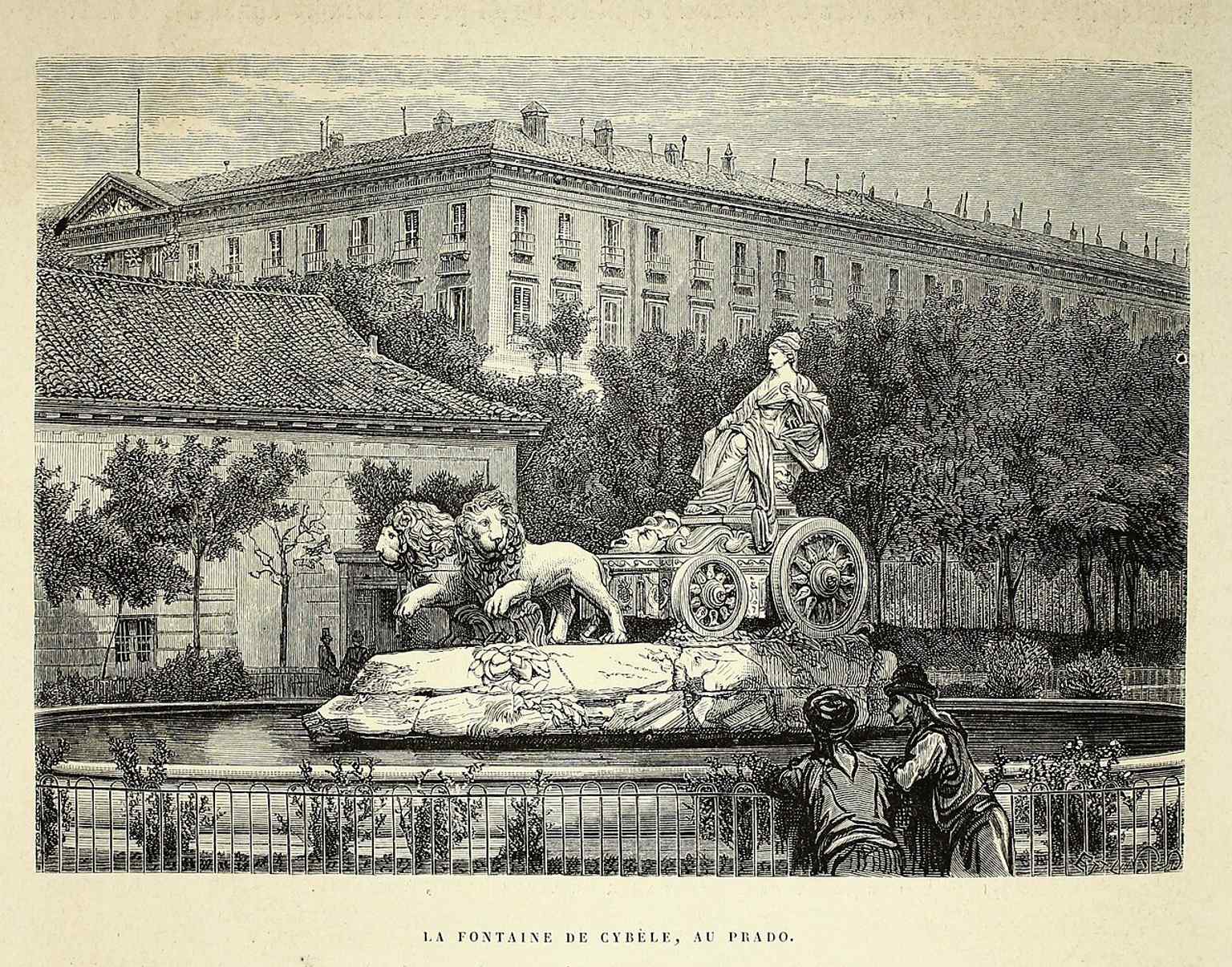
Gustave Doré’s 1874 illustration shows the fountain in its earlier urban setting, when Cibeles was still part of the Prado promenade.
Gustave Doré’s 1874 illustration shows the fountain in its earlier urban setting, when Cibeles was still part of the Prado promenade.Photo: Gustave Doré, Wikimedia Commons, Public domain. Cropped & resized.

Now notice the ring of institutions. To the northwest sits Buenavista Palace, the oldest corner, from seventeen seventy-seven, now the Army headquarters. To the southwest, the Banco de España, opened in eighteen ninety-one, gives the square financial muscle. Across from it, the Palacio de Linares became Casa de América, layering diplomacy onto old aristocratic splendor... with a side order of ghost stories in the nineteen nineties. Madrid does enjoy good upholstery and a better rumor.

And then there is the giant stage-set behind the fountain: the former Palace of Communications, opened in nineteen seventeen after Antonio Palacios and Julián Otamendi pushed its design into being. That soaring white mass, with its tower climbing more than sixty meters, first served mail, telegraph, and telephone. Since two thousand and seven, it has housed City Hall, so the building now speaks for Madrid in the most literal way possible.

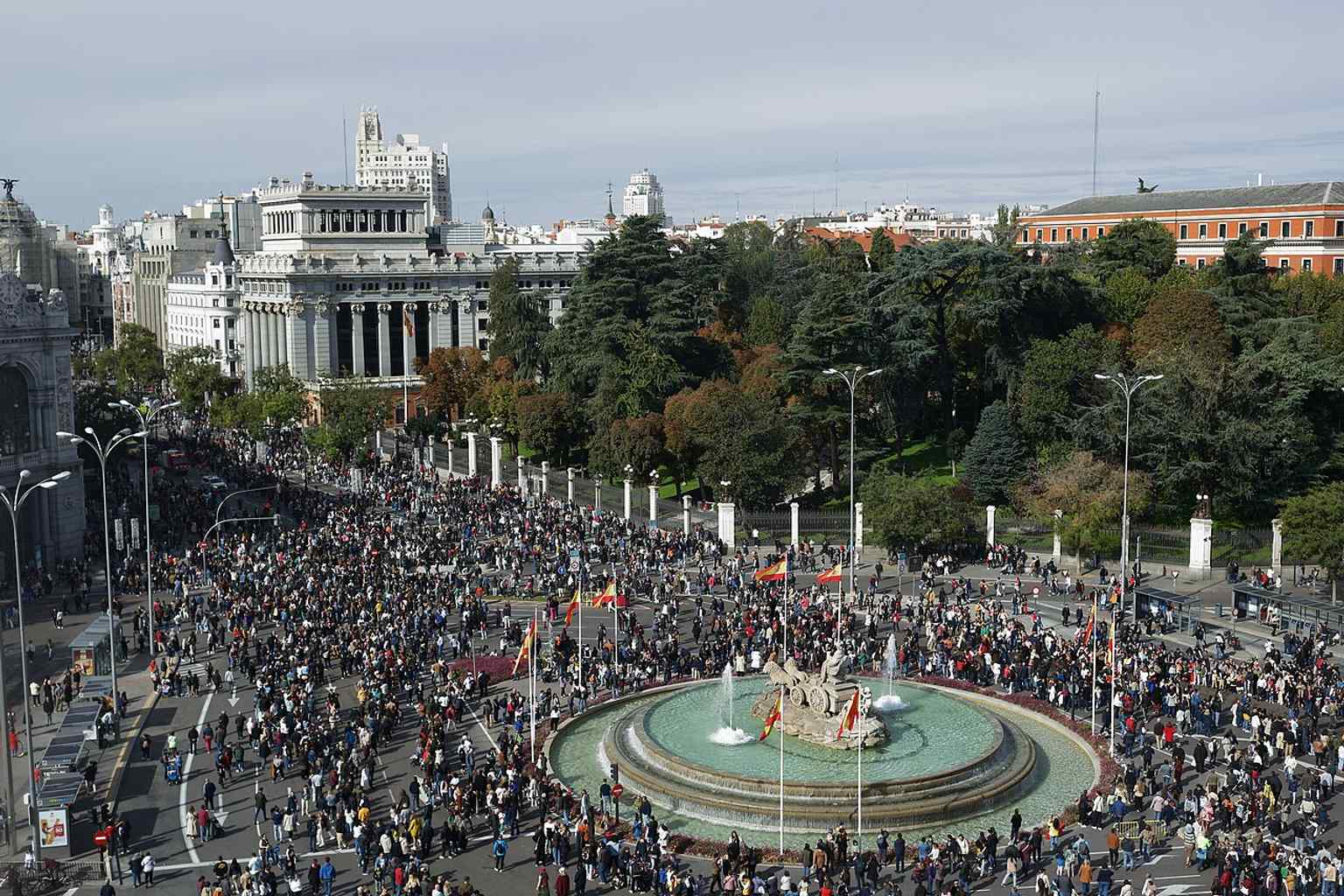
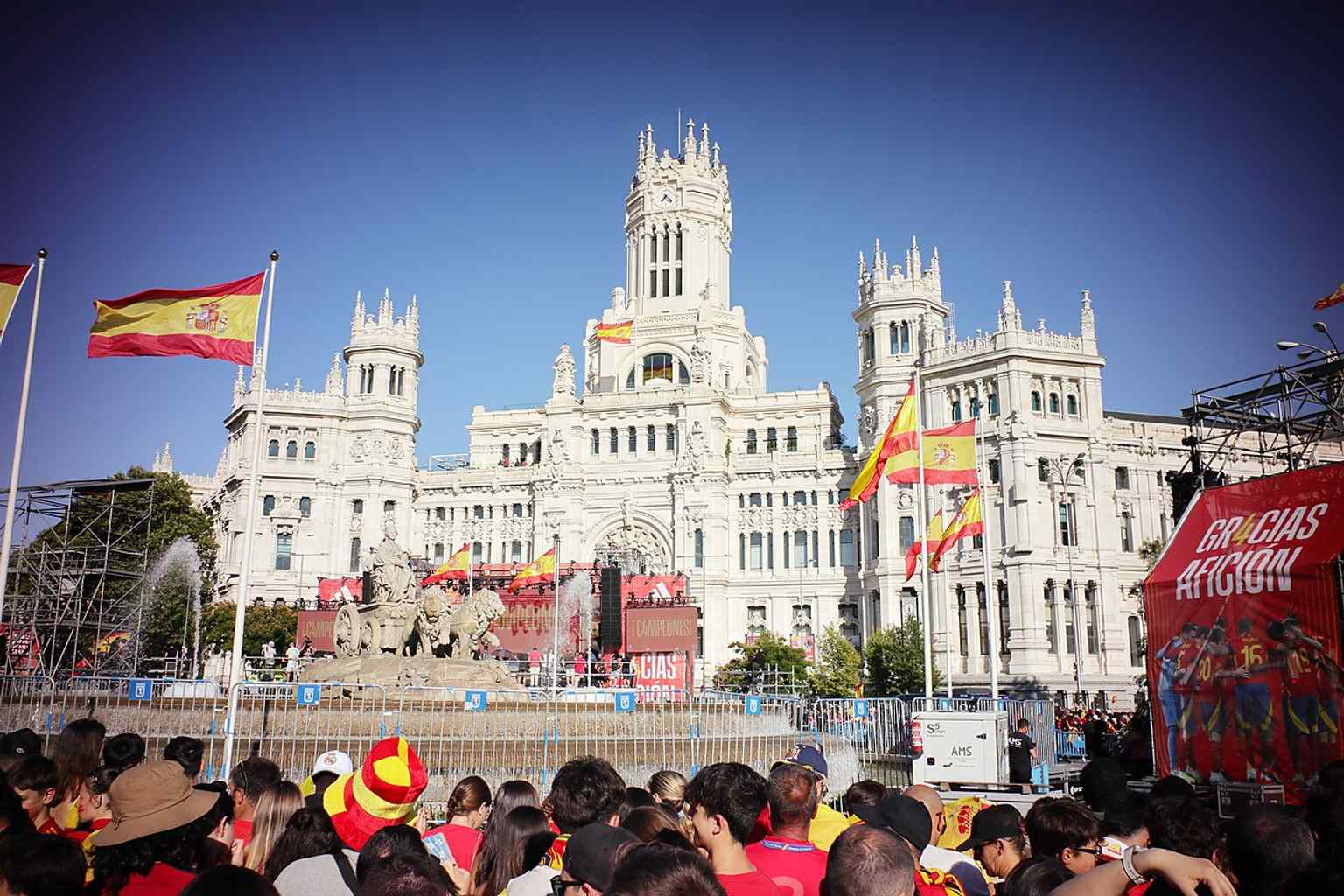
That is why so much public life ends up here. In nineteen thirty-one, crowds celebrated the proclamation of the Second Republic when its flag rose on that facade. Atlético supporters gathered here after the nineteen sixty-one to sixty-two Cup Winners’ Cup. Real Madrid later made Cibeles their near-obligatory victory stop in the late nineteen eighties. Protest marches converge here. The Three Kings parade ends here. Even sheep cross the square during the Fiesta de la Trashumancia, reviving the old livestock routes through Madrid. Take a glance at the aerial view in the app and you’ll see the trick: this is less a square than a civic amphitheater built inside a roundabout.

Now let’s glide south toward Neptune, where another Enlightenment fountain reminds us that urban beauty here was never just decoration... it was policy in stone.
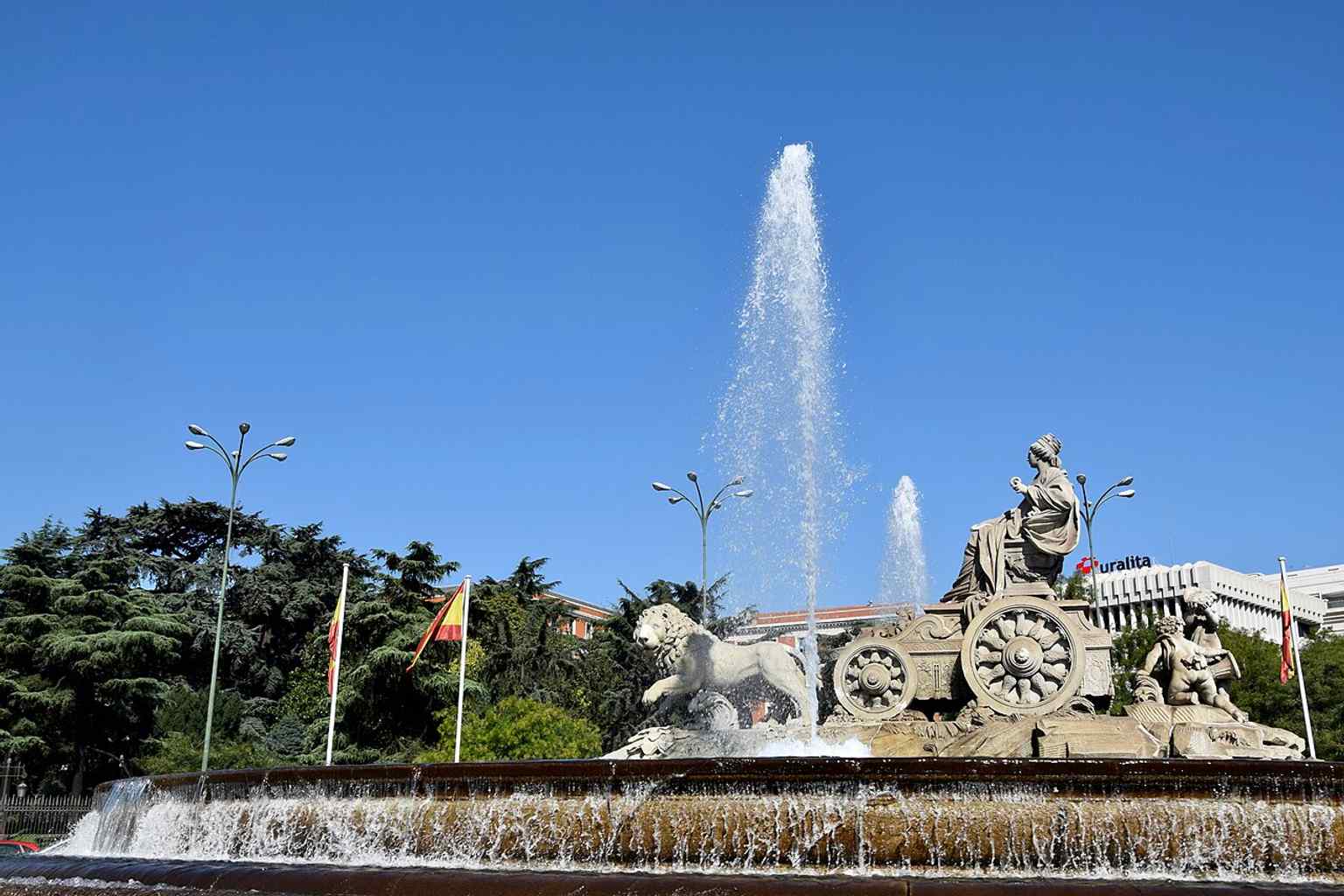
A close view of the Cybele statue itself, sculpted by Francisco Gutiérrez in 1782 as part of Ventura Rodríguez’s design.
A close view of the Cybele statue itself, sculpted by Francisco Gutiérrez in 1782 as part of Ventura Rodríguez’s design.Photo: Ank Kumar, Wikimedia Commons, CC BY-SA 4.0. Cropped & resized.
The Banco de España, which closes the southwest corner of Cibeles Square and helped define the modern plaza after the fountain’s relocation.
The Banco de España, which closes the southwest corner of Cibeles Square and helped define the modern plaza after the fountain’s relocation.Photo: Ricardo Ricote Rodrí…, Wikimedia Commons, CC BY 3.0. Cropped & resized.
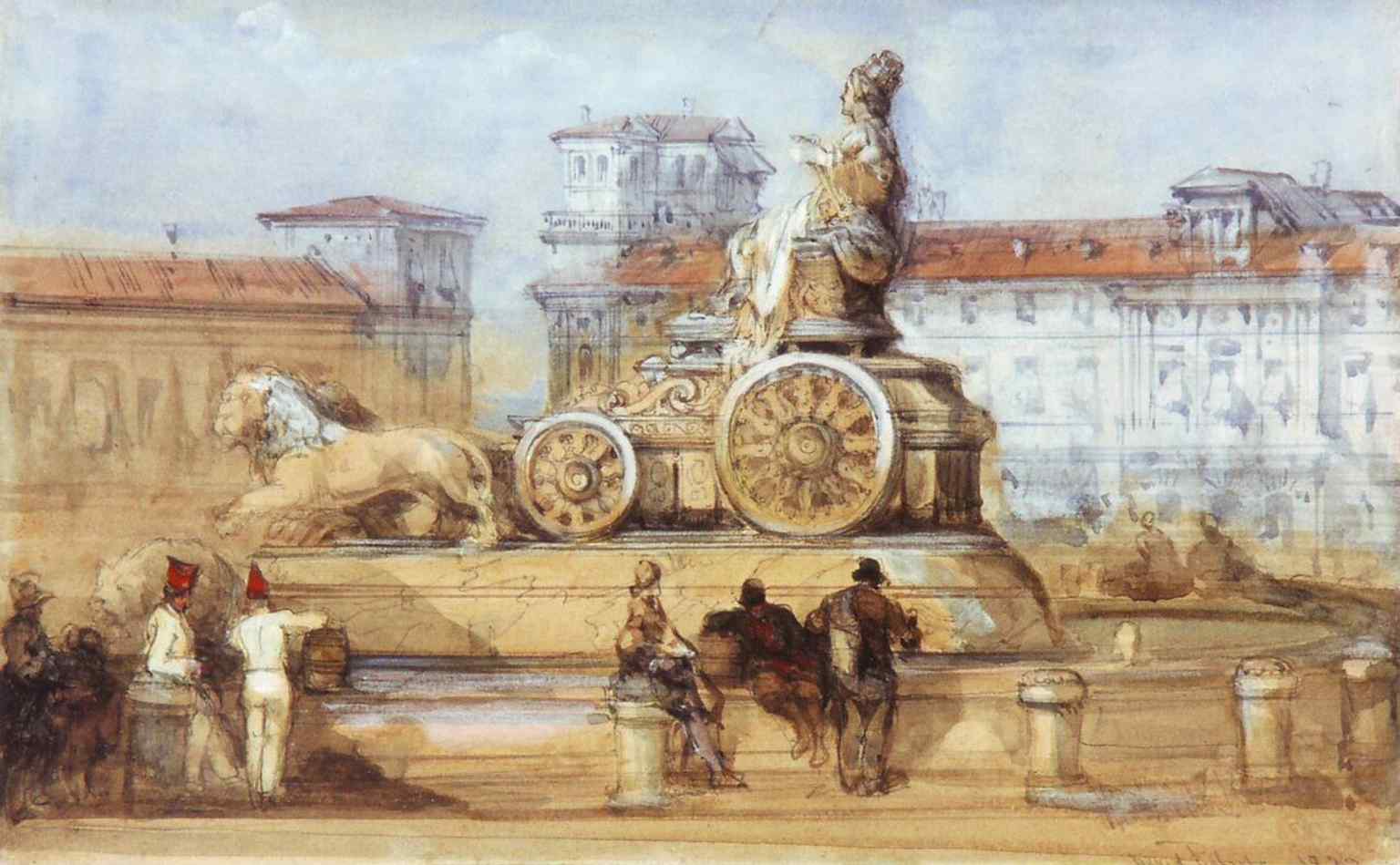
David Roberts’s romantic view of Cibeles captures the square before its later monumental surroundings were fully built.
David Roberts’s romantic view of Cibeles captures the square before its later monumental surroundings were fully built.Photo: David Roberts, Wikimedia Commons, Public domain. Cropped & resized.
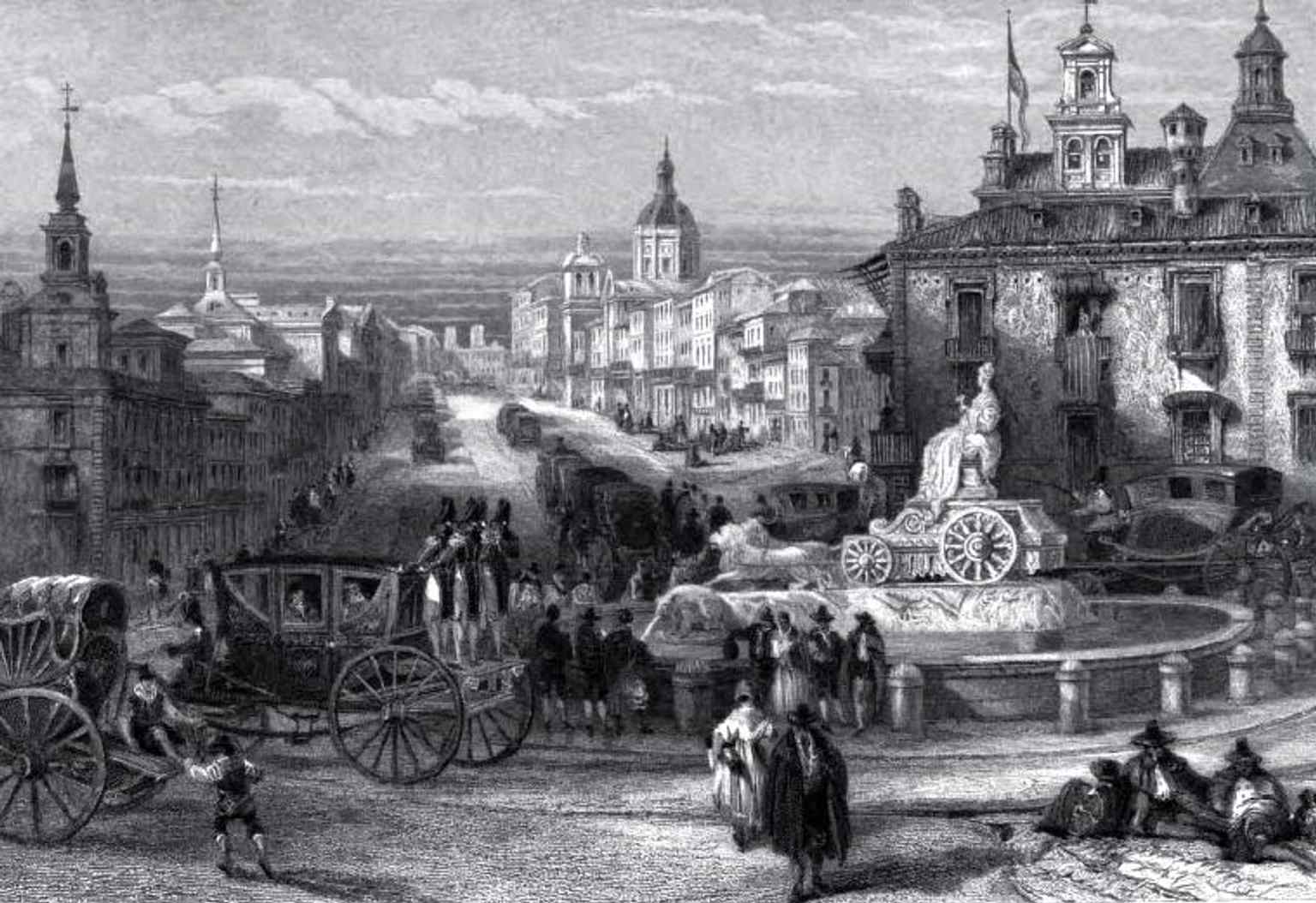
An 1832 engraving of Cibeles and Alcalá Street, showing the area before the square became the formal roundabout we know today.
An 1832 engraving of Cibeles and Alcalá Street, showing the area before the square became the formal roundabout we know today.Photo: David Roberts, Wikimedia Commons, Public domain. Cropped & resized.
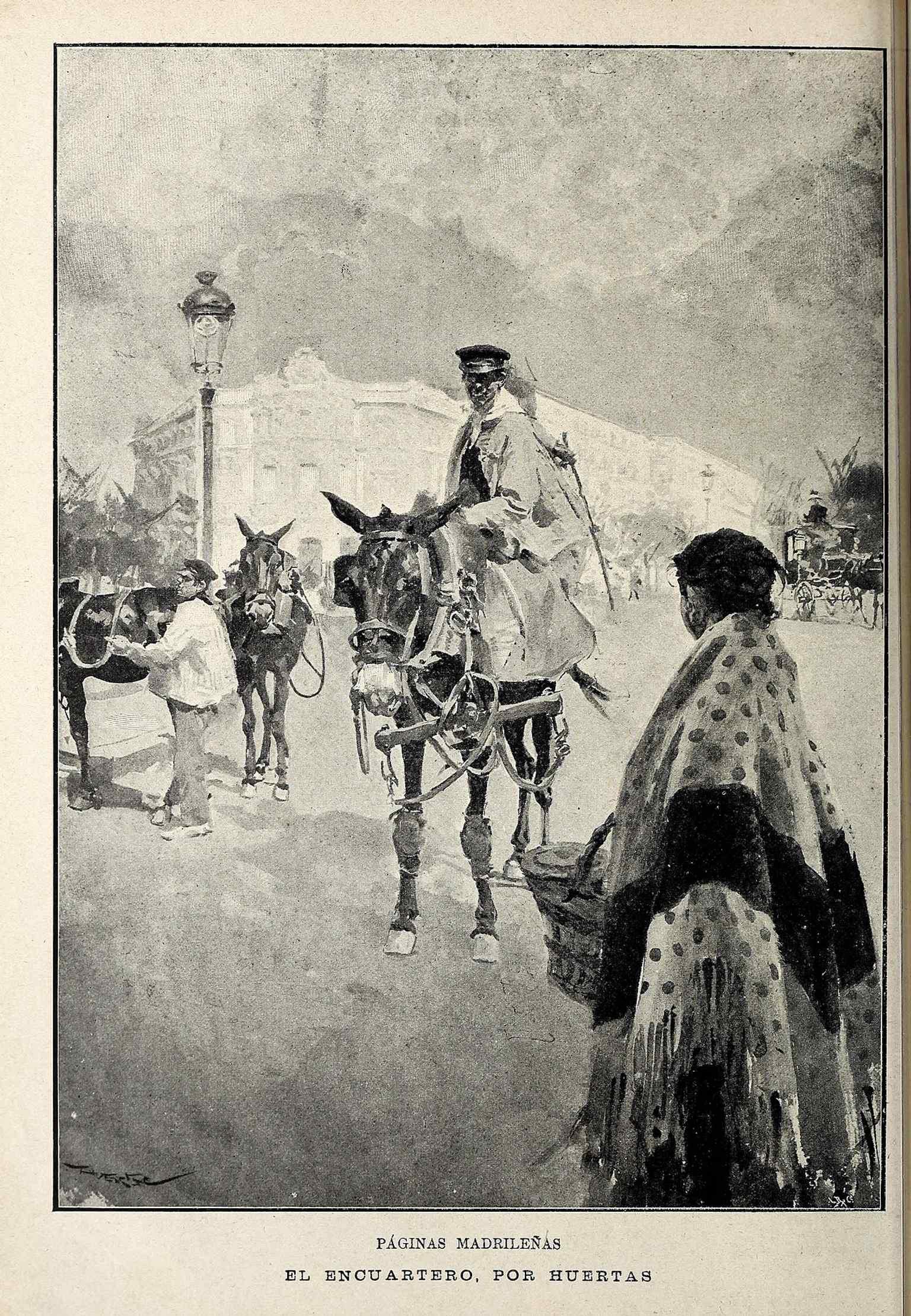
A 1898 print linked to the Palacio de Linares, one of the four corner palaces that frame the square.
A 1898 print linked to the Palacio de Linares, one of the four corner palaces that frame the square.Photo: Ángel Díaz Huertas, Wikimedia Commons, Public domain. Cropped & resized.
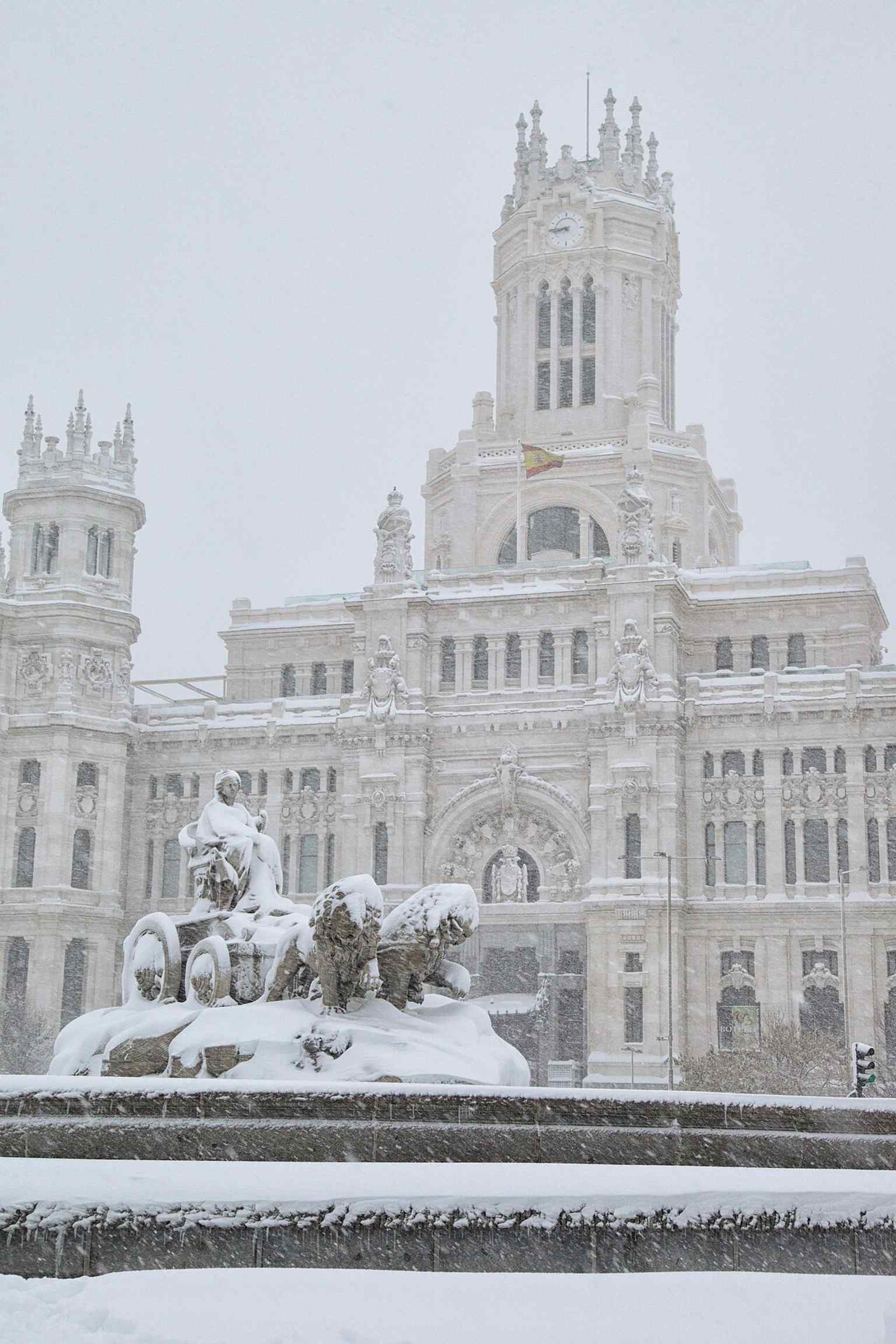
The square under Filomena snow in 2021 — an unusual winter scene around the fountain and the Palace of Cibeles.
The square under Filomena snow in 2021 — an unusual winter scene around the fountain and the Palace of Cibeles.Photo: Javier Pérez Montes, Wikimedia Commons, CC BY-SA 4.0. Cropped & resized.
Trashumance day in Cibeles, when a herd passes through the plaza and revives Madrid’s old livestock routes.
Trashumance day in Cibeles, when a herd passes through the plaza and revives Madrid’s old livestock routes.Photo: Javier Perez Montes, Wikimedia Commons, CC BY-SA 4.0. Cropped & resized.
A celebration crowd filling Cibeles in 2024, echoing the square’s long role as Madrid’s favorite place for sporting victories.
A celebration crowd filling Cibeles in 2024, echoing the square’s long role as Madrid’s favorite place for sporting victories.Photo: Javier Perez Montes, Wikimedia Commons, CC BY-SA 4.0. Cropped & resized.
arrow_back Back to Madrid Audio Tour: Historic Center Gems
Loved by travellers

Thousands of tours started.
Plenty of opinions.

4.8 across the App Store and Google Play. Here's a few we keep coming back to.

starstarstarstarstar
This was a solid way to get to know Brighton without feeling like a tourist. The narration had depth and context, but didn't overdo it.
Christoph
Christoph
Brighton Tour
starstarstarstarstar
Started this tour with a croissant in one hand and zero expectations. The app just vibes with you, no pressure, just you, your headphones, and some cool stories.
download Get the app

Pop your headphones in.
Step outside.

Free to download. Tours in every city. Start in 60 seconds — no account, no card.

Download on the App StoreGet it on Google Play
starstarstarstarstar_half
4.8
AudaTours app icon
headphones
~ 4 min until your first tour starts
public
1,000+ cities worldwide
all_inclusive
AudaTours
Unlimited

Every tour. Every city. One subscription.

3097 tours2273 cities138 countries50+ languages