
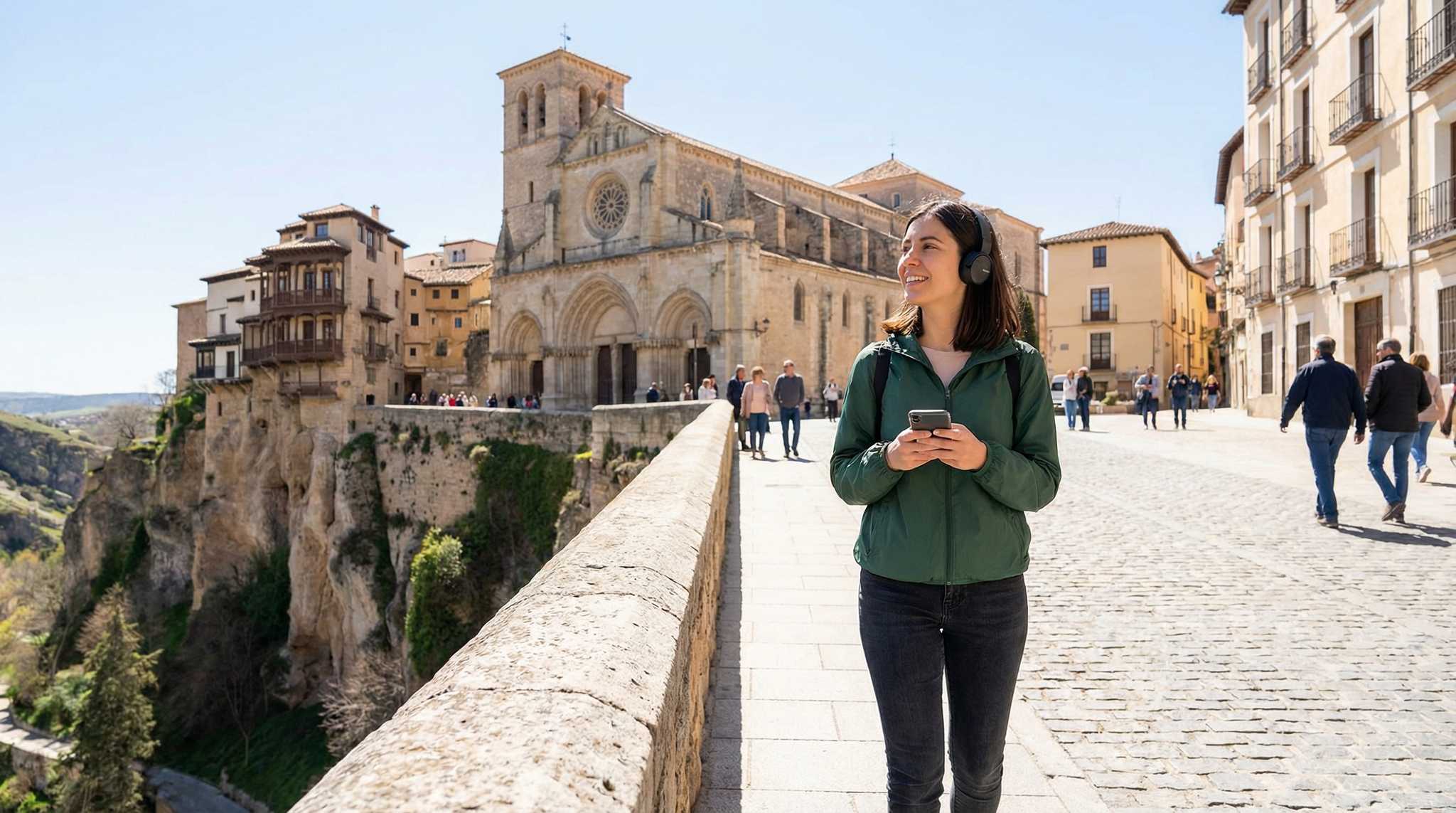
Cuenca Audio Tour: Historic Heritage Trails
Cuenca rises from a sheer gorge, where bells from the Cathedral of St. Mary and St. Julian seem to hang in the air like a warning. This self guided audio tour threads through plazas, cloisters, and stone lanes so stories slip into focus. Hear the rebellions, scandals, and quiet power plays most visitors walk past, even when they are standing right beside them. What happened when political rivals tried to bend the Cathedral to their will, and the city pushed back? What secret still clings to the silence inside the Monastery of Benedictine Mothers? Why does the Mangana Tower keep time with an oddly specific missing hour that locals argue about? Move from echoing nave to hidden corners, from sunlit viewpoints to shadowed stairways. Each stop turns Cuenca inside out, sharp with drama and discovery. Press play and chase the suspended bells to the edge of the gorge.
Tour preview
About this tour
- scheduleDuration 80–100 minsGo at your own pace
- straighten2.3 km walking routeFollow the guided path
- location_on
- wifi_offWorks offlineDownload once, use anywhere
- all_inclusiveLifetime accessReplay anytime, forever
- location_onStarts at Monastery of the Franciscan Conception
Stops on this tour
lock_open 3 free previews · 12 unlock with purchase
Look for the smooth, pale stone facade distinguished by a central oval window covered in an iron grate, all topped by a curved bell gable holding two cast bells. You are standing…Read moreShow less
Open dedicated page →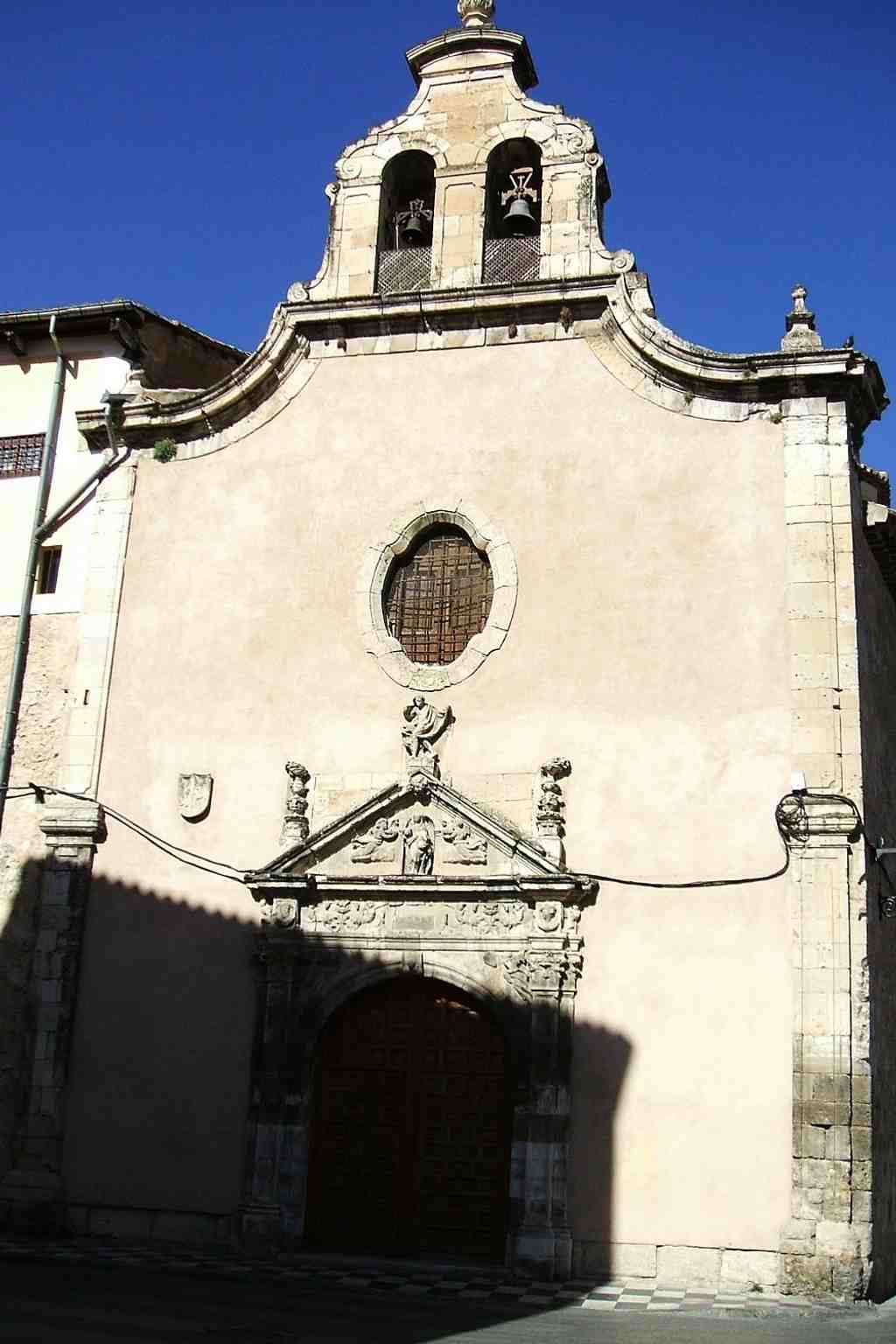
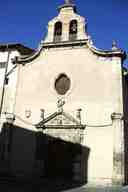
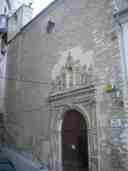
Monastery of the Franciscan ConceptionPhoto: Zarateman, Wikimedia Commons, Public domain. Cropped & resized. Look for the smooth, pale stone facade distinguished by a central oval window covered in an iron grate, all topped by a curved bell gable holding two cast bells. You are standing in front of the Monastery of the Franciscan Conception.
Alvar Pérez de Montemayor didn't just build this place in 1504 out of sheer, selfless piety. He was a powerful man, the treasurer of the grand cathedral in Toledo, and he knew how to play the long game. By establishing this religious refuge for the women of his lineage, he was actually executing a brilliant, strategic maneuver to secure a magnificent, exclusive burial site for his family. Why settle for a shared family plot when you can fund a monastery and demand the prime real estate right in front of the main altar?
His grand tomb was carved from alabaster, featuring a statue of him resting on lions. But he also left a rather grim warning for anyone entering. If you look at the carved stone doorway, above the arch and the religious figures, there is a small figure beside a skull. It bears a Latin inscription reminding visitors to remember they must die and consider their end. It was Montemayor's personal motto, a strict warning carved into a doorway built in the Plateresque style, a sixteenth-century Spanish architectural fashion known for intricate, delicate stone carving that mimics the work of a silversmith.
In the eighteenth century, the cloistered nuns living here wanted a modern upgrade. They hired architect José Martín de Aldehuela with a very specific, somewhat brutal instruction... tear down the entire old temple, but leave Montemayor's intricate stone doorway perfectly intact.
The monastery's walls have survived far worse than architectural remodeling. During the Spanish Civil War in the nineteen thirties, the building was seized and turned into a people's prison. The interior was devastated by fire. The original altarpiece burned to ash, and a beloved, venerated statue of the Virgin Mary was violently decapitated by the attackers. Yet, when the war ended, that broken figure was miraculously found in the rubble and eventually restored to the nuns.
Today, the nuns of the enclosed order still live here, maintaining a quiet way of life that has barely changed in over five hundred years. If you are here at the right time, you might even hear them singing Gregorian chants from behind their walls. Just keep in mind that the church is only open for worship during specific morning and evening hours depending on the day of the week.
As we leave this quiet corner, it makes you wonder what eternal legacy really costs, and who actually gets to pay for it. Our next stop is The Alhondiga, a four minute walk away, where we will trade the pursuit of heaven for a building designed for a much more earthly purpose.
You will spot The Alhóndiga on your left by its long pale stone facade, the off-center arched wooden doorway, and the bold red trim running along the roofline. While much of this…Read moreShow less
Open dedicated page →You will spot The Alhóndiga on your left by its long pale stone facade, the off-center arched wooden doorway, and the bold red trim running along the roofline.
While much of this city reaches toward the heavens, this solid building brings us firmly back down to the gritty reality of staying alive. In early sixteenth-century Cuenca, an alhorí, which is an Arabic term for a public granary or grain silo, was a crucial defense against starvation for the vulnerable population. These public storehouses were literal lifesavers, loaning grain to small farmers during times of famine or bad harvests so they would not fall prey to the crippling interest rates of local usurers. The push to build this specific, robust structure was not just a local initiative, but a direct mandate from King Philip the Second himself. Royal power intervened directly to ensure the city's survival, tasking master stonemason Pedro López de la Vaca with the project around 1569.
But survival is a complicated business.
Managing these massive community silos was often plagued by local corruption. To stop the officials from taking bribes or handing out the precious wheat to their friends and family, the rules were incredibly strict. The grain was locked away, and three separate keys were required to access it. These were split between the mayor, an alderman, and the depositary, ensuring no single person had the power to empty the city's reserves.
Take a glance at your app for a closer look at the building's exterior details. Above the windows, you can see three painted shields. Two of them clearly show the coats of arms for Spain and the city of Cuenca. The third one, however, is a bit of a historical mystery. Some local chronicles insist it belongs to a magistrate who later ordered the door to be rebuilt, but historians still love to debate its true origins.
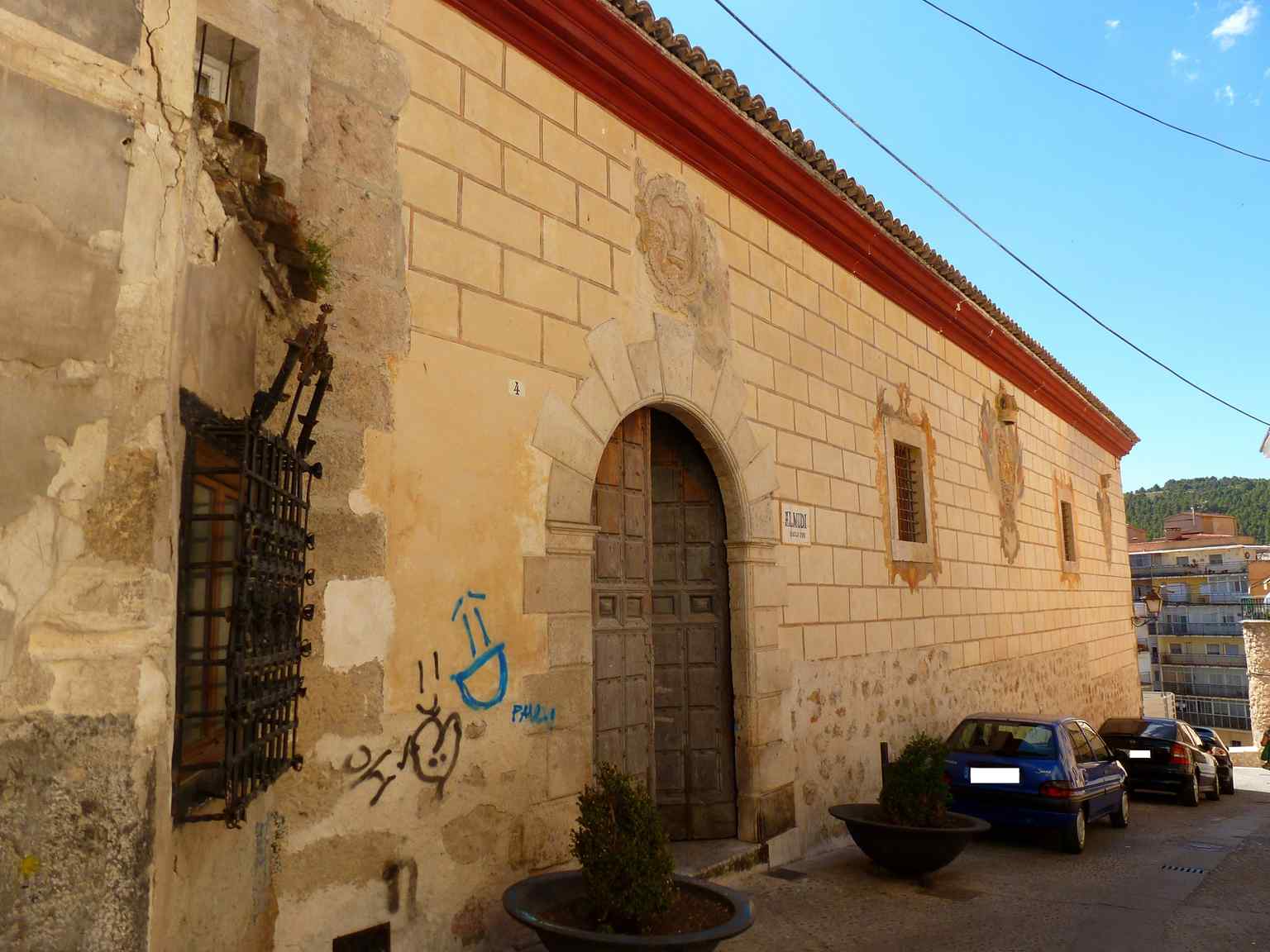
This image captures the facade of The Alhóndiga, a robust municipal building constructed around 1569, which features three prominent shields—two representing Spain and Cuenca, while the third's identity remains a historical mystery.Photo: Outisnn, Wikimedia Commons, CC BY-SA 3.0. Cropped & resized. Those incredibly thick stone walls you see were originally engineered to protect the wheat from moisture and plagues. But in the seventeenth century, when regional stability broke down, the building suffered a radical shift. It was requisitioned by a military regiment. As it turned out, massive walls built to protect grain from rats were equally effective at protecting soldiers, serving as an excellent improvised fortress.
Over the centuries, the Alhóndiga has proven astonishingly adaptable. Before it became the bustling hub it is today, athletes actually used it as a local gymnasium, working up a sweat under the very same thick, barrel-vaulted ceilings that once safeguarded the city's food supply.
Today, the Alhóndiga continues its centuries-long tradition of serving the public, hosting municipal offices, a music conservatory, and an active exhibition hall. If you want to look inside, it is generally open Tuesday through Saturday from ten to six, and Sundays from ten to three, though it is closed on Mondays.
Now, we are going to shift our focus from the survival of the masses to the extraordinary charity of one very determined individual as we head to the Monastery of Benedictine Mothers, just a short two-minute walk away.
On your left, you will see a stout, rectangular structure built from rough pale stone masonry, defined by a neat grid of heavy iron-barred windows and a distinct carved stone coat…Read moreShow less
Open dedicated page →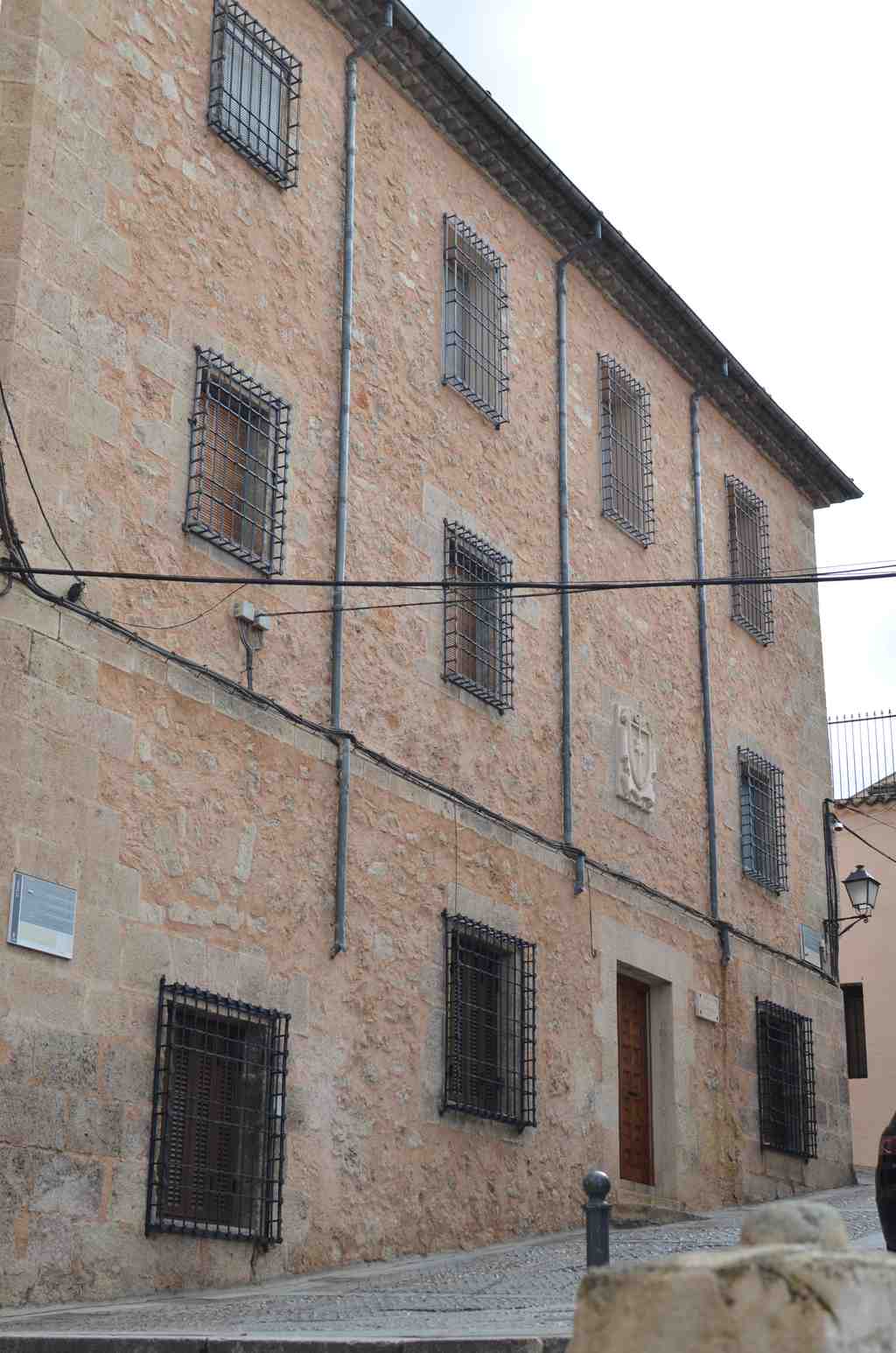
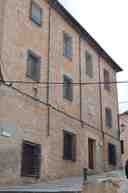
Monastery of Benedictine MothersPhoto: pako_moralo, Wikimedia Commons, CC BY-SA 4.0. Cropped & resized. On your left, you will see a stout, rectangular structure built from rough pale stone masonry, defined by a neat grid of heavy iron-barred windows and a distinct carved stone coat of arms set directly above the main wooden door.
This is the Monastery of Benedictine Mothers, established in 1448 as Cuenca's first female convent. The physical construction of this massive complex was entrusted to a fascinating man named Nuño Álvarez de Fuente Encalada. Though he came from a powerful noble family and was educated in Italy, Nuño was most famous for his overflowing, radical charity, famously taking in up to 400 abandoned orphans, known locally as the niños de la piedra, and sheltering them safely inside the cathedral's cloister, its enclosed inner courtyard.
He was officially the cathedral's chantre, the senior cleric in charge of leading the choir, a role he held for thirty years. Yet he cared far more about practical human needs than simply singing hymns. He poured his vast personal fortune into vital public infrastructure, like funding a bridge over the nearby river so everyday people could safely reach the mountains.
The story of this building is really a tale of high spiritual ideals meeting gritty, earthly realities. Inside the convent church, there is a magnificent arched stone ceiling known as a ribbed vault, designed by the master architect Pedro de Alviz. He was the man who introduced Renaissance architecture to Cuenca. But even great artists have to eat, and Alviz spent the final years of his life locked in a bitter, exhausting lawsuit over getting properly paid for his work, a brutal fight his widow had to finish after he died.
Centuries later, that tension between the sacred and the struggle to survive hit its peak. In 1936, the outbreak of the Spanish Civil War violently forced the nuns from these walls. For the first time in nearly five hundred years, their quiet, contemplative life was broken. The church was severely damaged and looted. When the surviving community finally returned three years later, they faced a monumental task of rebuilding. To help the city recover its spirit while they repaired their home, the nuns allowed local brotherhoods to use the battered church as a shelter to protect their massive, ornate Holy Week procession floats.
Today, the monastery continues its balancing act to survive. To keep the enormous stone complex from falling into ruin, the lower floors operate as a bustling modern school. This pragmatic choice financially supports the forty or so nuns who still live in cloistered silence on the upper levels.
Nuño Álvarez's boundless compassion left a permanent mark on Cuenca. In fact, popular devotion to him grew so intense that in 1631, officials dug up his remains and petitioned the Vatican to declare him a saint, though the effort unfortunately failed. But his legacy of protecting the vulnerable endures in these very stones.
Now, we will head toward our next stop, which is a two minute walk away, the Church of San Andrés, to see a place that has waged a relentless battle simply to stay standing.
Show 12 more stopsShow fewer stopsexpand_moreexpand_less
You can spot the Church of San Andrés by its pale rough hewn stone facade, the large arched wooden doorway, and the square bell tower rising on the right side. If you look…Read moreShow less
Open dedicated page →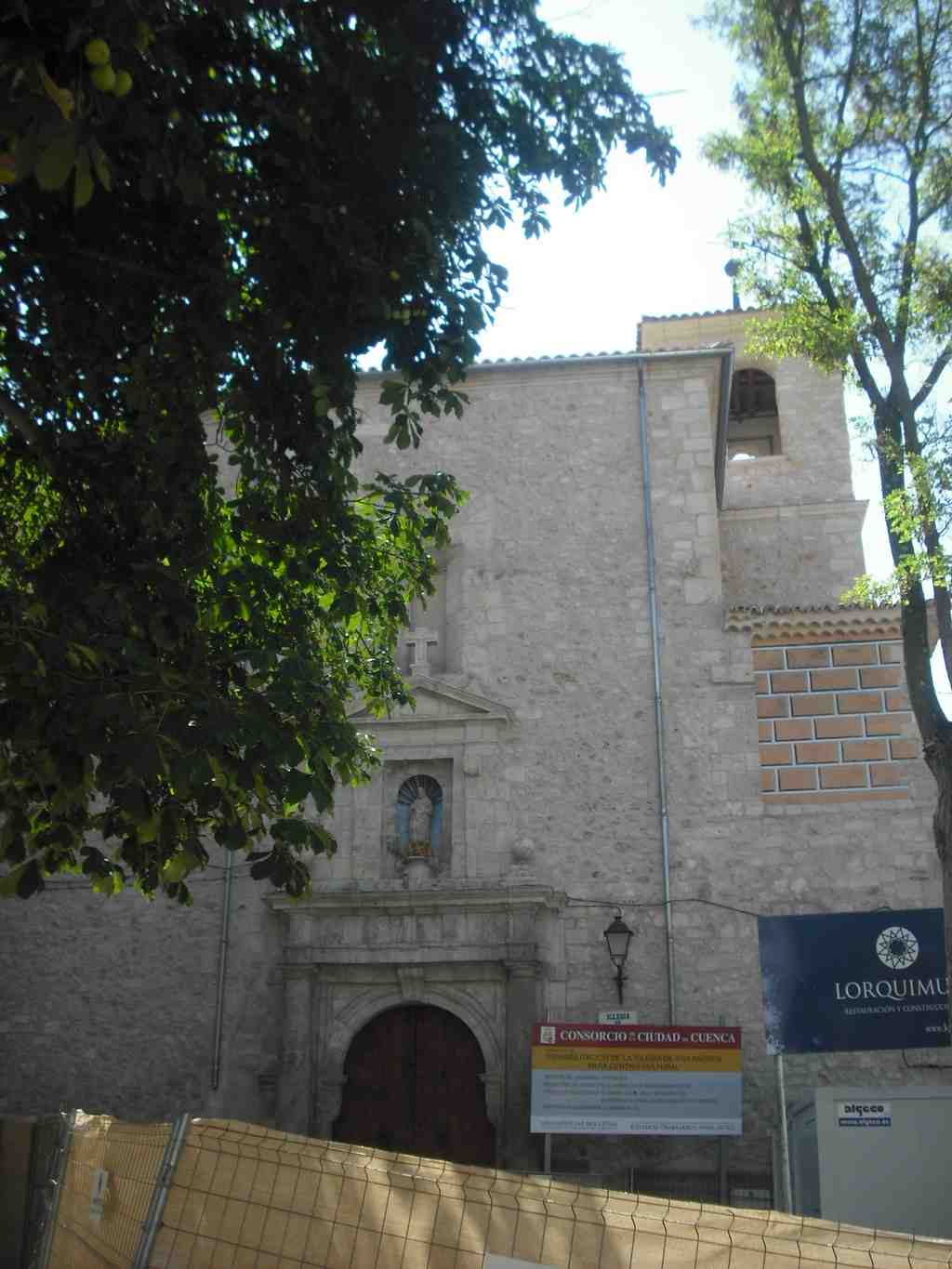
Church of San AndrésPhoto: Qoan, Wikimedia Commons, CC BY-SA 3.0. Cropped & resized. You can spot the Church of San Andrés by its pale rough hewn stone facade, the large arched wooden doorway, and the square bell tower rising on the right side.
If you look closely at the shape of the building, you might notice it sits on a rather awkward, irregular footprint. That was not the architect's first choice. When the original design was proposed in the sixteenth century, the local neighbors revolted. They complained fiercely that a larger church would narrow the streets and steal the sunlight from their homes. And so, the builders were forced to squeeze their grand vision into this cramped, trapezoidal plot of land.
That compromise set the stage for a building that has spent centuries fighting just to stay standing. By the late sixteen hundreds, creeping humidity had severely damaged the walls and the presbytery, the raised sanctuary area around the main altar. The situation grew so dire by sixteen seventy five that the church steward sent panicked letters warning of imminent collapse.
The job was publicly advertised for days, but the structure was so dangerously unstable that no master mason would touch it. Finally, a man named Felipe Crespo stepped forward. He took on the immense risk for nine thousand reales, a small fortune back then. Crespo did not just save the church, he finished the complex repairs in a staggering two months. He was so incredibly proud of this feat that he sealed a handwritten note boasting of his record breaking speed inside a walled up window. That hidden message sat in the dark for over three centuries until archaeologists stumbled upon it in two thousand and seven.
Much like the city of Cuenca itself, which has always had to scrape and fight to survive on its rocky cliffs, this church simply refused to crumble.
But gravity and water were not its only enemies. The start of the Spanish Civil War in nineteen thirty six brought devastating violence. Militias set the interior ablaze, destroying the baroque altarpieces, the bells, and the organ. When modern archaeologists restored the space, they chose not to scrub away the thick black soot left on the arches, leaving it as a silent, haunting monument to the tragedy.
Decades after the war, the ruined building faced a bizarre bureaucratic hurdle. The bishop wanted to give the crumbling church to the city council for free, but strict church regulations, known as canon law, prohibited giving away ecclesiastical property. To outsmart his own rulebook, the bishop asked Rome for special permission and orchestrated a fake sale in nineteen sixty four. He sold the church to the city for a symbolic five thousand pesetas, which is about thirty US dollars today.
Take a moment to look at these battered stones, and imagine the sheer will, the stubborn human effort, required to keep them upright against all odds. When you are ready, we will head to the Casa del Corregidor, which is about a four minute walk away. Just so you know, the church is open to visitors most days between ten and six, with varying hours on weekends and Wednesday afternoons, though it is closed on Tuesdays, Thursdays, and Fridays.
Look to your right to find a tall, flat facade of rough stone masonry, anchored by a large rounded archway over wooden doors and crowned with an intricate carving in lighter stone…Read moreShow less
Open dedicated page →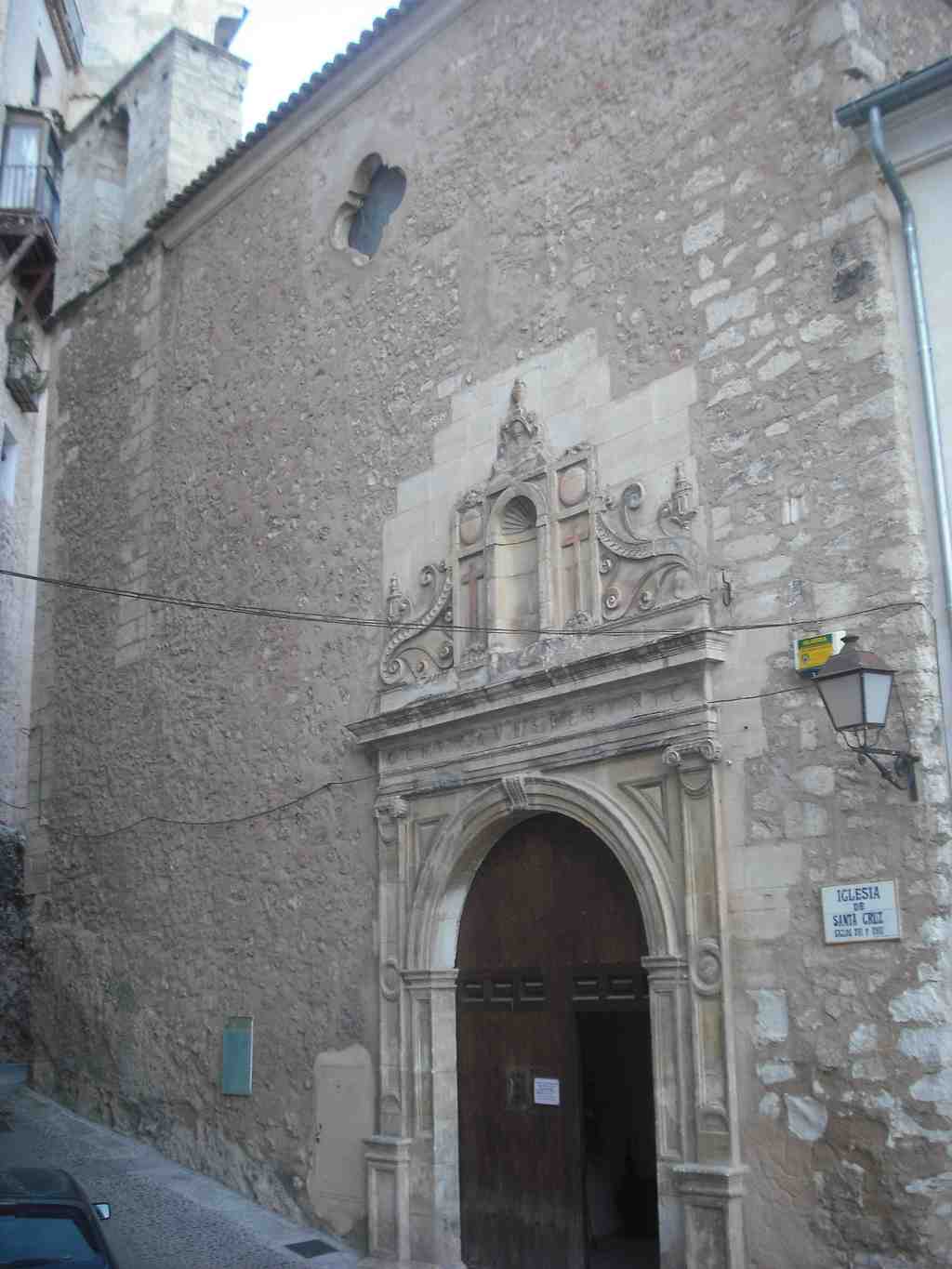
Church of Santa CruzPhoto: Qoan, Wikimedia Commons, CC BY-SA 3.0. Cropped & resized. Look to your right to find a tall, flat facade of rough stone masonry, anchored by a large rounded archway over wooden doors and crowned with an intricate carving in lighter stone that frames an empty niche. This is the Church of Santa Cruz, a building whose history is a wildly unpredictable pendulum swing of grand visions and harsh realities.
It began as one of the city's earliest, most modest parishes, a simple structure with a single nave, which is the main central hall where the congregation gathers. But the drive for legacy that shapes so much of Cuenca soon took hold. In the mid fifteen hundreds, Bishop Bernardo de Fresneda decided this humble church needed a major upgrade. Fresneda was not just any cleric. He was the personal confessor to King Philip the Second, a position of immense political power. He invited the king to Cuenca in fifteen sixty four, using his high profile status to funnel court resources into transforming the church into a grand Renaissance monument.
Inside these walls rests another ambitious figure from that era, Luis Valle de la Cerda. He was a fascinating sixteenth century spy in Flanders and an economist who promoted credit institutions to save the poor from predatory lenders. As a spy, his life was full of danger. In fact, he once excused his sudden, unauthorized return to Spain from a perilous mission by claiming he had acquired a highly important holy relic... specifically, the foot of Saint Philip.
The church saw another major overhaul in seventeen fifty five. The master builder, Manuel de Santa María, took on the grueling work of vaulting the ceiling. Tragically, he died just before the project was completed, leaving his sons to fight for the final payment of over forty thousand reales, the royal currency of the time, which would be roughly fifty thousand modern dollars today.
And right outside these walls, the earth held a dark secret. Recently, archaeologists excavating for a new mechanical ramp uncovered a fifteenth century street buried under a massive layer of silt. A catastrophic, forgotten flood had completely wiped out the medieval homes next to the church, burying everyday items like golden pottery under tons of mud.
But the building survived, only to face a bizarre architectural reinvention. In the nineteen nineties, the former church was repurposed into a bustling crafts center where local artisans sold traditional wares. Then, ambition struck again. The Roberto Polo Collection arrived in twenty nineteen, turning the space into a contemporary art museum. It did not go well. The project was an absolute disaster. It drew a dismal six thousand visitors in its first eight months, leading the regional government to abruptly tear up the contract. Locals cheered the closure, calling the museum a useless waste of money.
Sometimes, grand artistic visions fail spectacularly. But our next stop is proof of the exact opposite. We are heading to the Museum of Spanish Abstract Art, just a five minute walk away, where a bold artistic rebellion succeeded beyond anyone's wildest dreams. If you ever want to peek inside the Church of Santa Cruz, it is generally open Monday through Saturday from ten to six, and Sundays from ten to three. Let's keep walking.
On your right stands the Cathedral of St. Mary and St. Julian, a massive pale stone structure defined by three deeply recessed arched doorways and a striking central rose window…Read moreShow less
Open dedicated page →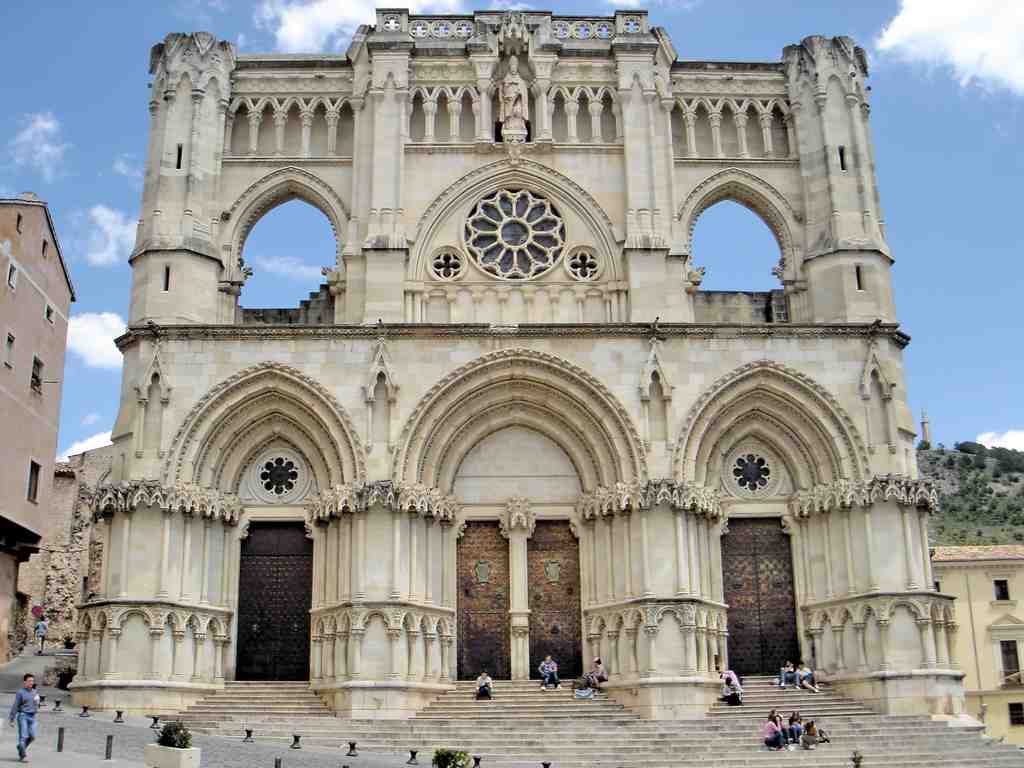
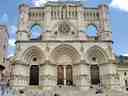
Cathedral of St. Mary and St. JulianPhoto: Der pepe, Wikimedia Commons, CC BY-SA 3.0. Cropped & resized. On your right stands the Cathedral of St. Mary and St. Julian, a massive pale stone structure defined by three deeply recessed arched doorways and a striking central rose window set below two large, empty arched openings.
This commanding building traces its roots back to 1177, when Alfonso VIII of Castile conquered Cuenca from the ruling Almoravids. While Alfonso secured the territory, it was his wife, Leonor of England, who truly shaped the cathedral you are looking at now. Leonor was the daughter of the formidable Eleanor of Aquitaine, and she brought Norman knights with her dowry. Thanks to their influence, when construction began in 1196, Cuenca became home to one of the very first Gothic cathedrals in Castile. It was a bold departure from the heavy, rounded arches of the Romanesque style that dominated Spanish Christian kingdoms at the time, introducing the soaring, pointed elegance of the French and Norman architectural worlds. If you want a closer look at how this early Anglo-Norman influence carried over into the fine carved details, take a glance at your screen.
But monumental architecture is only half the story here. The true ambition of this place was not just in reaching for the heavens, it was in capturing the human mind. For over thirty years in the late sixteenth and early seventeenth centuries, a man named Sebastián de Covarrubias served as a canon here. A canon is a senior member of the clergy who manages cathedral affairs, which sounds like a rather busy job. Yet Covarrubias somehow found the time to write a monumental manuscript in his house, published in 1611. It was the Tesoro de la lengua castellana o española, the very first monolingual dictionary of the Spanish language. Right here, in the shadow of these grand stone walls, the vast, chaotic vocabulary of an entire empire was meticulously cataloged and tamed.
Of course, earthly reality has a habit of testing divine ambition. The grand facade standing before you is actually not the original thirteenth-century stonework. In 1902, the cathedral's great bell tower tragically collapsed. It was a disaster that claimed four lives and sparked a massive political scandal in Madrid when politicians tried to blame the collapse on the vibration from the ringing of the bells, rather than decades of ignored structural warnings. Politics, it seems, never changes. The entire front was eventually redesigned in a neo-Gothic style inspired by the Cathedral of Reims, a dramatic transformation you can see for yourself if you check the before and after pictures in the app.
This cathedral stands as a fascinating intersection of lofty ideals, human intellect, and raw survival against gravity and time. If you decide to explore the interior chapels and cloisters, keep in mind it is generally open from ten in the morning until five in the afternoon, staying open until seven on Saturdays.
For now, direct your gaze upward past the rooflines toward the Mangana tower in the distance. It is an enduring symbol of time and dominance over the city, and it happens to be our next destination, just a four-minute walk away.
Standing on your left is a tall, square-built tower crafted from rugged stone masonry, featuring a large clock face and a projecting, fortress-like parapet at its summit. This is…Read moreShow less
Open dedicated page →Standing on your left is a tall, square-built tower crafted from rugged stone masonry, featuring a large clock face and a projecting, fortress-like parapet at its summit. This is the Mangana Tower.
The name Mangana has a rather aggressive origin. It comes from the Arabic word for machine, specifically a war machine like a catapult. For a long time, people believed this very spot housed heavy artillery to defend the old Islamic fortress, the alcázar, that once stood right in this area. But its documented life is actually a bit more domestic. In 1493, the city council realized the clock on the main church simply was not loud enough to reach the edges of Cuenca. So, they ordered a new one installed right here, establishing this as the city's official timekeeper.
Look up at the very top of the tower. Above the stonework, you can see an iron cross and a weathervane. Imagine the master ironsmith, Esteban Limosín, scaling that dizzying height in 1532 to plant that ironwork onto what was then a tin spire. This was not just decoration. By capping the tower with a massive cross, Limosín was carrying out a powerful drive for legacy. He was planting an unmistakable symbol of Christian dominance directly over the ruins of the former Arab fortress and a nearby Jewish synagogue, permanently claiming the skyline.
This tower has had a remarkably rough life. It survived a devastating lightning strike in the eighteenth century, only to be occupied and severely damaged by French troops during the Napoleonic Wars. It was almost lost completely, forcing an emergency architectural intervention just to keep it from collapsing.
Its appearance has completely shape-shifted over the years too. Take a glance at your screen to see what I mean. From 1926 until 1970, the tower was covered in bright, colorful plaster decorations in a Neo-Mudéjar style, which is a type of Moorish revival architecture meant to mimic Islamic art. But purists hated it, calling it a fake pastiche. So in 1970, an architect named Víctor Caballero had all that colorful plaster violently chipped away to expose the raw stone. He also added that heavy, overhanging rim near the top, called a matacán or machicolation. Originally, these overhangs allowed defenders to drop stones or hot liquids on attackers, giving the tower a fierce, defensive look it probably never actually had in this exact form.
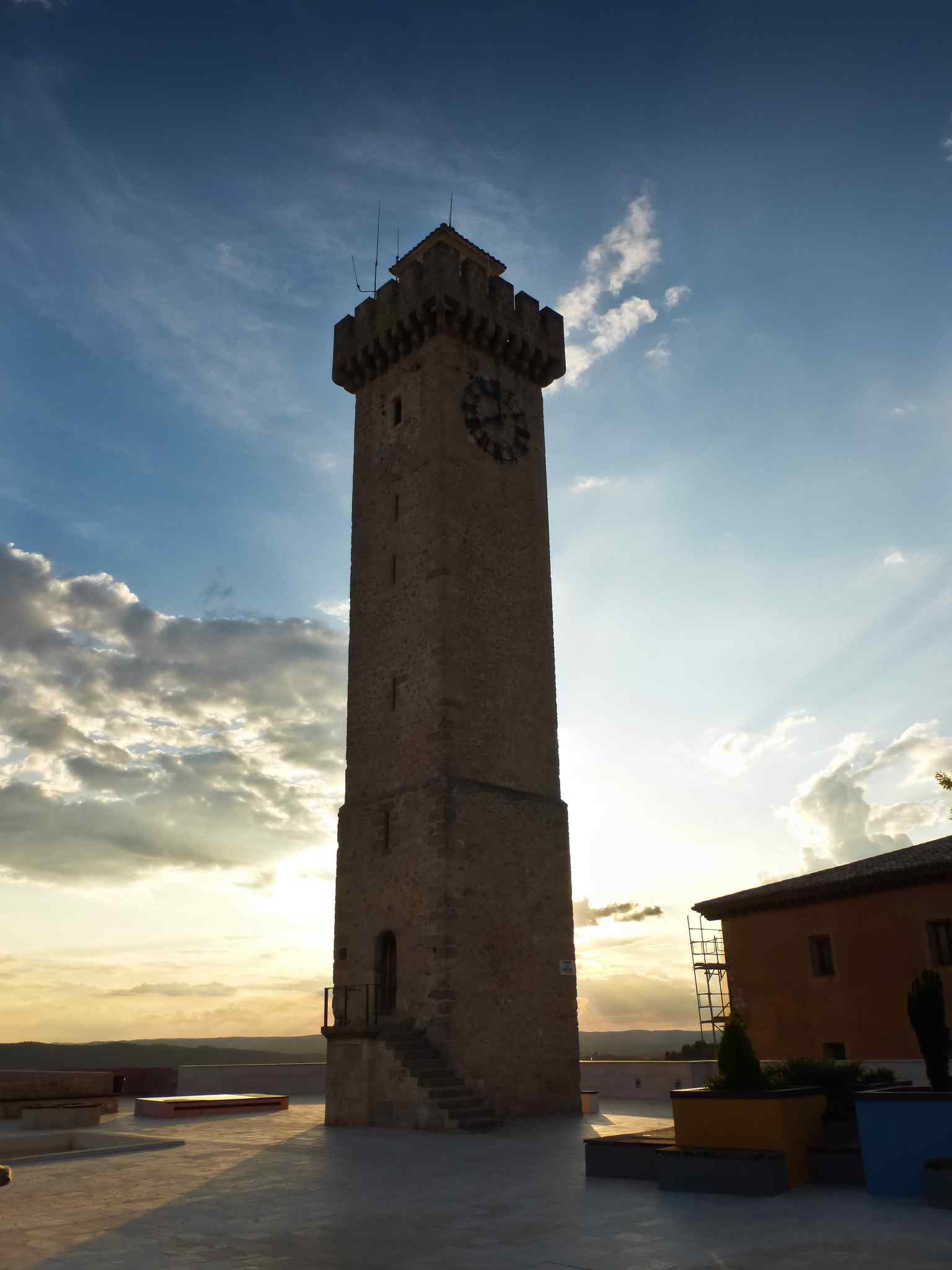
This ground-level view highlights the tower's current stonework, a stark contrast to the rich, colorful Neo-Mudéjar plaster decorations that adorned it from Fernando Alcántara's 1926 reform until 1970.Photo: D.Rovchak, Wikimedia Commons, CC BY-SA 4.0. Cropped & resized. During that 1970 remodel, the clock went silent for months, making locals very anxious. A newspaper took advantage of this on Spain's version of April Fools Day, publishing a doctored photo claiming the tower was leaning and about to collapse. It triggered a massive, though brief, panic across the city before the joke was revealed.
Since then, the tower has remained a stoic witness to the city, even while the plaza around it was closed for sixteen years after a massive 1999 archaeological dig unearthed the old Moorish fortress and ancient synagogue below. And conveniently, the public area around the tower remains open twenty-four hours a day, all week. Keep the image of Limosín's triumphant cross in your mind as we walk about five minutes to our next stop, the Convent of San Pedro de las Justinianas, where we will uncover a rather surprising financial secret.
On your right is the Iglesia de San Nicolás de Bari, recognizable by its plain beige stone facade, the elegant pointed archway of its main entrance, and the short flight of stone…Read moreShow less
Open dedicated page →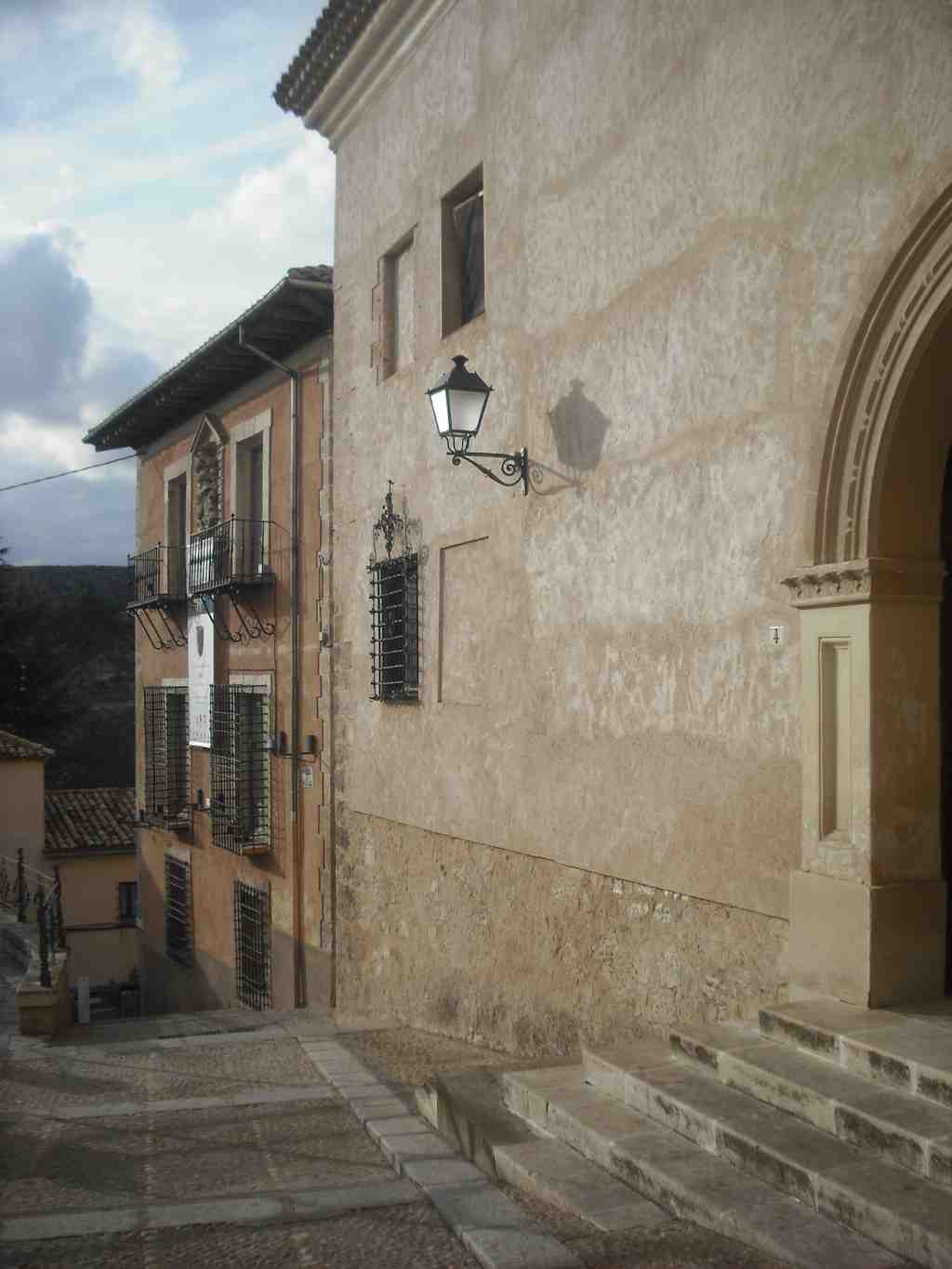
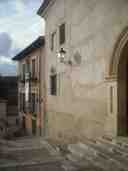
Iglesia de San Nicolás de BariPhoto: Qoan, Wikimedia Commons, CC BY-SA 3.0. Cropped & resized. On your right is the Iglesia de San Nicolás de Bari, recognizable by its plain beige stone facade, the elegant pointed archway of its main entrance, and the short flight of stone steps leading up to the doors.
If you look closely at the building, you will notice something peculiar about its layout. It does not stand alone. In a brilliant act of architectural self preservation, this church survived the centuries by physically merging with the city around it. To one side, it connects directly to the grand Casa Museo Zavala, and to the other, it is bound to a former convent that now serves as an art school. The church gave up its isolation to become an inseparable part of the neighborhood's daily life, letting the flow of the city run right into its very walls. Even its original stone apse, the semi circular back end of the church, was eventually swallowed up and buried beneath the adjoining residential houses.
It is a wonderfully practical kind of devotion. The building is constructed of simple masonry, meaning rough, unshaped stones held together by mortar, though its corners are reinforced with ashlar, which are carefully cut and squared blocks of stone. Despite its later origins, its south facing entrance and single rectangular nave, or main central hall, owe more to the heavy, grounded style of early Romanesque architecture than the airy Renaissance designs of its time.
But the real life of this building happens on Mondays. That is the only day the church opens for mass, keeping alive an iron clad local tradition known as the Caminatas de San Nicolás. According to custom, if a person attends mass for three consecutive Mondays and walks to and from the church in absolute silence, they can ask the saint for three wishes. The saint, as the deal goes, will grant exactly one.
This silent devotion stems from centuries of local miracles. The earliest tells of a young farmer left paralyzed after a brutal beating by bandits. His mother completed the three silent walks, and weeks later, her son walked again. But my favorite story involves a woman named Petra in the late nineteenth century. During a harsh winter of famine, Petra joined three friends on the silent walk to pray for her daughter, who had caught smallpox. On the way home, Petra broke the single, most important rule. She opened her mouth and started talking loudly in the street. Her friends waved their hands frantically, terrified she had ruined the plea for divine help. Miraculously, the saint healed Petra's daughter anyway. The unexpected grace profoundly changed Petra, who spent the rest of her life keeping the peace instead of making noise.
Before we move on, take a moment to walk toward the church and look closely at its structure, noticing how tightly it clings to the buildings beside it, almost as if the city itself flows right through the walls. Enjoy the tranquility of the Plaza de San Nicolás here, perhaps admiring the delicate bronze statue of the water bearer in the central fountain, before we head to a site that was not quite so lucky in its survival. Our next stop, the Iglesia de San Pantaleón, is just a one minute walk away.
Look for the weathered stone entryway forming a pointed arch at the top of a short flight of steps, distinguished by a dark iron gate and a crown of creeping ivy. This is Iglesia…Read moreShow less
Open dedicated page →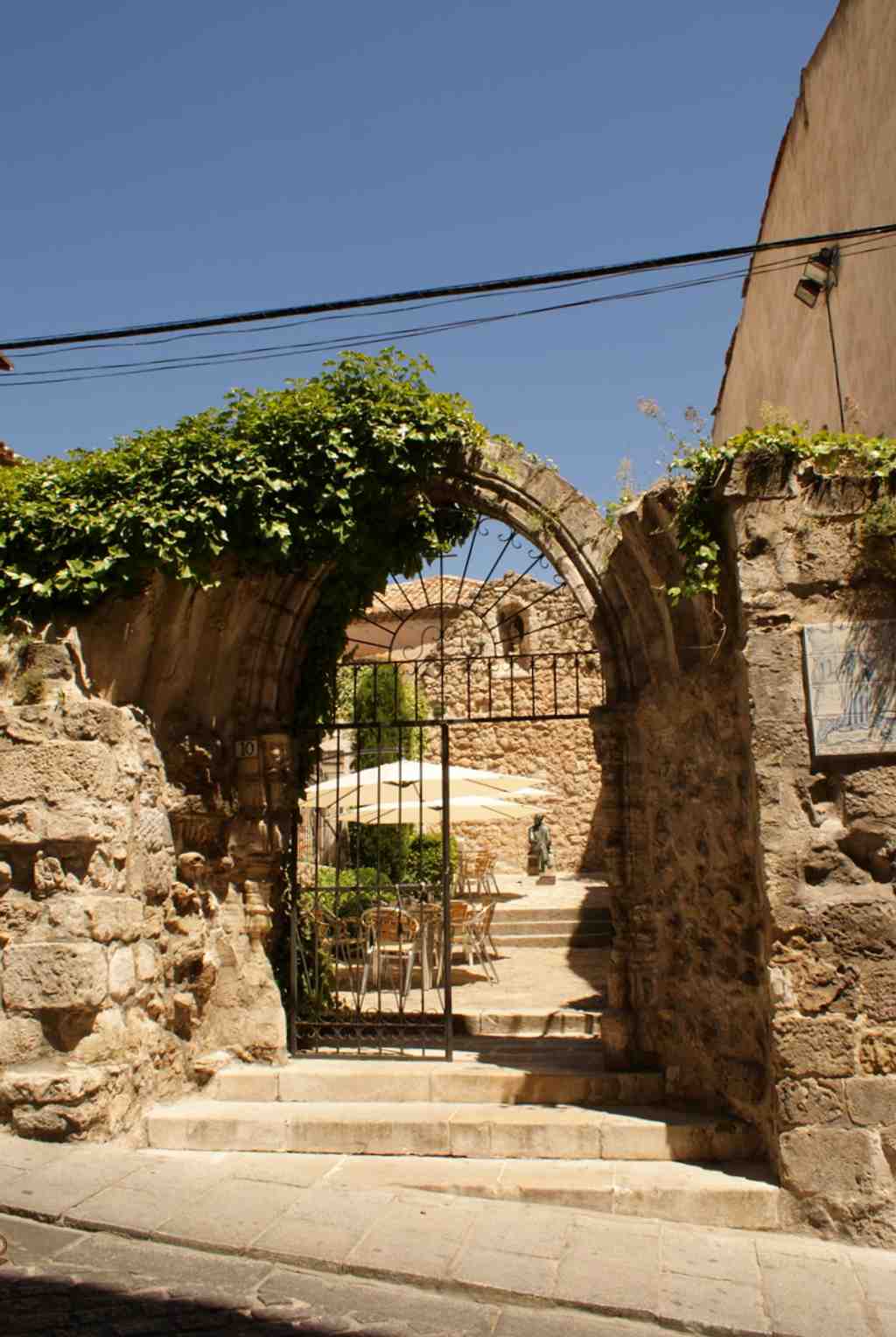
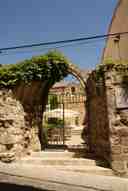
Iglesia de San PantaleónPhoto: AdriPozuelo, Wikimedia Commons, CC BY-SA 3.0 ES. Cropped & resized. Look for the weathered stone entryway forming a pointed arch at the top of a short flight of steps, distinguished by a dark iron gate and a crown of creeping ivy.
This is Iglesia de San Pantaleón. We have spent time admiring monuments that endured, but these ruined walls are the ultimate contrast to those survivors. This quiet corner is a testament to what happens when lofty, spiritual aspirations collide with the crushing pressures of a growing, hungry city.
For a very long time, historians believed this was always meant to be a modest, single-room hermitage. But stone has a way of holding onto the truth. When modern archaeologists finally excavated the site, they realized the church originally featured three sweeping naves, which are the long, central aisles that make up a church interior. So, what happened to them?
Between the late fifteenth and early sixteenth centuries, the church simply lost a turf war. As Cuenca expanded, the building was choked out by the construction of new palaces and neighboring churches. Those grand side aisles were slowly absorbed into other properties. In fact, the space where one of those lost naves once stood eventually became the modern street right next to us.
The ground beneath that street was hiding something much darker. In 2009, routine roadwork cracked open a massive medieval necropolis. Excavators uncovered the remains of nearly a hundred and fifty people, buried between the thirteenth and sixteenth centuries. It was a macabre scene of relentless recycling. For generations, graves were opened, and older skeletons were unceremoniously shoved aside to make room for fresh arrivals. If you walk nearby, you can find an archaeological window built into the pavement, displaying simulated bones to mark that grim discovery.
But the final blow to San Pantaleón was not urban sprawl. It was war. In 1874, during the Third Carlist War, a bloody Spanish civil conflict over the throne, soldiers dismantled the church walls just to use the stones for street barricades. It is a bitter historical irony that decades prior, the man in charge of this very church was the royal whose claim to the crown ignited those exact wars.
If you examine the right side of the main entrance arch, you will see a carved stone capital, the decorative top of the pillar, showing a horseman spearing a dragon. Local legend fiercely insists this was a secret signature left by the Knights Templar. The truth is slightly less mysterious. It was actually built by a rival military order, the Knights Hospitaller. But a good myth is hard to kill.
Today, the ruins remain open twenty-four hours a day for anyone seeking a bit of quiet reflection. Take a moment with the fractured bones of this church. Next, we are heading toward the highest point of the city, where we will confront a very different story of violent destruction at the Church of San Pedro, which is just a four-minute walk away.
You will spot the Church of San Pedro right away by its massive octagonal tiled roof topping pale stone walls, crowned by a small central cupola. Because it sits at the absolute…Read moreShow less
Open dedicated page →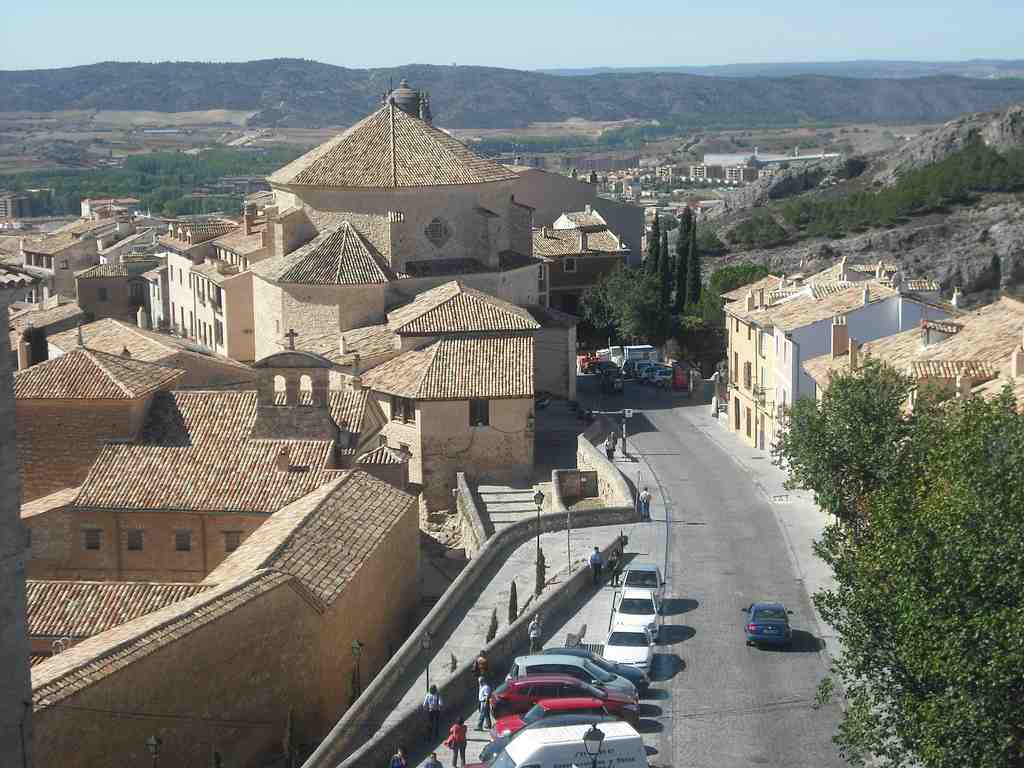
Church of San PedroPhoto: Qoan, Wikimedia Commons, CC BY-SA 3.0. Cropped & resized. You will spot the Church of San Pedro right away by its massive octagonal tiled roof topping pale stone walls, crowned by a small central cupola. Because it sits at the absolute highest point in Cuenca, right near the edge of the Júcar river gorge, this site has always been more than just a place of worship. It was a fortress. And in the fifteenth century, that strategic high ground turned this parish into a very dangerous place to be.
In 1449, Diego Hurtado de Mendoza and his troops were trying to surrender the city to the Kingdom of Aragon. The loyalists, backed by Bishop Lope de Barrientos, refused to yield and barricaded themselves right here inside the church. To break the stalemate, Mendoza did the unthinkable. He hauled a lombard, a massive primitive cannon, out from the nearby Cuenca Castle, and aimed it directly at these walls. The devastating artillery attack unleashed absolute hell on the sanctuary, sparking five simultaneous fires that reduced the original twelfth-century building to ash.
It is hard to picture standing in this sacred space in 1449, hearing the deafening roar of a cannonball shattering the stone walls. How does a community recover from its own protectors turning weapons against a church?
They rebuilt, of course. First in a Gothic style, and then in the eighteenth century, the architect José Martín de Aldehuela gave it the striking octagonal shape you see today, complete with a beautifully complex vaulted ceiling inside. Along the way, they also had to rebuild the bell tower in 1661 after it threatened to collapse entirely. The winning bid was 3,300 reales, which might equal a few thousand dollars today, representing a monumental sacrifice for a parish still picking up the pieces.
For centuries, the physical memory of that violent bombardment was buried under the floorboards. It was the ultimate architectural cover-up. But during a deep restoration in 1999, experts finally uncovered the scorched earth. They decided to leave an archaeological window open beneath the altar, allowing visitors to look through a glass floor. Down there, you can see three distinct color-coded layers of history, plus ancient tombs, proving this place was used as an active cemetery straight through to the nineteenth century.
It takes a lot to keep a church standing when half the town wants to blow it off the cliff. As you picture the smoke and cannon fire that once engulfed this stone, know that the church is open every day from ten in the morning until five thirty in the evening if you want to inspect those centuries of survival for yourself. Next, we will head toward a modern foundation born from exile, the Antonio Pérez Foundation, which is just a one-minute walk away.
You should be standing in front of a textured stone building featuring a small tiled overhang above an open square doorway, located right beside a tall stone archway with heavy…Read moreShow less
Open dedicated page →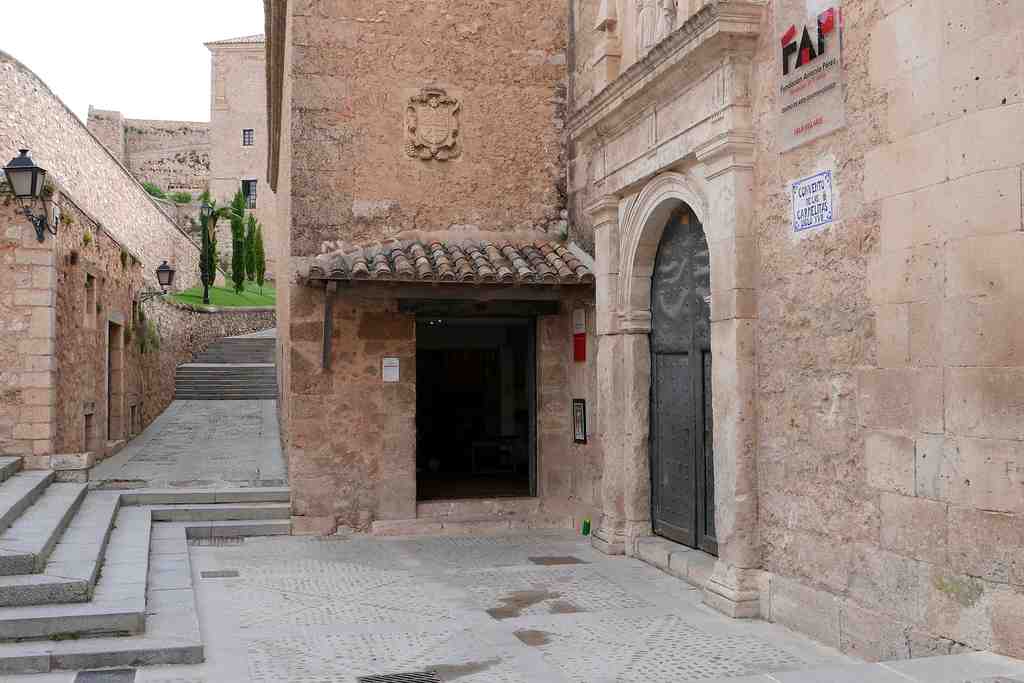
Antonio Pérez FoundationPhoto: ÁngelAragónFAP, Wikimedia Commons, CC BY-SA 4.0. Cropped & resized. You should be standing in front of a textured stone building featuring a small tiled overhang above an open square doorway, located right beside a tall stone archway with heavy dark metal doors.
This structure was born in the seventeenth century as a convent for Carmelite nuns, a Catholic religious order dedicated to a strictly contemplative, cloistered life. It was a space built for pure spiritual devotion. But celestial plans often crash into brutal reality. During the Spanish Civil War, the religious compound was violently looted. Its magnificent main altarpiece was stripped away, and these holy halls were repurposed to function as a prison. It is a perfect example of how heavenly ideals and gritty human endurance often battle it out within the exact same walls.
But just as Fernando Zóbel breathed new life into the hanging houses we explored earlier, Cuenca has a habit of magnificent reinvention. In 1998, this labyrinth of a building opened as the Antonio Pérez Foundation, cementing the town as a magnet for modern artistic rebellion.
Antonio Pérez himself lived a life straight out of a novel. Exiled to Paris during the Franco dictatorship, he co-founded the legendary Ruedo Ibérico publishing house in 1961. This operation became a beacon for European dissidents, smuggling banned anti-fascist literature back into Spain. Pérez was a remarkably charismatic figure in bohemian Paris. The acclaimed writer Juan Marsé fondly remembered him strolling down Boulevard Saint Germain with a red scarf whipping in the wind, the pockets of his trench coat absolutely overflowing with books.
When Pérez eventually settled in Cuenca, he brought that vibrant spirit with him. He was affectionately known as a strolling thief. During his walks, he would pick up discarded everyday trash, things like rusty cans or trampled candy wrappers, and elevate them into art. His most famous piece is a cheeky work called Sobresaura. He took a beautiful silkscreen, a type of high quality fine art print, gifted by his friend the renowned painter Antonio Saura, and slapped a crushed, oxidized tin can right on top of it to act as eyes. It was a brilliantly irreverent conversation between street garbage and celebrated fine art. The famous psychoanalyst Jacques Lacan once assured Pérez that he did not suffer from a hoarding disorder, pointing out that Pérez did not just collect junk, he only kept what he actually liked.
Operating a modern art museum in a maze-like historic convent brings its own kind of chaos. The foundation director has admitted that the sheer unpredictability of modern artists causes plenty of backstage drama. During one exhibition, the team had to work non-stop for nearly an entire day just to figure out how to physically wedge a massive five-by-six meter painting by the artist Antón Lamazares through these narrow, ancient corridors.
If you want to explore the thirty-five rooms of art inside, they are open most days during the late morning and early evening, though they are closed on Mondays.
Now, let us walk about three minutes down the road to our final stop, the Building of the Provincial Historical Archive of Cuenca, where we will uncover one of the darkest chapters preserved in Cuenca's long history.
On your right stands a massive, blocky structure built of light-colored rough stone, marked by a faded stone coat of arms set just above a dark grated window. This high point was…Read moreShow less
Open dedicated page →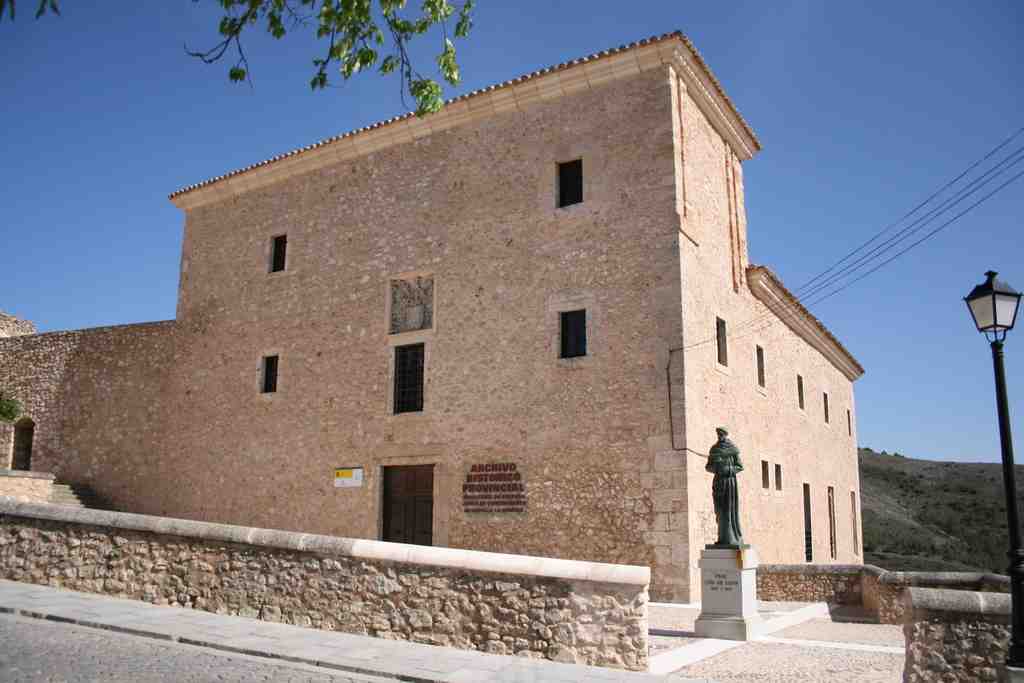
Building of the Provincial Historical Archive of CuencaPhoto: Tamorlan, Wikimedia Commons, CC BY 3.0. Cropped & resized. On your right stands a massive, blocky structure built of light-colored rough stone, marked by a faded stone coat of arms set just above a dark grated window.
This high point was once the site of Cuenca's original, nearly impenetrable castle. It took months for Alfonso VIII of Castile to finally break through and conquer this fortress, establishing it as a crucial stronghold. And if you recall the cannon fire that struck the Church of San Pedro we talked about earlier... well, this was the very castle that launched that 1449 bombardment.
But cannons were far from the darkest things housed on this hill. In 1574, King Philip II handed these grounds over to the Spanish Inquisition. They did not just use the old fortress, they built a custom headquarters from the ground up to serve as a prison and tribunal. This drive for legacy turned a military defense into a house of profound terror.
Within these thick walls, prisoners faced strict isolation. The desperation was absolute. One prisoner, a poet named Manuel de Castro, meticulously scratched a sonnet into his cell wall, begging the inquisitors to see he had been framed by false witnesses. Others fashioned pens out of wicker food baskets just to leave a trace of their existence. The sheer will to endure was carved quite literally into the stone.
The building's dominance was finally shattered in 1812. Retreating Napoleonic troops purposefully left a massive stockpile of gunpowder in the main offices and blew the center of the complex sky-high.
It sat as a ruined civil prison until the nineteen seventies. When architects finally came to rescue the site, they found the lower floors still choked with rubble from that French explosion over a century and a half prior. Instead of leaving it as a bleak monument to ruin, they chose a brilliant architectural reinvention. They healed the building's scars, transforming it into a bright, open space. Now, the prison of the Inquisition is the Provincial Historical Archive, dedicated to preserving the truth rather than suppressing it.
The stones of Cuenca have seen empires rise, cannons fire, and terrified whispers shared through cracks in a cell door. They remember everything.
If you would like to look inside, the archive is open Monday through Friday from 9 AM to 2 PM, though it is closed on weekends.
Frequently asked questions
How do I start the tour?
After purchase, download the AudaTours app and enter your redemption code. The tour will be ready to start immediately - just tap play and follow the GPS-guided route.
Do I need internet during the tour?
No! Download the tour before you start and enjoy it fully offline. Only the chat feature requires internet. We recommend downloading on WiFi to save mobile data.
Is this a guided group tour?
No - this is a self-guided audio tour. You explore independently at your own pace, with audio narration playing through your phone. No tour guide, no group, no schedule.
How long does the tour take?
Most tours take 60–90 minutes to complete, but you control the pace entirely. Pause, skip stops, or take breaks whenever you want.
What if I can't finish the tour today?
No problem! Tours have lifetime access. Pause and resume whenever you like - tomorrow, next week, or next year. Your progress is saved.
What languages are available?
All tours are available in 50+ languages. Select your preferred language when redeeming your code. Note: language cannot be changed after tour generation.
Where do I access the tour after purchase?
Download the free AudaTours app from the App Store or Google Play. Enter your redemption code (sent via email) and the tour will appear in your library, ready to download and start.
If you don't enjoy the tour, we'll refund your purchase. Contact us at [email protected]
Checkout securely with 






