
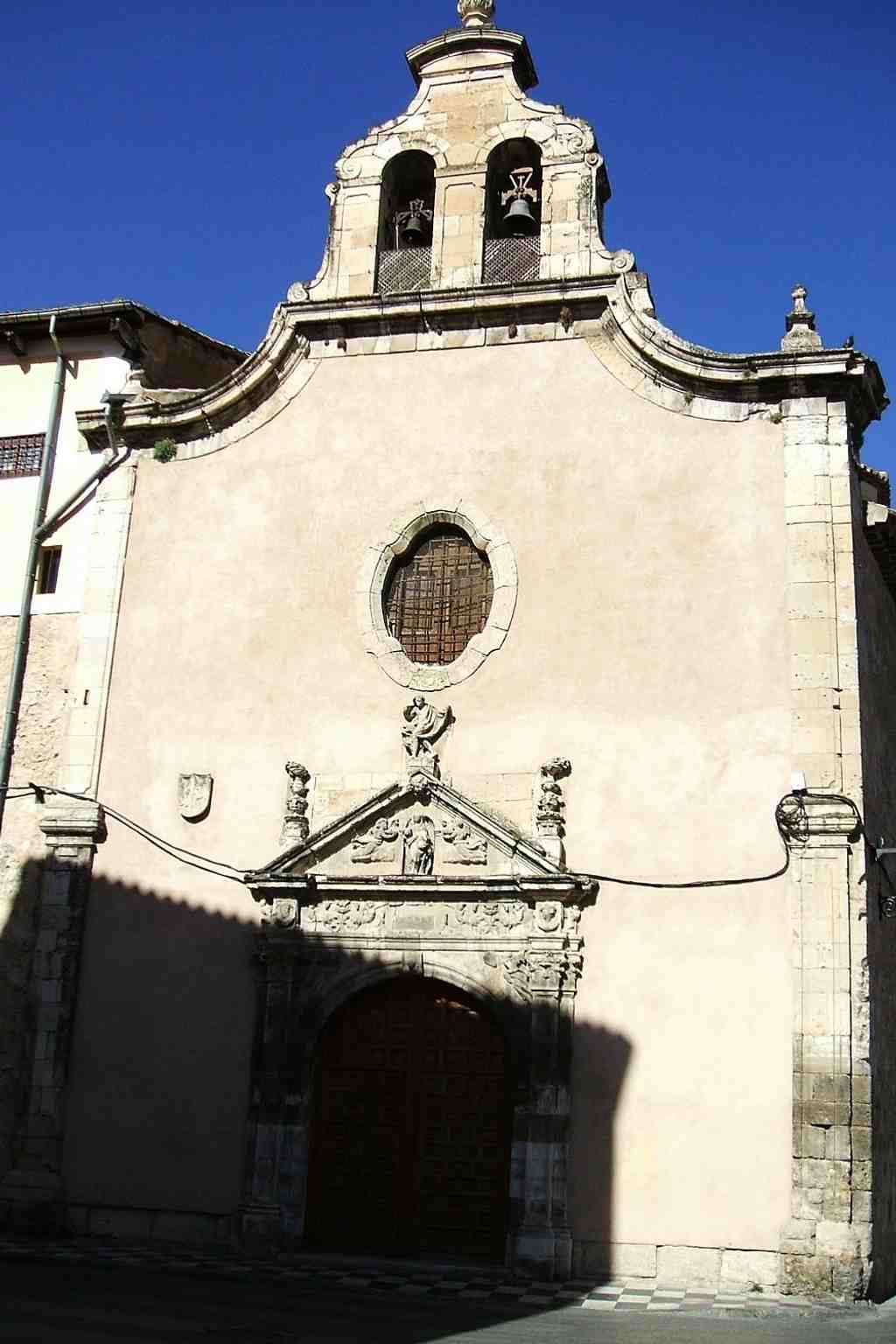
Look for the smooth, pale stone facade distinguished by a central oval window covered in an iron grate, all topped by a curved bell gable holding two cast bells. You are standing in front of the Monastery of the Franciscan Conception.
Alvar Pérez de Montemayor didn't just build this place in 1504 out of sheer, selfless piety. He was a powerful man, the treasurer of the grand cathedral in Toledo, and he knew how to play the long game. By establishing this religious refuge for the women of his lineage, he was actually executing a brilliant, strategic maneuver to secure a magnificent, exclusive burial site for his family. Why settle for a shared family plot when you can fund a monastery and demand the prime real estate right in front of the main altar?
His grand tomb was carved from alabaster, featuring a statue of him resting on lions. But he also left a rather grim warning for anyone entering. If you look at the carved stone doorway, above the arch and the religious figures, there is a small figure beside a skull. It bears a Latin inscription reminding visitors to remember they must die and consider their end. It was Montemayor's personal motto, a strict warning carved into a doorway built in the Plateresque style, a sixteenth-century Spanish architectural fashion known for intricate, delicate stone carving that mimics the work of a silversmith.
In the eighteenth century, the cloistered nuns living here wanted a modern upgrade. They hired architect José Martín de Aldehuela with a very specific, somewhat brutal instruction... tear down the entire old temple, but leave Montemayor's intricate stone doorway perfectly intact.
The monastery's walls have survived far worse than architectural remodeling. During the Spanish Civil War in the nineteen thirties, the building was seized and turned into a people's prison. The interior was devastated by fire. The original altarpiece burned to ash, and a beloved, venerated statue of the Virgin Mary was violently decapitated by the attackers. Yet, when the war ended, that broken figure was miraculously found in the rubble and eventually restored to the nuns.
Today, the nuns of the enclosed order still live here, maintaining a quiet way of life that has barely changed in over five hundred years. If you are here at the right time, you might even hear them singing Gregorian chants from behind their walls. Just keep in mind that the church is only open for worship during specific morning and evening hours depending on the day of the week.
As we leave this quiet corner, it makes you wonder what eternal legacy really costs, and who actually gets to pay for it. Our next stop is The Alhondiga, a four minute walk away, where we will trade the pursuit of heaven for a building designed for a much more earthly purpose.




