
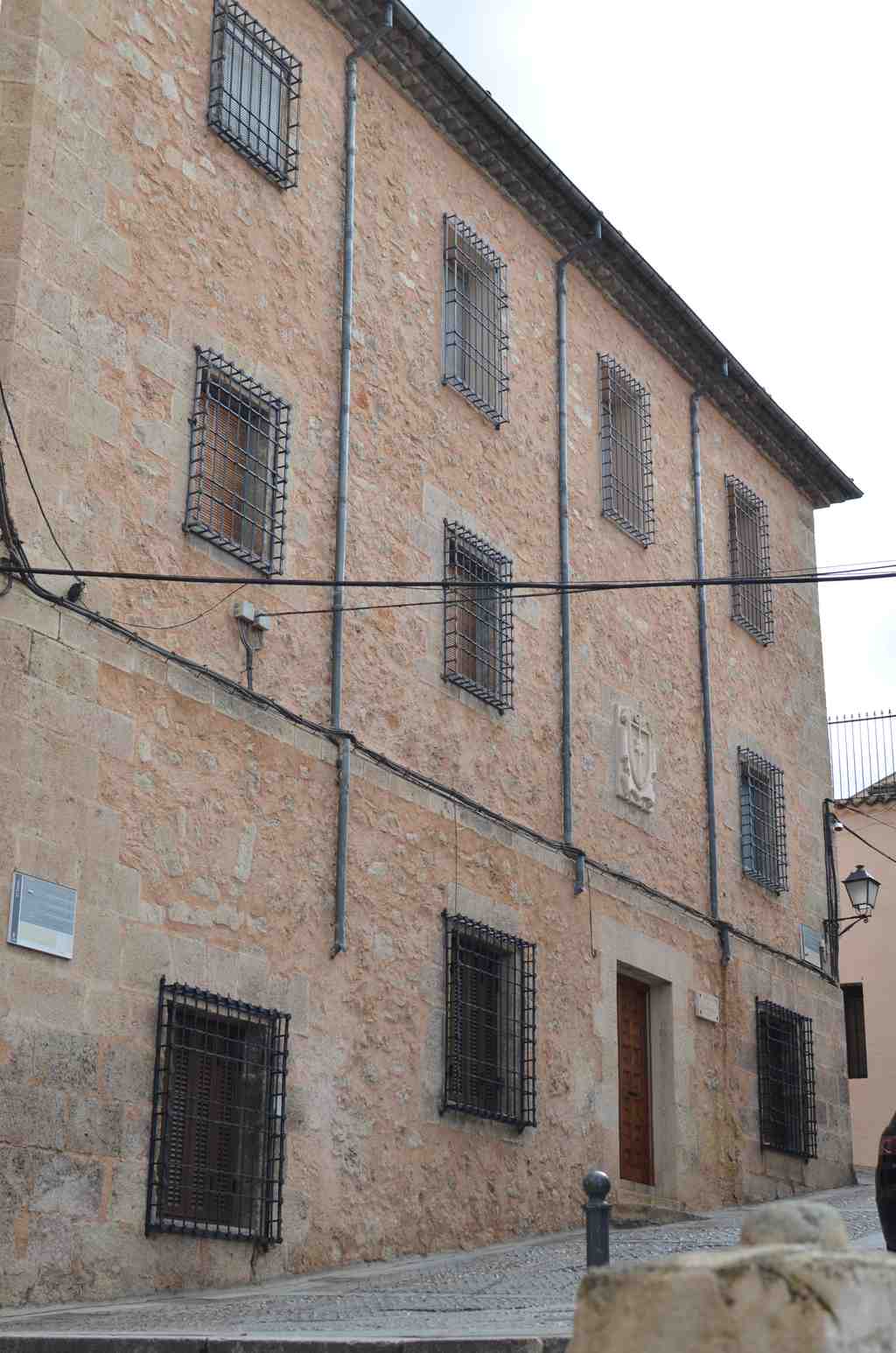
On your left, you will see a stout, rectangular structure built from rough pale stone masonry, defined by a neat grid of heavy iron-barred windows and a distinct carved stone coat of arms set directly above the main wooden door.
This is the Monastery of Benedictine Mothers, established in 1448 as Cuenca's first female convent. The physical construction of this massive complex was entrusted to a fascinating man named Nuño Álvarez de Fuente Encalada. Though he came from a powerful noble family and was educated in Italy, Nuño was most famous for his overflowing, radical charity, famously taking in up to 400 abandoned orphans, known locally as the niños de la piedra, and sheltering them safely inside the cathedral's cloister, its enclosed inner courtyard.
He was officially the cathedral's chantre, the senior cleric in charge of leading the choir, a role he held for thirty years. Yet he cared far more about practical human needs than simply singing hymns. He poured his vast personal fortune into vital public infrastructure, like funding a bridge over the nearby river so everyday people could safely reach the mountains.
The story of this building is really a tale of high spiritual ideals meeting gritty, earthly realities. Inside the convent church, there is a magnificent arched stone ceiling known as a ribbed vault, designed by the master architect Pedro de Alviz. He was the man who introduced Renaissance architecture to Cuenca. But even great artists have to eat, and Alviz spent the final years of his life locked in a bitter, exhausting lawsuit over getting properly paid for his work, a brutal fight his widow had to finish after he died.
Centuries later, that tension between the sacred and the struggle to survive hit its peak. In 1936, the outbreak of the Spanish Civil War violently forced the nuns from these walls. For the first time in nearly five hundred years, their quiet, contemplative life was broken. The church was severely damaged and looted. When the surviving community finally returned three years later, they faced a monumental task of rebuilding. To help the city recover its spirit while they repaired their home, the nuns allowed local brotherhoods to use the battered church as a shelter to protect their massive, ornate Holy Week procession floats.
Today, the monastery continues its balancing act to survive. To keep the enormous stone complex from falling into ruin, the lower floors operate as a bustling modern school. This pragmatic choice financially supports the forty or so nuns who still live in cloistered silence on the upper levels.
Nuño Álvarez's boundless compassion left a permanent mark on Cuenca. In fact, popular devotion to him grew so intense that in 1631, officials dug up his remains and petitioned the Vatican to declare him a saint, though the effort unfortunately failed. But his legacy of protecting the vulnerable endures in these very stones.
Now, we will head toward our next stop, which is a two minute walk away, the Church of San Andrés, to see a place that has waged a relentless battle simply to stay standing.




