
Standing on your left is a tall, square-built tower crafted from rugged stone masonry, featuring a large clock face and a projecting, fortress-like parapet at its summit. This is the Mangana Tower.
The name Mangana has a rather aggressive origin. It comes from the Arabic word for machine, specifically a war machine like a catapult. For a long time, people believed this very spot housed heavy artillery to defend the old Islamic fortress, the alcázar, that once stood right in this area. But its documented life is actually a bit more domestic. In 1493, the city council realized the clock on the main church simply was not loud enough to reach the edges of Cuenca. So, they ordered a new one installed right here, establishing this as the city's official timekeeper.
Look up at the very top of the tower. Above the stonework, you can see an iron cross and a weathervane. Imagine the master ironsmith, Esteban Limosín, scaling that dizzying height in 1532 to plant that ironwork onto what was then a tin spire. This was not just decoration. By capping the tower with a massive cross, Limosín was carrying out a powerful drive for legacy. He was planting an unmistakable symbol of Christian dominance directly over the ruins of the former Arab fortress and a nearby Jewish synagogue, permanently claiming the skyline.
This tower has had a remarkably rough life. It survived a devastating lightning strike in the eighteenth century, only to be occupied and severely damaged by French troops during the Napoleonic Wars. It was almost lost completely, forcing an emergency architectural intervention just to keep it from collapsing.
Its appearance has completely shape-shifted over the years too. Take a glance at your screen to see what I mean. From 1926 until 1970, the tower was covered in bright, colorful plaster decorations in a Neo-Mudéjar style, which is a type of Moorish revival architecture meant to mimic Islamic art. But purists hated it, calling it a fake pastiche. So in 1970, an architect named Víctor Caballero had all that colorful plaster violently chipped away to expose the raw stone. He also added that heavy, overhanging rim near the top, called a matacán or machicolation. Originally, these overhangs allowed defenders to drop stones or hot liquids on attackers, giving the tower a fierce, defensive look it probably never actually had in this exact form.
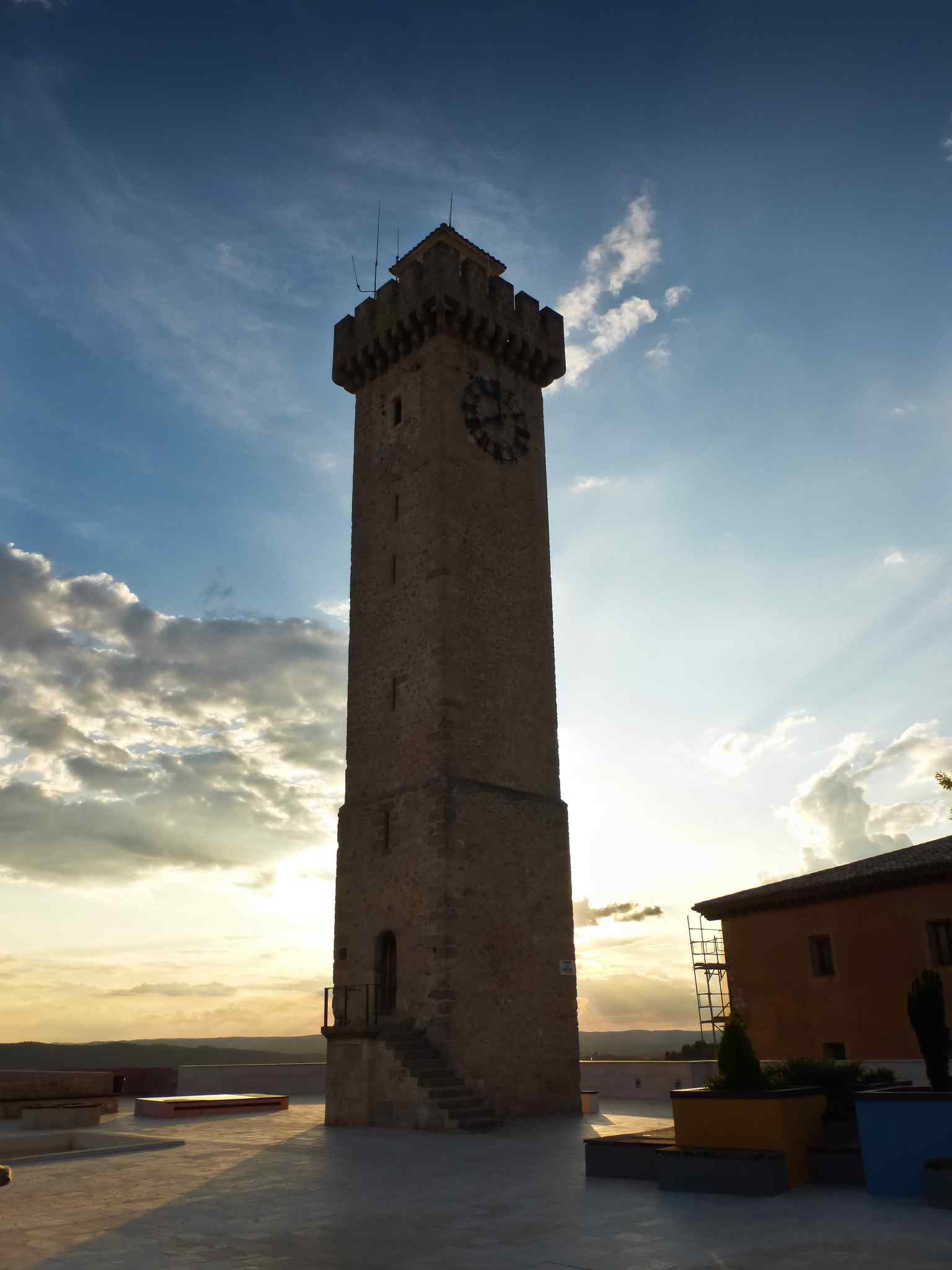
During that 1970 remodel, the clock went silent for months, making locals very anxious. A newspaper took advantage of this on Spain's version of April Fools Day, publishing a doctored photo claiming the tower was leaning and about to collapse. It triggered a massive, though brief, panic across the city before the joke was revealed.
Since then, the tower has remained a stoic witness to the city, even while the plaza around it was closed for sixteen years after a massive 1999 archaeological dig unearthed the old Moorish fortress and ancient synagogue below. And conveniently, the public area around the tower remains open twenty-four hours a day, all week. Keep the image of Limosín's triumphant cross in your mind as we walk about five minutes to our next stop, the Convent of San Pedro de las Justinianas, where we will uncover a rather surprising financial secret.





