
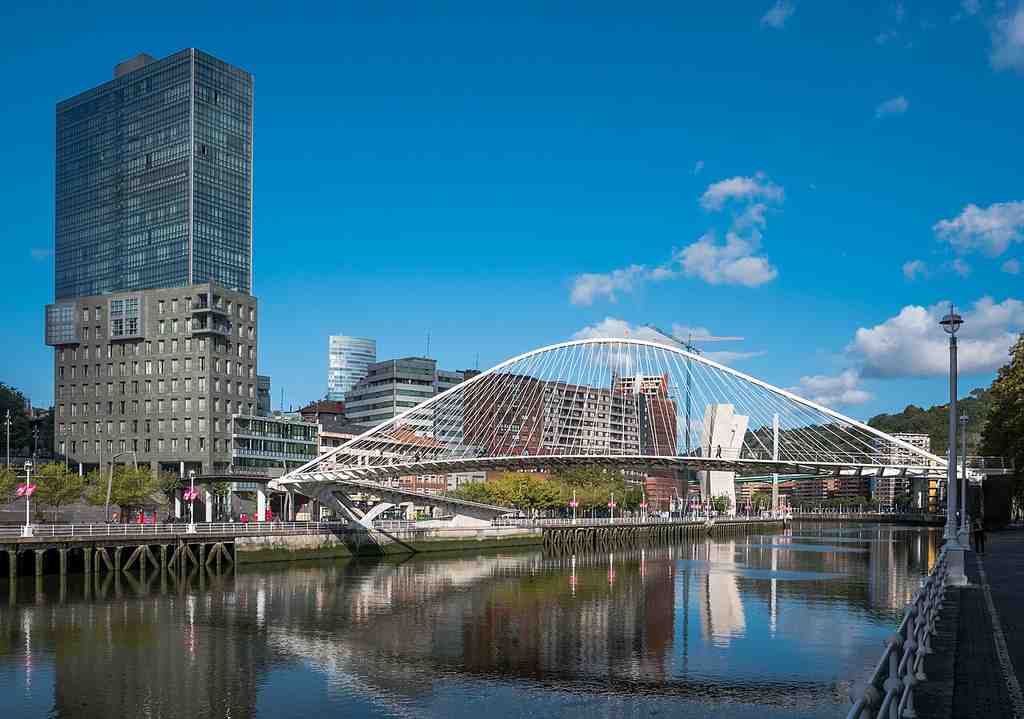
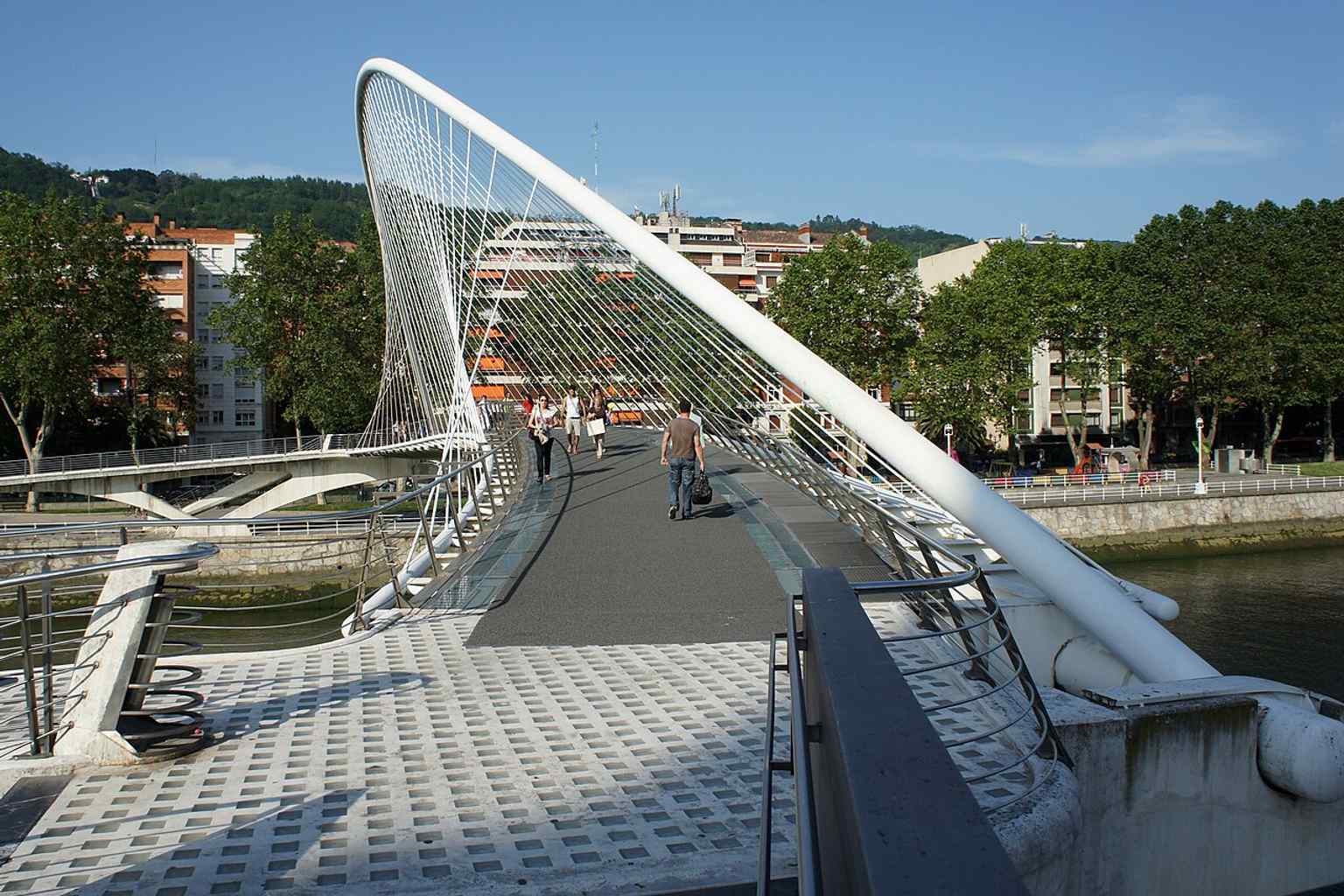
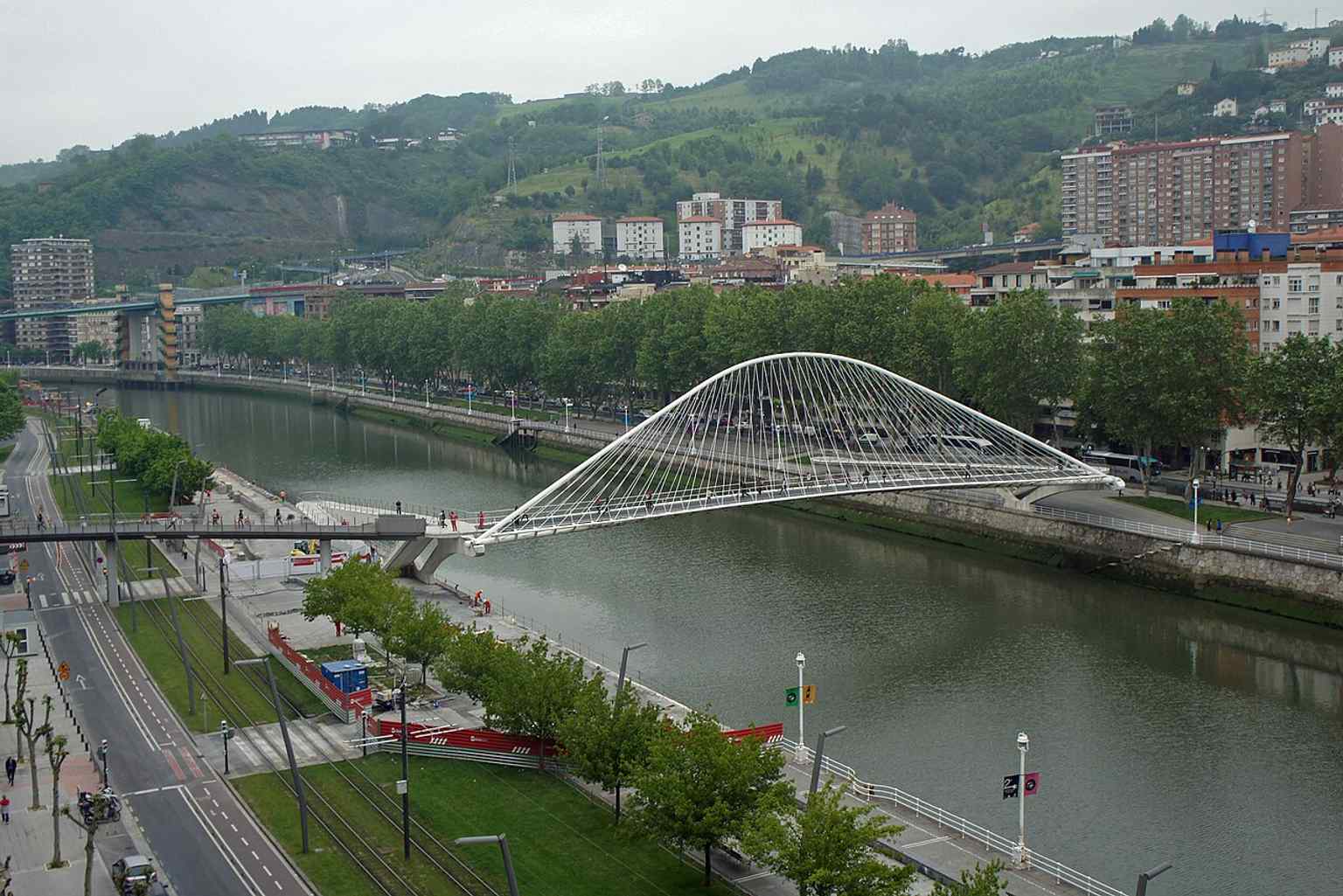
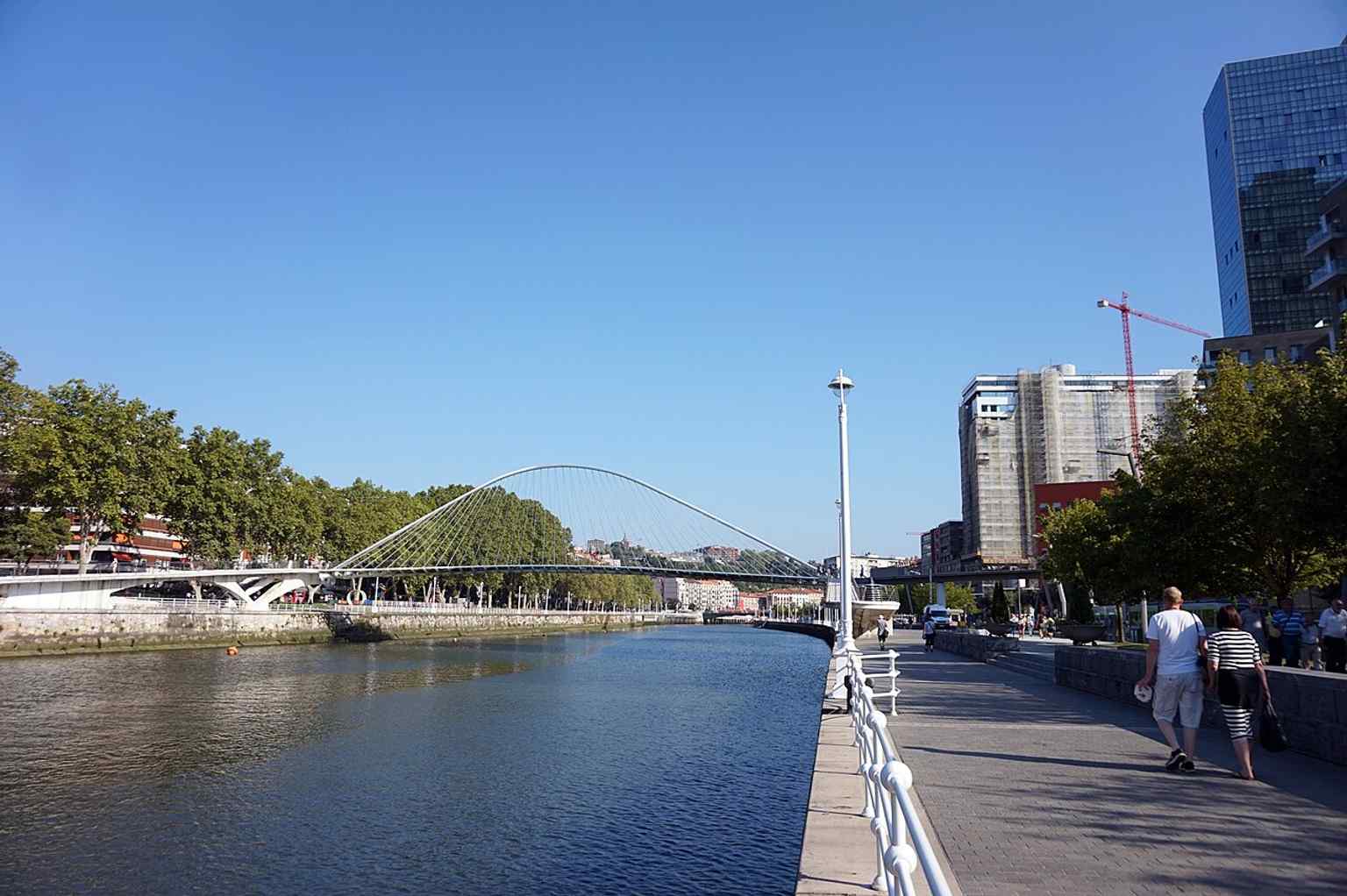
In front of you is a bright white pedestrian bridge with a tilted steel arch, a curved suspended deck, and fine cable lines that make it look almost like a drawn bow across the river.
This is Zubizuri, which in Basque means White Bridge... and for once, the city kept the naming nice and simple. Architect Santiago Calatrava designed it in the nineteen nineties, construction began in nineteen ninety, and Bilbao opened it on the thirtieth of May, nineteen ninety-seven. It links the Campo de Volantín side to Uribitarte, and from the start it announced a new version of the city: cleaner lines, big gestures, and a riverfront made for walking instead of heavy industry.
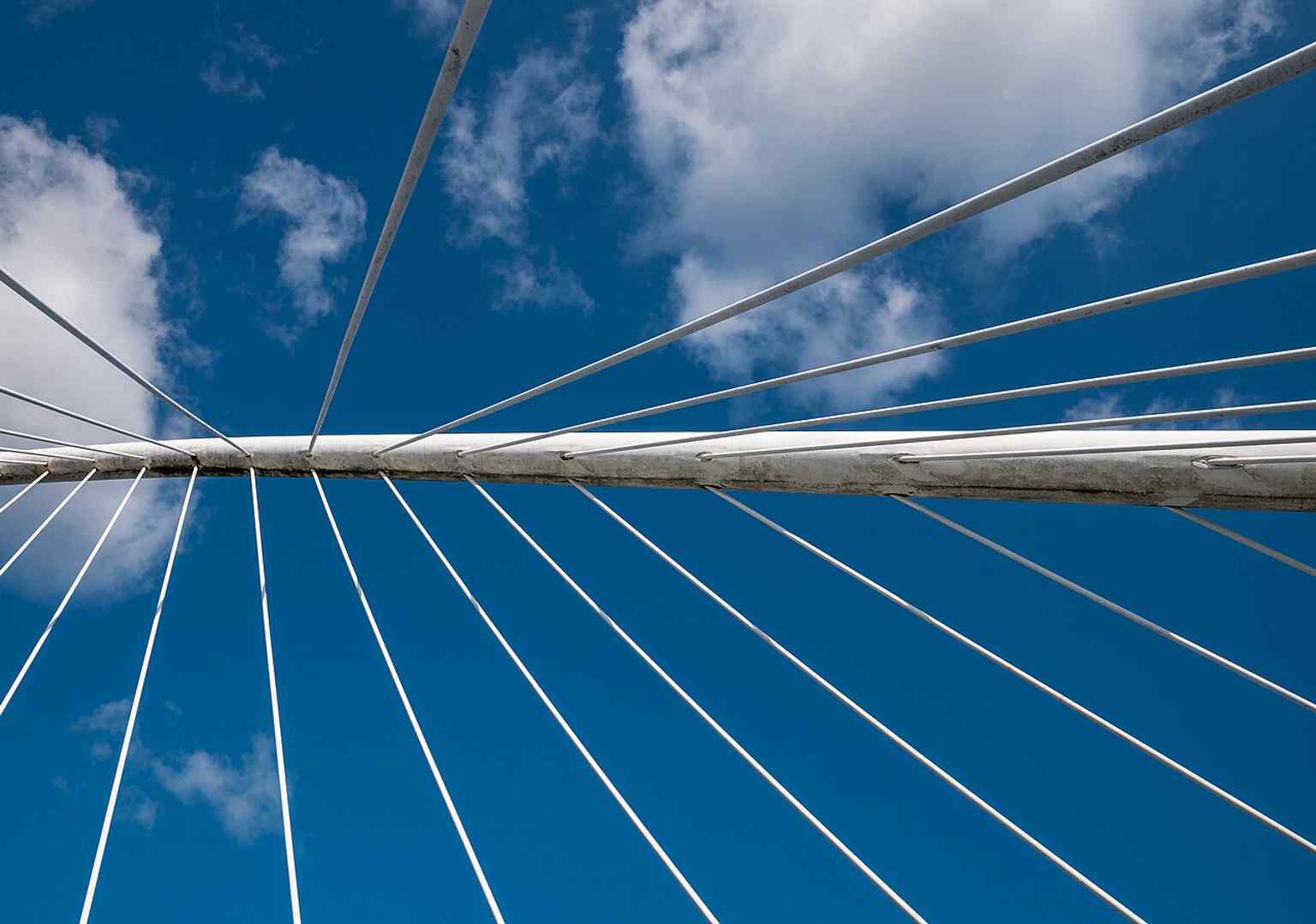
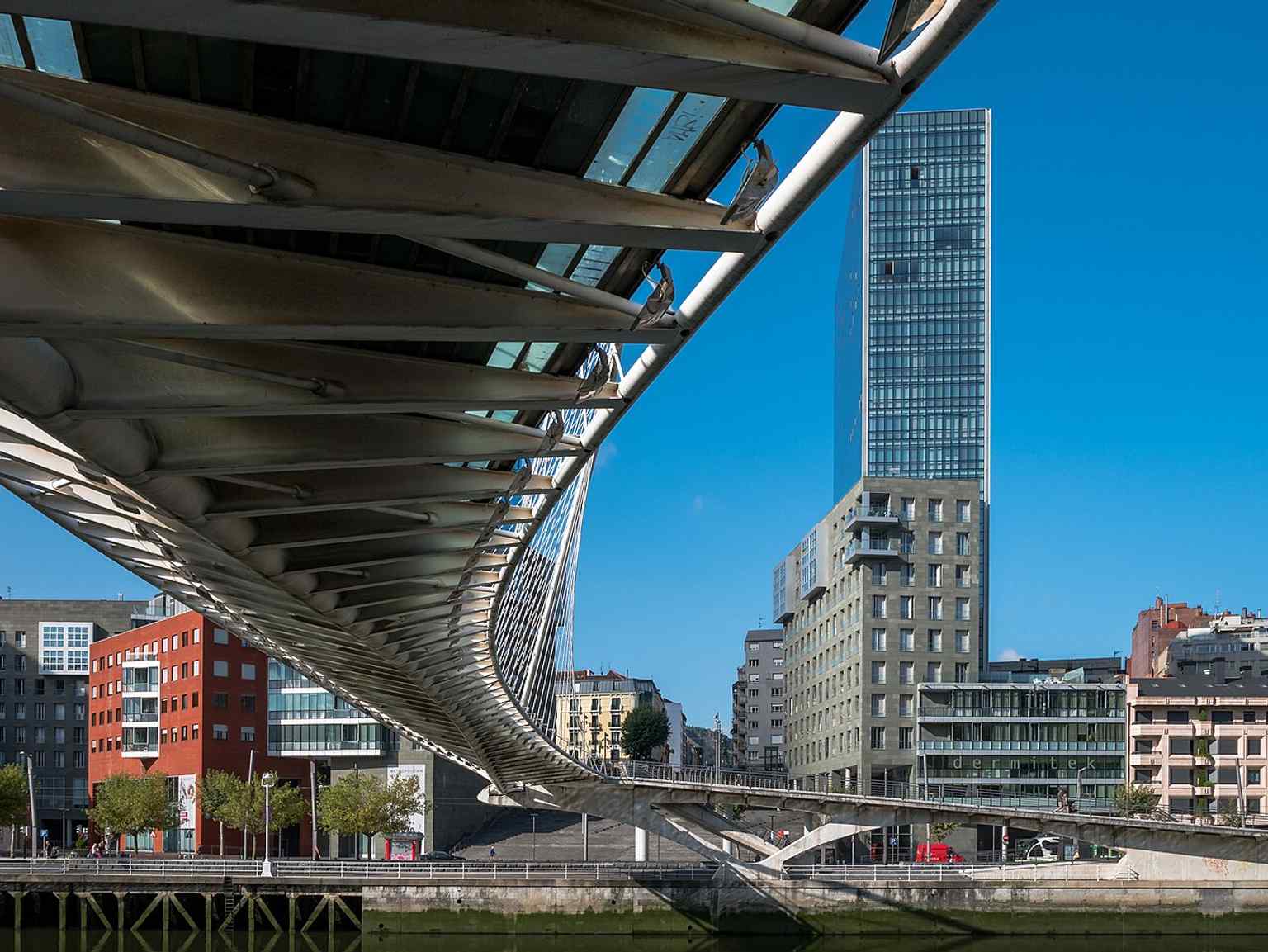
If you glance at the image on your screen, the upward view really shows Calatrava’s trick here: that inclined arch carries the walkway with iron cables, so the whole bridge seems to float rather than simply sit on supports. It is elegant, photogenic, and very much part of the same Bilbao makeover that gave the world the Guggenheim.
Now for the twist. Beautiful design does not always mean friendly shoes.
The original walkway used glass tiles. They looked sleek, modern, almost jewel-like. But in daily use, people slipped. A lot. The city first tried anti-slip strips over the glass. Then it tested special transparent tiles meant to prevent falls. In the end, Bilbao covered the walkway with a plastic anti-slip carpet, which is about as close as architecture gets to admitting, “Well... that did not go exactly as planned.” Most visitors admire the white arch and never realize that one of the bridge’s most famous stories is about the floor, not the skyline.
And there was more. Some of those glass panels cracked and needed frequent replacement, first blamed on vandalism, later tied mainly to temperature changes. Maintenance costs kept piling up. So this bridge became a symbol of renewal, yes, but also a very local lesson: a city has to live with its icons, not just photograph them.
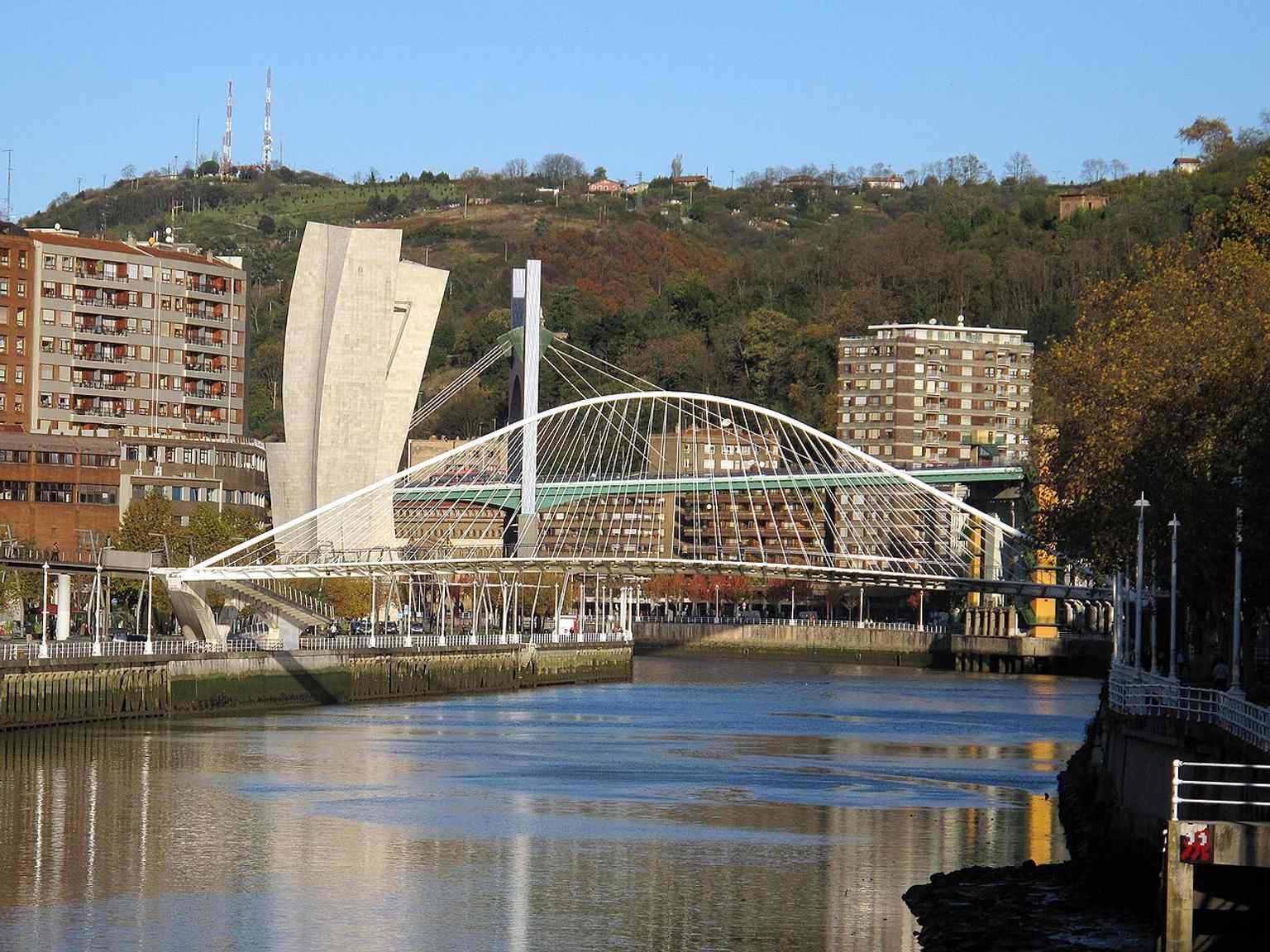
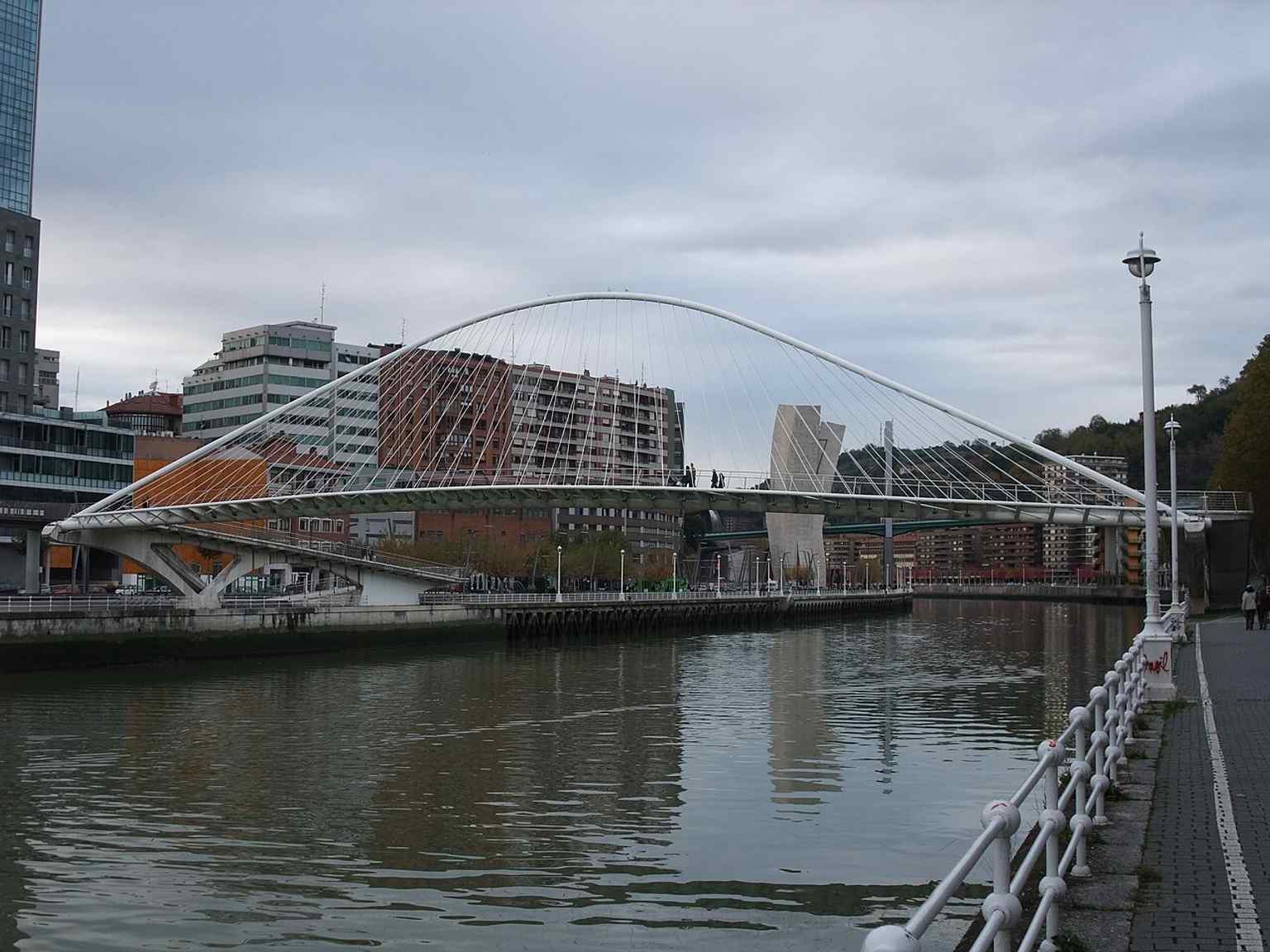
That tension became personal through Iñaki Azkuna, Bilbao’s mayor. He openly said he himself had fallen here before becoming mayor, which turned a design problem into something more human than a municipal report. When officials later wanted easier access up toward the city center, they approved a connecting walkway by Japanese architect Arata Isozaki in two thousand and six. If you look at the app image with the Isozaki connection, you can see the addition that sparked the argument.
Calatrava sued in two thousand and seven, saying the city had damaged the integrity of his creation - in plain English, the legal right of an artist or architect to object when others alter the work. A court first said the bridge had indeed been altered, but public use mattered more. On appeal, another court awarded Calatrava thirty thousand euros in two thousand and nine, far less than the three million euros he sought. He donated the money to Bilbao’s Casa de la Misericordia.
So Zubizuri is not just a pretty bridge. It is Bilbao in miniature: ambition, reinvention, argument, compromise... all crossing the same river.
From here, we turn toward Arenal, about a five-minute walk away, where public life in Bilbao played out long before white steel and designer lawsuits entered the picture. And like any good bridge, Zubizuri stays open all day, every day.






-Puente%20Zubizuri%20(Santiago%20Calatrava)-2.jpg)


