
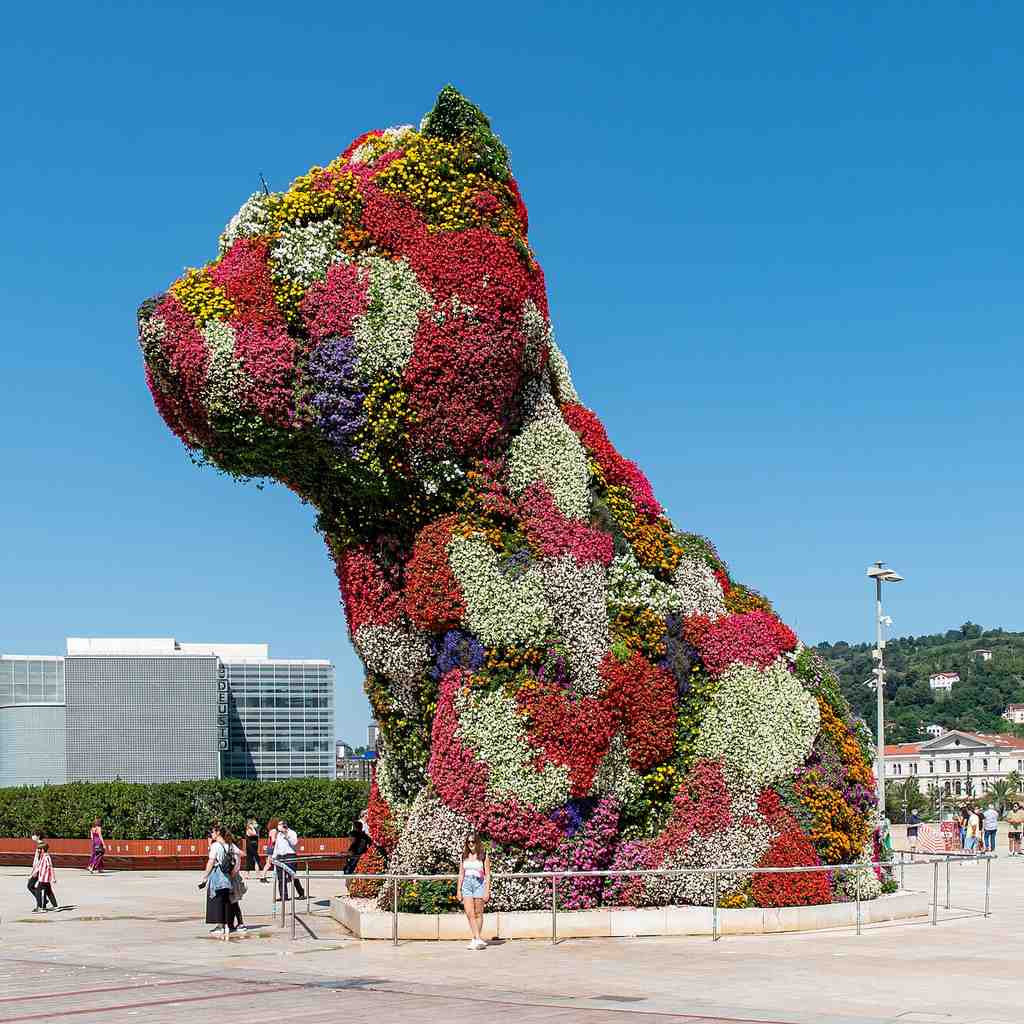
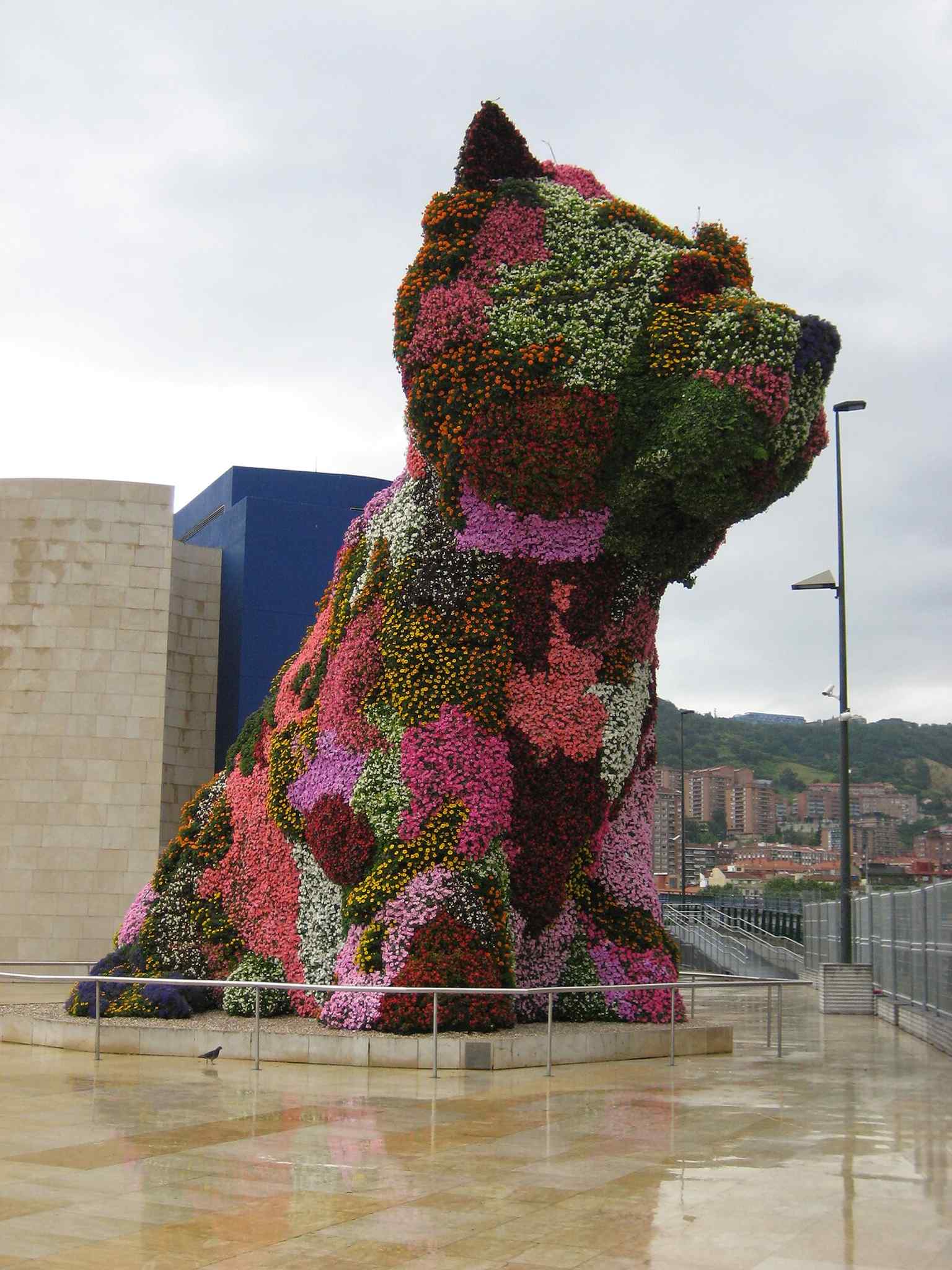
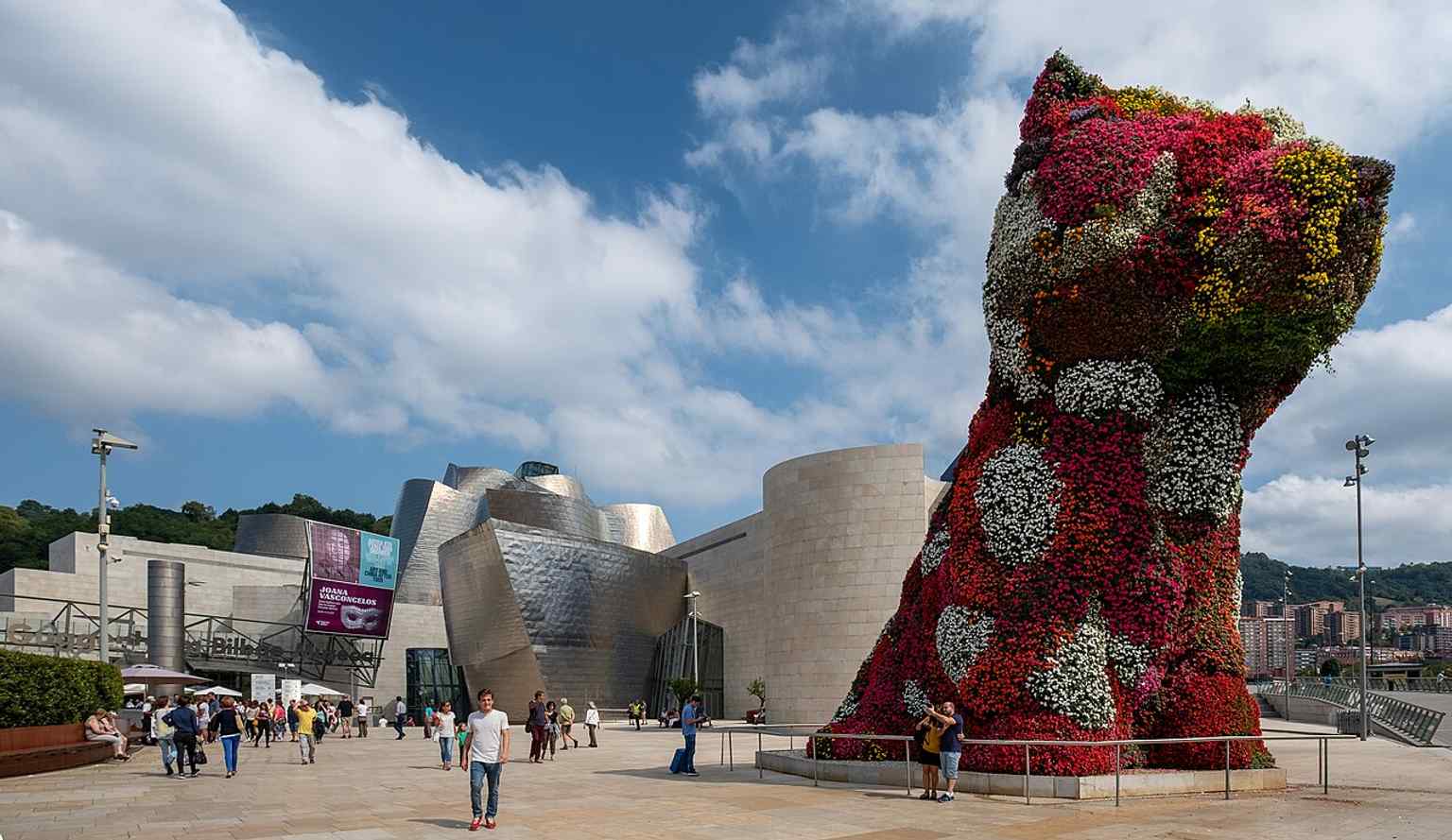
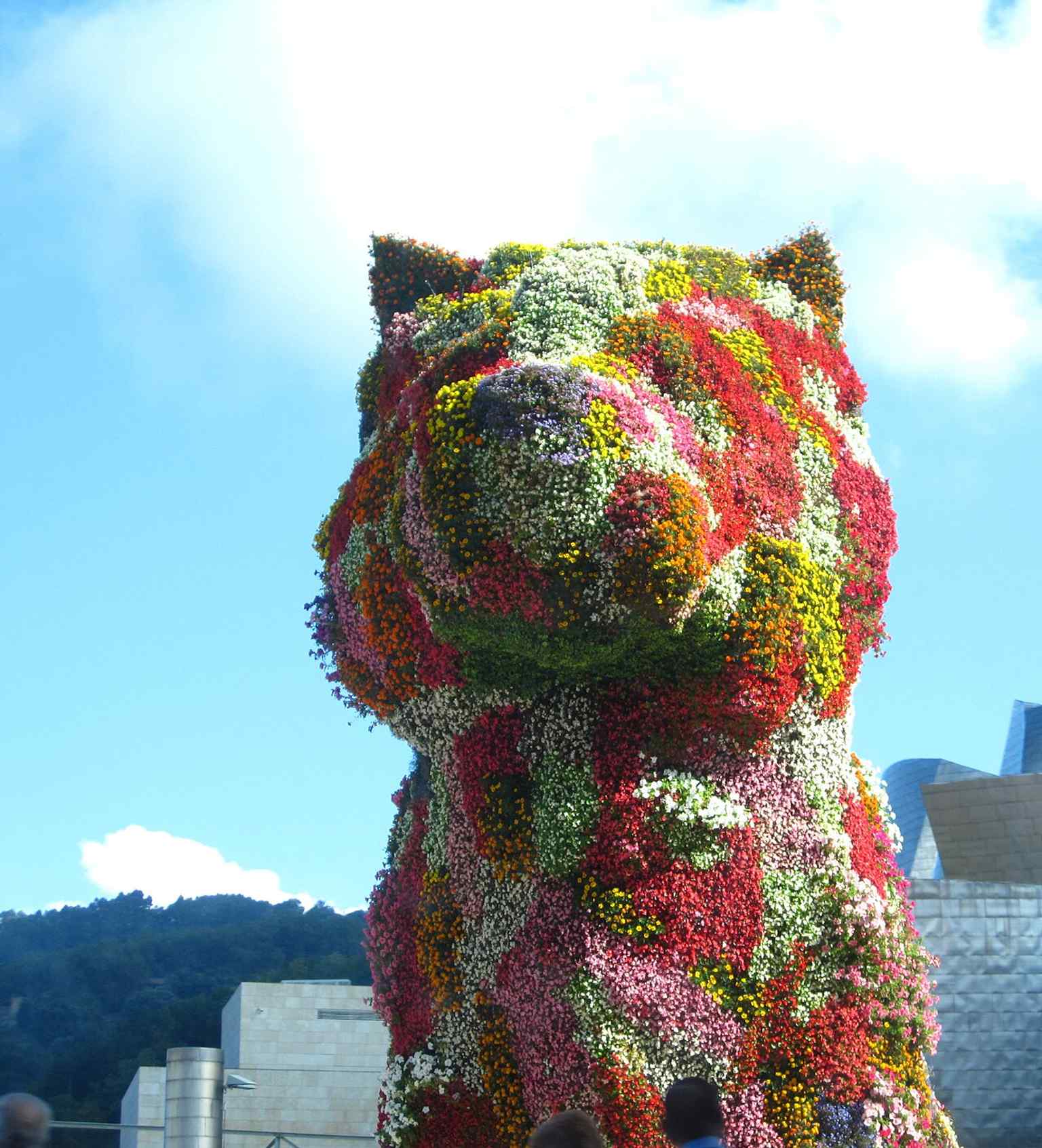
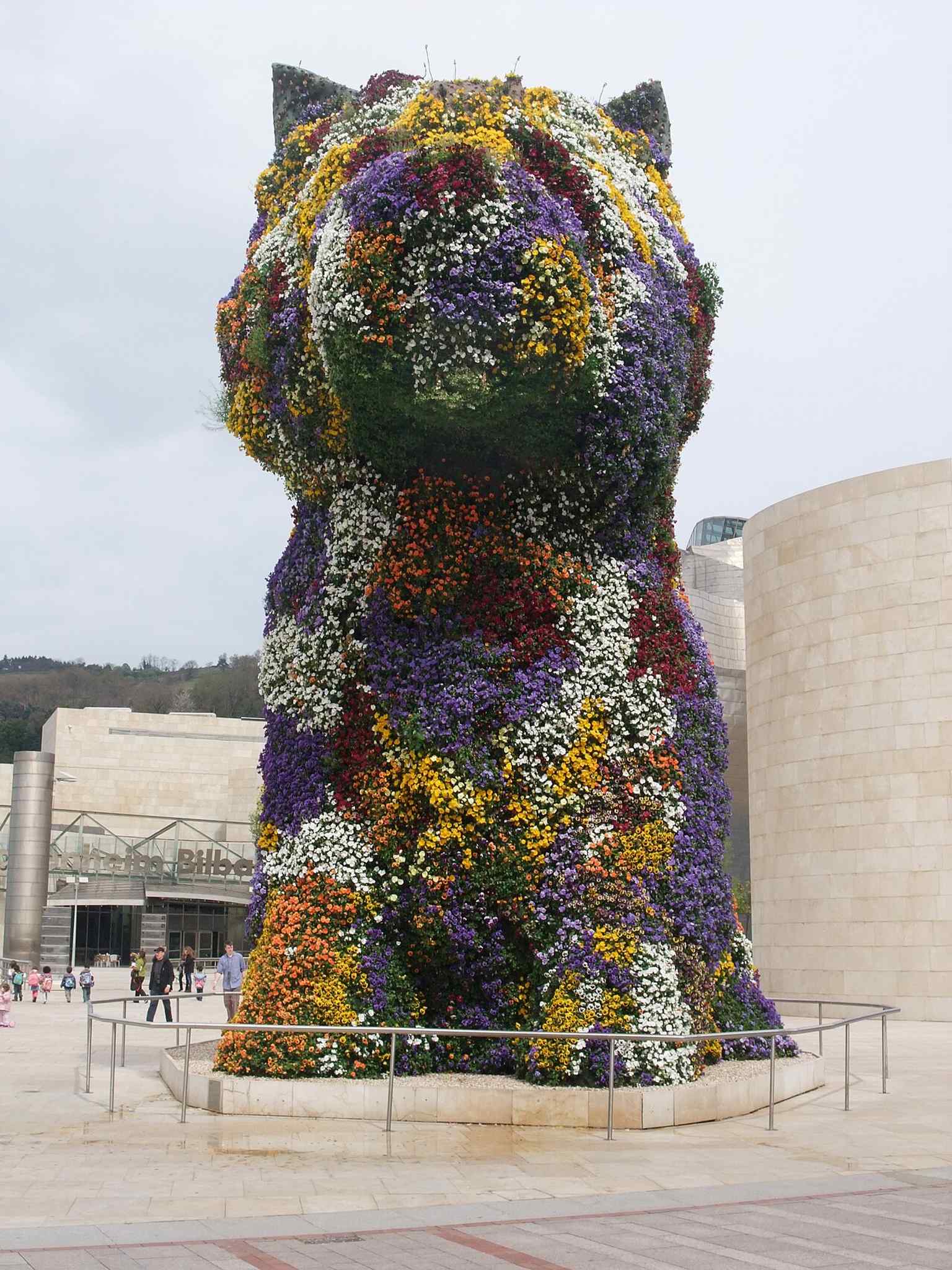
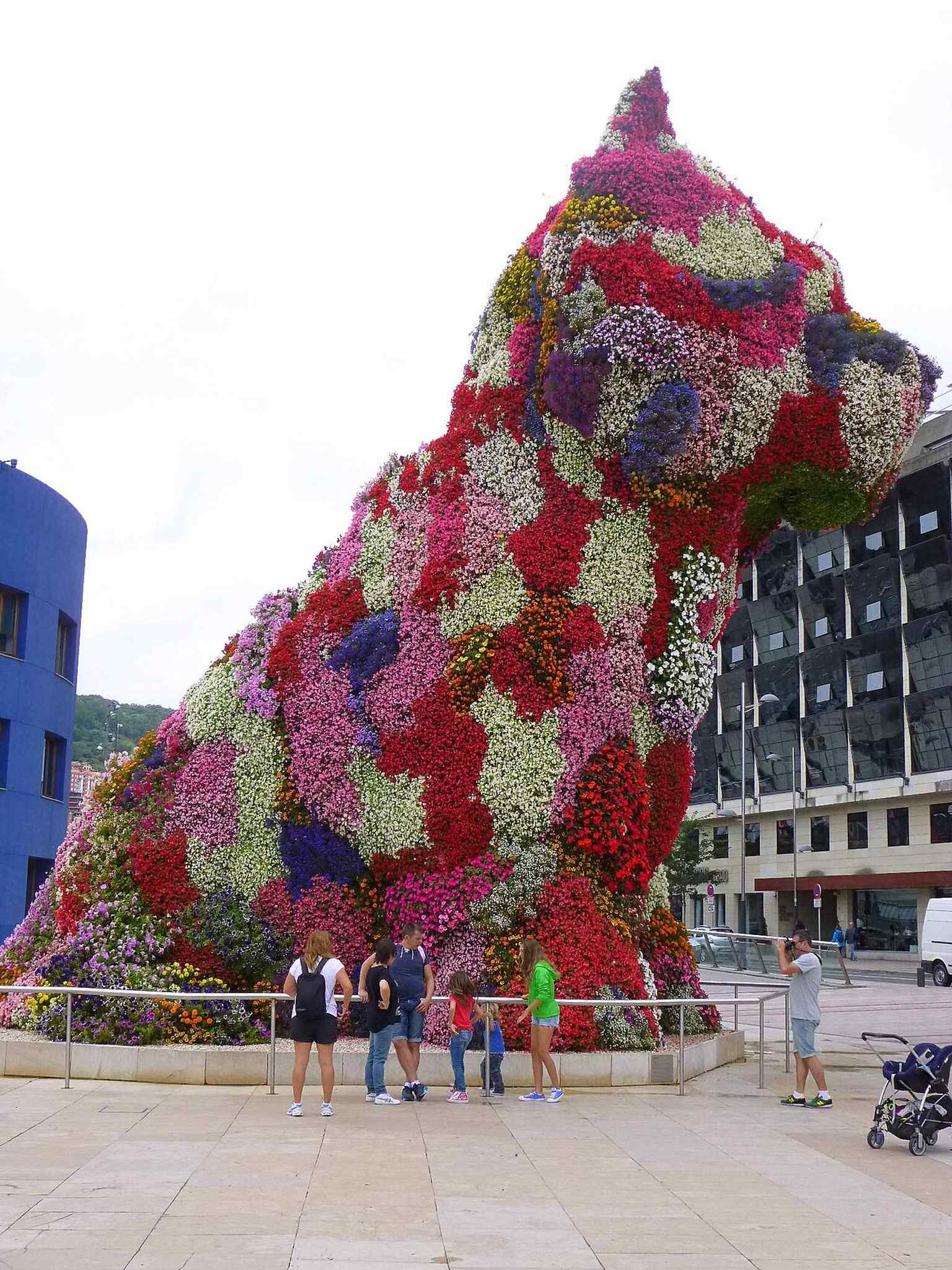
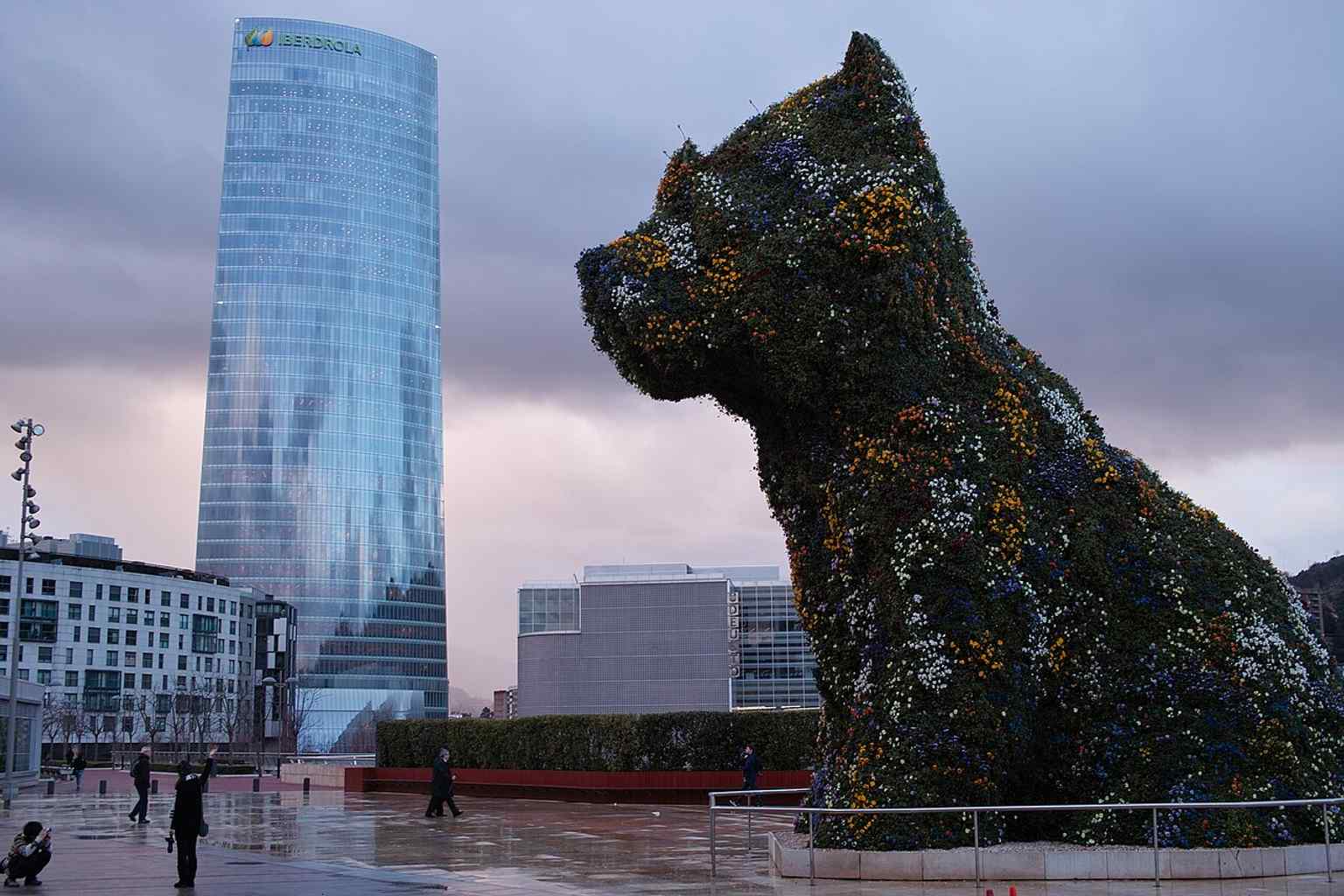
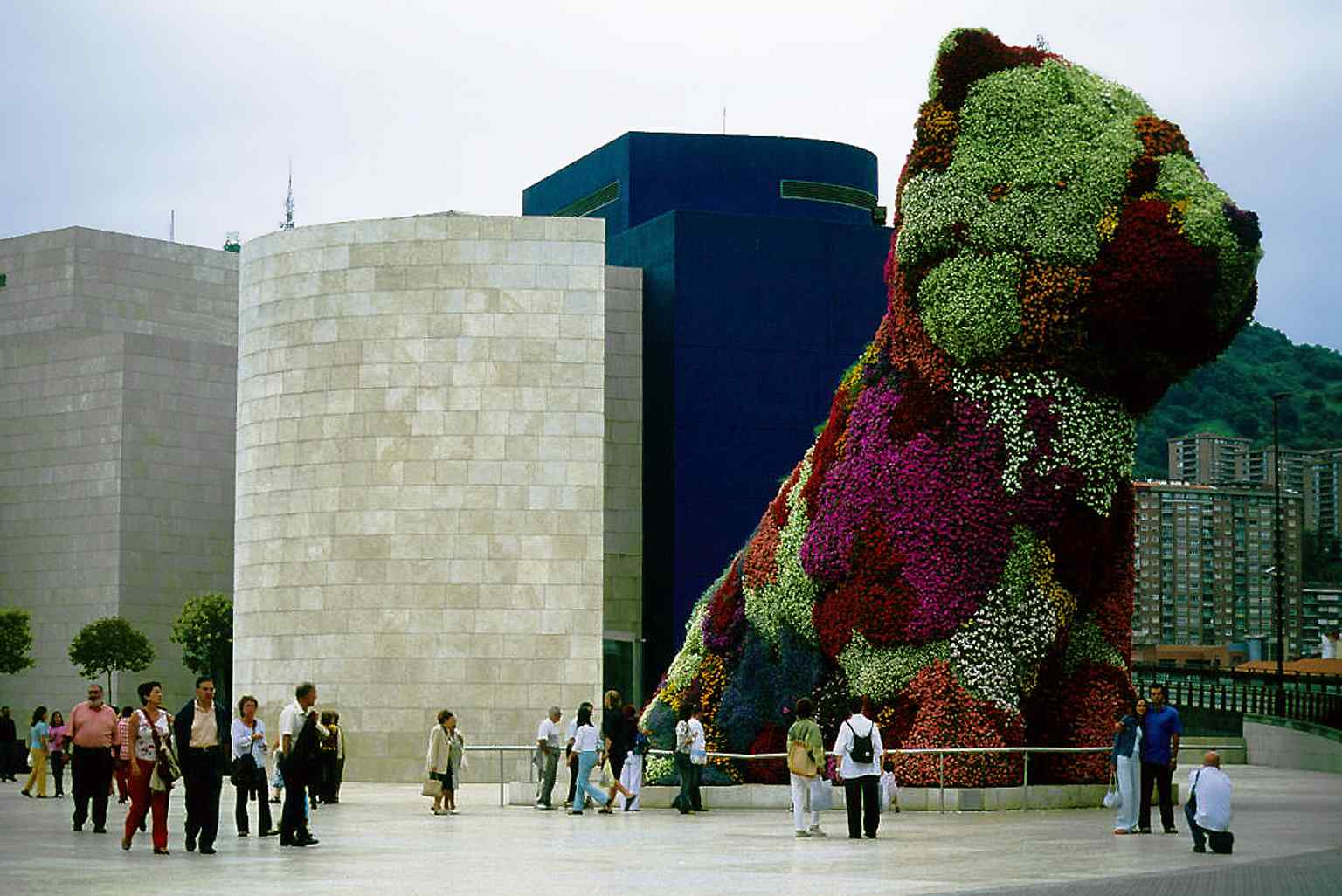
On your left stands a giant terrier shaped from a steel frame and wrapped in a thick skin of living flowers, its rounded muzzle and upright ears giving it the unmistakable look of an oversized West Highland White Terrier.
Puppy is one of Bilbao’s most cheerful ambassadors... and also one of its best little lessons in how this city remakes itself. Jeff Koons created it in nineteen ninety-two, and he gave the world a pop-art charmer that behaves more like a garden than a statue. From a distance, it looks simple enough: a big friendly dog. Up close, it turns into a negotiation between planning and wildness. Koons himself boiled it down to “control and disorder.” First you engineer every inch of it with precision; then you hand part of the result over to roots, water, bloom cycles, and plain old plant stubbornness.
That idea fits Bilbao pretty well, if you ask me. The city has spent this whole walk showing us that careful ambition can still produce messy, living results.
Before Bilbao claimed Puppy as its own in October of nineteen ninety-seven, the sculpture had a short first life in Germany as a temporary installation for Documenta Nine. That early version stood about eleven meters tall, used wood, and disappeared when the exhibition ended. So even this icon began as something temporary, a visitor testing how art could change a place.
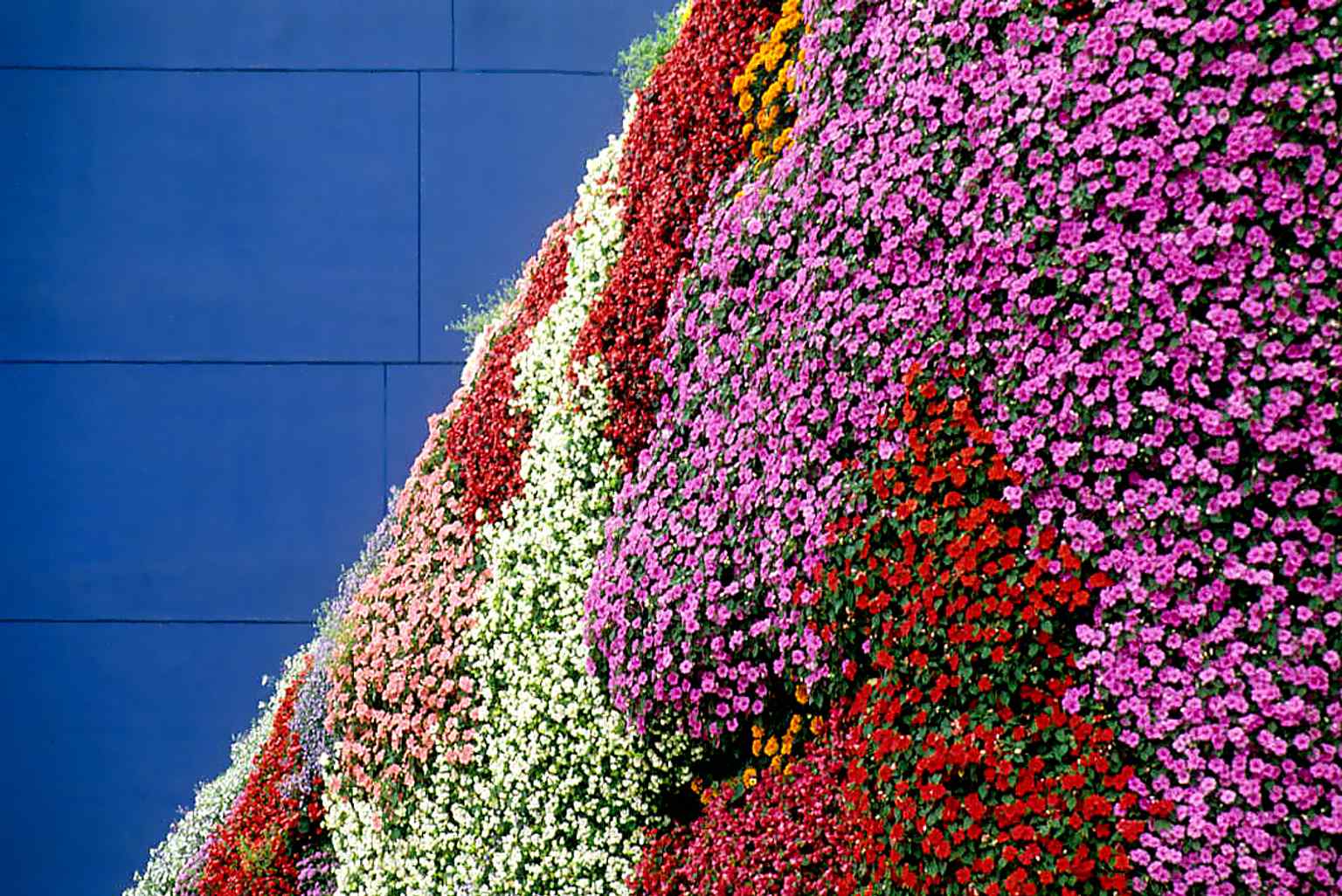
Now have a good look at the surface... not the outline, the coat. Notice how it never reads like paint. It’s textured, uneven, alive. If you check the image on your screen, you can see that floral skin in close detail. This one sculpture carries around thirty-eight thousand plants, all rooted into layers held by an internal steel structure. They replace the planting twice a year, and the job usually takes about nine days with a team of twenty gardeners. Behind that grin is a serious machine: one hundred and fourteen irrigation outlets feed water and plant treatments through the body.
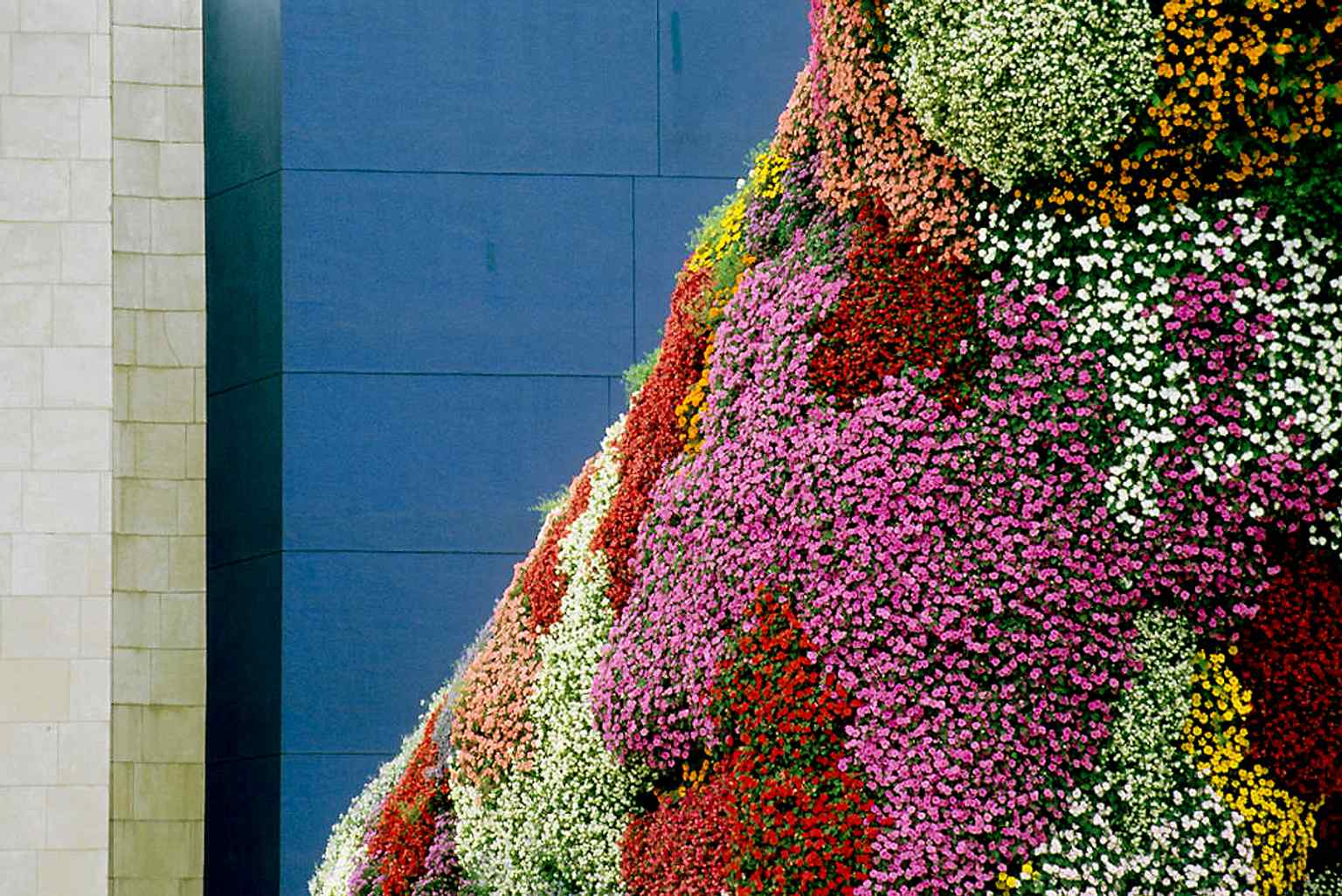
Koons used sophisticated computer models to shape Puppy so it could wink at the formal European gardens of the eighteenth century, those aristocratic landscapes where nature got dressed up and taught manners. But he also wanted optimism, confidence, and security. In plain English: a monumental flower dog that makes people smile before they start asking bigger questions.
And there are bigger questions. In two thousand twenty-one, the museum launched a crowdfunding campaign, Da Vida a Puppy, to help renew the sculpture’s irrigation and support systems. The community pitched in, and the work kept this local mascot viable for the long haul.
If you want a nice backstage reminder, the app’s image five shows Puppy under scaffolding during maintenance. That’s the secret here: Bilbao’s friendliest face depends on labor, money, horticulture, and patience.
Even its image can evolve. In two thousand twenty, Puppy wore a floral face mask after a Bilbao resident wrote to Koons with the idea during the pandemic. The plants took weeks to bloom, so the gesture appeared gradually, as if the sculpture itself were thinking it over.
So here we have a living artwork in a city that keeps revising itself: polished on the postcard, complicated in the plumbing. Our next stop, Zubizuri, is another modern symbol with elegant lines and a few practical headaches of its own, about a twelve-minute walk away. And unlike the museum behind it, Puppy keeps watch here twenty-four hours a day.





%2014.jpg)

%20julesvernex2.jpg)
%2015.jpg)

-Puppy%20(Jef%20Koons%2C%201992)-1-Situado%20junto%20al%20Museo%20Guggenheim.jpg)
%203.jpg)
.jpg)
%2013.jpg)