AudaTours logoAudaTours

Stop 7 of 17

Primacial Palace

headphones 04:32 Buy tour to unlock all 19 tracks
Primacial Palace
Primate's Palace
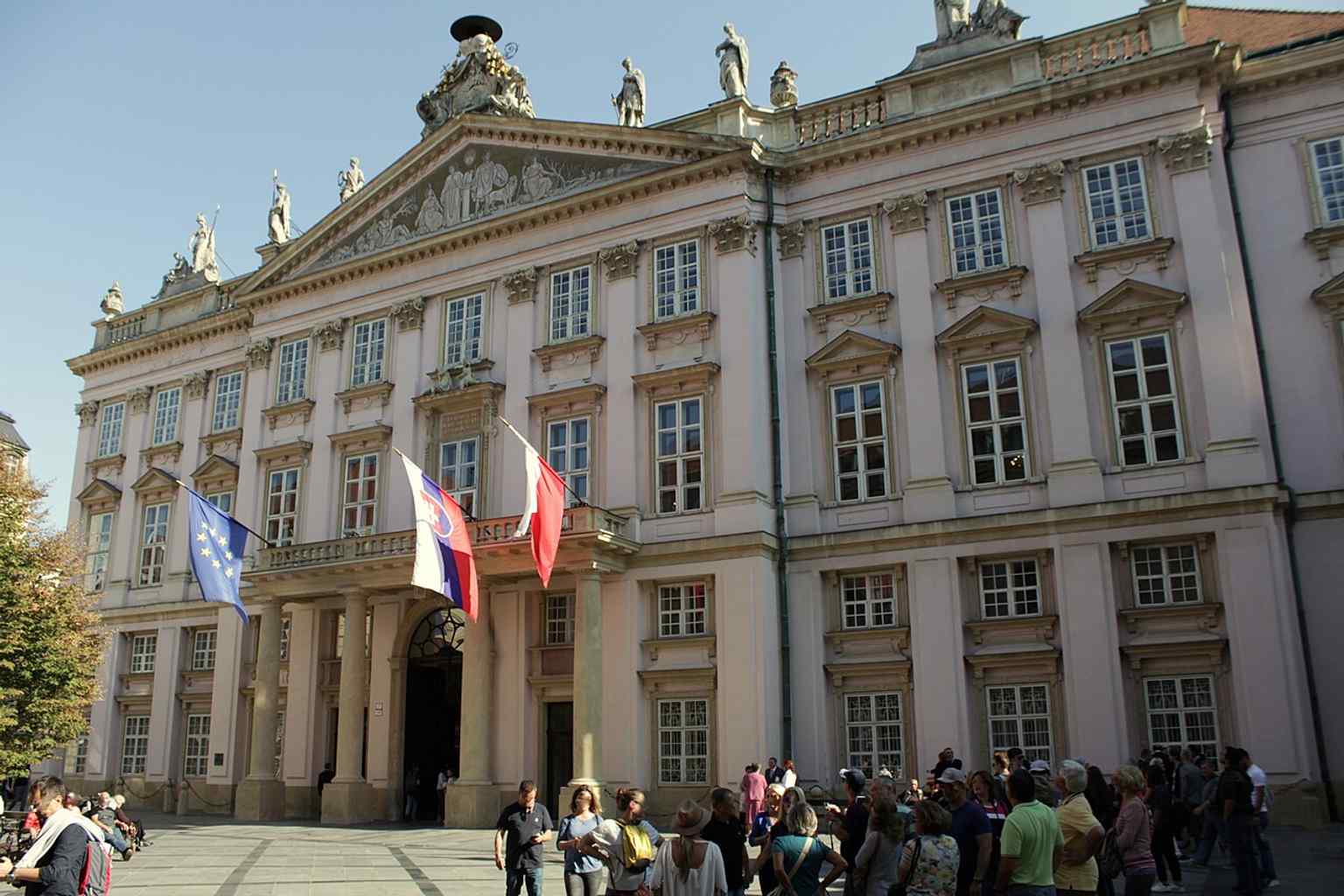
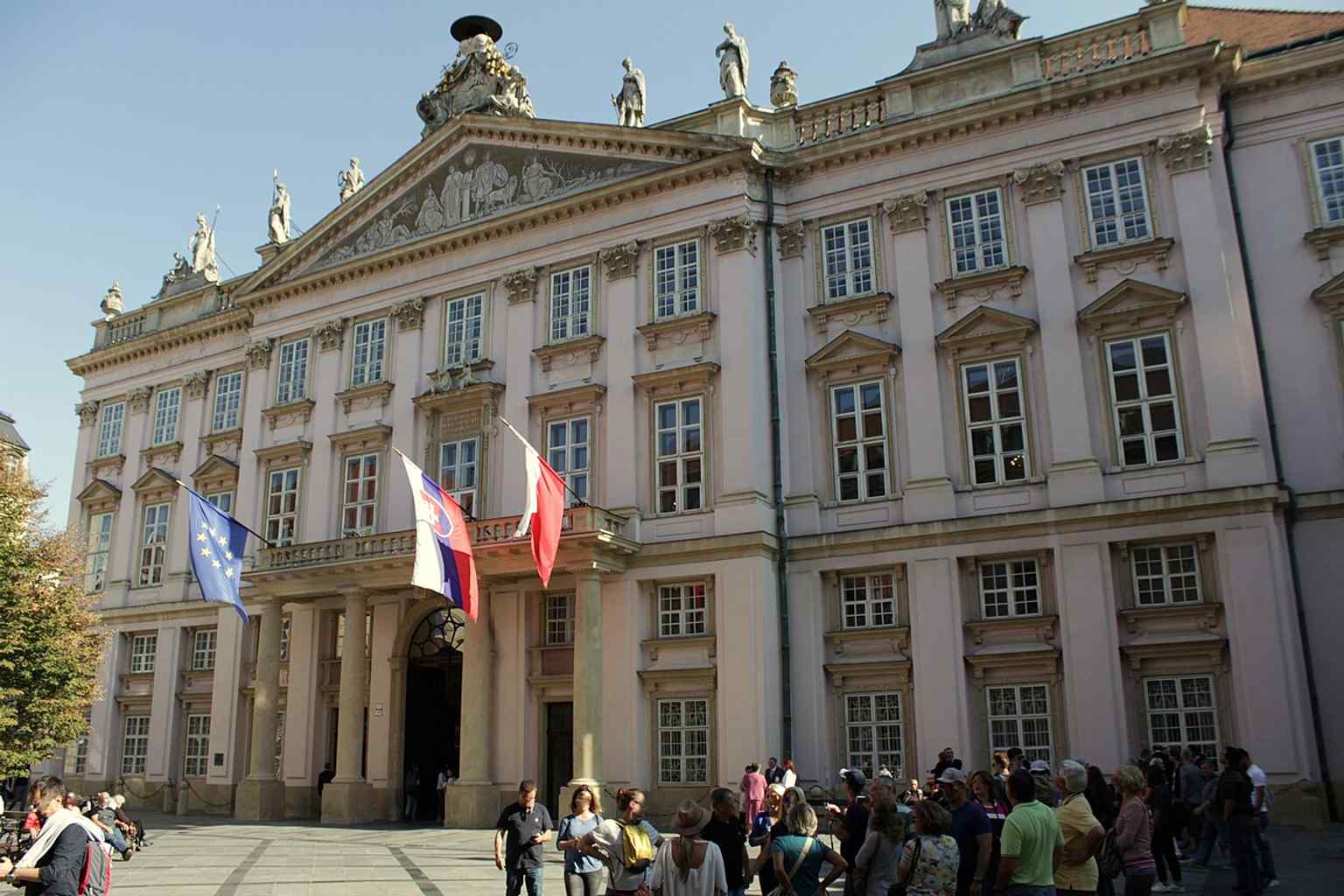
Primate's PalacePhoto: LMih, Wikimedia Commons, CC BY-SA 3.0. Cropped & resized.

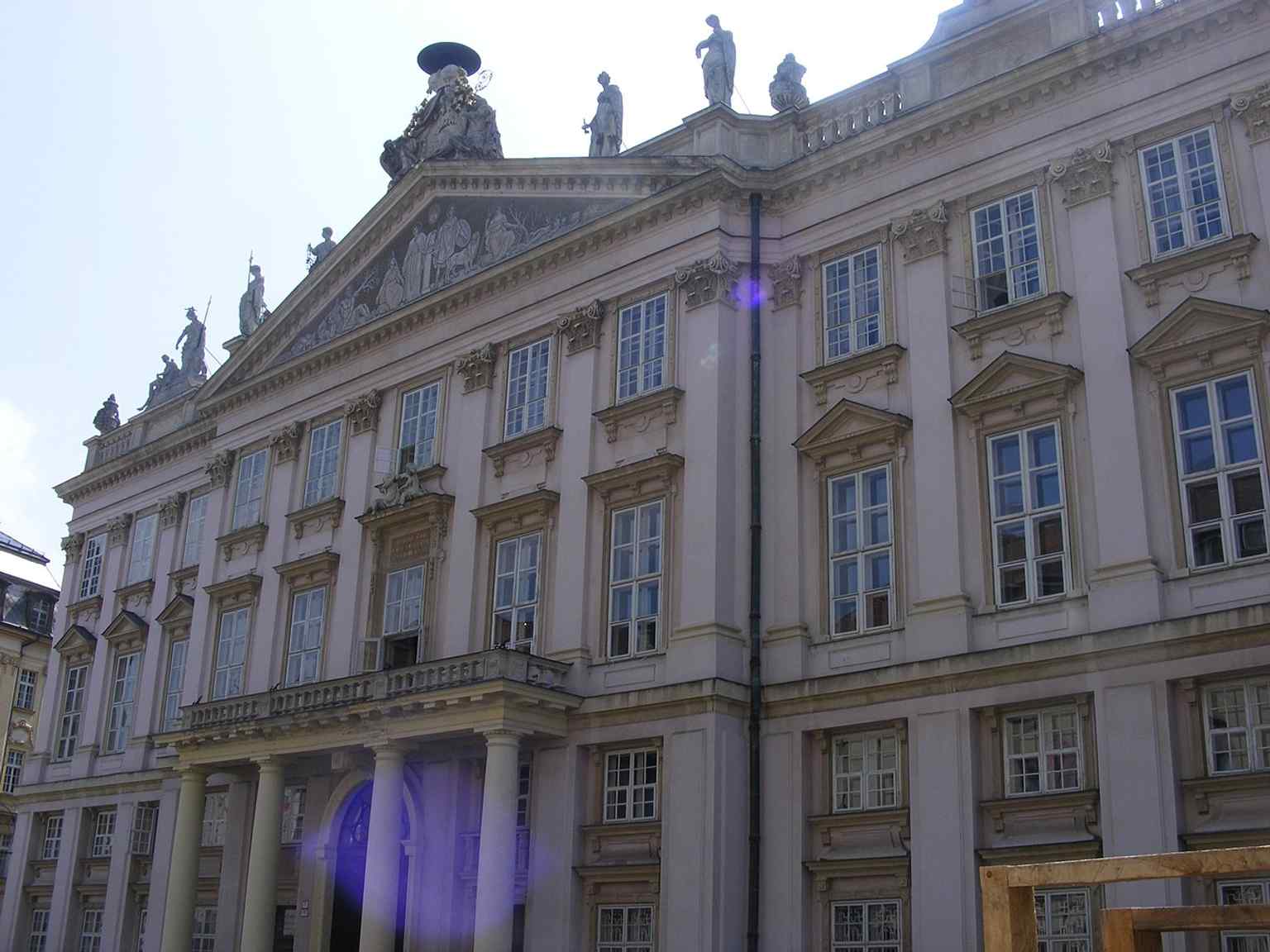
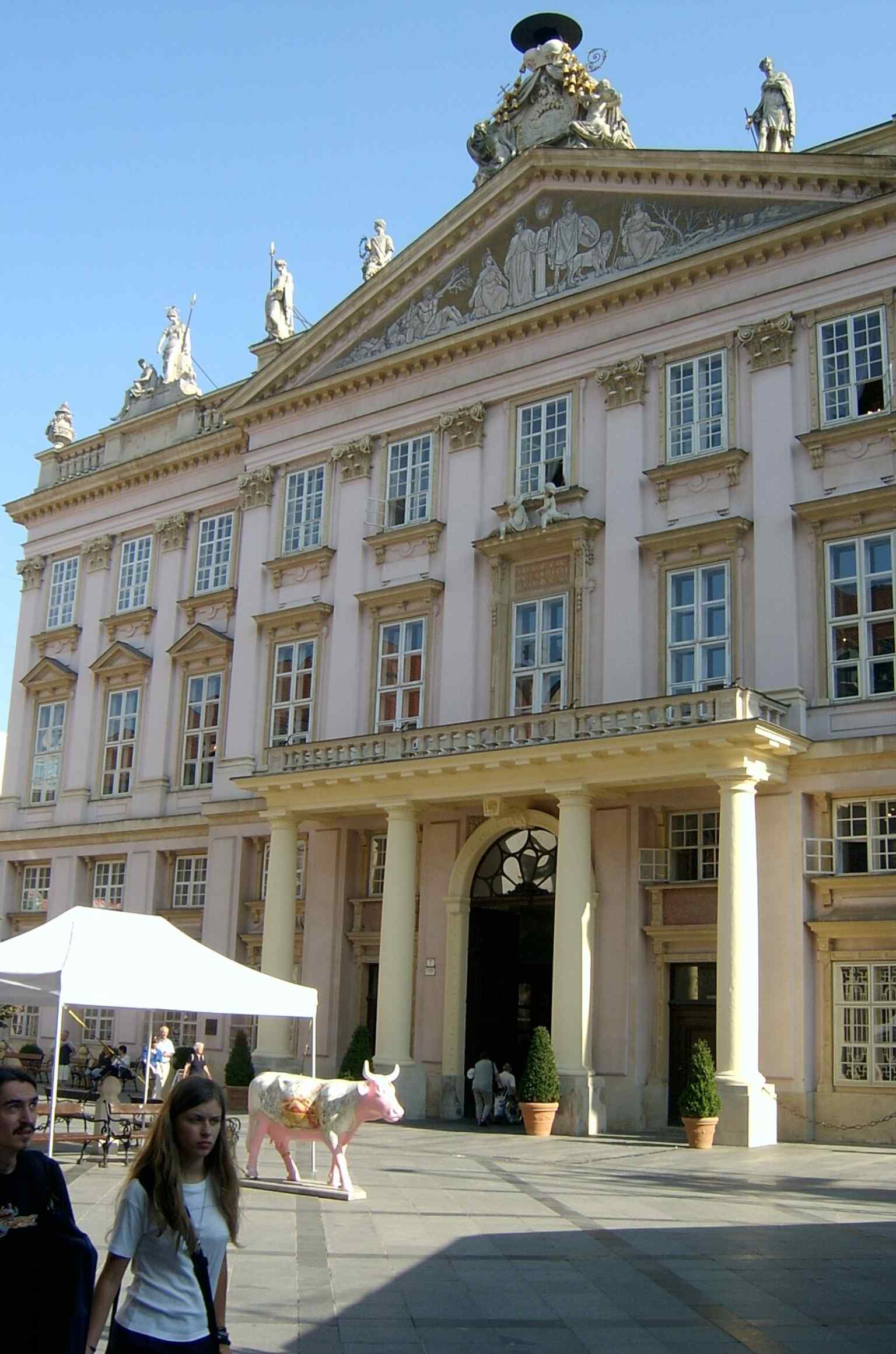
On your right, look for the wide pale pink stucco façade, the central balcony carried by four stone columns, and the huge coat of arms set high along the roofline.

This is Primate’s Palace, and it wears power very neatly. Not loud power... the organized kind. The kind that signs treaties, hosts dignitaries, and decides how a capital should present itself to the world.

Before this elegant front rose here in the late eighteenth century, this spot already mattered for centuries. Most visitors admire the polish and keep walking, but beneath it lies one of the old city’s deepest roots: a central medieval zone where the archbishop kept a working residence, where a chapel of Saint Ladislaus stood by the fifteenth century, and where archaeology pushes human presence back to Roman times. Bratislava has a habit of laying a fresh tablecloth over an ancient table.

When the Hungarian army was defeated at Mohács in fifteen twenty-six, the kingdom’s center of gravity shifted north. Pressburg, today’s Bratislava, grew into a coronation city, and once kings were crowned here, the supporting machinery of rank and rule clustered close by. Crowns touched heads in Saint Martin’s Cathedral, but the hosting, lobbying, filing, bargaining, and ceremonial planning needed headquarters like this one.

That helps explain the title here. The primate was not just a senior churchman, but the leading archbishop of the kingdom, with land, money, influence, and a direct hand in shaping the city. In a place like Bratislava, religious authority and political authority often shared the same front door.

The man who gave the palace its present form was Archbishop József Batthyány. In the seventeen seventies, he decided Bratislava needed a residence worthy of his office and convenient for his family ties, nearby estates, and the imperial court in Vienna. He hired his Viennese architect, Melchior Hefele, approved the final plan in seventeen seventy-eight, and within just a few years this broad, symmetrical palace stood here with its inner courtyard, grand façade, and roofline statues. If you glance at your screen, image three isolates Batthyány’s coat of arms above you. Those two little figures above the balcony hold the letters C and I, for his motto: clemency and justice. A pretty tidy job description, if you ask me.
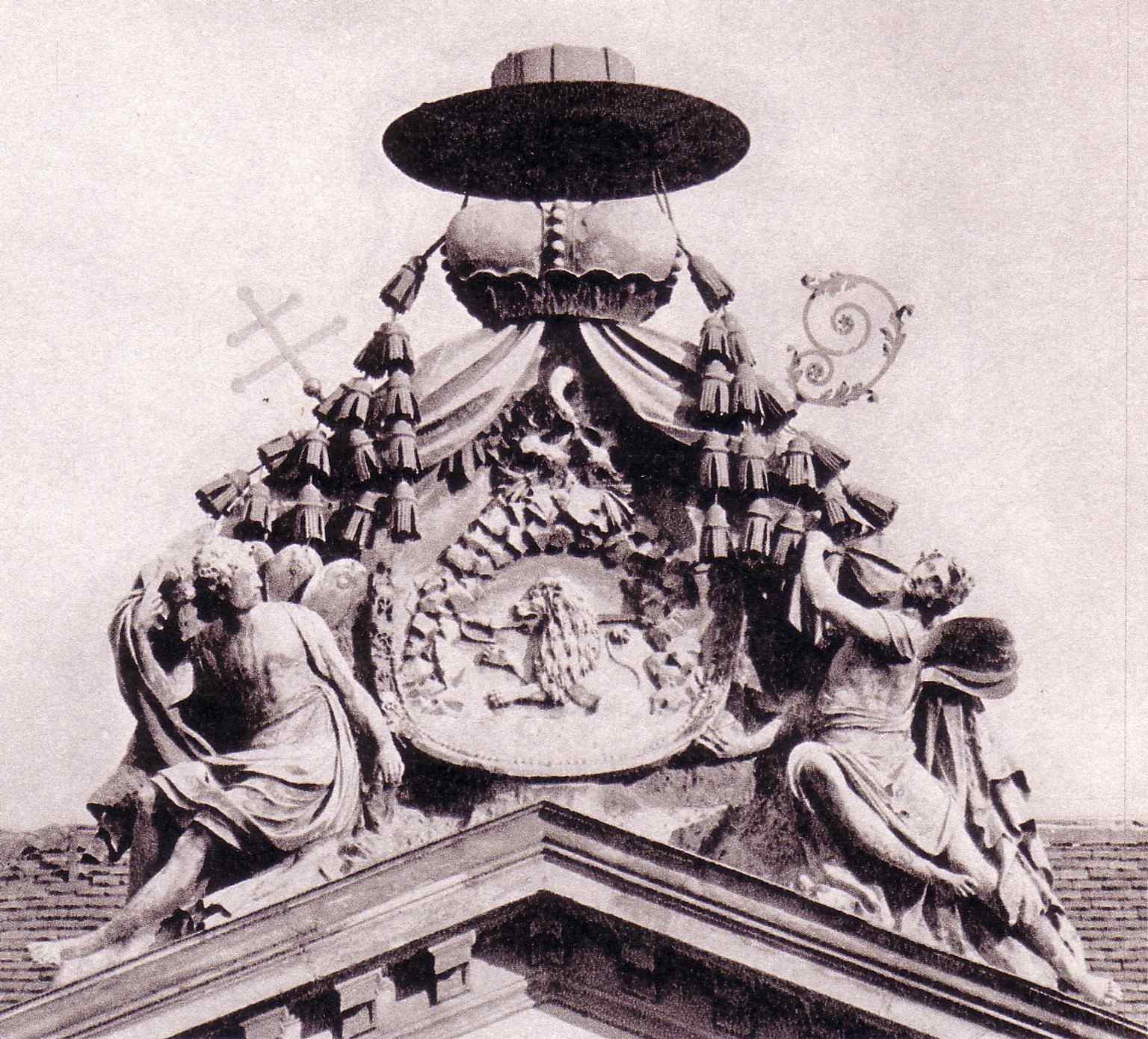
The Batthyány coat of arms on the roofline links the building to Archbishop József Batthyány, who commissioned the palace’s late-18th-century reconstruction.
The Batthyány coat of arms on the roofline links the building to Archbishop József Batthyány, who commissioned the palace’s late-18th-century reconstruction.Photo: Carol23 de, Wikimedia Commons, CC BY-SA 4.0. Cropped & resized.

Inside, the grand reception room is the Mirror Hall, and that room has seen Europe reshuffled. On the twenty-sixth of December, eighteen oh five, after Napoleon’s victory at Austerlitz, Prince Johann-Joseph von Liechtenstein signed the Peace of Pressburg here for Austria, and Charles-Maurice de Talleyrand signed for France. Later, Ferdinand the Fifth signed the March Laws here in eighteen forty-eight. Even in nineteen sixty-eight, communist leaders used this palace for the Bratislava Declaration. Same walls... different empires, different paperwork.

And then the city added one more layer. After the archbishops moved back to Esztergom, the palace declined, until Bratislava bought it in nineteen oh three and turned it into city property. During that restoration, workers found six lost tapestries hidden behind coverings near the Mirror Hall, like history slipping a note out from inside the wall. Some parts now serve the city mayor, some hold gallery spaces, and the building still hosts public life rather than merely posing for it.

Carry that thought with you to Mirbach Palace: in Bratislava, the loveliest façades often stand on much older claims.
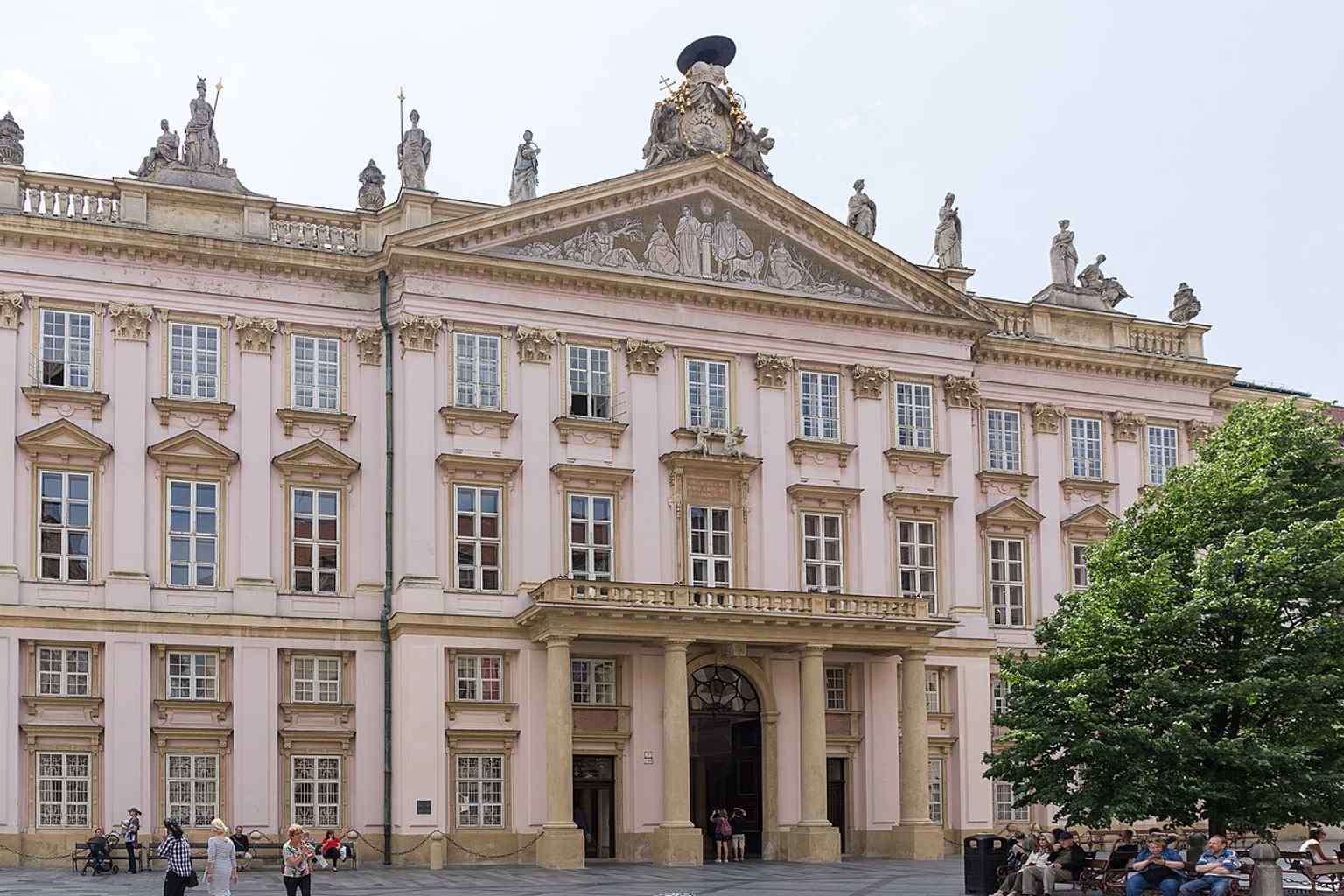
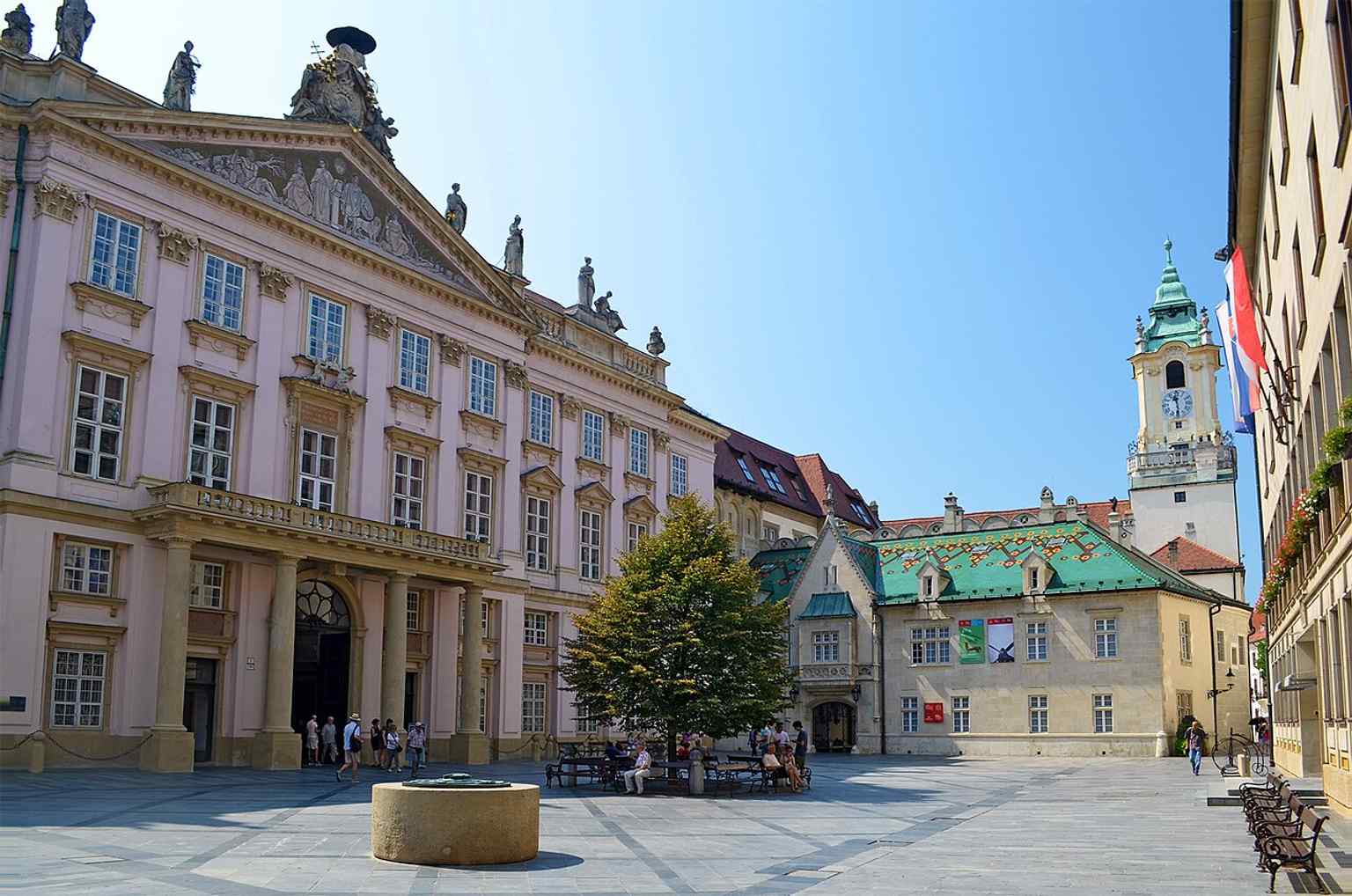
A crisp modern view of the palace’s main façade on Primatial Square, showing the grand classical front that fills nearly the whole south side of the square.
A crisp modern view of the palace’s main façade on Primatial Square, showing the grand classical front that fills nearly the whole south side of the square.Photo: Pymouss, Wikimedia Commons, CC BY-SA 4.0. Cropped & resized.
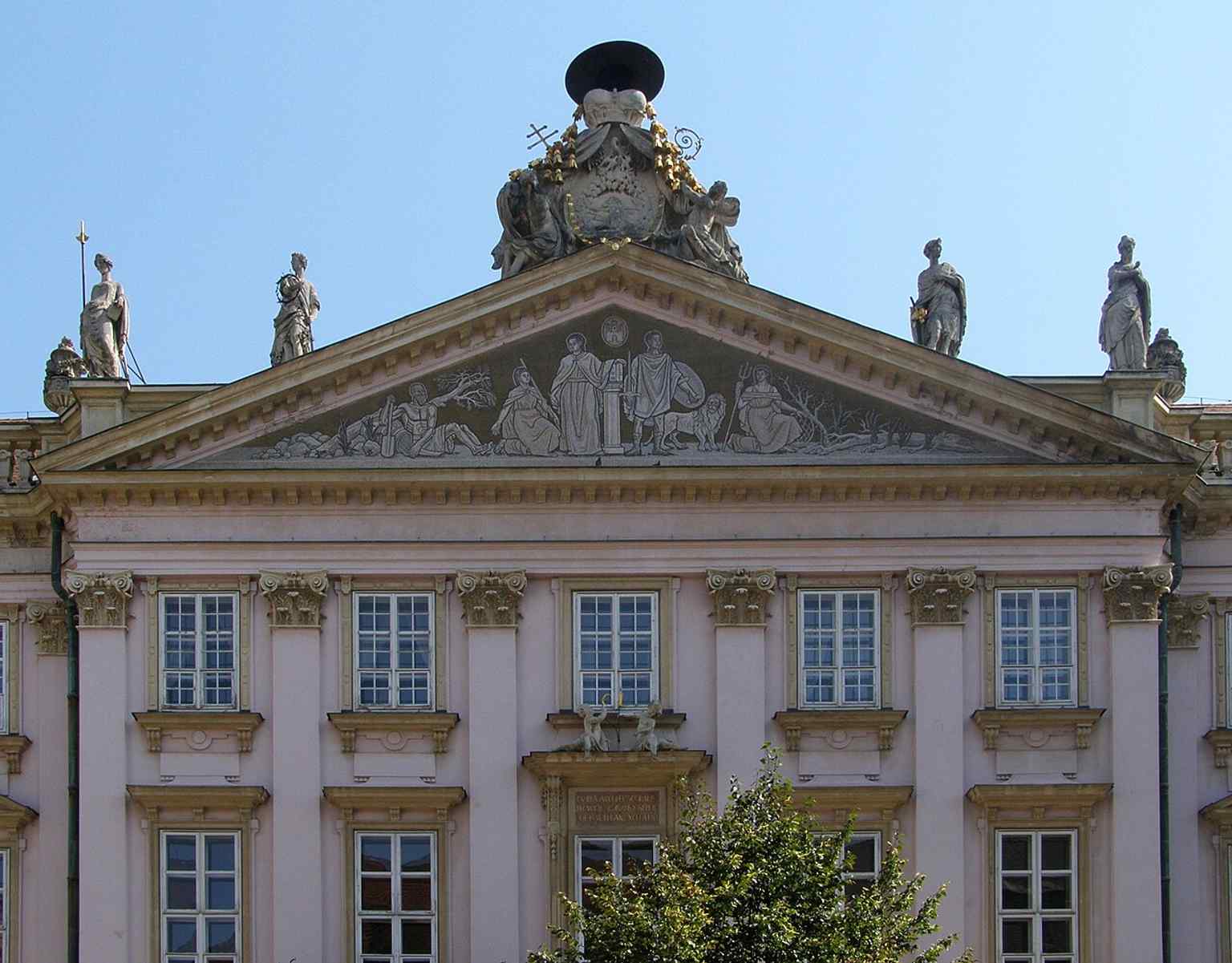
The pediment close-up highlights the palace’s classical fronton, where the original Maulbertsch fresco once crowned the façade before being replaced by a later mosaic.
The pediment close-up highlights the palace’s classical fronton, where the original Maulbertsch fresco once crowned the façade before being replaced by a later mosaic.Photo: Albertus teolog, Wikimedia Commons, CC BY-SA 4.0. Cropped & resized.
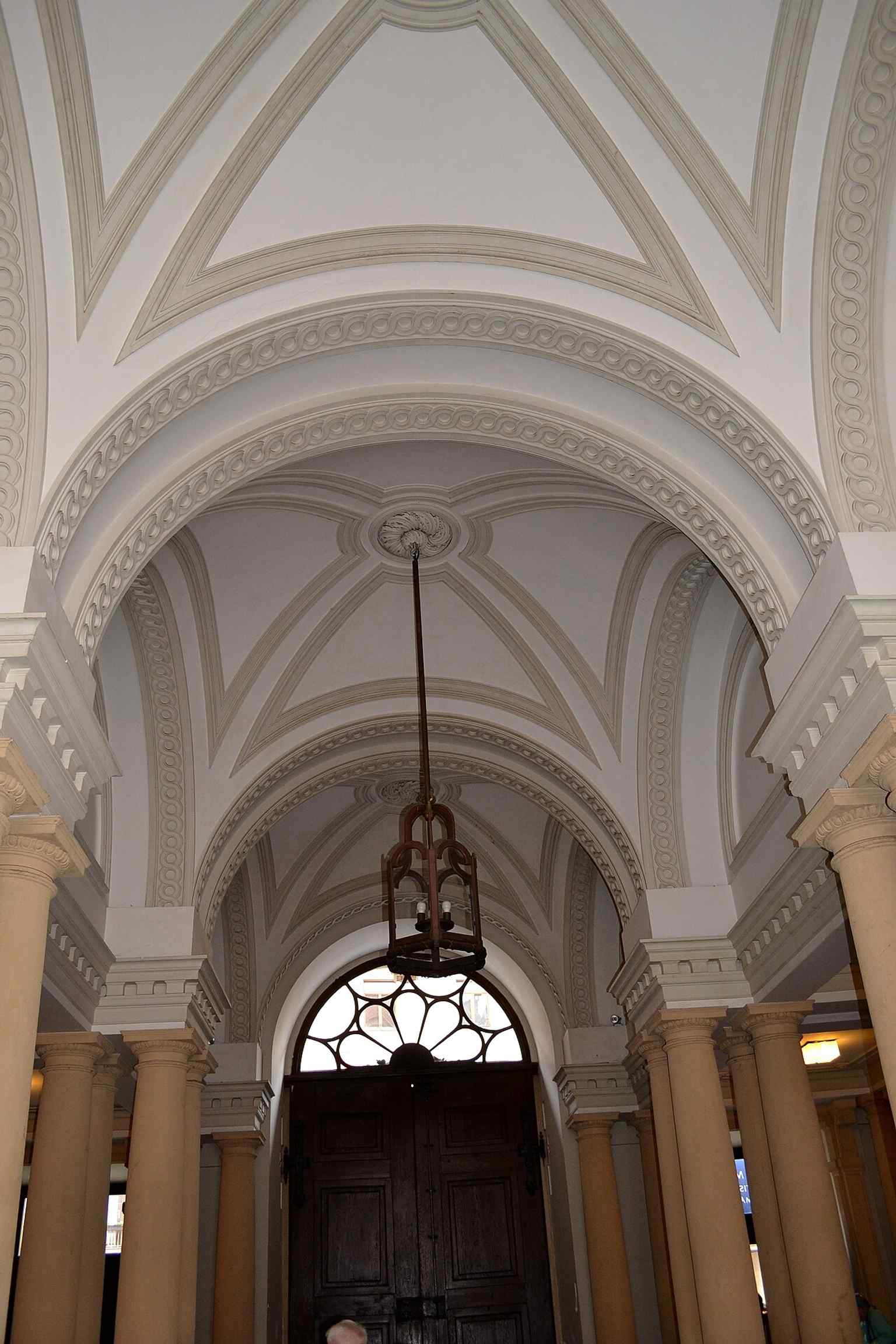
Looking up into the passageway, this image captures the interior entrance space that leads into the palace’s ceremonial courtyards.
Looking up into the passageway, this image captures the interior entrance space that leads into the palace’s ceremonial courtyards.Photo: Lure, Wikimedia Commons, CC BY-SA 3.0. Cropped & resized.
This plaque commemorates the Peace of Pressburg of 1805, signed in the palace’s Mirror Hall after the Battle of Austerlitz.
This plaque commemorates the Peace of Pressburg of 1805, signed in the palace’s Mirror Hall after the Battle of Austerlitz.Photo: Szabi237, Wikimedia Commons, CC BY 3.0. Cropped & resized.
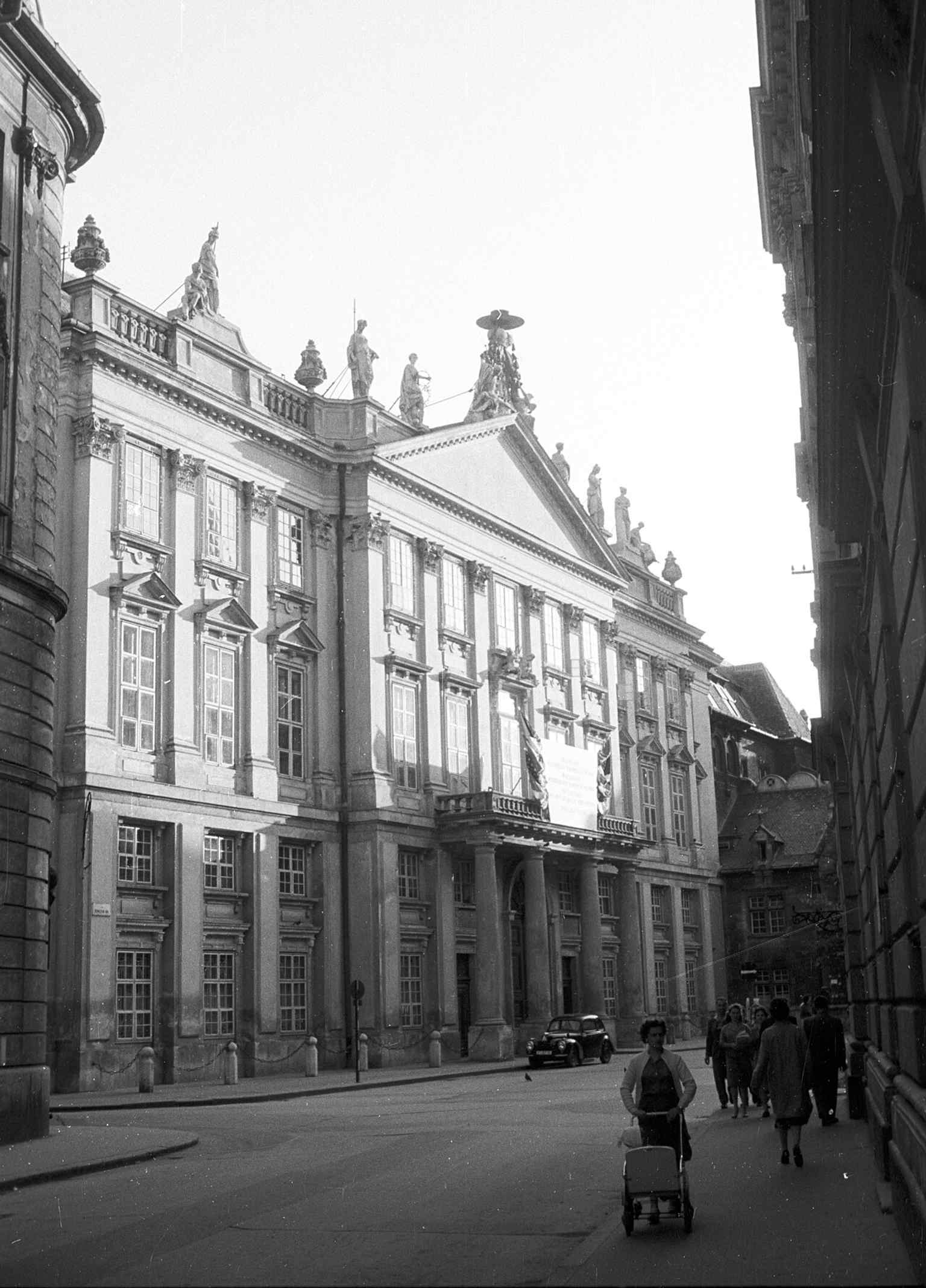
A vintage street-level view shows the palace in an earlier urban setting, useful for telling the story of how it survived and changed through the 20th century.
A vintage street-level view shows the palace in an earlier urban setting, useful for telling the story of how it survived and changed through the 20th century.Photo: FOTO:Fortepan — ID 51370: Adományozó/Donor: Nagy Gyula. archive copy at the Wayback Machine, Wikimedia Commons, CC BY-SA 3.0. Cropped & resized.
An older heritage-record image of the monument, ideal as a documentary view of the palace as a protected cultural landmark.
An older heritage-record image of the monument, ideal as a documentary view of the palace as a protected cultural landmark.Photo: This photograph was taken by K@rl . It's released under the license(s) stated below. You are free to use it for any purpose as long as you credit me as the author and follow the terms of the license., Wikimedia Commons, CC BY-SA 3.0. Cropped & resized.
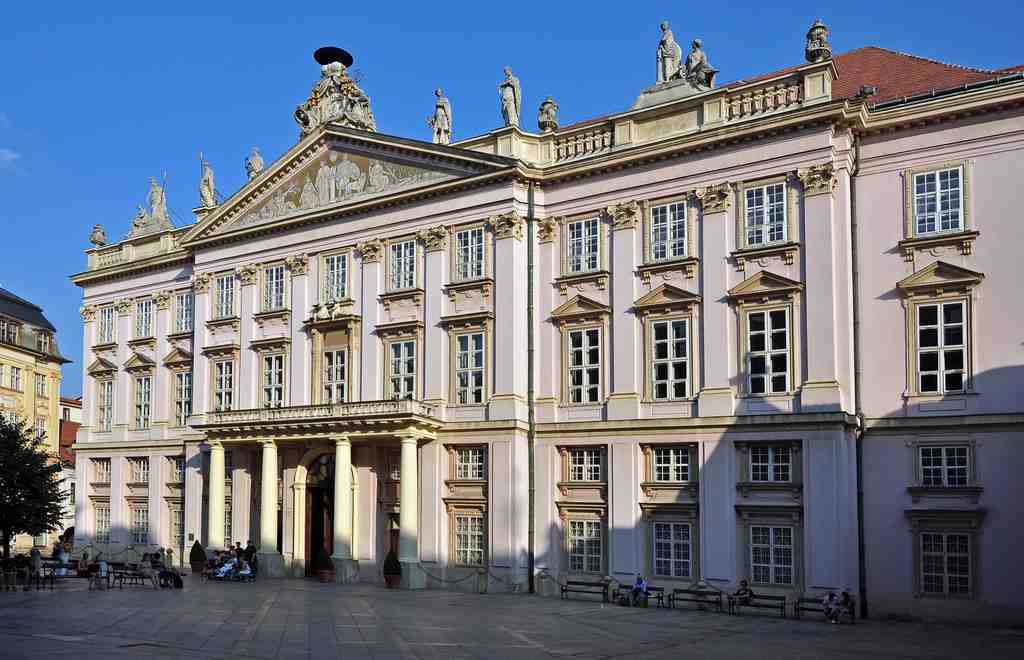
Another strong full-building view, useful for showing the palace’s symmetrical classicist massing and its place in the historic center.
Another strong full-building view, useful for showing the palace’s symmetrical classicist massing and its place in the historic center.Photo: Valerio2468, Wikimedia Commons, CC BY-SA 4.0. Cropped & resized.
This street-level perspective shows the palace embedded in the old town fabric, echoing the text’s note about its sensitive integration into the historic core.
This street-level perspective shows the palace embedded in the old town fabric, echoing the text’s note about its sensitive integration into the historic core.Photo: Рустам Абдрахимов, Wikimedia Commons, CC BY 3.0. Cropped & resized.
A likely interior-focused catalogue image that can support the story of the palace as an active civic and ceremonial venue, not just a monument.
A likely interior-focused catalogue image that can support the story of the palace as an active civic and ceremonial venue, not just a monument.Photo: Valerio2468, Wikimedia Commons, CC BY-SA 4.0. Cropped & resized.
arrow_back Back to Bratislava Audio Tour: Historic Heart
Loved by travellers

Thousands of tours started.
Plenty of opinions.

4.8 across the App Store and Google Play. Here's a few we keep coming back to.

starstarstarstarstar
This was a solid way to get to know Brighton without feeling like a tourist. The narration had depth and context, but didn't overdo it.
Christoph
Christoph
Brighton Tour
starstarstarstarstar
Started this tour with a croissant in one hand and zero expectations. The app just vibes with you, no pressure, just you, your headphones, and some cool stories.
download Get the app

Pop your headphones in.
Step outside.

Free to download. Tours in every city. Start in 60 seconds — no account, no card.

Download on the App StoreGet it on Google Play
starstarstarstarstar_half
4.8
AudaTours app icon
headphones
~ 4 min until your first tour starts
public
1,000+ cities worldwide
all_inclusive
AudaTours
Unlimited

Every tour. Every city. One subscription.

3097 tours2273 cities138 countries50+ languages