
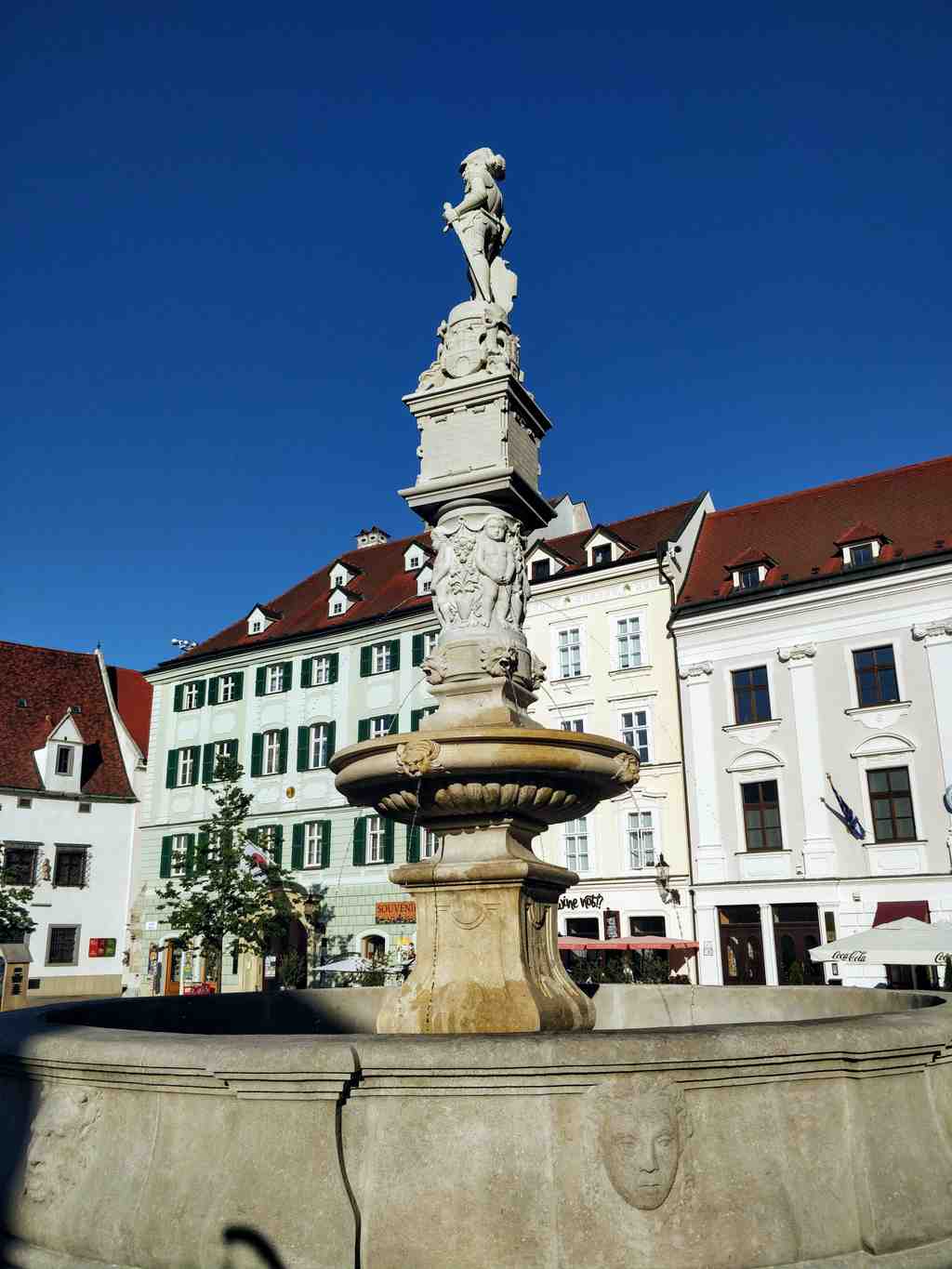
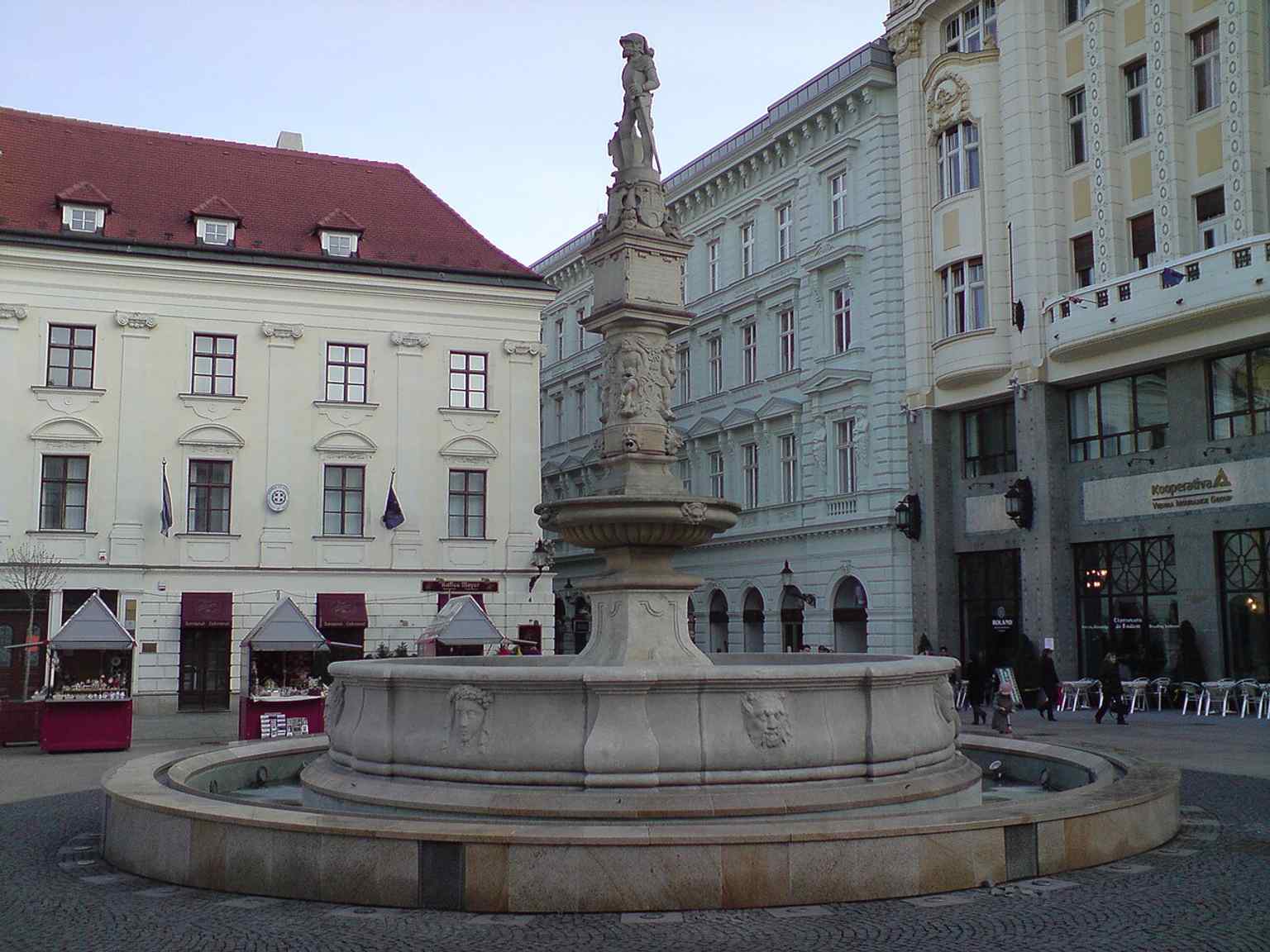
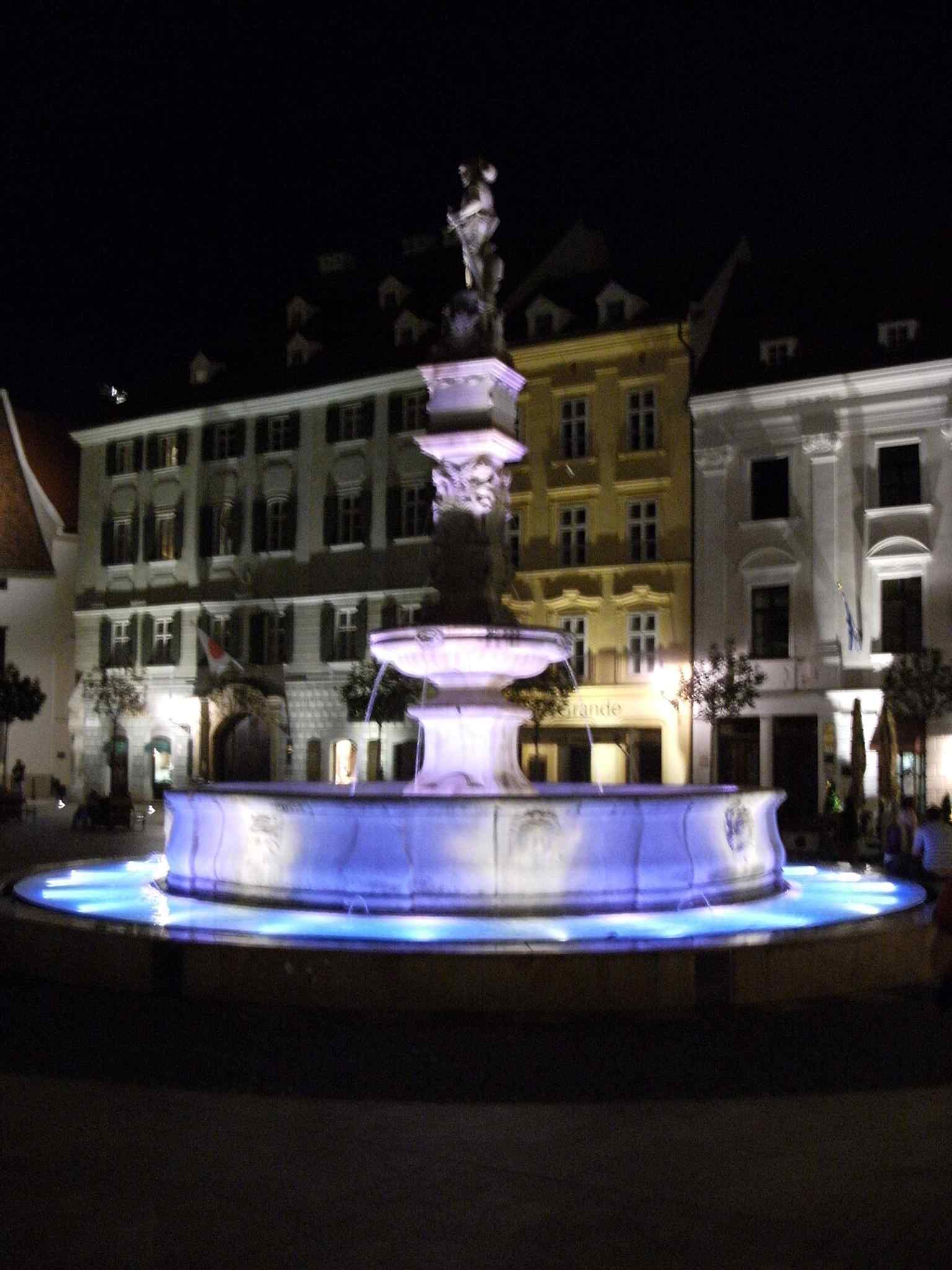
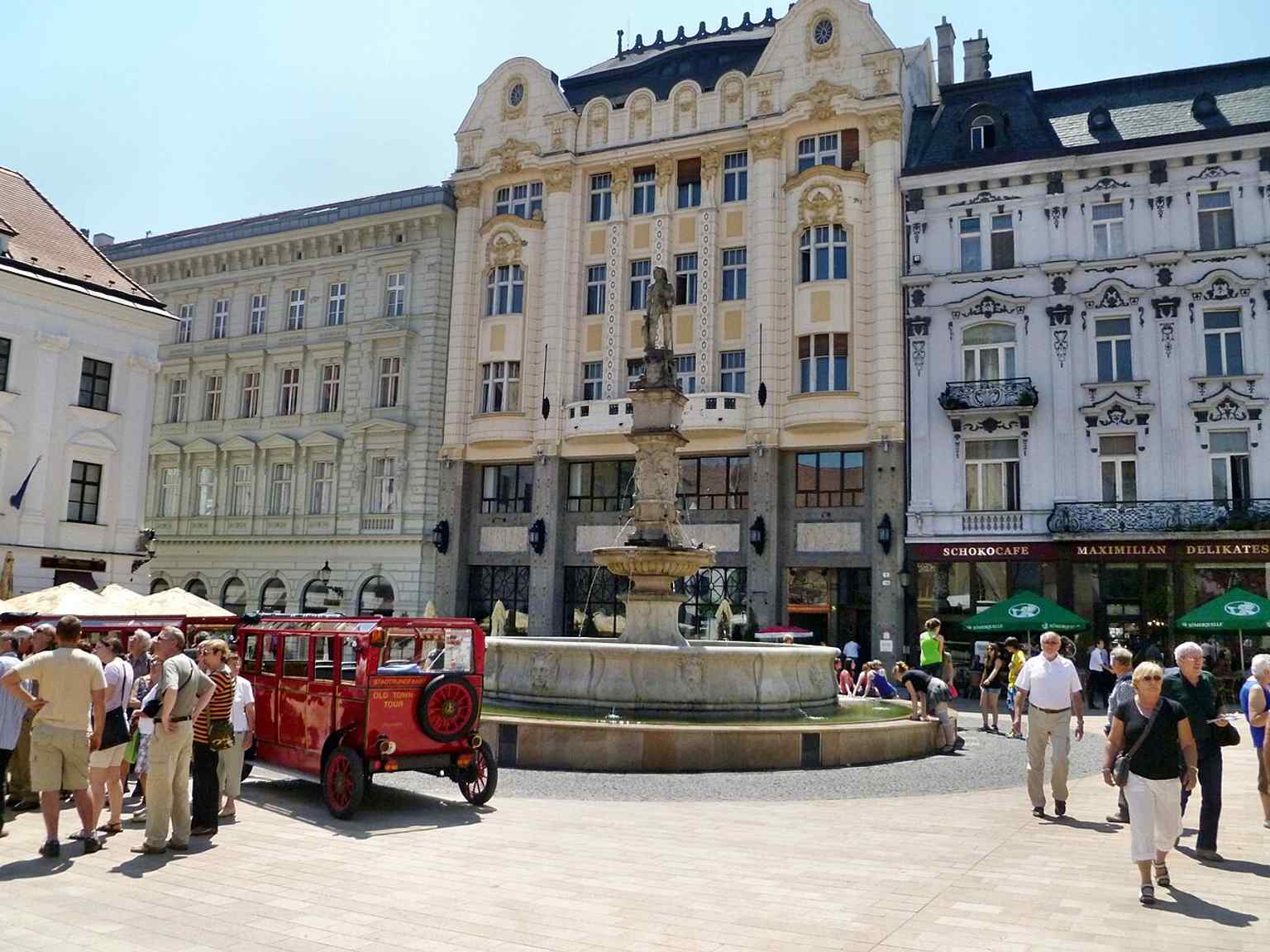
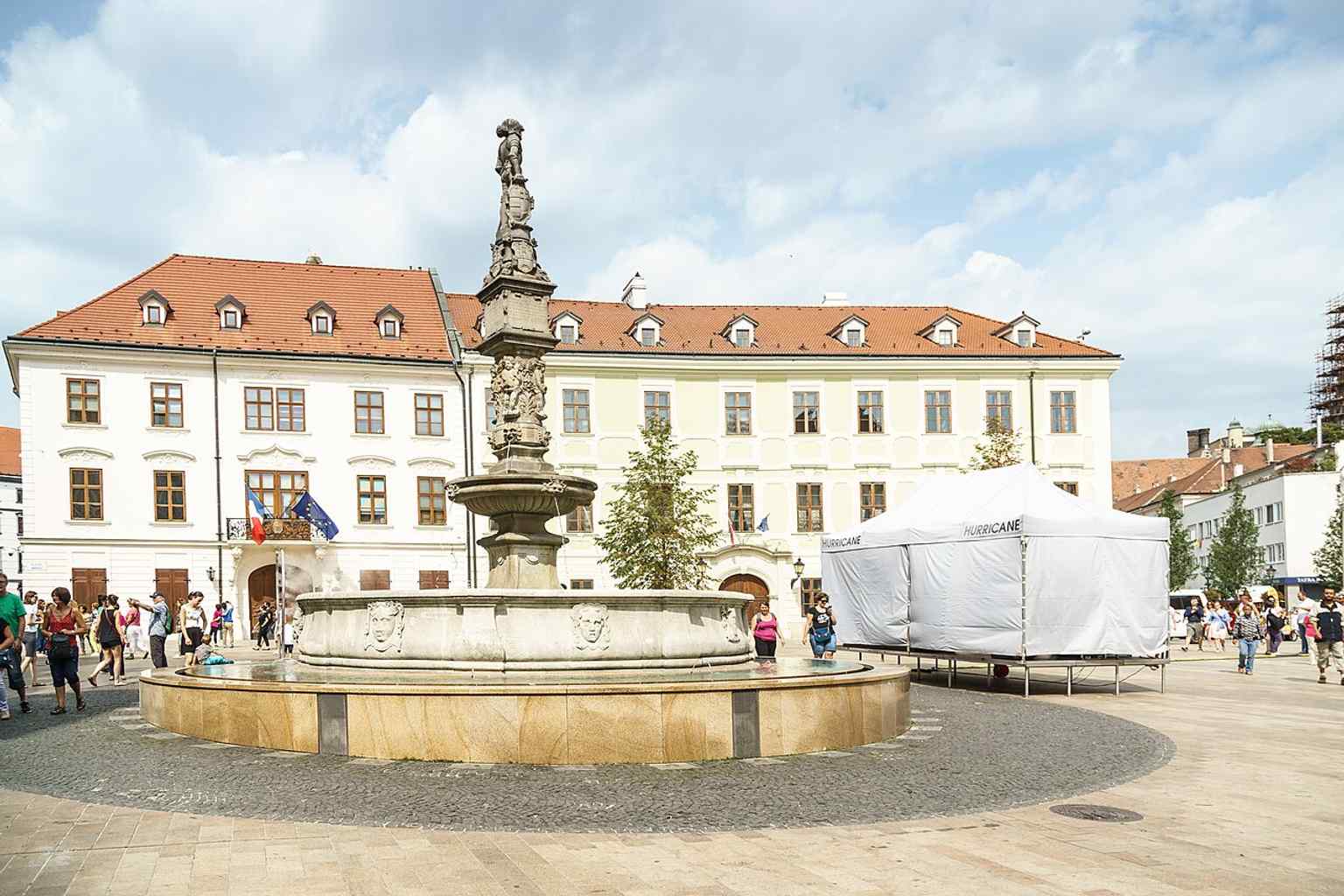
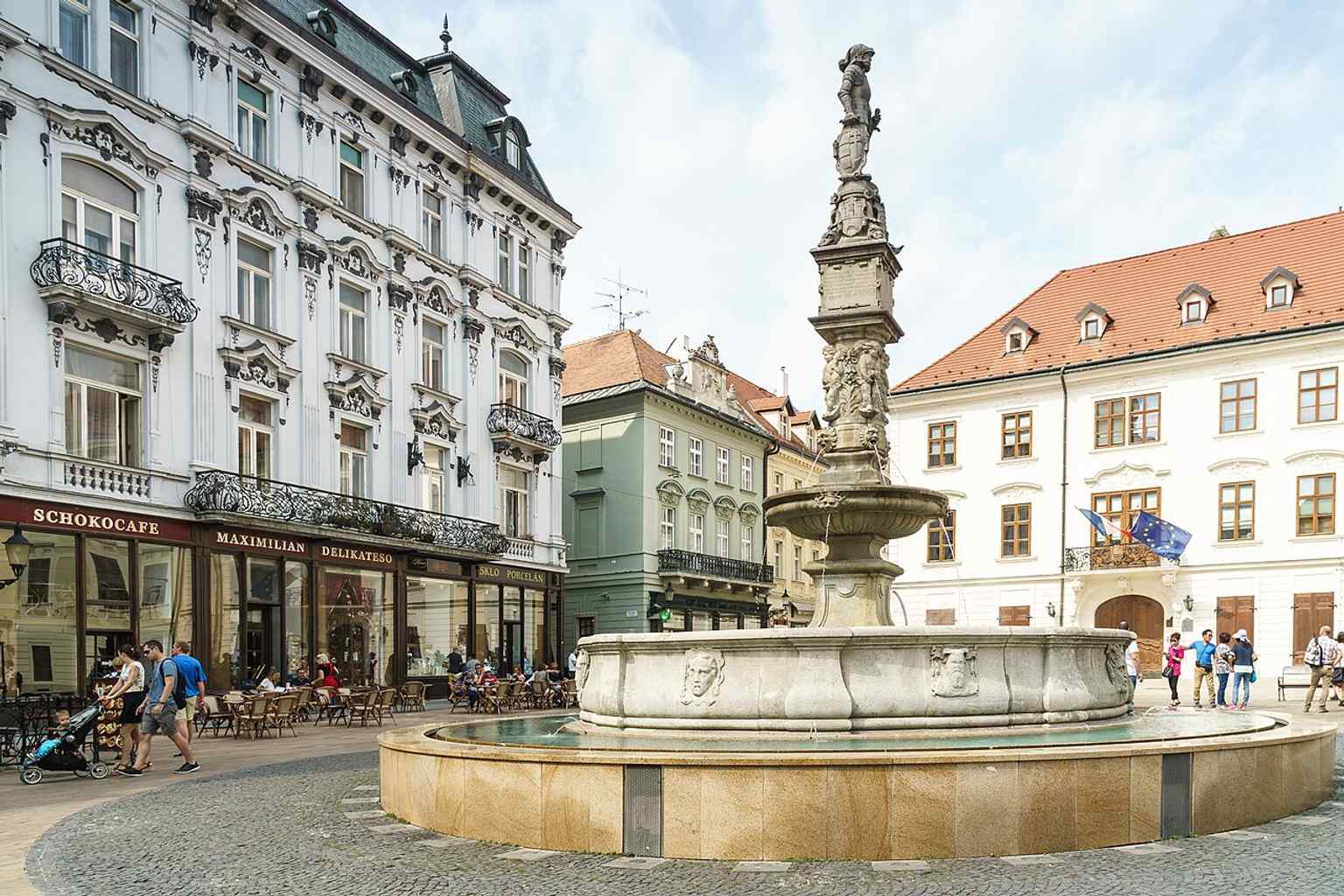
On your right, look for a broad round stone basin topped by a tall central column and a helmeted knight, with carved faces around the rim where water once poured.
This is Maximilian’s Fountain, raised in fifteen seventy-two, and it is the oldest fountain in Bratislava. At first glance it looks ceremonial... a proud Renaissance monument in the middle of the main square. And it is that. But it also began as something far more practical: a city’s answer to fire.
Maximilian the Second entered Bratislava history as the first Hungarian king crowned here, on the eighth of September, fifteen sixty-three. Just four days later, during festive games held for the coronation, a fire broke out in the Hungarian camp and spread into the city. Royal pageantry had barely ended before the hard lesson arrived: celebration is lovely, but water saves lives. So Maximilian ordered water reservoirs across the city, with running water feeding them year-round. This fountain became the finest of them, set here in the main square where markets, town business, and daily survival all met.
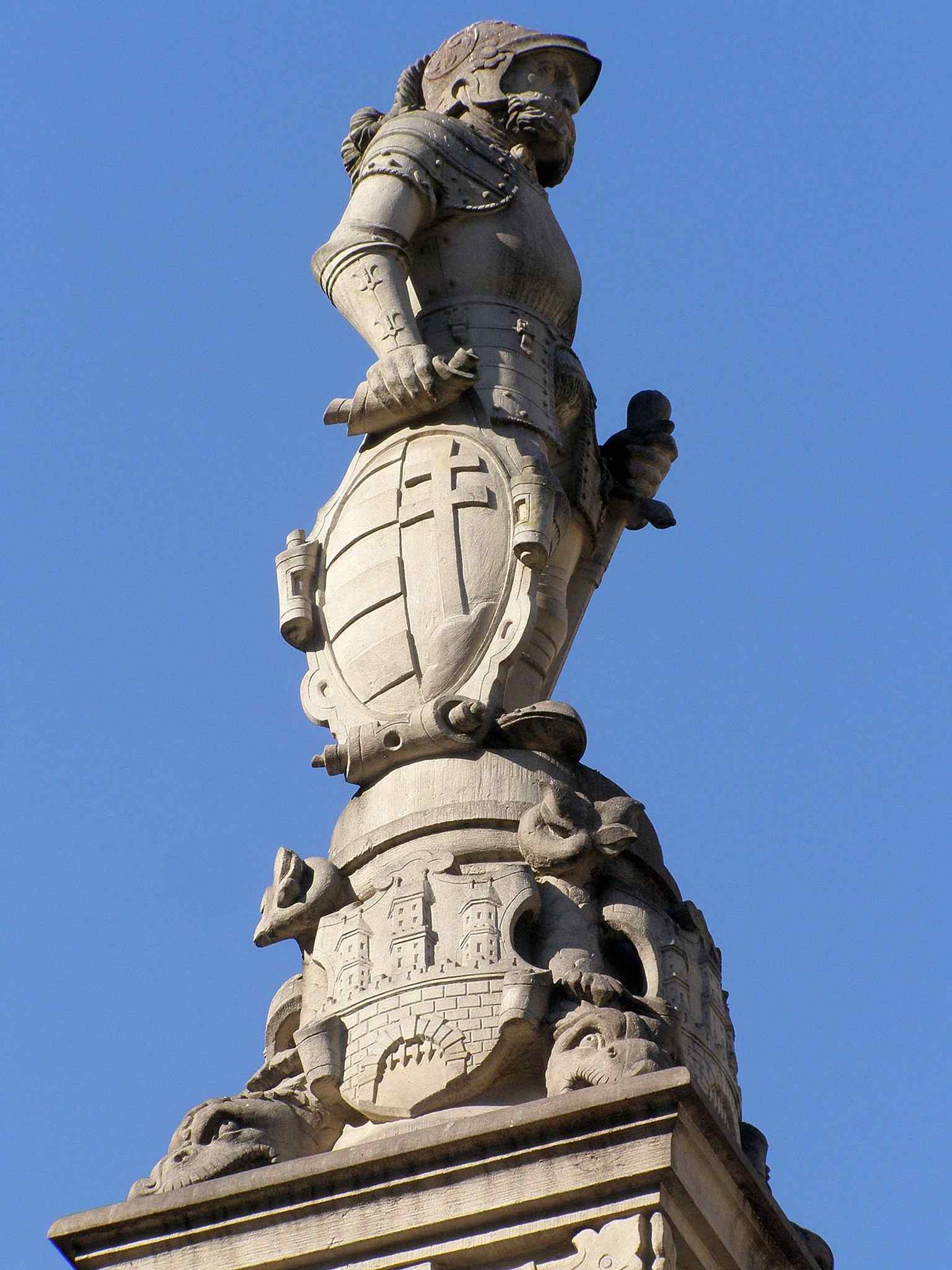
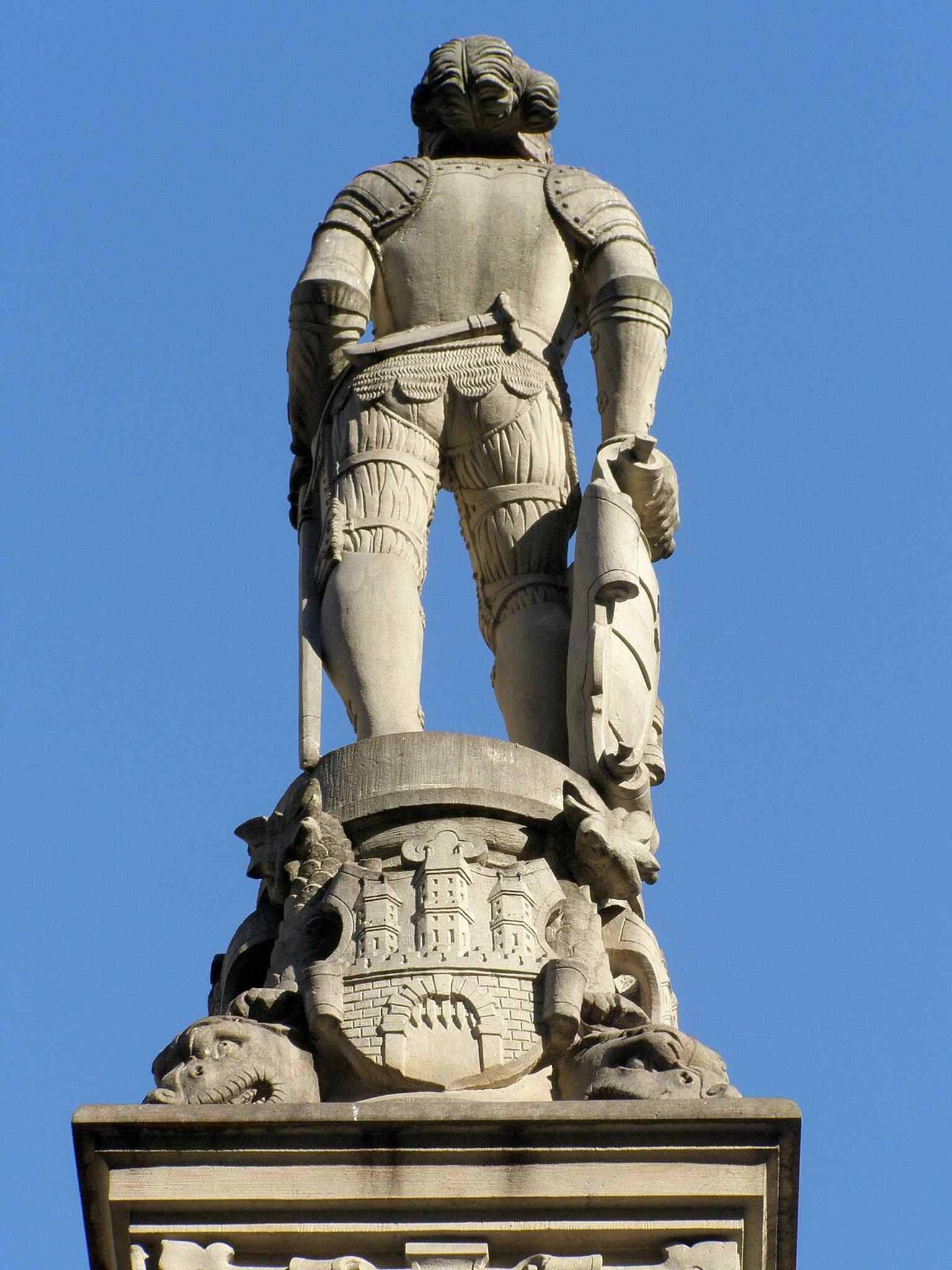
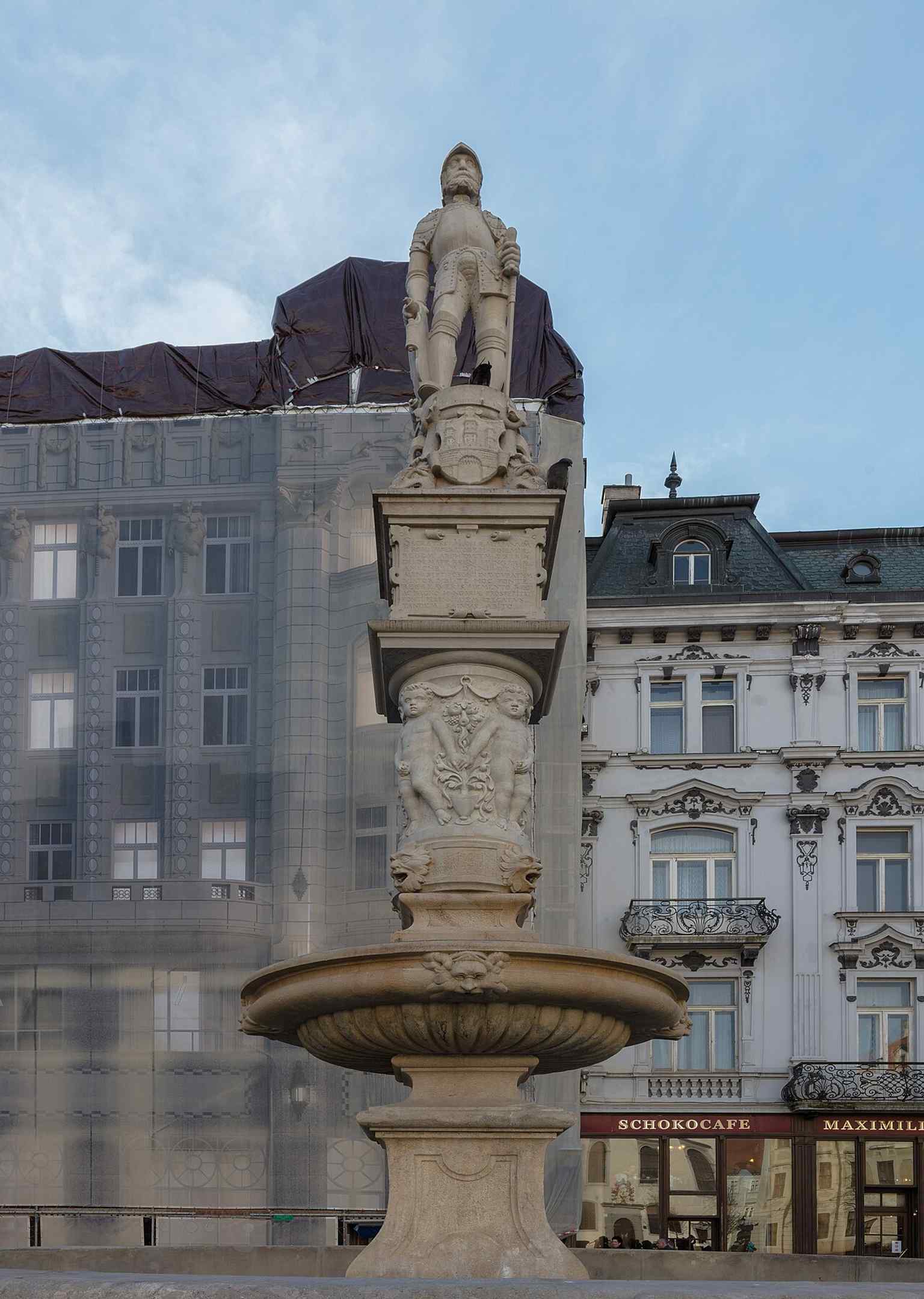
That mix of usefulness and image is the real story here. The fountain gave people water, but it also advertised power. Up on top, the armored figure holds a sword and leans on a shield with the Hungarian coat of arms, facing the town hall. For generations, locals called this the Roland Fountain, linking it to Roland, the legendary knight who symbolized city rights and protection. But many scholars now argue the figure is actually Maximilian himself, dressed as a Christian knight. Same armor, very different message. If you glance at the image on your screen, the figure’s stance makes that debate easier to see.
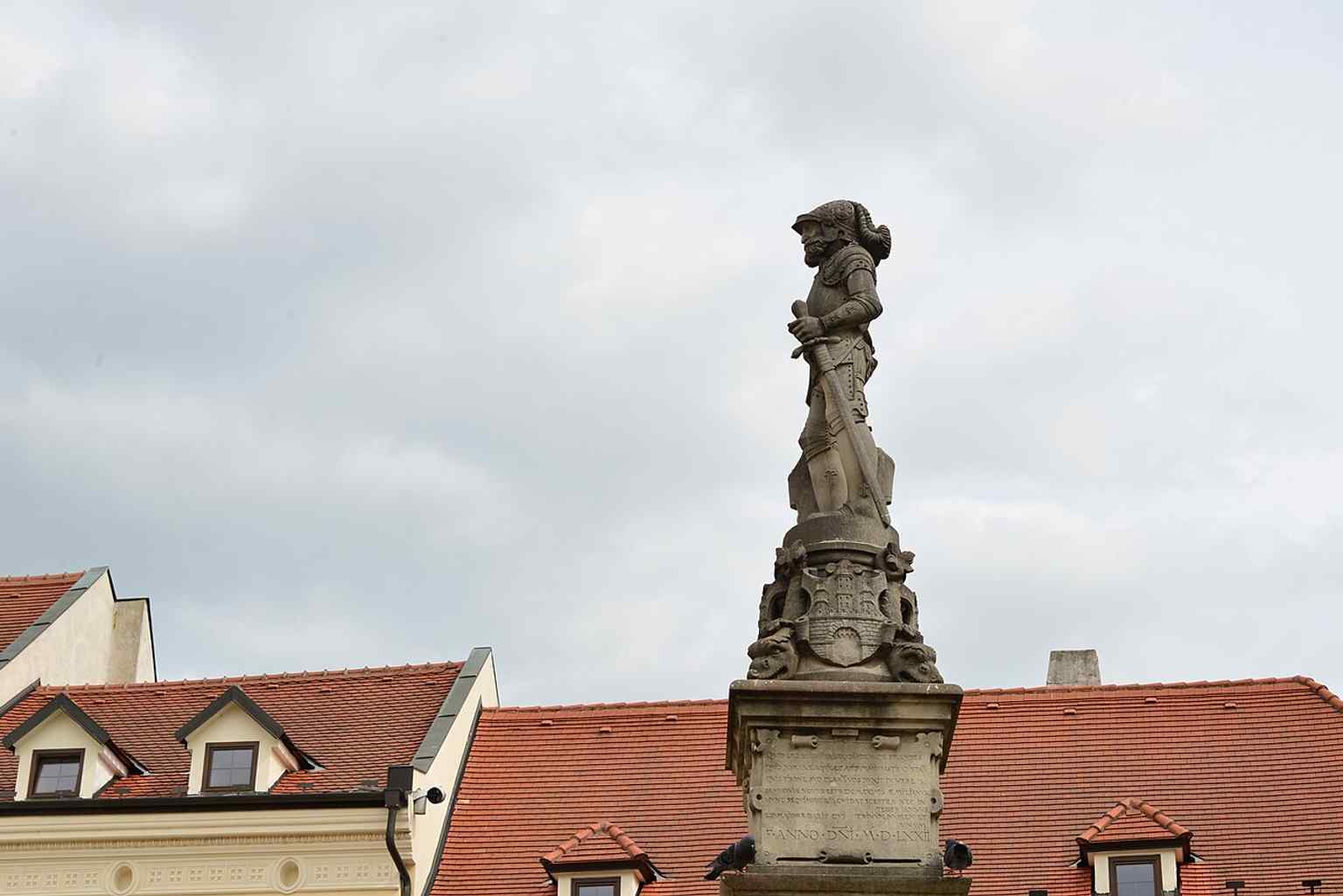
The human hand behind the stone belonged to Andreas Luttringer, a master stonemason from Deutsch Altenburg in Austria, who completed the work in fifteen seventy-two. And there may have been another ambitious hand at work too: newer research suggests a nobleman, Tibor Bocskai, may have pushed the project forward as a private initiative, using the dedication to shine a little brighter at the imperial court. Even fountains, it turns out, can campaign for attention.
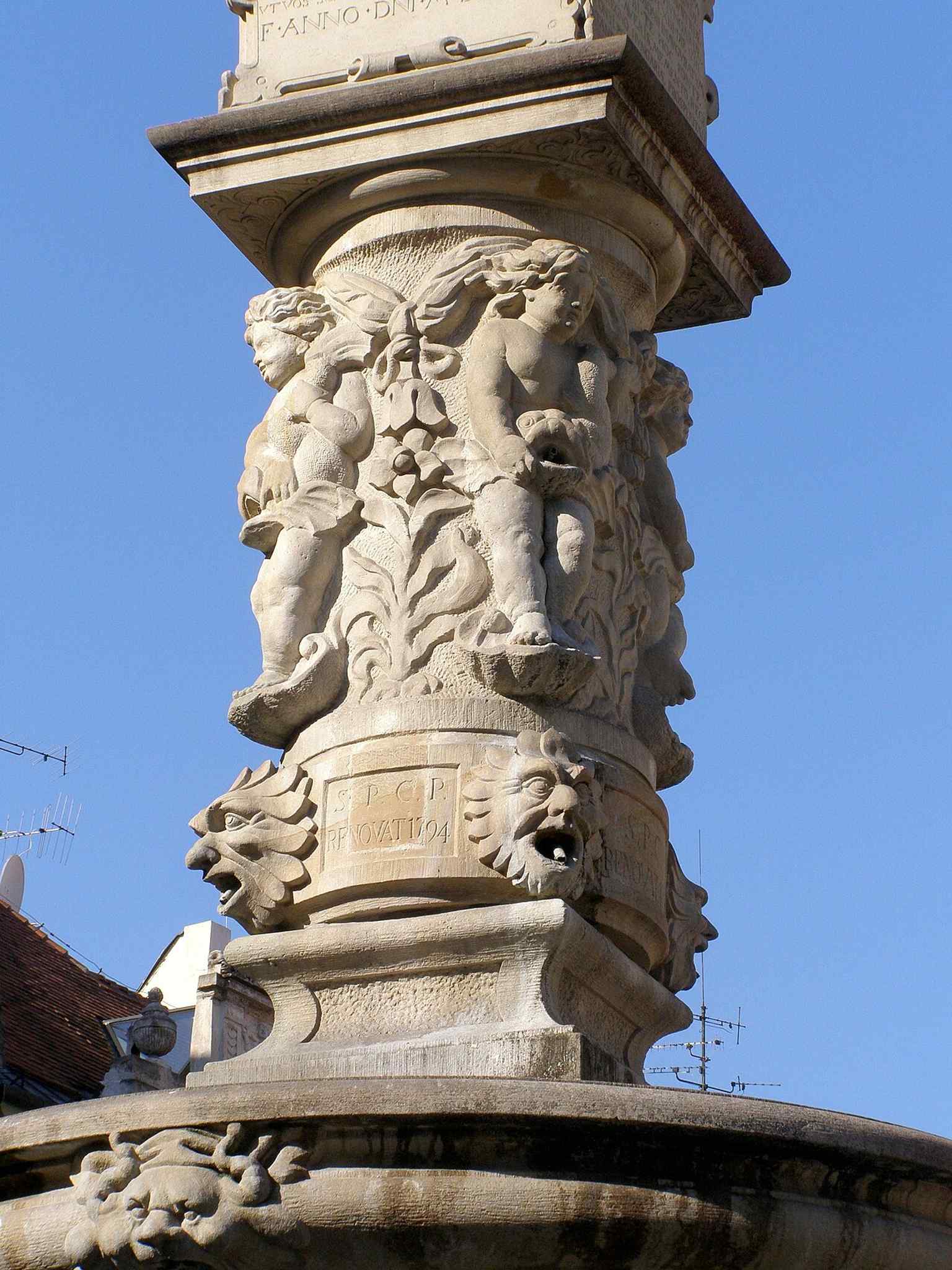
Look around the basin and you’ll notice carved masks, called mascarons, stone faces used as decorative water spouts. The basin is about nine meters across. The fountain changed over the centuries: in the eighteenth century, restorers swapped out some original figures; in two thousand and five, the city added a marble ring that many experts disliked because it dulled the fountain’s historic character. Then, in two thousand and nineteen, restorers from the atelier of sculptor Vladimír Višváder removed those modern additions, brought back the steps, repaired the water system, and restored the Renaissance look. If you want a closer sense of that cleanup, check the restored detail image in the app.
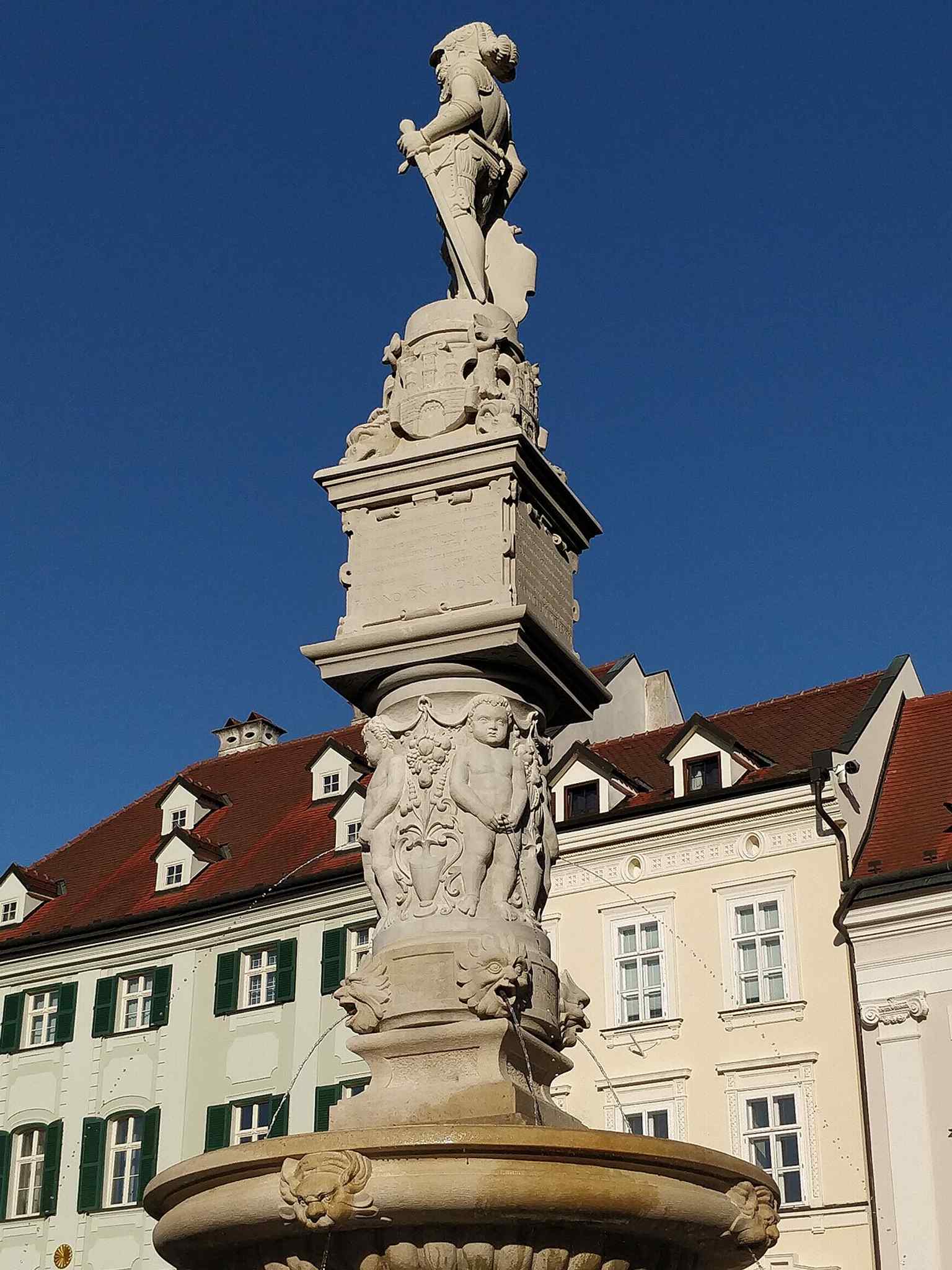
One inscription here once addressed the traveler directly: refresh yourself at this fountain, then remember the king and wish prosperity for Hungary before you go. Not subtle. But honest.
And here’s the question this fountain leaves hanging in the square: if you were a ruler cheered with tournaments and ceremony, what would matter more after the applause... a monument to your glory, or safer daily life for the people living around it?
From this basin in the market square, we’re heading next toward rooms where power moved indoors and became more formal: Primate’s Palace is about a two-minute walk away. And like any good city landmark, this fountain is here around the clock.





.jpg)


