
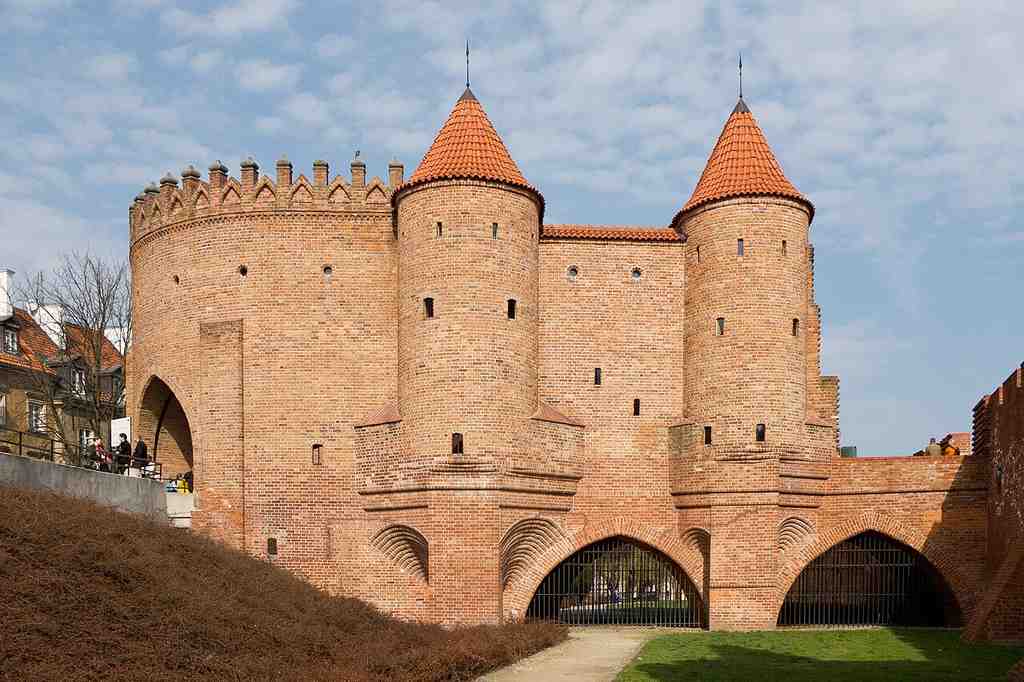
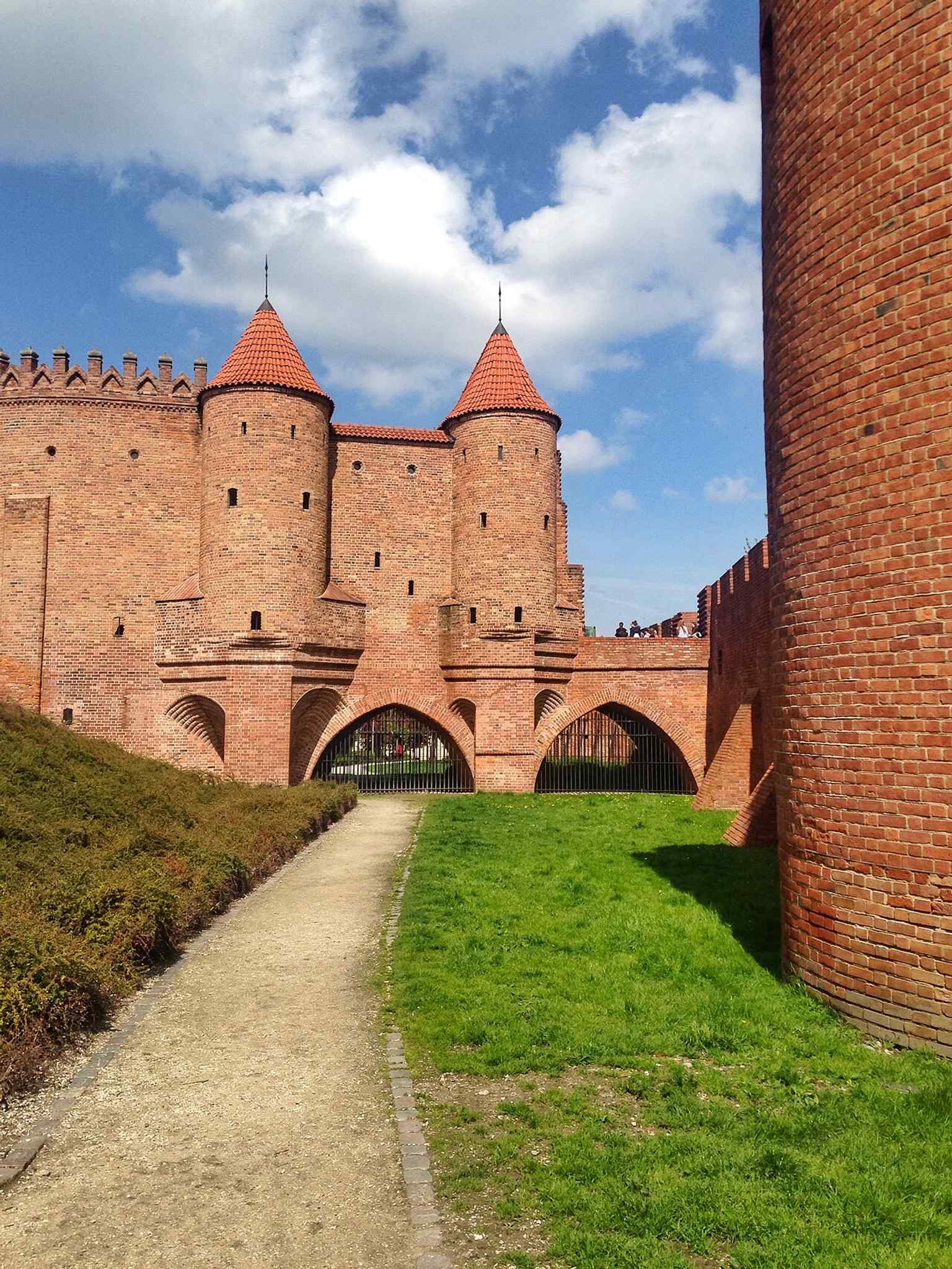
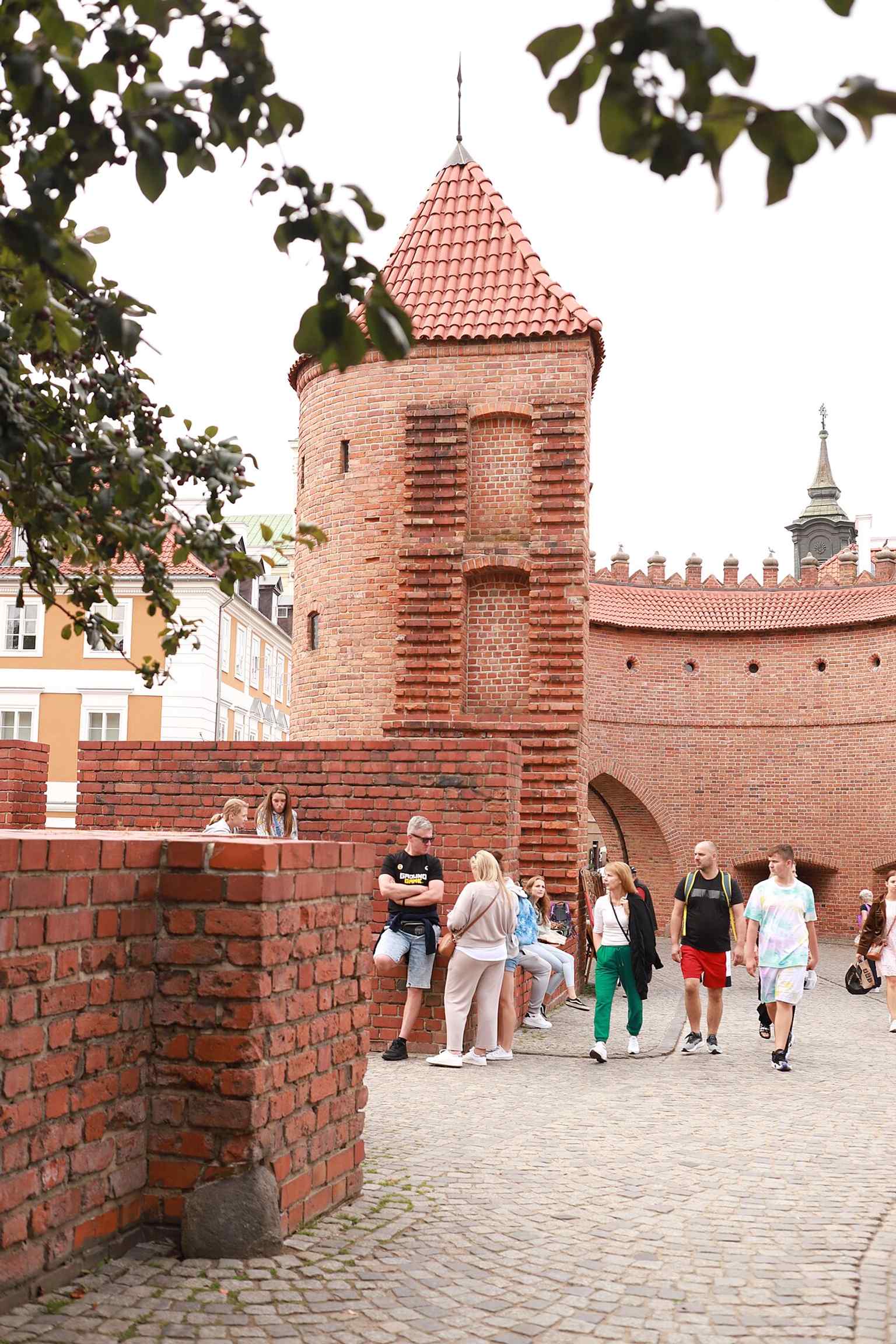
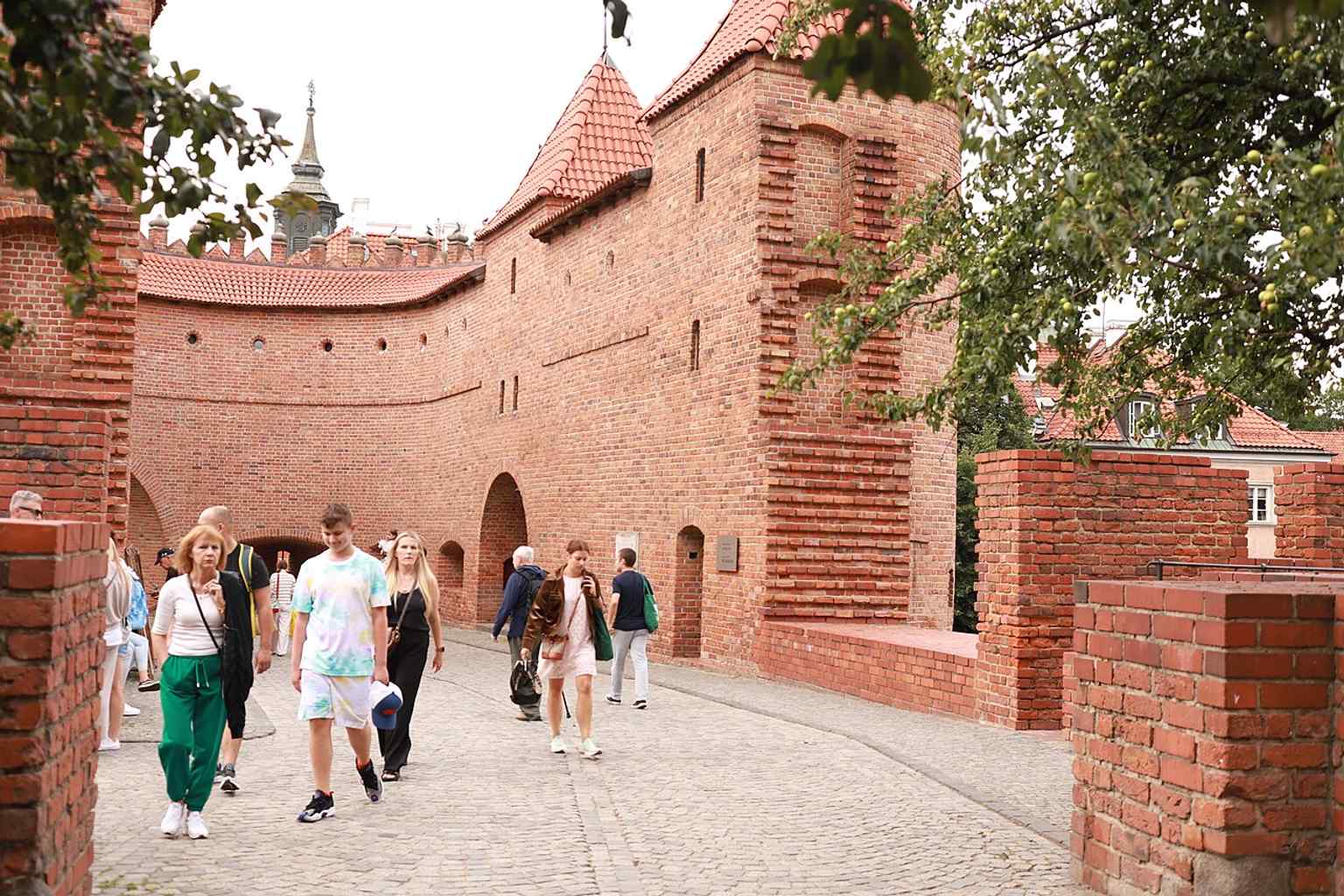
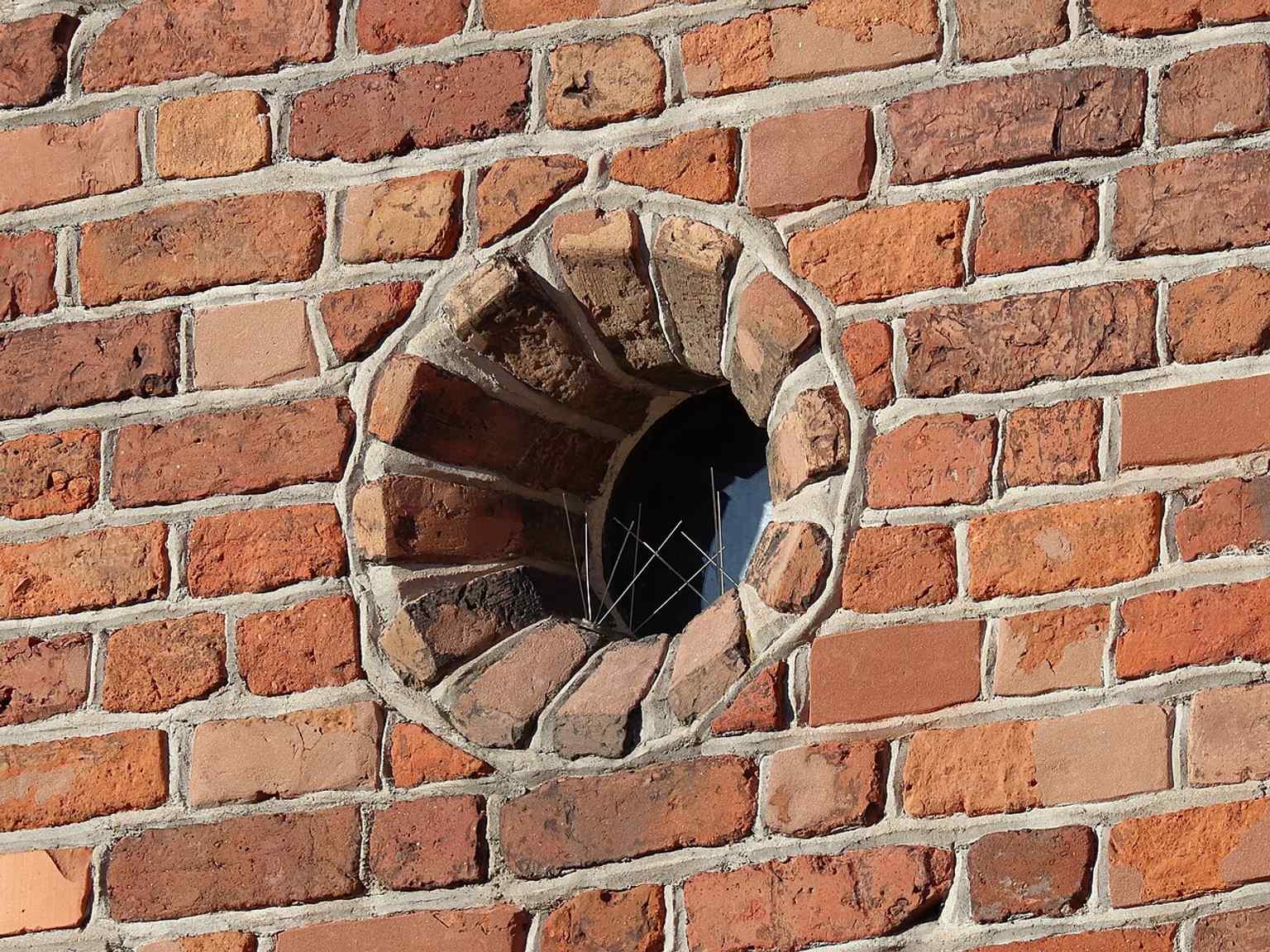
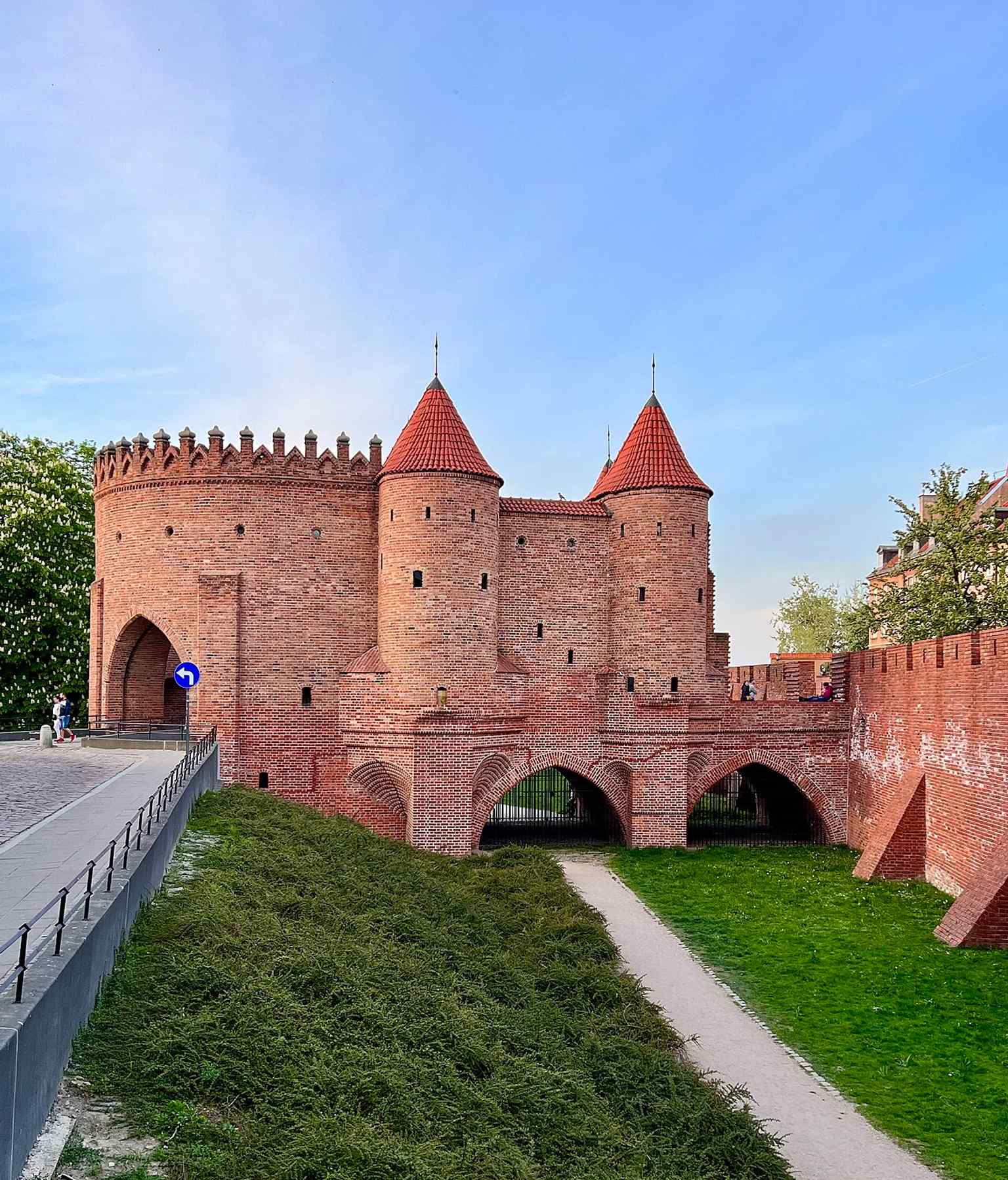
Look for the red-brick, half-round fortification with a broad arched passage through the middle and a row of small circular loophole windows along its upper level.
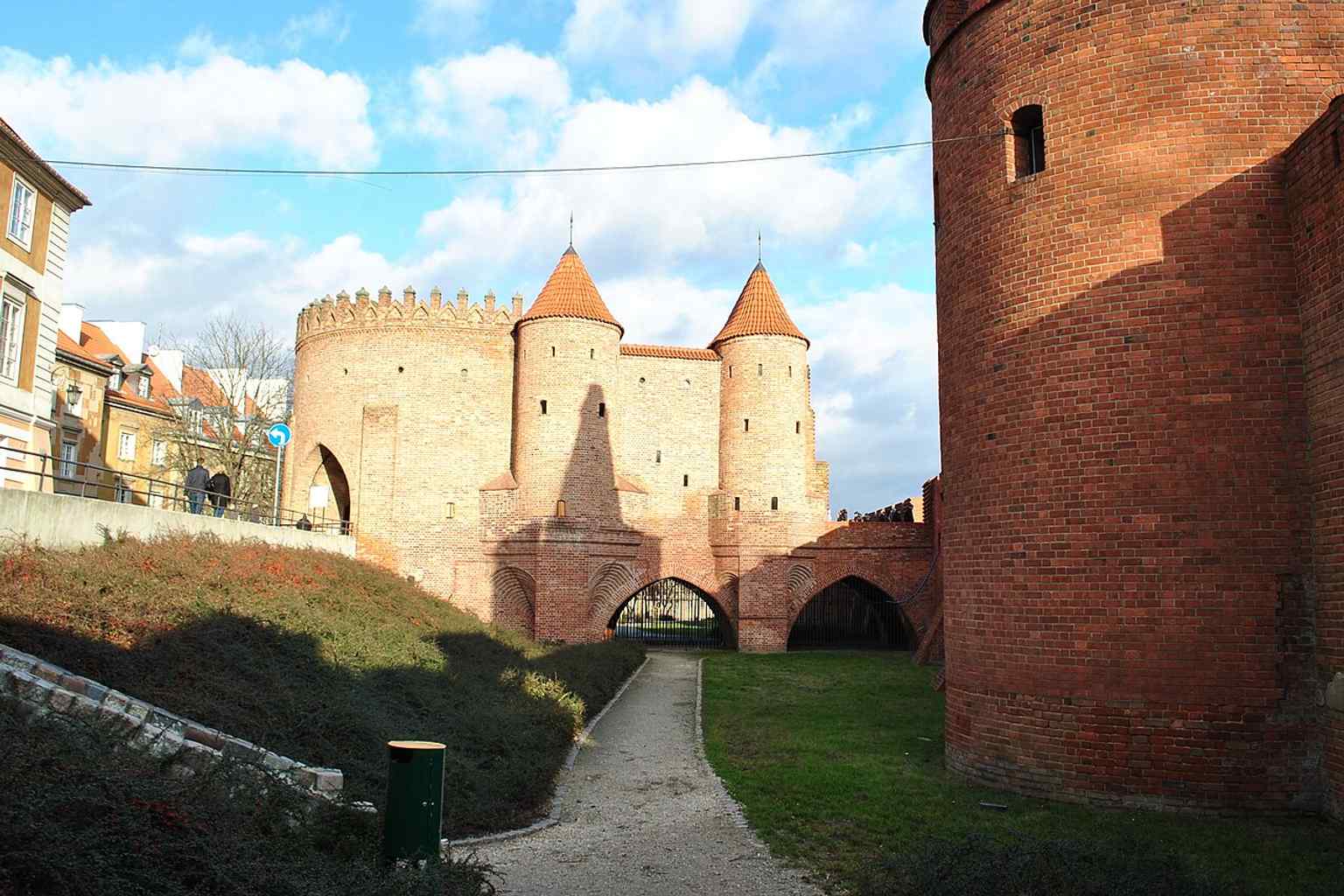
This is the Barbican of Warsaw... a fortified outwork, meaning an extra defensive barrier placed in front of a city gate. It rose around fifteen forty-eight to protect the New Town Gate and strengthen the walls on either side. In plain English: before anyone entered Old Warsaw from this direction, the city wanted one more handshake... with a weapon in it.
Most visitors read this as medieval Poland, but there is a little Italy tucked into the brickwork. Jan Baptysta from Venice designed it - not just a builder, but a Renaissance architect, sculptor, and stonemason. So this was more than a wall. It was Warsaw importing the latest military know-how from Venice, trying on a modern sixteenth-century face at its northern edge.
Its shape tells the story. The building projects out beyond the old moat in a rounded bastion, two levels high. Down below, gunners fired through artillery loopholes. Up above, defenders used a covered gallery - a roofed passage - with round firing openings on both sides. It likely connected to drawbridges in front and inside the approach. If you want the full layout, the aerial view makes the whole defensive puzzle click into place.
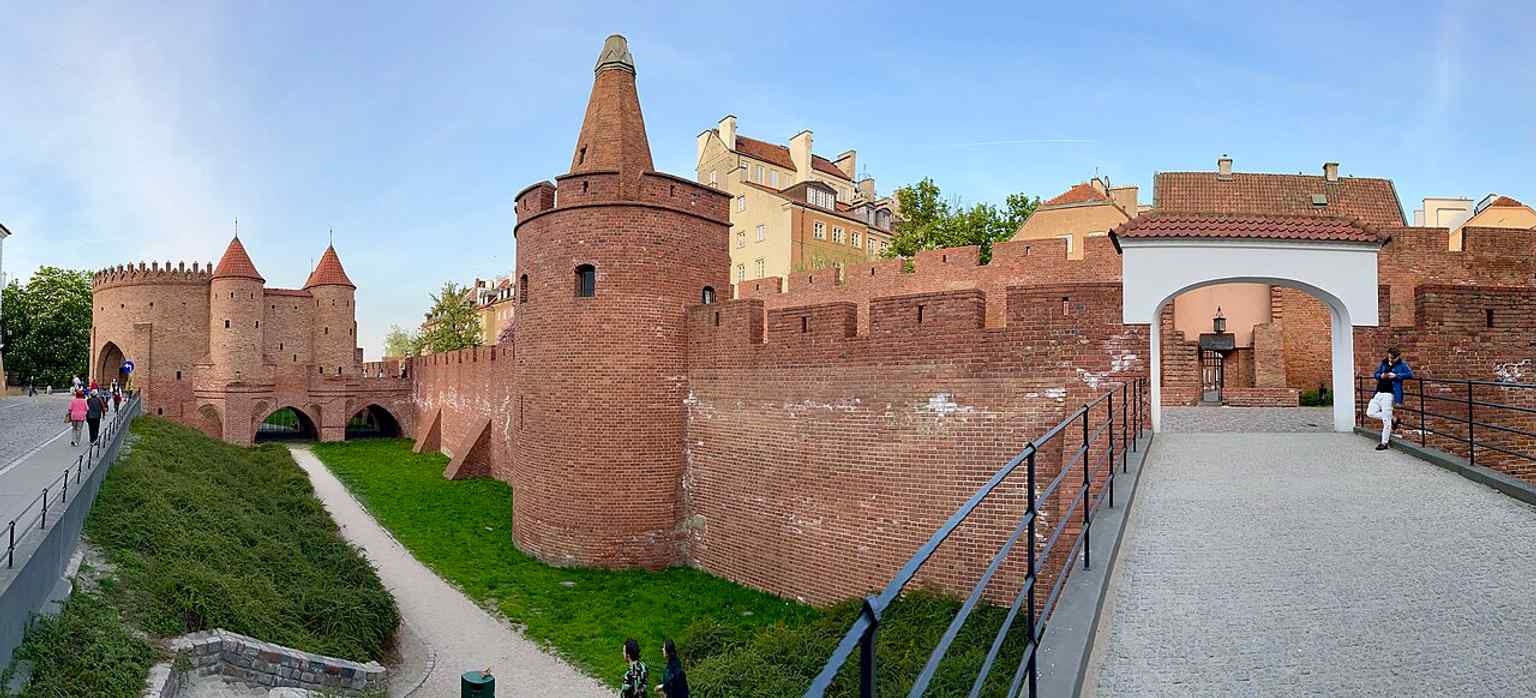
And yet here is the twist: even when workers finished it, the Barbican was already a little old-fashioned. Artillery had advanced so quickly that this handsome new defense had missed the train by a station or two. It fought seriously only once, during the Swedish Deluge, when fighting in Warsaw briefly centered on this gate. Local memory blurs the exact day, which feels honest somehow; war rarely leaves tidy labels.
Then came a quieter kind of danger: forgetting. In the eighteenth century people partly dismantled the Barbican. In the nineteenth, they folded it into ordinary townhouses. One building, the Piwnica Gdańska, used the old defensive wall as its back wall. So the monument survived partly because it disappeared into daily life. Not glamorous, but effective - like hiding the family silver in a flour tin.
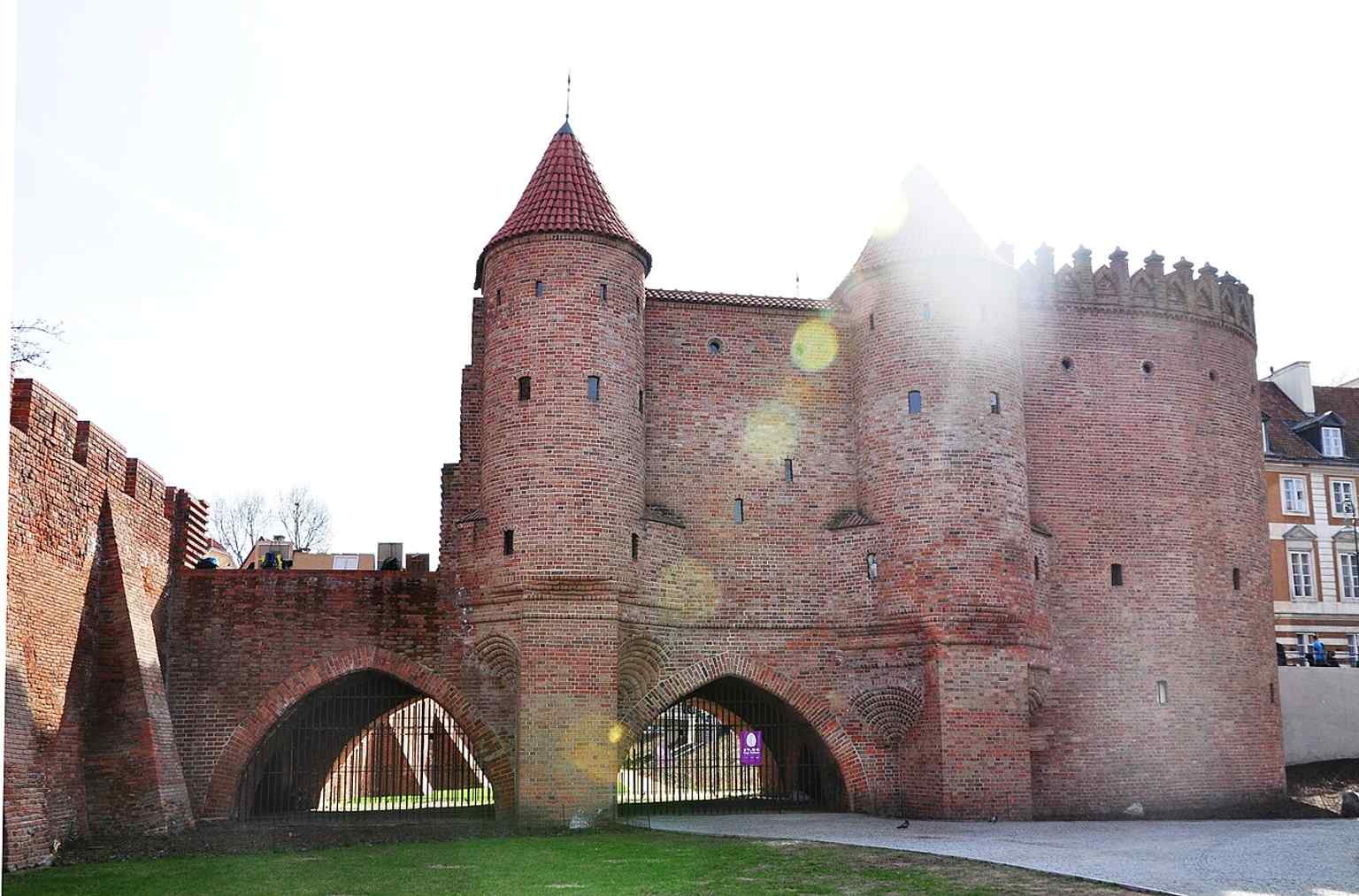
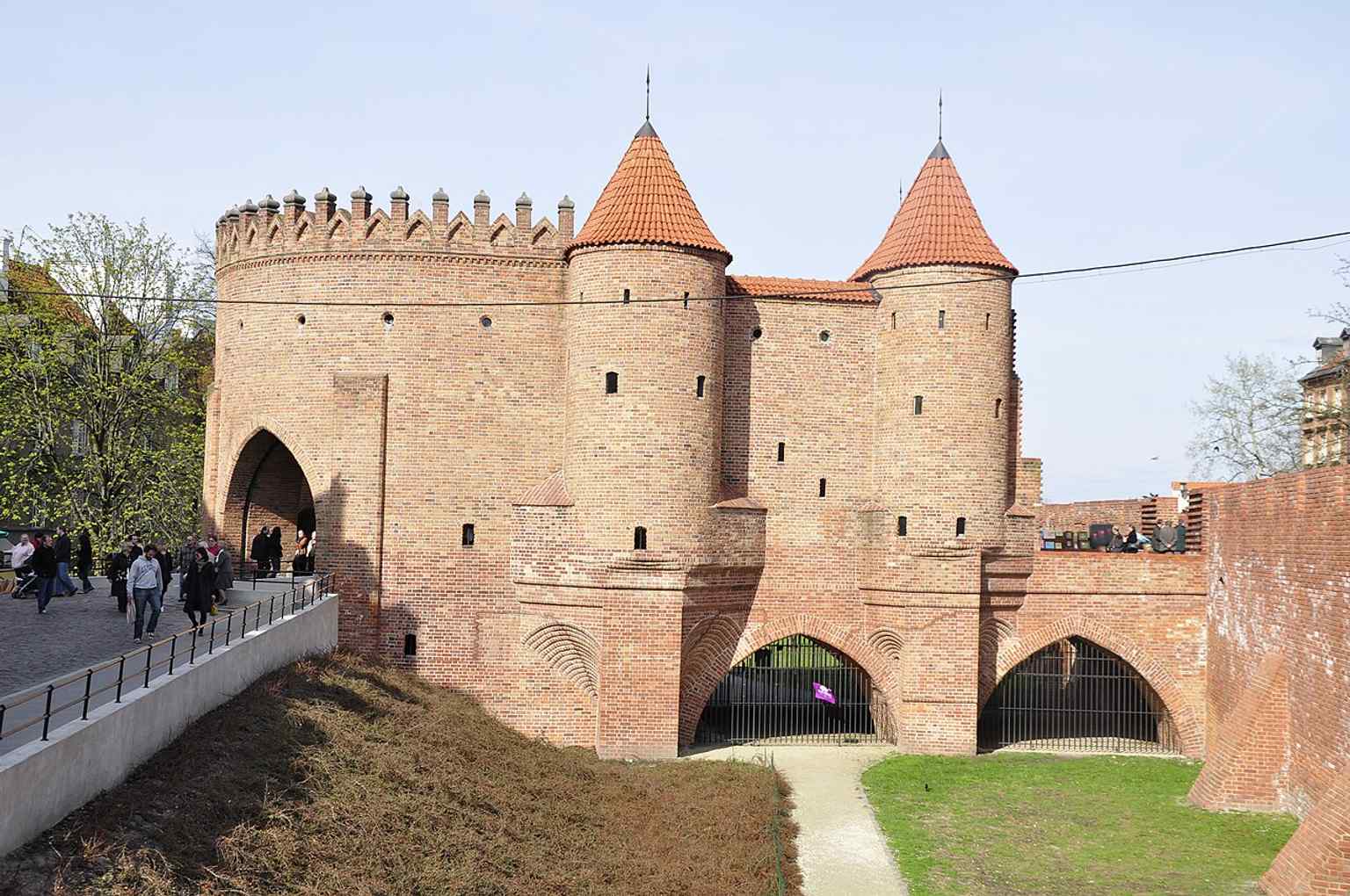
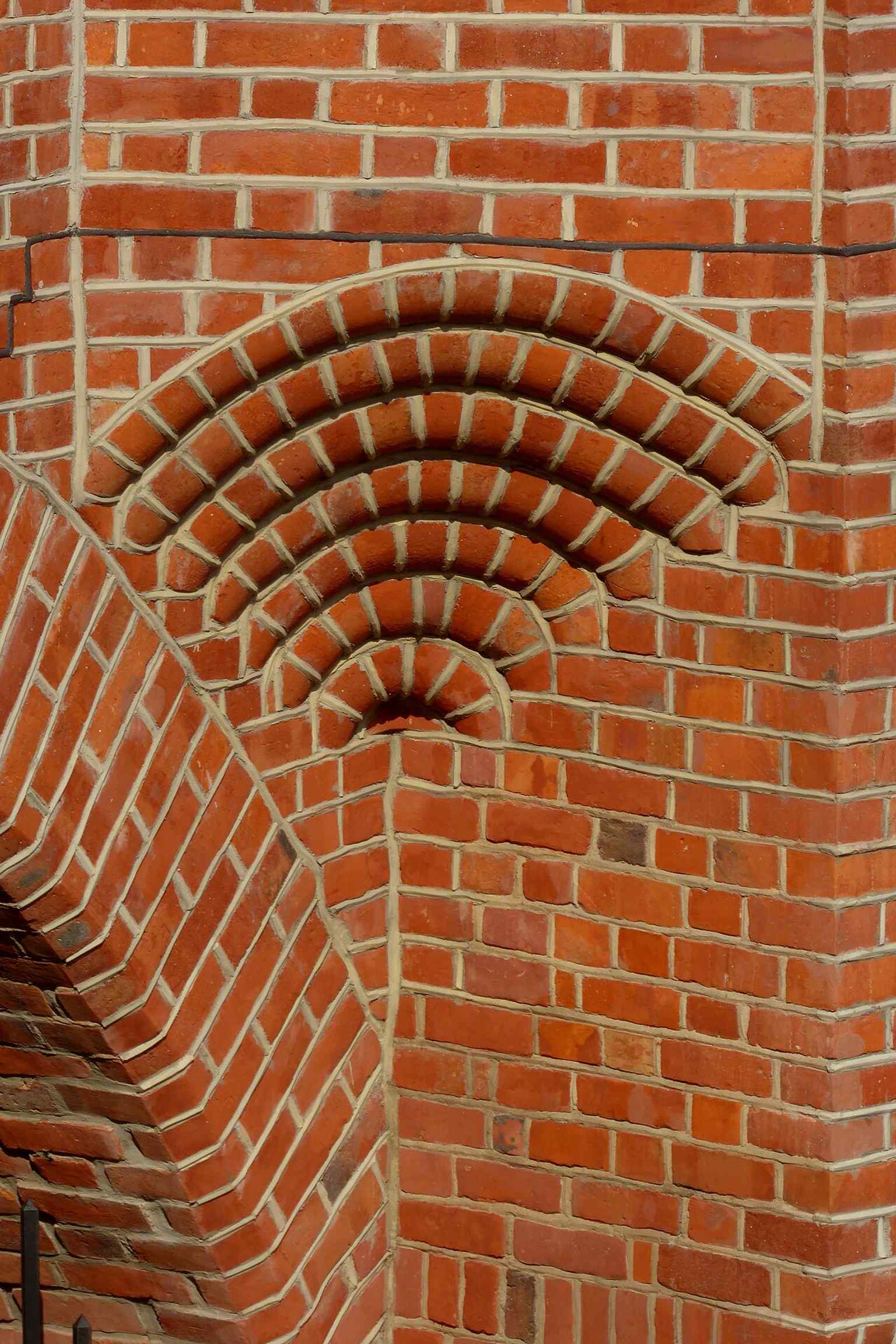
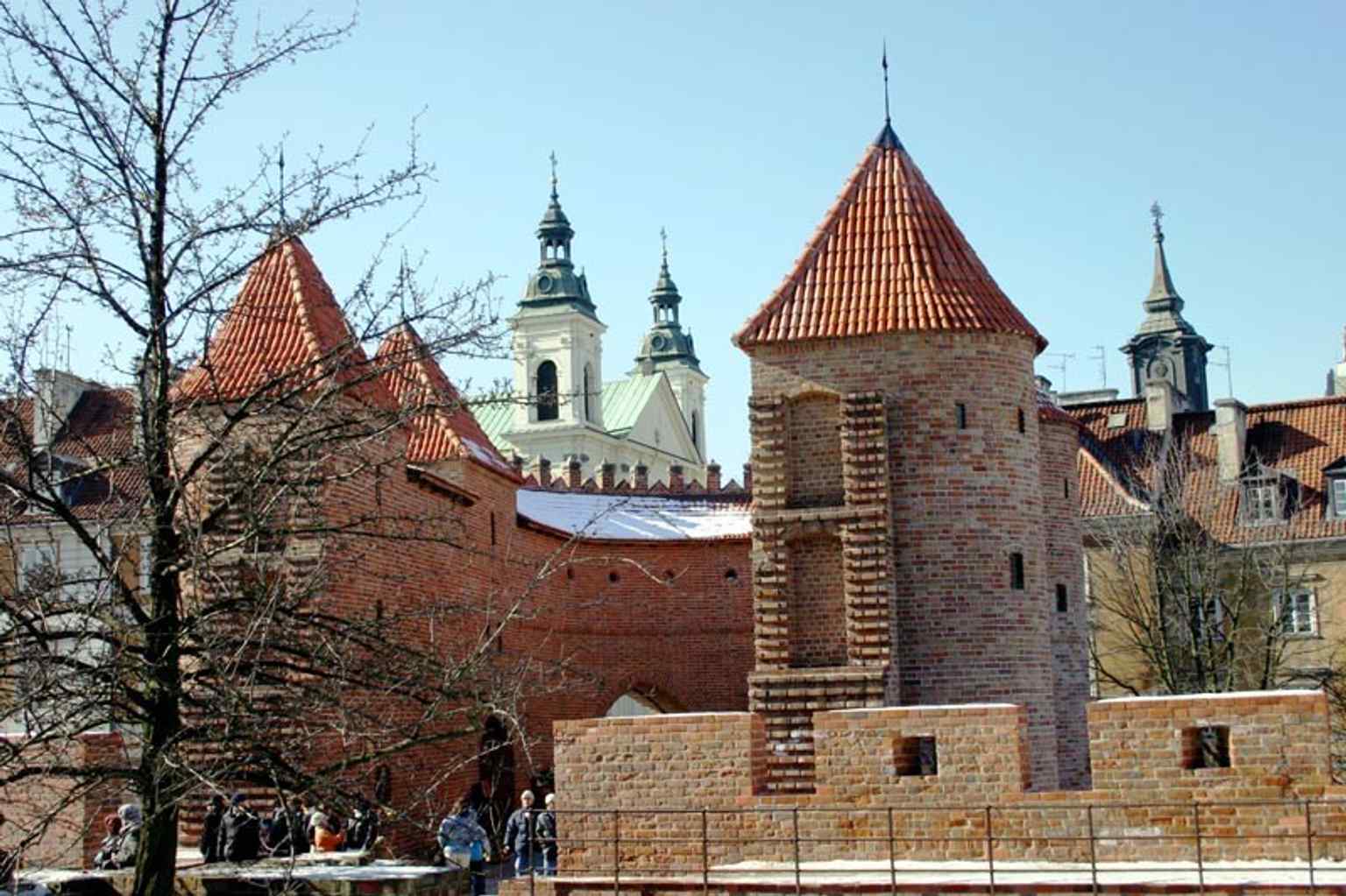
After the destruction of nineteen thirty-nine and nineteen forty-four, conservator Jan Zachwatowicz helped shape the decision not to leave these remains as noble ruins. Then Wacław Podlewski led the reconstruction from nineteen fifty-two to nineteen fifty-four, using seventeenth-century engravings and even bricks taken from demolished Gothic buildings in Nysa and Wrocław. If you study the wall, locals sometimes notice the older bricks sitting lower and newer ones higher, as if the rebuilding left its own layers of memory in plain sight. If you glance at the before-and-after image on your screen, you can watch this gateway shift from an earlier postcard calm into the busier Old Town around it.
The rebuild was not perfect: part of the inner approach never returned, and the outer portal does not exactly match the old form. But that feels fitting here. This place stands between defense, legend, and restoration. Even the flaws tell the truth.
On the inner wall, there is a sandstone plaque from nineteen fifty-six honoring the soldiers and residents who fought during the Swedish invasion. A wall that once tried to stop enemies now also holds remembrance.
If you want more, the small Museum of Warsaw display inside usually opens only on Wednesdays and Saturdays from one in the afternoon to five. From tomb to theater, palace to market, Warsaw has shown how cities defend themselves not only with walls, but with memory.






.jpg)


.jpg)
