AudaTours logoAudaTours

Stop 14 of 17

Archcathedral Basilica of St. John the Baptist

Archcathedral Basilica of St. John the Baptist
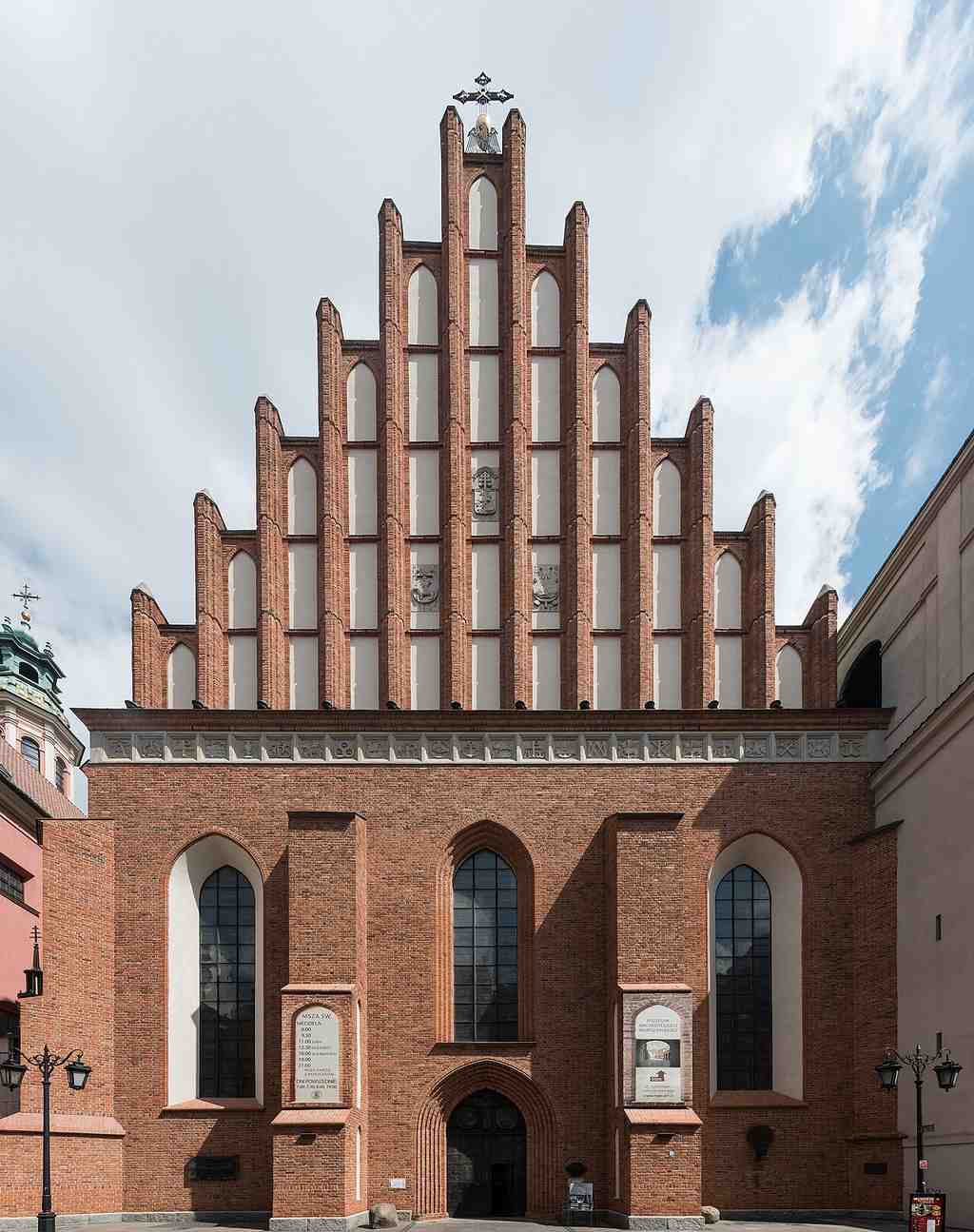
Archcathedral Basilica of St. John the Baptist in Warsaw
Archcathedral Basilica of St. John the Baptist in WarsawPhoto: Adrian Grycuk, Wikimedia Commons, CC BY-SA 3.0 PL. Cropped & resized.

On your right, look for the tall red-brick façade with its broad stepped gable, narrow pointed windows, and deep central archway.

This is St. John’s Archcathedral, and from where you stand you can read its whole argument in brick: plain, upright, and serious, like a witness sworn in before speaking. Even its address matters. Most medieval town churches in Poland faced a market corner. This one lines the street because it served two masters at once: the town parish and the castle next door.

A wooden chapel stood here around the turn of the thirteenth and fourteenth centuries. Then Duke Janusz the First the Elder pushed the church into brick around thirteen ninety, and Warsaw began storing more than prayer here. In thirteen thirty-eight, the city posted a summons against the Teutonic Order on the church door. That tells you the tone of the place early on: altar on one side, public business on the other.

Later, Father Piotr Skarga preached here. Władysław the Fourth swore his royal pacta conventa here - a binding promise to the Commonwealth. Royal weddings filled the nave, the soaring central hall of the church. Queens received crowns here, and the Constitution of the Third of May was sworn here too. At the Royal Castle, power wore velvet. Here, it knelt.

Then came the familiar Warsaw blow. Bombing damaged the cathedral in nineteen thirty-nine, and German destruction in nineteen forty-four left almost nothing but fragments, with the presbytery and the Baryczków Chapel surviving best. If you like, compare the historic photo with the current view in the app; it shows how completely this church had to be brought back from ruin.

The man who gave it back its face was Jan Zachwatowicz, working with Maria and Kazimierz Piechotka. He did not simply copy the last prewar version. Sources were thin, so he reached further back and rebuilt a more medieval cathedral, using traces, comparisons, and an old watercolor by Zygmunt Vogel. In other words, this façade is both ancient memory and postwar decision. That is a very Warsaw kind of truth.

Inside, the church keeps gathering voices. If you glance at the interior image on your screen, you’ll see the severe brick nave and star-shaped vaulting rebuilt after the war. There are baroque choir stalls offered by Jan the Third Sobieski after Vienna, the Baryczków crucifix, a revered Gothic cross saved from destruction, and tombs that read like a compressed national archive: Mazovian dukes, King Stanisław August, President Gabriel Narutowicz, Ignacy Jan Paderewski, Henryk Sienkiewicz, and Cardinal Stefan Wyszyński.
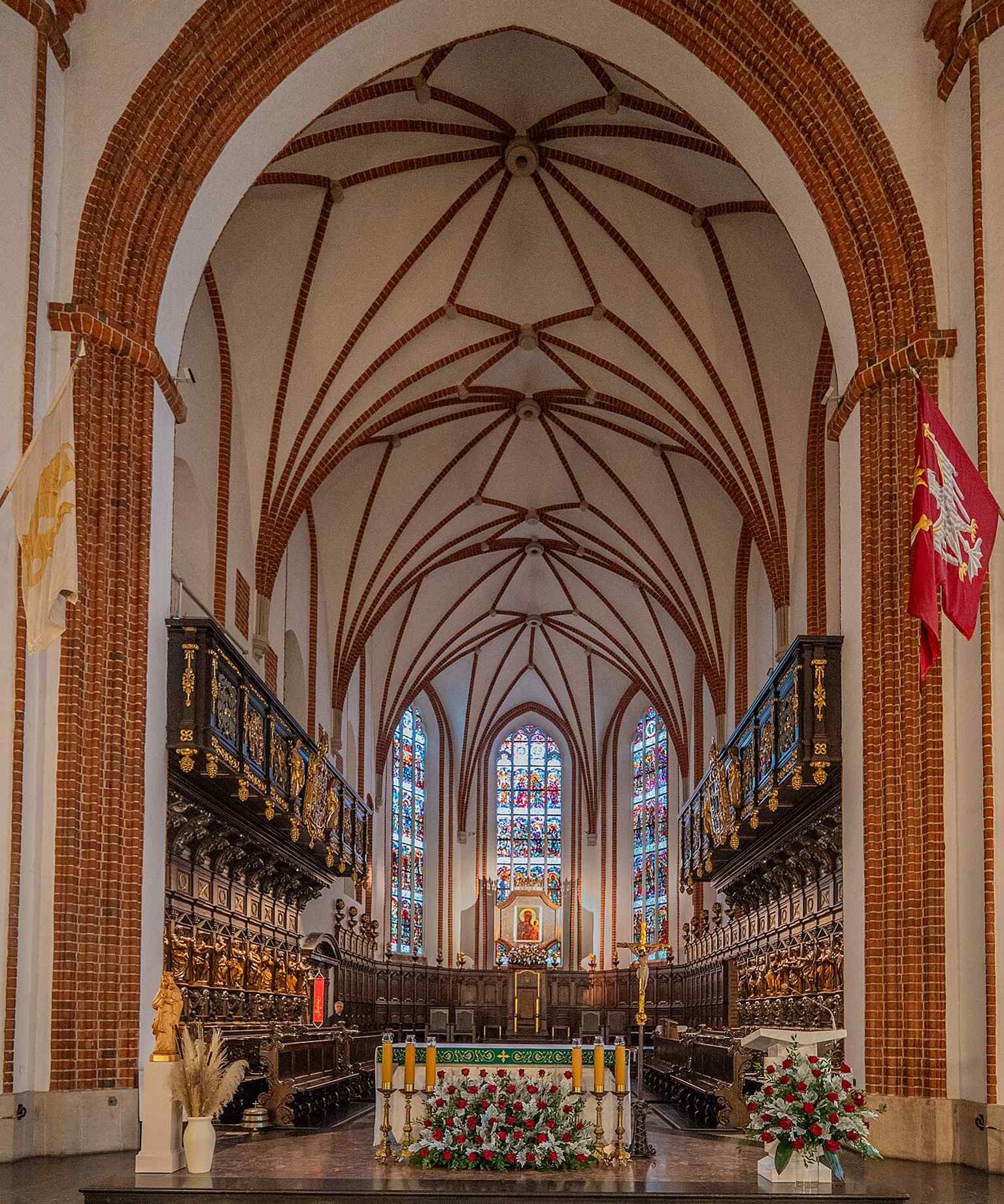
The nave interior in 2025, showing the cathedral’s austere Gothic space and the star vault rebuilt after wartime destruction.
The nave interior in 2025, showing the cathedral’s austere Gothic space and the star vault rebuilt after wartime destruction.Photo: Kapitel, Wikimedia Commons, CC BY-SA 4.0. Cropped & resized.

Wyszyński gives this place a particularly human pulse. When he died in nineteen eighty-one, the bells of the Old Town announced it, and his funeral turned into a national act of grief. Later, Pope John Paul the Second came here to pray at his tomb. So this church is not frozen memory. It keeps receiving new voices, new wounds, and new acts of care. When U-N-E-S-C-O, the United Nations Educational, Scientific and Cultural Organization, recognized Warsaw’s rebuilt Old Town, this cathedral stood as proof that careful reconstruction can itself become part of world heritage.

In a moment, we’ll leave this chamber of vows, sermons, burials, and oaths for Old Town Square, where history gets noisier and more public, only about a minute ahead. If you want to step inside later, the cathedral is generally open every day from early morning into the evening, with longer hours on Sundays.
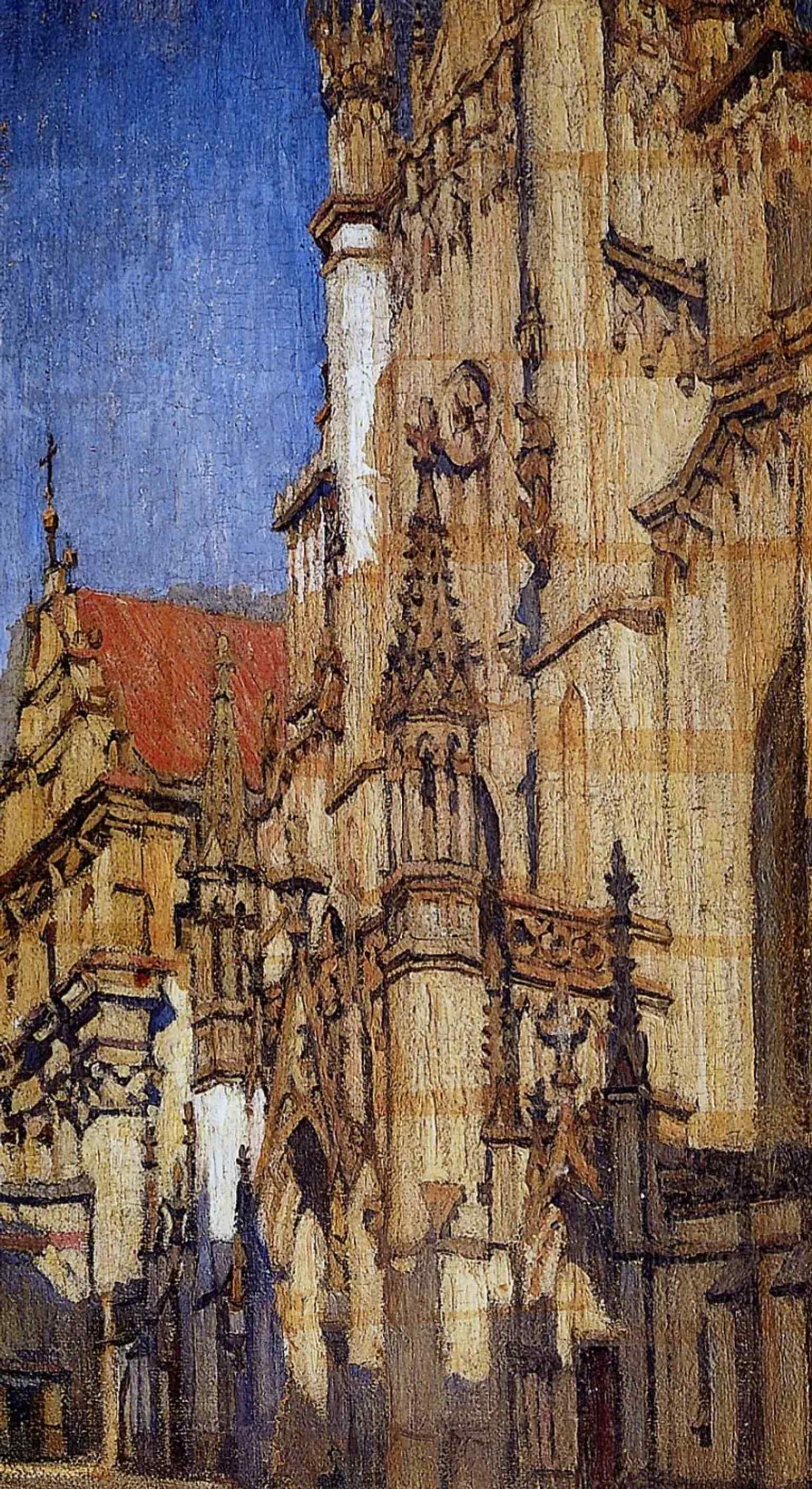
A 1907 painted view of St. John’s Cathedral, valuable as an early artistic record of the Warsaw landmark before modern damage and reconstruction.
A 1907 painted view of St. John’s Cathedral, valuable as an early artistic record of the Warsaw landmark before modern damage and reconstruction.Photo: Aleksandr Shturman, Wikimedia Commons, Public domain. Cropped & resized.
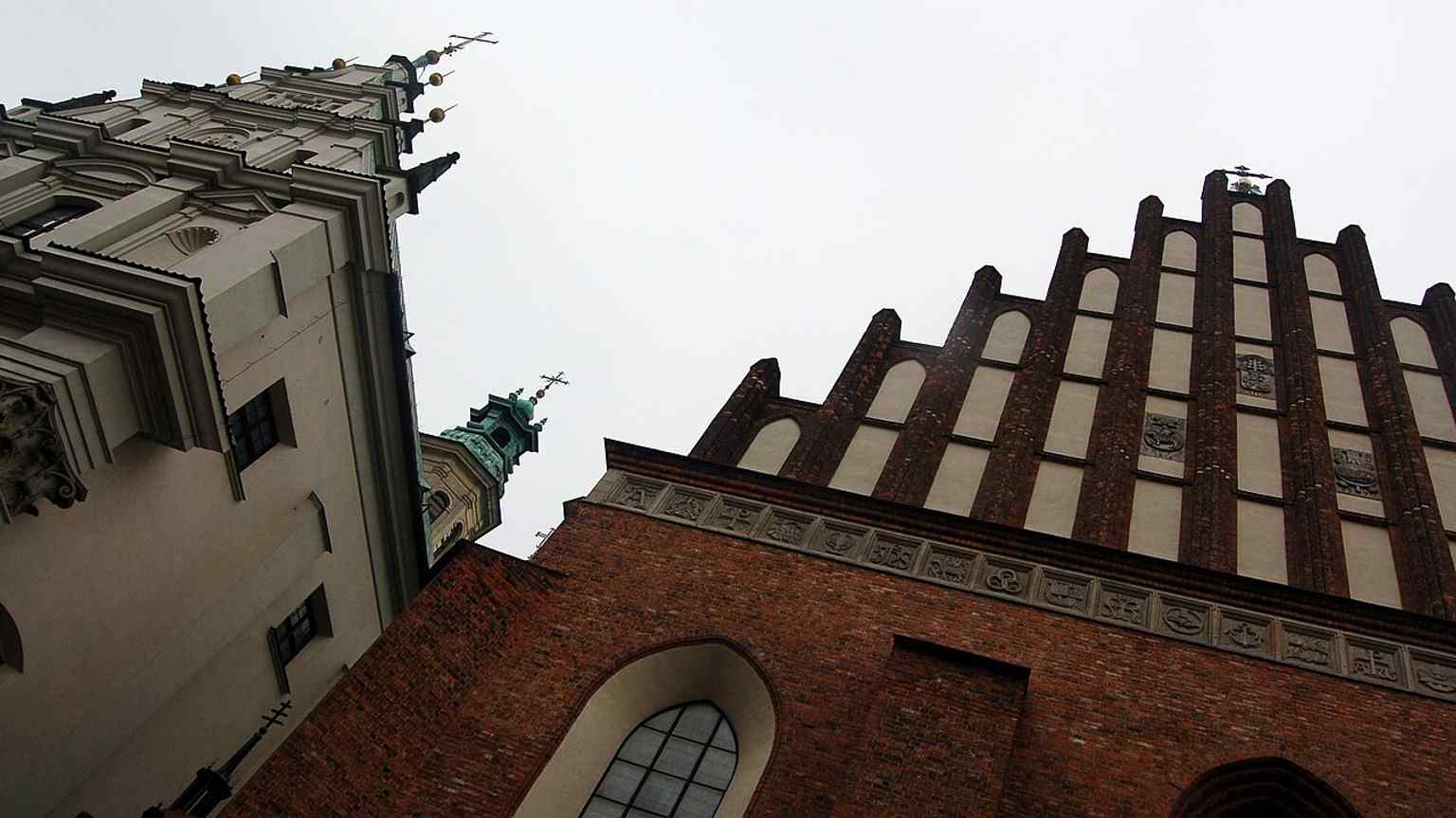
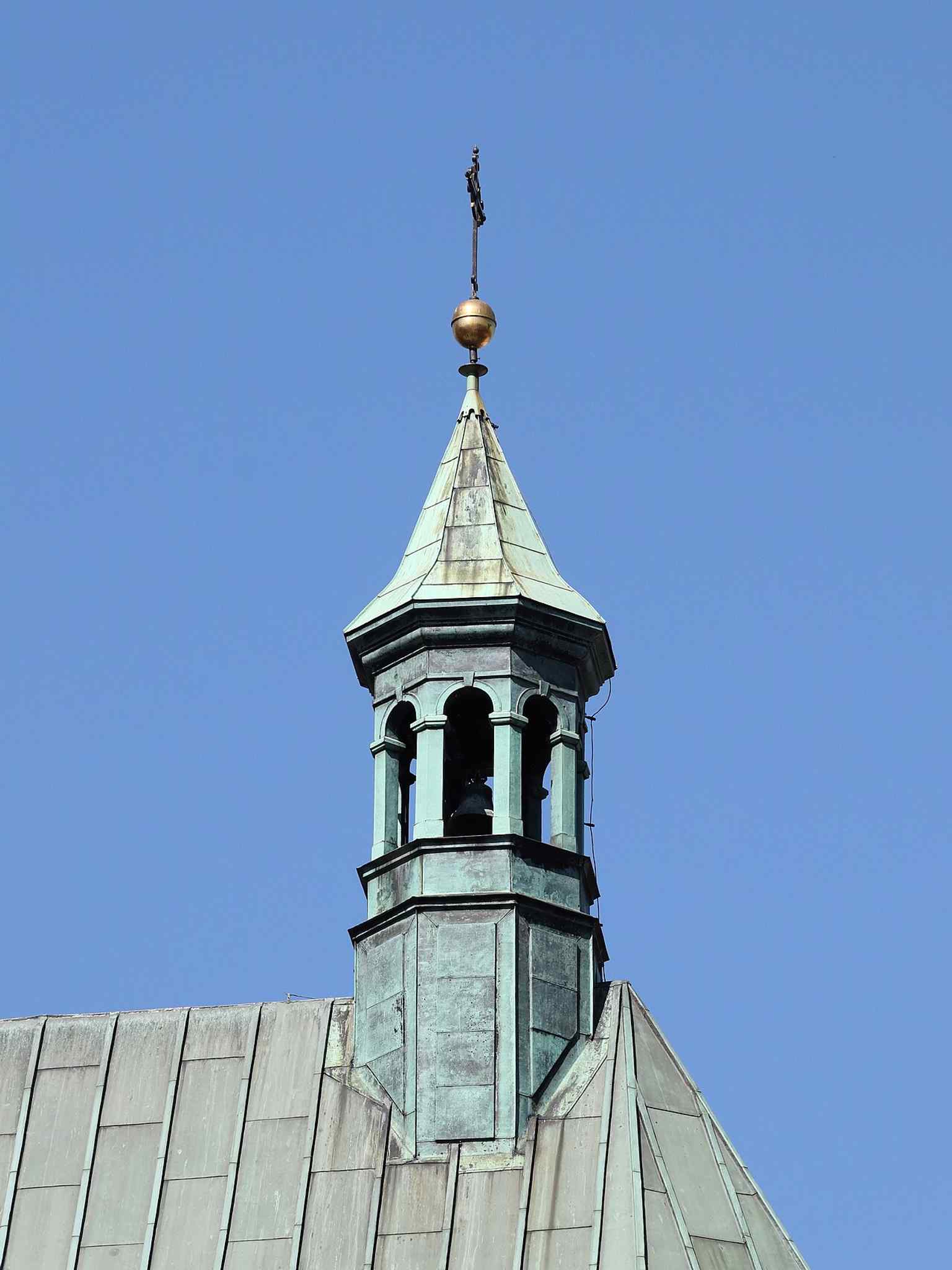
The tower above the presbytery, showing the church’s Gothic revival silhouette and the rebuilt postwar form seen today.
The tower above the presbytery, showing the church’s Gothic revival silhouette and the rebuilt postwar form seen today.Photo: Cybularny, Wikimedia Commons, CC BY 4.0. Cropped & resized.
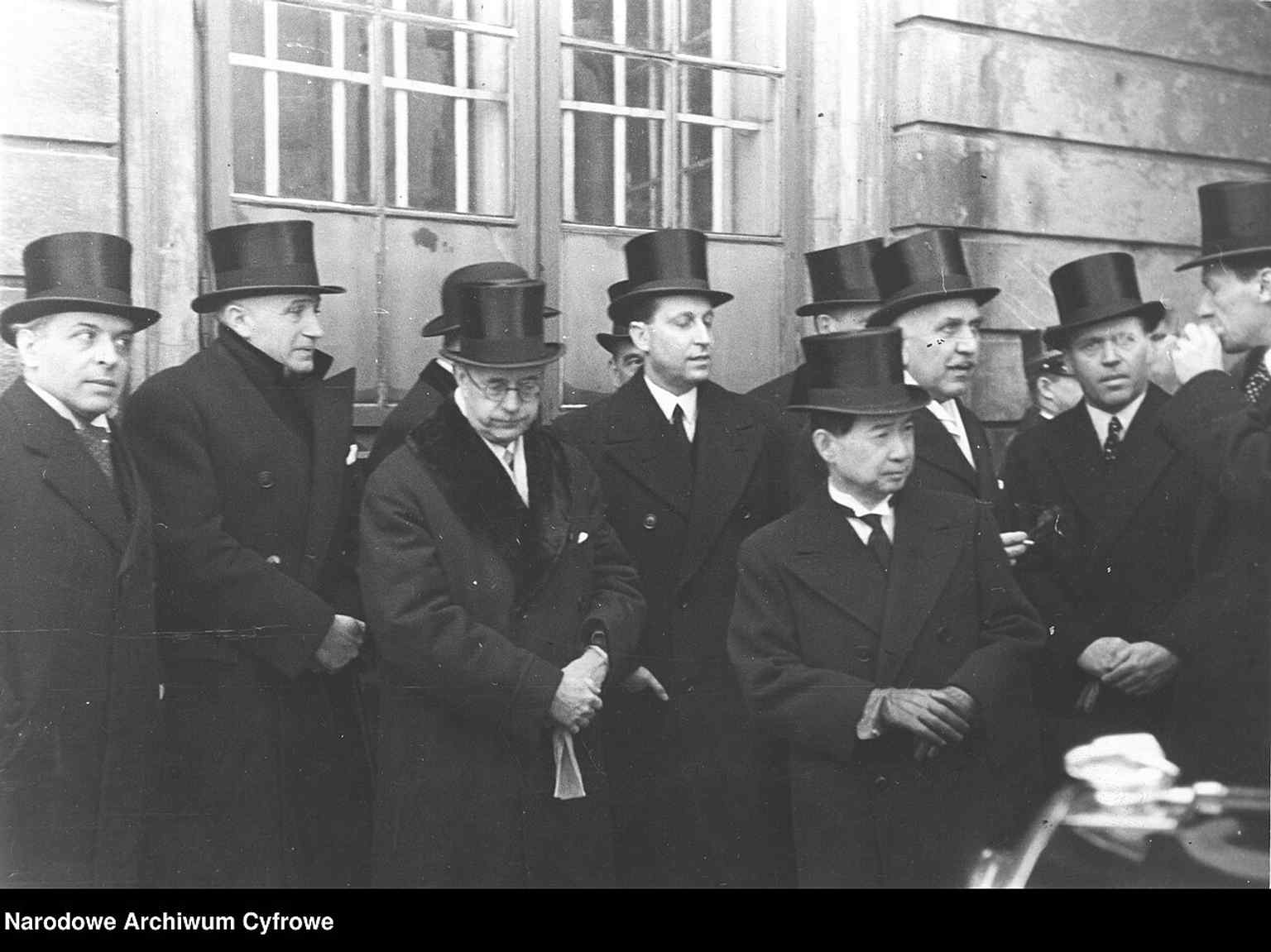
A 1935 view of May 3rd celebrations at the cathedral, recalling the site where the Constitution of 3 May was sworn in.
A 1935 view of May 3rd celebrations at the cathedral, recalling the site where the Constitution of 3 May was sworn in.Photo: Koncern Ilustrowany Kurier Codzienny - Archiwum Ilustracji, Wikimedia Commons, Public domain. Cropped & resized.
A wider 2006 view with the Jesuit Church beside St. John’s Cathedral, helpful for placing the landmark in Warsaw’s Old Town streetscape.
A wider 2006 view with the Jesuit Church beside St. John’s Cathedral, helpful for placing the landmark in Warsaw’s Old Town streetscape.Photo: Bahnfrend, Wikimedia Commons, CC BY-SA 4.0. Cropped & resized.
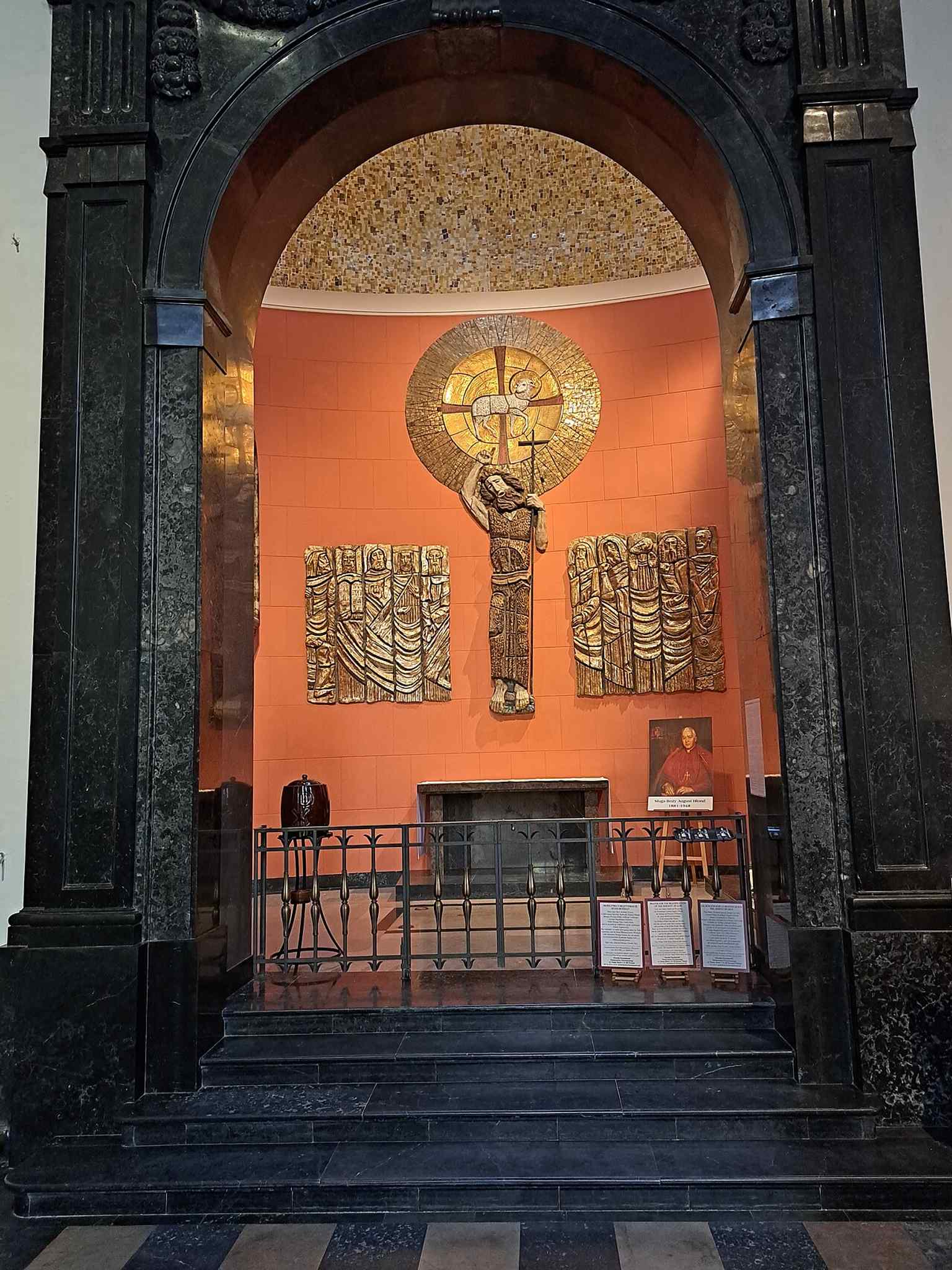
St. John the Baptist Chapel, one of the most important interior spaces, linked to the cathedral’s patron and later memorial burials.
St. John the Baptist Chapel, one of the most important interior spaces, linked to the cathedral’s patron and later memorial burials.Photo: Olowirnik, Wikimedia Commons, CC BY-SA 4.0. Cropped & resized.
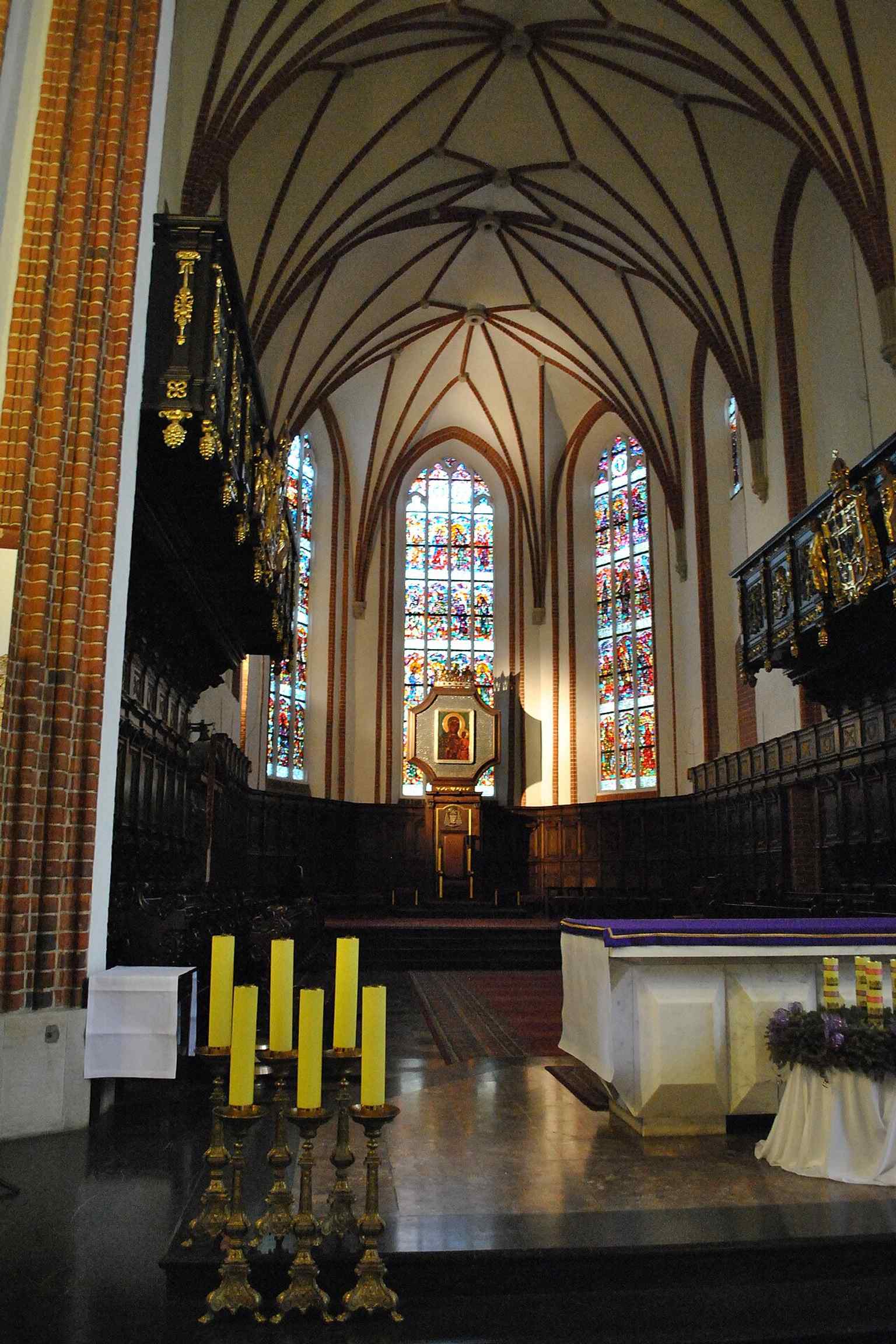
The presbytery, where the main altar and choir stalls anchor the cathedral’s liturgical heart and its postwar reconstruction.
The presbytery, where the main altar and choir stalls anchor the cathedral’s liturgical heart and its postwar reconstruction.Photo: Marek Mróz, Wikimedia Commons, CC BY 4.0. Cropped & resized.
arrow_back Back to Warsaw Audio Tour: Royal Heritage Walk
Loved by travellers

Thousands of tours started.
Plenty of opinions.

4.8 across the App Store and Google Play. Here's a few we keep coming back to.

starstarstarstarstar
This was a solid way to get to know Brighton without feeling like a tourist. The narration had depth and context, but didn't overdo it.
Christoph
Christoph
Brighton Tour
starstarstarstarstar
Started this tour with a croissant in one hand and zero expectations. The app just vibes with you, no pressure, just you, your headphones, and some cool stories.
download Get the app

Pop your headphones in.
Step outside.

Free to download. Tours in every city. Start in 60 seconds — no account, no card.

Download on the App StoreGet it on Google Play
starstarstarstarstar_half
4.8
AudaTours app icon
headphones
~ 4 min until your first tour starts
public
1,000+ cities worldwide
all_inclusive
AudaTours
Unlimited

Every tour. Every city. One subscription.

3097 tours2273 cities138 countries50+ languages