
Krakow Audio Tour: A Journey Through History and Culture
Blood once ran beneath the stones of Kraków where revolutionaries whispered secrets in candlelit chapels and art treasures hid in plain sight. This city reveals its boldest tales only to those who know where to listen. On this self-guided audio tour, discover stories behind quiet squares, dramatic monuments, and hidden churches that most visitors rush right past. Find the beats of history echoing under your feet. Why did a shattered painting ignite outrage across Europe? What silent witness stood guard during a desperate rebellion? Which forgotten ritual takes place every spring behind the Church of the Visitation’s closed doors? Trace the path of rebels, visionaries, and everyday citizens who shaped Kraków through scandal and hope. Move between centuries in moments. Feel cold stone and golden light as unseen chapters reveal themselves with each step. Uncover Kraków’s buried legends. Begin walking—and see what others miss.
Tour preview
About this tour
- scheduleDuration 80–100 minsGo at your own pace
- straighten3.0 km walking routeFollow the guided path
- location_on
- wifi_offWorks offlineDownload once, use anywhere
- all_inclusiveLifetime accessReplay anytime, forever
- location_onStarts at Biskupia Street in Krakow
Stops on this tour
lock_open 3 free previews · 12 unlock with purchase
Look for the unusually broad street with twin carriageways split by a long planted median, framed by pale stone and stucco townhouses, with the convent church rising at the…Read moreShow less
Open dedicated page →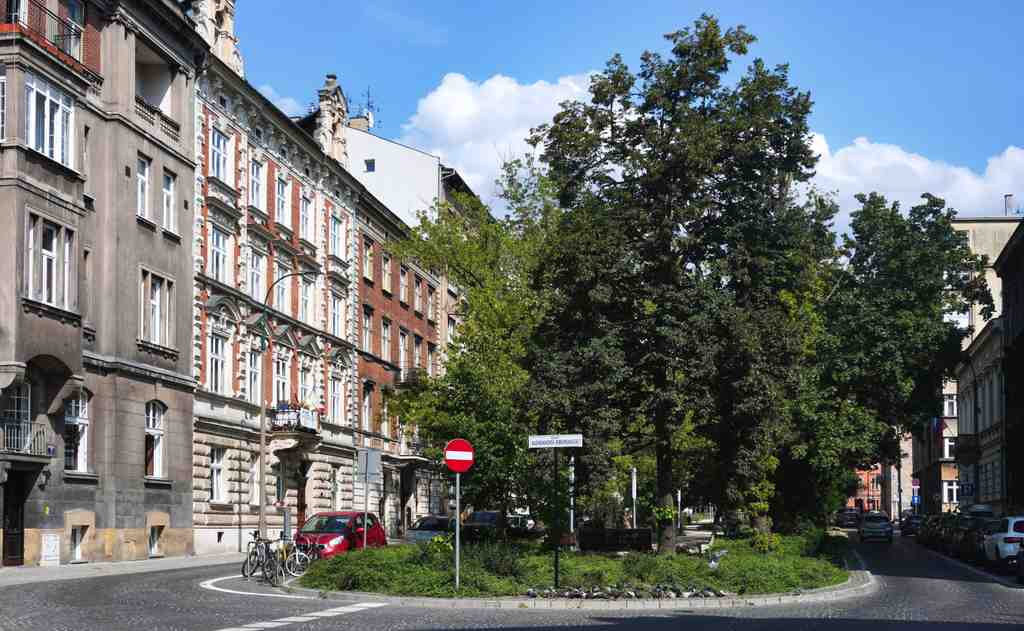
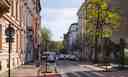
Biskupia Street in KrakowPhoto: Mach240390, Wikimedia Commons, CC BY 4.0. Cropped & resized. Look for the unusually broad street with twin carriageways split by a long planted median, framed by pale stone and stucco townhouses, with the convent church rising at the eastern end as its fixed marker.
Biskupia begins this walk with a small deception. It calls itself a street, yet it spreads itself so generously that locals long treated it as a square, Plac Biskupi, as though the city could not quite decide what this space wanted to be.
That uncertainty runs deep. You are standing in what used to be a jurydyka, a privately governed enclave just outside the medieval city’s own legal order. Before Kraków received its charter in twelve fifty-seven, some of this land already belonged to the bishops, and in the early fourteenth century Bishop Jan Muskata bought more ground here, extending a little world of church ownership beyond the old core. What began, most likely, as the bishops’ farm gradually filled with gardeners, tailors, servants from the episcopal palace, and many bakers who could sell bread in Kraków without belonging to the official guilds.
And here is the detail locals delight in sharing quietly: for centuries, the name Ulica Biskupia did not even belong to this stretch. It referred to today’s Krowoderska. This place, meanwhile, drifted under humbler names, Goły Plac, the bare square, or simply no proper name at all. Memory here has always been negotiated, never settled. In twenty twenty-two, after Russia’s invasion of Ukraine, some residents wanted the entire street renamed for Ukraine’s defenders; the council rejected that, but the eastern part became Skwer Wolnej Ukrainy, the Square of Free Ukraine. One piece of ground, several claims on what it should remember.
Take a slow look at the width of it now. The split roadways, the central green, the pause in the urban fabric: does this feel to you like a street, a square, or something still unresolved between the two? If you want a wider sense of its shape, the view on your screen catches that stretched, in-between character beautifully.
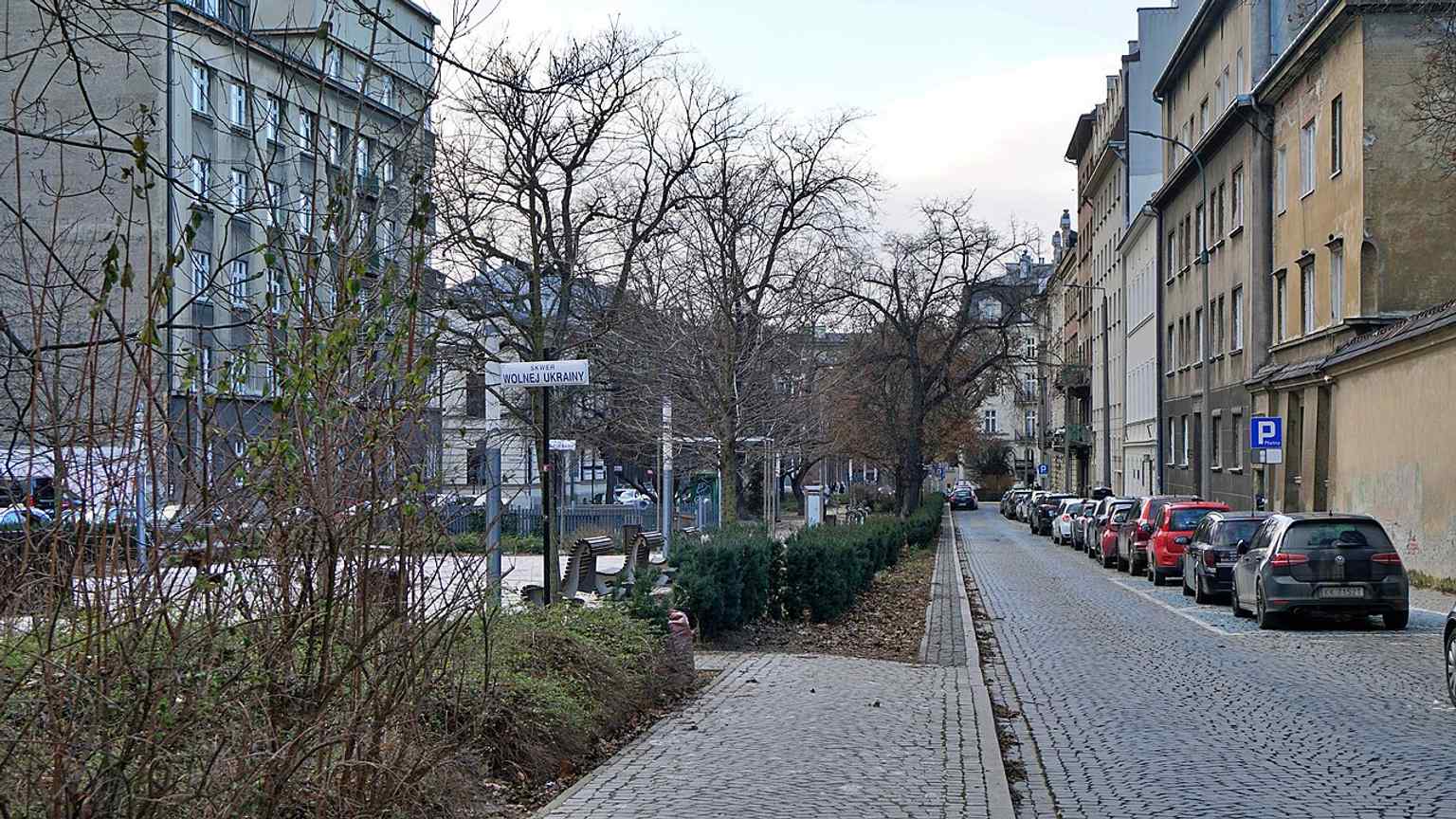
A wide view west along Biskupia Street, showing its unusually broad layout that locals often call Plac Biskupi.Photo: Igor123121, Wikimedia Commons, CC BY 4.0. Cropped & resized. Biskupia has survived repeated erasures. In the age when this jurydyka was built mostly of wood, fire and war ravaged it again and again. After the Swedish invasion, officials counted the losses in sixteen fifty-nine and found that only five of fifty-one houses had survived. So the calm you see now rests on a long record of disappearance.
Yet private ambition left elegant traces. At number two, architect Jan Zawiejski designed Jasny Dom, the Bright House, for himself in the years nineteen hundred and nine to nineteen ten. It is one of those wonderfully personal addresses that tells you an architect was not only shaping the city, but placing his own life inside it. Farther along stands the Y-M-C-A, the Young Men’s Christian Association, at number nineteen, a modern building whose architect, Wacław Krzyżanowski, even designed parts of the interior.
More recently, this broad ground became a civic argument all over again. In twenty fourteen, the city proposed underground parking here. Residents pushed back. They wanted trees, benches, play space, and room for pedestrians instead of another machine for storing cars. After delays, disputes, and a broken contract, the redesign finally opened in early twenty twenty-two: a park zone, a play zone, and an urban square with a fountain.
So Biskupia offers a fitting beginning. Even a quiet, slightly awkward side street can hold bishops, bakers, architects, diplomats, protesters, and competing futures all at once. Keep that in mind as we continue to Galeria Olympia, about an eight-minute walk away.
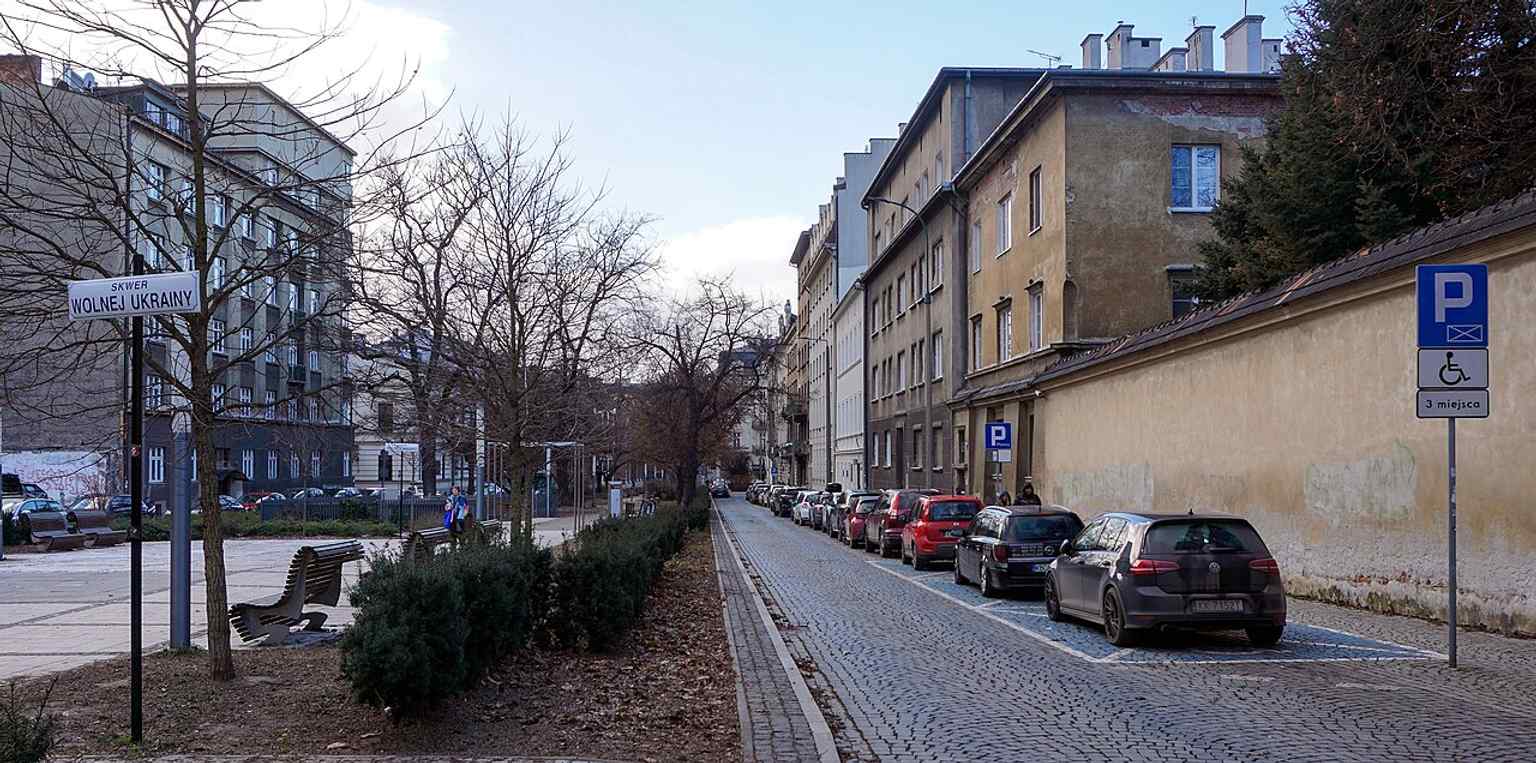
Another street-level view of Biskupia Street in Kraków, useful for showing the long open corridor and the green central strip of the former square.Photo: Igor123121, Wikimedia Commons, CC BY 4.0. Cropped & resized. On your right, Łobzowska presents itself as a long paved corridor lined with pale stucco and brick townhouses, their tall rectangular fronts interrupted by the solid church mass…Read moreShow less
Open dedicated page →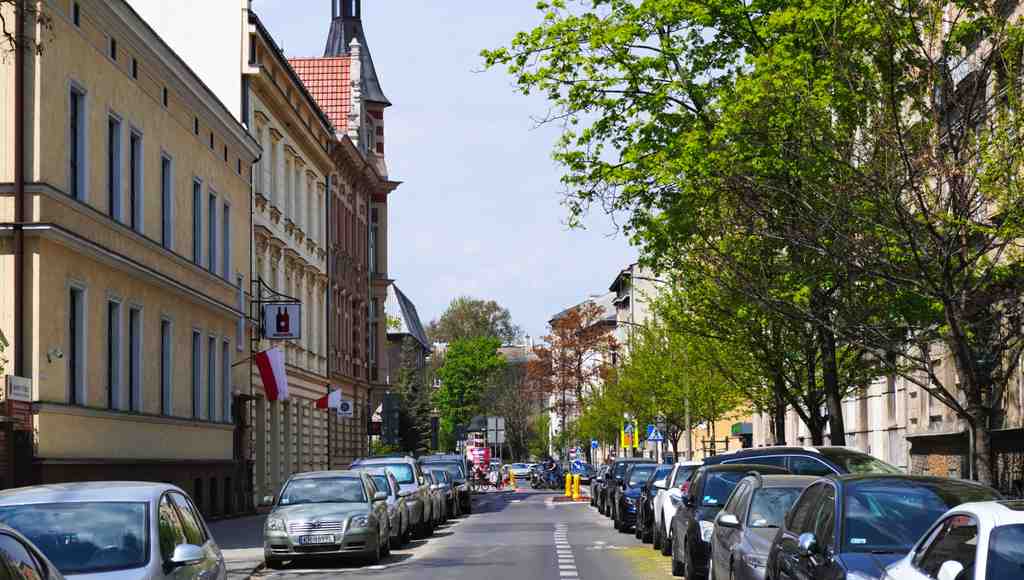
Łobzowska Street in KrakowPhoto: Mach240390, Wikimedia Commons, CC BY 4.0. Cropped & resized. On your right, Łobzowska presents itself as a long paved corridor lined with pale stucco and brick townhouses, their tall rectangular fronts interrupted by the solid church mass further along the street.
Łobzowska has the rare gift of looking practical while carrying a rather intimate charge. At first glance it is simply a route: it runs from Garbarska toward Juliusza Słowackiego Avenue and beyond. But this line through the city is much older than the façades you see. It follows a suburban road known here from at least the fourteenth century, laid out beside the Rudawa and a branch of it called the Młynówka Królewska, the Royal Millstream that once powered mills and shaped settlement.
Like the bishops’ territory we touched earlier, this area stood outside the medieval core. It belonged to Garbary, one of Kraków’s old jurydyki, meaning a semi-independent suburb with its own legal life. In the Middle Ages people called this place Półwsie, and a record from fourteen fourteen already names the street. Later, a church changed the map of memory. In fourteen ninety-eight, Jan Wels, a professor at the Kraków Academy, funded the church of Saint Peter the Little here. He imagined it as a cemetery church for all Kraków, an ambitious plan that never quite came to life. The church suffered again and again: during Maximilian Habsburg’s invasion in fifteen eighty-seven, during the Swedish Deluge, and again in seventeen oh two in the Great Northern War. By eighteen oh one, people finally demolished it. Then the street shifted names as if shrugging on new identities: first the road behind Saint Peter’s church, then Saint Peter Street, and only in eighteen fifty-eight did it become Łobzowska.
That layering matters because this is also where Adam Asnyk settled. He moved here in eighteen seventy-one, into a suburban manor by the Rudawa, and remained until his death in eighteen ninety-seven. He was not merely a poet with a quiet address. In Kraków, Asnyk edited Reforma and later Nowa Reforma, served as a city councillor, and sat in the Galician parliament. So this street held his private life and his public voice at once.
The most telling trace is at number seven. The manor where he died disappeared, and in its place rose a Secession-style tenement designed by Władysław Kaczmarski in nineteen oh nine. Yet the site refused to let him go. A plaque with Asnyk’s head in shallow carved relief marks the façade there. Locals who know the street well like to note a small proof of continuity: a photograph from nineteen thirty-eight shows that plaque already in place before the war. Memory here did not arrive later as a neat correction. It was already attached to the stone.
If you glance at the image in the app, the run of façades shows how the street kept rewriting itself through the late nineteenth and early twentieth centuries: historicist houses, Secession, then modernism, all on the track of an old road. And that is Łobzowska’s secret. A thoroughfare becomes personal, then political, simply because a life settled here and the city chose not to forget it. In a moment, we will follow that choice to a street that bears his name outright: Adam Asnyka Street.
Northward view along Łobzowska Street in Kraków, showing the street’s current urban character on the route that once followed an old path beside the Rudawa and Młynówka Królewska.Photo: Igor123121, Wikimedia Commons, CC BY 4.0. Cropped & resized.
Show 12 more stopsShow fewer stopsexpand_moreexpand_less
Look for a narrow, straight street paved between rows of pale stucco and stone townhouses, with a tightly framed corridor of historic facades drawing your eye toward the far…Read moreShow less
Open dedicated page →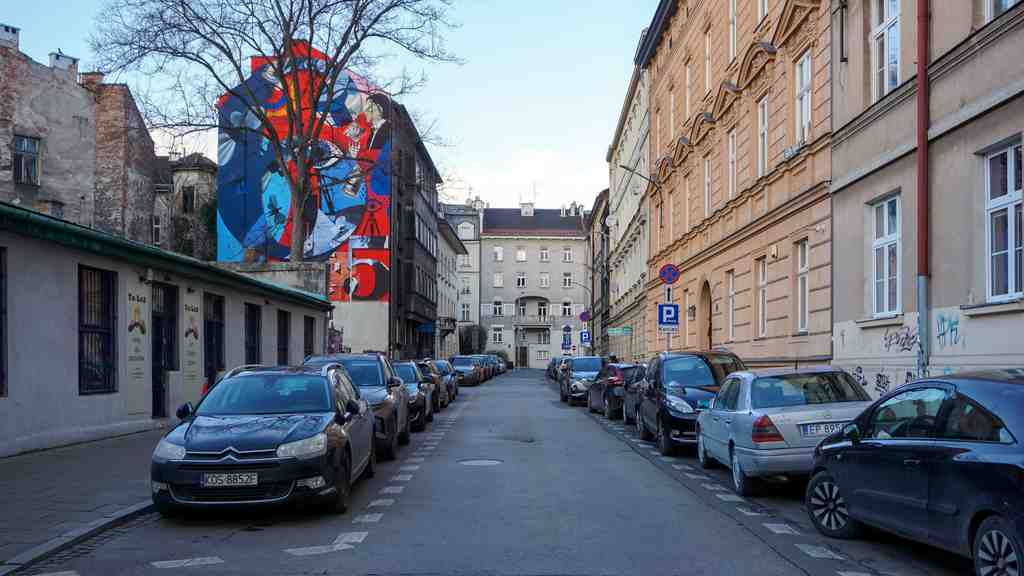
Adam Asnyka Street in KrakowPhoto: Igor123121, Wikimedia Commons, CC BY 4.0. Cropped & resized. Look for a narrow, straight street paved between rows of pale stucco and stone townhouses, with a tightly framed corridor of historic facades drawing your eye toward the far end.
Adam Asnyk’s name, which lingers elsewhere in Kraków as literary memory, stretches into urban form here. This street took his name in nineteen twelve, but its story began much earlier, when this area belonged to Garbary, a settlement just outside old Kraków’s strict municipal edge. Before anyone called this Asnyka Street, it was simply a track running along the bank of the Młynówka Królewska, the royal mill channel, a branch of the Rudawa.
That older life survives in one very precise address. Near what is now number six stood the Upper Mill. Mikołaj Gerlak, who likely oversaw the building of the channel itself, probably raised the first wooden mill here around the turn of the thirteenth and fourteenth centuries. In thirteen thirty-five, his son Bieniasz received from King Kazimierz the Great a privilege granting him one third of the rights to the mill. Later, Bieniasz sold that share to the Corpus Christi convent in Kazimierz. It is such a wonderfully Kraków sort of chain: engineer, son, king, monastery, all tied to one working building beside a watercourse now gone from sight.
The mill kept changing with the city. In seventeen sixty-nine, Wojciech Tyrankiewicz and Jan Herman rebuilt it in brick. By the early twentieth century, it no longer ground grain at all; people had turned it into a flour depot and a residence. That is why this street once answered to practical names like Łazienna, or Bath Street, and Górnych Młynów, Upper Mills Street. If you glance at the image on your screen, you can see how modest the street still feels, almost as if it is withholding its importance.
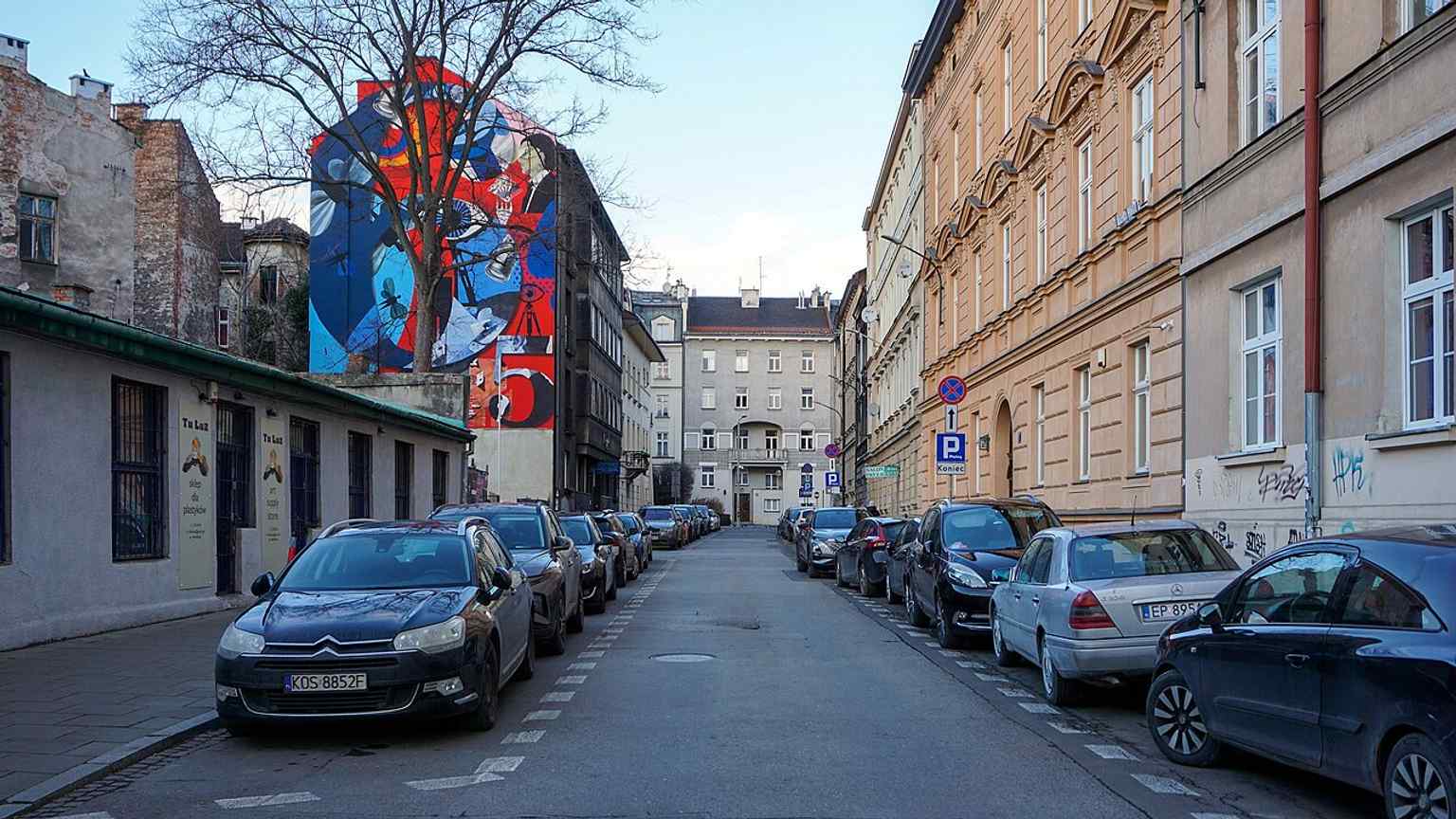
A northward view along Adam Asnyk Street, showing the small historic street that links the Basztowa area with Biskupia Street.Photo: Igor123121, Wikimedia Commons, CC BY 4.0. Cropped & resized. And then, at the southern end, the whole tone changes. Here the street meets a small square that became a stage for public memory. For sixty-one years, the monument to Tadeusz Rejtan was missing from its historic place at the junction of Basztowa, Dunajewskiego, and Asnyka. In two thousand and seven, Kraków restored the neglected square, spent about nine hundred thousand złoty on the monument’s recreation, and returned Rejtan to the spot from which he had vanished. A leftover scrap of land between roads became, once again, a place where the city chose to remember in public.
In two thousand and eighteen, the square took the name of Professor Władysław Bartoszewski. His son said something telling at the ceremony: Bartoszewski may have been a man of Warsaw, but he loved Kraków because of its people, not merely its institutions. That is the secret of this street. It carries poetry in its name, work in its buried past, and argument in the way memory gets put back where it belongs.
In a moment, we will meet Rejtan himself, standing just ahead, where absence turned back into presence.
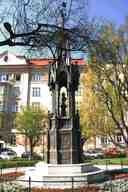
On your left stands a dark iron monument shaped like a tall Gothic chapel, rising from a two-step granite base, with Tadeusz Rejtan’s bust held inside its pointed frame. Tadeusz…Read moreShow less
Open dedicated page →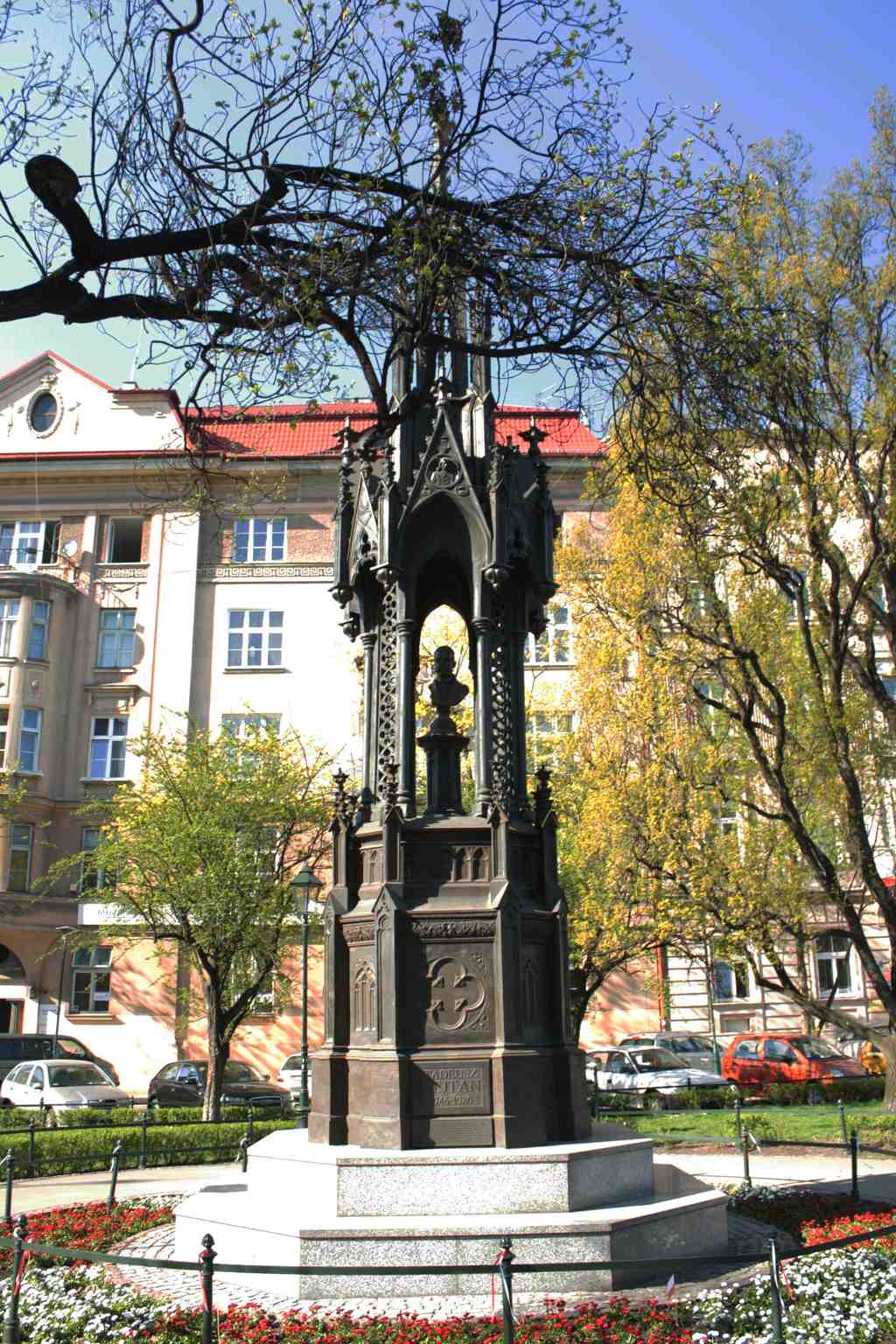
Monument to Tadeusz Rejtan in KrakowPhoto: Paberu, Wikimedia Commons, CC BY 3.0. Cropped & resized. On your left stands a dark iron monument shaped like a tall Gothic chapel, rising from a two-step granite base, with Tadeusz Rejtan’s bust held inside its pointed frame.
Tadeusz Rejtan became one of Poland’s great human symbols because, in seventeen seventy-three, he made resistance visible with a single dramatic protest against the partition of the country. Later, Jan Matejko fixed that gesture in the national imagination. This monument turns that moral outcry into something solid, public, and strangely fragile.
Its story began with family devotion. Most likely Stefan Rejtan, one of the last of the line, pushed for it as a lasting sign that the family memory should not simply close and vanish. Between eighteen fifty-six and eighteen fifty-nine, workers at the Lilpop, Rau and Loewenstein factory in Warsaw cast this Gothic revival form in iron, with a bust by the little-known sculptor Teodor Zakrzewski. It may first have been meant for Rejtan’s grave in Lachowicze. Instead, the Rejtan family gave it to Kraków in the late eighteen eighties.
When the city unveiled it in June of eighteen ninety, people were oddly cool about it. Some dismissed it as too funerary, too much like a cemetery chapel. And yet that criticism tells you something essential: public memory is never neutral. Even monuments arrive arguing for their right to stand here.
If you glance at the before-and-after image, you can see how the setting changed while the monument’s silhouette stayed hauntingly familiar. And if you look at the close detail on your screen, the chapel-like ironwork makes that old criticism easier to understand. Then came the break. A storm in February of nineteen forty-six wrecked the structure, and the city removed it. Most tourists never realise the most important original piece survived: Rejtan’s bust went into the National Museum, and that rescue made the later return possible. In two thousand and seven, sculptor Czesław Dźwigaj rebuilt the monument from archival photographs, documents, and a matching copy on the Lilpop tomb in Warsaw. He even left a discreet conservator’s signature: one lock of Rejtan’s hair turns in a different direction.
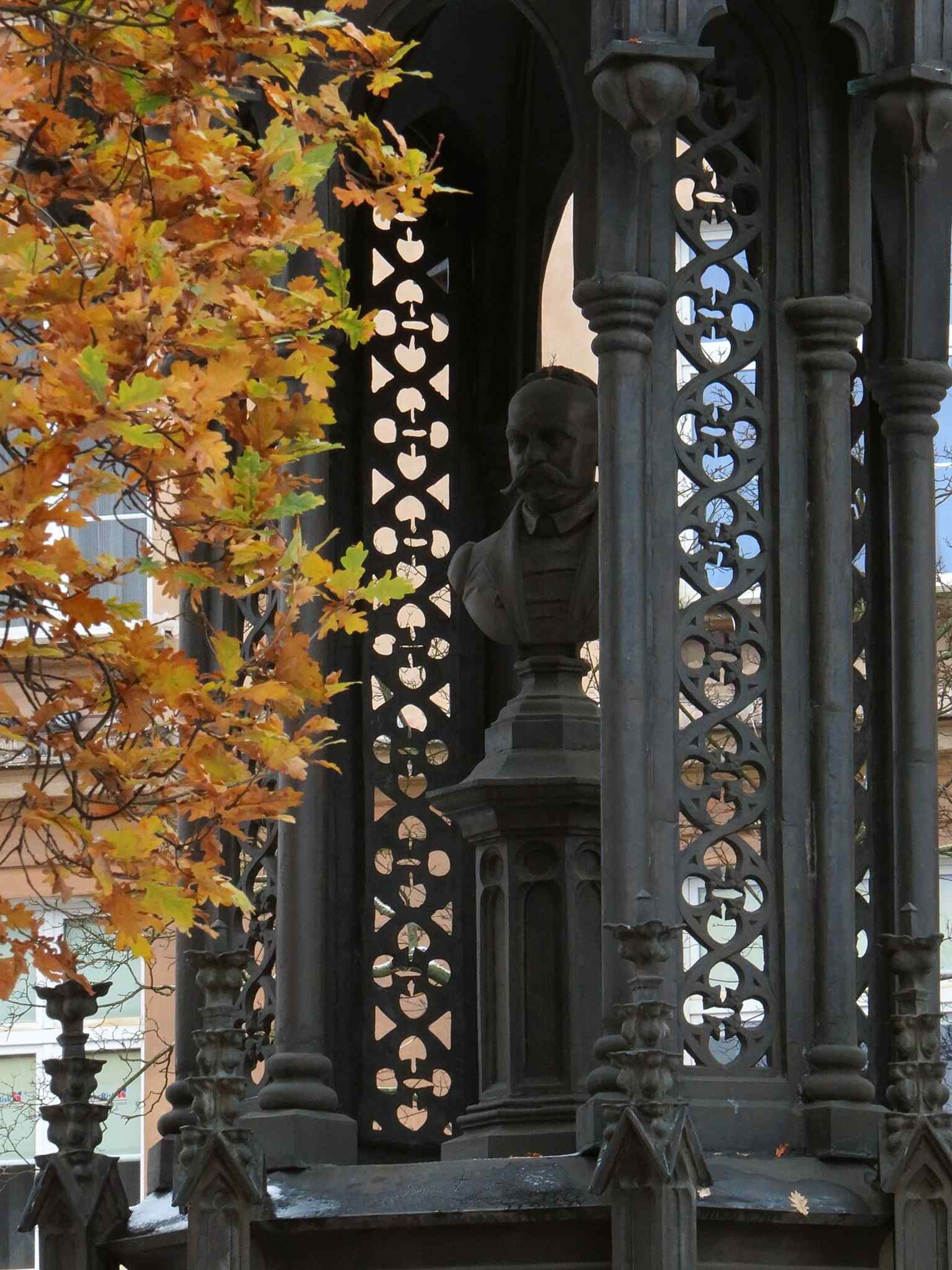
A closer angle that helps reveal the ornate neo-Gothic structure and the bust inside — the part preserved in the National Museum after the 1946 storm damage.Photo: Аимаина хикари, Wikimedia Commons, CC0. Cropped & resized. So when something disappears for decades and then reappears, has memory been restored, or quietly rewritten? We’ll carry that question with us as we slip into Garbarska Street, where ordinary façades hold more than they first confess. This square, by the way, is always open.
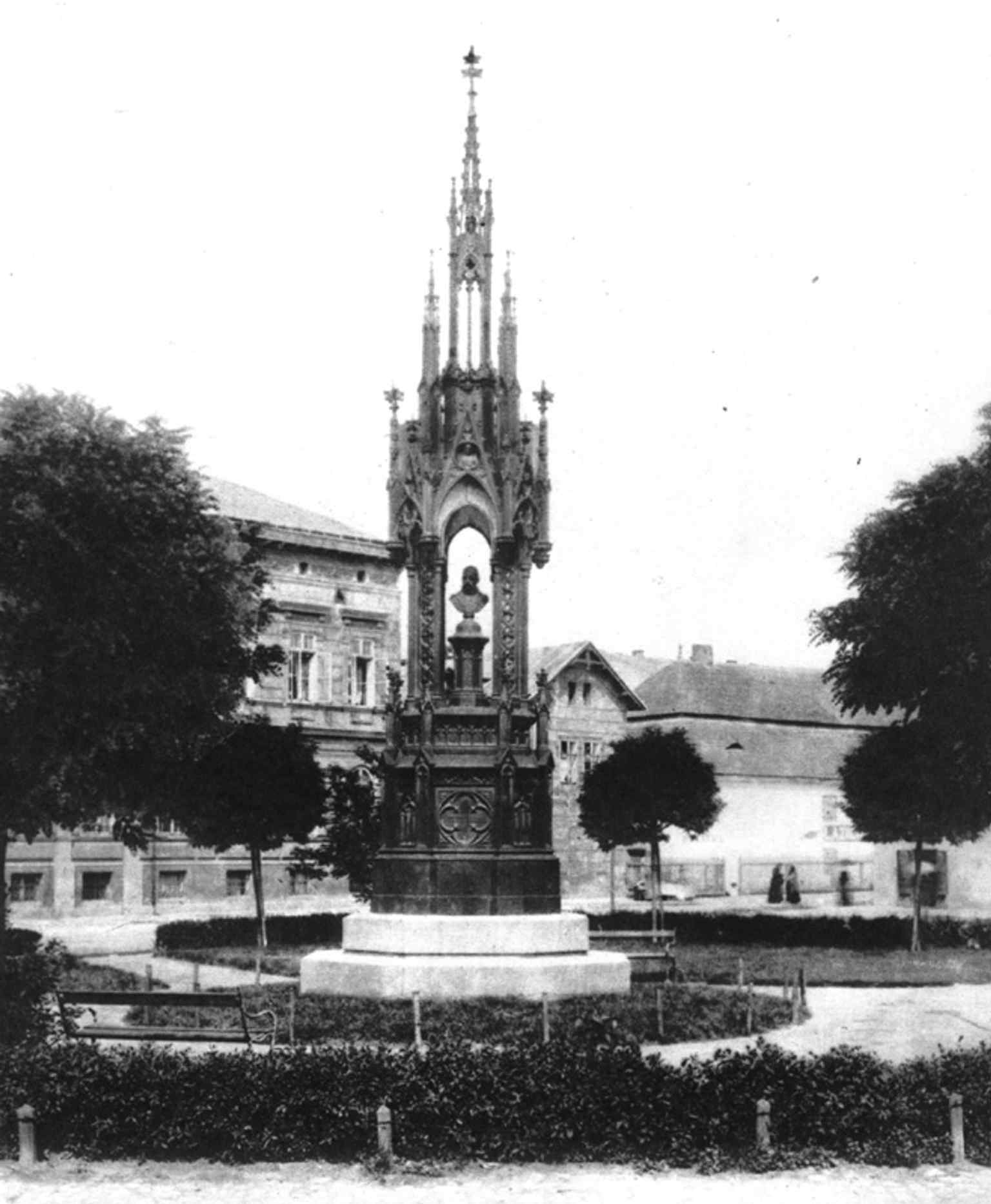
An 1889 view of the original monument before its Kraków unveiling in 1890 — a rare glimpse of the neogothic iron chapel form that critics once called too funerary.Photo: Ignacy Krieger (1817-1889), Wikimedia Commons, Public domain. Cropped & resized. 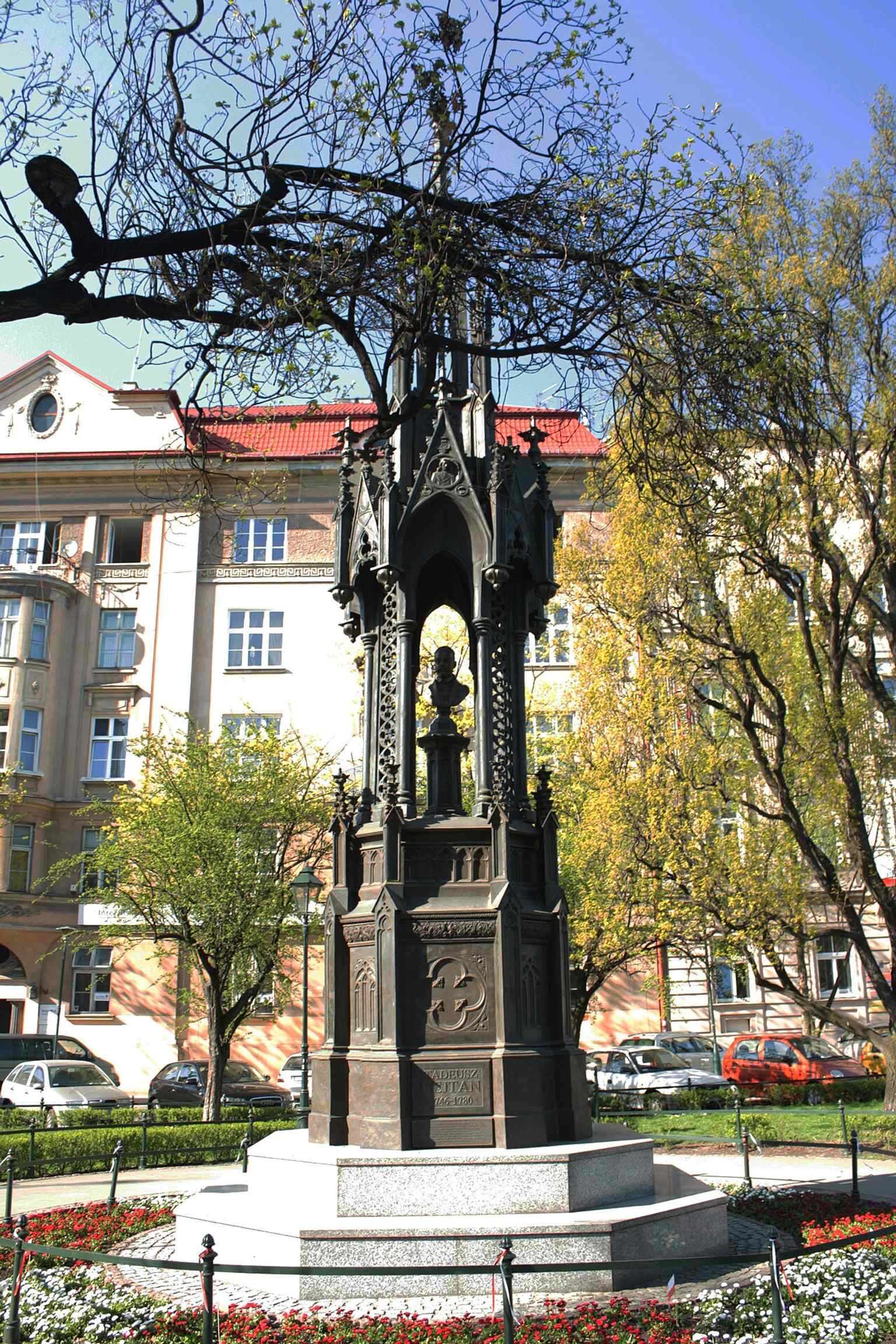
A clear full view of the reconstructed monument standing on the square, matching the tour’s story of the 2007 return of Rejtan to Kraków.Photo: Pawel Swiegoda (Paberu), Wikimedia Commons, CC BY 3.0. Cropped & resized. 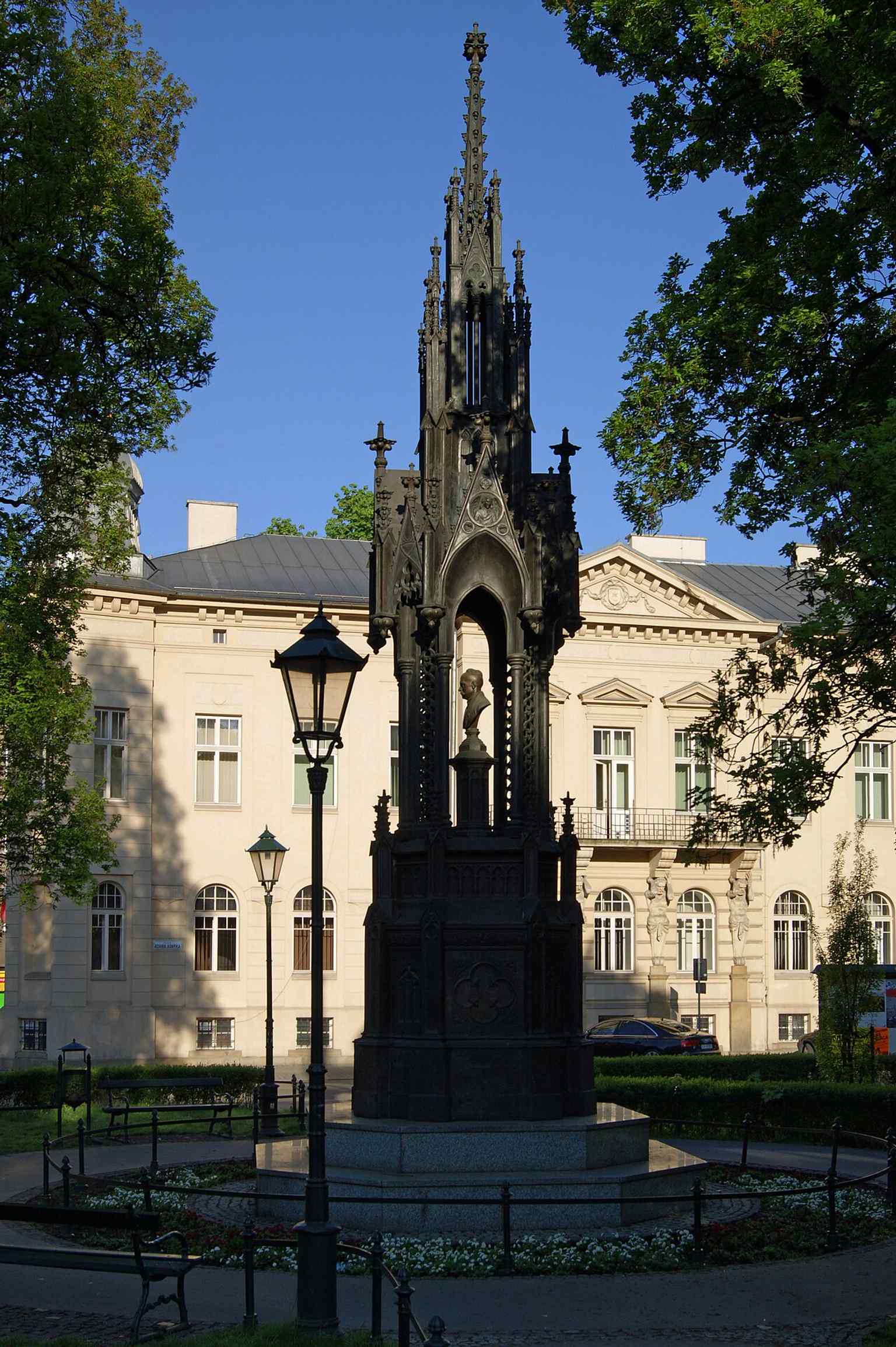
The monument from Garbarska Street, emphasizing the tall, chapel-like silhouette that was recreated from archival photos and the Powązki copy.Photo: Zygmunt Put Zetpe0202, Wikimedia Commons, CC BY-SA 4.0. Cropped & resized. 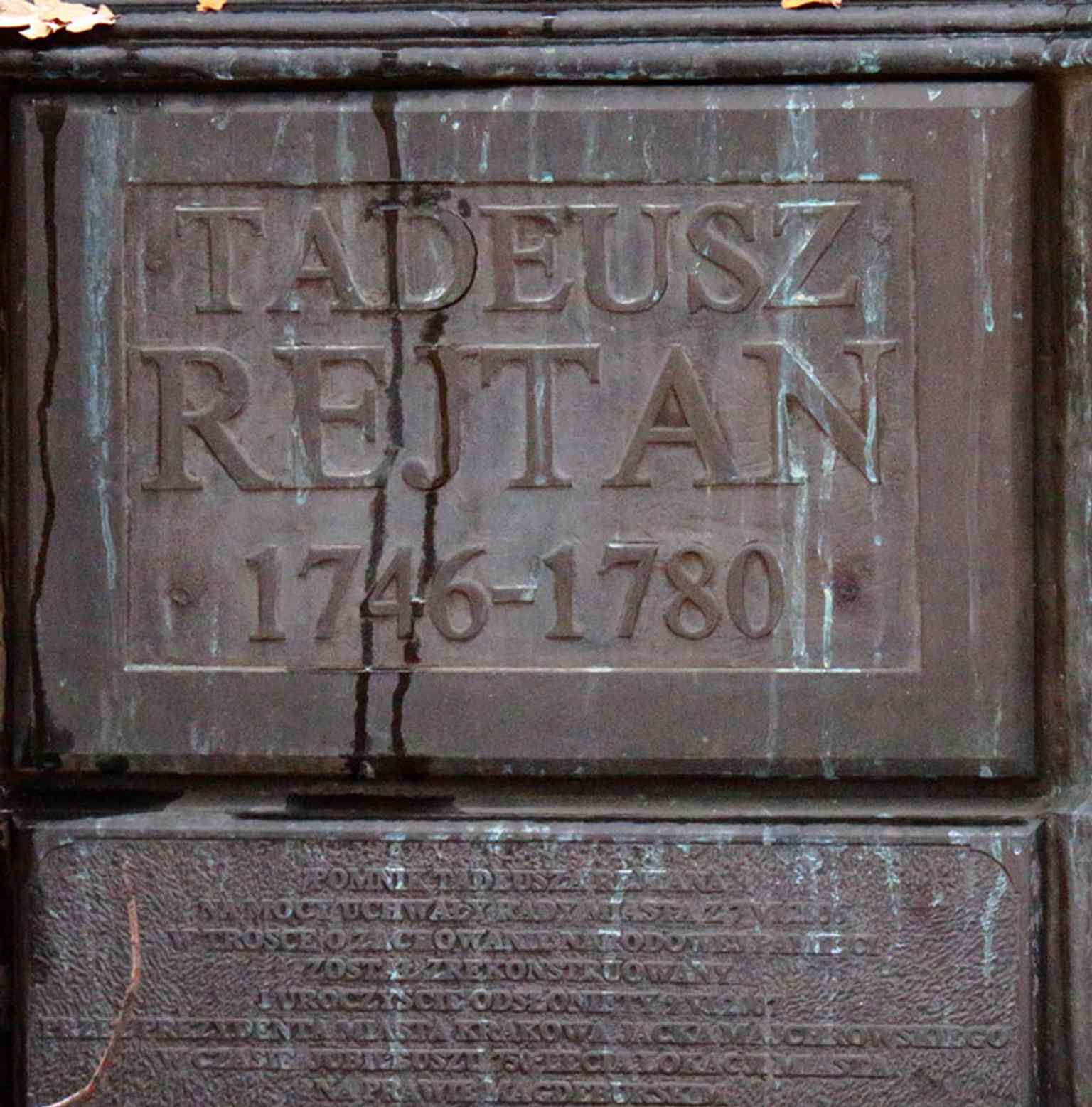
A tighter cropped view of the monument’s decorative ironwork, ideal for highlighting the detailed reconstruction work done from historical documentation.Photo: Аимаина хикари, Wikimedia Commons, CC0. Cropped & resized. 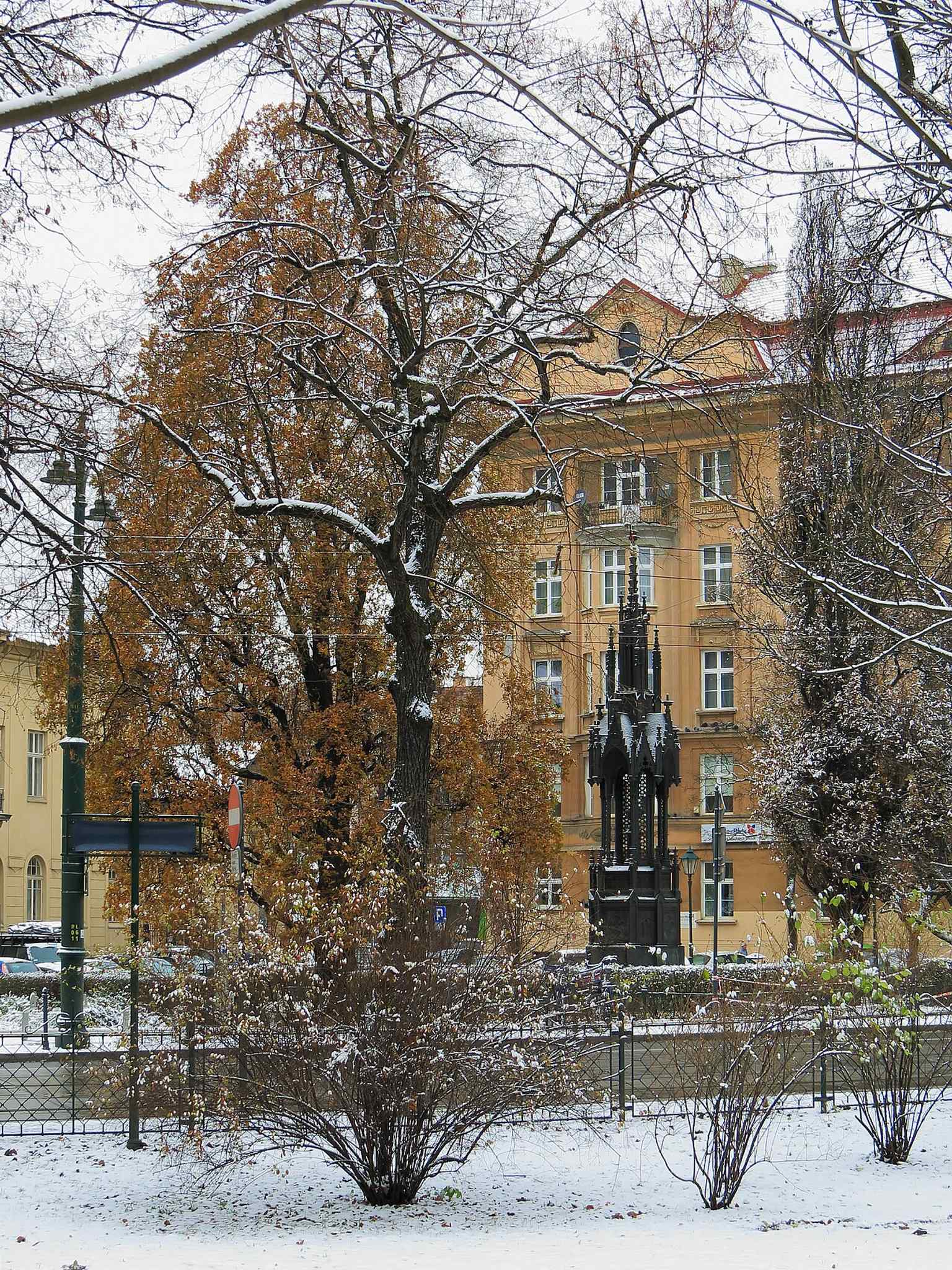
Another contemporary full-height view, showing the monument’s scale: 11 meters tall and mounted on a two-step granite base.Photo: Аимаина хикари, Wikimedia Commons, CC0. Cropped & resized. 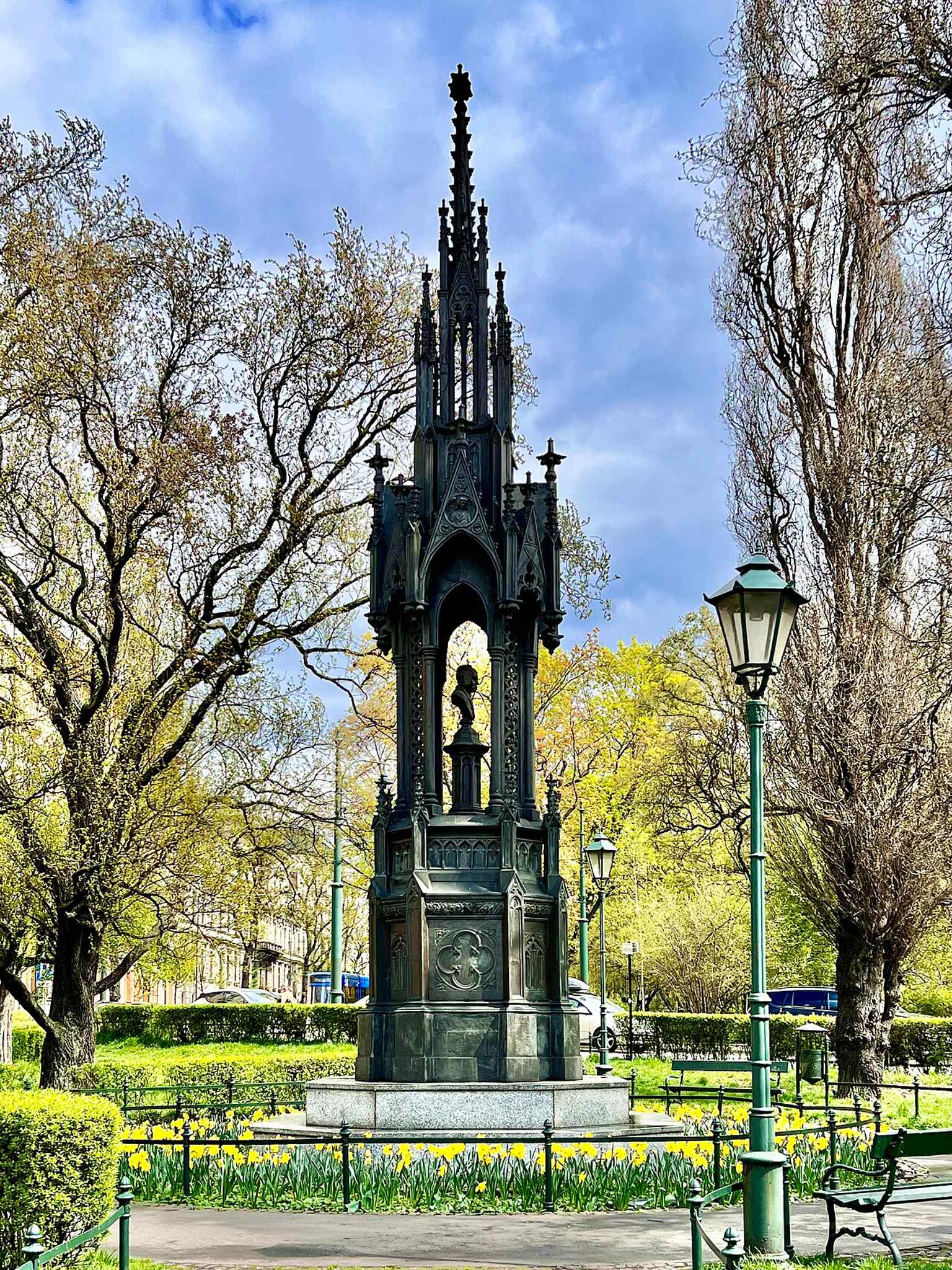
A recent winter view of the monument in Kraków, giving a strong sense of the square’s everyday setting rather than just a ceremonial portrait.Photo: Chris Olszewski, Wikimedia Commons, CC BY-SA 4.0. Cropped & resized. 
A close look at the monument’s sculptural center, where Czesław Dźwigaj recreated the bust using archival photographs and the Warsaw copy as guides.Photo: Kgbo, Wikimedia Commons, CC BY-SA 4.0. Cropped & resized. 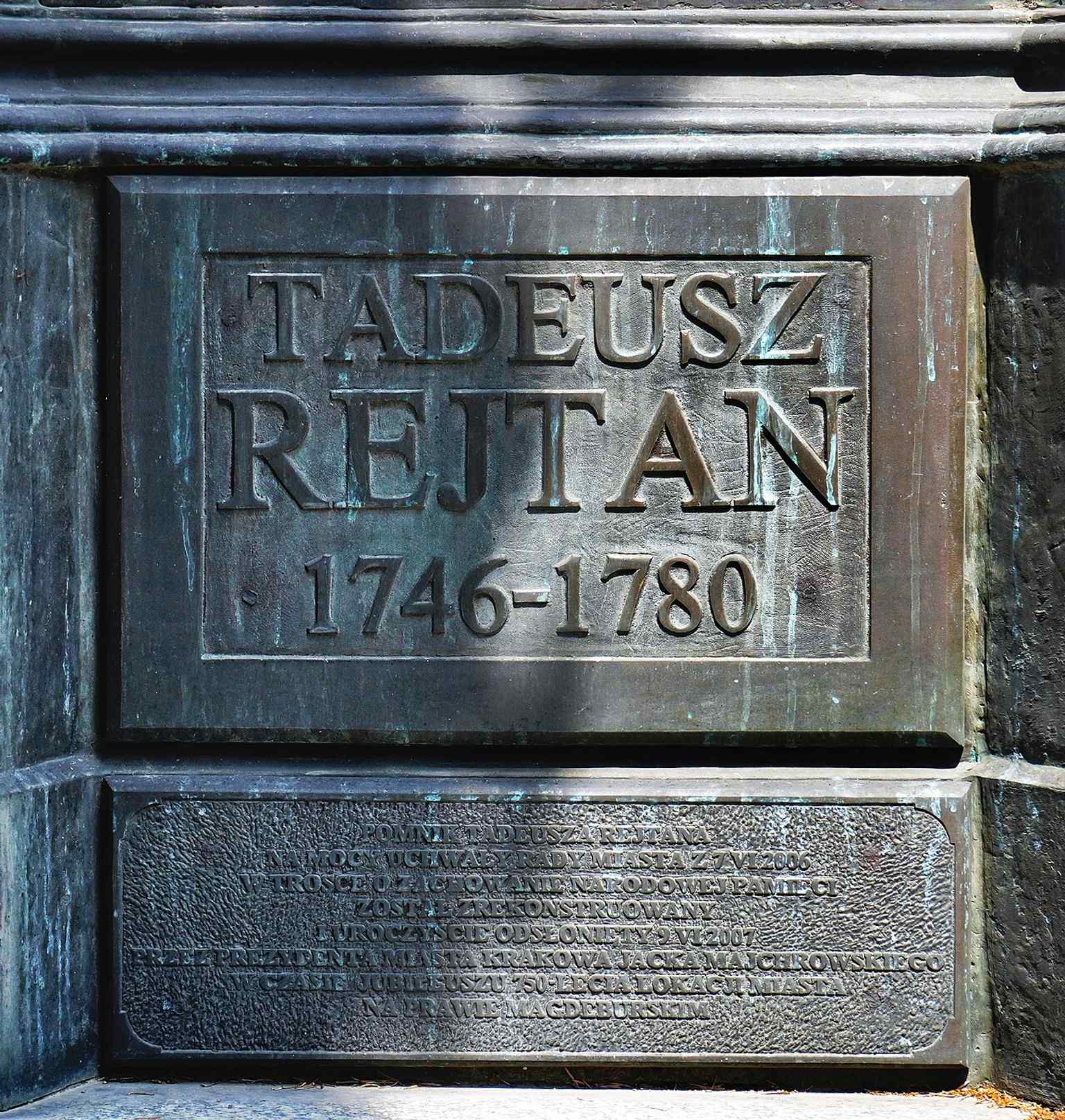
The commemorative plaque for the monument site — a useful contextual detail for the story of the 1890 unveiling, wartime loss, and 2007 rebirth.Photo: Mach240390, Wikimedia Commons, CC BY 4.0. Cropped & resized. Garbarska presents itself as a narrow run of tall plaster-and-brick townhouses in a continuous row, with the solid mass of the Carmelite church marking the corner like an old…Read moreShow less
Open dedicated page →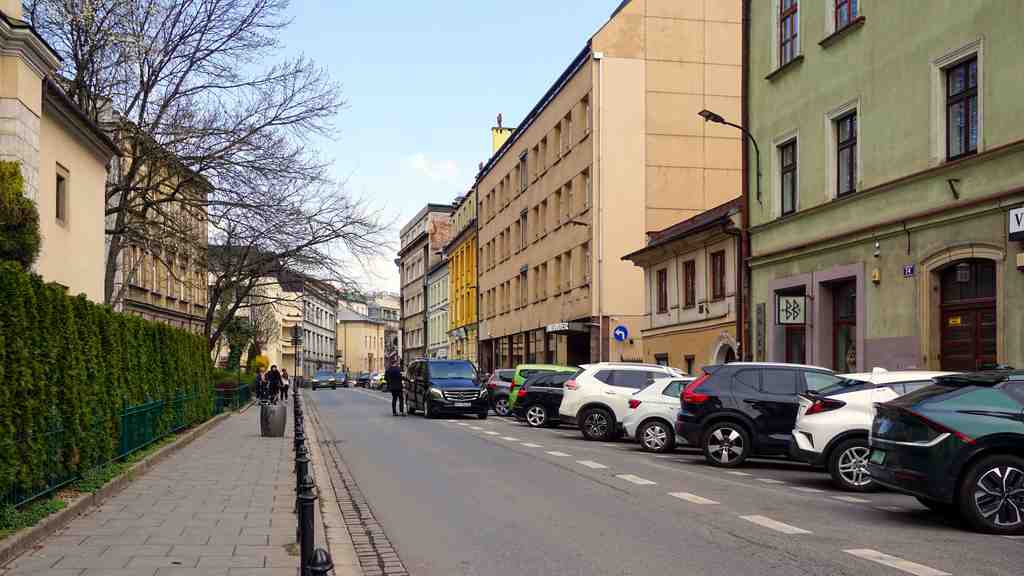
Garbarska Street in KrakowPhoto: Igor123121, Wikimedia Commons, CC BY 4.0. Cropped & resized. Garbarska presents itself as a narrow run of tall plaster-and-brick townhouses in a continuous row, with the solid mass of the Carmelite church marking the corner like an old stone hinge.
This street likely already existed in the fifteenth century, linking the Carmelite church with the now-lost church of Saint Peter the Small. Its name came from Garbary, a jurydyka, meaning a privately governed district that stood outside Kraków’s medieval core before the city fully absorbed it. People called this lane by other names for a time, including Pańska, until the city restored Garbarska officially in eighteen fifty-eight. By then it had already survived repeated ruin. Sieges in fifteen eighty-seven and again in sixteen fifty-five tore through the street and forced it to begin again.
That is part of Garbarska’s quiet force: it looks ordinary, but ordinary streets often carry the hardest memory. Most of the frontage you see now comes from the late nineteenth and early twentieth centuries, with a few older early nineteenth-century houses still preserving the feel of the former suburb. If you glance at the image on your screen, the view along the street helps place number four, where filmmaker Wojciech Jerzy Has was born on the first of April, nineteen twenty-five. During the occupation, Has stayed bound to Kraków, studying in a commercial college and then in secret classes at the Academy of Fine Arts. Later, people said his house had simply been lucky enough to survive.
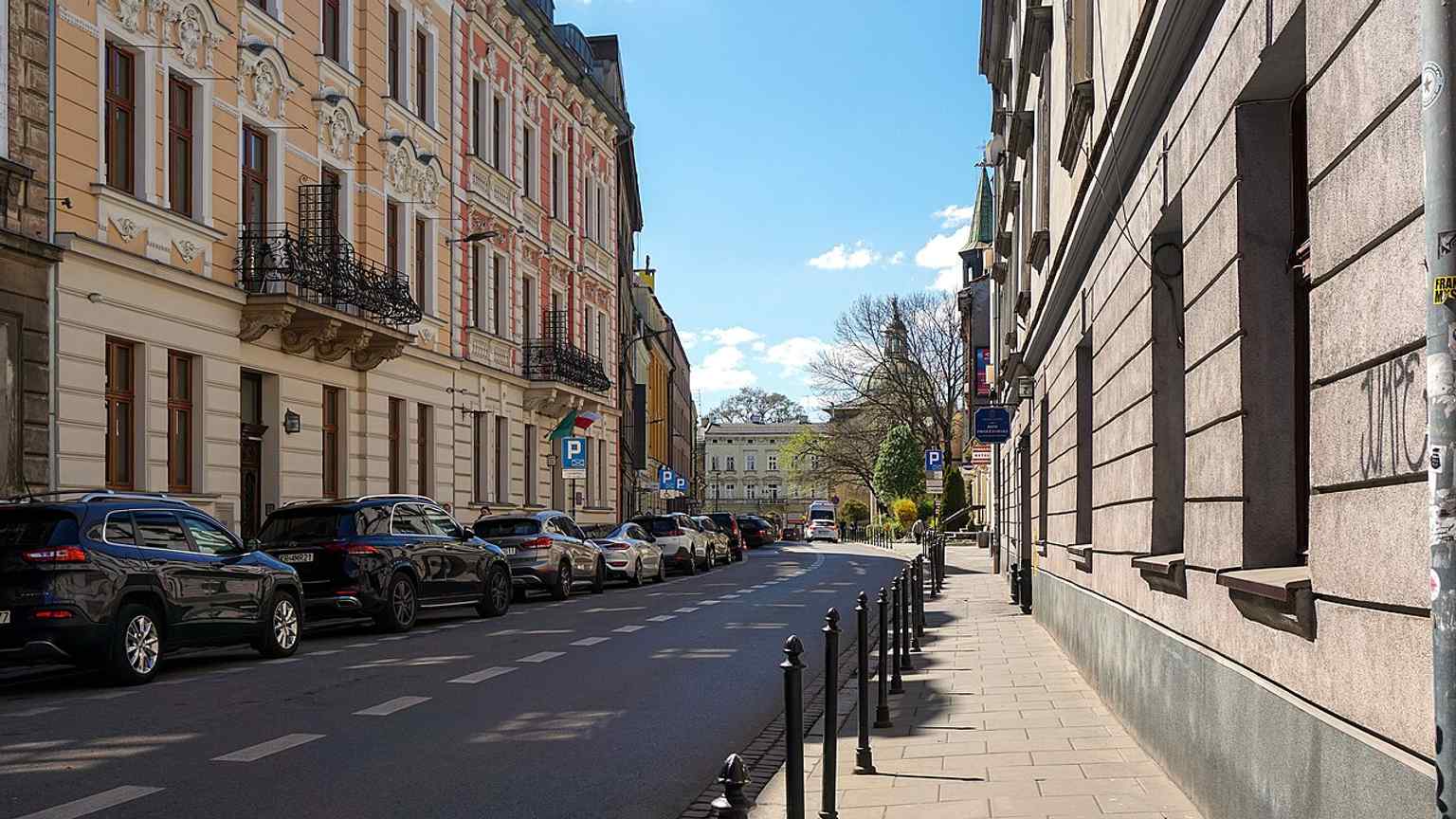
Looking west from the opposite end of Garbarska Street, this street scene helps place the lane where Wojciech Jerzy Has was born at No. 4.Photo: Igor123121, Wikimedia Commons, CC BY 4.0. Cropped & resized. Now let your attention rest on the Carmelite church. It is one of Garbarska’s oldest constants, and it draws us naturally to the Church of the Visitation of the Blessed Virgin Mary.
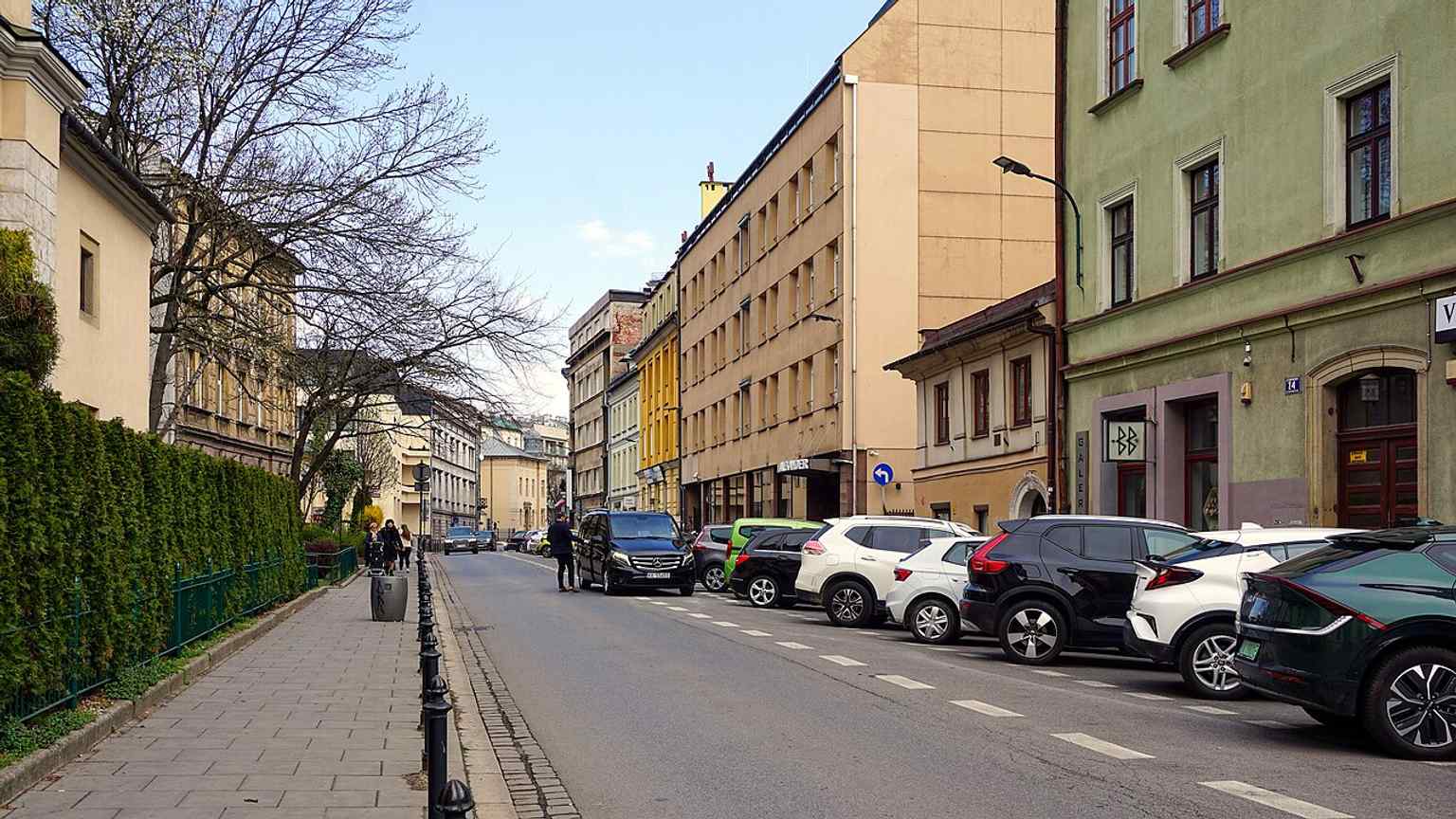
A clear eastward view along Garbarska Street in Kraków, showing the historic urban frontage of the old Garbary suburb.Photo: Igor123121, Wikimedia Commons, CC BY 4.0. Cropped & resized. On your right, look for the pale stone Baroque façade with its tall pilasters, broad central gable, and the sculptural mass of the Carmelite complex stretching back behind…Read moreShow less
Open dedicated page →On your right, look for the pale stone Baroque façade with its tall pilasters, broad central gable, and the sculptural mass of the Carmelite complex stretching back behind it.
This church holds several Krakóws at once: legend, royal patronage, military danger, and stubborn devotion. People often call it the Carmelites Church, and that matters. The Carmelites did not simply occupy this corner; they helped define Piasek, the old district whose name comes from sand. In a city where streets and loyalties keep shifting, a religious order can leave a mark as lasting as any planner or politician.
The oldest story here belongs to Duke Władysław Herman. According to legend, he came northwest of the old walls after a vision and found violets blooming in sand. Those violets, people said, cured the scurvy that had disfigured him. It is a wonderfully local sort of miracle: not abstract, not distant, but tied to this ground itself. Historians are more cautious. They can firmly place the first church here in thirteen ninety-five, when Queen Jadwiga and Władysław Jagiełło backed its foundation, and in thirteen ninety-seven they entrusted it to the Carmelites, newly invited from Prague.
Jadwiga lingers here in stone. Along the outer wall on Garbarska Street there is a carved footprint said to be hers, as if the queen paused mid-building and left proof of her presence. The tale only appeared in print in the nineteenth century, so scholars treat it as a later legend. Even so, it tells you something important: Kraków wanted this church to remember itself as royal.
What you see now is not the medieval church they knew. The Swedish Deluge in the mid-seventeenth century nearly erased the place. Fighting and deliberate destruction wrecked the church and convent, and the rebuilding dragged on until sixteen seventy-nine, when this Baroque form finally emerged, modelled on Il Gesù in Rome. If you peek at the image in the app, the cloister painting of the church burning preserves that memory of near-obliteration with unsettling intimacy.
And then the shrine gathered power again. The image of Our Lady of Piasek became famous after the siege of fifteen eighty-seven, when it reportedly survived the fire that damaged the Gothic church. Carmelite records say people from every rank of society left written accounts of favours and cures here, turning prayer into a kind of civic archive. The icon itself carries another whisper of miracle: tradition says an artist left it unfinished in the fifteenth century, and heavenly hands completed it. Later, Jan Matejko designed its crown, and he had already woven his own life into this place by marrying here in eighteen sixty-four.
On the fifteenth of August, sixteen eighty-three, King Jan the Third Sobieski and Maria Kazimiera prayed here before he rode to Vienna. Their vows linked this church to one of Poland’s defining victories. Less gloriously, in seventeen seventy-two Russian troops used the church, standing outside the old walls, as an artillery sighting platform. Its sacred height became a military tool. That, too, is part of Kraków’s truth: prayer and power rarely keep to separate streets.
If you look at the interior photo on your screen, you can sense how richly that recovery was staged, with Baroque carving and colour gathering the faithful back into the great central hall. And somewhere behind these buildings, hidden from view, a fragment of the old Carmelite orchard still survives, as if the church keeps one private memory no street can quite absorb.
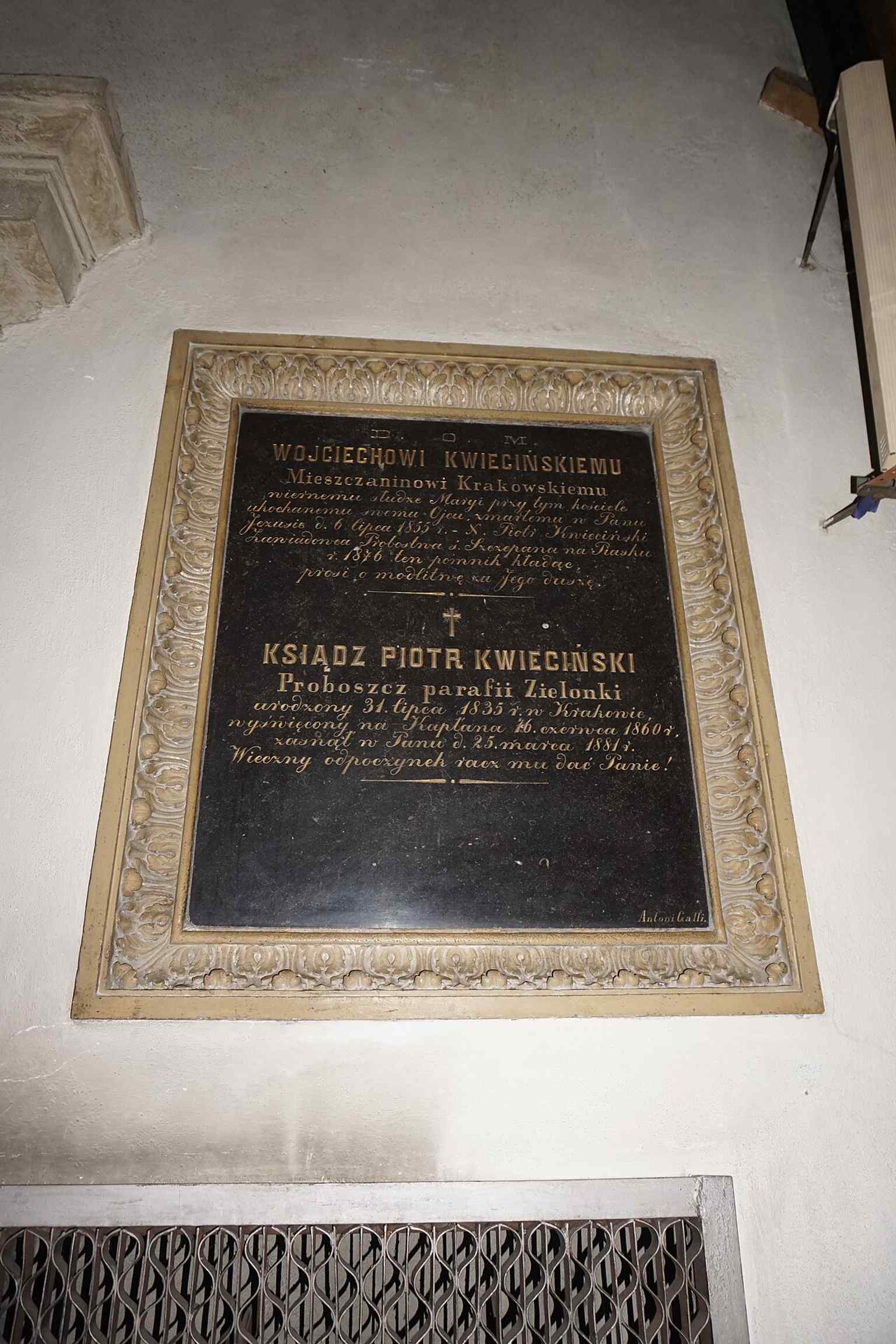
A richly decorated interior view from 2025, showing the basilica’s layered Baroque decoration in active use today.Photo: Igor123121, Wikimedia Commons, CC BY 4.0. Cropped & resized. From here we continue to Esplanada Café, about three minutes away, where another congregation once formed around talk, taste, and the provocations of urban life. If you want to return later, the church is generally open every day from six in the morning until eight in the evening.
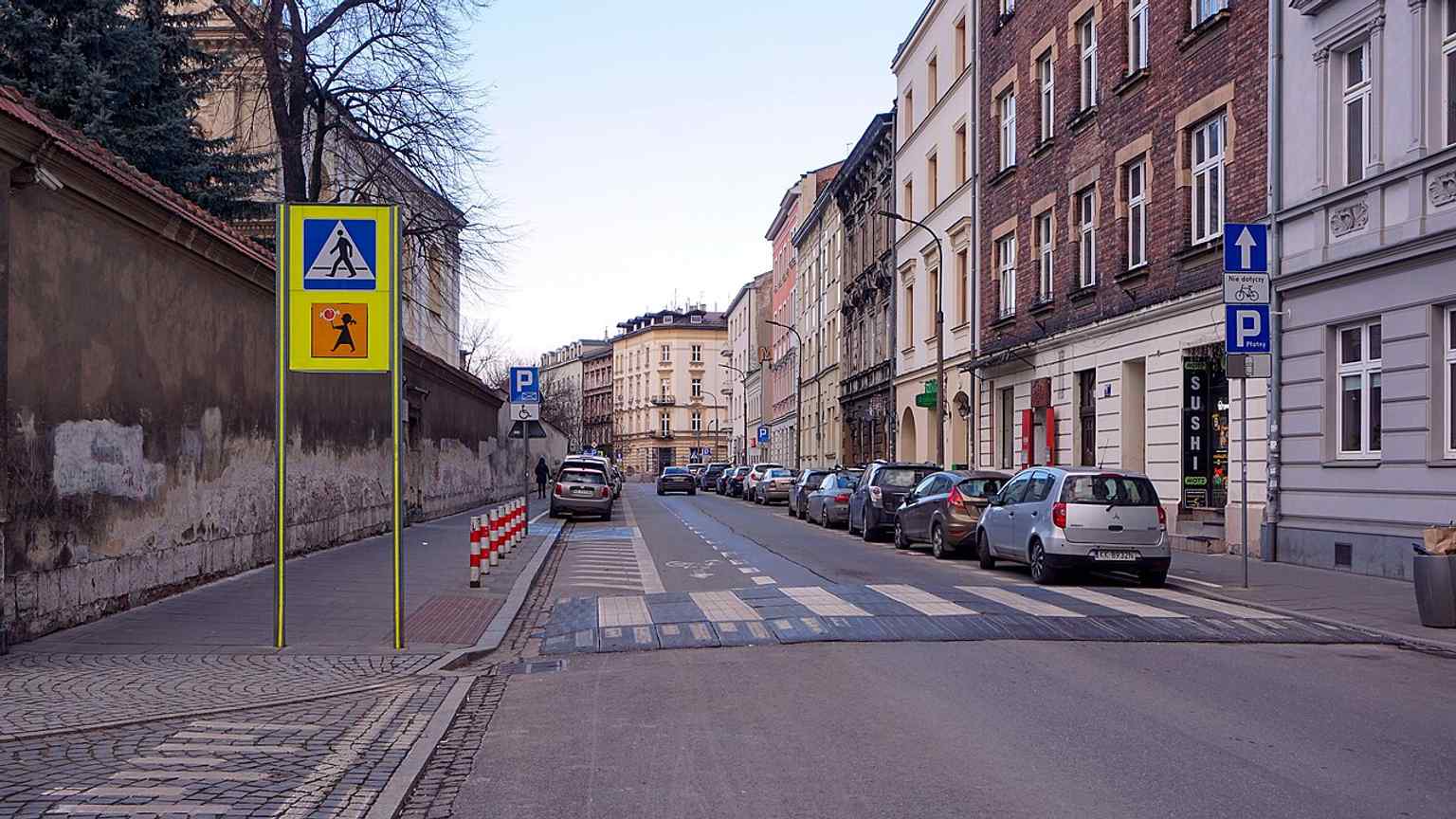
Look for the corner townhouse with a pale plaster façade, tall rectangular windows, and a sharp angled corner marking the meeting of Podwale and Krupnicza. This address once held…Read moreShow less
Open dedicated page →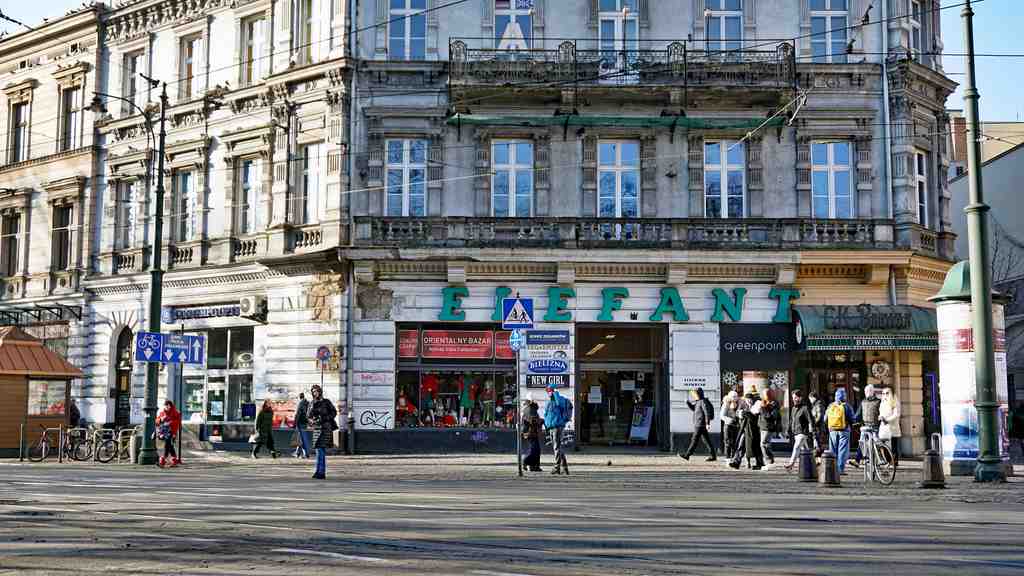
Esplanada Café in KrakowPhoto: Igor123121, Wikimedia Commons, CC BY-SA 4.0. Cropped & resized. Look for the corner townhouse with a pale plaster façade, tall rectangular windows, and a sharp angled corner marking the meeting of Podwale and Krupnicza.
This address once held Esplanada, a café that opened in nineteen twelve under the merchant Karol Wołkowski, and it managed to be fashionable, unruly, scandalous, and politically charged almost all at once. On the surface, it was a smart city café with chamber music in the afternoons and evenings. Underneath, it was the sort of place where Kraków argued over who had the right to define culture.
Wołkowski himself was no mild host. Kraków’s newspapers loved him for all the wrong reasons. One inspection described filthy conditions so shocking that the press printed them in outrage, and in nineteen fourteen another paper urged readers to boycott the café for serving “Prussian wafers” instead of supporting local goods. Even the biscuits became ideological here.
But the real charge of the place gathered in a side room. If Galeria Olympia felt intimate, like art whispered across a domestic threshold, Esplanada offered the opposite: art in public, art in commerce, art elbowing the café tables aside. The futurist and formist circle of Gałka Muszkatołowa met here, a club of young rebels who delighted in provoking people through language, design, and behaviour. They played with spelling, mocked good taste, and treated manners as something to be kicked open.
Most people passing this corner have no idea that Tytus Czyżewski and Józef Jarema decorated that side room themselves. They turned the café interior into part of the experiment: bright paintings, distorted faces, strange figures, hard geometric shapes, and even a ceiling lamp probably designed by Czyżewski. Imagine Bruno Jasieński arriving with a monocle, a pink tie, and a cane topped with ivory, determined to look like a walking manifesto.
And then Kraków struck back. Conservative opinion grew so disgusted by the futurists’ antics that Wołkowski literally bricked up the entrance to their room and rented the sealed-off space to a typewriter firm. It is such a perfect local drama: the avant-garde painted the walls, scandalised the city, and ended up replaced by office machinery.
Yet the room kept changing its role. On the twenty-eighth of July, nineteen fourteen, Józef Piłsudski came here, spoke with Michał Sokolnicki about the likelihood of war, and within hours war began. He set up his command rooms at the back, with desks and typewriters, and some of the first mobilisation orders for the riflemen went out from this café. Later came early jazz, and even mathematicians such as Stefan Banach and Hugon Steinhaus, thinking hard at these tables.
Then another turn: under the name Cristal, during the occupation, Germans only could enter. After the war, the place reopened briefly, but by the late nineteen forties the café disappeared into a department store. That is often how Kraków hides its most combustible rooms: plain frontage, vanished interiors, no applause.
When you are ready, the Museum of Insurance is about a two-minute walk away. If you want to peer into the present life of the address, the building keeps daily hours from ten in the morning until eight in the evening.
On your left, look for the pale stucco facade with tall rectangular windows, a stone-framed entrance, and a pronounced cornice drawing a firm line across the front. This quiet…Read moreShow less
Open dedicated page →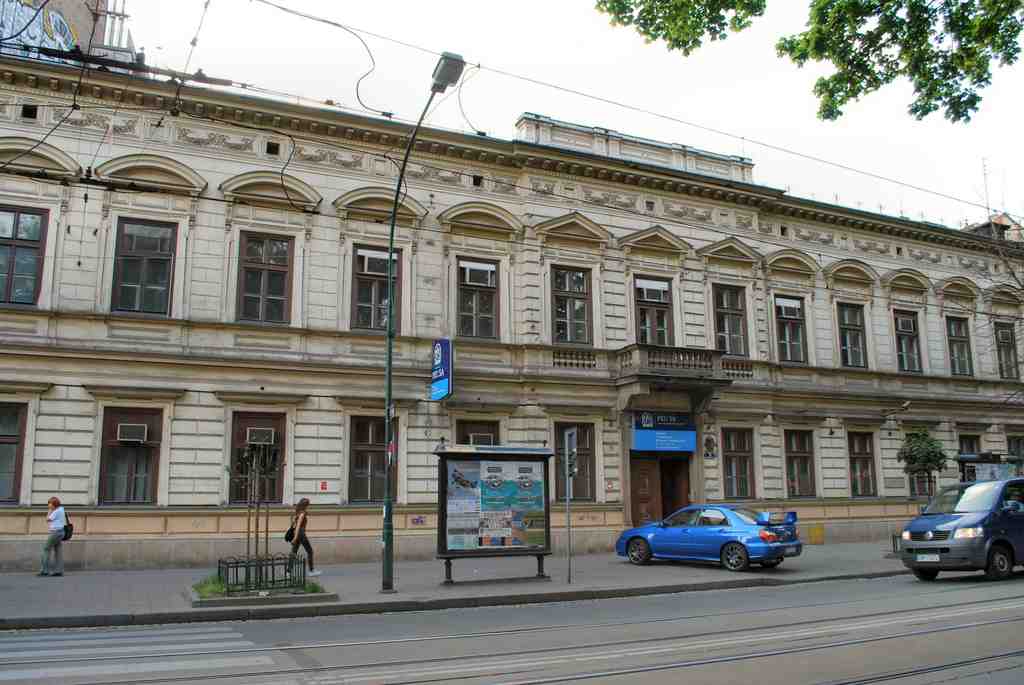
Museum of Insurance, KrakówPhoto: Delimata, Wikimedia Commons, CC BY-SA 4.0. Cropped & resized. On your left, look for the pale stucco facade with tall rectangular windows, a stone-framed entrance, and a pronounced cornice drawing a firm line across the front.
This quiet building held one of Kraków’s strangest archives: the Museum of Insurance, founded in nineteen eighty-seven inside the historic district branch of PZU, the state insurance company. It sounds dry, almost comic, until you realise what people chose to save here. Under the director Marianna Halota, this little museum gathered more than thirty-five thousand documents and certificates from twenty-eight countries, spanning two centuries. It was the only museum of its kind devoted to the full history of insurance in Poland and the former Polish lands.
The image in the app catches the disguise of it all: an ordinary institutional facade concealing remarkable memory.
The prize object reached straight into Napoleon’s circle: the original life insurance policy of Count Aleksander Colonna-Walewski, the illegitimate son of Napoleon Bonaparte and Countess Maria Walewska, issued in eighteen twenty-nine by the French company Union. Suddenly actuarial tables become love, empire, and scandal.
And then there was the oldest survivor: a receipt dated the fourteenth of December, eighteen oh four, issued to Woyciech Kirster by the Fire Society for Cities in South Prussia. The museum also kept cattle ear-tagging kits for livestock insurance and heavy metal fire marks, plaques fixed to houses so private fire brigades knew a building was insured and worth saving.
It closed quietly around twenty fifteen. Even so, it leaves a deliciously unsettling question: which scraps of paperwork does a city decide are worth a future?
From here, memory shifts from paperwork to revolution as we continue to Kapucyńska Street, about four minutes away.
Look for a narrow street lined with tall stone and stucco façades, especially the rounded corner building crowned by a wavy roofline and a clock set inside a sculpted…Read moreShow less
Open dedicated page →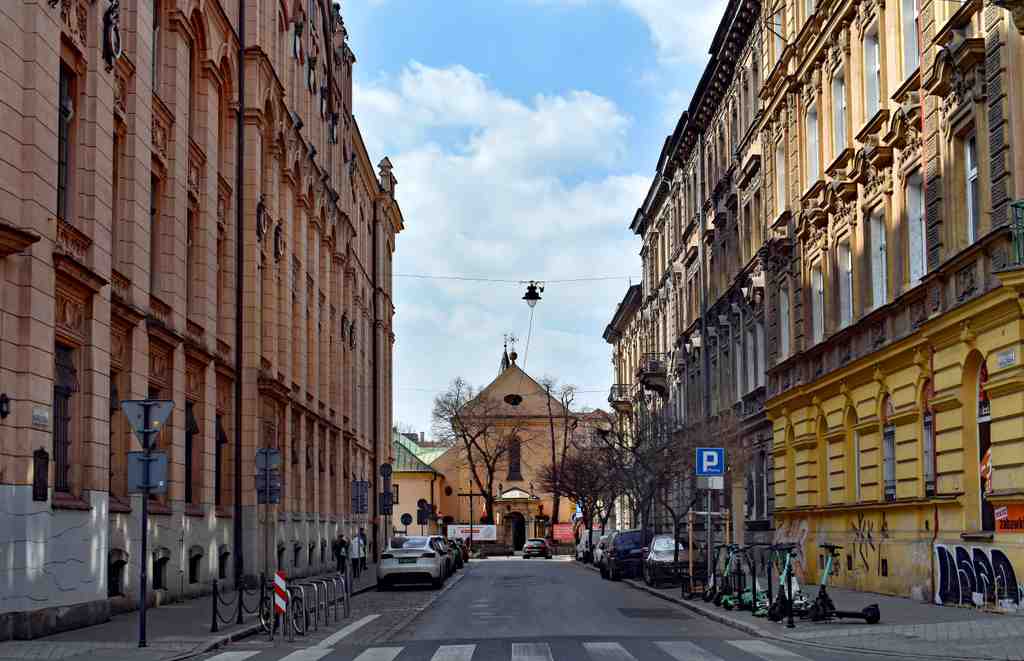
Kapucyńska Street in KrakowPhoto: Zygmunt Put, Wikimedia Commons, CC BY-SA 4.0. Cropped & resized. Look for a narrow street lined with tall stone and stucco façades, especially the rounded corner building crowned by a wavy roofline and a clock set inside a sculpted shield.
Kapucyńska is easy to miss. It is short, single-carriageway, almost modest, running between Loretańska and Podwale and marking the edge between Nowy Świat and Piasek. Yet that modesty is part of its trick. Streets like this keep their most consequential moments hidden behind ordinary walls.
Its name, given in eighteen eighty-one, comes from the nearby Capuchin monastery and church, founded here in sixteen ninety-nine after the order arrived in Kraków in sixteen ninety-five. Before that, this ground belonged to a jurisdiction called Ogrodniki, the Gardeners. So the street began not as a grand urban statement, but as something looser, more rural. In old photographs it still looks like a dirt lane with two rows of poplars, and a column of Our Lady of Grace standing in the middle like a quiet witness.
Now the frame tightens. On the night of the twenty-third of March, seventeen ninety-four, Tadeusz Kościuszko slept in the Wodzicki manor that once stood along this street. General Józef Wodzicki hosted him there. At dawn, before the insurrection formally began in the Main Market Square, Kościuszko slipped through a small gate in the garden wall, crossed toward the Capuchin church, and entered for Mass with Wodzicki. There, before the altar, they blessed their sabres and swore loyalty to the homeland. It is one of those rare moments when private prayer and public revolt touch the same stone threshold.
That old manor is gone. Lawyer Józef Rettinger demolished it in the eighteen nineties and split the garden into plots for tenement houses. One fragment survived for a time: the so-called Kościuszko Tower, a small sixteenth-century brick gatehouse tied to the legend of his passage. Then, in nineteen oh nine, Jan Kanty Federowicz secretly tore it down at night, ignoring strict orders from monument conservators. Kraków erupted in anger. People understood exactly what had been lost: not only a building, but a claim on memory.
And this street holds darker layers too. On the opposite side, before schools rose here, the open ground known as the square below the Capuchins served the army for brutal corporal punishment. Kazimierz Girtler, who saw it as a schoolboy in eighteen fourteen, wrote that his heart clenched and he had to run from the sight of soldiers beaten senseless with rods.
So keep Kościuszko in mind as you continue. Follow the line he took, urgent and inward, toward Loretańska Street, only a minute away.
Before you stretches a narrow, straight street of tall plastered town houses, its historic frontage broken by the pale masonry wall and chapel of the Capuchin church. Loretańska…Read moreShow less
Open dedicated page →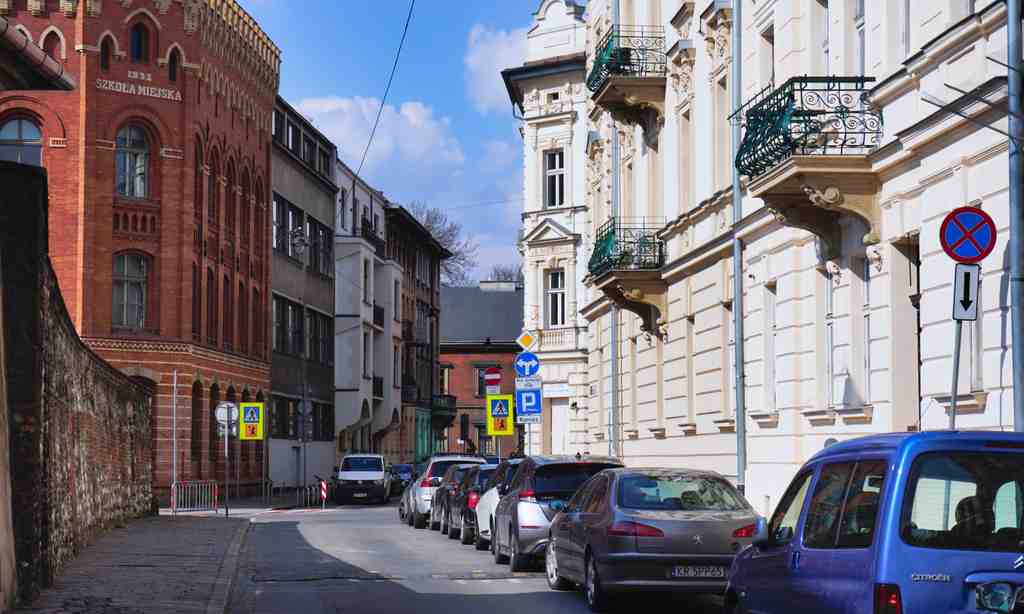
Loretańska Street in KrakowPhoto: Mach240390, Wikimedia Commons, CC BY 4.0. Cropped & resized. Before you stretches a narrow, straight street of tall plastered town houses, its historic frontage broken by the pale masonry wall and chapel of the Capuchin church.
Loretańska looks modest at first glance, but that is part of its cunning. This little lane existed here already in the fifteenth century. The first record, in fourteen thirty-one, did not flatter it at all: people simply called it the small street, the narrow street, the cramped street. And yet, for a place once dismissed as tight and minor, it has carried an extraordinary weight.
In the seventeenth century, Reformed Franciscan monks kept a monastery here until the Swedish Deluge destroyed it. Later, at the end of that same century, the Capuchins took the site and raised the church and monastery you see woven into the street line. For a long while the road along their wall had no proper name at all on city plans. Only around eighteen eighty did Kraków settle on Loretańska, a name that quietly fixed devotion onto the map.
Its most charged morning came on the twenty-fourth of March, seventeen ninety-four. Tadeusz Kościuszko had spent the night in the Wodzicki Palace, which no longer exists. Its gardens once spread across the ground where these later apartment houses stand. At dawn, Kościuszko passed through a garden gate straight into the Loreto Chapel here before heading to the Main Market Square to swear the oath that launched the insurrection.
And here is the exquisite problem this street poses: when the palace vanishes, the garden vanishes, even the gate vanishes, what keeps that decisive passage alive in the street itself? Kraków answers with fragments. A relief by Alfred Daun on the church wall recalls the blessing of the blades. A plaque at number fourteen marks the exact place of the lost gate. Memory, here, survives by attaching itself to stone after the original stage set has gone.
The grandest change came at the end of the nineteenth century. The Wodzicki estate was broken up, and by eighteen ninety-three the old palace grounds were giving way to dense rows of rental houses. In only a few years, Loretańska acquired much of the face it still wears: historicist façades, many designed by Leopold Tlachna, who gave the street an almost single-author rhythm. Look along the frontage and you can sense it: neobaroque flourishes here, neo-Renaissance balance there, the city writing a new chapter over erased aristocratic land.
Yet the older pulse never quite left. Inside number eleven, the Capuchin church keeps a cannonball lodged in a pillar from a Russian bombardment during the Bar Confederation in seventeen sixty-eight. In August of eighteen eighty-seven, Adam Chmielowski entered the Loreto Chapel here and took the habit, beginning the path that led Kraków to know him as Brother Albert. After the Warsaw Uprising collapsed, the monastery sheltered refugees from the capital, who later gave thanks with a painting of Christ by Adolf Hyła, set against a burning Warsaw.
So Loretańska offers a lesson in how a city preserves what matters. Not by freezing itself, but by rebuilding, relabelling, and trusting certain stories to cling on.
When you are ready, continue to Jabłonowskich Street. There, even a street name becomes part of the argument over who deserves remembrance.
Ahead of you is a short, straight street lined with stone late nineteenth-century tenements, their tall rectangular windows and the rounded corner mass of the Hussarzewski House…Read moreShow less
Open dedicated page →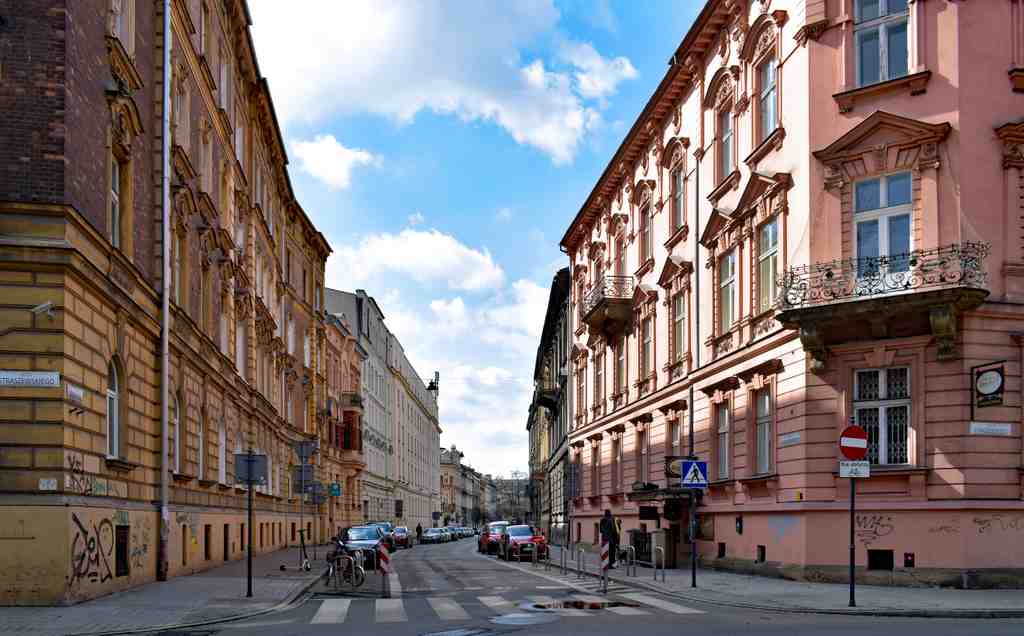
Jabłonowskich Street in KrakowPhoto: Zygmunt Put, Wikimedia Commons, CC BY-SA 4.0. Cropped & resized. Ahead of you is a short, straight street lined with stone late nineteenth-century tenements, their tall rectangular windows and the rounded corner mass of the Hussarzewski House giving the whole frontage a composed, urban rhythm.
When a government renames a street, it does more than replace a plaque. It tries to train everyday memory itself: how people write their address, how they give directions, which past gets spoken and which one is quietly pushed aside.
Jabłonowskich began as aristocratic ground. The land west of the old city walls belonged to the Jabłonowski family, and when Kraków expanded hard in the eighteen seventies and eighteen eighties, their gardens gave way to plots, and the plots gave way to rental houses. The city laid out this street at the end of the eighteen eighties and officially named it in eighteen ninety. If you glance at the image in the app, you can see that long, orderly residential perspective still holding its shape. Then came the twentieth century’s heavier hand. From nineteen fifty-two until nineteen ninety, this was officially Stanisława Ziai Street. For nearly four decades, every letter delivered here, every identity card, every doorway number, served a state-sponsored version of remembrance. That is the detail most visitors miss: an entire ordinary street turned into an instrument of ideological branding.
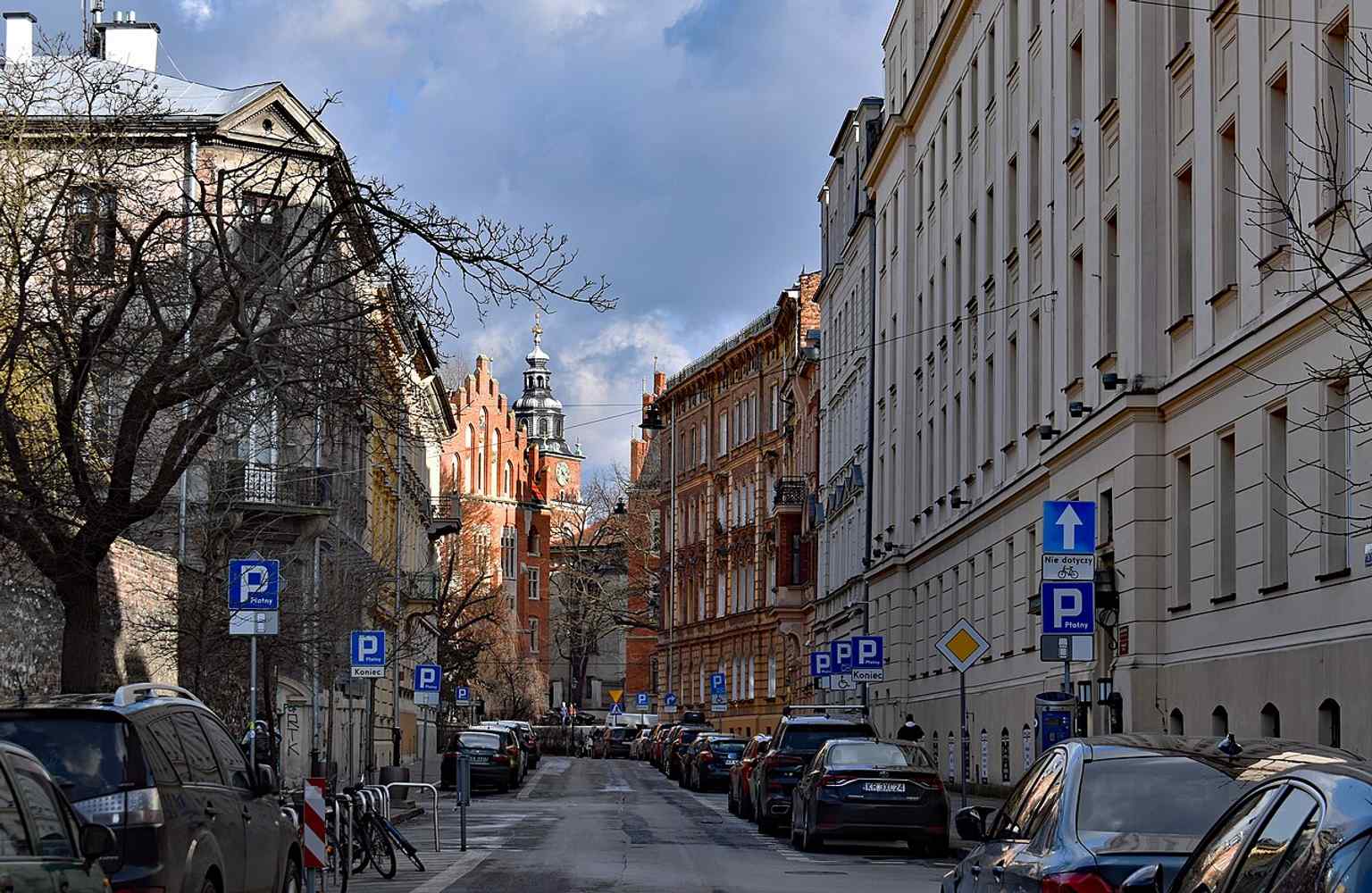
Looking east along the street, this modern panorama helps place the route in the historic New Town area of Kraków and shows the street’s continuous residential character.Photo: Zygmunt Put, Wikimedia Commons, CC BY-SA 4.0. Cropped & resized. The crucial building stands at numbers ten to twelve, the student house known as Bratniak. Have a look at it on your screen. In nineteen sixty-three, the communist authorities renamed the building Blokada, or Blockade, claiming to honour a left-wing student action from nineteen thirty-seven. But the truth is rather sharper. In the nineteen thirties, Bratniak was largely a fortress of nationalist students, and the notorious blockade of the university aimed to pressure the rector into introducing segregated seating for Jewish students. The official story softened that ugliness, then tried to overwrite it.
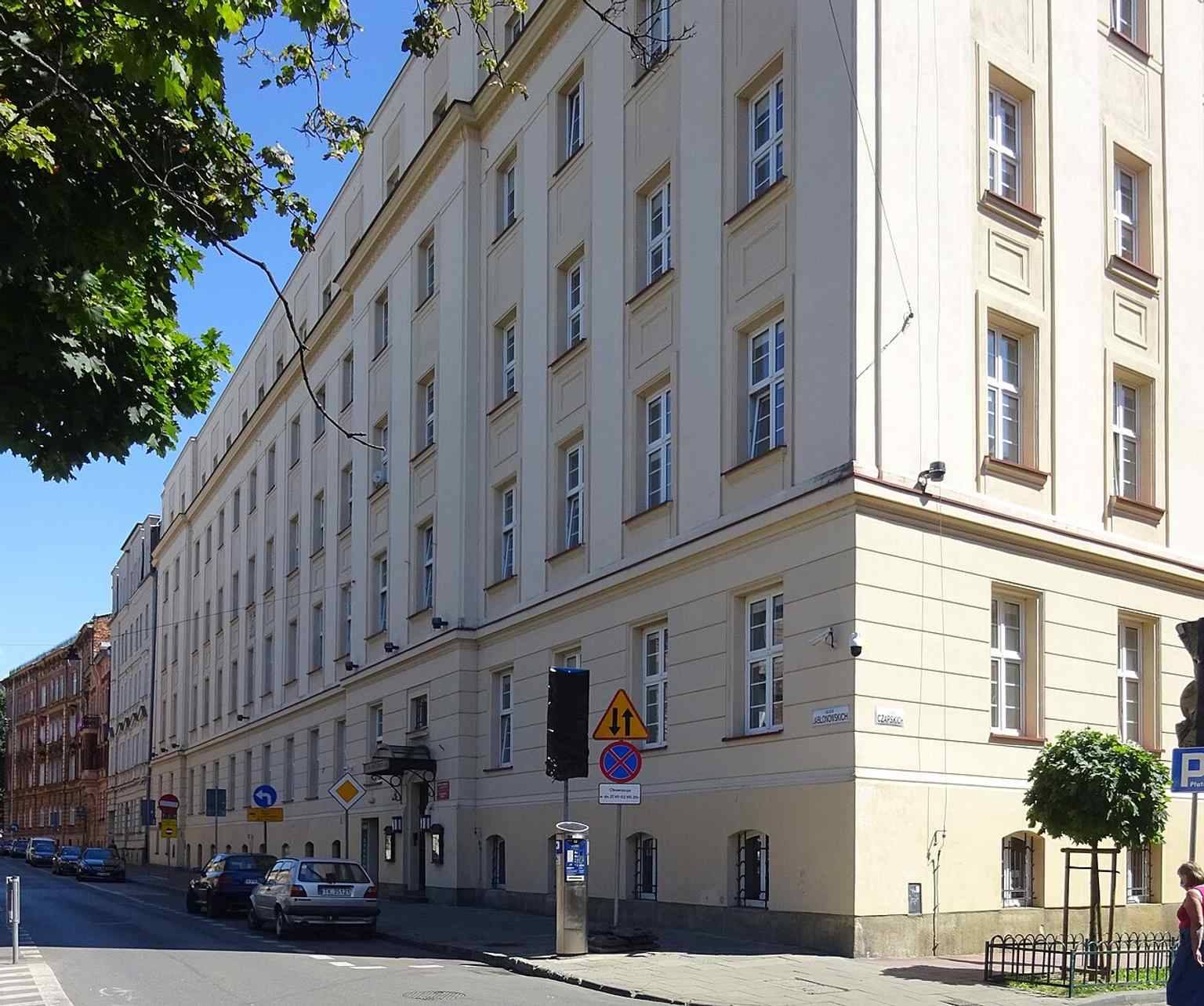
The Bratniak student dormitory at numbers 10–12, where the club Buda later gave birth to Kabaret Pod Budą and where Bohdan Smoleń’s student story began.Photo: Mach240390, Wikimedia Commons, CC BY 4.0. Cropped & resized. That is where Stanisław Ziaja enters. He studied philosophy at the Jagiellonian University, lived here in the student house, joined the illegal Communist Party of Poland, and suffered repeated arrests for it. He likely stood on the opposite side of those student battles. He died violently in nineteen forty-four, in Kraków, though some sources place his end in the Płaszów camp. After the war, the new regime chose him as a fitting patron and pushed the old Jabłonowski name aside. Like the Rejtan monument earlier, this is a reminder that memory is fought over; only here, the struggle hid inside an address.
And yet the story refused to stay obedient. In Bratniak’s cellars, the student club Buda later gave birth to the cabaret Pod Budą, with Bohdan Smoleń among its founders. A building used to discipline memory ended up nurturing laughter instead. Hold onto that thought as we continue to the EUROPEUM, where another old structure discovers a second cultural life.
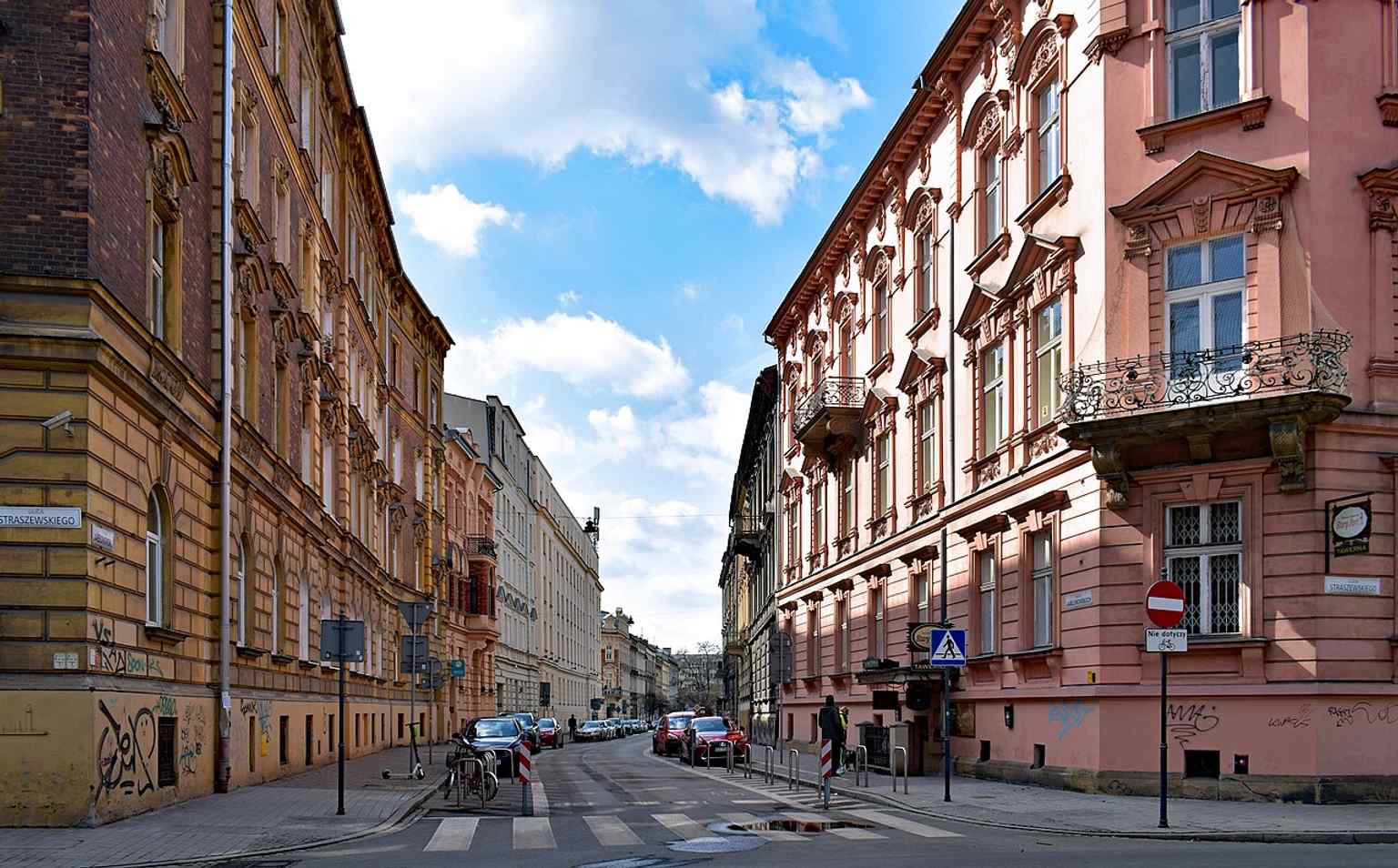
A wide westward view of Jabłonowskich Street showing its calm late-19th-century urban frontage near Planty, where the city expanded onto former Jabłonowskich family land.Photo: Zygmunt Put, Wikimedia Commons, CC BY-SA 4.0. Cropped & resized. 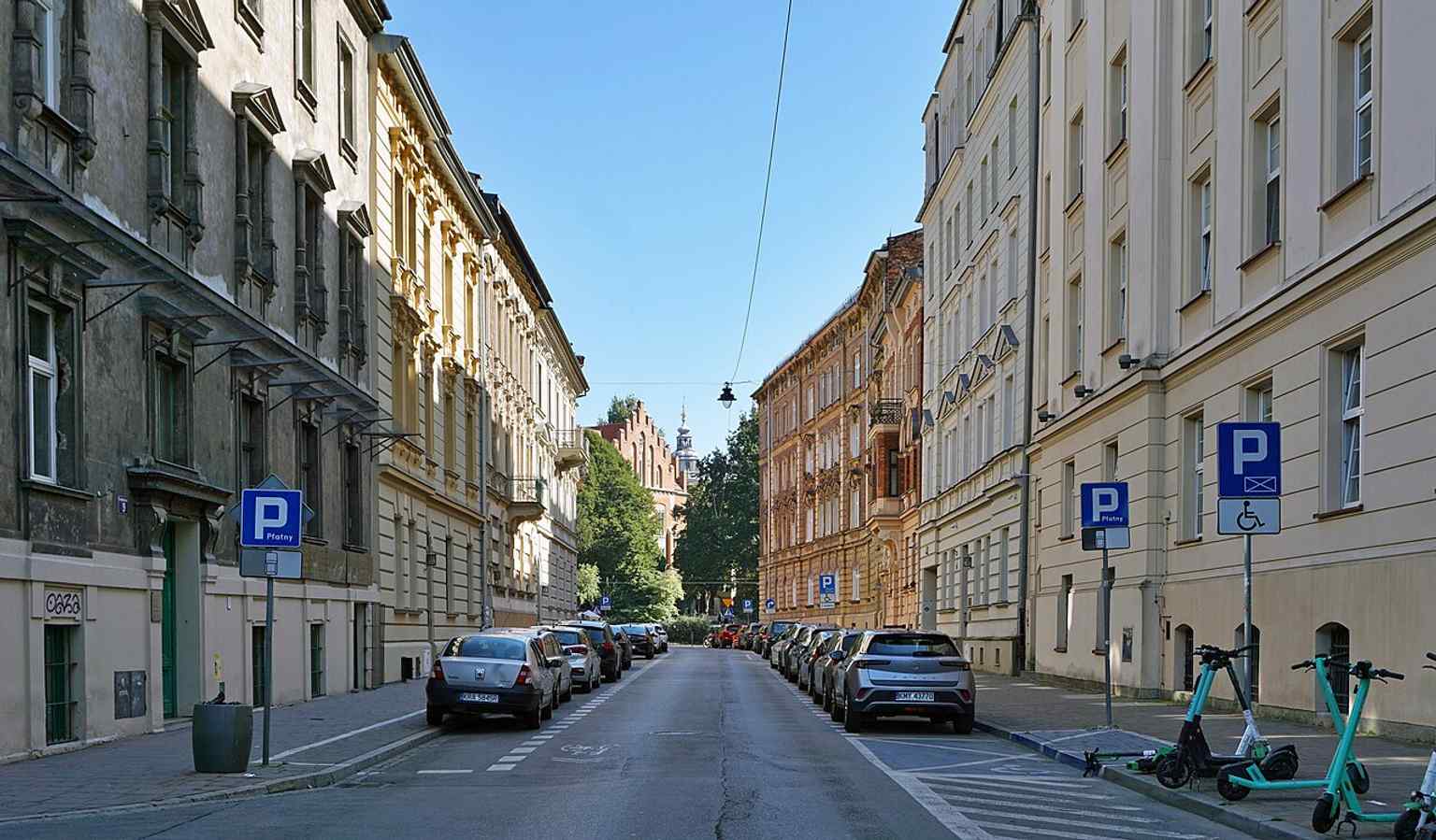
Another east-facing street view, useful for orientation near the Loretańska side and for showing the overall scale of this short Kraków street.Photo: Igor123121, Wikimedia Commons, CC BY-SA 4.0. Cropped & resized. 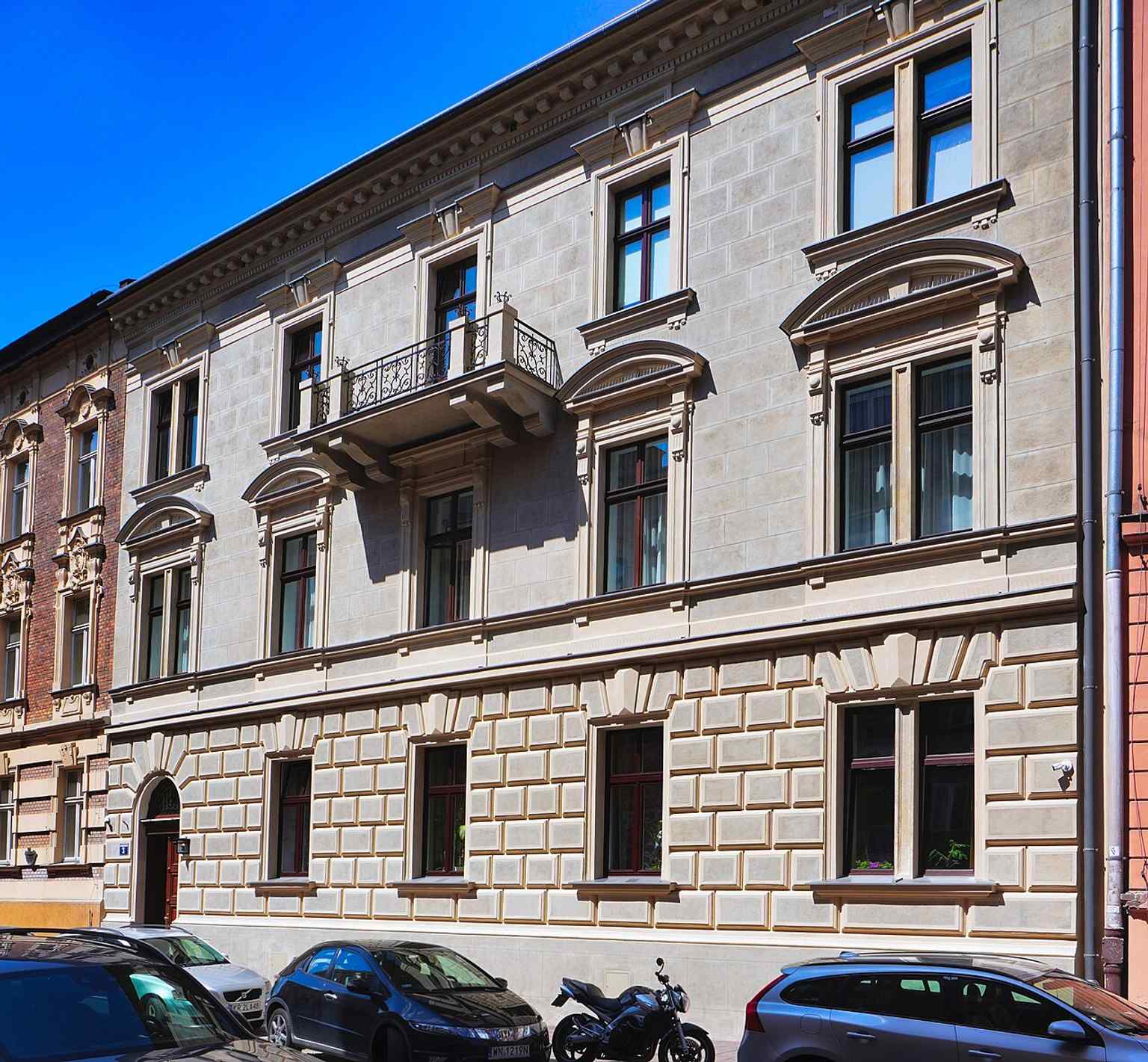
Kamienica at Jabłonowskich 3, designed by Józef Pokutyński in 1899, representing the elegant apartment-house boom that replaced the old gardens here.Photo: Mach240390, Wikimedia Commons, CC BY 4.0. Cropped & resized. 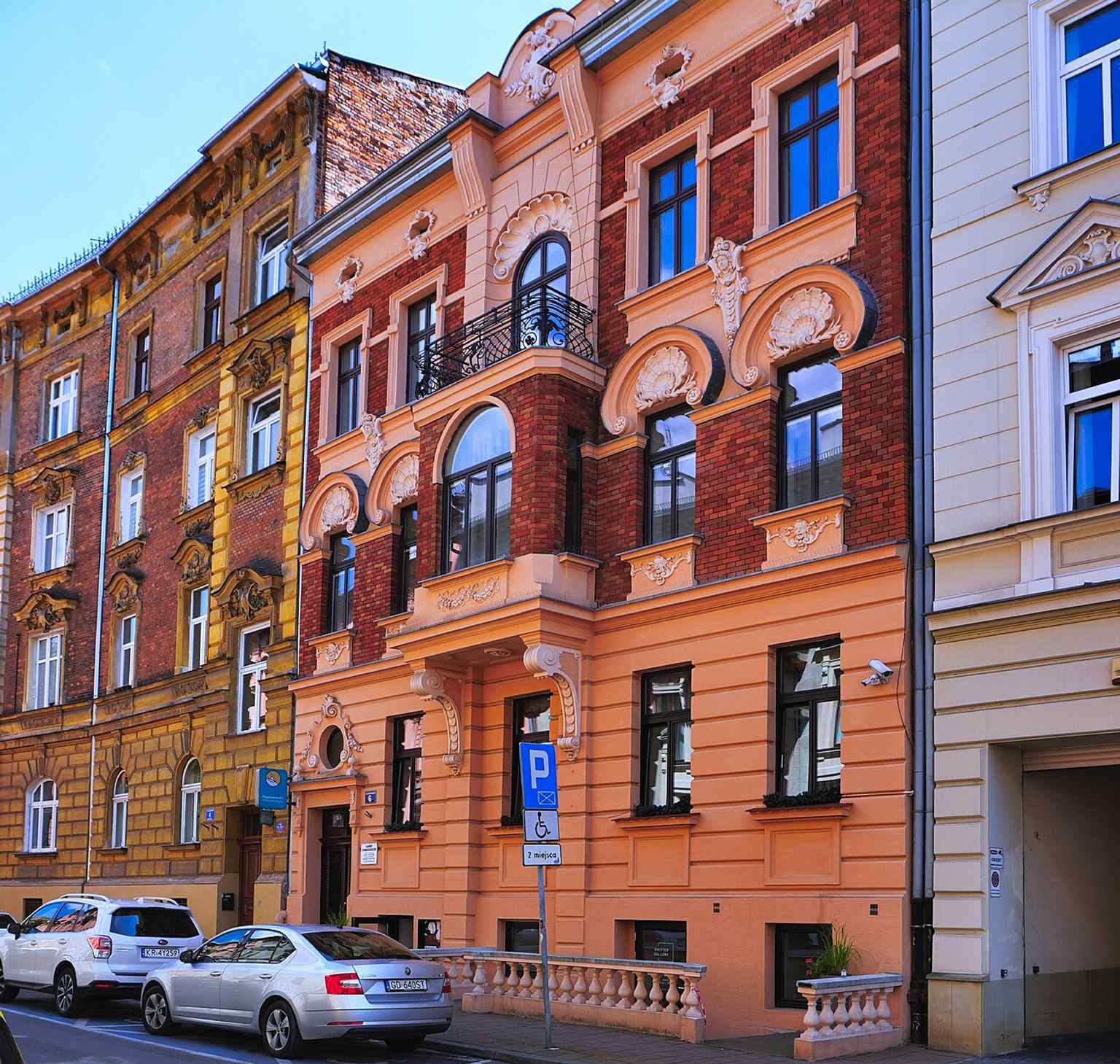
Kamienica at Jabłonowskich 6 by Beniamin Torbe, a solid early-20th-century tenement from the period when the street was being densely built up.Photo: Mach240390, Wikimedia Commons, CC BY 4.0. Cropped & resized. 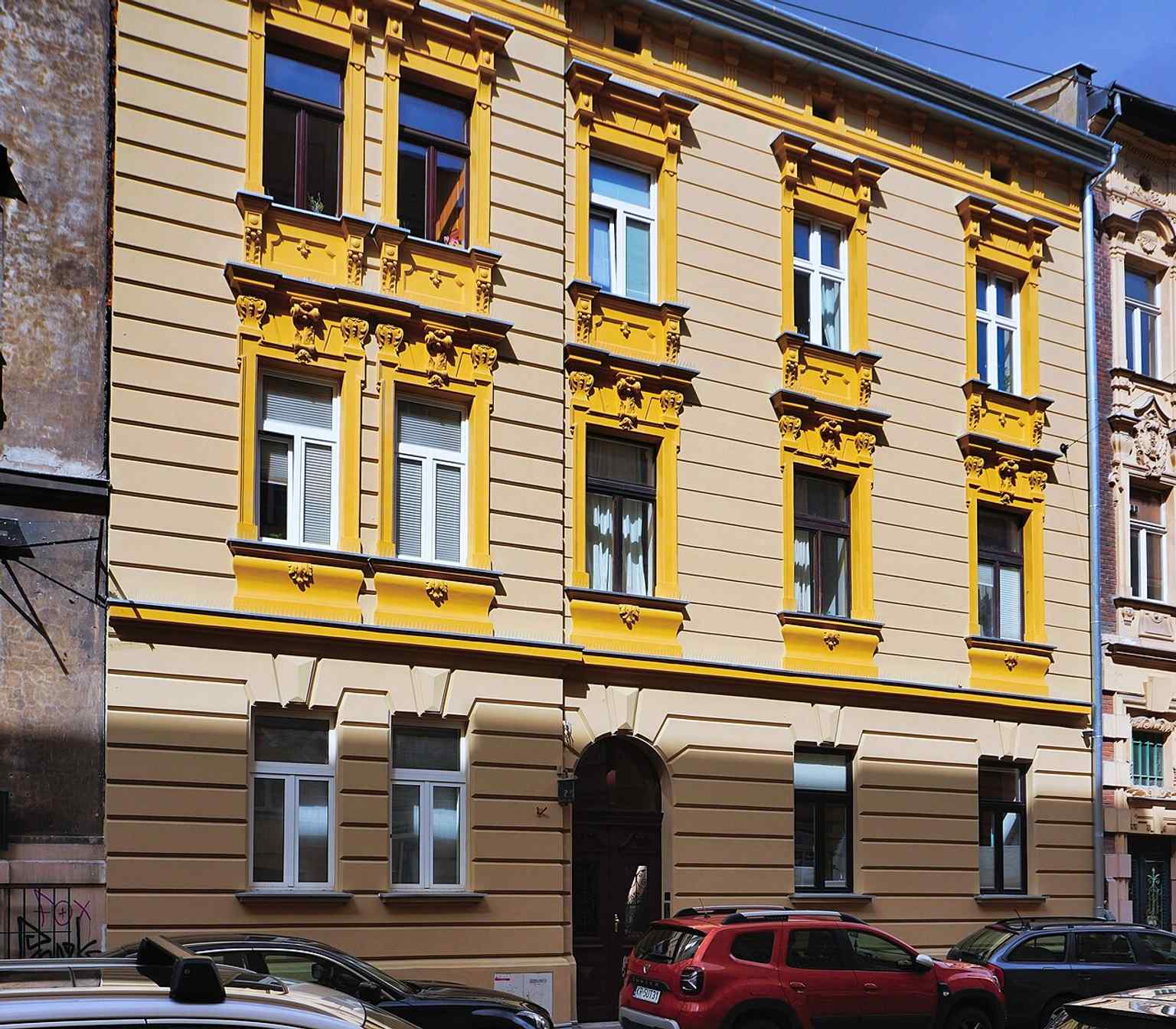
Kamienica at Jabłonowskich 7 by Leopold Tlachna, another well-preserved tenement that reflects the street’s early modern residential development.Photo: Mach240390, Wikimedia Commons, CC BY 4.0. Cropped & resized. 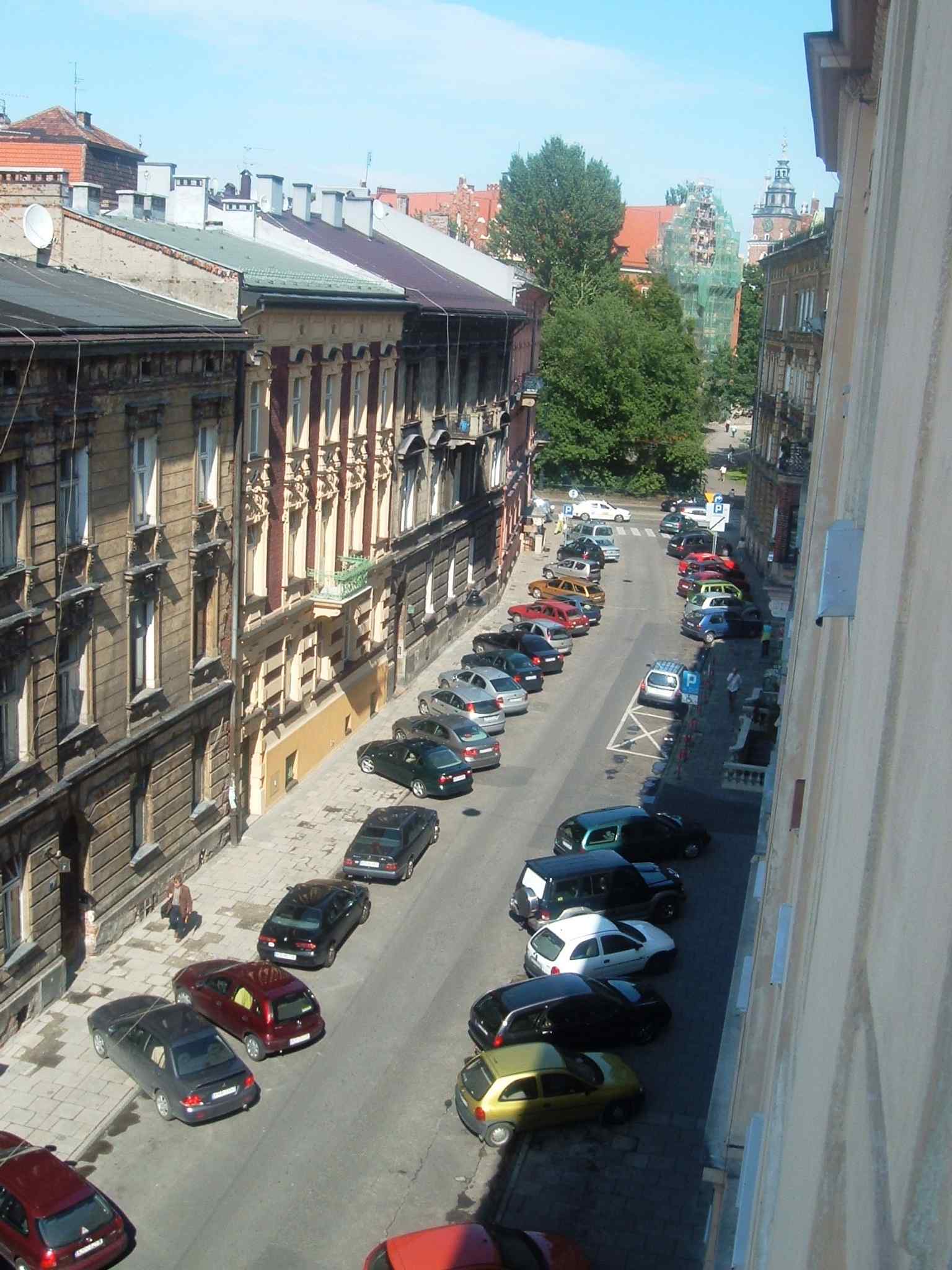
An older street view from 2007, useful as a historical comparison for how Jabłonowskich has changed while keeping its long residential perspective.Photo: Rj1979, Wikimedia Commons, Public domain. Cropped & resized. 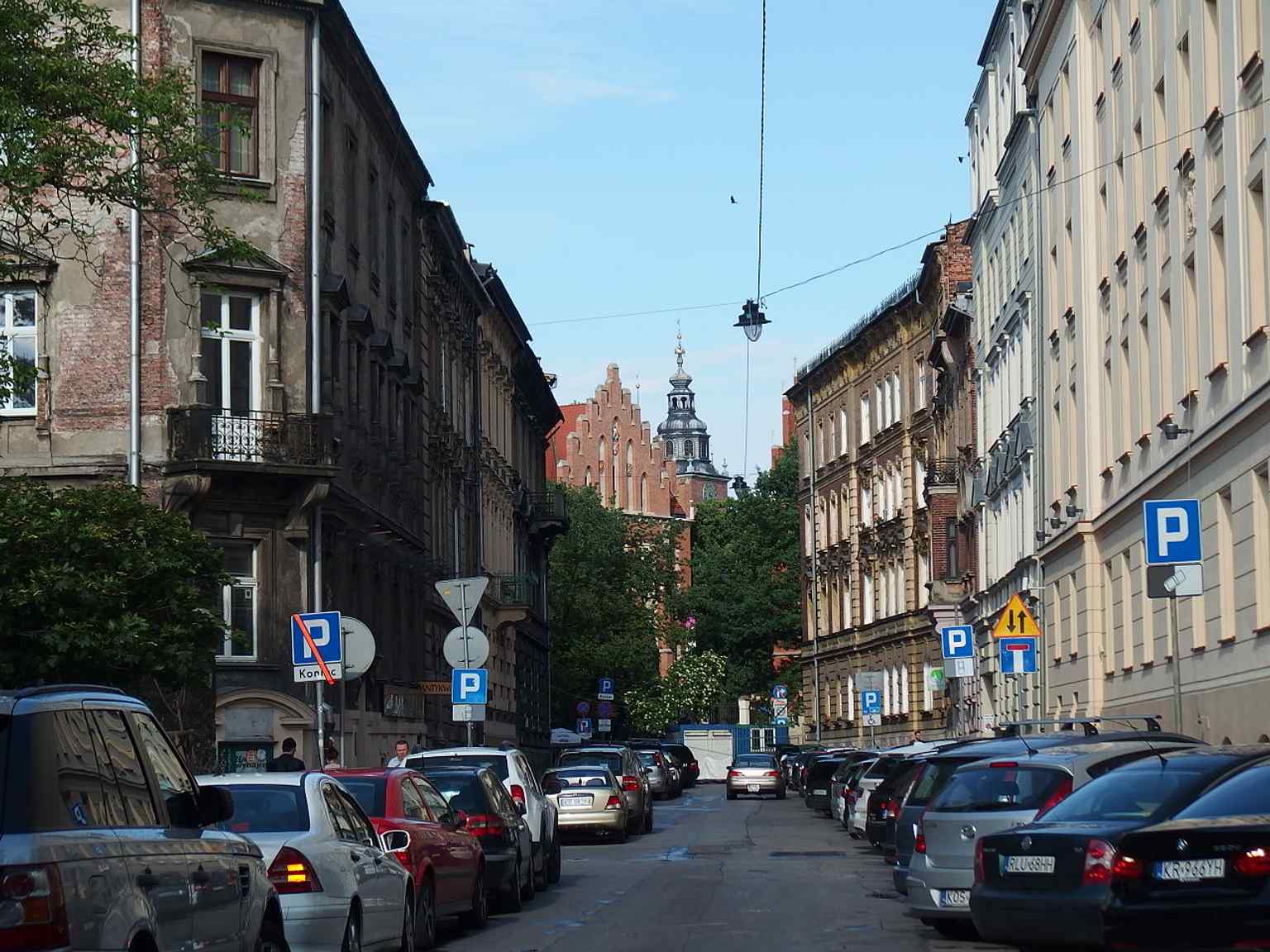
A 2015 view of Jabłonowskich Street that complements the newer panoramas and shows the everyday character of the street today.Photo: SkyMaja, Wikimedia Commons, CC BY-SA 4.0. Cropped & resized. 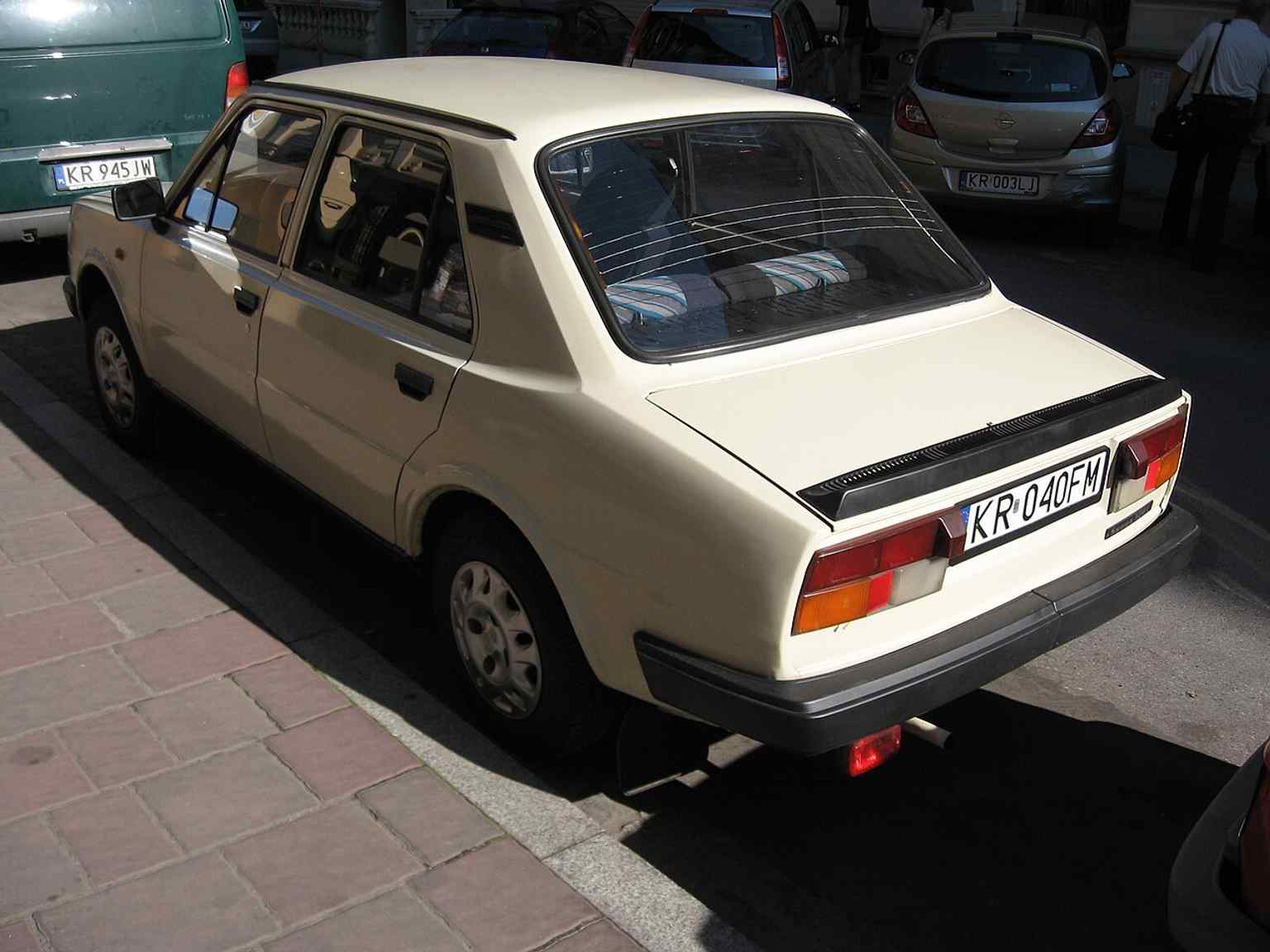
A preserved 1980s Škoda parked on Jabłonowskich Street, adding a street-level detail that captures the everyday atmosphere beyond the architecture.Photo: SuperTank17, Wikimedia Commons, CC BY-SA 3.0. Cropped & resized. 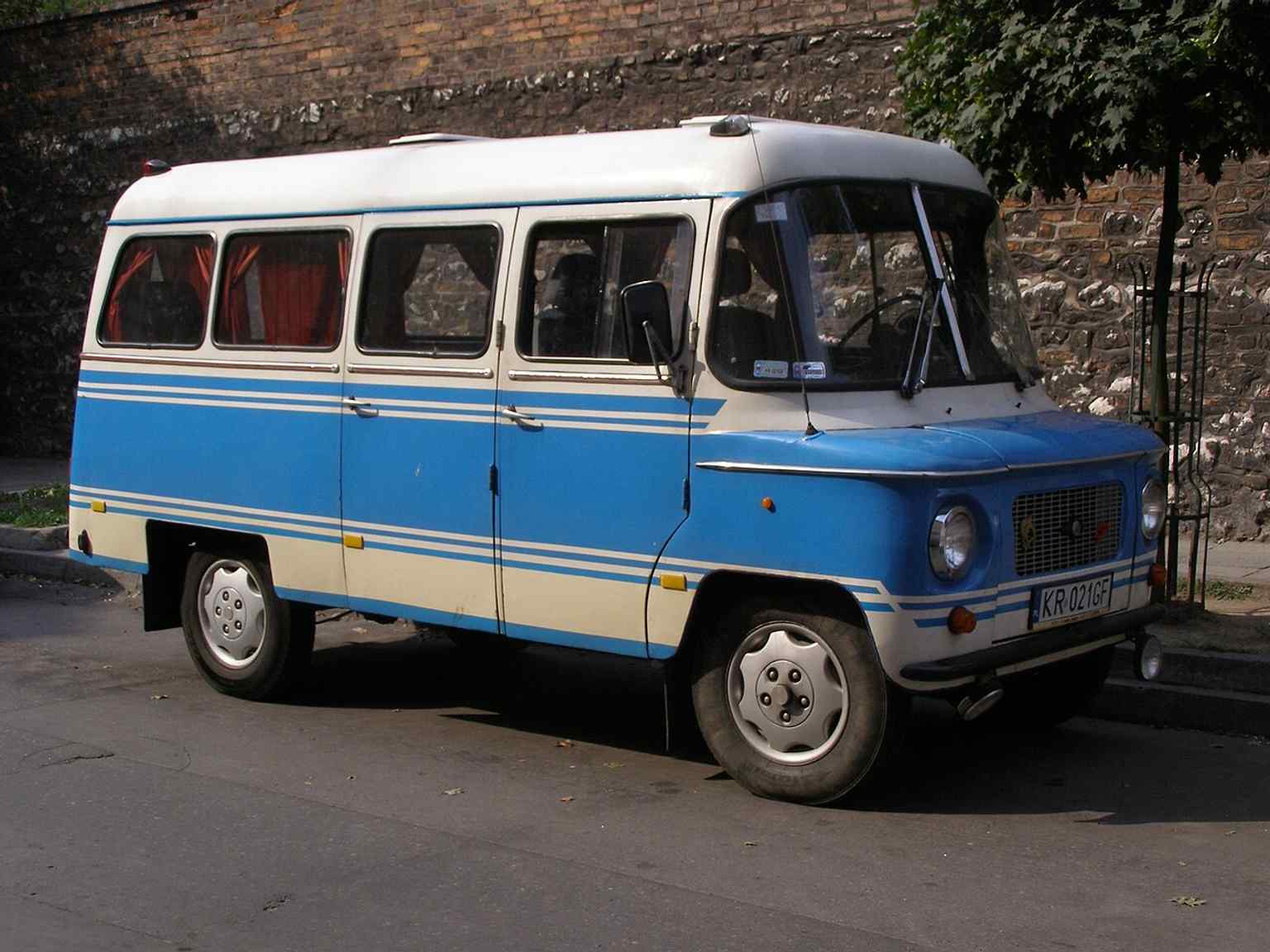
A Nysa van on Jabłonowskich Street, a practical detail that brings the lived-in urban scene of this Kraków side street into view.Photo: Andrzej Otrębski, Wikimedia Commons, CC BY-SA 4.0. Cropped & resized. 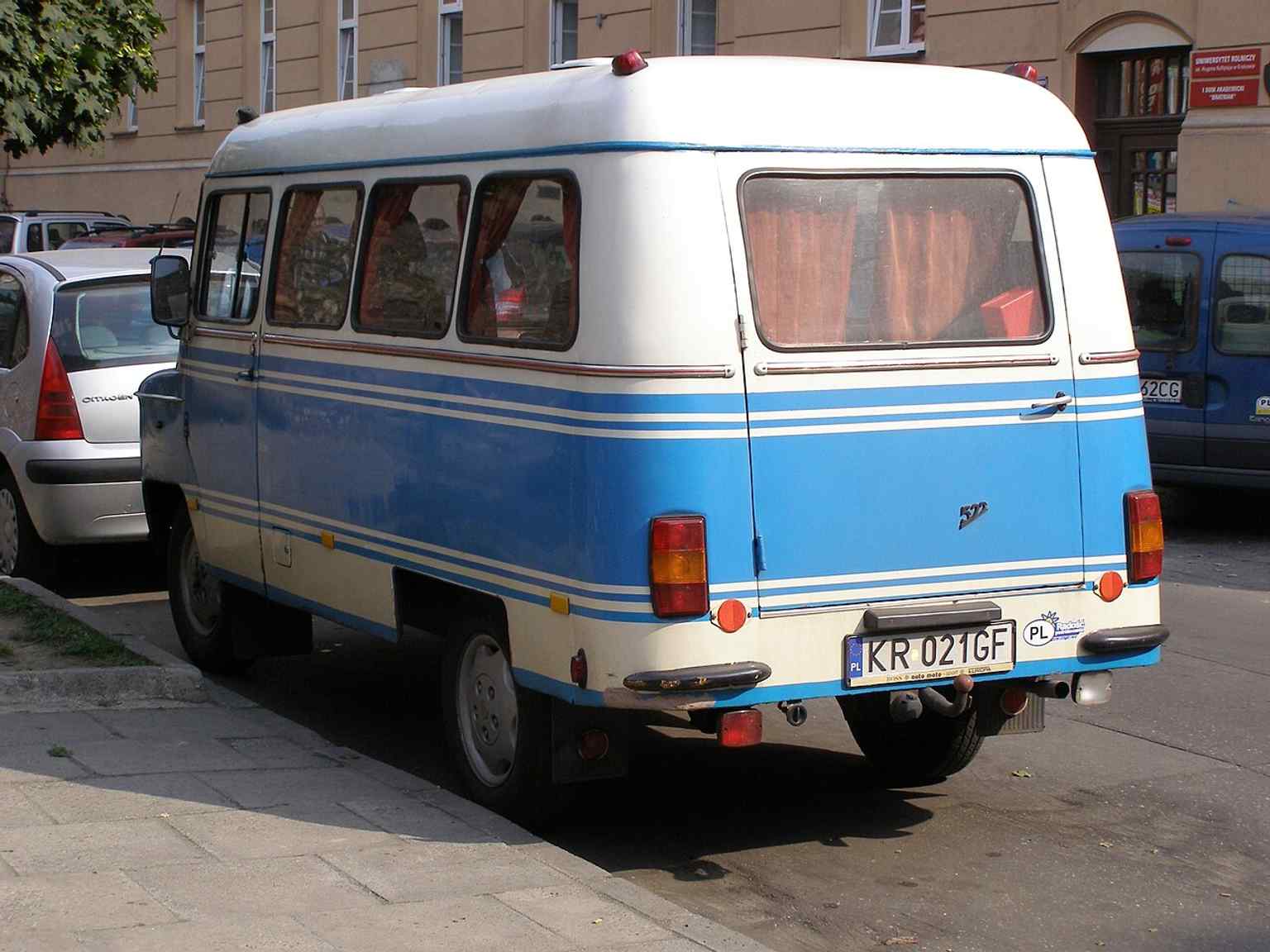
Another Nysa van view on Jabłonowskich Street, offering a different angle on the street’s everyday traffic and local character.Photo: Andrzej Otrębski, Wikimedia Commons, CC BY-SA 4.0. Cropped & resized. On your right, look for a long, pale masonry building with a steep roof and rows of small rectangular windows, its old granary shape still clearly visible beneath the careful…Read moreShow less
Open dedicated page →
EUROPEUM – European Culture CentrePhoto: Unknown author, Wikimedia Commons, Public domain. Cropped & resized. On your right, look for a long, pale masonry building with a steep roof and rows of small rectangular windows, its old granary shape still clearly visible beneath the careful museum restoration.
This is the Europeum, the European Culture Centre of the National Museum in Kraków, and it carries one of my favourite reversals in the city. Before it held paintings by Venetian and Dutch masters, it held grain. Later, in the nineteenth century, a carriage works packed wheels and frames in here. After the Second World War, the National Museum took it over, but not yet with grandeur in mind; by nineteen sixty-nine it served as a furniture storehouse, full of crates, dust, and forgotten equipment. For decades, this handsome old shell lived a practical, rather neglected life.
Then came its rescue. Between two thousand and eight and two thousand and thirteen, conservators and builders remade the structure almost completely: facades and foundations were repaired and insulated, floors and roof replaced, new electrical and water systems installed. The whole project cost nine million Polish złoty, with four million seven hundred thousand from the National Fund for the Restoration of Historic Buildings and Monuments in Kraków. If you glance at the image on your screen, you can see how deliberately the restored granary keeps its sturdy, workmanlike dignity rather than pretending it was ever a palace. At the opening, on the thirteenth of September, twenty thirteen, the museum’s director, Zofia Gołubiew, gave the transformation its perfect line. Once, she said, seed for sowing was stored here. Now, they wanted to sow knowledge of the culture of Europe. It is a graceful thought, and also a very Kraków one: the city rarely throws a place away if it can teach it a new role.
There is another twist. This building was not originally meant for old European masters at all. It was planned for contemporary art. But when the Princes Czartoryski Foundation decided that their renovated museum on Pijarska Street would show only their own collection, including Leonardo da Vinci’s Lady with an Ermine, the National Museum’s European works suddenly needed a home. So this granary became an emergency lifeboat for displaced treasures.
That gives the Europeum a faint air of quiet drama. Inside are more than one hundred paintings and sculptures spanning seven centuries. One of the most intriguing is Lorenzo Lotto’s Adoration of the Child. If you open the artwork image, notice Saint Catherine’s unidealised face, even the double chin. Art historians believe Lotto may have painted her as Caterina Cornaro, the exiled Queen of Cyprus, slipping a real royal woman into a sacred scene. And the sleeping infant Christ is not only sleeping; he hints at death, too, turning tenderness into something more unsettling. So here, after Olympia’s intimate risk and Esplanada’s conversational ferment, art enters the official frame: catalogued, conserved, lit just so. Yet the impulse is the same. Someone still chooses what must not vanish.
Behind the museum lies a lapidarium, an outdoor display of carved stone fragments, where columns, cornices, and portals from lost Kraków buildings rest like a cemetery of architecture. Even absence gets archived here.
In a moment, we return to the street and continue to Garncarska, only about two minutes away, where the city’s everyday trades begin speaking again.
Look for a modest, straight street lined with cream and pale grey stucco townhouses, mostly three storeys high, with tall rectangular windows and touches of carved ornament across…Read moreShow less
Open dedicated page →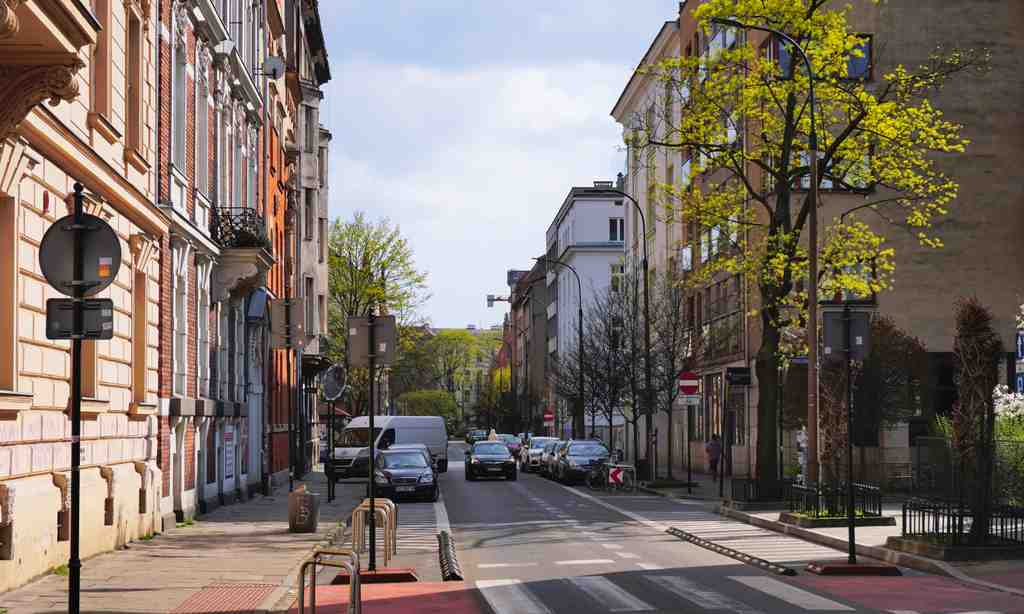
Garncarska Street in KrakowPhoto: Mach240390, Wikimedia Commons, CC BY 4.0. Cropped & resized. Look for a modest, straight street lined with cream and pale grey stucco townhouses, mostly three storeys high, with tall rectangular windows and touches of carved ornament across their flat facades.
Garncarska has the sort of face cities use when they are keeping their deepest memories to themselves. At first glance, this is simply a residential street in the old Piasek district, running from Krupnicza toward Józef Piłsudski Street. But under the present name lies an older one, and under that, an older life again.
From the sixteenth century, this area formed part of a settlement called Krupniki, within the suburb of Garbary. The people here were mostly krupnicy, craftsmen who processed grain into flour and groats. So before Garncarska became Garncarska, the street answered to Krupnicza or Krupniki. Even its naming tells you something rather moving about Kraków: what sounds fixed is often layered, and what looks permanent may only be the latest version.
The street took its present shape after regulations in the eighteen eighties and eighteen nineties. Most of the houses you see belong to that moment: late nineteenth- and early twentieth-century townhouses, two or three floors, eclectic in style, meaning they borrow from several older fashions at once, and occasionally touched by early modern simplicity. Respectable, urban, composed. And yet one address still carries a grudge.
At number five stood, in its first life, a charming low villa with a loggia, an open recessed porch, and a garden. Professor Zygmunt Lisocki, a scholar of Roman law, owned it. Then, in the nineteen thirties, developers raised it upward in the name of progress and stripped away its villa character, turning it into an ordinary rental house. People still remember that change as an architectural tragedy. It is a small but telling wound: not every improvement feels like care.
And then there is number four, where history turns inward and becomes domestic. During the German occupation, Józefa Onitsch, the widow of General Zygmunt Zieliński, gave shelter to the Vetulani family in her flat. Here the future neurobiologist Jerzy Vetulani spent his childhood years, in a home he later remembered as a place of discipline, honour, and warmth. His mother worked as a translator. She taught her sons patriotism not as a slogan, but as habit. On Sundays, the family sang Boże, coś Polskę together. In occupied Kraków, that ordinary apartment became a refuge, and refuge, as ever, began with one person deciding to make room.
A little farther along, number six bears a plaque to Stanisław Okoń, known as Sumak, commander of Kraków’s Grey Ranks, the underground scout resistance. When the Germans first arrested him in nineteen forty, he calmly ate the secret documents he carried before they could seize them. It saved him then. A second arrest sent him to Auschwitz, where he died in nineteen forty-two. One façade, one plaque, and a whole life of quiet courage.
That, I think, is the lesson of Garncarska. Streets like this do not announce themselves. They simply hold the rooms where people worked, argued, hid, endured, and tried to remain decent.
In a moment, we’ll step into General Władysław Sikorski Square, where many of these private strands gather into public memory. It’s about a two-minute walk from here.
Look for a modest open square framed by pale stucco townhouses, with the long, plain masonry form of the old granary standing out as its most distinctive marker. This little…Read moreShow less
Open dedicated page →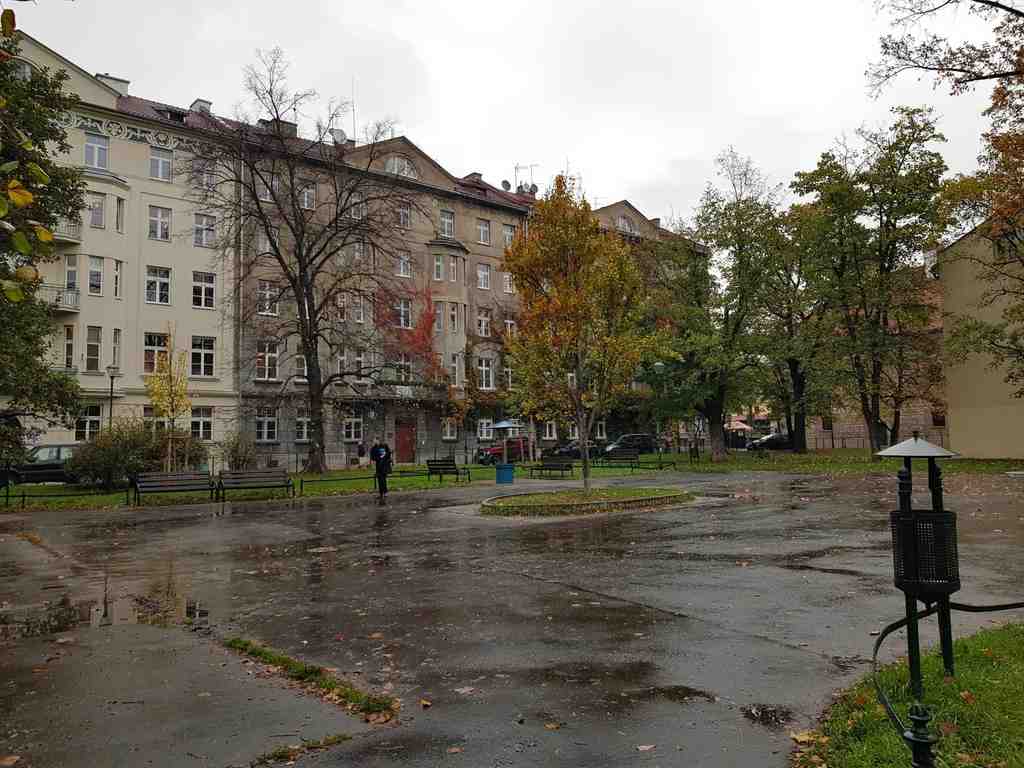
General Władysław Sikorski Square in KrakowPhoto: Igor123121, Wikimedia Commons, CC BY 4.0. Cropped & resized. Look for a modest open square framed by pale stucco townhouses, with the long, plain masonry form of the old granary standing out as its most distinctive marker.
This little square gathers Kraków’s habits of remembering into one surprisingly intimate stage. City planners marked it out in the eighteen nineties, on land that belonged to the Jabłonowski princes. Earlier still, in the eighteenth century, the Wielopolski family held these grounds, and people called the area Wielopole. Even the language of the map kept changing, and so did the meaning of the place. Until nineteen forty-five this was Plac Jabłonowskich. Then Kraków gave it a new patron: General Władysław Sikorski, soldier, statesman, prime minister of Poland. He died on the fourth of July, nineteen forty-three, in a plane crash just after takeoff from Gibraltar. In later years, Kraków marked the anniversary with ceremonies, and flowers were laid by his sarcophagus at Wawel, as if the square itself were part of that chain of memory.
Now let your gaze settle on the old granary at number six. It is the oldest building here, an eighteenth-century storehouse once owned by the Wielopolskis. Yet its life did not remain noble or fixed. After the city took it over in nineteen oh five, it served one practical purpose after another: a warehouse for a carriage factory, then a general storehouse, a dairy, a shop. Between the wars, the Association of Architects of the Republic even moved in. That is what makes this building so telling. Kraków did not preserve it by freezing it. Kraków preserved it by using it.
If you glance at the app, the wider view shows that balance beautifully: open public space beside a ring of historic façades, ordinary and ceremonial at once. In the nineteen sixties the National Museum took the granary for furniture storage. In two thousand and thirteen, after renovation, it reopened as the Europeum, a branch devoted to European art. Then, in two thousand and twenty-one, it changed again, becoming a museum devoted to Stanisław Wyspiański. Because many of his works are paper-based and need protection from light, the display appears in alternating versions, always partly present, partly withheld. That feels apt for Wyspiański, whose dazzling work was shaped in the shadow of illness.
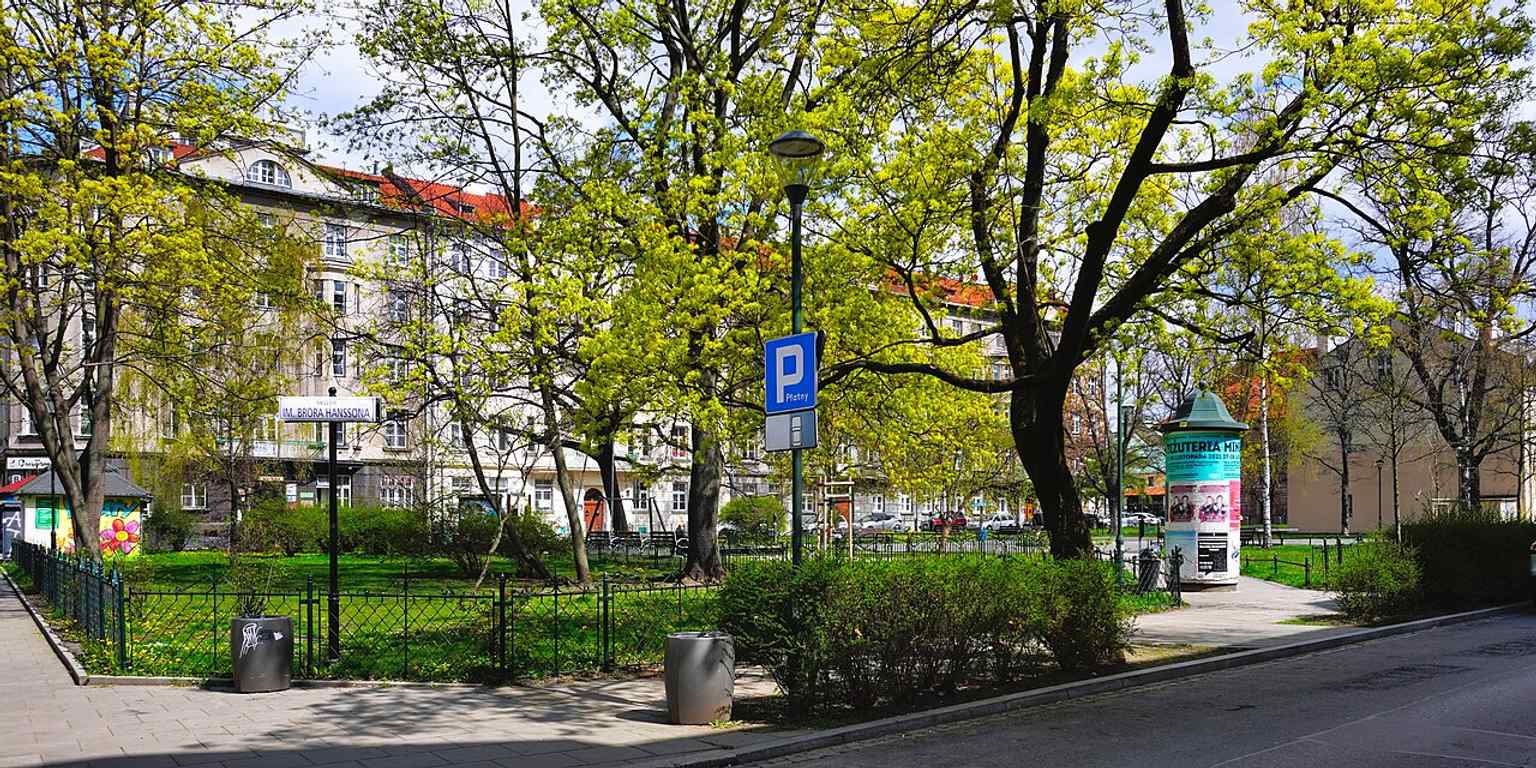
A broad south-facing view of General Władysław Sikorski Square, including Bror Hansson Square, showing the open space beside the historic buildings.Photo: Mach240390, Wikimedia Commons, CC BY 4.0. Cropped & resized. Even now, the square keeps adjusting its role. Civic projects brought back trees, shrubs, benches, bicycle stands, and a larger play area, returning the place to neighbourhood use. On your screen, the small Jagiellonian well hints at that quieter, daily life.
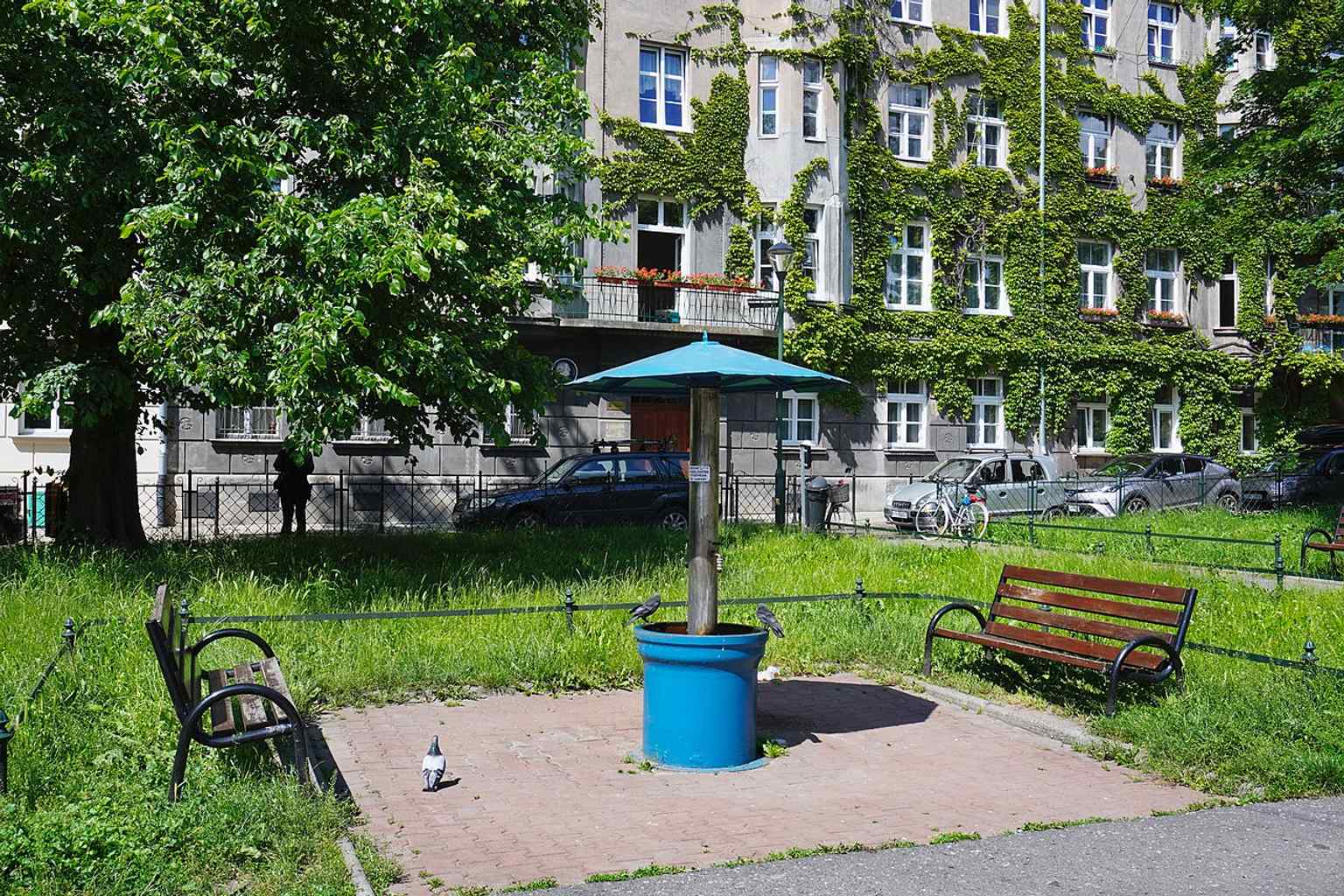
The Jagiellonian well at the square is a small but important feature of the renewed public space, tying the site to its everyday neighborhood use.Photo: Mach240390, Wikimedia Commons, CC BY 4.0. Cropped & resized. Before you move on, sweep your eyes around the edges of the square and notice how storage, ceremony, art, and ordinary living all still fit here. You have not merely crossed side streets. You have traced Kraków’s unofficial civic autobiography.
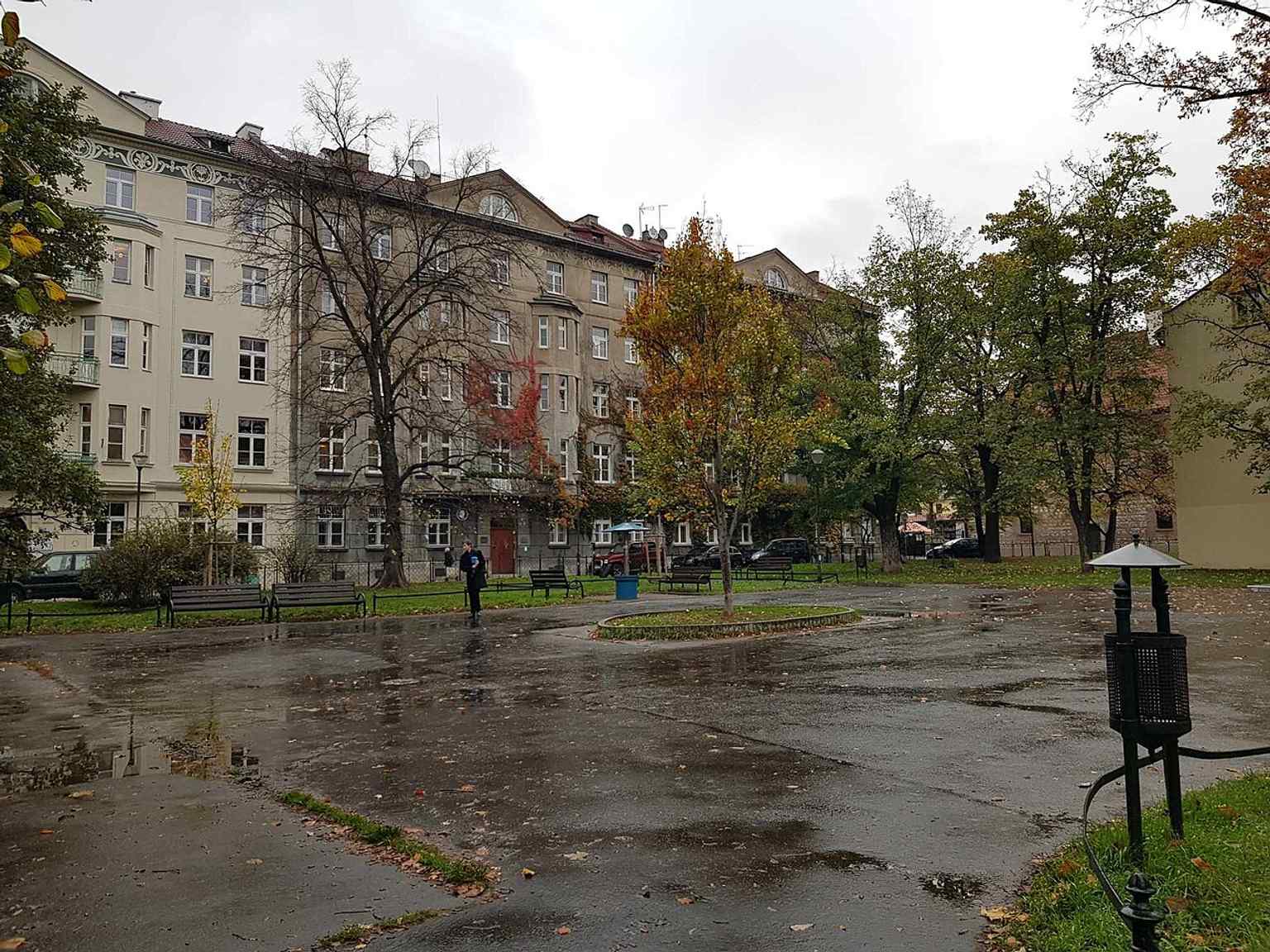
A general view of the square in Kraków’s Old Town, useful for orienting listeners to the landmark’s everyday urban setting.Photo: Igor123121, Wikimedia Commons, CC BY 4.0. Cropped & resized. 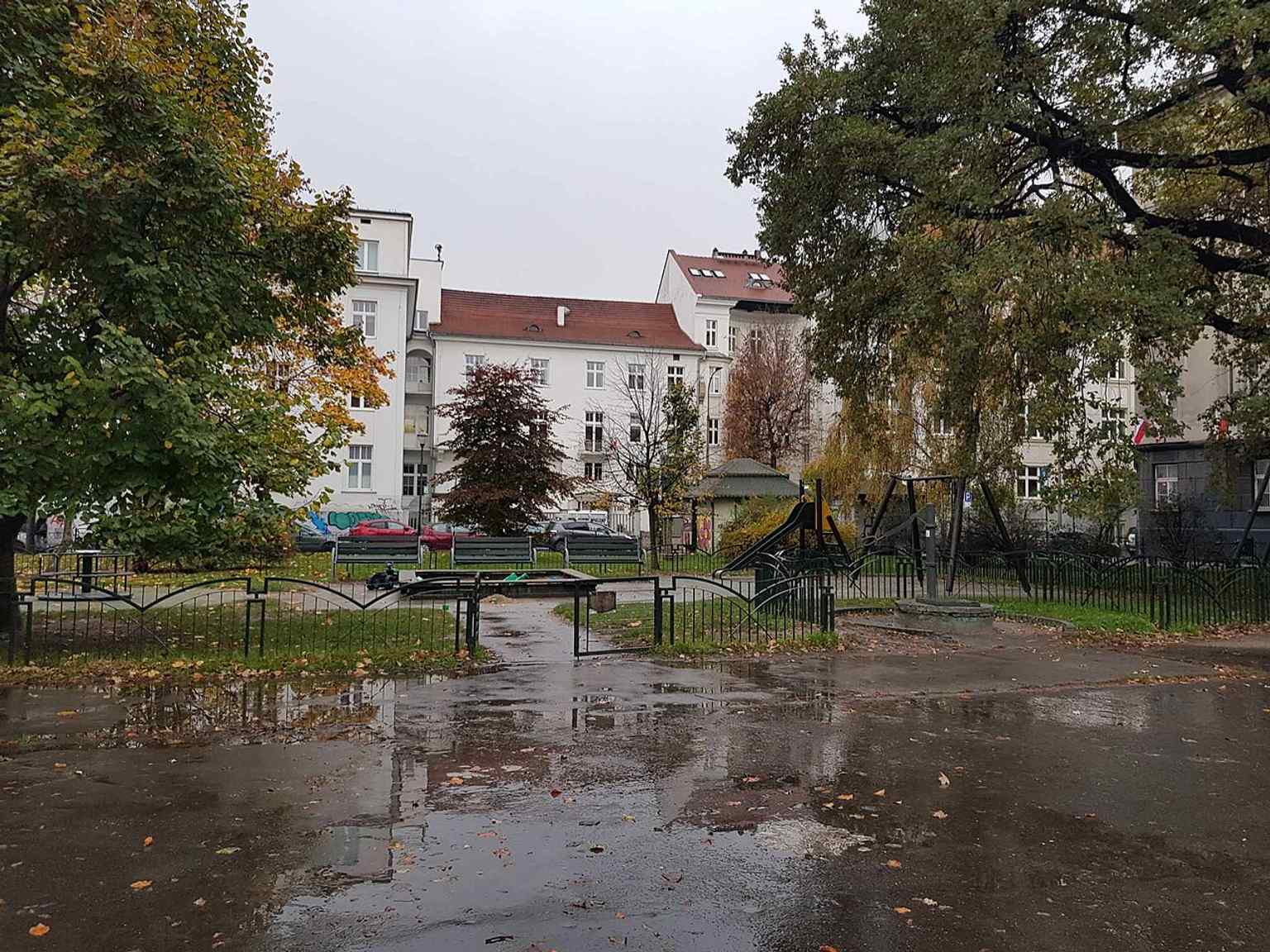
The playground on Sikorski Square reflects the recent effort to turn the area back into a greener, family-friendly courtyard in the heart of Kraków.Photo: Igor123121, Wikimedia Commons, CC BY 4.0. Cropped & resized.
Frequently asked questions
How do I start the tour?
After purchase, download the AudaTours app and enter your redemption code. The tour will be ready to start immediately - just tap play and follow the GPS-guided route.
Do I need internet during the tour?
No! Download the tour before you start and enjoy it fully offline. Only the chat feature requires internet. We recommend downloading on WiFi to save mobile data.
Is this a guided group tour?
No - this is a self-guided audio tour. You explore independently at your own pace, with audio narration playing through your phone. No tour guide, no group, no schedule.
How long does the tour take?
Most tours take 60–90 minutes to complete, but you control the pace entirely. Pause, skip stops, or take breaks whenever you want.
What if I can't finish the tour today?
No problem! Tours have lifetime access. Pause and resume whenever you like - tomorrow, next week, or next year. Your progress is saved.
What languages are available?
All tours are available in 50+ languages. Select your preferred language when redeeming your code. Note: language cannot be changed after tour generation.
Where do I access the tour after purchase?
Download the free AudaTours app from the App Store or Google Play. Enter your redemption code (sent via email) and the tour will appear in your library, ready to download and start.
If you don't enjoy the tour, we'll refund your purchase. Contact us at [email protected]
Checkout securely with 






.jpg)


.jpg)


