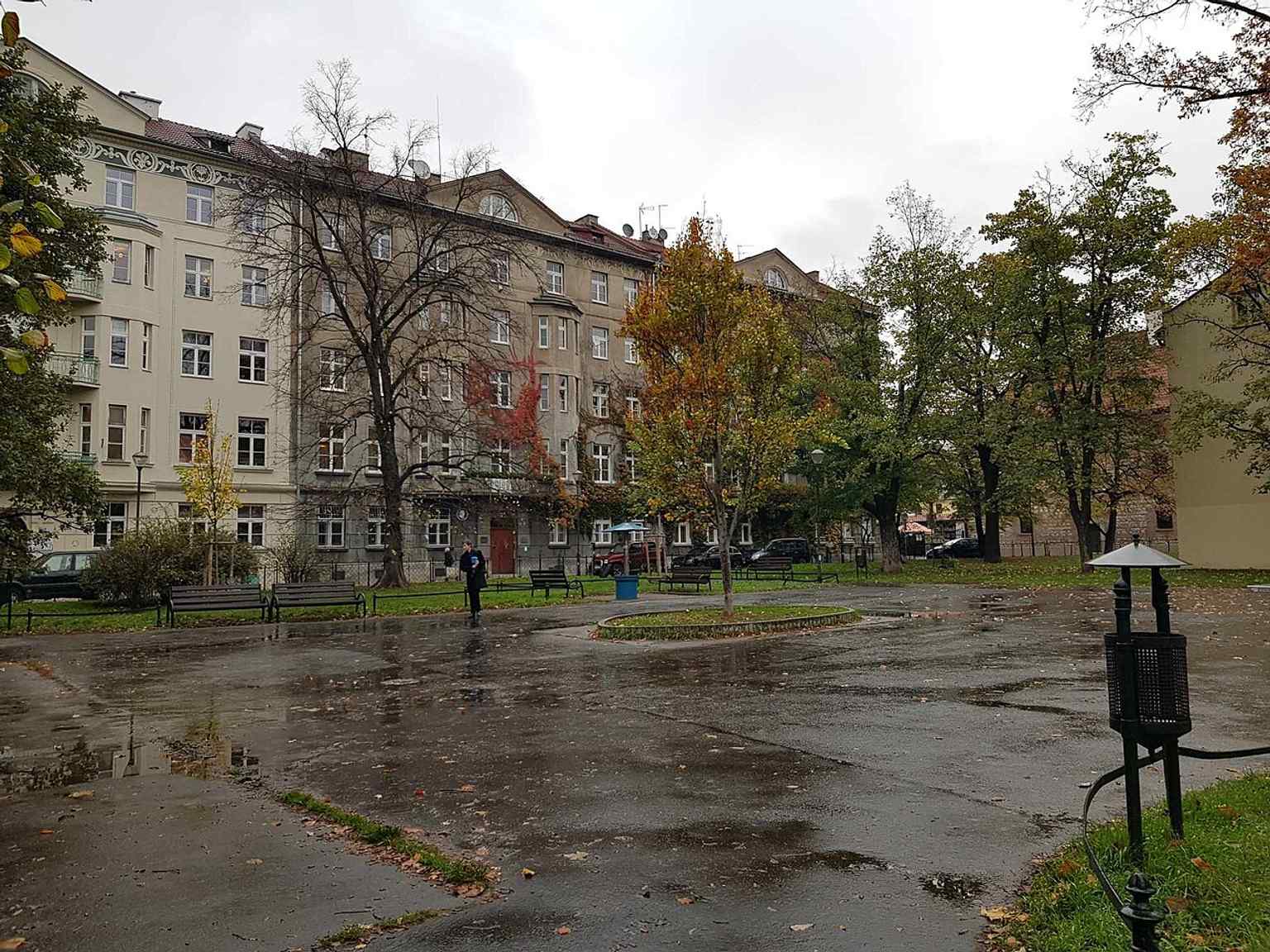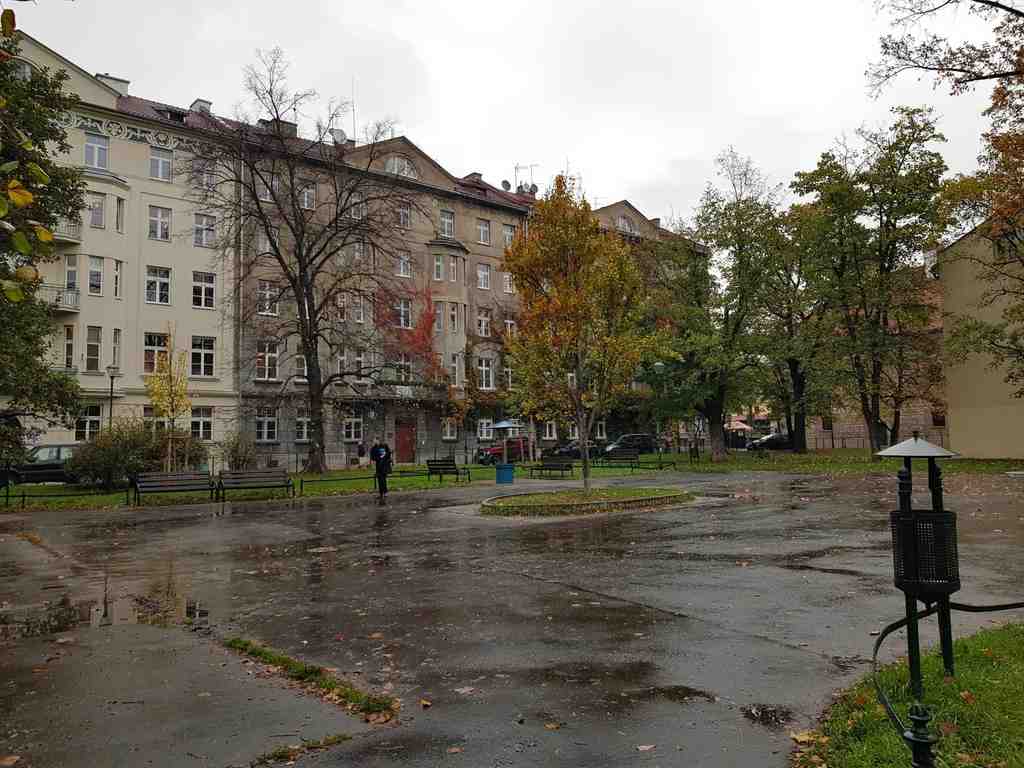
Look for a modest open square framed by pale stucco townhouses, with the long, plain masonry form of the old granary standing out as its most distinctive marker.
This little square gathers Kraków’s habits of remembering into one surprisingly intimate stage. City planners marked it out in the eighteen nineties, on land that belonged to the Jabłonowski princes. Earlier still, in the eighteenth century, the Wielopolski family held these grounds, and people called the area Wielopole. Even the language of the map kept changing, and so did the meaning of the place. Until nineteen forty-five this was Plac Jabłonowskich. Then Kraków gave it a new patron: General Władysław Sikorski, soldier, statesman, prime minister of Poland. He died on the fourth of July, nineteen forty-three, in a plane crash just after takeoff from Gibraltar. In later years, Kraków marked the anniversary with ceremonies, and flowers were laid by his sarcophagus at Wawel, as if the square itself were part of that chain of memory.
Now let your gaze settle on the old granary at number six. It is the oldest building here, an eighteenth-century storehouse once owned by the Wielopolskis. Yet its life did not remain noble or fixed. After the city took it over in nineteen oh five, it served one practical purpose after another: a warehouse for a carriage factory, then a general storehouse, a dairy, a shop. Between the wars, the Association of Architects of the Republic even moved in. That is what makes this building so telling. Kraków did not preserve it by freezing it. Kraków preserved it by using it.
If you glance at the app, the wider view shows that balance beautifully: open public space beside a ring of historic façades, ordinary and ceremonial at once. In the nineteen sixties the National Museum took the granary for furniture storage. In two thousand and thirteen, after renovation, it reopened as the Europeum, a branch devoted to European art. Then, in two thousand and twenty-one, it changed again, becoming a museum devoted to Stanisław Wyspiański. Because many of his works are paper-based and need protection from light, the display appears in alternating versions, always partly present, partly withheld. That feels apt for Wyspiański, whose dazzling work was shaped in the shadow of illness.
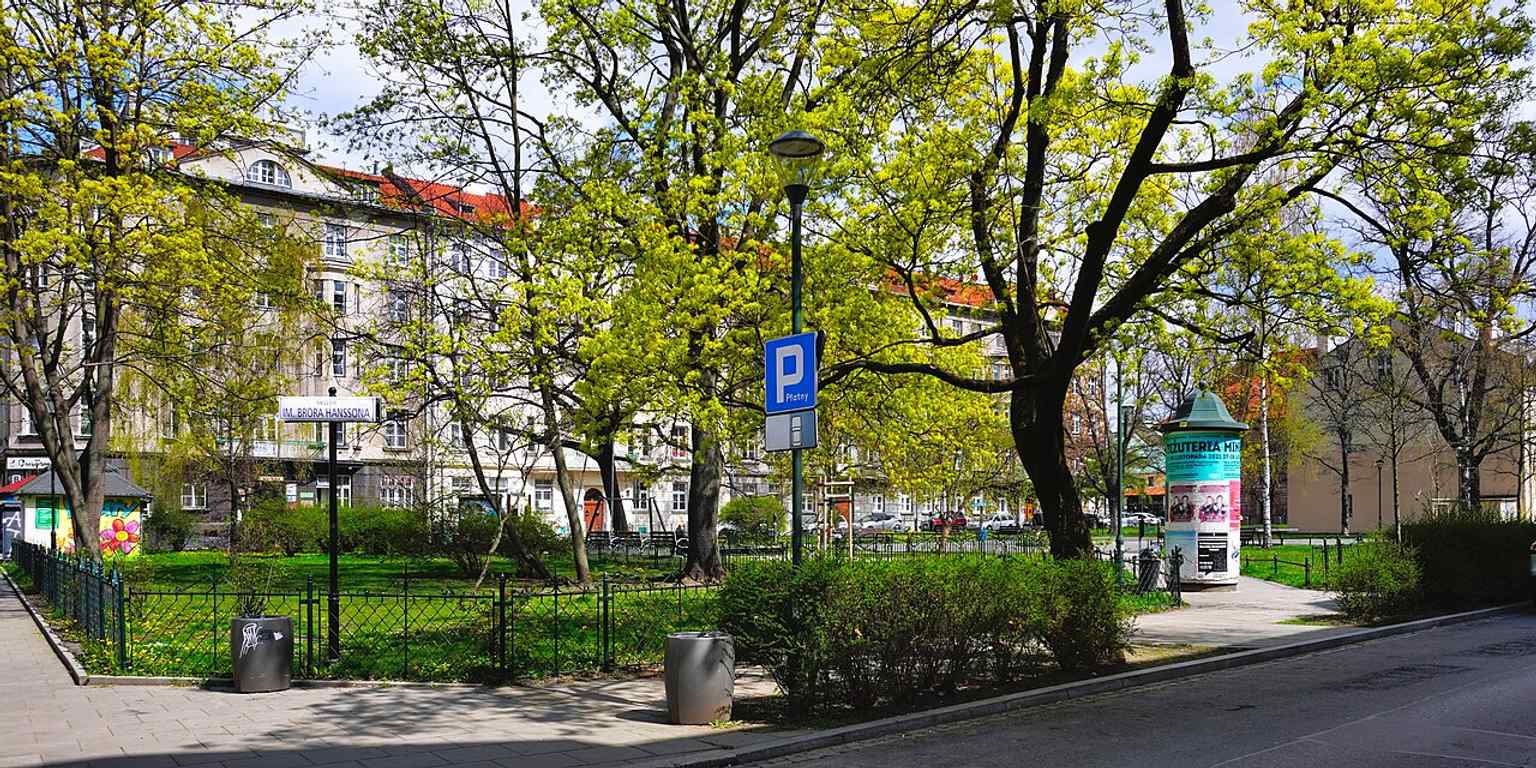
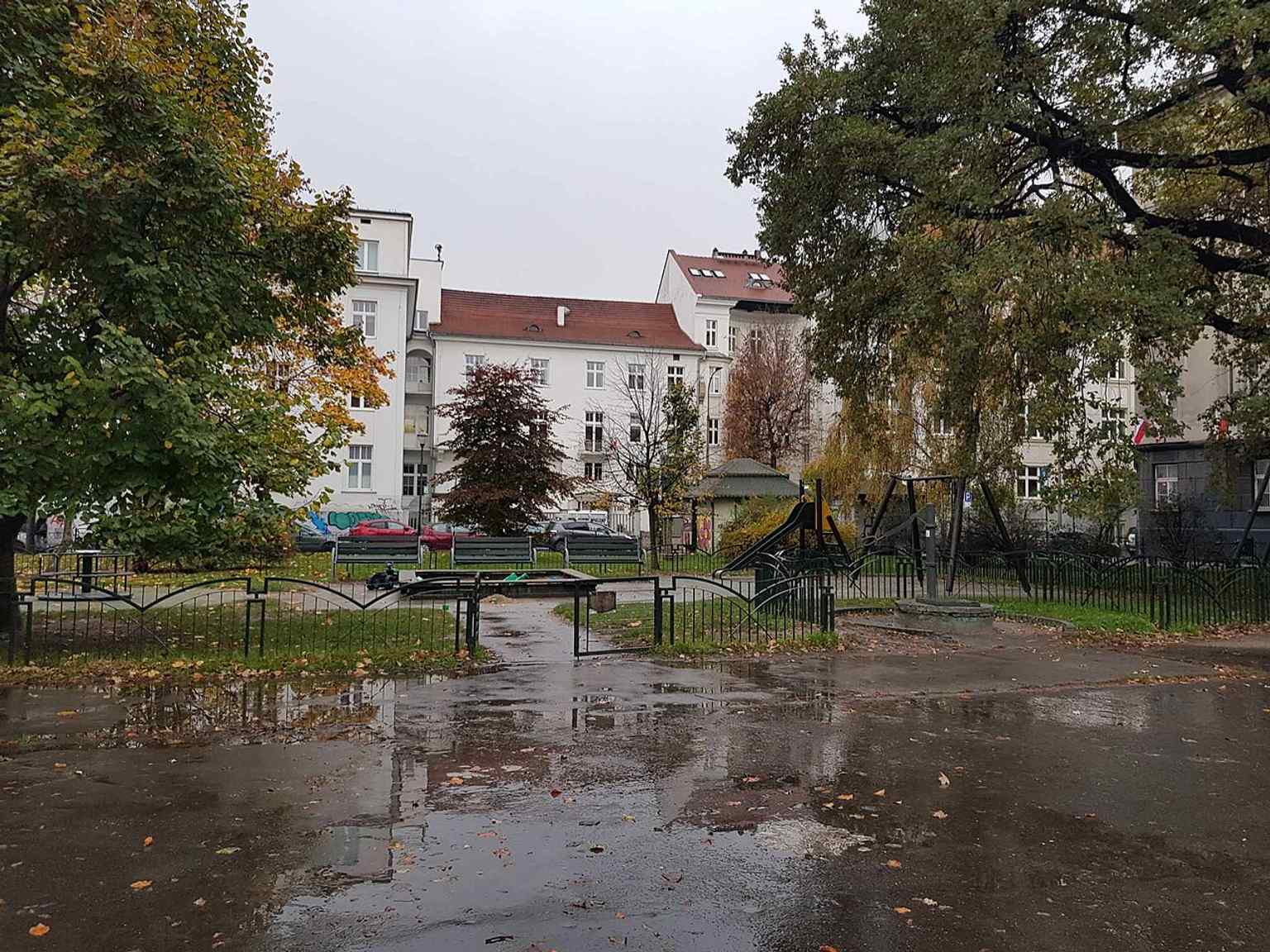
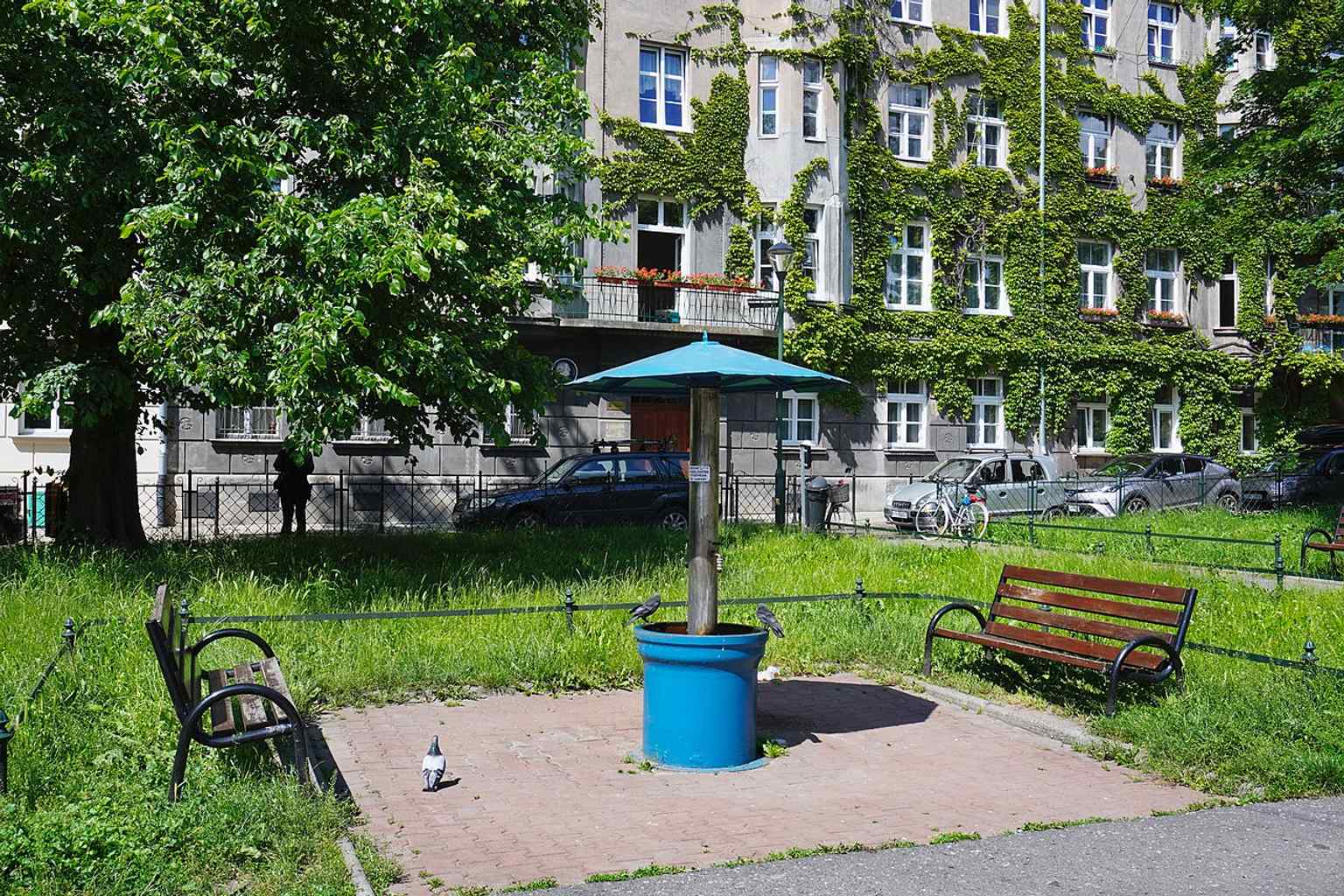
Even now, the square keeps adjusting its role. Civic projects brought back trees, shrubs, benches, bicycle stands, and a larger play area, returning the place to neighbourhood use. On your screen, the small Jagiellonian well hints at that quieter, daily life.
Before you move on, sweep your eyes around the edges of the square and notice how storage, ceremony, art, and ordinary living all still fit here. You have not merely crossed side streets. You have traced Kraków’s unofficial civic autobiography.