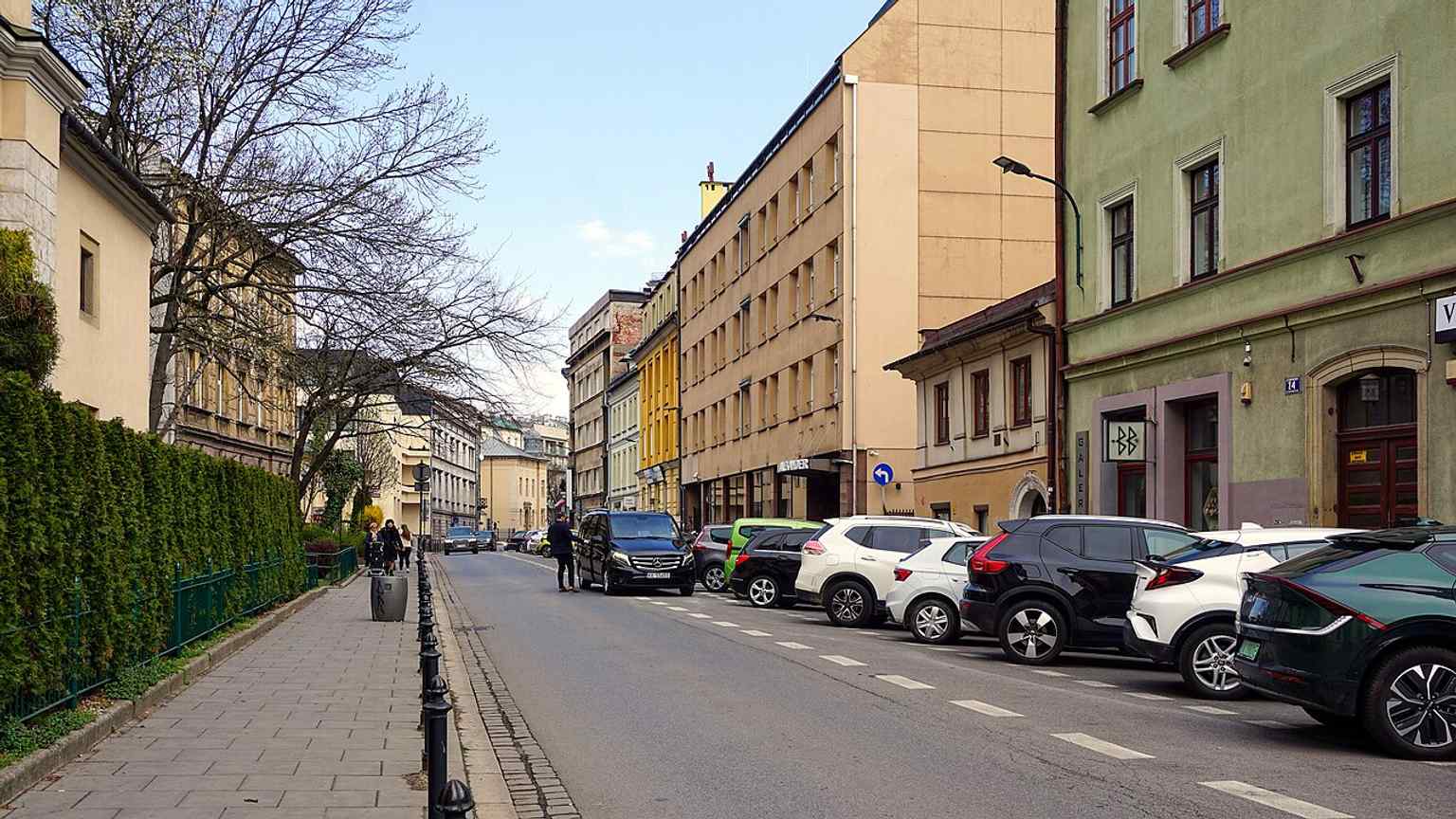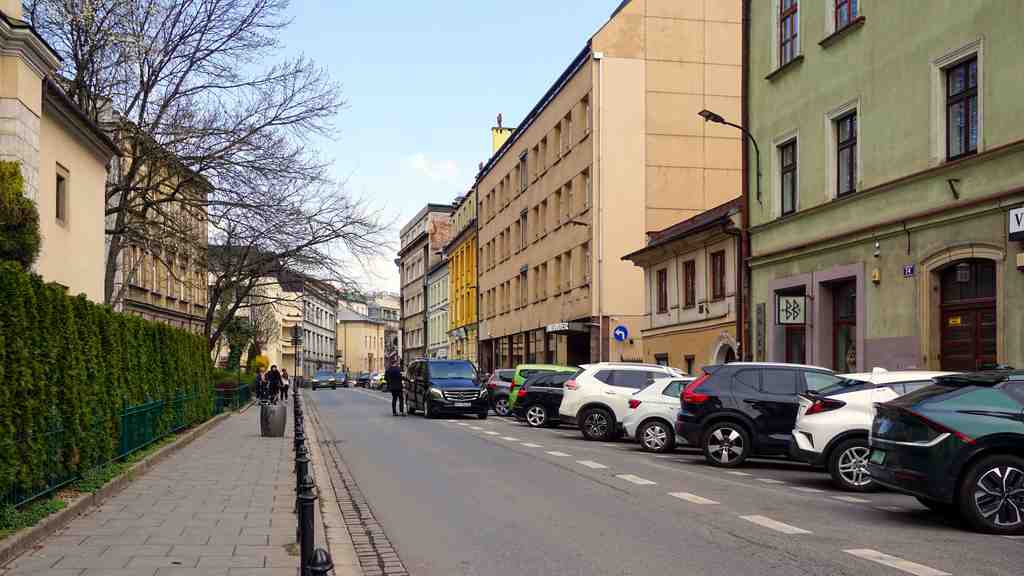
Garbarska presents itself as a narrow run of tall plaster-and-brick townhouses in a continuous row, with the solid mass of the Carmelite church marking the corner like an old stone hinge.
This street likely already existed in the fifteenth century, linking the Carmelite church with the now-lost church of Saint Peter the Small. Its name came from Garbary, a jurydyka, meaning a privately governed district that stood outside Kraków’s medieval core before the city fully absorbed it. People called this lane by other names for a time, including Pańska, until the city restored Garbarska officially in eighteen fifty-eight. By then it had already survived repeated ruin. Sieges in fifteen eighty-seven and again in sixteen fifty-five tore through the street and forced it to begin again.
That is part of Garbarska’s quiet force: it looks ordinary, but ordinary streets often carry the hardest memory. Most of the frontage you see now comes from the late nineteenth and early twentieth centuries, with a few older early nineteenth-century houses still preserving the feel of the former suburb. If you glance at the image on your screen, the view along the street helps place number four, where filmmaker Wojciech Jerzy Has was born on the first of April, nineteen twenty-five. During the occupation, Has stayed bound to Kraków, studying in a commercial college and then in secret classes at the Academy of Fine Arts. Later, people said his house had simply been lucky enough to survive.
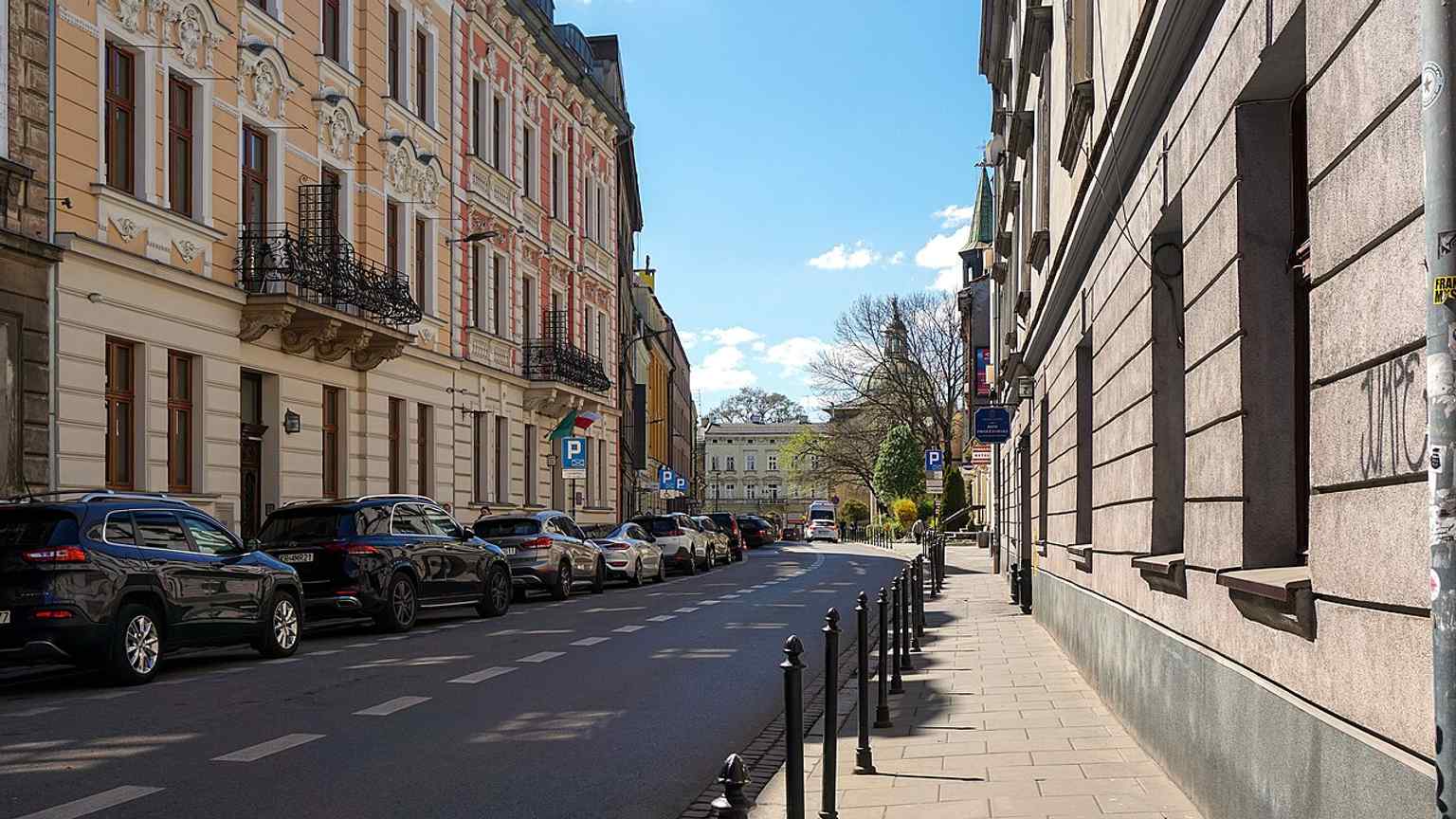
Now let your attention rest on the Carmelite church. It is one of Garbarska’s oldest constants, and it draws us naturally to the Church of the Visitation of the Blessed Virgin Mary.