
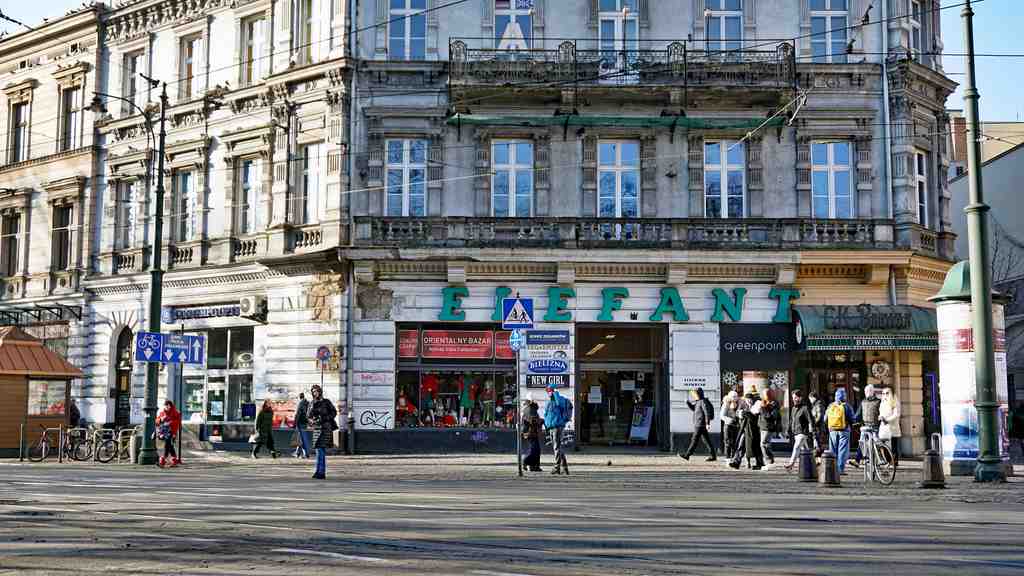
Look for the corner townhouse with a pale plaster façade, tall rectangular windows, and a sharp angled corner marking the meeting of Podwale and Krupnicza.
This address once held Esplanada, a café that opened in nineteen twelve under the merchant Karol Wołkowski, and it managed to be fashionable, unruly, scandalous, and politically charged almost all at once. On the surface, it was a smart city café with chamber music in the afternoons and evenings. Underneath, it was the sort of place where Kraków argued over who had the right to define culture.
Wołkowski himself was no mild host. Kraków’s newspapers loved him for all the wrong reasons. One inspection described filthy conditions so shocking that the press printed them in outrage, and in nineteen fourteen another paper urged readers to boycott the café for serving “Prussian wafers” instead of supporting local goods. Even the biscuits became ideological here.
But the real charge of the place gathered in a side room. If Galeria Olympia felt intimate, like art whispered across a domestic threshold, Esplanada offered the opposite: art in public, art in commerce, art elbowing the café tables aside. The futurist and formist circle of Gałka Muszkatołowa met here, a club of young rebels who delighted in provoking people through language, design, and behaviour. They played with spelling, mocked good taste, and treated manners as something to be kicked open.
Most people passing this corner have no idea that Tytus Czyżewski and Józef Jarema decorated that side room themselves. They turned the café interior into part of the experiment: bright paintings, distorted faces, strange figures, hard geometric shapes, and even a ceiling lamp probably designed by Czyżewski. Imagine Bruno Jasieński arriving with a monocle, a pink tie, and a cane topped with ivory, determined to look like a walking manifesto.
And then Kraków struck back. Conservative opinion grew so disgusted by the futurists’ antics that Wołkowski literally bricked up the entrance to their room and rented the sealed-off space to a typewriter firm. It is such a perfect local drama: the avant-garde painted the walls, scandalised the city, and ended up replaced by office machinery.
Yet the room kept changing its role. On the twenty-eighth of July, nineteen fourteen, Józef Piłsudski came here, spoke with Michał Sokolnicki about the likelihood of war, and within hours war began. He set up his command rooms at the back, with desks and typewriters, and some of the first mobilisation orders for the riflemen went out from this café. Later came early jazz, and even mathematicians such as Stefan Banach and Hugon Steinhaus, thinking hard at these tables.
Then another turn: under the name Cristal, during the occupation, Germans only could enter. After the war, the place reopened briefly, but by the late nineteen forties the café disappeared into a department store. That is often how Kraków hides its most combustible rooms: plain frontage, vanished interiors, no applause.
When you are ready, the Museum of Insurance is about a two-minute walk away. If you want to peer into the present life of the address, the building keeps daily hours from ten in the morning until eight in the evening.




