
On your right, Place de la République opens as a broad circular garden edged by pale stone avenues, ringed with grand sandstone facades, and marked by a solemn memorial at its center.
This square is the key that helps the whole Neustadt make sense. Neustadt simply means “new town” in German, and from the eighteen eighties onward, German planners used this place as the hinge between old Strasbourg and their new imperial district. City architect Johann Carl Ott designed it from eighteen eighty-three to eighteen eighty-seven, and he did not design it as an everyday patch of open ground. He designed a stage.
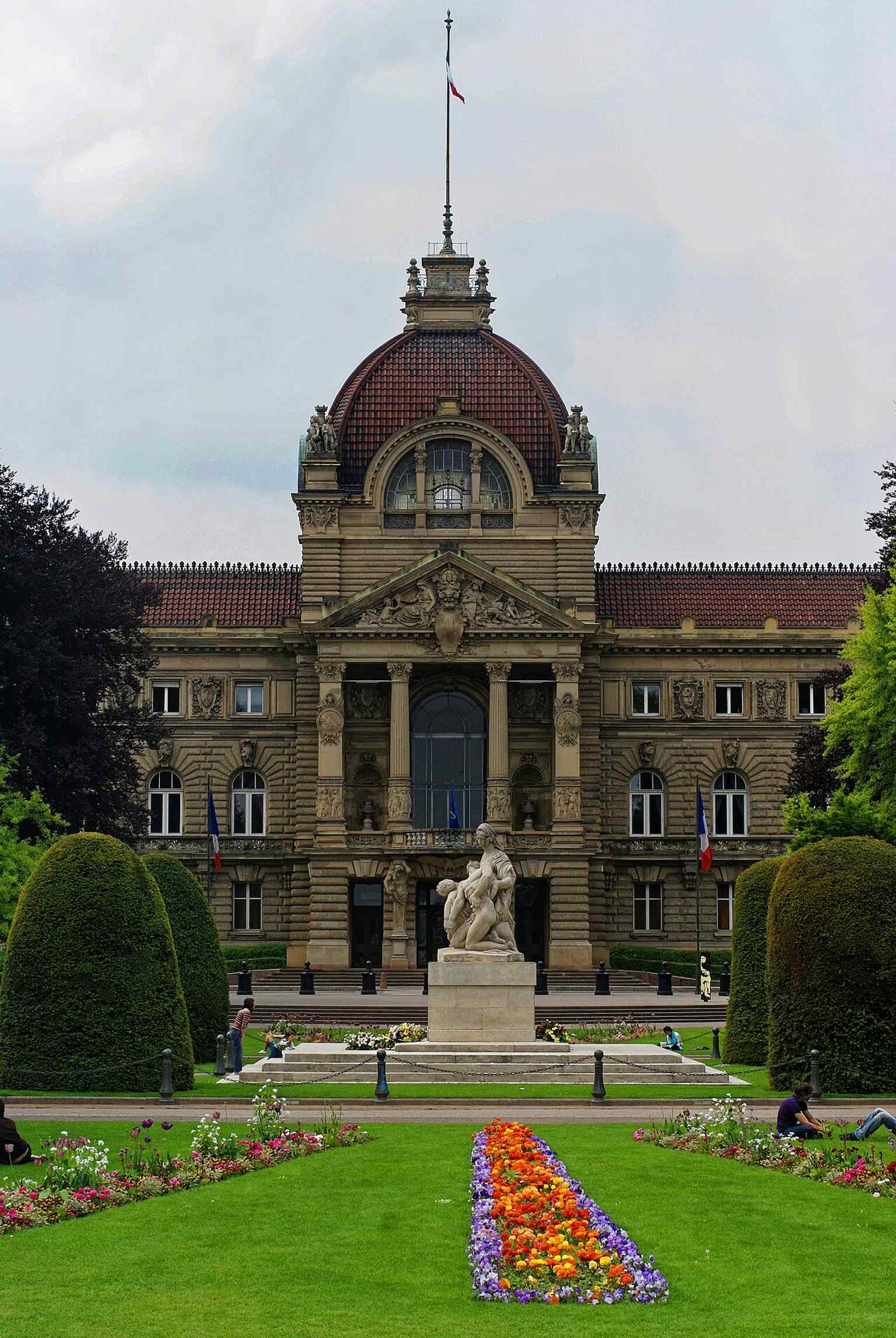
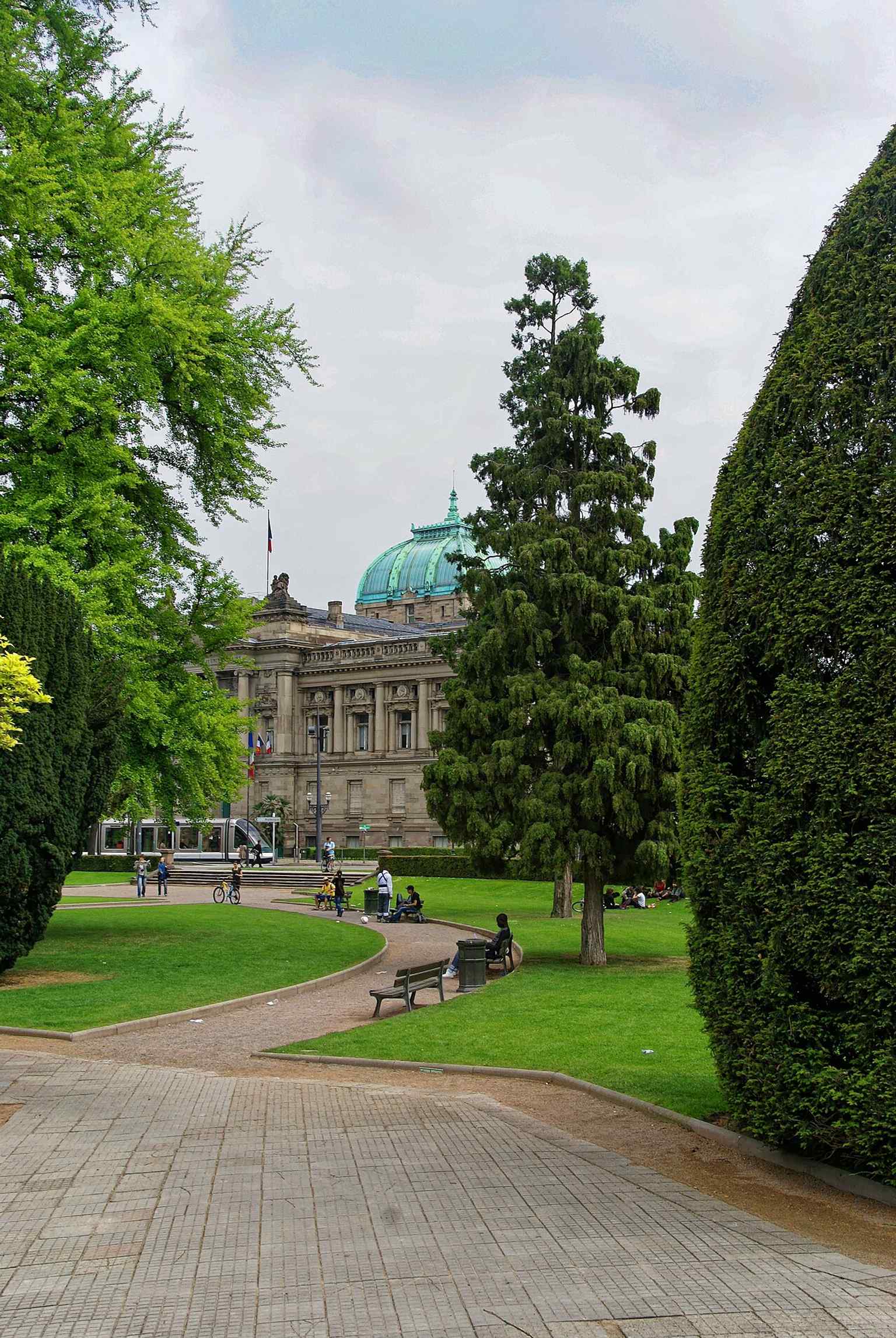
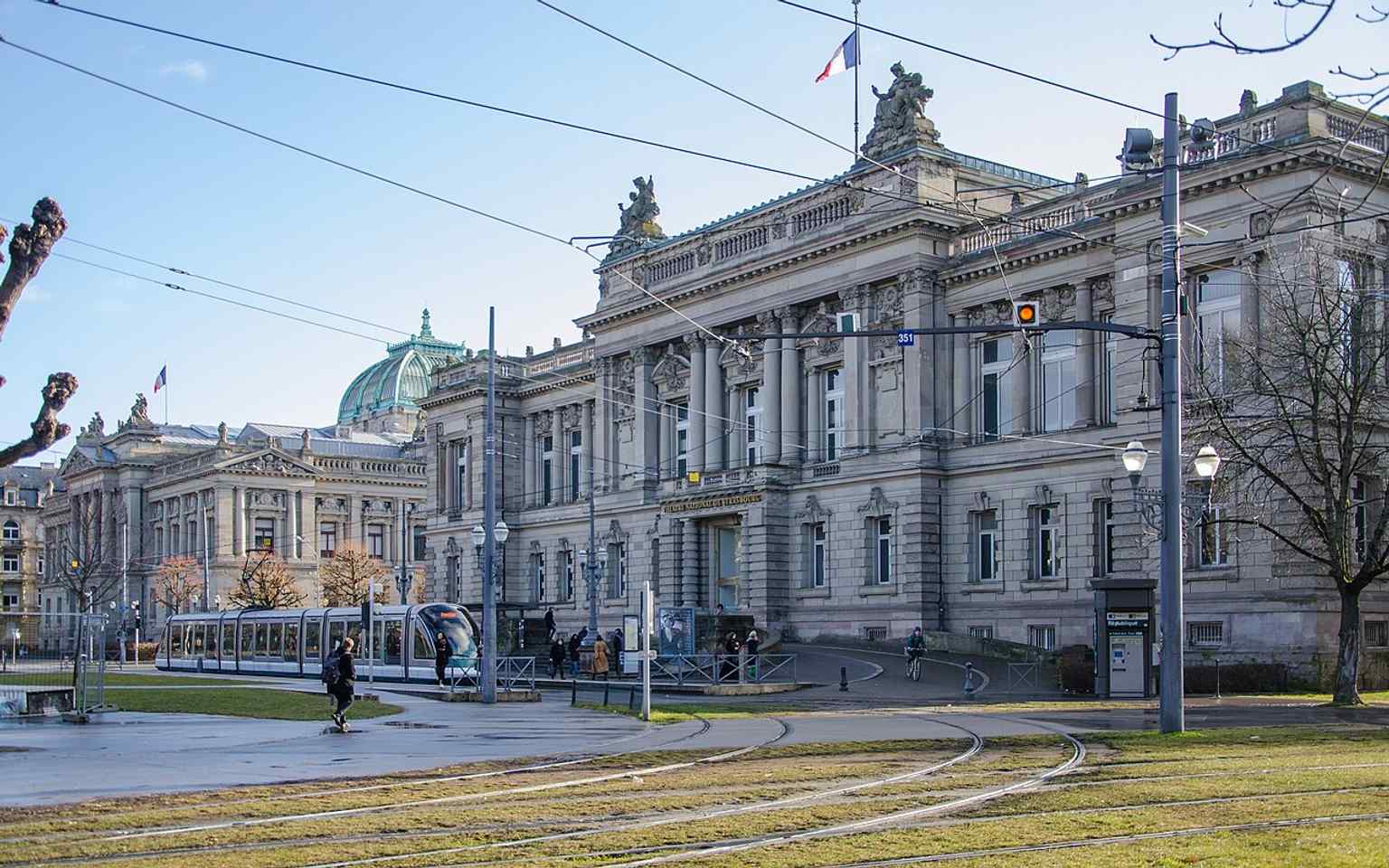
Look around the edges and you can read the cast list. The former imperial palace, now the Palais du Rhin. The former parliament building, now the Théâtre national de Strasbourg. The National and University Library. Two former ministry buildings, now government offices. Different styles mingle here - Italian Renaissance, baroque, classical - but the message is consistent: authority, arranged with a ruler and a very steady hand.
Pause for a beat and trace the alignments around you... do these spaces feel improvised, or carefully aimed? From here, planners opened a grand perspective between power and knowledge: from the imperial palace toward the university quarter beyond. If you want a handy overview, the image on your screen shows that ceremonial composition beautifully.
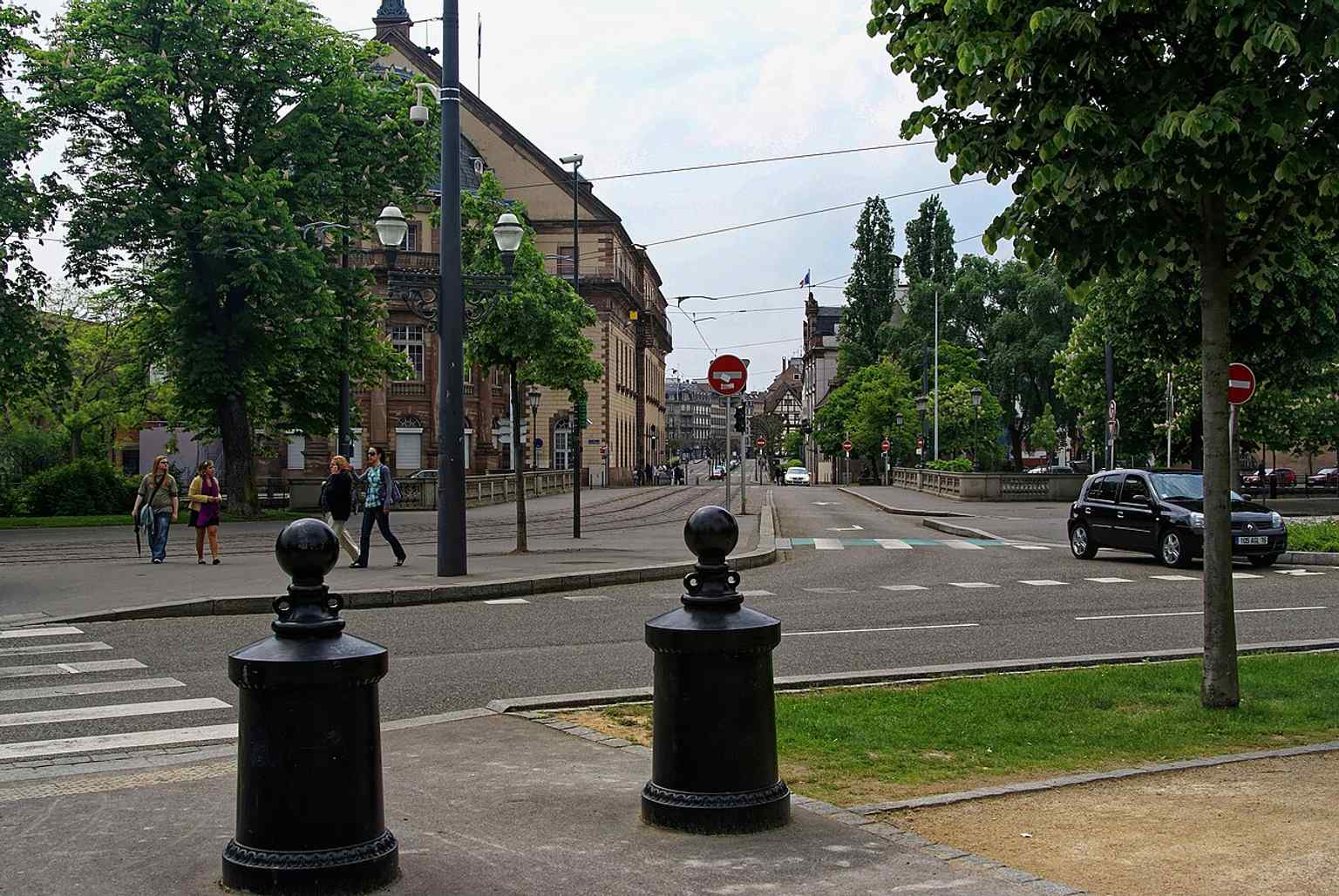
And yet, for all that imperial confidence, this square never held still politically. It began as Kaiserplatz, Imperial Square. After the First World War and the return of Alsace-Lorraine to France, it became Place de la République. During the second German annexation in nineteen forty, authorities renamed it Bismarckplatz. In nineteen forty-five, it became République again. Same geometry, different regime. Stone, as it turns out, is patient.
The center tells that story most sharply. In nineteen eleven, Ludwig Manzel placed an equestrian statue of Emperor William there. Strasbourg residents pulled it down in nineteen eighteen, just before French troops entered the city. In nineteen nineteen, a captured German biplane briefly took its place on the pedestal - history here can turn on a dime, or on a propeller. A temporary obelisk followed, because the square had already become a public place of grief.
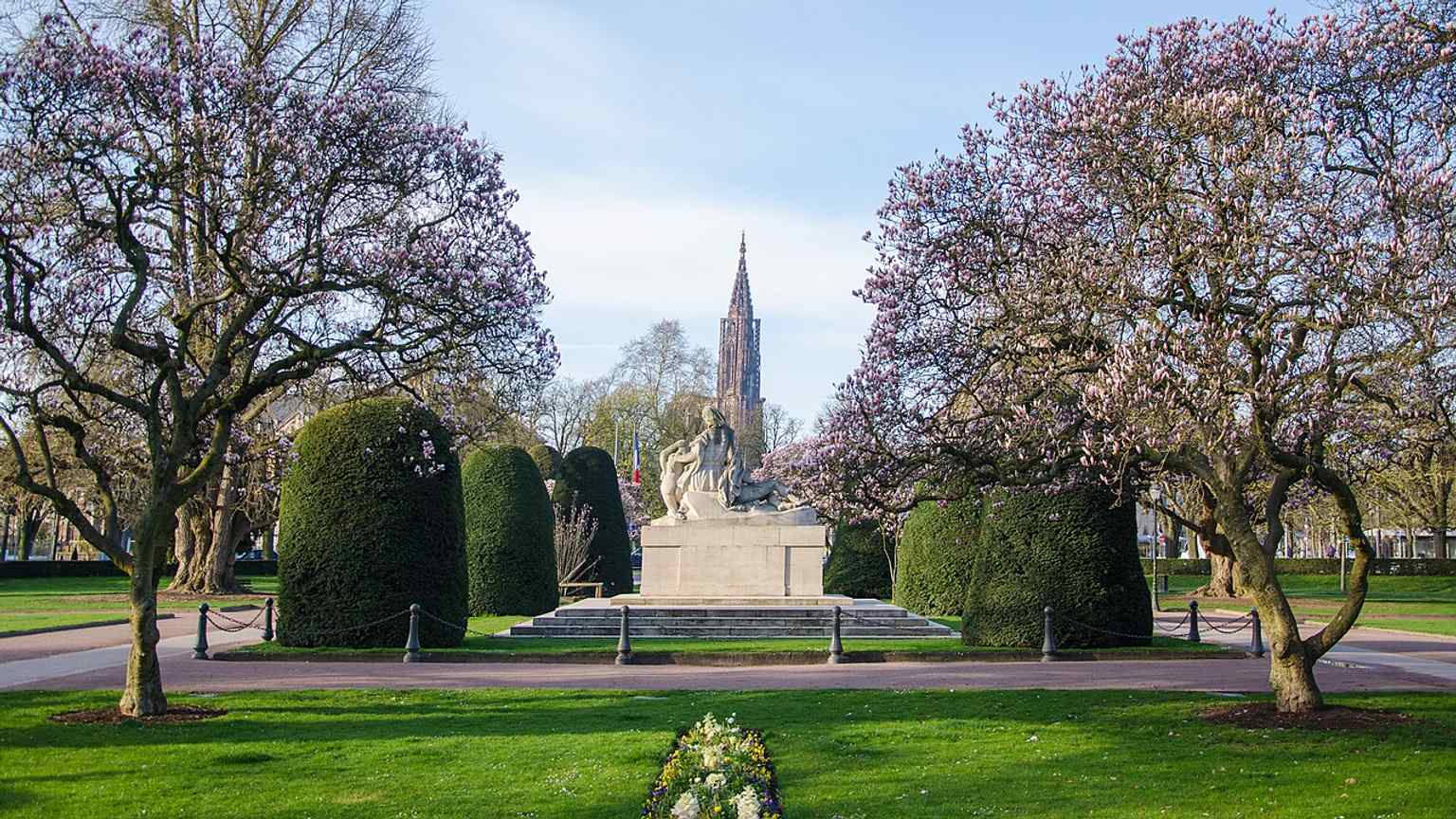
Then Henry Lévy, an industrialist, former deputy mayor, and vice-president of the Jewish Consistory of Bas-Rhin, pushed for a permanent memorial. The result, sculpted by Léon-Ernest Drivier and inaugurated in nineteen thirty-six by President Albert Lebrun, remains one of the most striking war memorials in France. A mother holds two dying sons on her knees: one fought in the French army, the other in the German army. No heroic uniforms, no victory pose, no easy comfort. Just loss... shared and unbearable. Even the Nazi occupiers left it untouched.
The garden around it adds another layer. Those ginkgo trees are said to have come as gifts from Emperor Mutsuhito of Japan to William. Local people loved the way their leaves turned the round garden into a scatter of gold. On your screen, another image gives you that central symmetry - memorial, paths, planting beds, all composed with almost theatrical precision.
And now the final turn of the screw: one side of this square houses memory, but another houses learning. The library standing here grew from the same imperial project, then outlived it, and today it holds more than three million volumes and thousands of manuscripts. That is Strasbourg in a nutshell: power tries to script the city... and the city answers by reading, keeping, and reinterpreting the script. Our next stop is the National and University Library. It’s about a four-minute walk away.





.jpg)


%20et%20sa%20voisine%20la%20Biblioth%C3%A8que%20nationnale%20universitaire%20(BNU).jpg)