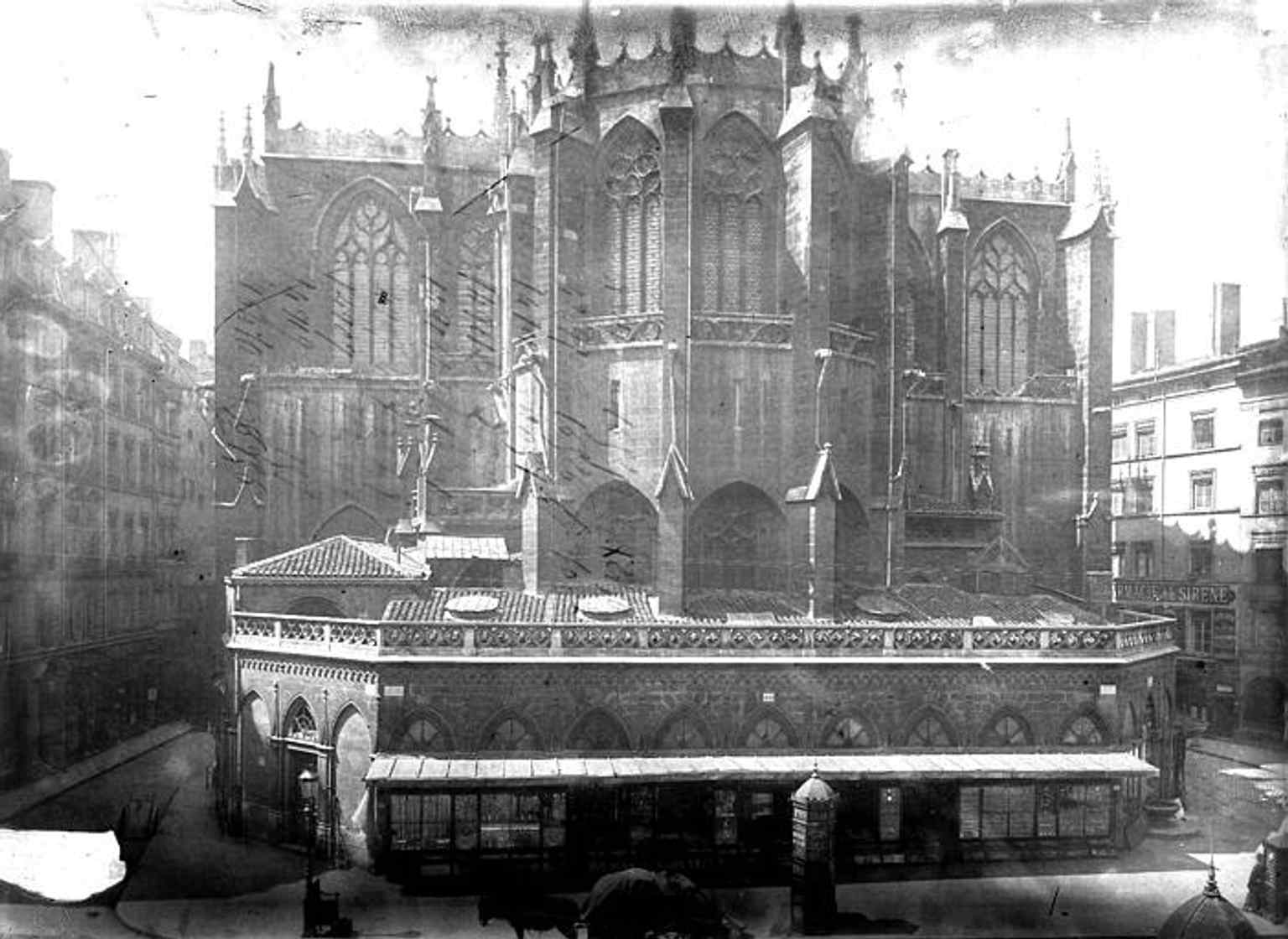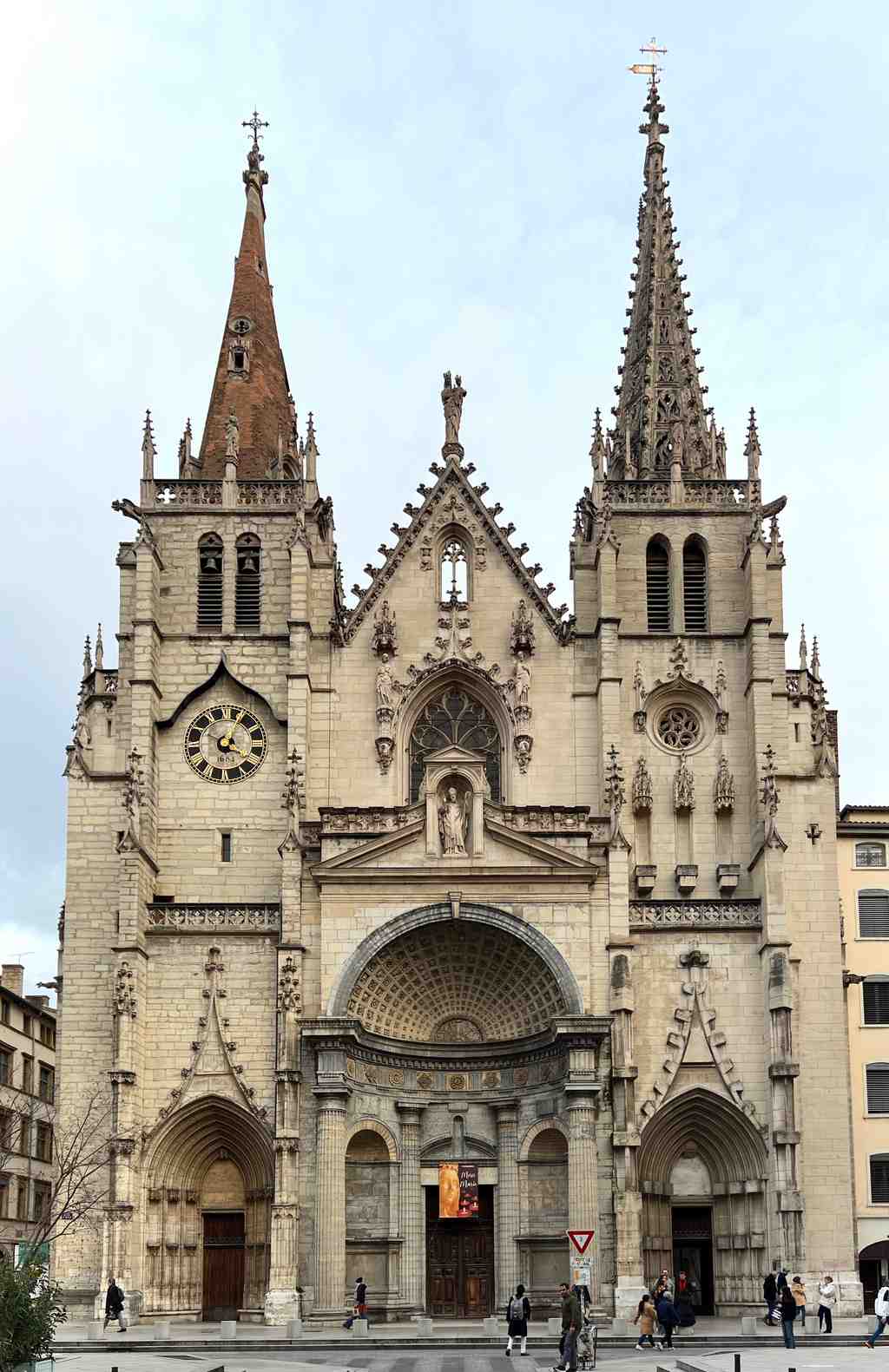
On your left, Saint-Nizier rises in pale stone as a broad Gothic facade with a deep arched portal and two needle-like, uneven spires, one marked by a distinctive pink-brick crown.
This church is one of Lyon’s best reminders that a holy place can carry several birth certificates... and none of them fully signed.
People long claimed a Roman temple once stood here, perhaps for Attis. Another tradition said Saint Pothin founded a chapel on this spot. The honest answer is: maybe. No serious excavation has settled it under the present building. What scholars can prove is already powerful enough. This ground belonged to an ancient cemetery of Roman Lugdunum. Nearby, people found funerary inscriptions to the gods of the dead, and a Christian epitaph from the year four hundred ninety-five. So beneath this church sits not certainty, exactly... but very old memory.
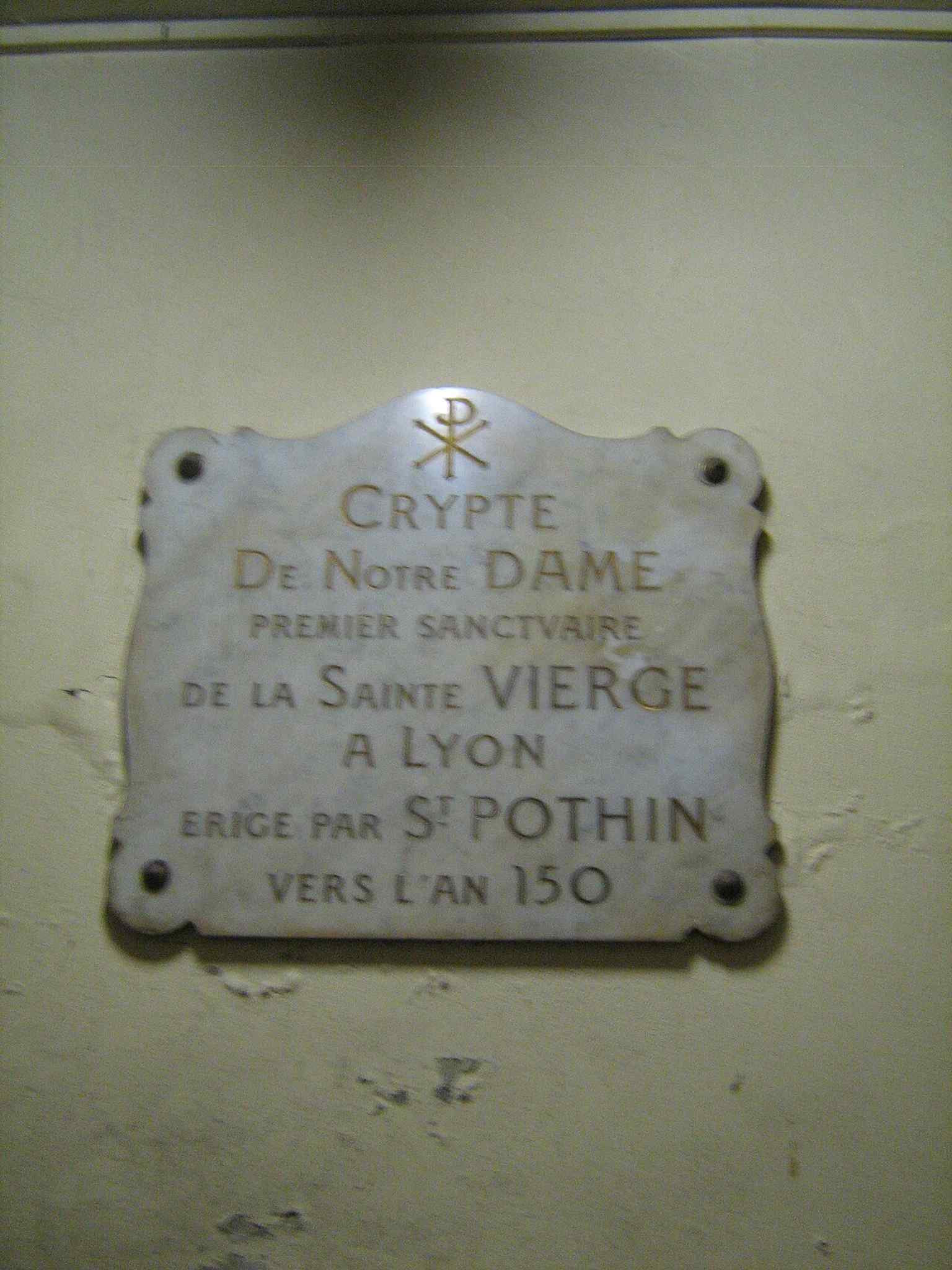
That matters here, because Saint-Nizier became important early and stayed that way. The body of Bishop Nizier, who died in the sixth century, drew such crowds and so many reported miracles that the church eventually took his name. His burial place survives below, in a crypt laid out like a Greek cross, with equal arms meeting at the center. If you glance at the image in the app, the plaque at the crypt entrance points straight to that buried past.
By the Middle Ages, this was the church of the Presqu’île’s townspeople, merchants, and guildsmen. While Saint-Jean across the Saône spoke for cathedral power, Saint-Nizier spoke for the people here on the peninsula. That rivalry was not just theological. It shaped donations, prestige, and even where city assemblies met. For centuries, major municipal gatherings happened here. In other words, this facade did not only watch prayer; it watched politics.
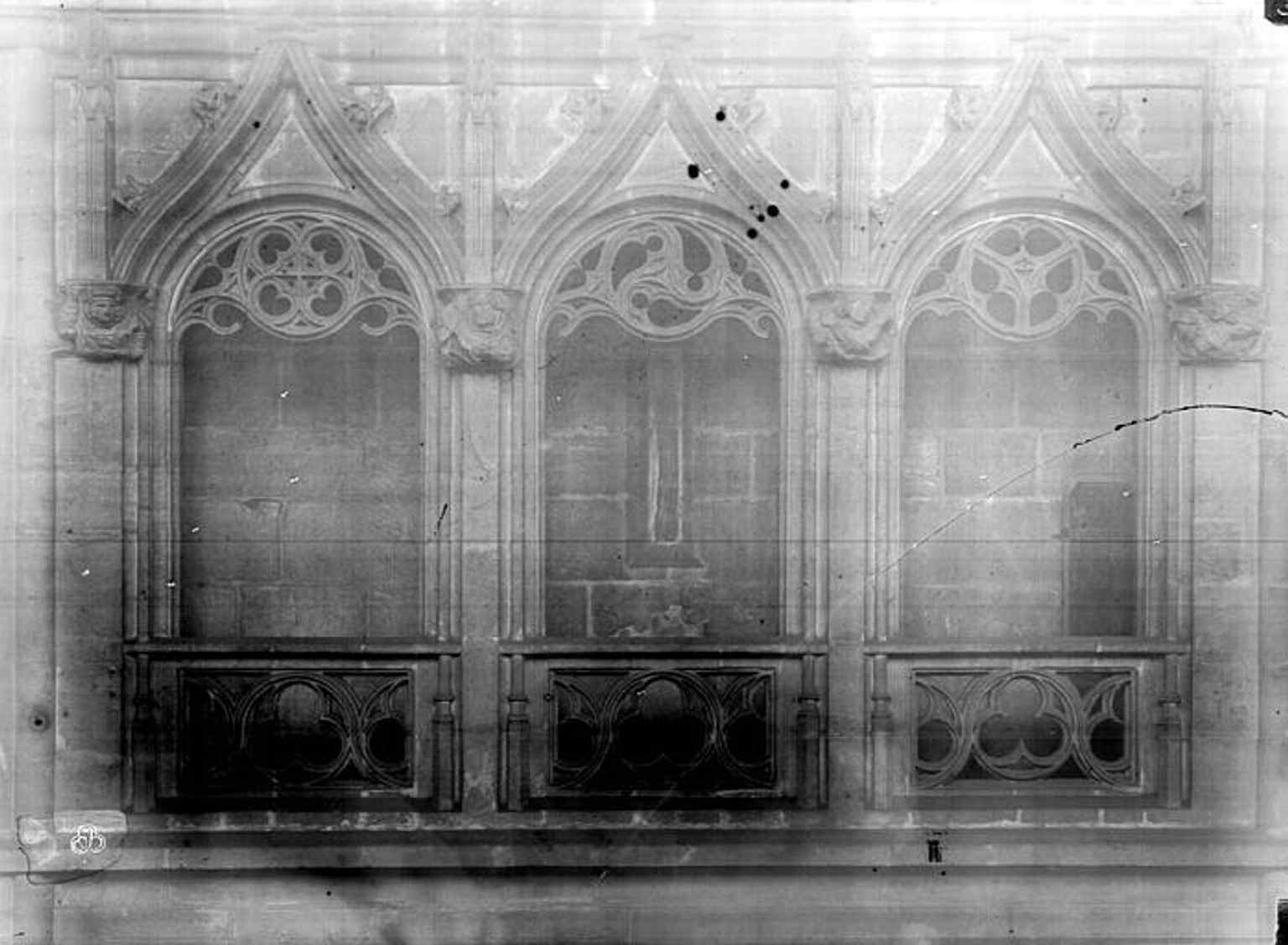
Look closely and the front tells its own layered story. The north tower began in the late fifteenth century in flamboyant Gothic, a style full of curling stone lines that look almost like flame. The central portal came later, after violence interrupted everything. In fifteen sixty-two, the baron des Adrets and his Protestant troops damaged the church and profaned bishops’ tombs. Then architect Jean Vallet picked the work back up in fifteen seventy-eight and set in the Renaissance portal you see today, with its classical columns and deep half-dome porch. The south tower did not join the party until the nineteenth century, when architects finally completed the west front in a neo-Gothic spirit. So yes... even the “main facade” is really a conversation across four centuries.
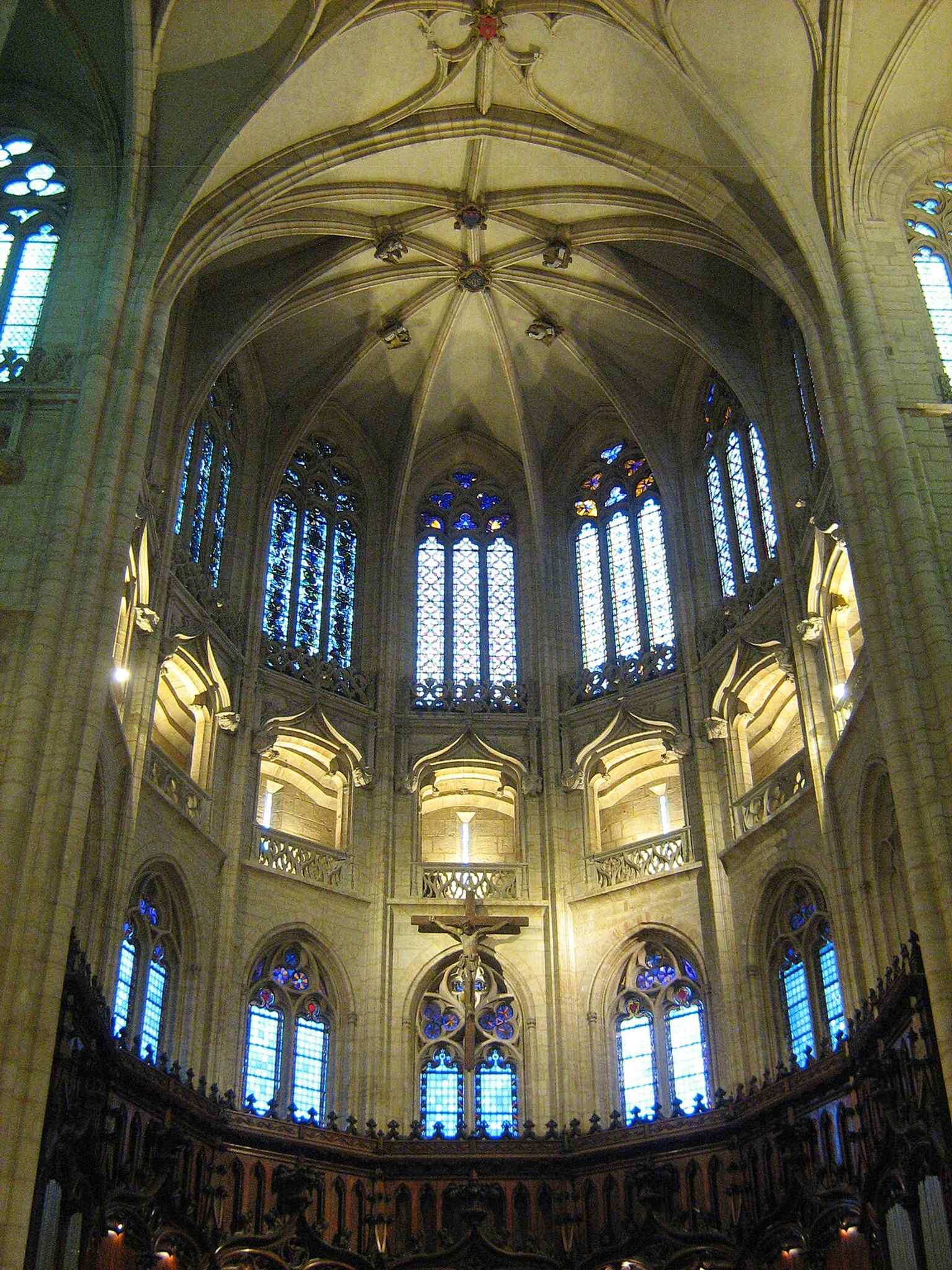
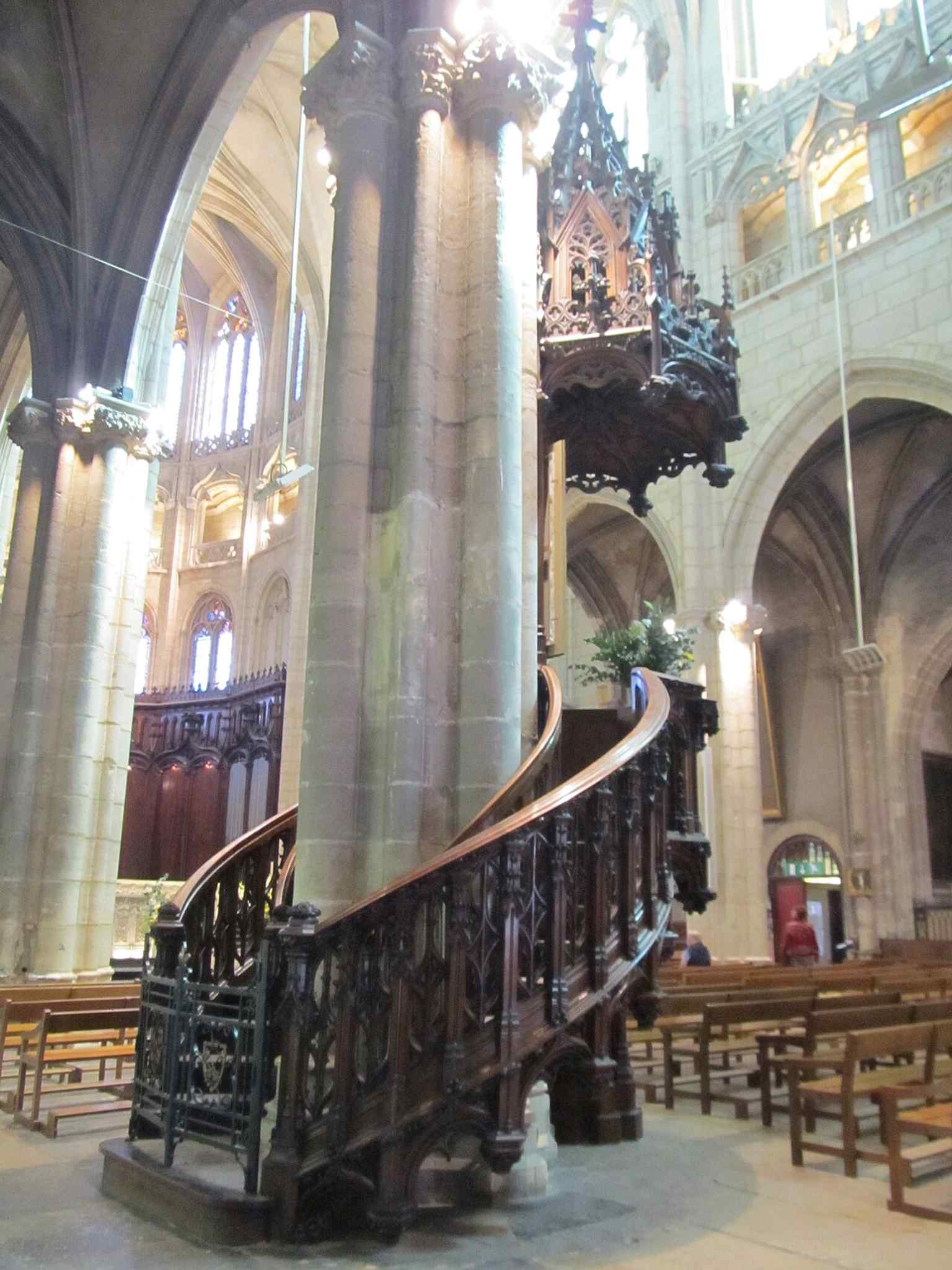
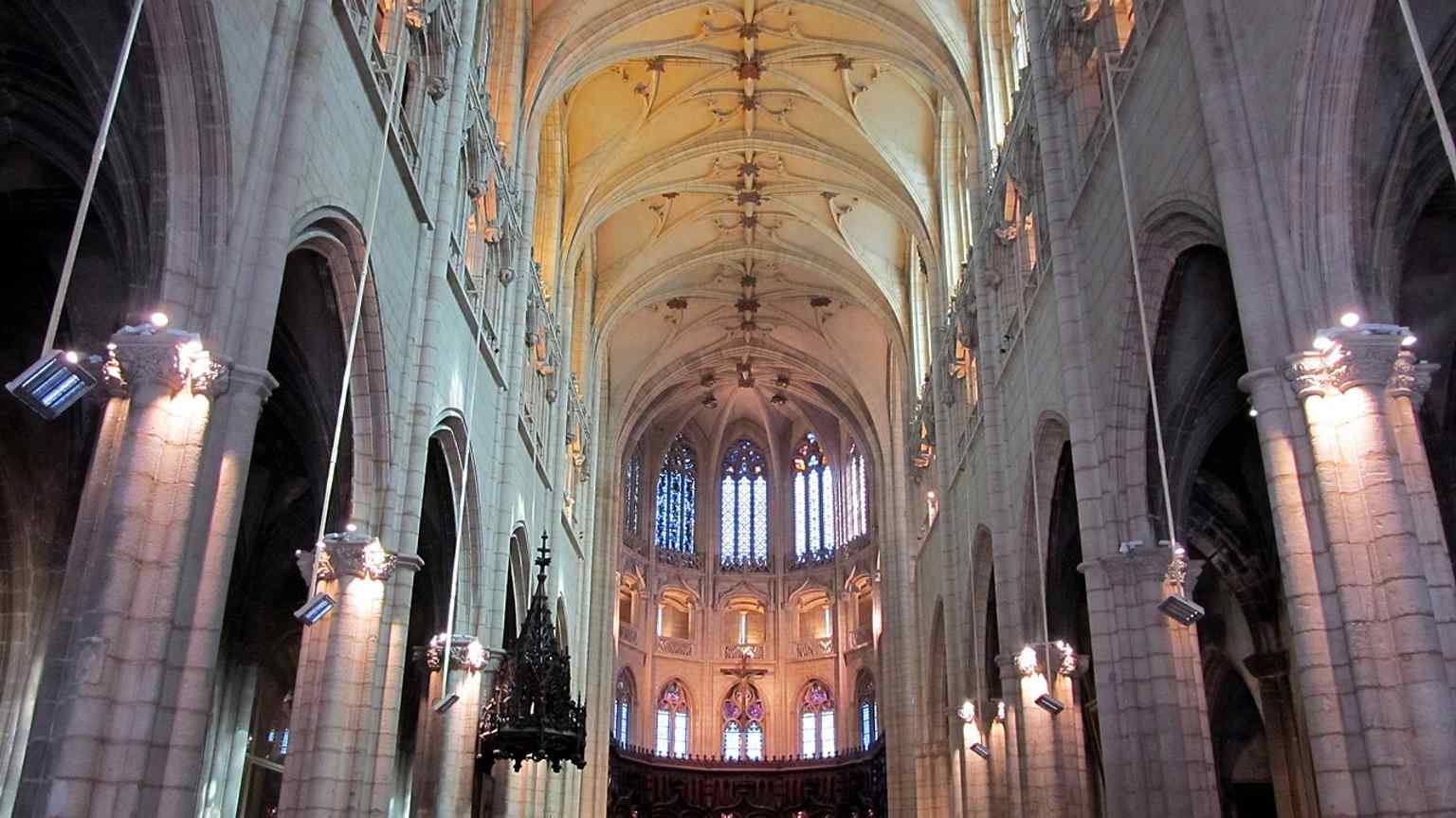
If you open the nave image on your screen, you can see the surprise waiting inside: a bright, lofty central hall with a stern kind of grace, less sugary than grand.
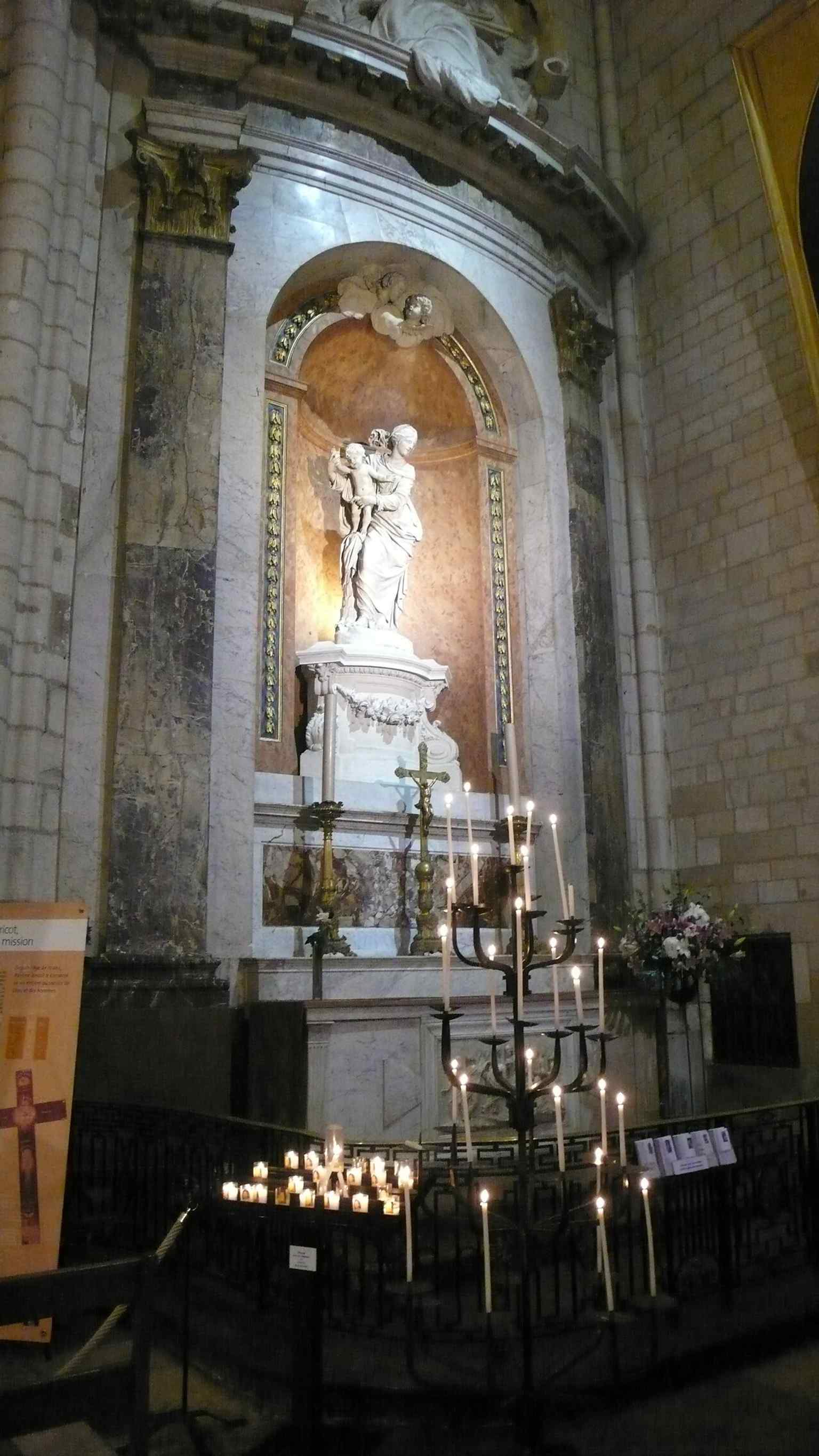
And Saint-Nizier never stopped collecting stories. During the Revolution, the church suffered bombardment, lost its furnishings, and even served as a flour storehouse. A statue of the Virgin by Antoine Coysevox survived because people hid it in a sack of flour. Lyon has a real talent for saving beauty with whatever is handy.
From here, continue about seven minutes to Place des Jacobins, where arguments about faith, power, and public life spilled fully out into the square. If you want to step inside later, note that Saint-Nizier’s opening hours vary quite a bit by day, from short afternoon windows to longer daytime access.