
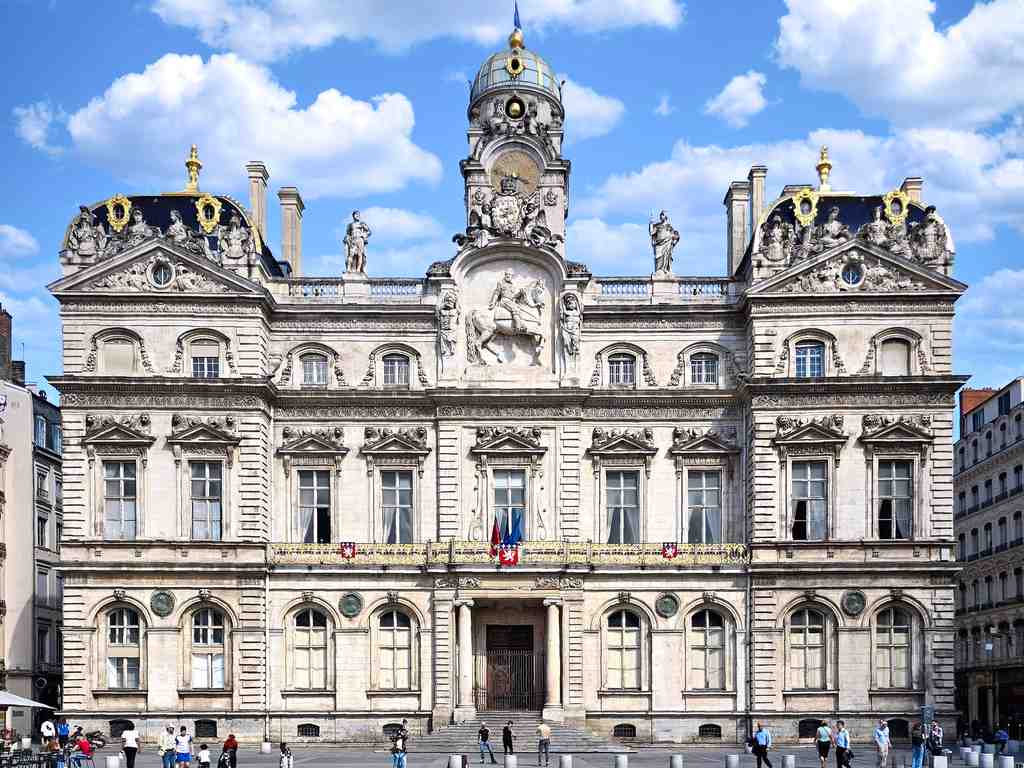
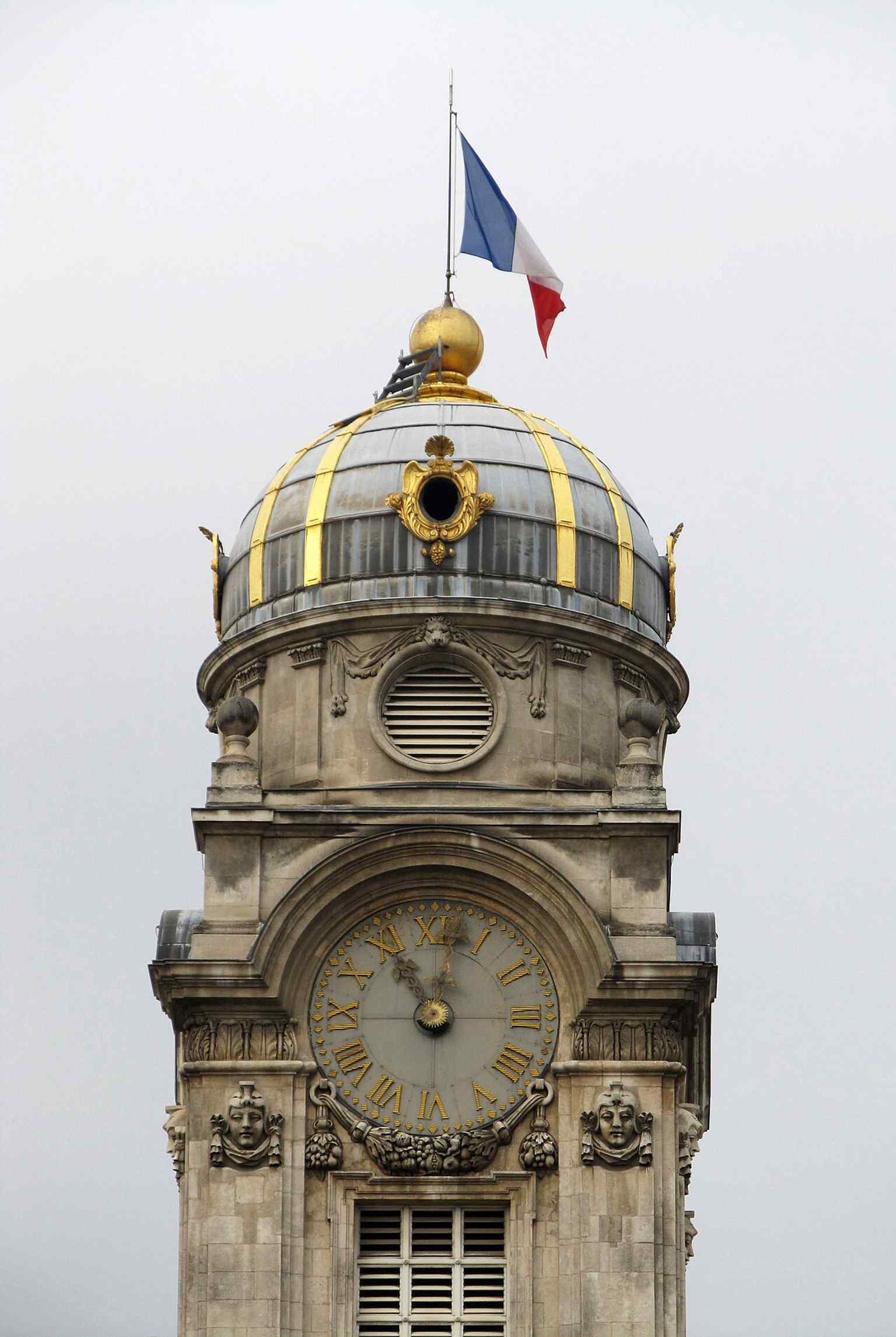
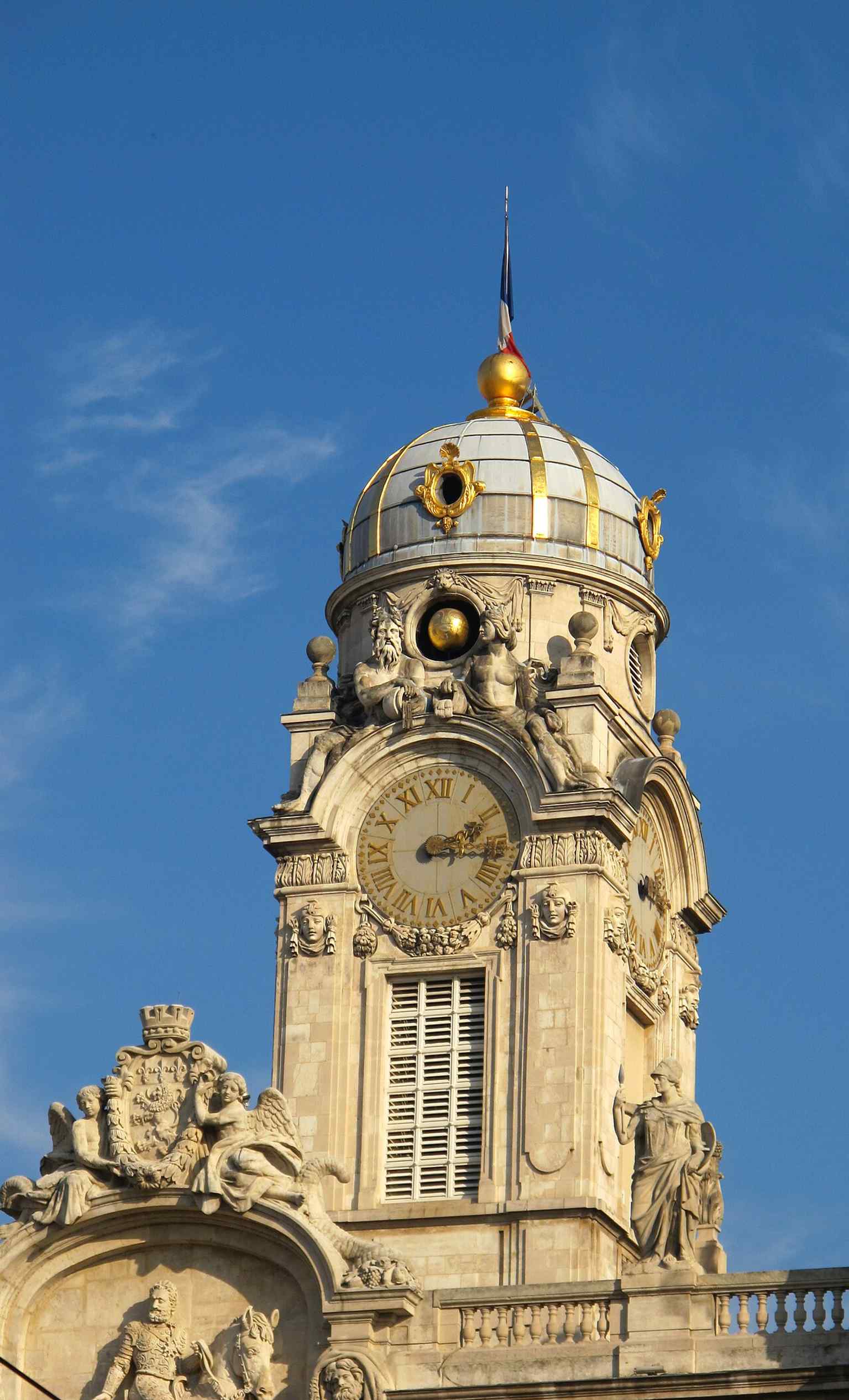
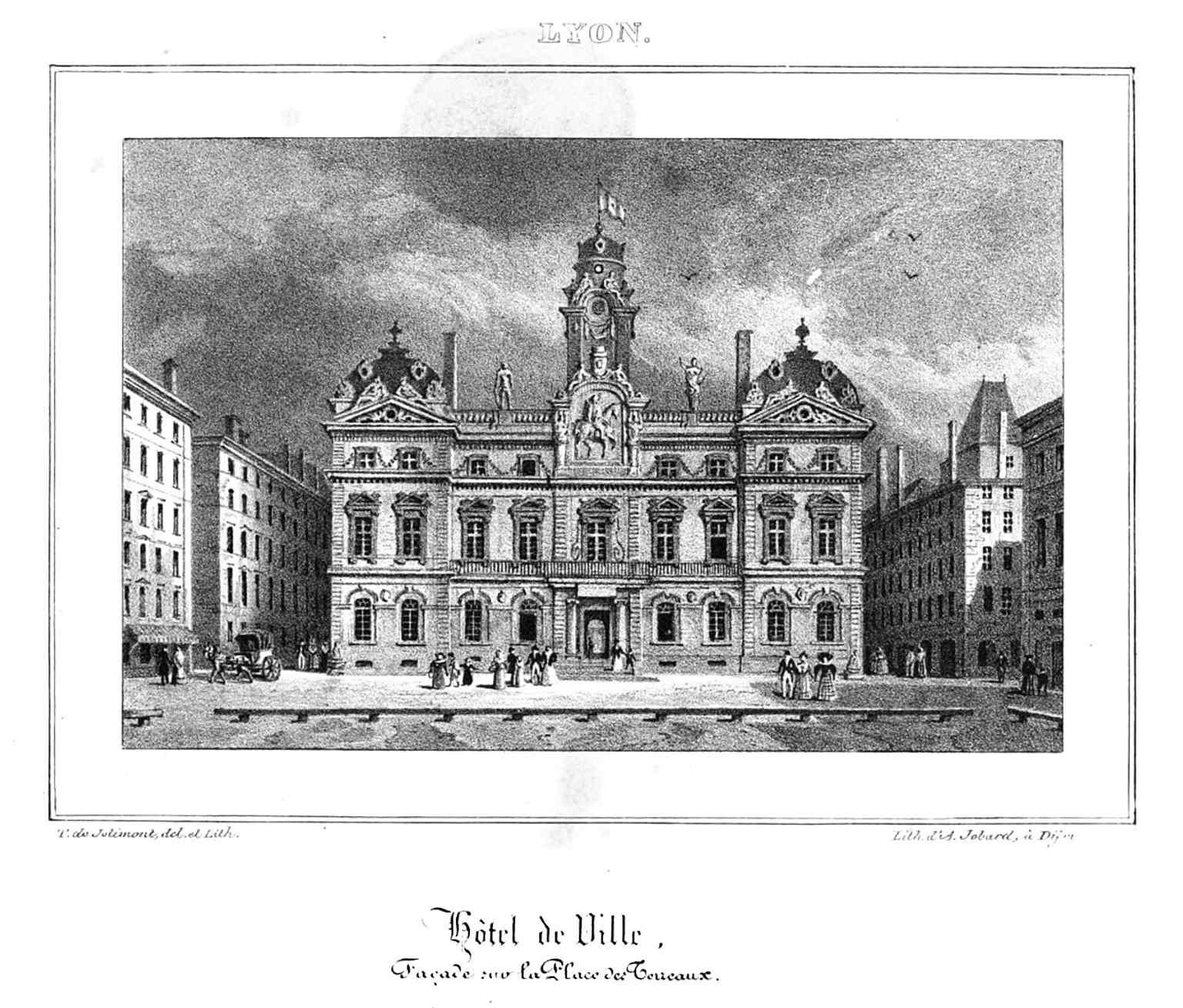
On your right, the Hôtel de Ville shows itself as a long pale ashlar-stone façade with a square central doorway, orderly rows of windows, and a domed clock belfry rising above the relief of King Henry the Fourth.
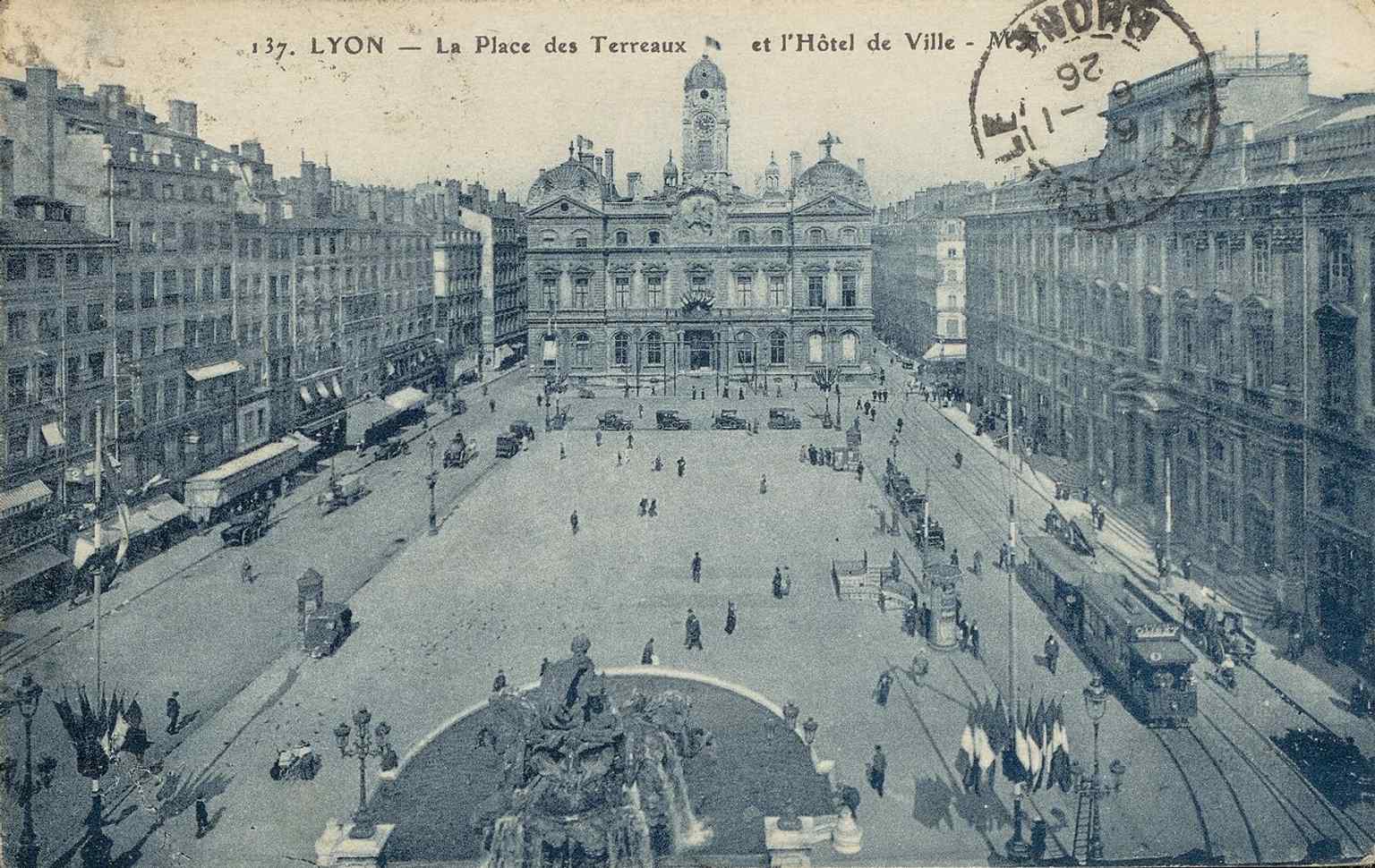
From across the square, you can see exactly what Lyon wanted this building to say in the seventeenth century: we are rich, organized, and very much worth noticing. The city chose this site as the Presqu'île became the new center, and in a nice bit of political choreography, leaders began construction on the fifth of September, sixteen forty-six... the birthday of Louis the Fourteenth. Architect Simon Maupin gave them a balanced front of nine bays, with the end sections pushed forward like pavilions on a palace. Even city government, it turns out, likes a good entrance.
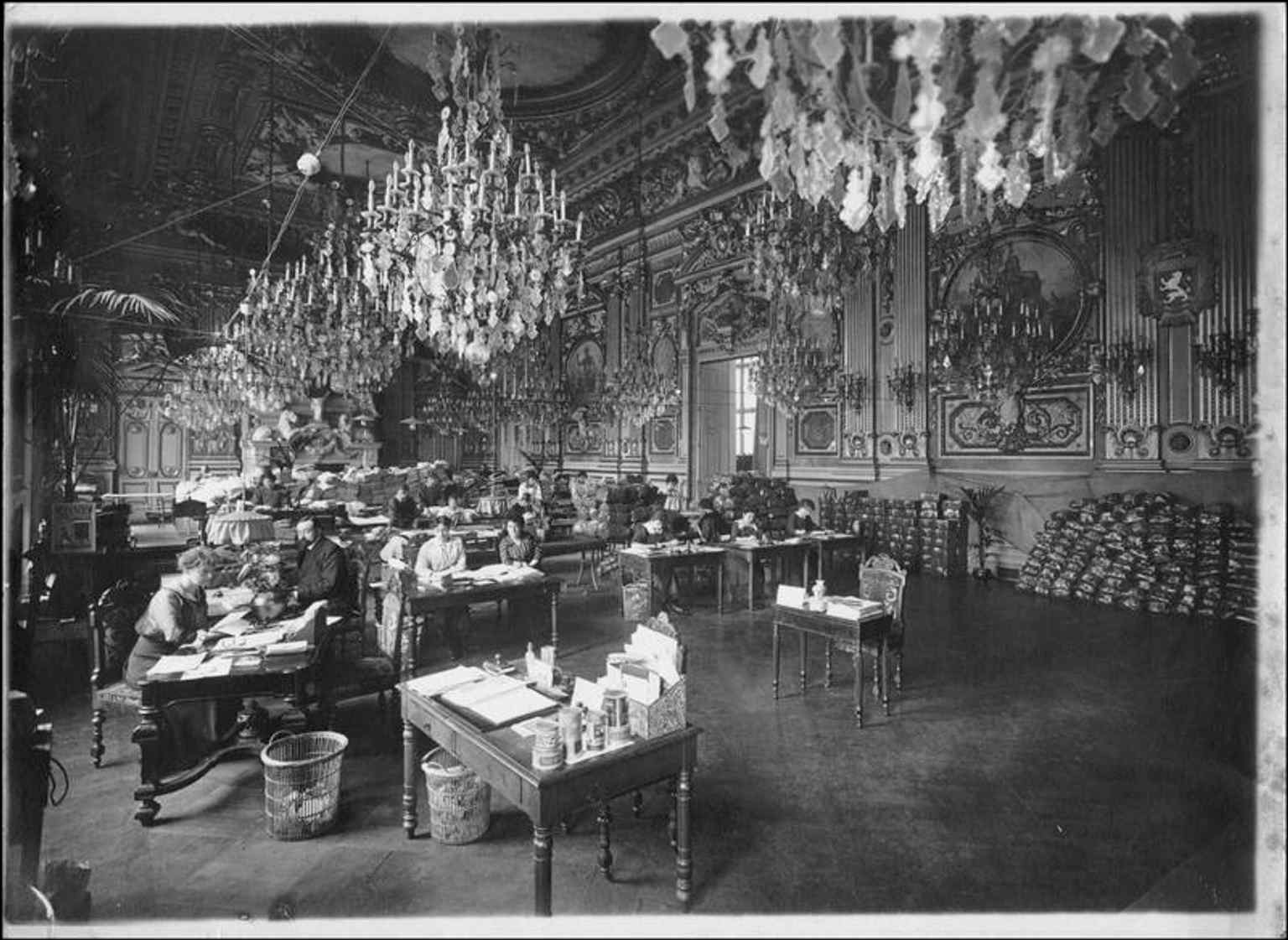
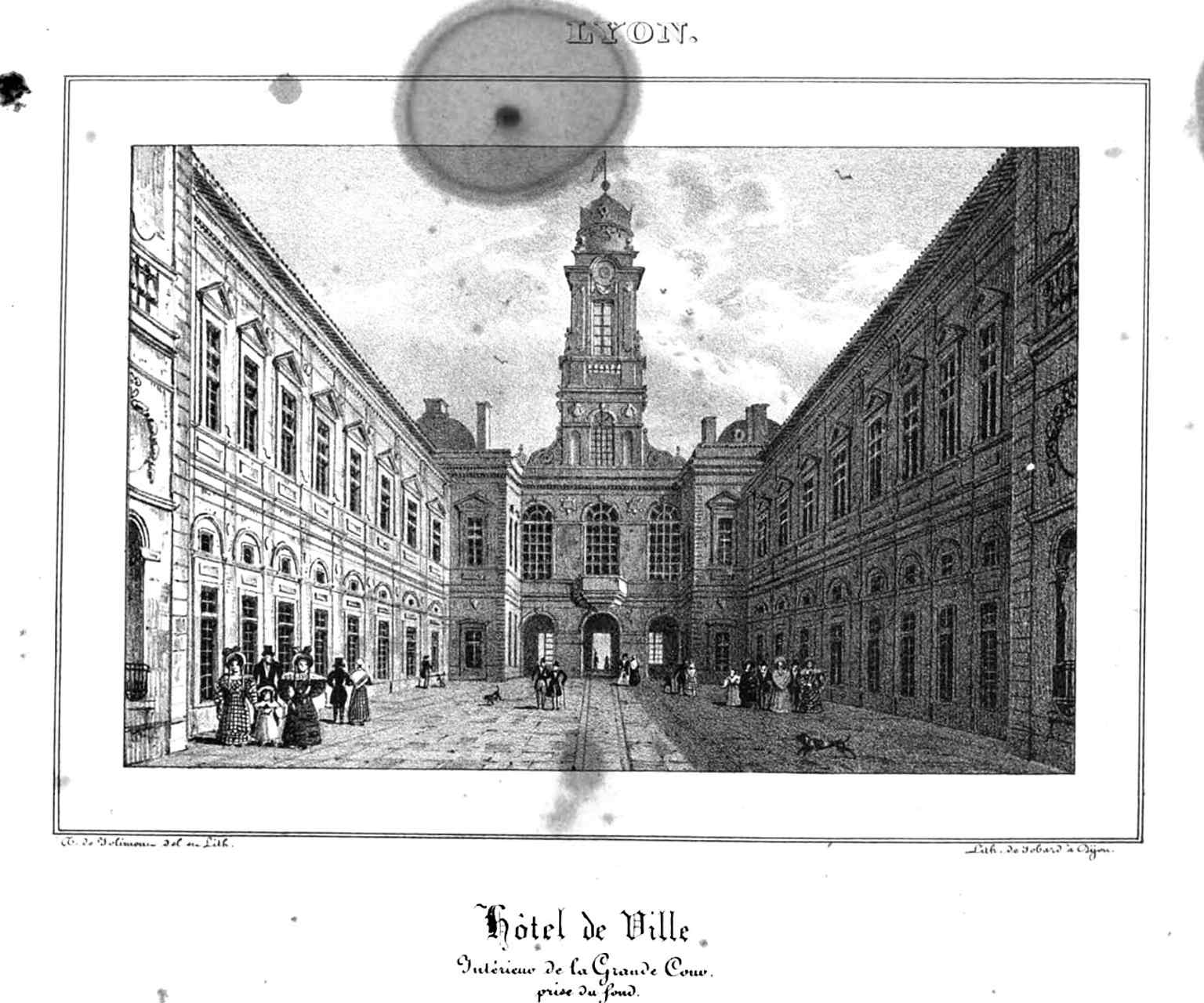
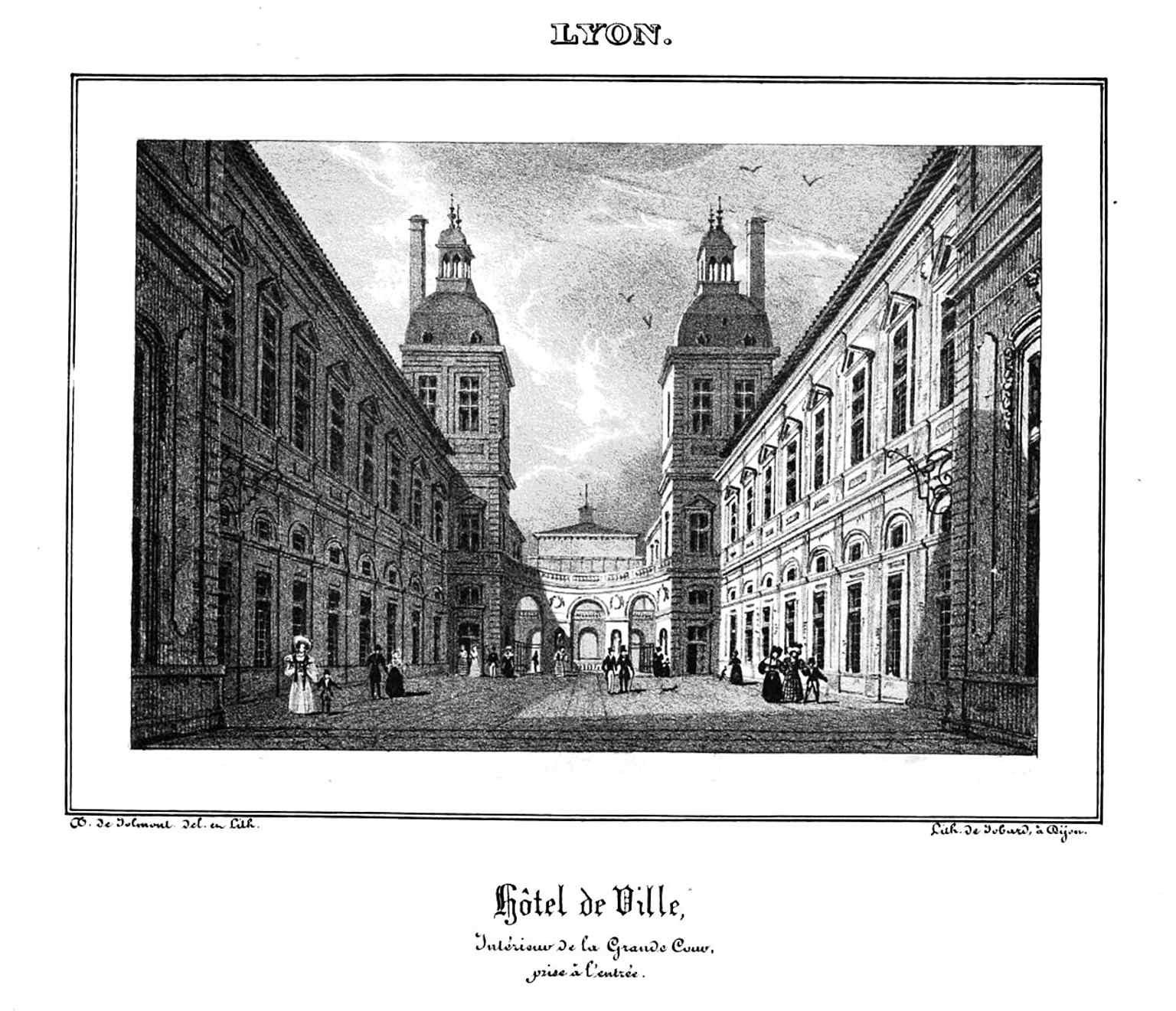
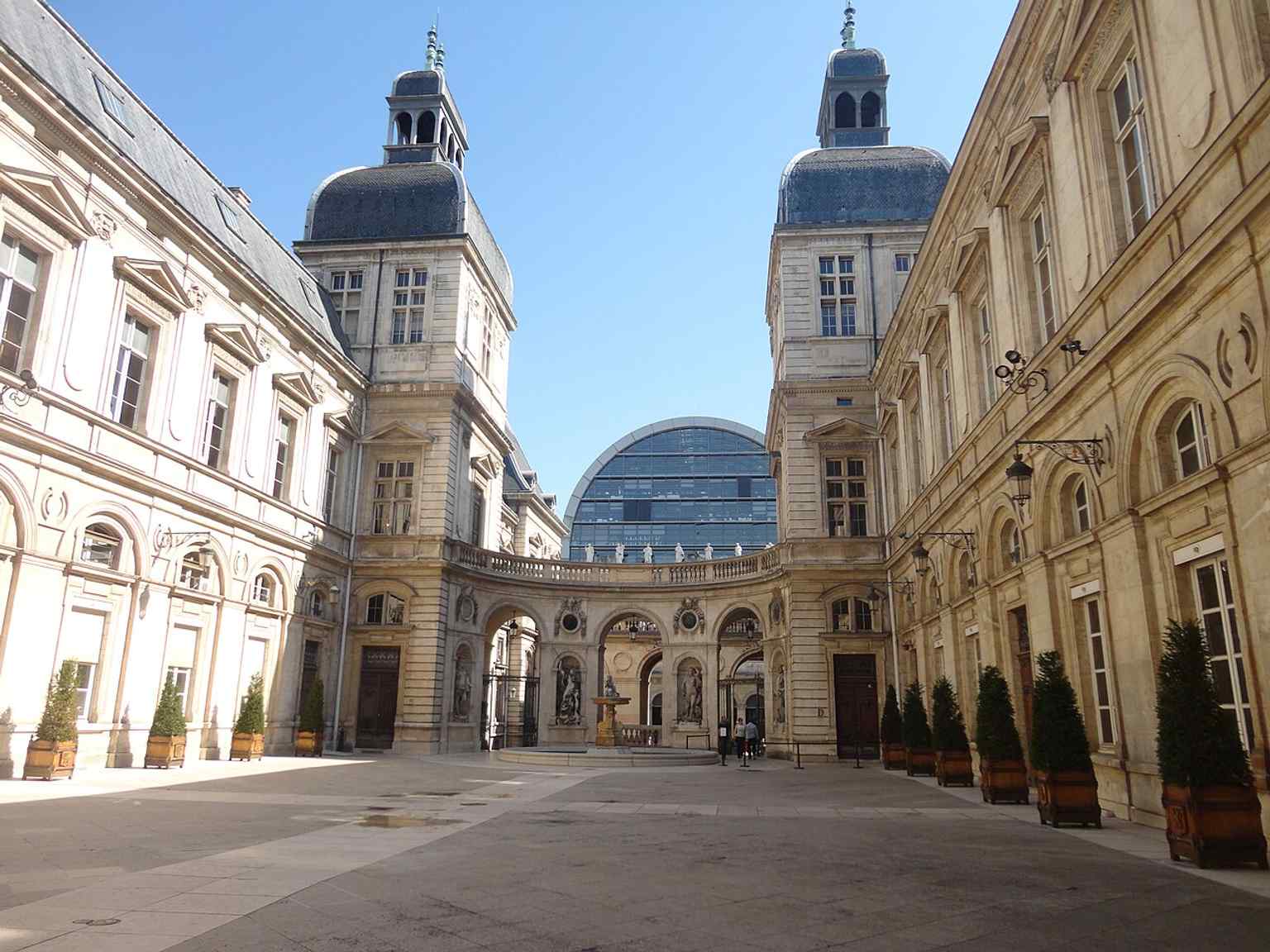
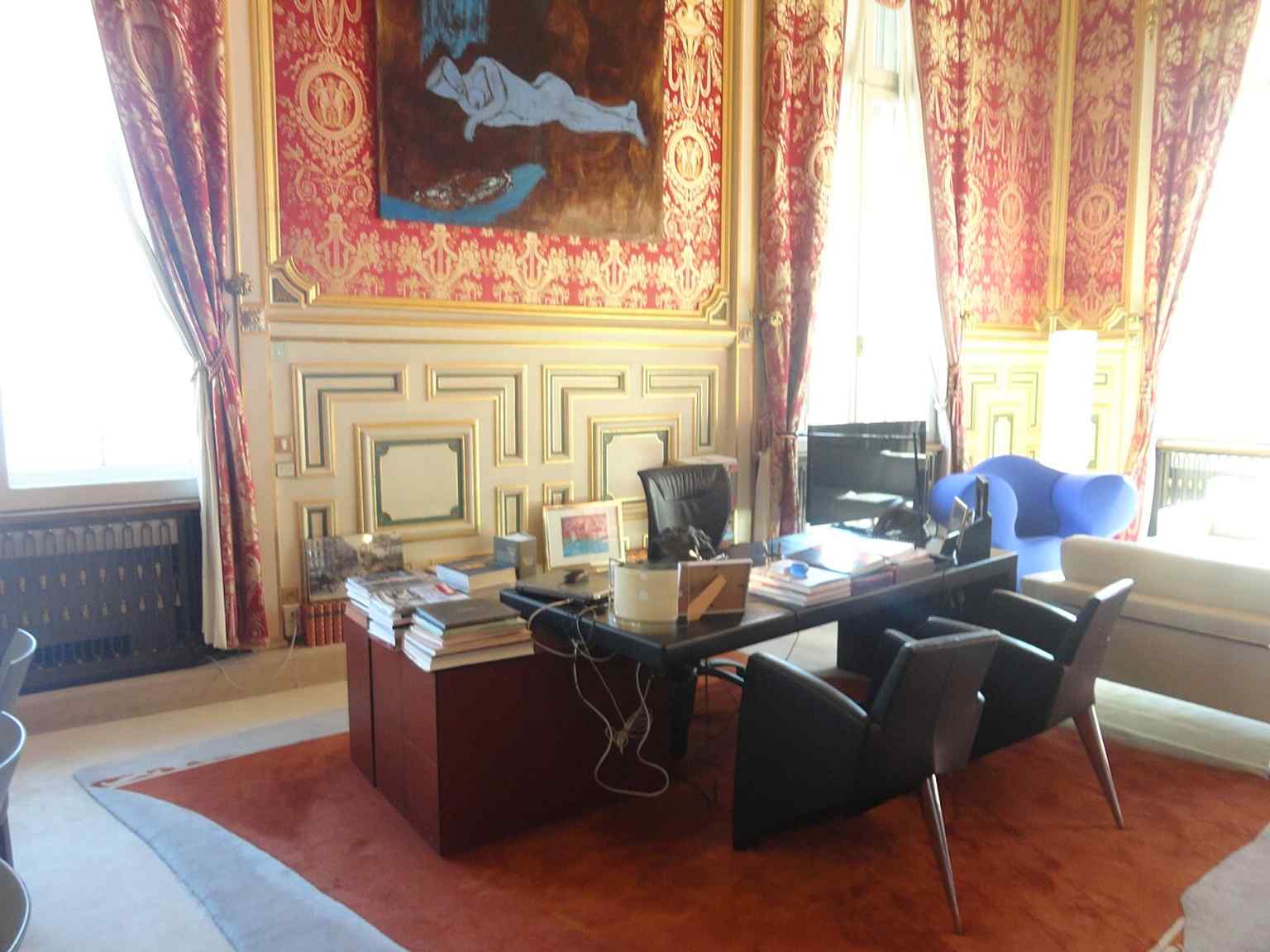
Look at the middle: that doorway framed by Ionic columns, the straight, scroll-topped classical kind, sets up the whole performance. Above it, the façade climbs in careful layers toward the belfry. If you open the interior image on your screen, the ceremonial rooms show how the drama continued inside, not just out here on the square.
Louis the Fourteenth himself came here on the second of December, sixteen fifty-eight, for a grand reception. Here is the part locals enjoy: the place still wasn’t truly finished. The king and court stepped into a glittering civic welcome... with dust and construction debris still hanging around the brand-new town hall. Then the city forgot to provide chairs. The evening became famous as the great banquet where nobody sat down. That’s Lyon in one scene: ambitious, stylish, and just a little improvised.
But this polished face nearly vanished. On the thirteenth of September, sixteen seventy-four, fire broke out in the Great Hall after weeks of dryness had left the timber frame brittle as kindling. The heat turned savage. Bells in the tower melted, and molten metal ran downward. Carpenters made a brutal choice: they hacked through burning roof timbers to separate the doomed hall from the rest of the building and save the archives and the southern wing. That desperate act helps explain the French phrase about “giving the fire its share” - cutting your losses to save what matters most.
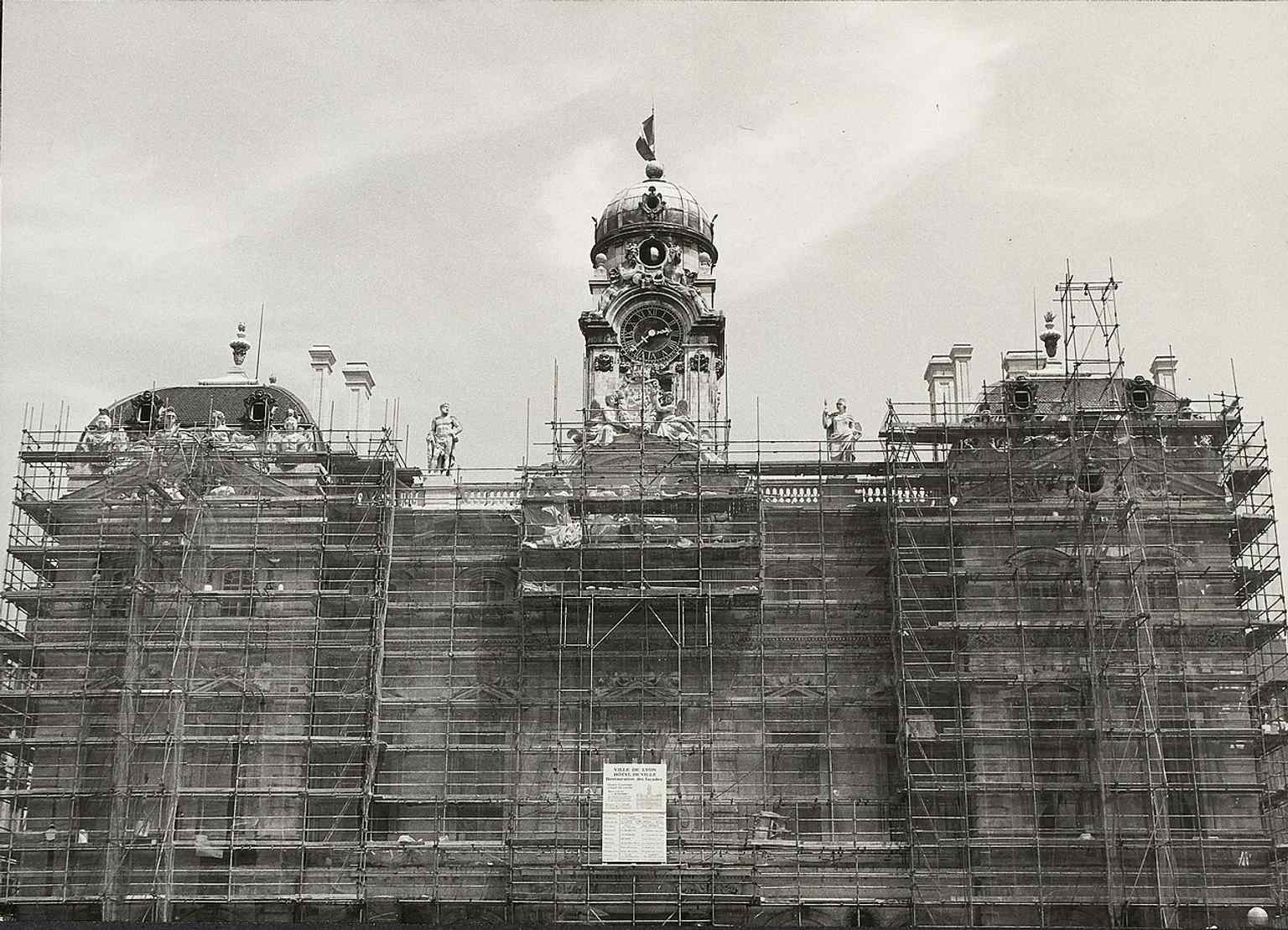
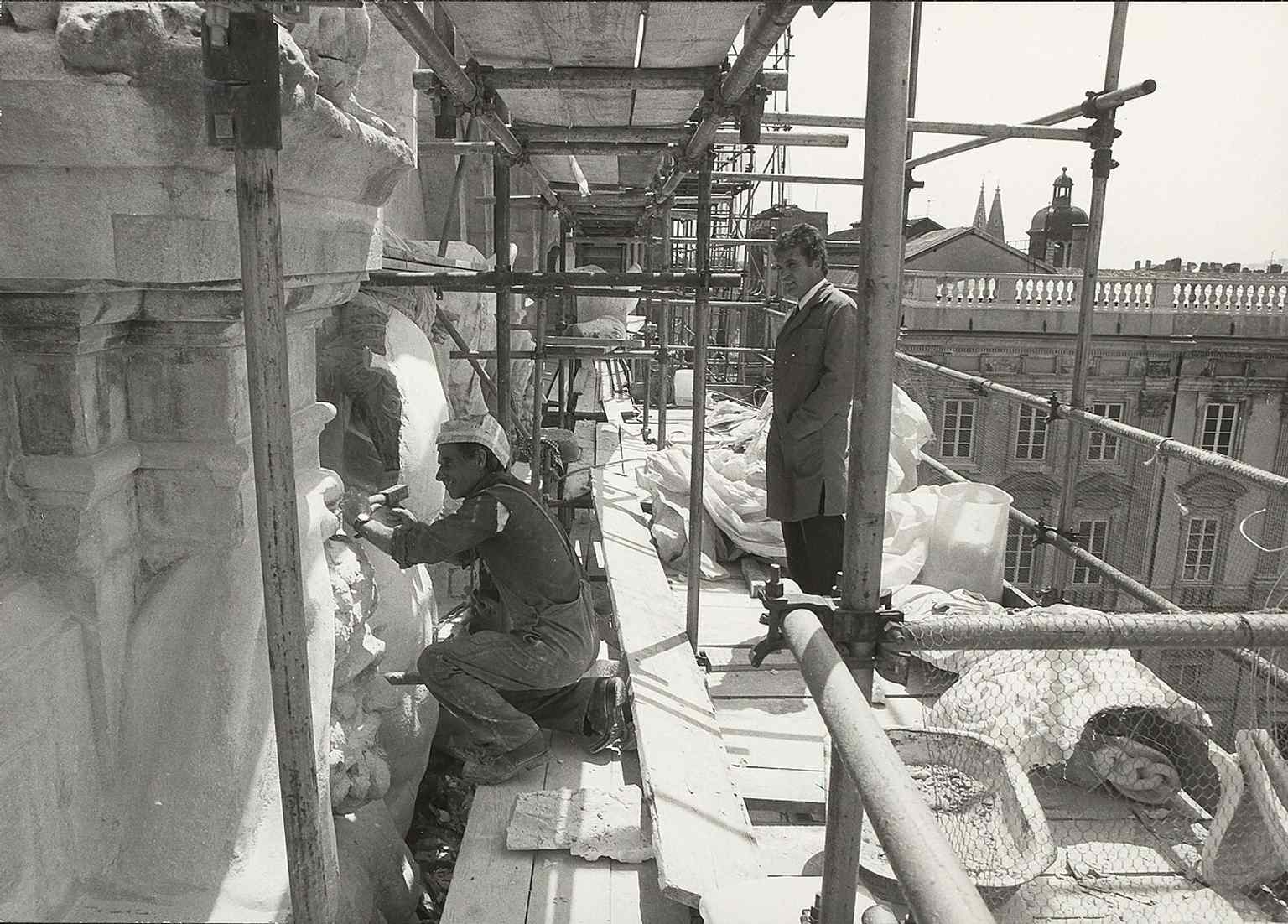
Afterward, Jules Hardouin-Mansart and Robert de Cotte reshaped the building. The high original roofs disappeared; in their place came the lower balustrades, statues, and the skyline you see now. If you like, take a quick look at the before-and-after image - it shows how the restored west front shed its scaffolding and came back into full civic dress.
And then the politics changed again. In seventeen ninety-three, revolutionaries destroyed the bronze relief of Louis the Fourteenth. Later, the city chose Henry the Fourth for the replacement above you, a safer king for a wounded city. This façade remembers power, but it also remembers editing power.
That’s the real turn here: this is not just a town hall. It is a stage set rewritten by monarchs, fire, revolutionaries, and restorers, all trying to control the same view across the same square. In eighteen seventy, a crowd even proclaimed the Republic here hours before Paris did, and for months a red flag flew over the building.
When you’re ready, head for Saint-Nizier, about five minutes away. There, continuity feels less official, more argued over... and much older.






.JPG)
