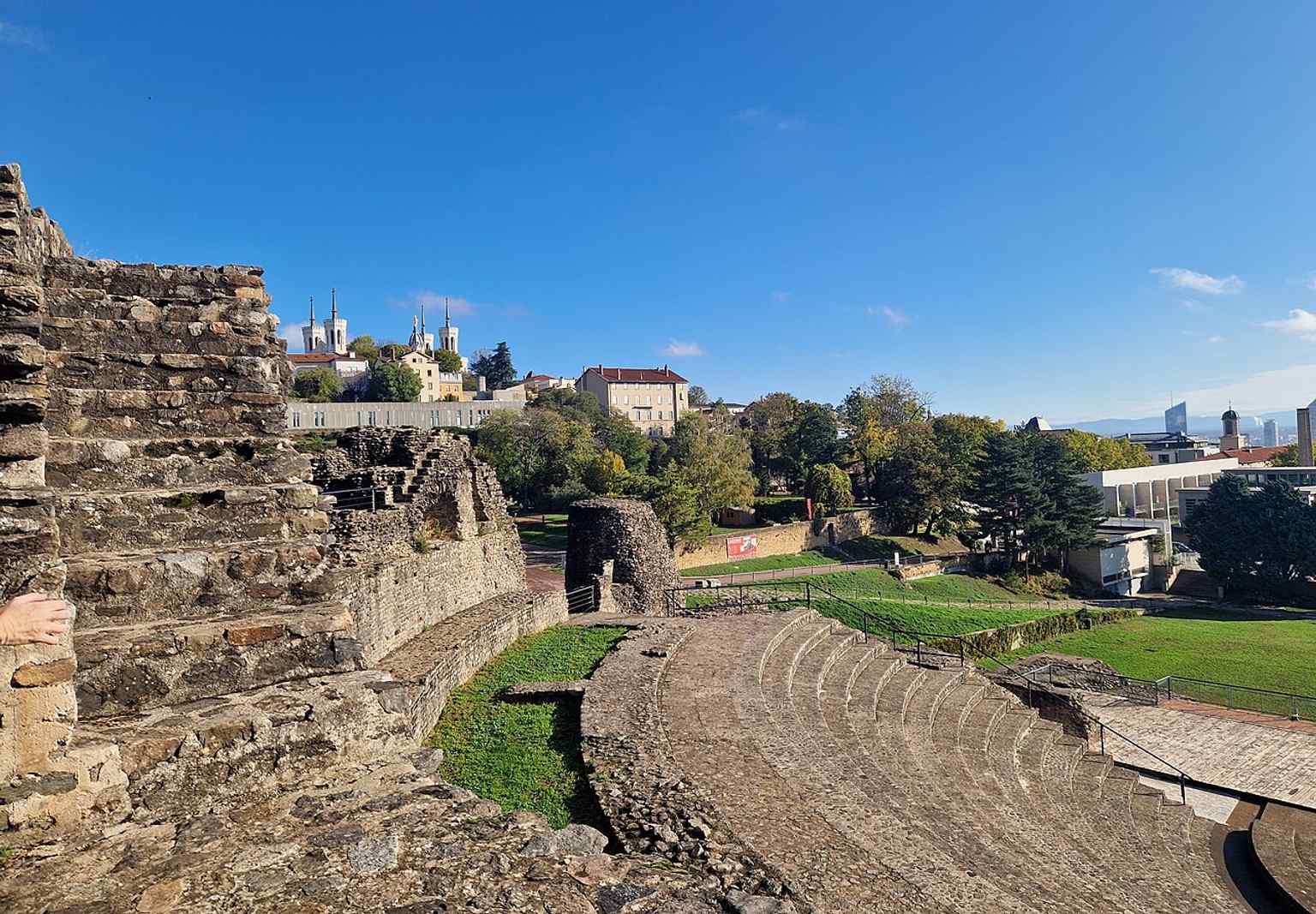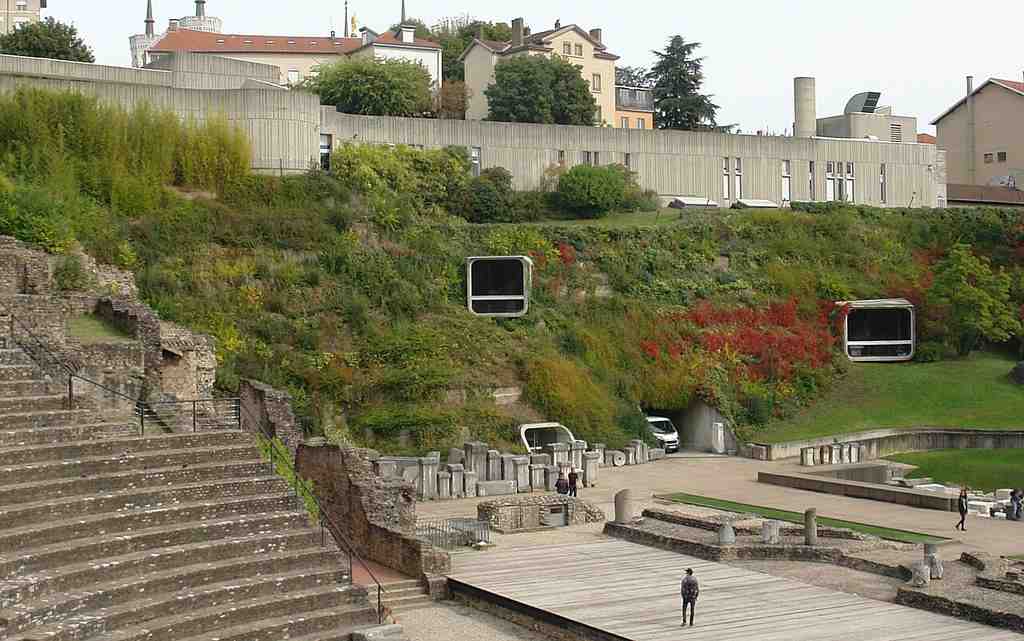
On your right, look for a low concrete-and-glass entrance cut into the hillside, with broad angular walls and a discreet opening that seems almost swallowed by Fourvière.
That half-hidden look is the whole point. This museum does not strut. It tucks itself into the slope so the Roman ruins above keep the spotlight. If you glance at the image on your screen, you can see how Bernard Zehrfuss, the architect, made the building almost disappear into the hill instead of sitting on top of it like a big stone hat.
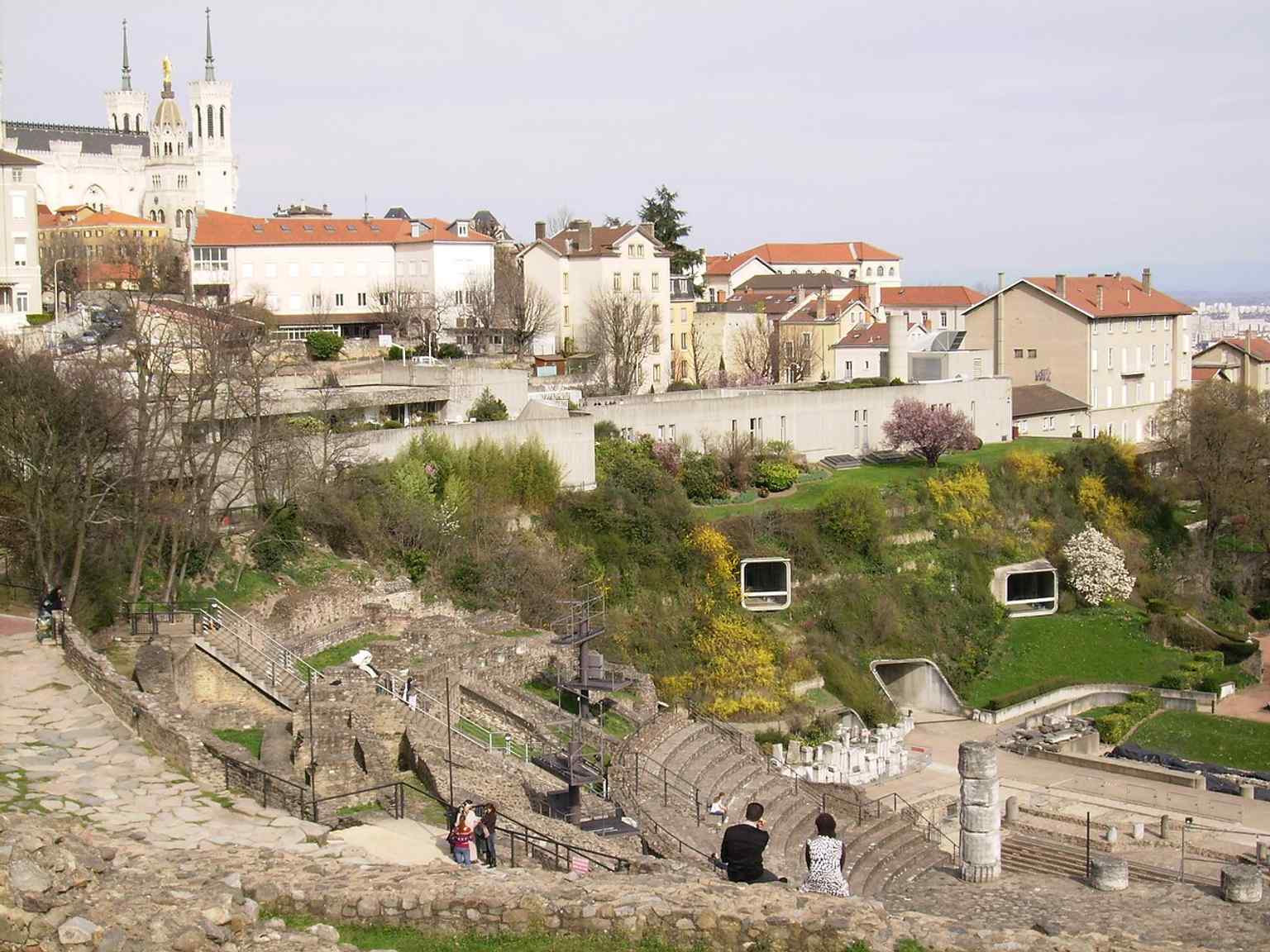
This is Lugdunum, the archaeological museum of Lyon, and it tells a very local truth: cities do not remember by magic. Memory gets buried, broken, carted away, rediscovered, argued over, cleaned, labeled, and finally displayed with a little civic pride. That is what you are standing in front of here... not just a museum, but a machine for rebuilding memory from fragments.
For a long time, Lyon’s Roman finds lived all over town. In the early eighteen hundreds, François Artaud gathered ancient objects under the cloister arcades of the Museum of Fine Arts. Then, when excavations began here on Fourvière in the nineteen thirties, workers unearthed so much material from the theaters that the city stuffed it into nearby buildings called the Antiquarium, basically a cramped store-and-show space for ancient finds. Useful, yes. Glamorous, not exactly.
The person who kept pushing for something better was Amable Audin, an archaeologist with the patience of a monk and the stubbornness of a mule. In the nineteen fifties and sixties, he pressed Lyon to create a real archaeological museum here, close to the ruins themselves. Then Zehrfuss arrived in nineteen sixty-six and flipped the old plan upside down... or rather, into the ground. He designed an underground museum with a raw concrete spiral ramp inside, guiding visitors downward through time. If you peek at the interior image in the app, that ramp is the building’s quiet masterstroke.
Now, the star of the place: the Claudian Table. It is a bronze inscription, meaning text cut into metal, recording a speech the emperor Claudius gave in the year forty-eight. Claudius was born here in Lugdunum, and in that speech he argued that elite men from Gaul should be allowed into the Roman Senate. One object, and suddenly Lyon is not a provincial footnote; it is speaking straight into Roman power.
Most visitors miss the sweetest part of that story. The table’s modern fame did not begin in some grand official dig. In fifteen twenty-eight, a Lyon draper named Roland Gerbaud found it in his garden at Croix-Rousse. The city bought it the next year, making it the oldest object in Lyon’s public collections. It later passed through city halls and the Museum of Fine Arts before finally arriving here in nineteen seventy-five.
So here, Lyon’s buried layers stop being an idea and turn into evidence: bronze, stone, mosaics, inscriptions, even a Gaulish calendar from Coligny. In a moment, we’ll head out to the Ancient Theatre, where the museum’s careful story opens into the landscape itself. If you plan to come back inside, the museum closes on Monday, opens from eleven to six Tuesday through Friday, and from ten to six on weekends.