AudaTours logoAudaTours

Stop 2 of 17

Basilica of Notre Dame of Fourvière

Basilica of Notre Dame of Fourvière
Basilica of Our Lady of Fourvière
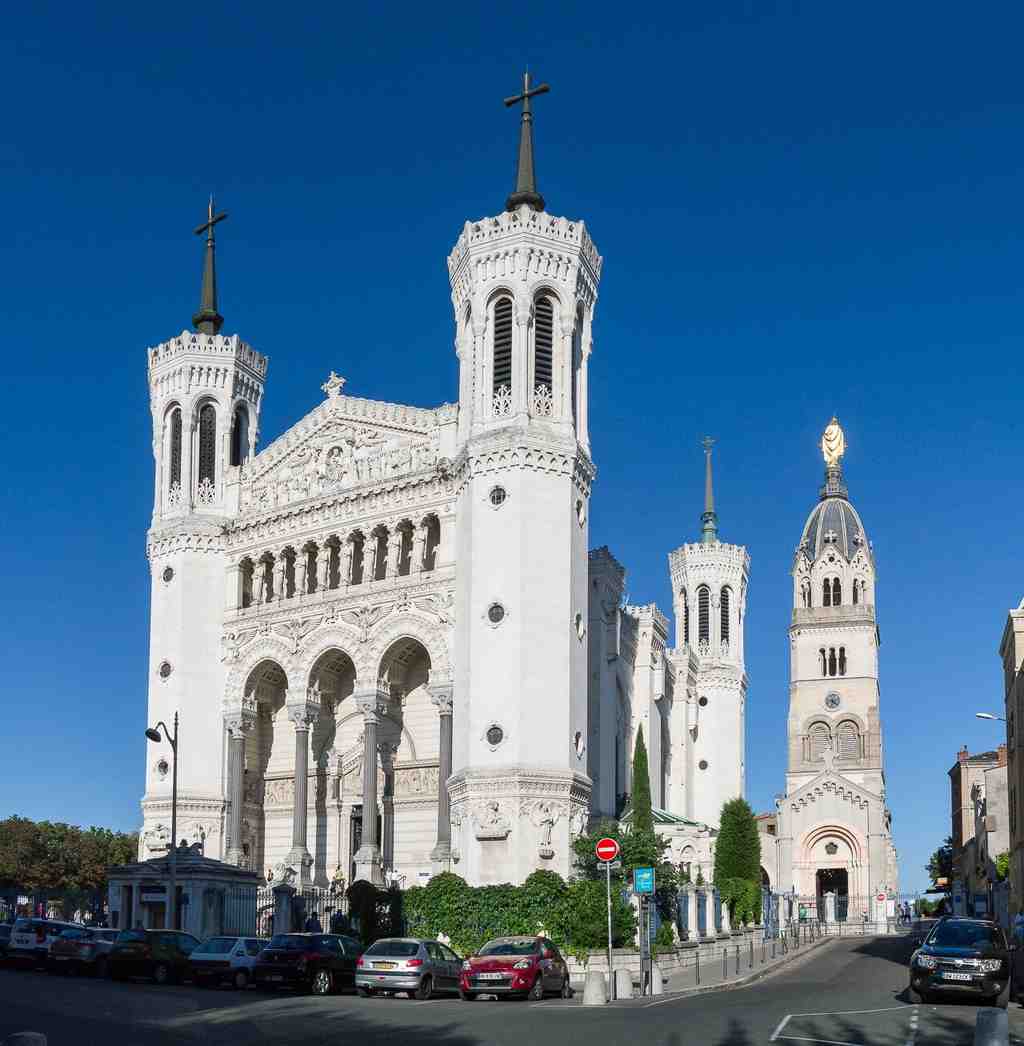
Basilica of Our Lady of FourvièrePhoto: Sergey Ashmarin, Wikimedia Commons, CC BY-SA 3.0. Cropped & resized.

Ahead of you rises a white stone basilica with four octagonal corner towers, a deep arched porch, and a richly carved front gable that looks almost like a crown set on the hill.

This is Lyon’s great lookout tower in church form... and it plays a neat trick on the eye. From here, the basilica feels eternal, but it is actually a nineteenth-century monument standing over ground that had already lived several earlier lives. Long before these pale walls and towers, this hill held the Roman Forum vetus, the “old forum.” Most locals won’t point it out, but that old name likely helped Fourvière become Fourvière. Lyon likes to keep its old labels tucked under new stone, like notes slipped into a coat pocket.

From this height, you can read the city almost in stacked bands. Down below lie the river corridors and the tight medieval streets of Vieux Lyon; beyond them spread the grander later neighborhoods, then the modern city stretching outward. If you want one image for the whole walk ahead, let it be this hill: one perch, many centuries, all visible at once.

Now look back at the basilica itself, especially that front-left corner. Pierre Bossan designed this in a bold neo-Byzantine style, borrowing from eastern Christian forms and, many think, from Sicily as well. Some people adored it. Others thought the towers looked so unusual they compared them to upside-down elephants. Architects can be a ruthless bunch. Bossan drew the vision, but illness forced him to supervise from afar, so Louis Sainte-Marie Perrin carried much of the construction forward. Builders began in eighteen seventy-two, and they had to sink foundations about twenty-two meters deep because the hill’s subsoil was unstable. Even this mountaintop symbol had to wrestle with the ground beneath it.

But Fourvière is not only a grand public statement. It also carries the quieter fingerprint of Pauline Jaricot. In eighteen thirty-two, she bought the nearby House of Lorette at the foot of the hill and turned it into a place of prayer and mission. She later built a chapel to Saint Philomena after a healing she believed came through the saint’s tomb in Italy. Through her “Living Rosary,” an organized chain of shared prayer, she helped make this hill feel personal, not just monumental.

That personal devotion had deep roots here already. A medieval chapel stood on this site from the twelfth century, first linked to Saint Thomas of Canterbury, then quickly to the Virgin Mary. During plague outbreaks, Lyon’s aldermen vowed in sixteen forty-three to make an annual pilgrimage here, asking Mary to protect the city. Then in eighteen fifty-two, a gilded statue of Mary rose on the chapel tower, and the celebration for its unveiling inspired Lyonnais to place little candles in their windows-an origin story often linked to the Festival of Lights.

If you want a quick sense of how the city changed while this hill stayed the visual boss of the skyline, take a peek at the before-and-after image in the app. And if you glance at the old design drawing on your screen, you can see Bossan imagining the shrine before the stone caught up with him.
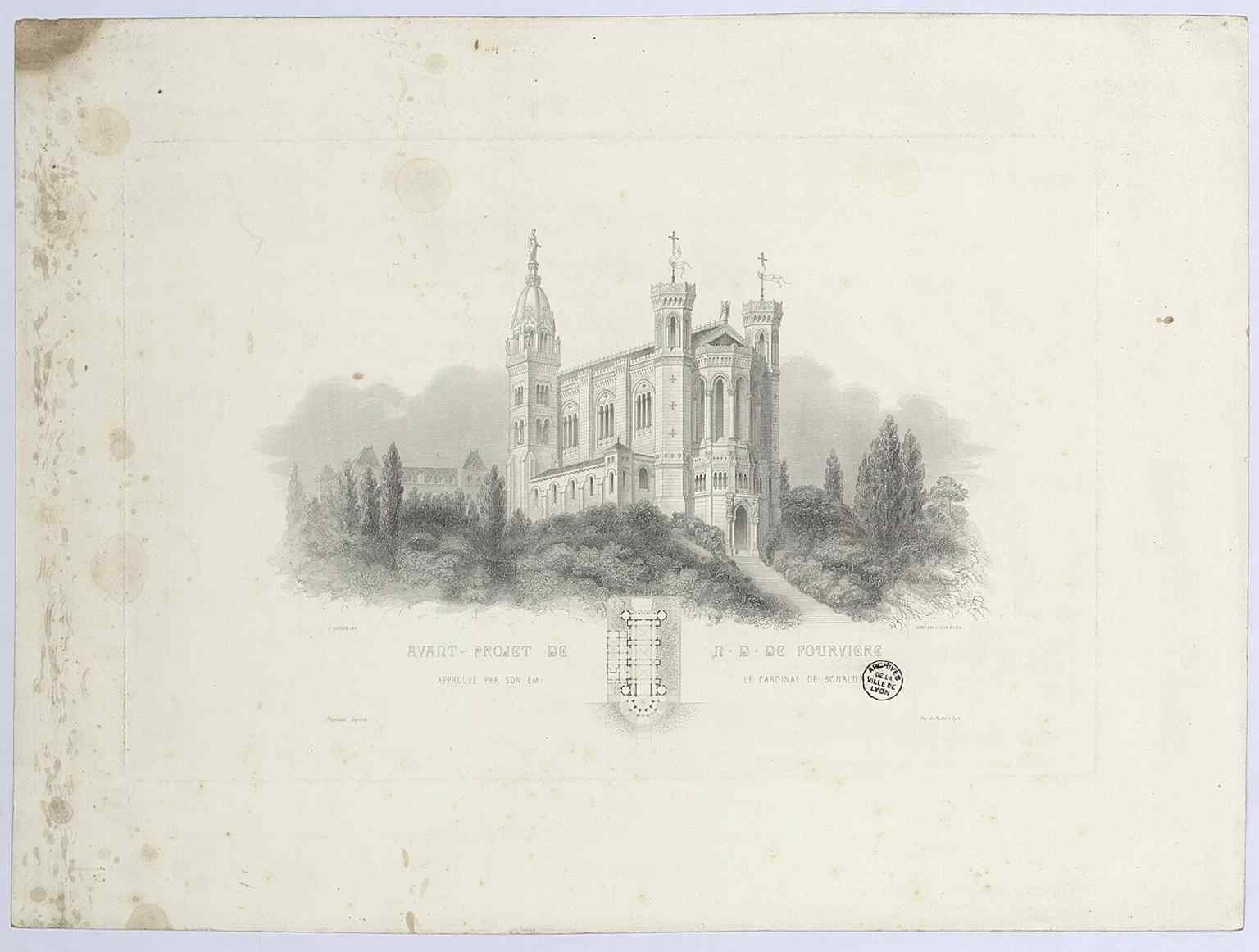
Bossan’s 1857 design drawing shows the basilica as an idea before construction, with the future sanctuary already dominating the hill above Lyon.
Bossan’s 1857 design drawing shows the basilica as an idea before construction, with the future sanctuary already dominating the hill above Lyon.Photo: Pierre Bossan, Wikimedia Commons, CC BY-SA 4.0. Cropped & resized.

Before moving on, cast your eyes over the city below and ask yourself: how many different Lyons are hiding in that view? We’re about to go looking for the older city tucked under the later one, starting at Lugdunum Museum, about a four-minute walk away. If you plan to come back inside later, the basilica generally opens daily from early morning into the evening.
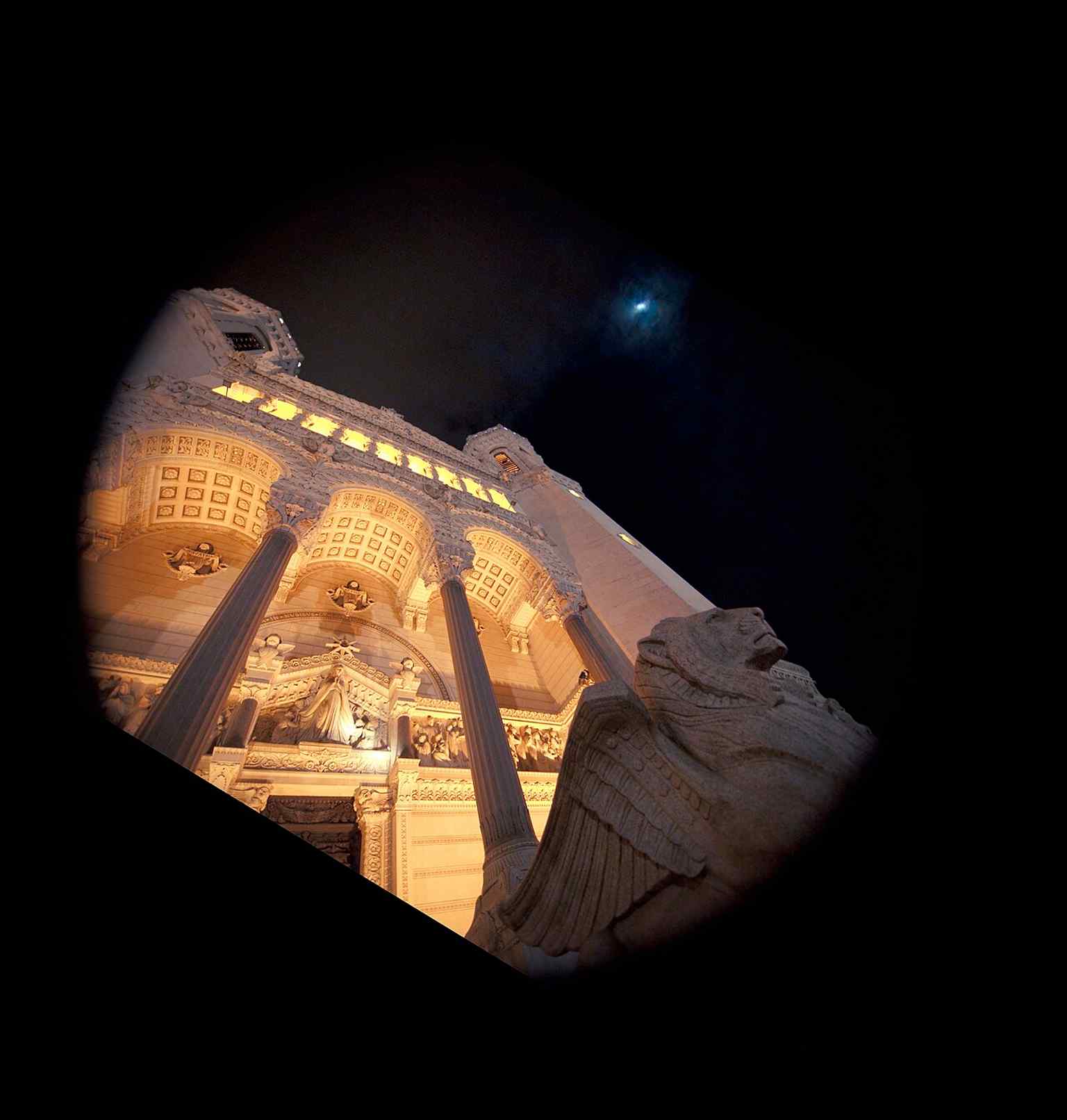
The Porte des Lions is one of Bossan’s most symbolic entrance designs, part of the carefully staged pilgrimage route through the monument.
The Porte des Lions is one of Bossan’s most symbolic entrance designs, part of the carefully staged pilgrimage route through the monument.Photo: SashiRolls, Wikimedia Commons, CC BY-SA 4.0. Cropped & resized.
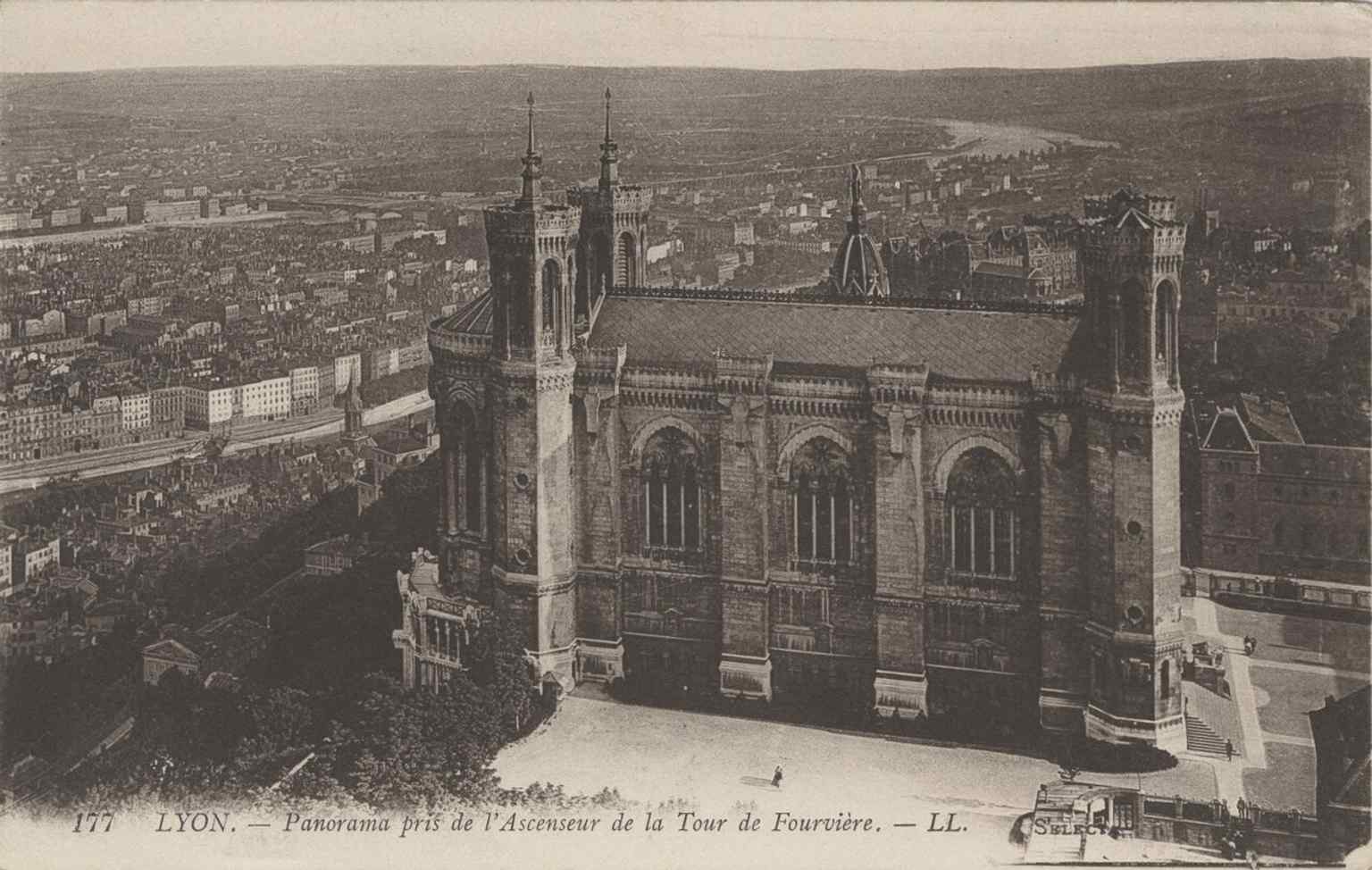
A rare early postcard view from around 1915 shows Fourvière as an established emblem of Lyon, long after the basilica’s 1896 consecration.
A rare early postcard view from around 1915 shows Fourvière as an established emblem of Lyon, long after the basilica’s 1896 consecration.Photo: Léon & Lévy, Wikimedia Commons, Public domain. Cropped & resized.
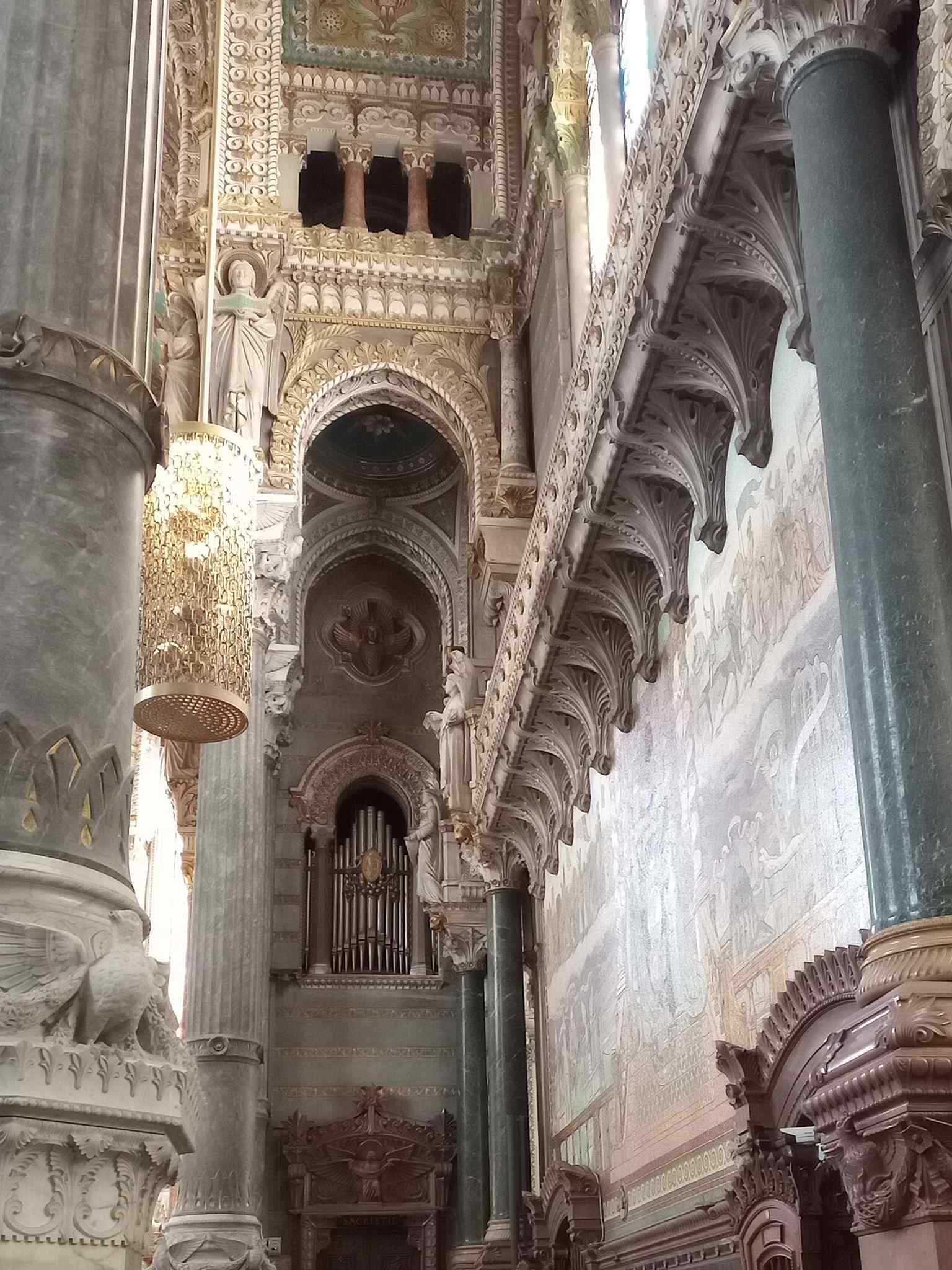
The organ side of the upper church reveals Fourvière’s richly decorated interior, where the monumental liturgy and music tradition still continue.
The organ side of the upper church reveals Fourvière’s richly decorated interior, where the monumental liturgy and music tradition still continue.Photo: Tibia Plena 8', Wikimedia Commons, CC BY-SA 4.0. Cropped & resized.
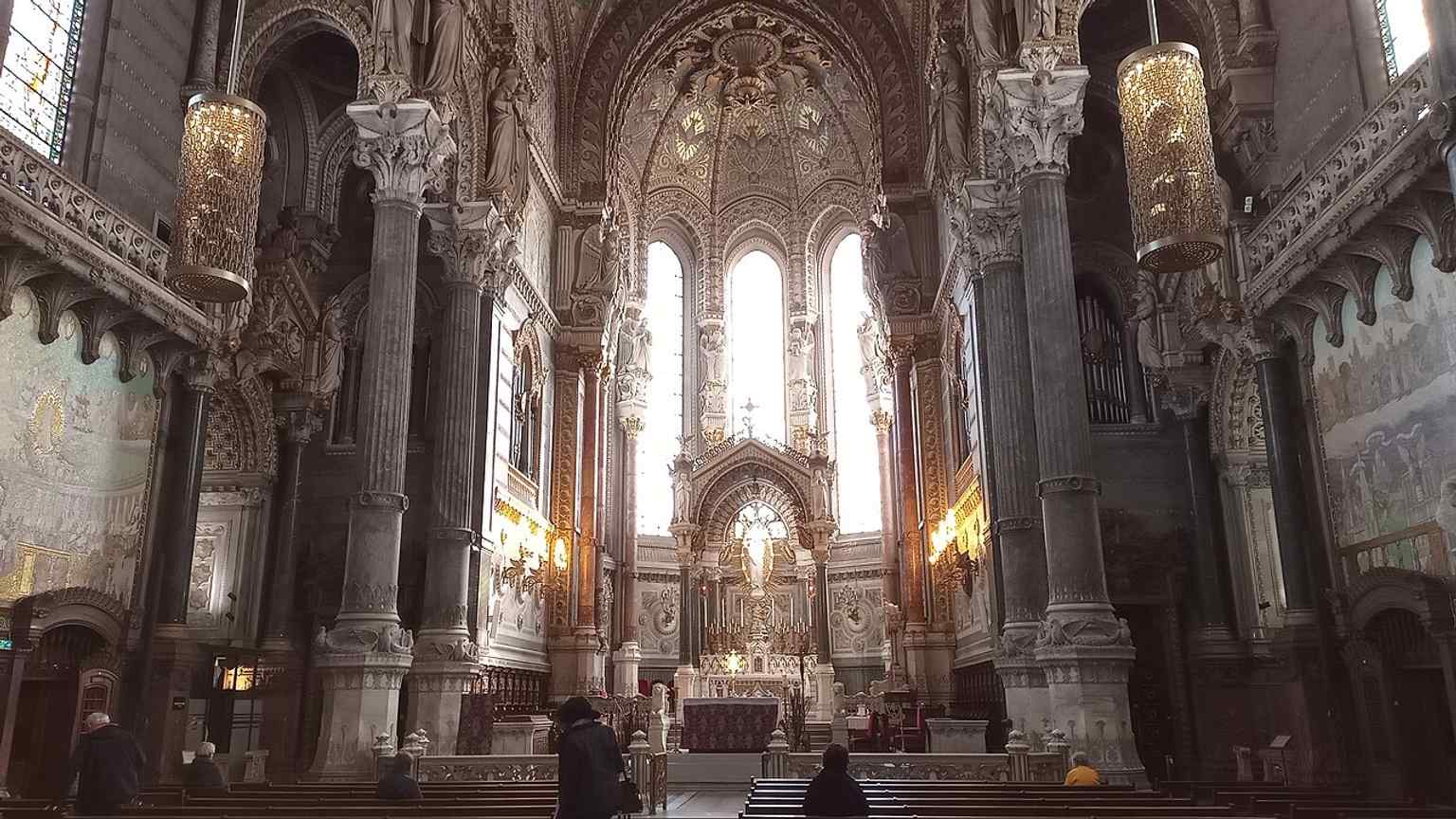
Looking into the choir highlights the basilica’s luminous upper church, the destination of the symbolic ascent from the darker lower level.
Looking into the choir highlights the basilica’s luminous upper church, the destination of the symbolic ascent from the darker lower level.Photo: Tibia Plena 8', Wikimedia Commons, CC BY-SA 4.0. Cropped & resized.
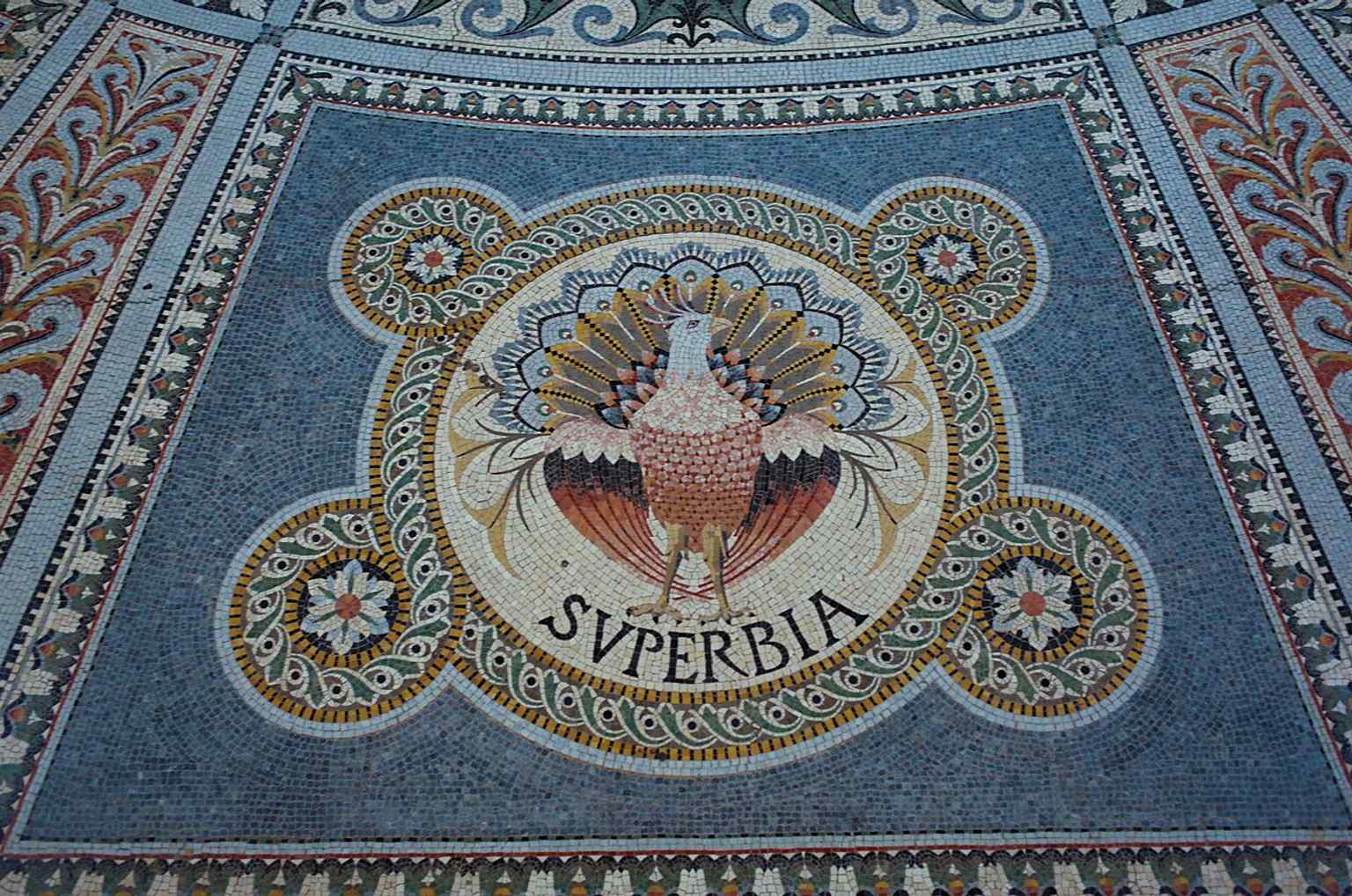
This allegorical medallion from the lower church shows the basilica’s dense moral iconography, where even vice and virtue are worked into the decoration.
This allegorical medallion from the lower church shows the basilica’s dense moral iconography, where even vice and virtue are worked into the decoration.Photo: Matteo Frigo, Wikimedia Commons, CC BY-SA 4.0. Cropped & resized.
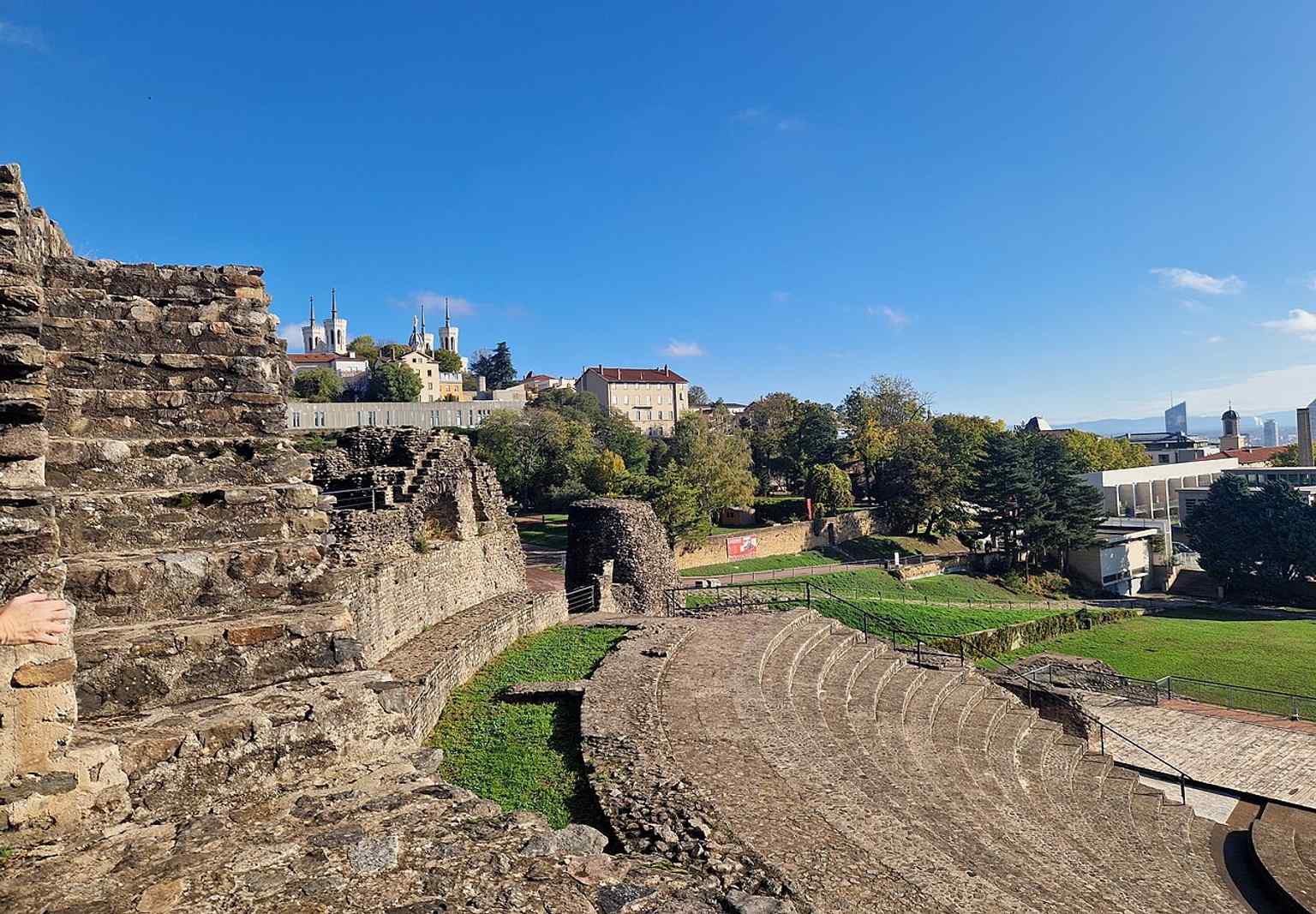
Seen from the Roman odeon, Fourvière rises above Lyon’s ancient layers, linking the basilica to the site of the old Roman hilltop city.
Seen from the Roman odeon, Fourvière rises above Lyon’s ancient layers, linking the basilica to the site of the old Roman hilltop city.Photo: Chris j wood, Wikimedia Commons, CC BY-SA 4.0. Cropped & resized.
arrow_back Back to Lyon Audio Tour: Historic Heritage
Loved by travellers

Thousands of tours started.
Plenty of opinions.

4.8 across the App Store and Google Play. Here's a few we keep coming back to.

starstarstarstarstar
This was a solid way to get to know Brighton without feeling like a tourist. The narration had depth and context, but didn't overdo it.
Christoph
Christoph
Brighton Tour
starstarstarstarstar
Started this tour with a croissant in one hand and zero expectations. The app just vibes with you, no pressure, just you, your headphones, and some cool stories.
download Get the app

Pop your headphones in.
Step outside.

Free to download. Tours in every city. Start in 60 seconds — no account, no card.

Download on the App StoreGet it on Google Play
starstarstarstarstar_half
4.8
AudaTours app icon
headphones
~ 4 min until your first tour starts
public
1,000+ cities worldwide
all_inclusive
AudaTours
Unlimited

Every tour. Every city. One subscription.

3097 tours2273 cities138 countries50+ languages