
Helsinki Audio Tour: Nightlife, Legends & Landmarks Unveiled
In the heart of Helsinki, beneath the shifting northern sky, stories linger where marble and modernity collide. This self-guided audio tour leads straight into the shadows and spotlight of the city, uncovering sights and secrets hidden in plain view—beyond the surface of busy squares and silent statues. Why did a single speech at the Finnish National Theatre nearly spark outrage? Who watches over Elielinaukio’s restless crowds while midnight mysteries unfold? And what forgotten scandal haunts the stern gaze of the Aleksis Kivi Memorial Statue, its meaning lost to passing footsteps? Move from monument to market, feeling the pulse of revolutions and rebellions beneath your feet. Each stop peels back Helsinki’s elegant facade, revealing invisible battles, scandals, and revelations that shaped the city forever. Set your own pace and let curiosity guide you. The city’s secrets are waiting—will you hear them whisper where history sleeps?
Tour preview
About this tour
- scheduleDuration 70–90 minsGo at your own pace
- straighten2.0 km walking routeFollow the guided path
- location_on
- wifi_offWorks offlineDownload once, use anywhere
- all_inclusiveLifetime accessReplay anytime, forever
- location_onStarts at Elielinaukio
Stops on this tour
lock_open 3 free previews · 10 unlock with purchase
Look for a broad stone-and-asphalt plaza laid out in long, straight lanes, with an old warehouse anchoring one end like a survivor from another age. At first glance, Elielinaukio…Read moreShow less
Open dedicated page →Look for a broad stone-and-asphalt plaza laid out in long, straight lanes, with an old warehouse anchoring one end like a survivor from another age.
At first glance, Elielinaukio seems gloriously ordinary: a bus square, practical and unsentimental, a place of departures, arrivals, waiting, and sudden decisions. Yet this is a fine place to begin, because central Helsinki likes to hide its older selves inside its busiest surfaces. Here, movement is the architecture. Routes fan out toward Töölö, Espoo, Vantaa; pedestrians cut across one another; vehicles glide in, pause, and vanish again. The district lives by transfer.
The square takes its name from the station’s architect, who gave Helsinki Central Station its commanding presence. He did not merely draw a station; he helped teach the city how to think on a monumental scale.
Now pause a moment and simply watch the patterns around you: people waiting, crossing, turning back, hurrying on. Ask yourself which of those motions will disappear in seconds, and which have defined this place for more than a century.
Because before buses ruled this space, trains and goods did. A small railway yard stood here, along with the quick-freight area known as the express goods station, a rough-edged working zone for wholesale traffic. To the west of the station were railway workshops and engine sheds. In other words, this elegant central square grew out of soot, cargo, and rail logistics. The vanished yard is not somewhere else; it is under your feet.
If you fancy it, have a look at the before-and-after image in the app; the change from the station’s western yard to this ordered terminal is quite striking.
After the old rail functions disappeared, the site spent a while as a car park, which feels almost like an intermission. Then the city reshaped it in the late nineteen nineties as part of the new plan for the south side of Töölönlahti. The bus terminal opened on the thirtieth of October, two thousand. Even its equipment tells a little story about the moment: drivers used T-V monitors to see behind the bus when reversing away from the platform, a very turn-of-the-millennium touch.
And yet the older layers persist. The most surprising trace is the Vltava building at the southern end. It began life in nineteen oh nine as a warehouse, part of the railway goods and workshop environment. The City Museum considers it the oldest surviving part of the whole central station complex, and the last clear memory of Töölönlahti’s broad rail yard.
On your screen, the wider photo shows how tightly this terminal is stitched into the heart of the city.
Even now, Elielinaukio is not settled. Architects, developers, historians, and citizens have all argued over what should rise here next. The latest proposal would bring new building, but it must respect the historic setting and keep the warehouse structure. Around this district, plans rarely arrive alone; they bring debate, delay, revision, and another future waiting its turn.
When you are ready, we’ll walk on to Sokos in the centre of Helsinki, about four minutes away.
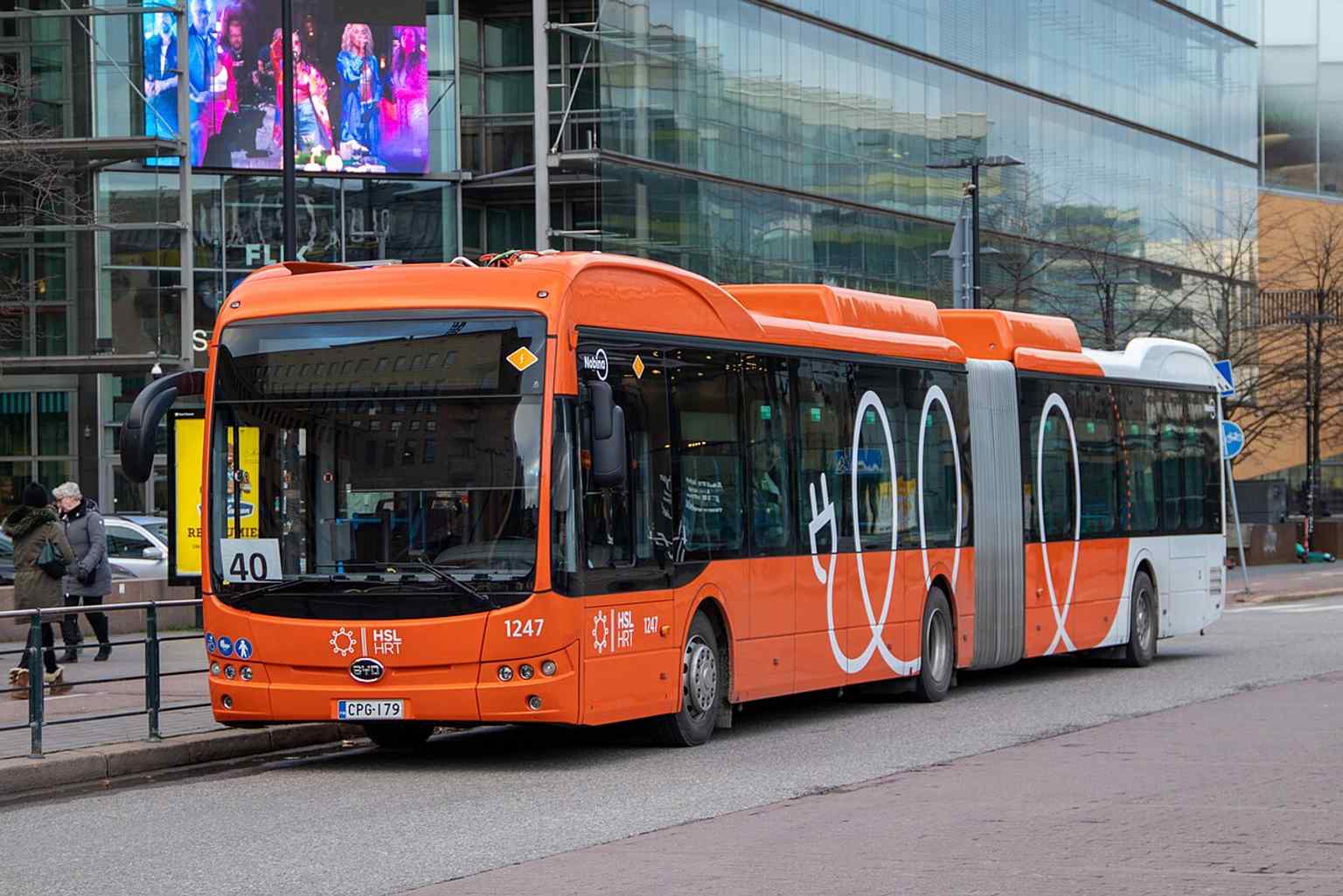
An articulated route 40 bus at Elielinaukio, one of the square’s core services linking central Helsinki with the western suburbs.Photo: Coen, Wikimedia Commons, CC BY-SA 4.0. Cropped & resized. On your right stands a pale stone and glass block with long horizontal window bands and a taller hotel section rising above it, a crisp postwar facade that gives Sokos its…Read moreShow less
Open dedicated page →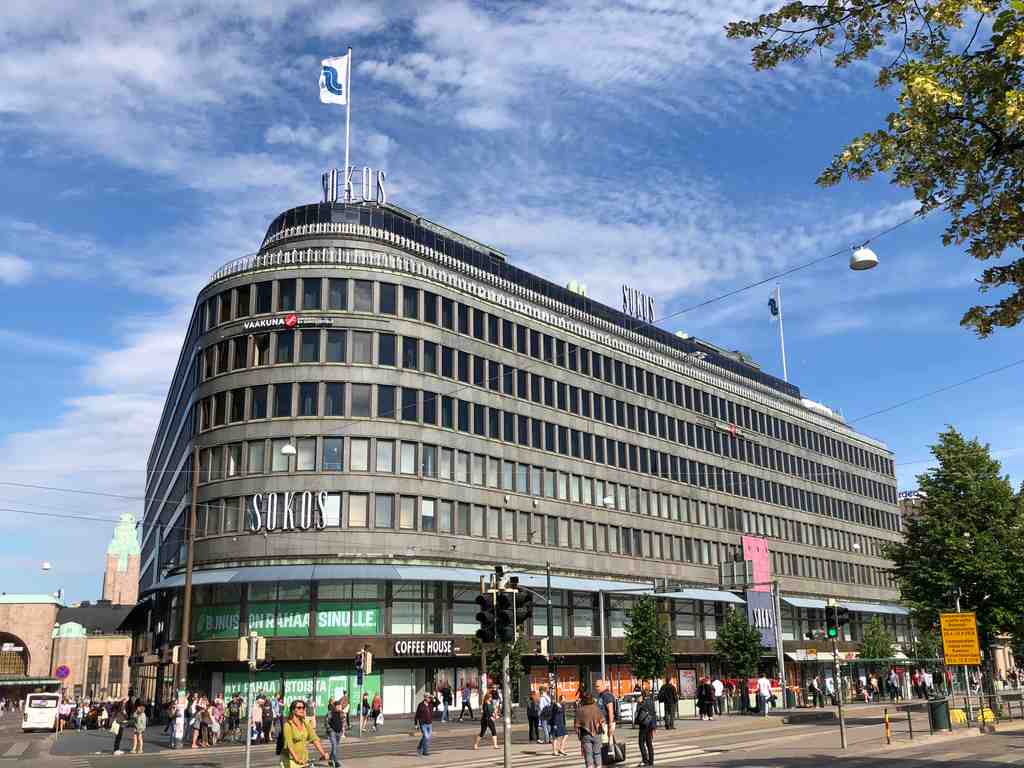
Sokos in the center of HelsinkiPhoto: Vadelmavene, Wikimedia Commons, CC BY-SA 4.0. Cropped & resized. On your right stands a pale stone and glass block with long horizontal window bands and a taller hotel section rising above it, a crisp postwar facade that gives Sokos its unmistakable profile.
Sokos likes to look effortless. That, of course, is part of the performance.
Architect Erkki Huttunen began planning this building in nineteen thirty-eight, when Helsinki expected to greet the Olympic year of nineteen forty with a brand-new department store at its heart. Locals sometimes smile at that detail, because it tells you something important about this city: modernity here often arrived late. By delayed modernity, I mean a future imagined on time, designed with confidence, then postponed by war, shortages, and bureaucracy before finally appearing in stone and glass. Huttunen drew a modern capital; history made him wait more than a decade to see it standing here.
When Sokos finally opened on the seventeenth of March, nineteen fifty-two, at noon, it entered the city like a carefully timed entrance cue. The store filled the lower floors, and above it came Hotel Vaakuna, which opened that June in the same building. If you glance at the image on your screen, you can see how firmly this house sits in the middle of the city’s shopping and transport knot, exactly where Helsinki wanted to present its polished face. The glamour upstairs was not subtle. At the Vaakuna opening on the tenth of June, nineteen fifty-two, invited guests ate foie gras, caviar, and pork fillet with salsify and marmalade, while President Juho Kusti Paasikivi and other state leaders gave the occasion the air of a national premiere. A department store below, a hotel above: shopping, sleeping, dining, and status all stacked into one vertical little world.
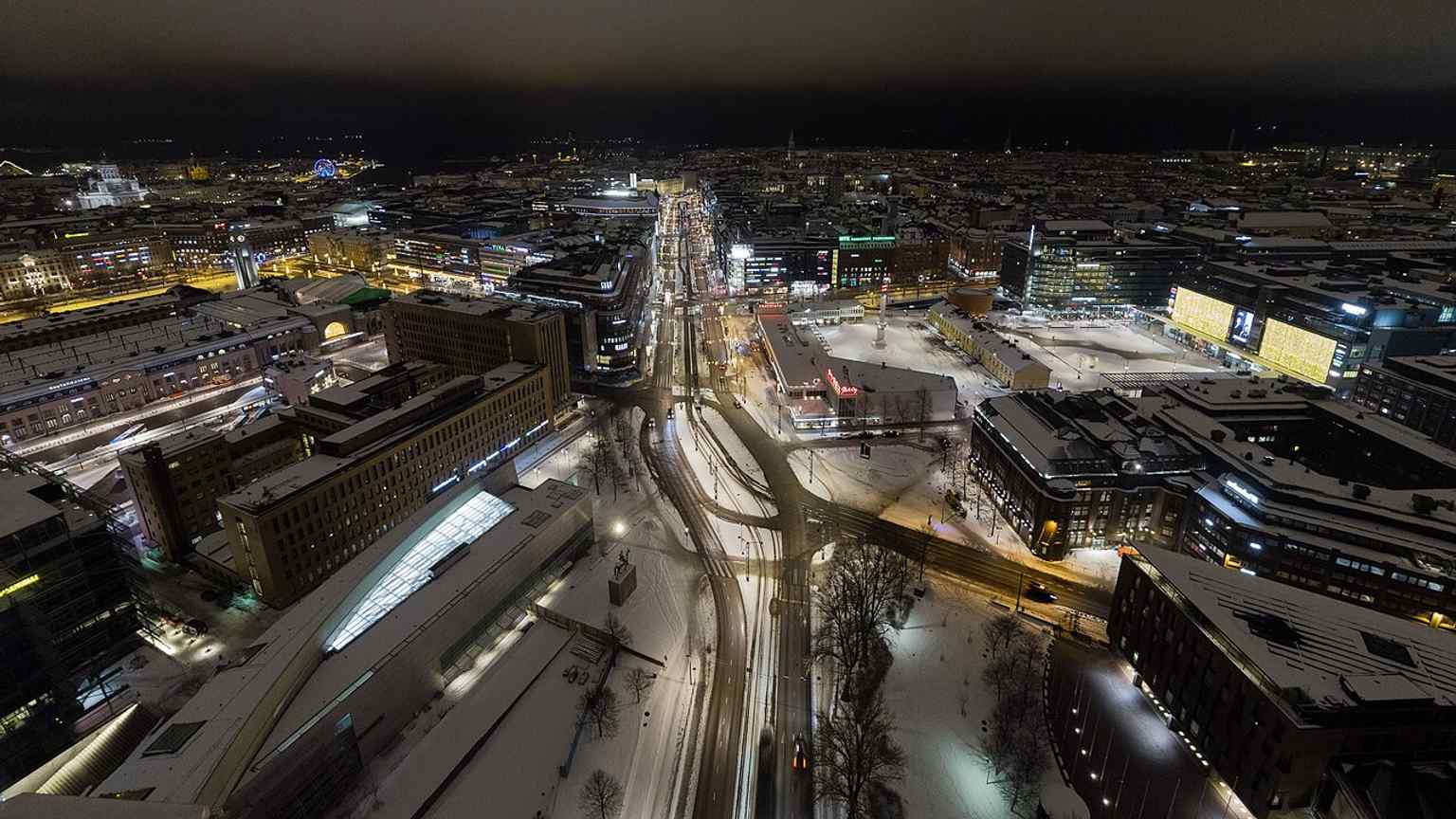
Aerial view over Mannerheimintie and the city-center blocks around Sokos, placing the landmark in the heart of Helsinki’s central shopping and transport hub.Photo: Joneikifi, Wikimedia Commons, CC BY-SA 4.0. Cropped & resized. And the selling itself felt new. Early Sokos arranged goods for speed and clarity, pushing customers toward self-service, which simply means choosing directly from open displays instead of waiting for a clerk to fetch everything for you. That was modern retail theatre in Helsinki. There were dozens of display windows, specialist departments, restaurants, and, in the lobby, even a fountain with Gunnar Finne’s red granite sculpture Grotesque at its centre, still protected today along with much of the original hotel interior.
If you look at the facade in the app image, the clean lines make perfect sense once you know Huttunen wanted this to announce a fresh era. It became his last major design before his death in nineteen fifty-six.
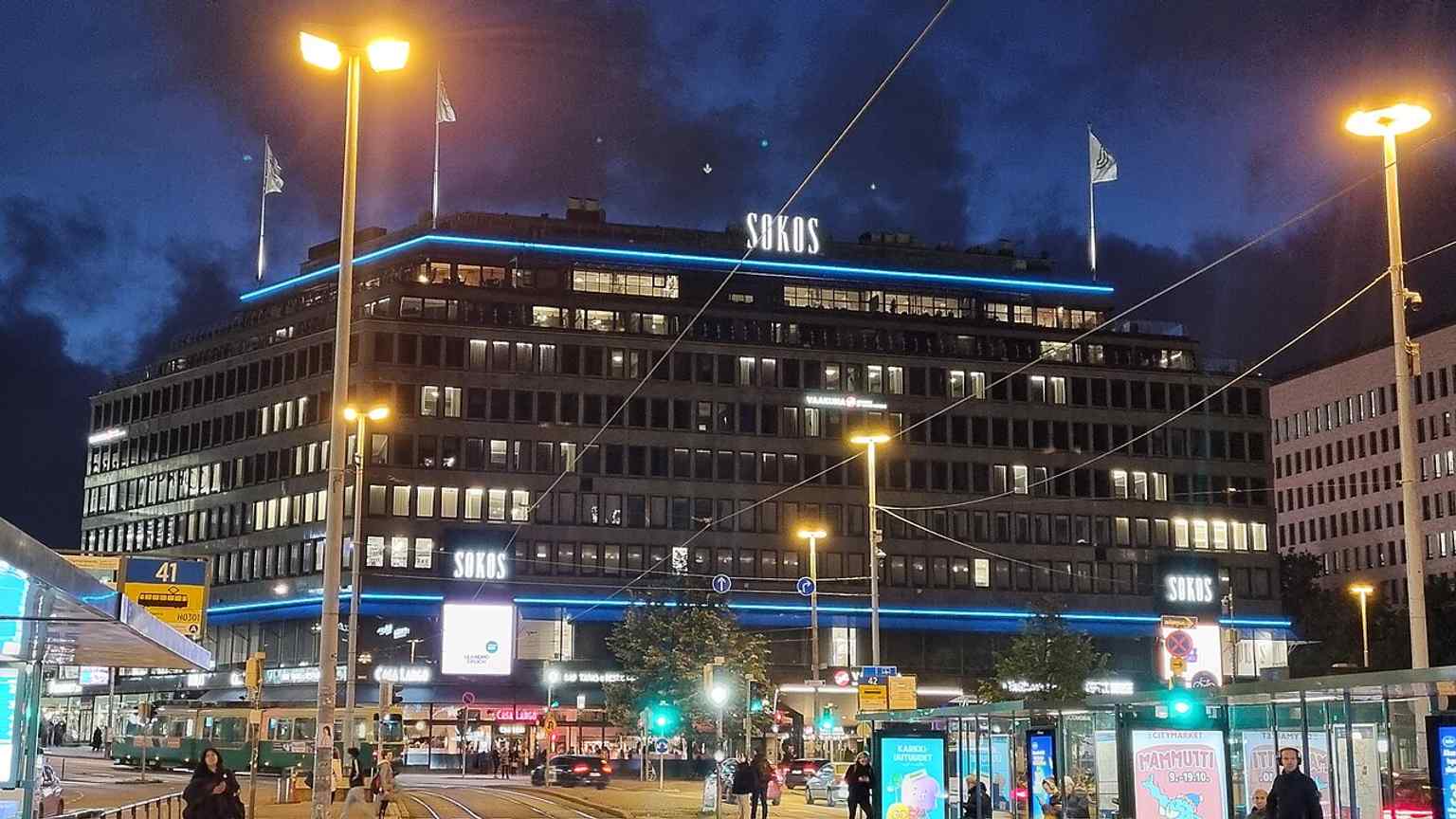
Sokos department store on Mannerheimintie, the postwar Helsinki landmark that opened in 1952 and later shared the building with Hotel Vaakuna.Photo: Cope Baronet, Wikimedia Commons, CC BY-SA 4.0. Cropped & resized. That is central Helsinki for you: it debuts itself with style, then lets slip that the grand entrance came after years of delay. In about three minutes, we’ll continue to the Lantern Bearers. If you plan to come back inside later, Sokos usually opens from nine to nine on weekdays, with shorter hours at the weekend.
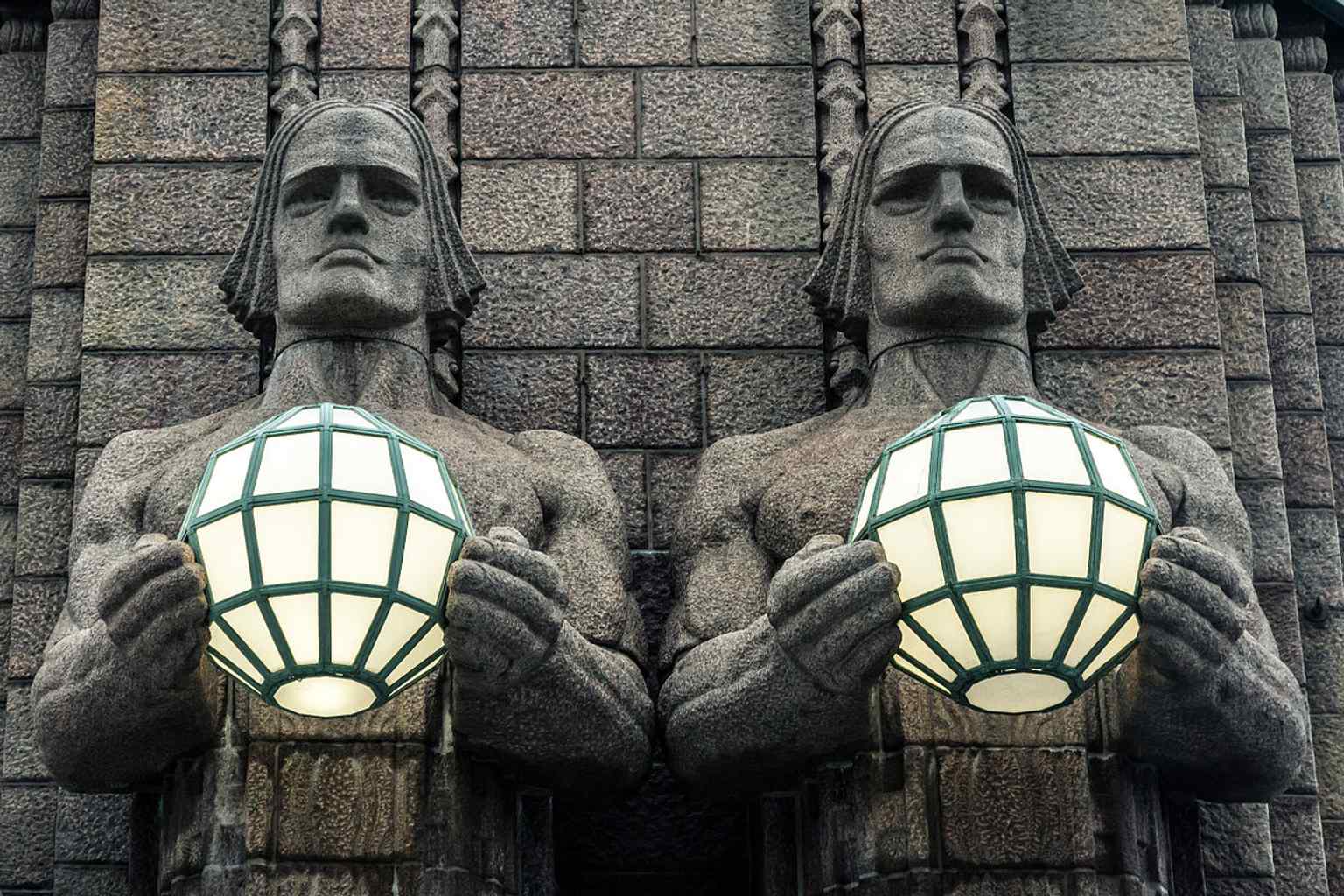
On your right, look for four colossal granite men built into the station entrance, each holding a round lamp, their square faces and cropped hair making the façade impossible to…Read moreShow less
Open dedicated page →On your right, look for four colossal granite men built into the station entrance, each holding a round lamp, their square faces and cropped hair making the façade impossible to mistake.
These are the Lantern Bearers, completed in nineteen fourteen by the sculptor Emil Wikström, five years before the railway station itself opened. For a curious stretch of time, they stood here guarding a threshold that had not yet begun its full public life, as if Helsinki had placed its actors on stage before the audience arrived.
Eliel Saarinen, who designed this station, understood that a great arrival point should do more than function well. He gave Helsinki a granite drama in the flowing Jugend style, the northern version of art nouveau, where architecture turns symbolic and a doorway becomes a declaration. In his earliest ideas, bears flanked the entrance, but he abandoned them and asked for these giant men instead. It was a shrewd choice: bears would have decorated the station, but these figures almost become part of its structure, like ancient guardians holding the building’s meaning in their hands.
And they are ancient in spirit. Their upper bodies are muscular and unmistakably human, yet below the waist they taper into patterned pillar forms. That shape comes from the herm, a classical architectural figure that is part person, part column. So what you see is not quite statue and not quite support. It is something stranger: a human presence turned into civic stone.
Look at the faces. The story goes that Wikström gave them the features of a real man, Jalmari Lehtinen, known as Kappion Jalmari, a crofter and gardener from the sculptor’s Visavuori estate. Suddenly these stern giants become more intimate. A working man’s face, enlarged into myth, now watches generations arrive and depart.
If you glance at the close-up image in the app, the nearby people make the scale of these figures wonderfully clear. And if you fancy it, compare the historic view with today’s brighter forecourt; the composition has held its nerve across decades of travellers.
Later, the railway company, VR, gave them a second life in advertisements from two thousand and two onward. There, the Kivimiehet, the Stone Men, wandered Finland, holidayed in Lapland, even attended a statue conference in Verona. That campaign made them famous, but Helsinki already knew them well; in a two thousand and eight poll, they ranked among the city’s most loved outdoor sculptures.
They even left their posts briefly in two thousand and thirteen, when restorers dismantled them, cleaned the granite, and fitted new L-E-D lamps. The entrance looked oddly bereft without them.
Before you move on, study those jaws and lamp-bearing arms. Do they feel purely heroic, or do you sense the gardener still hiding in the stone? Helsinki announces itself here like a performance: monumental, slightly theatrical, and very sure of its entrance. Postitalo is about a minute away, and these guardians keep watch here around the clock.
A wide view of Helsinki Central Railway Station, the Eliel Saarinen landmark whose main entrance is guarded by the Lantern Bearers.Photo: User:Matthias Süßen, Wikimedia Commons, CC BY-SA 3.0. Cropped & resized.
Show 10 more stopsShow fewer stopsexpand_moreexpand_less
On your left stands a broad, yellow clinker-brick building with clean horizontal lines and a firm rectangular mass, its facade distinguished by the subtly postmark-patterned brick…Read moreShow less
Open dedicated page →On your left stands a broad, yellow clinker-brick building with clean horizontal lines and a firm rectangular mass, its facade distinguished by the subtly postmark-patterned brick that gives Postitalo its own quiet signature.
This is Postitalo, the former headquarters of Finland’s Post and Telegraph service, completed in nineteen thirty-eight. It looks calm, almost disciplined, but that composure is slightly deceptive. This place worked like a control room for the whole city: letters, telegrams, phone traffic, staff, machinery, public counters, all arranged with the precision of a well-run stage set.
Its style is functionalism, a modern design language that prized efficiency, clarity, and speed. You can feel that in the facade from where you stand at the front-right corner: the building does not flirt, it organizes. Yet even here there is drama. In the competition of nineteen thirty-four, two ambitious young architects, Jorma Järvi and Erik Lindroos, rose above a field that included Alvar Aalto. Järvi was only twenty-six. The authorities admired their bold modernism, then promptly worried they were too young to trust with such an important building. So they brought in Kaarlo Borg, an older architect, to steady the work. That tension between youth and caution is frozen into the building itself: daring, but supervised; modern, but never reckless.
If you glance at the historic view on your screen, you can see how firmly the building holds Mannerheiminaukio, almost like a civic machine dressed as architecture.
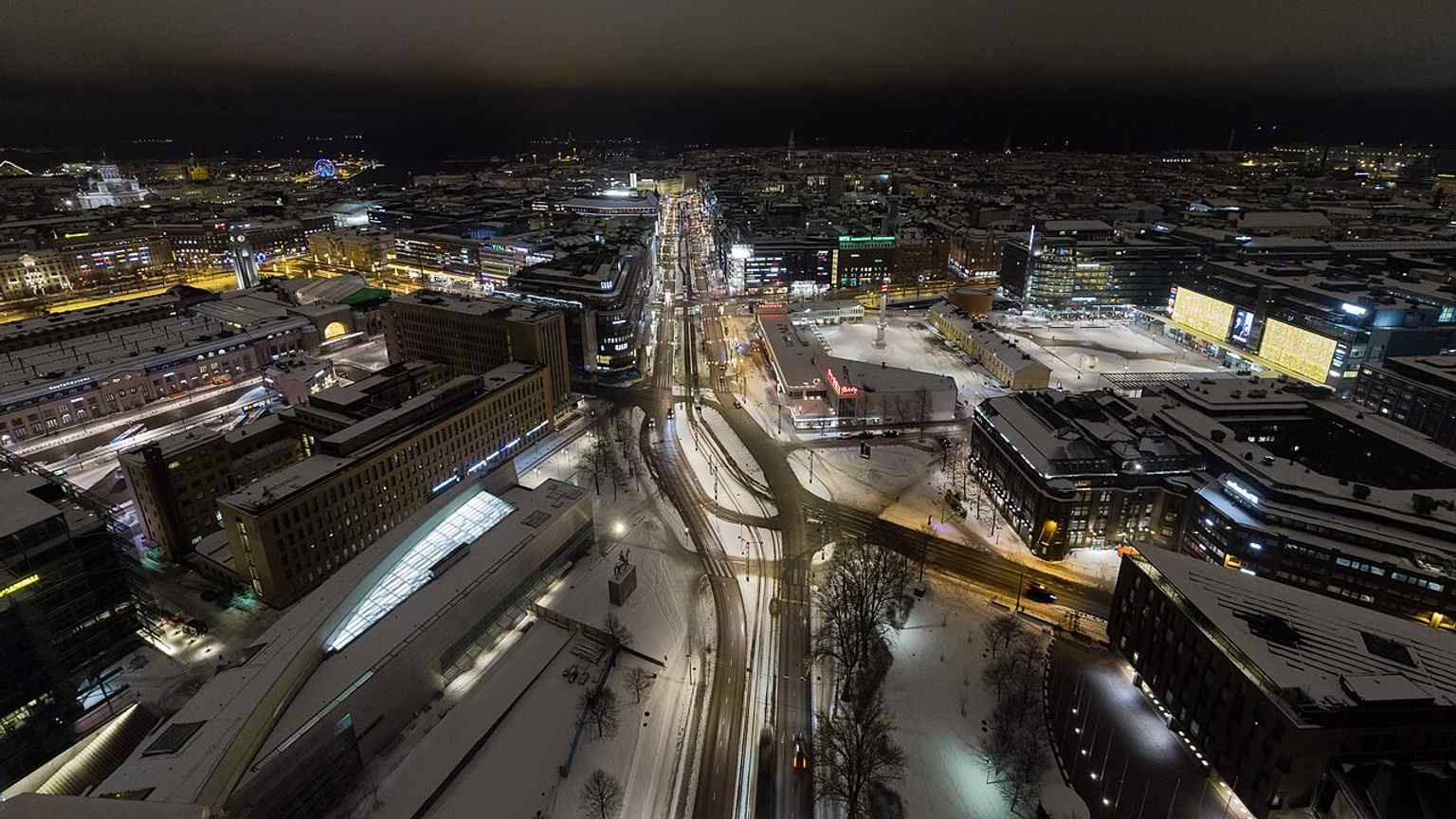
Night view from Mannerheiminaukio, the square where Postitalo’s main entrance faces and where the functionalist building anchors the city center.Photo: Joneikifi, Wikimedia Commons, CC BY-SA 4.0. Cropped & resized. Most people look at the yellow walls and stop there. A local would tell you the real Postitalo once began below your feet. Two underground levels housed heat distribution, electrical control rooms, the ventilation centre, a backup power plant, storage, and even equipment for cleaning mail sacks. Not just sorting letters, then, but scrubbing, powering, circulating, correcting. Beneath this polished facade sat an entire hidden organism, humming away so the public saw only ease. Even the interior followed that logic: custom furniture, careful lighting by notable designers such as Paavo Tynell, and open service counters that avoided the old glass barriers between clerk and customer.
The site itself had an earlier life too. Workers cleared away old gasworks buildings before this new headquarters could rise, so once again Helsinki replaced one engine with another.
Later, the building changed with the city: extra floors arrived in the nineteen fifties, and in nineteen fifty-two the roof even served as Helsinki’s first helicopter landing pad during the Olympics. Elegant, yes. But elegance here always depended on systems, labour, and nerves hidden from view.
In about four minutes, Kaisantunneli will show you another passageway where the city keeps its movement slightly out of sight. If you want to step inside here later, the building is generally open daily, with shorter hours on weekends.
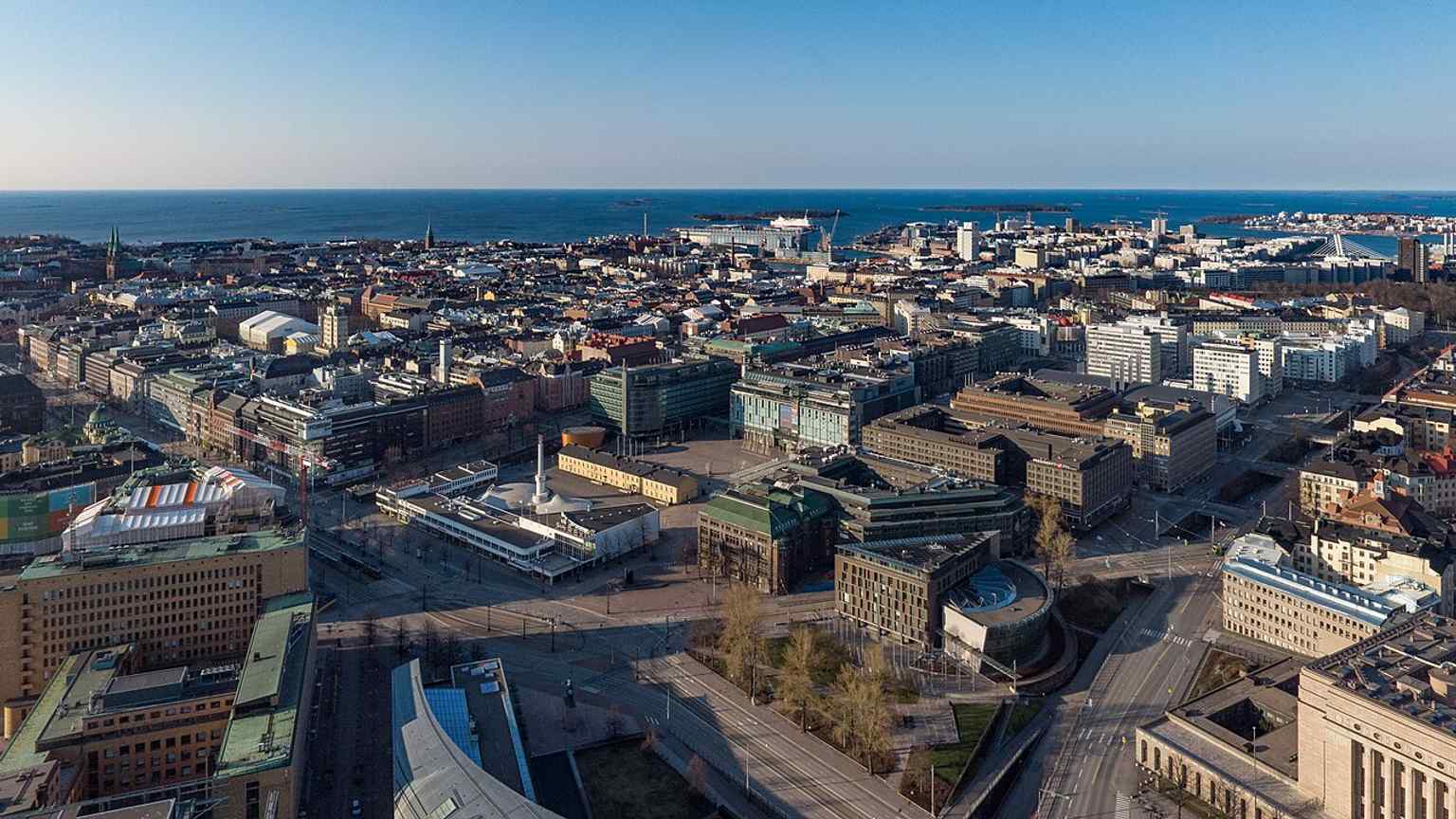
Aerial view over central Helsinki near Mannerheimintie, helping place Postitalo in its urban setting by Mannerheiminaukio and the surrounding civic core.Photo: Joneikifi, Wikimedia Commons, CC BY-SA 4.0. Cropped & resized. Look for a broad, curving concrete tunnel entrance with a pale metal-lined ceiling and a smooth, scooped opening slipping beneath the railway tracks. This is Kaisantunneli,…Read moreShow less
Open dedicated page →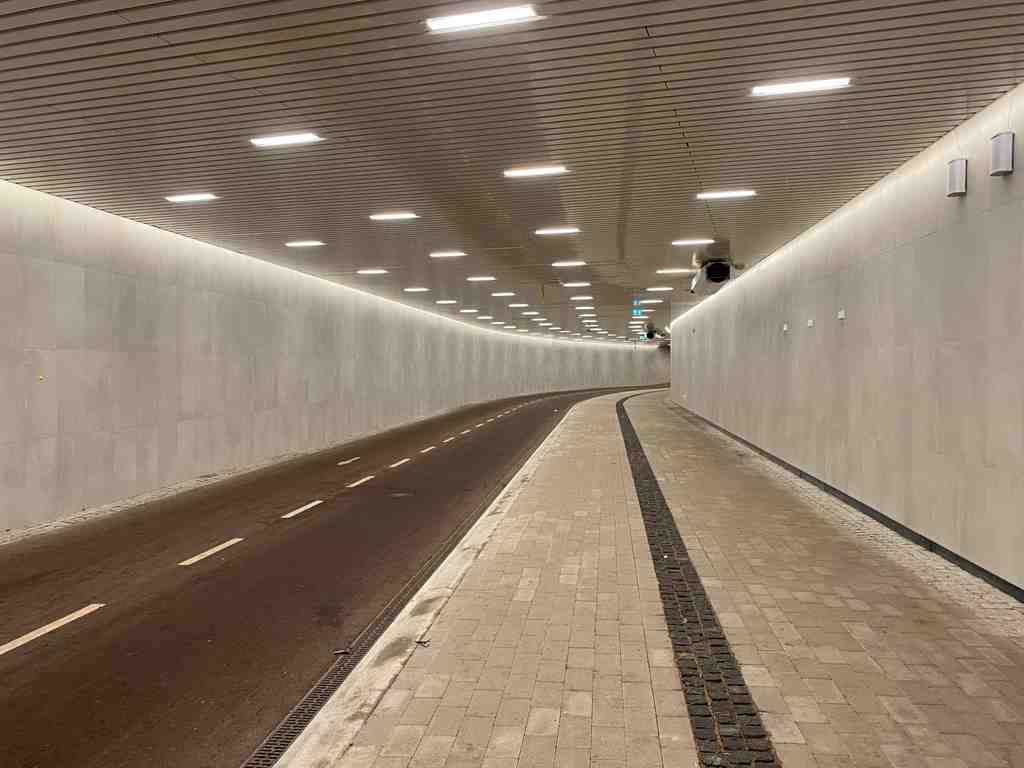
KaisantunneliPhoto: Roopeank, Wikimedia Commons, CC BY-SA 4.0. Cropped & resized. Look for a broad, curving concrete tunnel entrance with a pale metal-lined ceiling and a smooth, scooped opening slipping beneath the railway tracks.
This is Kaisantunneli, Helsinki’s new shortcut: a precise, quietly confident passage for cyclists and pedestrians running under the central station between Töölönlahdenkatu and Kaisaniemi Park. It opened on the fourth of May, twenty twenty-four, but it already feels like part of the city’s deeper logic - another route in a district that has always worried about how bodies move, where they cross, and how safely they can share the same ground.
Its curve is no flourish. Designer Matti Tapaninen chose a gentle bend with a radius of one hundred and twenty metres so people could see well ahead, while the tunnel neatly avoided platform stairs and hidden underground cables. That small elegance matters. The whole passage measures about two hundred and twenty metres long and eight metres wide, with a four-metre lane for bicycles and a three-and-a-half-metre lane for walkers. In other words: separation without hostility, speed without chaos.
If you glance at the image in the app, the interior makes that intention beautifully clear. The ceiling is lined with white aluminium slats - fifteen kilometres of them, in total. Engineers made them thicker than usual to resist vandalism, and their pale surface throws light back into the space, so the tunnel feels open rather than compressed.
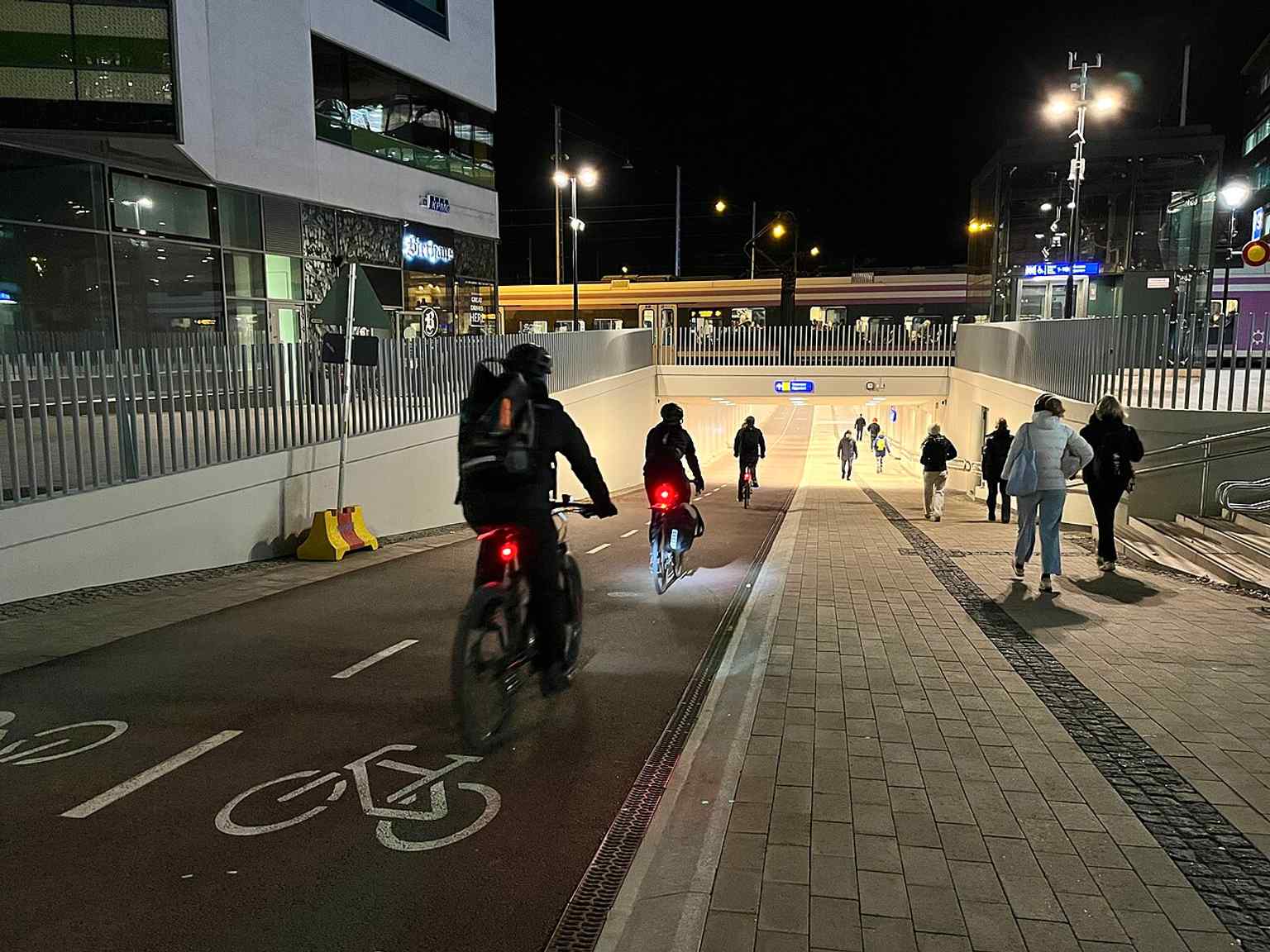
The tunnel’s nighttime interior in use, highlighting the dedicated pedestrian and bicycle route linking the station area to the city cycling network.Photo: Merja Wesander, Wikimedia Commons, CC BY 4.0. Cropped & resized. That smoothness came at a price in effort. Building here, under one of the busiest railway sites in the country, became one of Helsinki’s hardest construction jobs. Project director Juha Viitala worked with tightly timed blasting windows - one hundred and twenty-six of them - each lasting only a few minutes, just long enough to stop train traffic, clear passengers, blast, and reopen the routes. Builders dug the trench from above, then roofed it over at the end. And beneath the surface, the city revealed its older selves: unmapped walls, timber pile structures, cables no plan had fully captured. Those discoveries delayed the opening, but they also tell you something essential about central Helsinki. Nothing here arrives on blank ground.
Take a look at the construction image and you can sense that hidden struggle for yourself. Today the tunnel links directly to Baana and could carry as many as ten thousand cyclists a day, while easing the dangerous tangle that used to build on Kaivokatu and Elielinaukio.
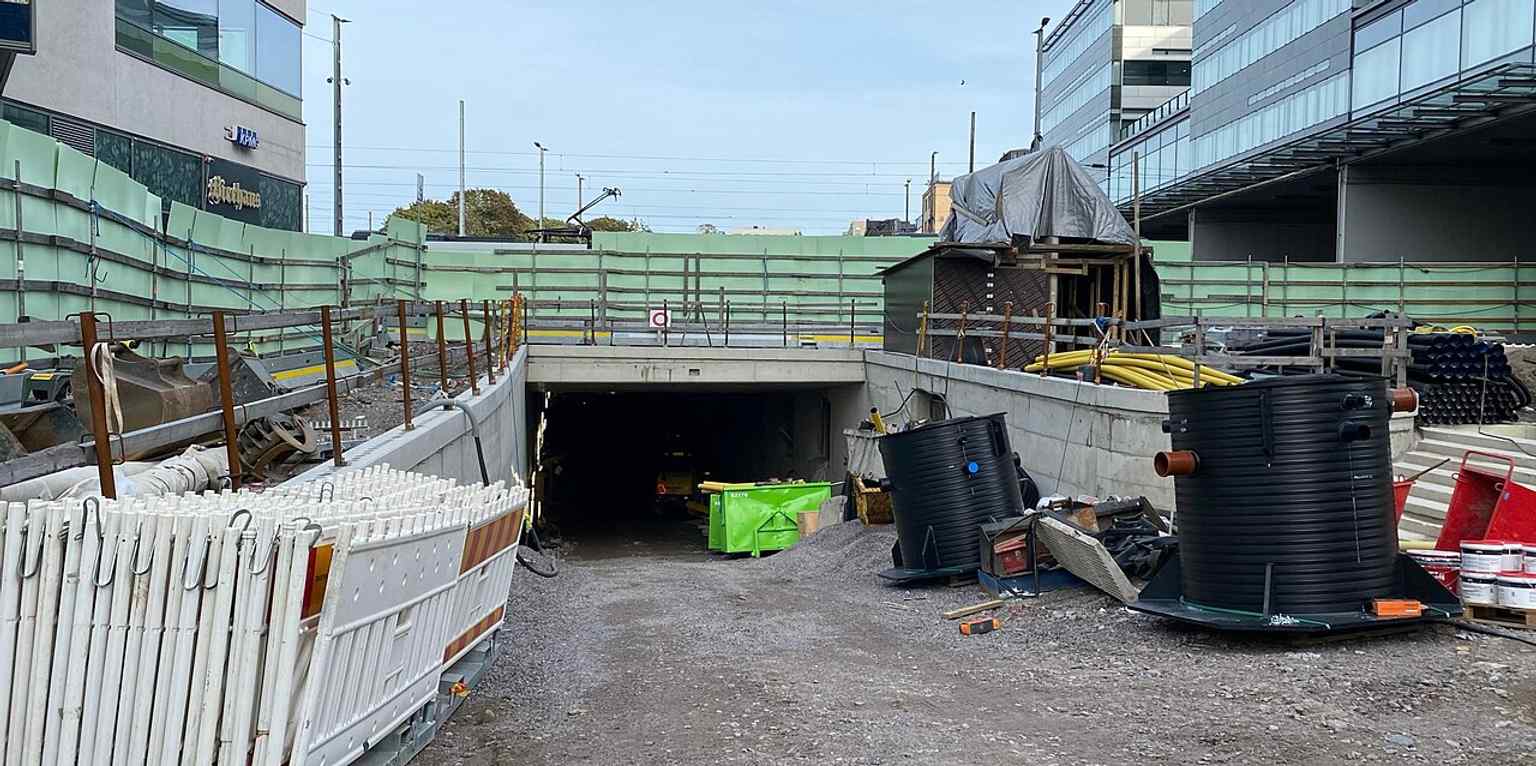
Western entrance under construction in September 2023, when the tunnel was still being built beneath Helsinki Central Station.Photo: Roopeank, Wikimedia Commons, CC BY-SA 4.0. Cropped & resized. So this polished new passage is not merely modern infrastructure. It is memory with good lighting: a new route shaped by old obstacles, buried remains, and the city’s long determination to keep people moving. In about four minutes, at the Aleksis Kivi Memorial Statue, that movement becomes something less mechanical and far more theatrical.
On your left rises a rugged grey-granite theatre with steep gables, tall arched windows, and a tower-like corner that makes it feel almost like a northern castle. This is the…Read moreShow less
Open dedicated page →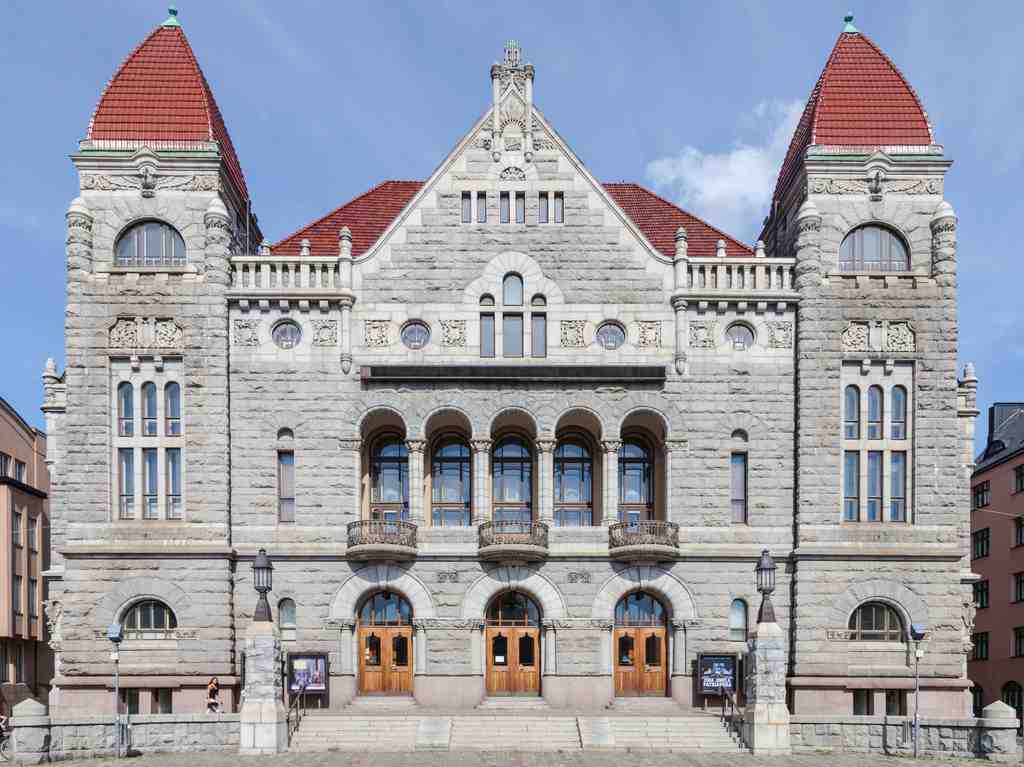
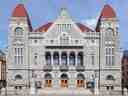
Finnish National TheatrePhoto: Diego Delso, Wikimedia Commons, CC BY-SA 3.0. Cropped & resized. On your left rises a rugged grey-granite theatre with steep gables, tall arched windows, and a tower-like corner that makes it feel almost like a northern castle.
This is the Finnish National Theatre, and for Helsinki it has never been only a building. It is the place where Finnish stepped forward as a public language of art. The company began in eighteen seventy-two under the name Suomalainen Teatteri, the oldest professional Finnish-language theatre in the country, after thinkers like Fredrik Cygnaeus and the determined director Kaarlo Bergbom argued that the stage should speak to the whole nation, not just a cultured circle in Swedish.
And here is the first little reversal in the story: this “national” theatre did not begin grandly in the capital at all. In its early years it travelled through places such as Pori, Tampere, Turku and Viipuri, carrying plays to audiences beyond Helsinki. Even now that restlessness remains. Since two thousand and ten, its touring stage has taken performances into prisons, health care units and reception centres, reaching people who cannot easily come here themselves. So this theatre has always moved outward, even when it seems planted in stone.
The stone came later. In nineteen oh two, architect Onni Tarjanne gave the company this great home on Railway Square in a National Romantic style, meaning architecture that used rough local materials and medieval-looking forms to make a young nation seem ancient, weighty and unmistakably its own. The granite came from Uusikaupunki, and it gives the facade that stern, almost legendary gravity. If you fancy it, have a look at the before-and-after image in the app; it shows the nineteen-thirties extension rising beside the original theatre before the whole frontage settled into the form you see now. Inside, the arguments never stopped. In eighteen eighty-five, Minna Canth’s The Worker’s Wife shocked audiences by showing urban poverty plainly and attacking a law that gave husbands control over their wives’ property. Conservatives called it indecent; reformers embraced it. That is the thing about this place: it stages the nation, but it also needles it.
And then, rather deliciously, the theatre refuses to stay entirely rational. People here still speak, quite calmly, of Urho Somersalmi. He spent years playing heroic roles, but after retirement he fell into deep depression; in nineteen sixty-two he killed his wife, the actress Aili Somersalmi, before taking his own life. Staff have long said that his ghost still wanders these corridors, sometimes with the axe in his hand. It is the building’s darkest afterimage: a man trained to live before an audience, unable to leave the stage.
He is not said to be alone. There is also the Grey Lady, drifting as if searching costume rooms or a balcony for something never found. So while trains, shoppers and office workers stream past outside, this is perhaps Helsinki’s most honest building. It admits that public life is theatre, and that some roles cling long after the applause ends.
When you are ready, head on to Railway Square Metro Station, about a minute away, and carry that small shiver with you. The theatre is generally open from ten to five, Monday through Saturday, and closes on Sunday.
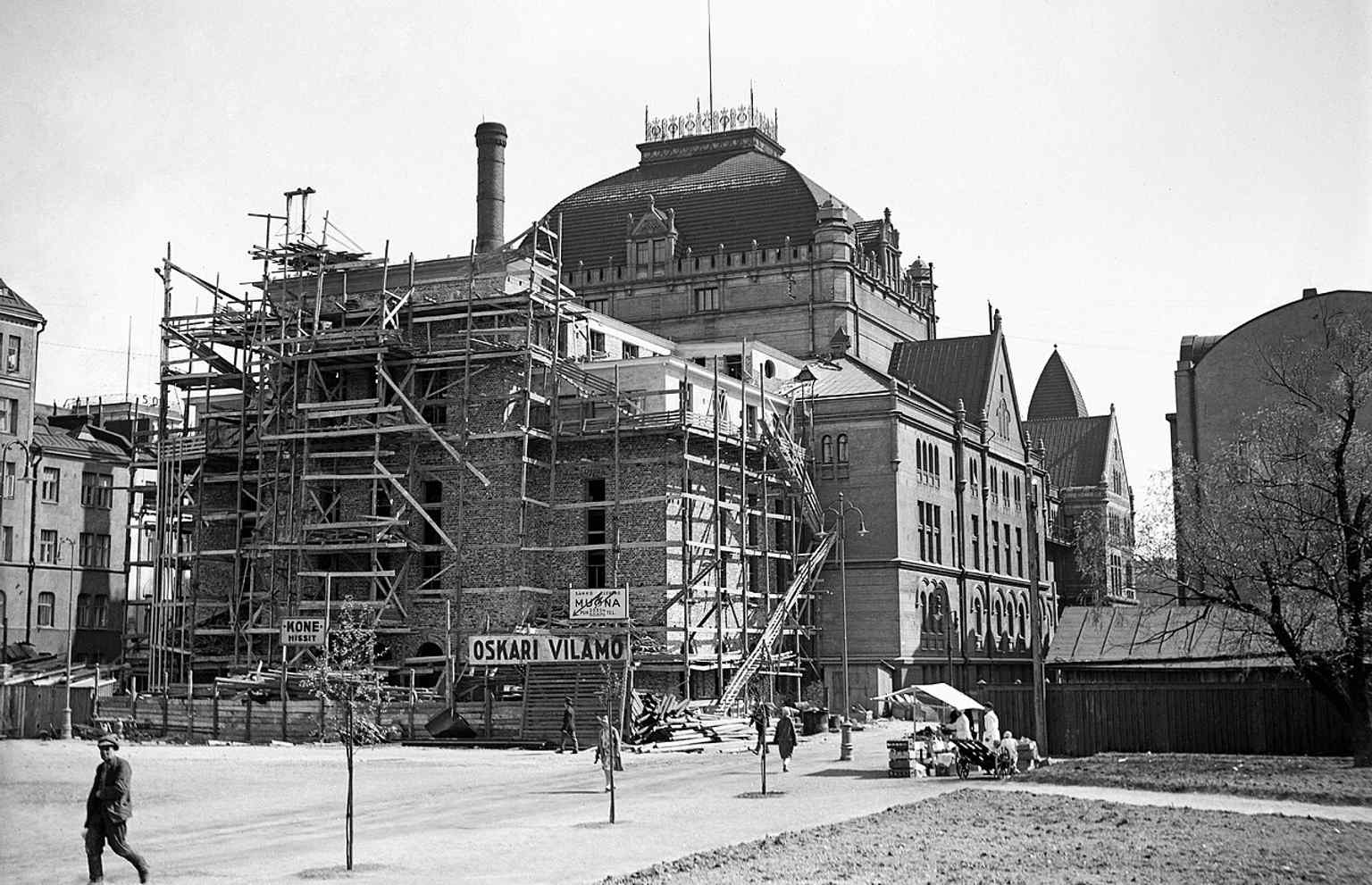
The theatre’s 1930 expansion under construction, showing how the building grew after the 1902 opening on the edge of Rautatientori.Photo: Alkamann, Wikimedia Commons, CC0. Cropped & resized. Look for the low, angular entrance of pale stone and glass, cut into the pavement and marked by the unmistakable red Metro M. From the street, it seems almost modest. But beneath…Read moreShow less
Open dedicated page →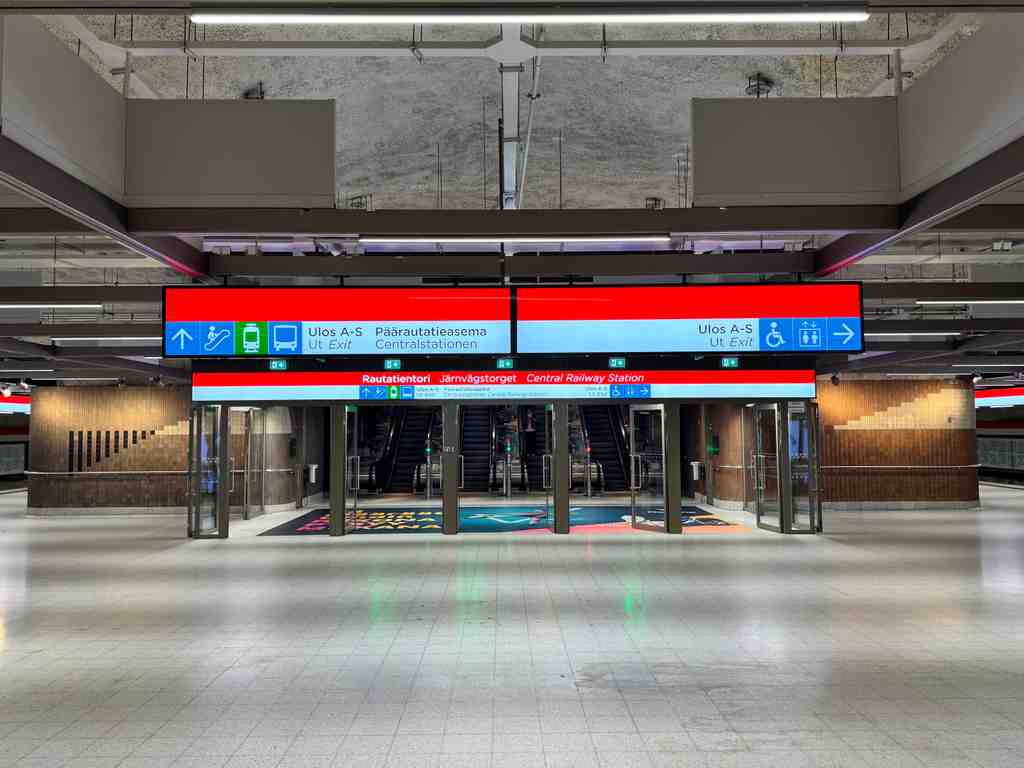
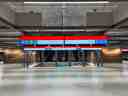
Railway Square Metro StationPhoto: Vadelmavene, Wikimedia Commons, CC0. Cropped & resized. Look for the low, angular entrance of pale stone and glass, cut into the pavement and marked by the unmistakable red Metro M.
From the street, it seems almost modest. But beneath your feet, this station drops roughly twenty-seven metres below the surface, and about twenty-two metres below sea level, into the machinery of central Helsinki. Rautatientori Metro Station opened on the first of July, nineteen eighty-two, and the architects Rolf Björkstam, Erkki Heino, and Eero Kostiainen gave it a look that still feels surprisingly severe: broad spaces, hard lines, and sections of raw rock left visible, as if the city had been peeled back rather than decorated.
That matters here, because this is not merely a stop. It is the hinge beneath the centre, linking the station tunnel, the main railway station, Kaivopiha, Sokos, and even Forum under Mannerheimintie. Above ground, Helsinki presents its various faces: shopping, culture, official grandeur, nightlife. Down below, all those costumes fall away. The city becomes movement.
And what movement. In twenty twenty-five, this was the busiest station in the entire metro system, serving an average of fifty thousand six hundred weekday passengers. Before the pandemic, the figure reached seventy-eight thousand two hundred. It is one of the very few stations whose name is announced not only in Finnish and Swedish, but in English as well: “Central railway station.” That little choice tells you exactly who this place is for. Everyone. Commuters, visitors, late stragglers, first arrivals.
If you glance at the image in the app, you can see the entrance in nineteen eighty-two, held behind a ceremonial ribbon, like a secret the city was about to reveal. And inside, the theatrical quality never quite disappears. Midway along the island platform - that means one central platform with tracks on both sides - a single escalator shaft rises upward in one great vertical throat, with four escalators climbing and descending under the eye of a darkened glass control booth. It has the stripped, cavernous feeling of a stage set after the scenery has been removed.
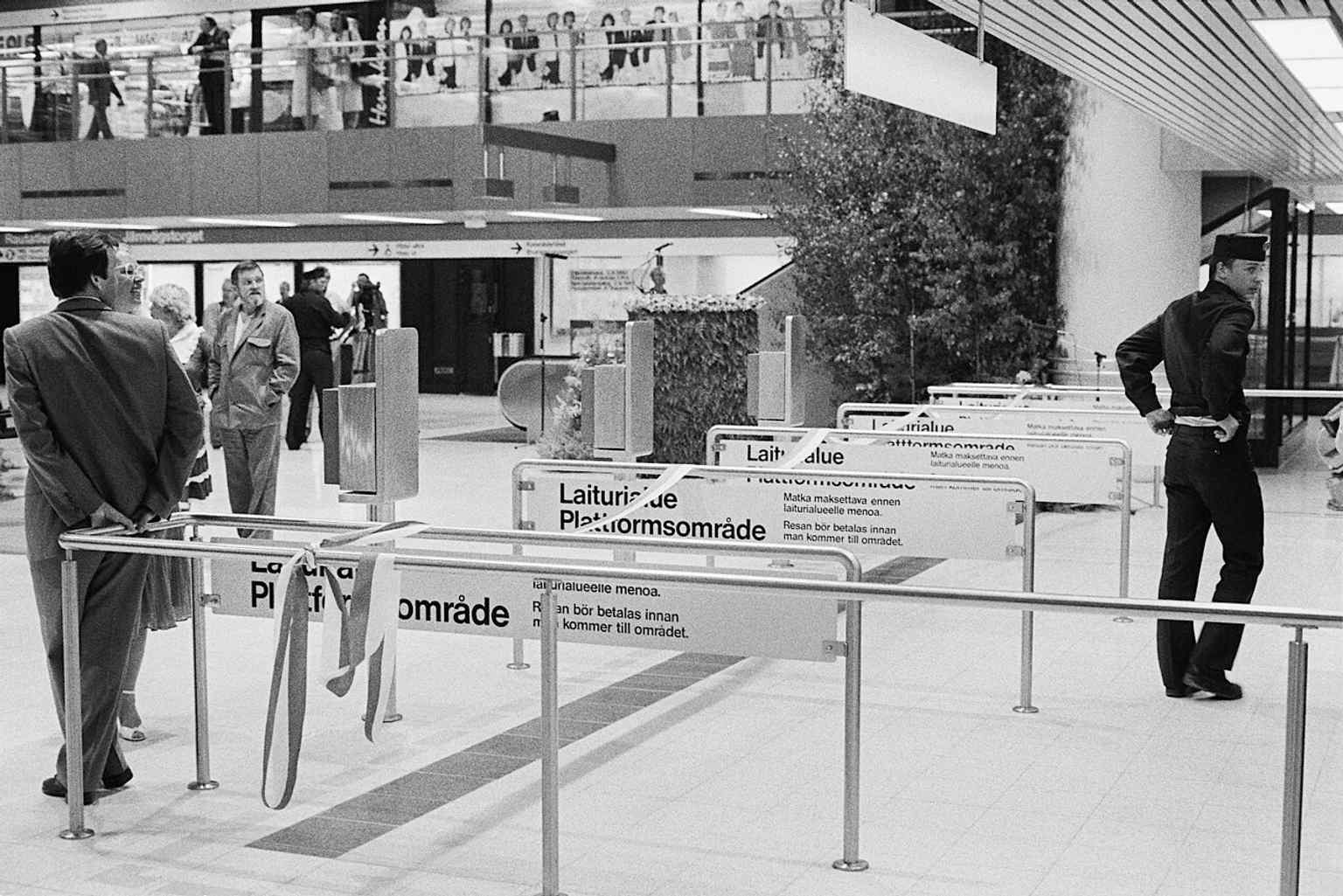
The station entrance closed off with ribbon before the 1982 ceremony — a simple but evocative view of the metro’s highly anticipated opening.Photo: Jan Alanco, Wikimedia Commons, CC BY 4.0. Cropped & resized. There is art there too, quietly watching the flow. Jouko Christiansson’s painting Metrolinjat has been part of the station since nineteen eighty-five, and in two thousand and seven Sanna Karlsson-Sutisna added a bronze group called Faces of the Metro on a Sunday Evening, catching the private expressions people wear in public.
But the underworld keeps its own drama. On the eighth of November, two thousand and nine, a water main burst under Kaivokatu. Water tore into the station tunnel and plunged down the escalators, turning the station into an underground waterfall. Matti Lahdenranta, then head of the city transport operator, called the situation exceptional, and he was not exaggerating. The station shut for more than three months. For a strange stretch of time, trains slowed through this dark, empty chamber without stopping. Even later, another flood in two thousand and nineteen destroyed lift electronics and left the station difficult to use for months.
There is, appropriately, still one deliciously odd detail hidden in the system: the lift toward Kaivopiha travels diagonally, part ordinary lift, part funicular, sliding both upward and sideways.
So here is the twist beneath the square: Helsinki, at its most efficient, is also at its most dramatic - a city reduced to rock, concrete, light, velocity, and human faces in transit. When you are ready, Hercules is about five minutes away. Like the pulse it serves, this station stays open twenty-four hours a day.
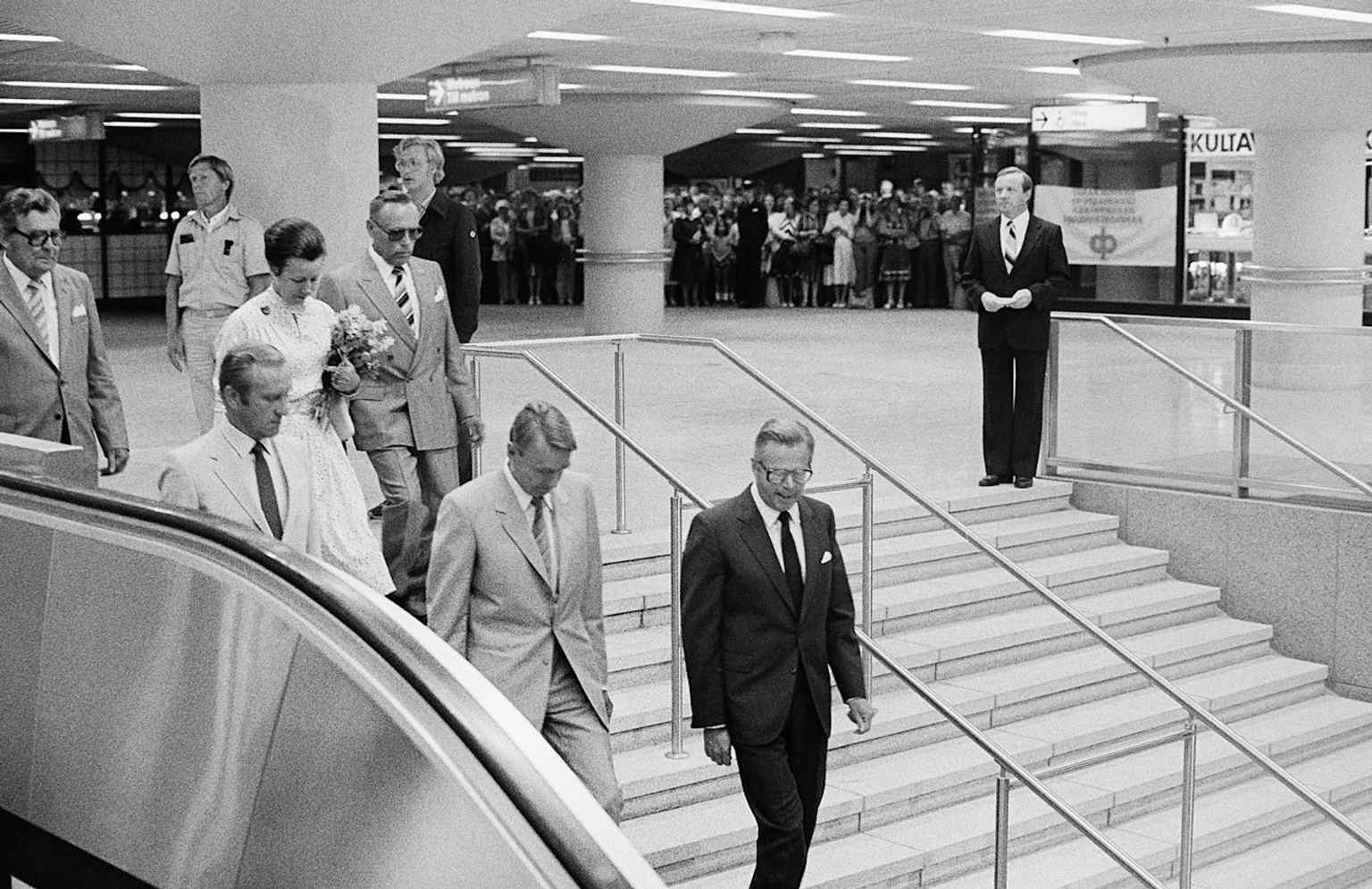
A wider opening-day view with Koivisto and Helsinki’s civic leaders entering the station, useful for storytelling about the metro’s launch.Photo: Jan Alanco, Wikimedia Commons, CC BY 4.0. Cropped & resized. Look for a modern glass entrance cut into a pale stone frontage, a broad rectangular opening marked by the Hercules name above the doors. Hercules matters because Helsinki’s…Read moreShow less
Open dedicated page →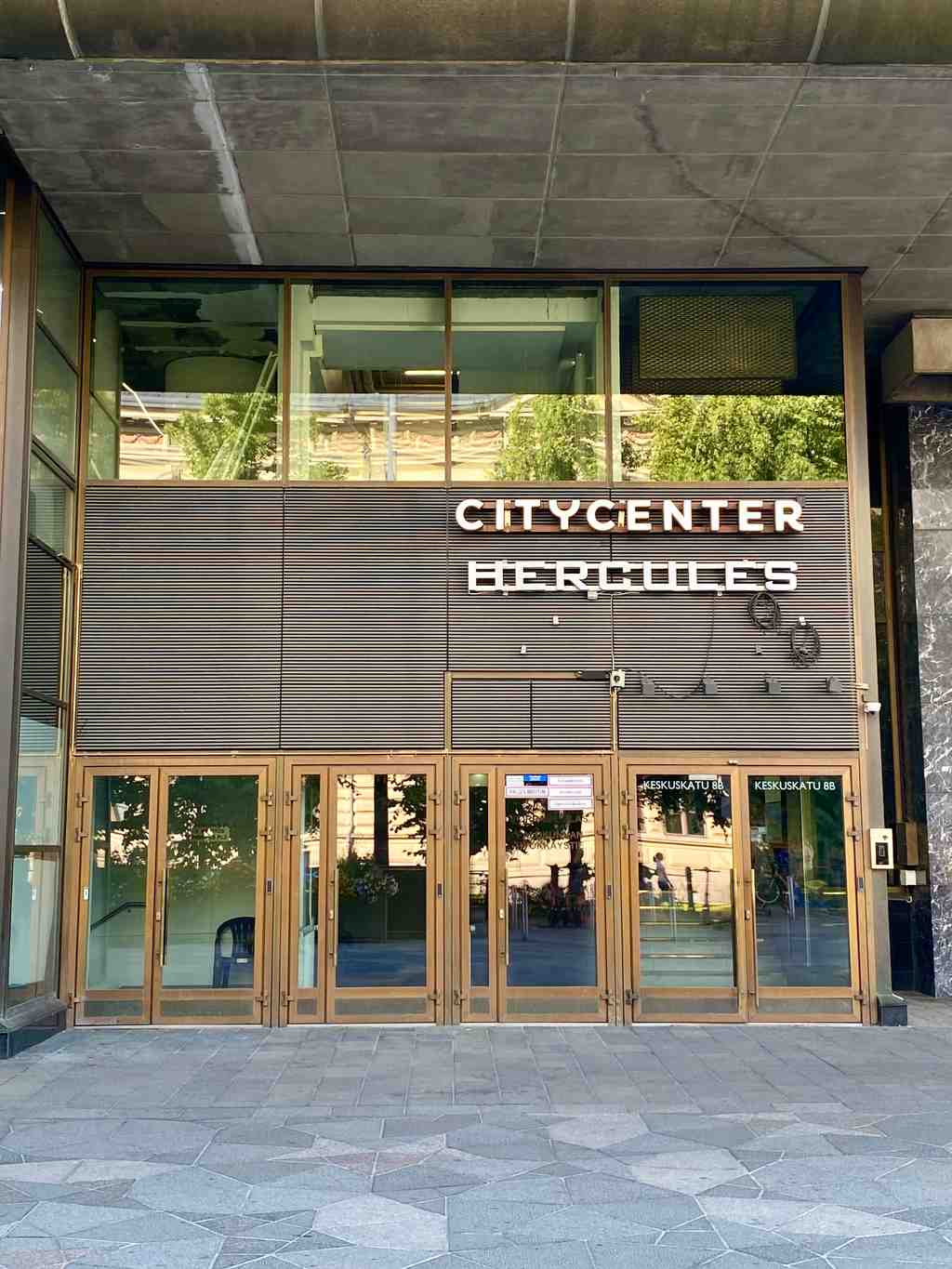
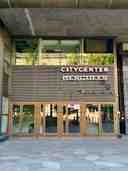
HerculesPhoto: Golem08, Wikimedia Commons, CC0. Cropped & resized. Look for a modern glass entrance cut into a pale stone frontage, a broad rectangular opening marked by the Hercules name above the doors.
Hercules matters because Helsinki’s queer nightlife community did not grow only in hidden corners; it claimed central addresses, bright entrances, and a right to be seen. Here, across from the railway station and high inside the Citycenter complex, a club became part of the city’s public face after dark.
The name is deliciously theatrical. If you glance at the image on your screen, the old artwork of Hercules grappling with the many-headed Hydra feels rather apt. This club, too, kept fighting on several fronts at once: for survival, for visibility, and for the simple pleasure of gathering without apology.
Restaurateurs Erkki Koski and Mika Olkkonen opened Hercules on the thirtieth of August, two thousand, as their third venue under Moek Trading. Before that, they had already opened Café Escale and Mann’s Street, building places for queer life in a city that did not always make room for it gladly. Koski later described the pressure that forced Escale out as homophobic discrimination. So Hercules was never just another dance floor. It was an answer.
It became popular almost at once. In fact, it grew so quickly that it briefly lost its liquor licence after exceeding capacity, and the owners responded by reworking the kitchen and staff areas to fit one hundred more people. That tells you something about the appetite for the place. Critics called it edgy, welcoming, packed, raunchy, friendly. The soundtrack leaned toward Europop, trance, and, with a wink only Finland could manage, even Finnish folk songs. The crowd ranged widely in age, but Hercules especially catered to gay men over thirty, and on weekends it barred entry to anyone under twenty-four. In a nightlife culture that often worships youth, that choice quietly redrew the social map.
And then there was the stage. Drag artists such as Barbara Blo’up, Barbi Becker, Bella RuRu, and Candy Sucker turned the room into a ritual of reinvention. Galaxy Drag Club nights mixed drag, burlesque, and live singing, making the city itself feel like a performance in which more people could finally take a speaking part. If you look at the towering heroic figure in the second image, you can see how the club borrowed that larger-than-life swagger for itself.
But the glossy surface hid bruises. Hercules moved from Kamppi when a hotel took over its first home, then struggled in Etu-Töölö. While Erkki Koski recovered in hospital from a stroke, a manager embezzled money from the business. Then came a racism scandal over a post on the club’s social media, public backlash, a costly pricing error on the terrace, water damage, and the long strain of the pandemic. Yet the club adapted, even turning its dance floor into a television studio for streamed drag revues, concerts, and talk shows when ordinary nightlife stopped.
That persistence is the real story here. A city centre often pretends to belong to shoppers, commuters, and official culture, but nightlife can change the ownership of a place without changing a single stone. Hercules helped make central Helsinki belong, visibly and joyfully, to people who had once been asked to stay discreet. When you are ready, continue to Sausage House, only about two minutes away, and if you fancy returning later, Hercules usually opens from four in the afternoon until half past four in the morning from Wednesday through Saturday.
On your left, look for the broad concrete and glass building with a long curved overhang wrapping the upper level - the strange, unmistakable feature that gave Makkaratalo, the…Read moreShow less
Open dedicated page →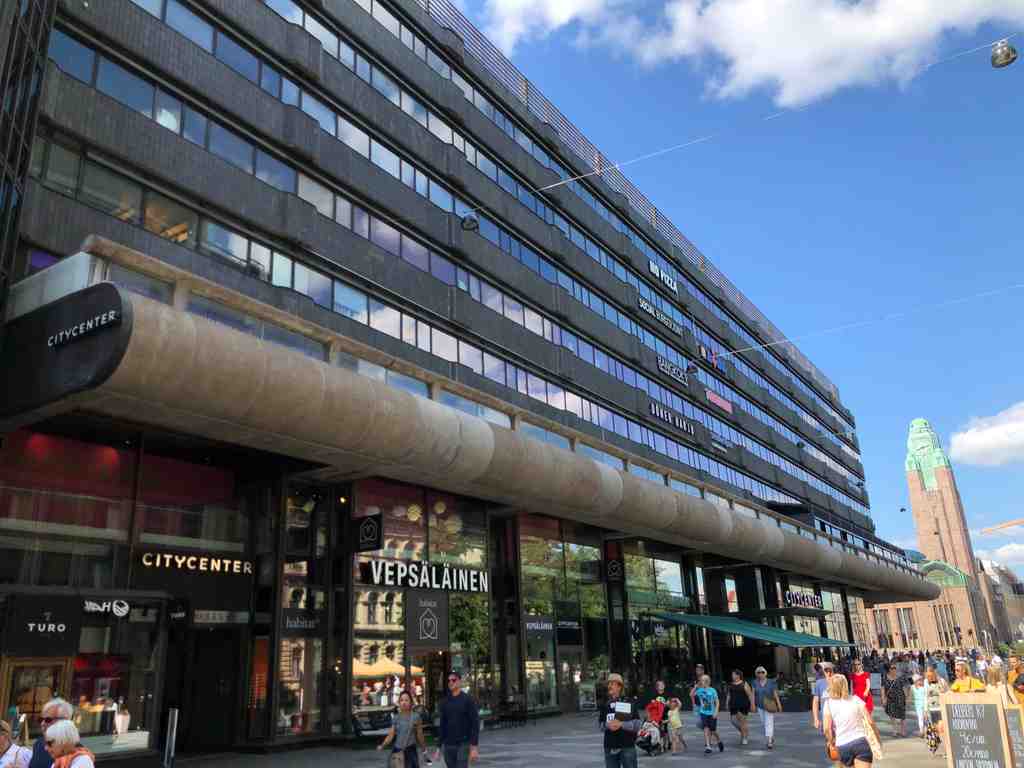
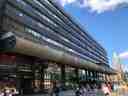
Sausage HousePhoto: Vadelmavene, Wikimedia Commons, CC BY-SA 4.0. Cropped & resized. On your left, look for the broad concrete and glass building with a long curved overhang wrapping the upper level - the strange, unmistakable feature that gave Makkaratalo, the Sausage House, its name.
This is one of central Helsinki’s great arguments made solid. Viljo Revell and Heikki Castrén designed it in the nineteen sixties, and it opened in nineteen sixty-seven opposite the railway station, right where the city had begun fighting over what should be torn down, what should replace it, and who got to decide what the centre ought to become.
Before this rose here, the site held Skohan talo, a four-storey commercial building, and beside it a low bazaar with Restaurant Central. Their loss meant more than one demolition. It stripped away ordinary rooms of daily city life. Revell did not imagine this as a lone building, either. He wanted a much larger City Center complex stretching all the way to Aleksanterinkatu. Only the northern part was realised, and you are standing in front of that compromise.
If you glance at the image on your screen, you can see how the curved projection dominates the facade. That overhang circled the third-floor parking level, reached by ramps, and Helsinki promptly gave it a mocking nickname: the sausage. A cartoonist, Kari Suomalainen, helped fix that name in the public mind with a satirical drawing in nineteen sixty-six. A joke helped christen a building more permanently than any official plaque.
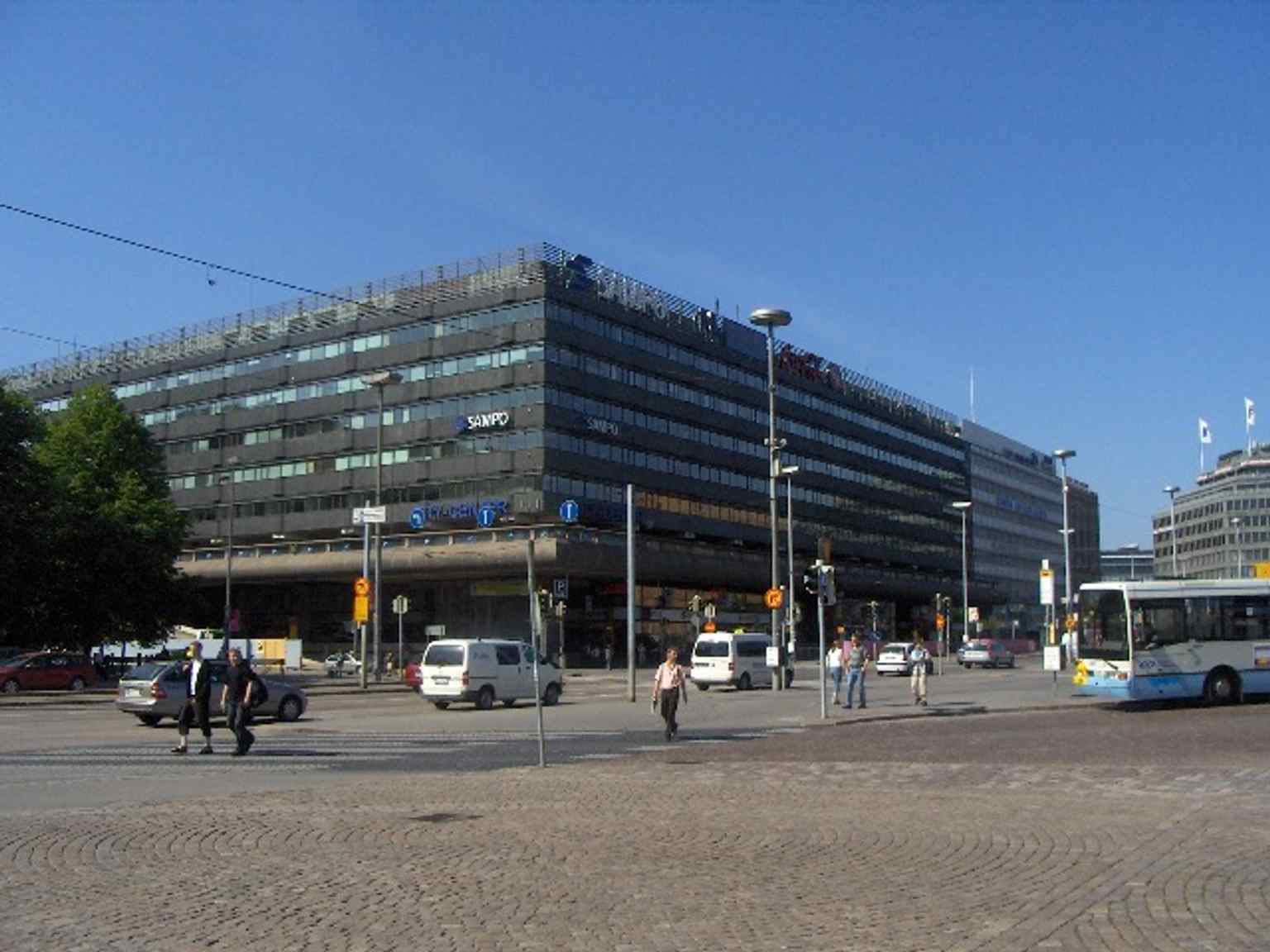
The curved 'sausage' building of Makkaratalo in the heart of Helsinki — the 1967 City-Center landmark opposite the railway station.Photo: No machine-readable author provided. Skorpion87 assumed (based on copyright claims)., Wikimedia Commons, Public domain. Cropped & resized. And here is the sharper question. When a disliked building replaces familiar streets and shops, what weighs more after decades: the wound it caused, the use it gave, or the memories people made anyway?
Critics called it ugly, too car-centred, even a scale error beside the station. Yet when owners tried to remake it in the two thousand and tens, the city let the Keskuskatu ramps go but protected the rest, including the very “sausage” people had once ridiculed. Look at the historical image in the app and you can feel that tension beside the station itself. Beneath the newer shopping centre, even an older building by Eliel Saarinen from nineteen ten still survives in the inner courtyard, like a secret layer the redevelopment never quite erased.
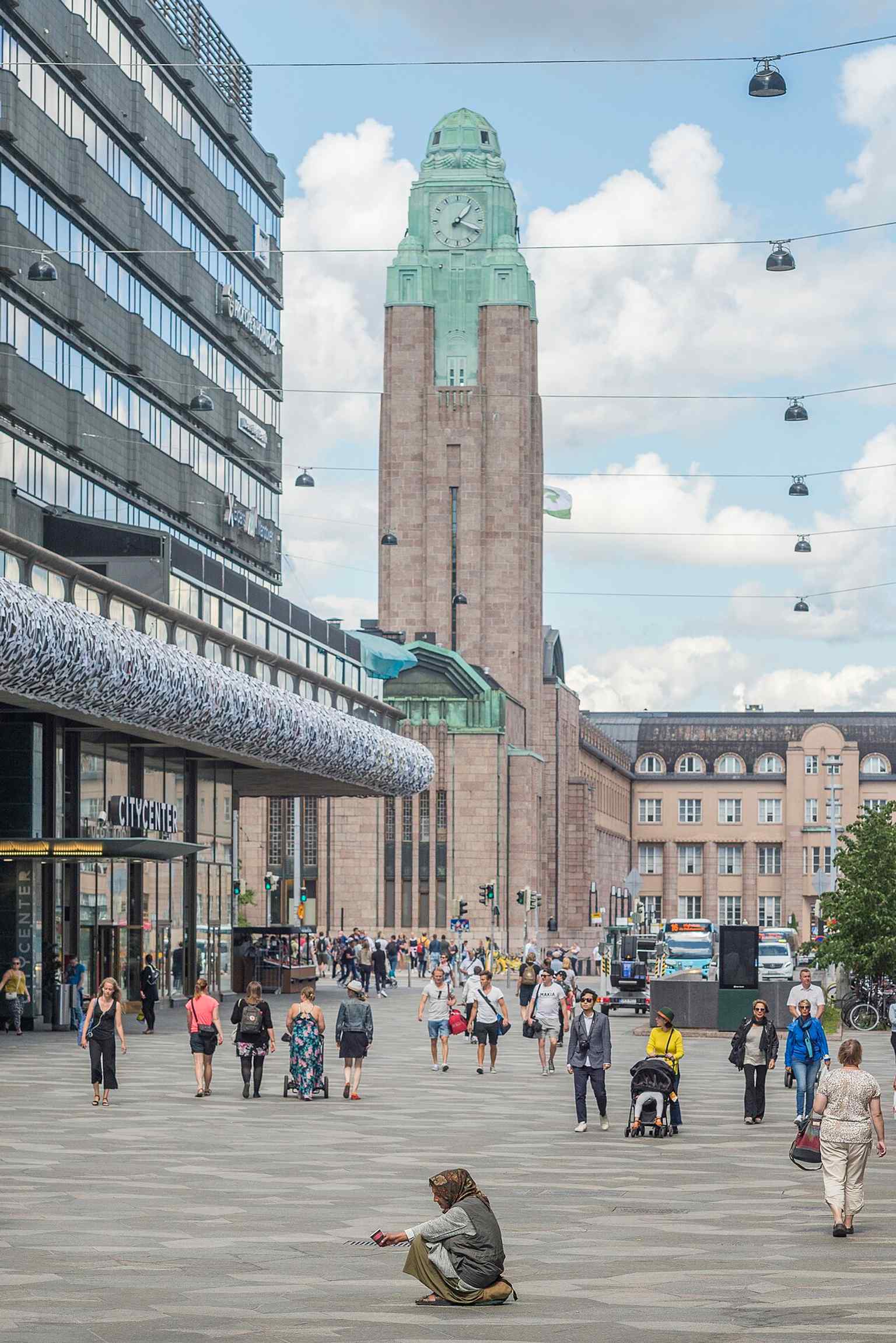
A heritage-era view of Makkaratalo and Helsinki Central Station, capturing the building’s contested place in the postwar transformation of the city centre.Photo: Sakari Kiuru, Wikimedia Commons, CC BY 4.0. Cropped & resized. That is the discomfort of city making: what gets mocked can endure, and what gets loved can vanish. We carry that unease with us to the Ateneum Art Museum, about two minutes away. If you want to go inside later, note that it is generally closed on Mondays and Sundays.
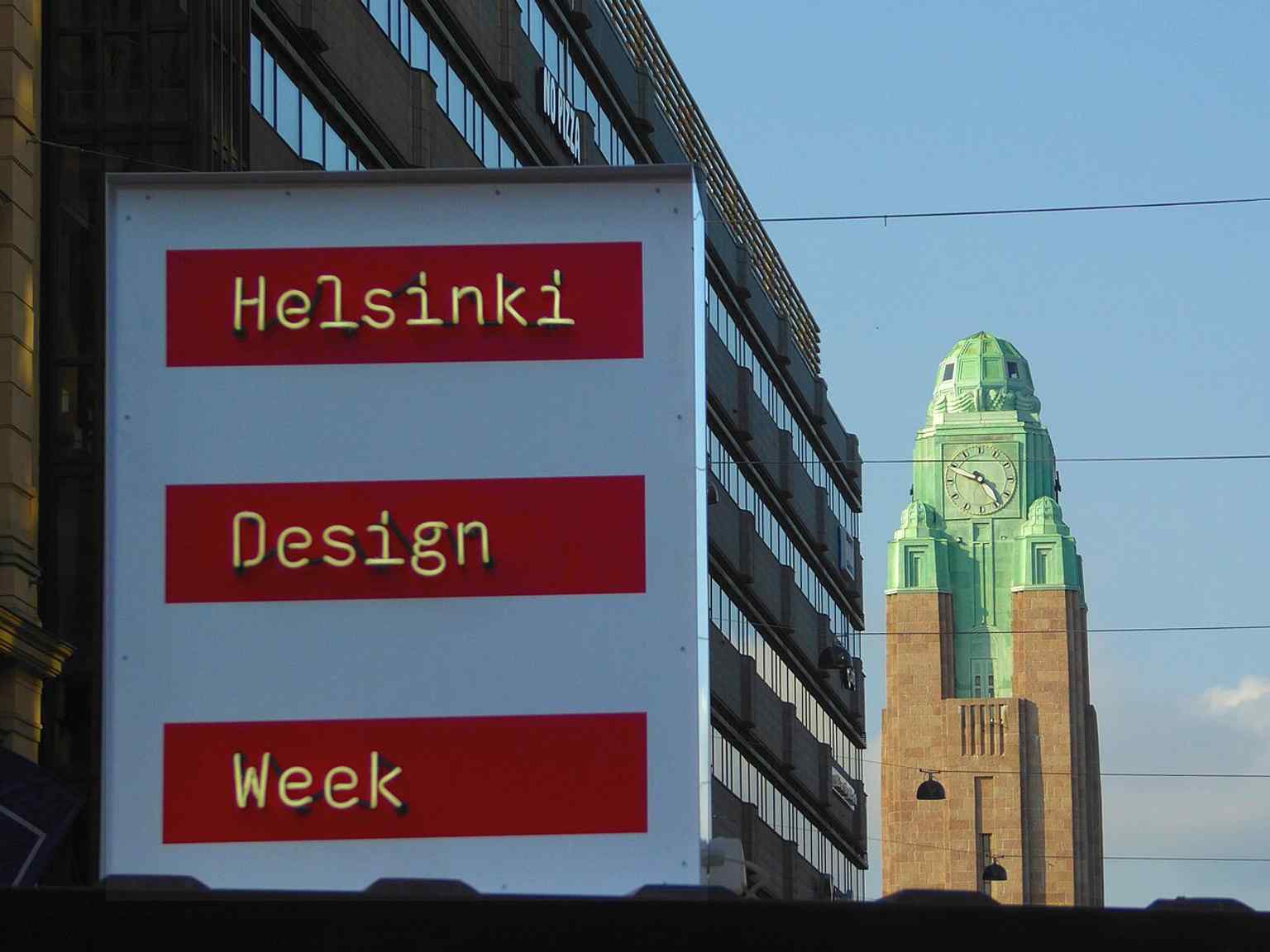
Makkaratalo seen beside Keskuskatu's neon signs and the railway station clock tower, showing how the mall sits in Helsinki's busiest city-centre block.Photo: AjaxSmack, Wikimedia Commons, CC BY-SA 4.0. Cropped & resized. On your right stands a long pale stone façade with rows of arched windows, sculpted busts above the central doors, and a high triangular pediment carrying gold Latin…Read moreShow less
Open dedicated page →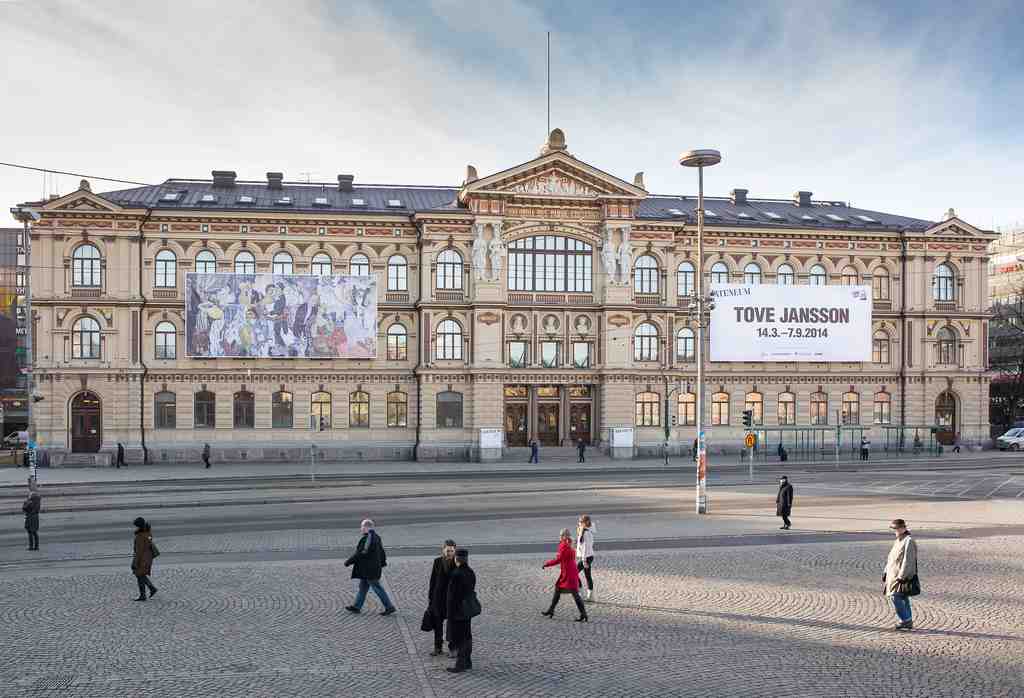
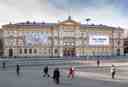
Ateneum Art MuseumPhoto: Finnish National Gallery, Wikimedia Commons, CC BY-SA 4.0. Cropped & resized. On your right stands a long pale stone façade with rows of arched windows, sculpted busts above the central doors, and a high triangular pediment carrying gold Latin lettering.
This is the Ateneum, and it feels rather like Helsinki drawing itself upright. Outside, trams, commuters, shopfronts and crossings keep the centre in motion; here, the city answers with symmetry, ceremony, and the quiet insistence that art belongs at the heart of public life.
Even the name reaches upward. Professor Carl Gustaf Estlander chose Ateneum in the eighteen seventies, borrowing from temples devoted to Pallas Athene, goddess of wisdom. He imagined an arts palace for Helsinki, where painting and design would thrive under one roof. He had hoped to gather music and literature here as well, though in the end the house devoted itself to visual art. Across the square, Aleksis Kivi gave the nation a literary voice; here, the city raised a stone case for its images.
The architect Theodor Höijer completed this Renaissance revival building in eighteen eighty-seven, and he made the façade speak. Above the doors you can pick out three great figures of art: Bramante the architect, Raphael the painter, and Phidias the sculptor. Higher still stand four caryatids, female sculpted figures used as columns, representing architecture, geometry, painting, and sculpture. And in the pediment, beneath the sculpture group, the gold words read Concordia res parvae crescunt: in harmony, small things grow. Estlander chose that line with a little steel in his velvet. Helsinki’s art world had quarrelled bitterly over language, money, and whether this grand project should exist at all. The missing second half of the saying warns that in discord, even great things collapse.
This building taught artists as well as displaying them. The Finnish Art Society’s drawing school worked here for decades, and later the School of Arts and Crafts stayed until the nineteen eighties. Young Akseli Gallen-Kallela studied in these studios and, according to the tale, painted so obsessively that he sometimes slept here in secret rather than stop. His Aino Triptych, shown in the image on your screen, shows the kind of myth, ambition, and national feeling that this house helped shape. And here is the detail locals tend to treasure: Tove Jansson studied here in the nineteen thirties, and despite the global fame of the Moomins, she always considered herself first and foremost a painter. That feels important outside this façade. The world may choose one version of an artist; the work often begins somewhere more private, more stubborn.
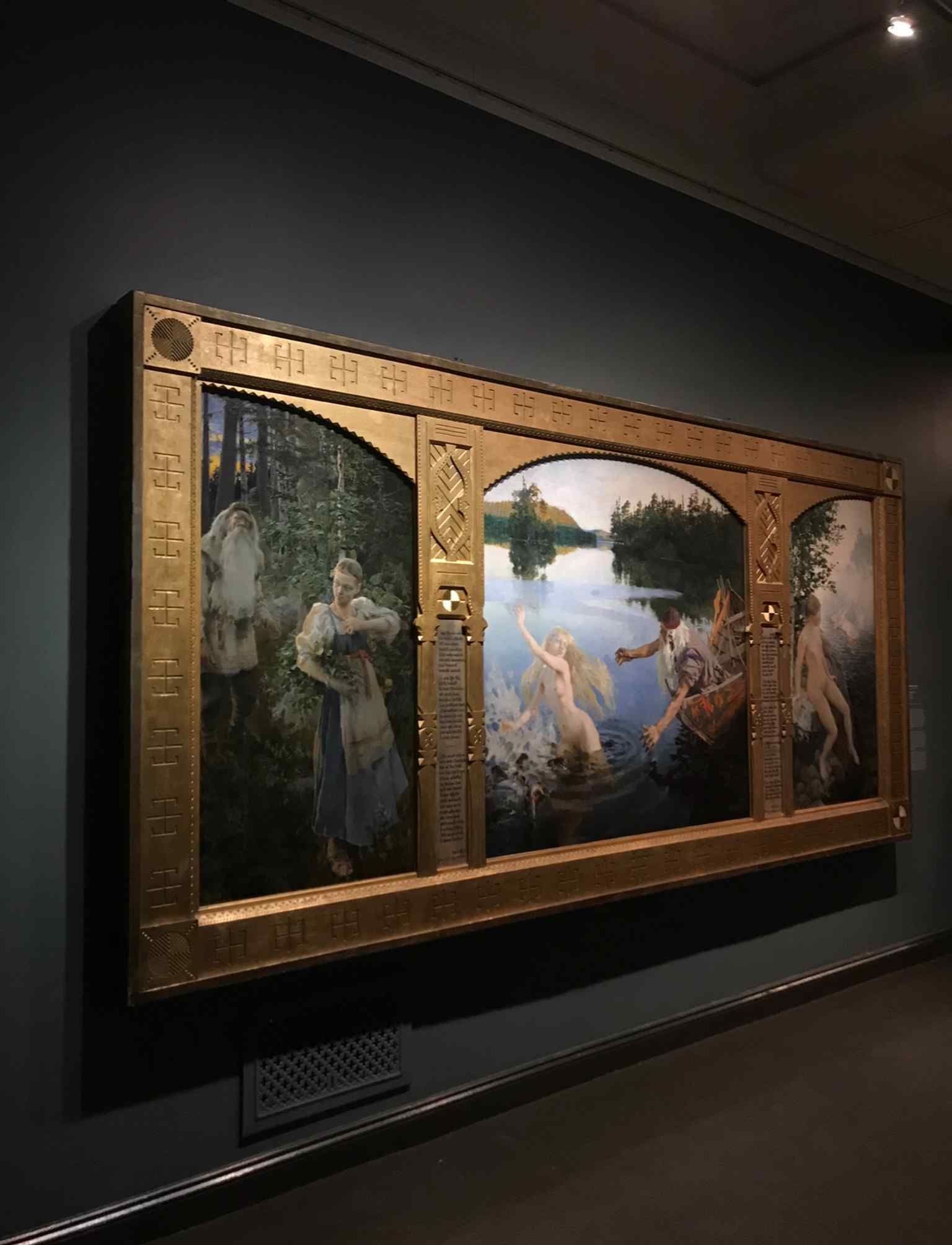
Gallen-Kallela’s Aino Triptych, one of the celebrated works connected to the Ateneum collection and Finnish national art history.Photo: Jaakko.kulta, Wikimedia Commons, CC BY-SA 4.0. Cropped & resized. War nearly interrupted that continuity. In nineteen thirty-nine, staff rushed the most valuable works out to country manors and church cellars for safety. During the great bombings of February nineteen forty-four, blast waves shattered hundreds of windows and damaged the roof, yet the building survived. One student here then, the cartoonist Kari Suomalainen, later recalled watching the bombing from the roof while serving in anti-aircraft duty. In the before-and-after image, you can watch this frontage hold its poise while the street around it slips from a traffic policeman’s Helsinki into the present. Inside waits one of the nation’s most loved paintings, Hugo Simberg’s Wounded Angel, born after the artist recovered from serious illness; he refused to explain its meaning, leaving each viewer to meet it alone. That is the Ateneum’s secret, really: not a mausoleum, but a place where one generation hands its questions to the next.
Ahead, the city loosens its collar again, and art takes on wheels and a wink at Spårakoff. If you want to come back inside later, the museum is open every day except Monday, with later hours on Wednesday and Thursday.
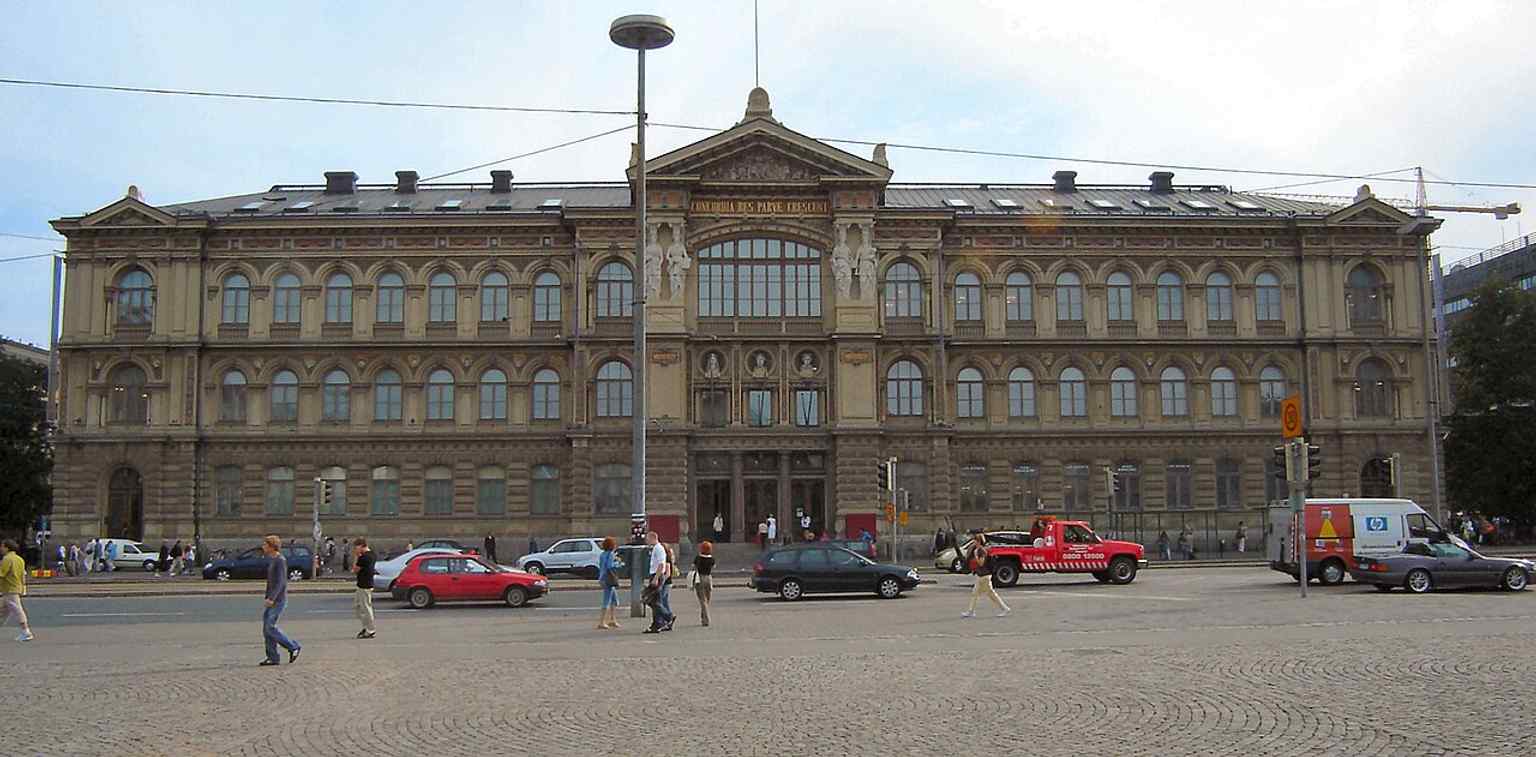
The Ateneum’s ornate neo-Renaissance façade in Helsinki, the building designed by Theodor Höijer and completed in 1887.Photo: BishkekRocks, Wikimedia Commons, CC BY-SA 3.0. Cropped & resized. 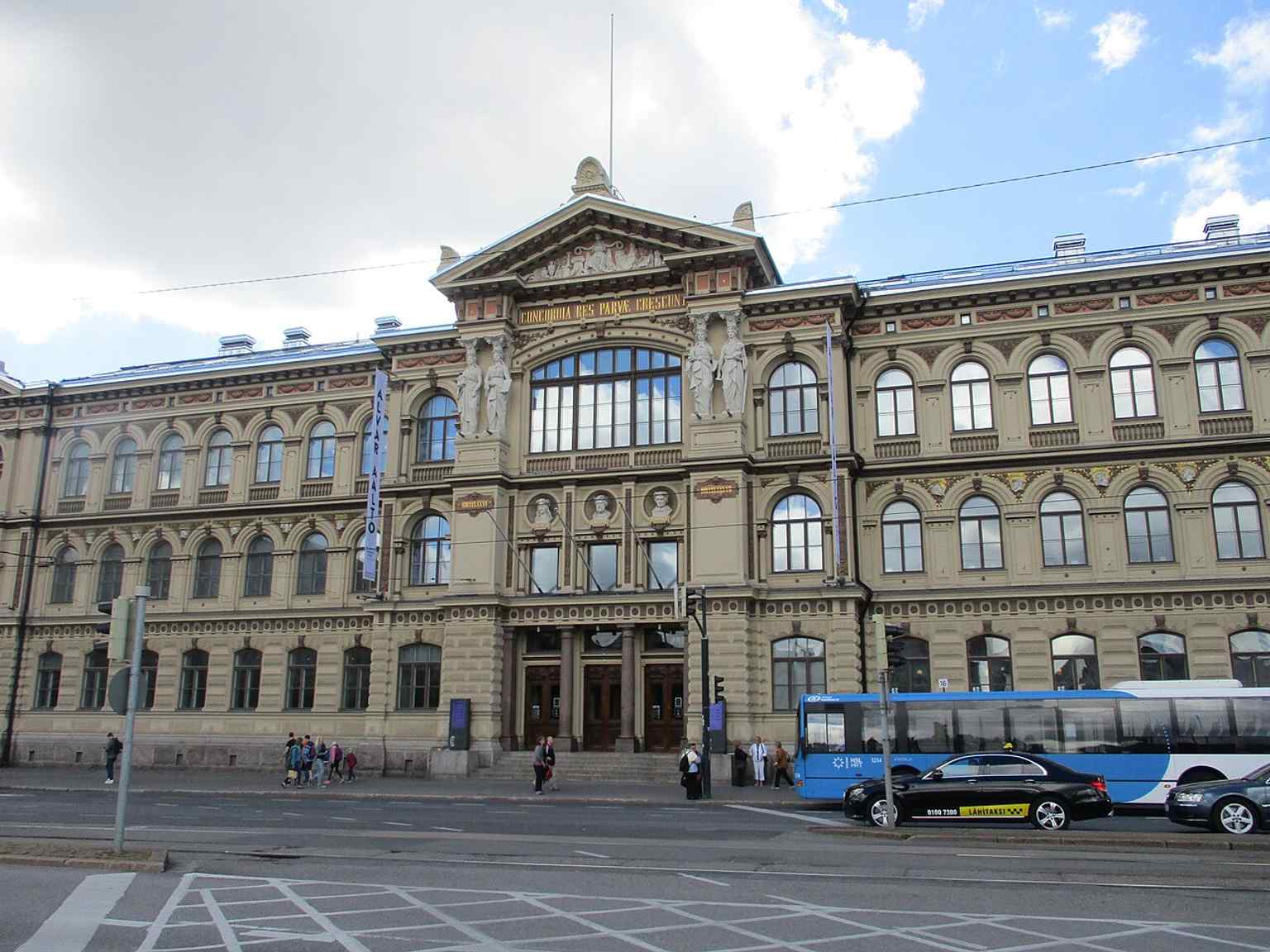
The Ateneum museum exterior in full view — a fitting match for the article’s focus on the building as well as the art museum inside it.Photo: Mikkoau, Wikimedia Commons, CC BY-SA 4.0. Cropped & resized. 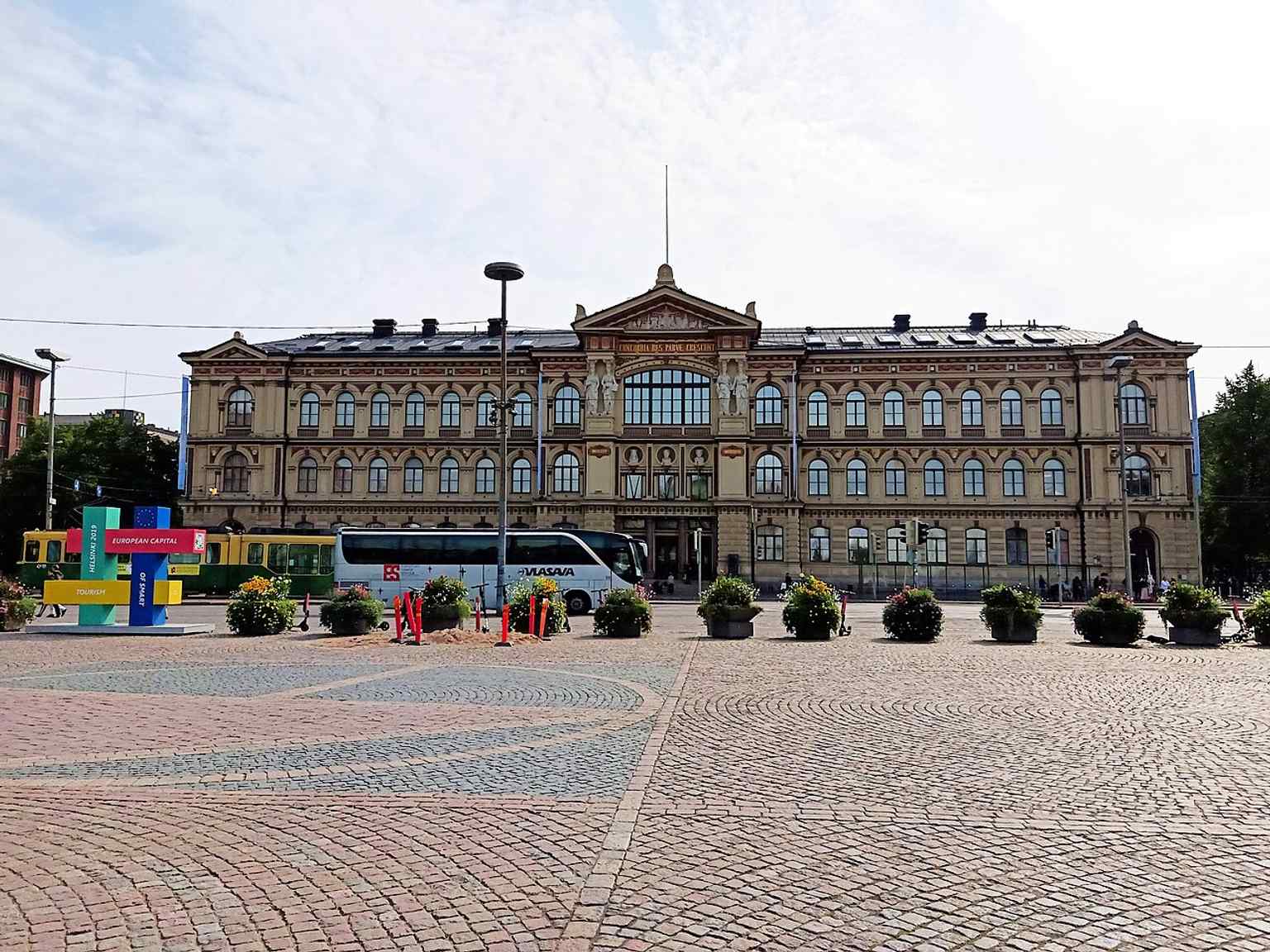
The Finnish National Gallery’s Ateneum building from outside, emphasizing the museum’s iconic street-facing architecture.Photo: Suyash Dwivedi, Wikimedia Commons, CC BY-SA 4.0. Cropped & resized. 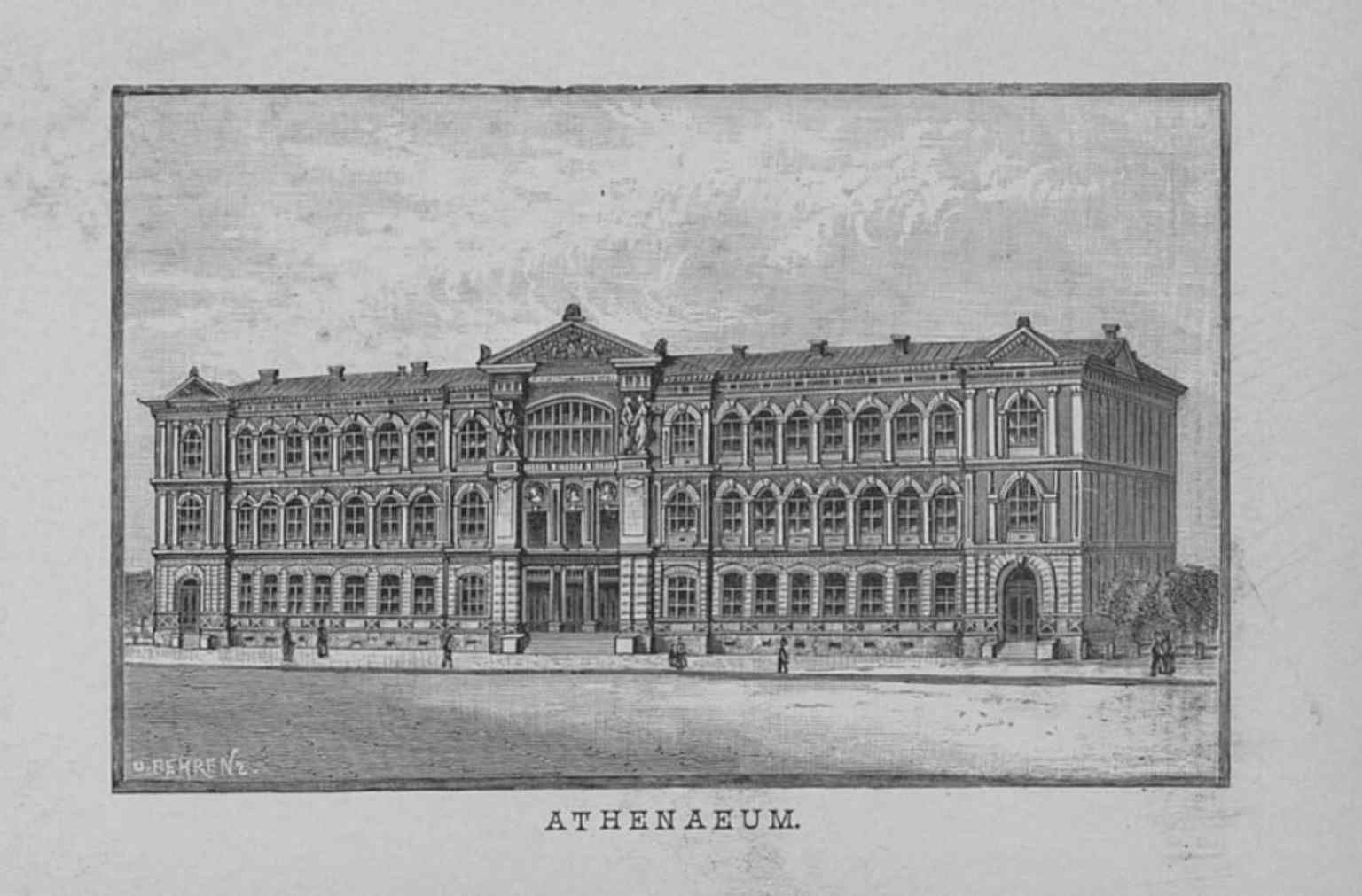
A 1887 illustration of the Athenaeum, useful as an early historical view of the building soon after its completion.Photo: Frans Otto Behrens (1850-1939), Wikimedia Commons, Public domain. Cropped & resized. Look for the bright red steel tram with its boxy vintage shape, wide rectangular windows, and the route display that reads “Pub - Kiertoajelu.” Spårakoff is one of those ideas…Read moreShow less
Open dedicated page →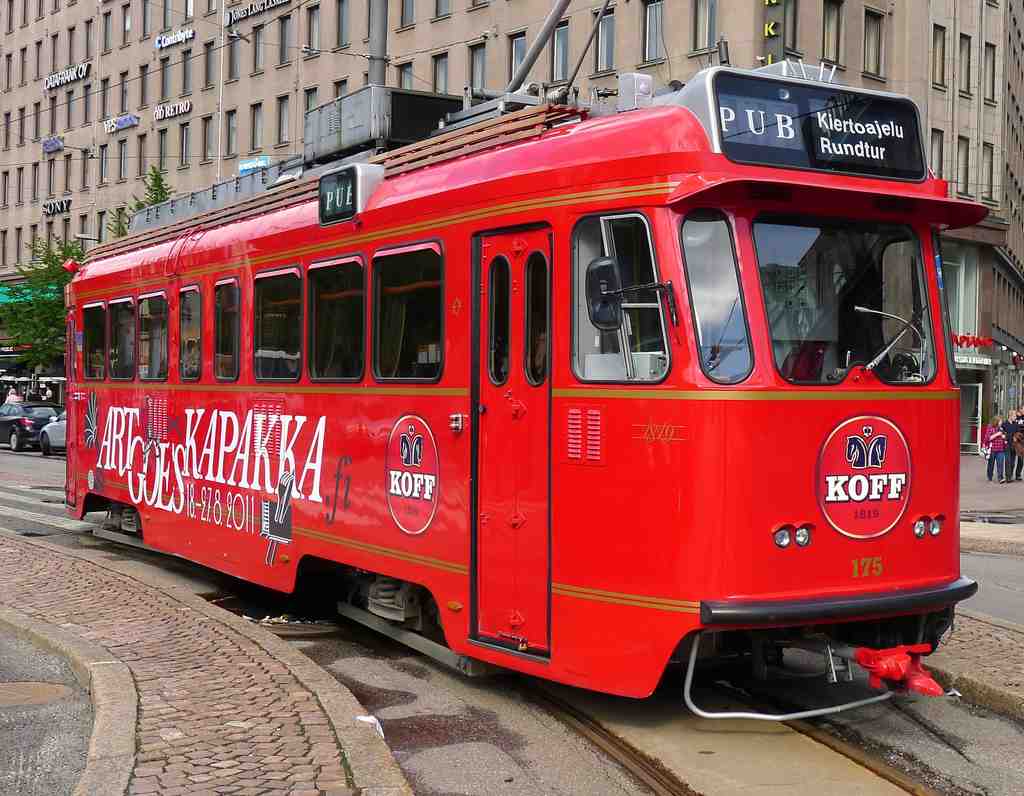
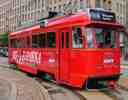
SpårakoffPhoto: Cecil, Wikimedia Commons, CC BY-SA 3.0. Cropped & resized. Look for the bright red steel tram with its boxy vintage shape, wide rectangular windows, and the route display that reads “Pub - Kiertoajelu.”
Spårakoff is one of those ideas that ought to have been a throwaway joke and somehow became a beloved civic institution. In nineteen ninety-five, to celebrate Sinebrychoff’s one hundred and seventy-fifth anniversary, designers took a tram from nineteen fifty-nine - car number fifteen - and gave it a second life as a moving restaurant, renumbered one hundred and seventy-five. It was only meant to last for two years. Instead, it kept charming the city, and by twenty twenty-five it had reached thirty years on the rails.
There is something wonderfully Helsinki about that. A public tram, built for getting people from one place to another, turns into a place where getting nowhere quickly becomes the whole pleasure. Restaurant manager Sanna Lindholm once called it “a ship on rails”, and that is exactly right: a tiny voyage through the centre, with the city drifting by the windows like scenery on a stage.
The app images show the tram in its newly transformed form at Market Square in nineteen ninety-five, and the side view makes the joke beautifully clear: where a line number should be, it simply says “Pub - Kiertoajelu” - pub sightseeing.
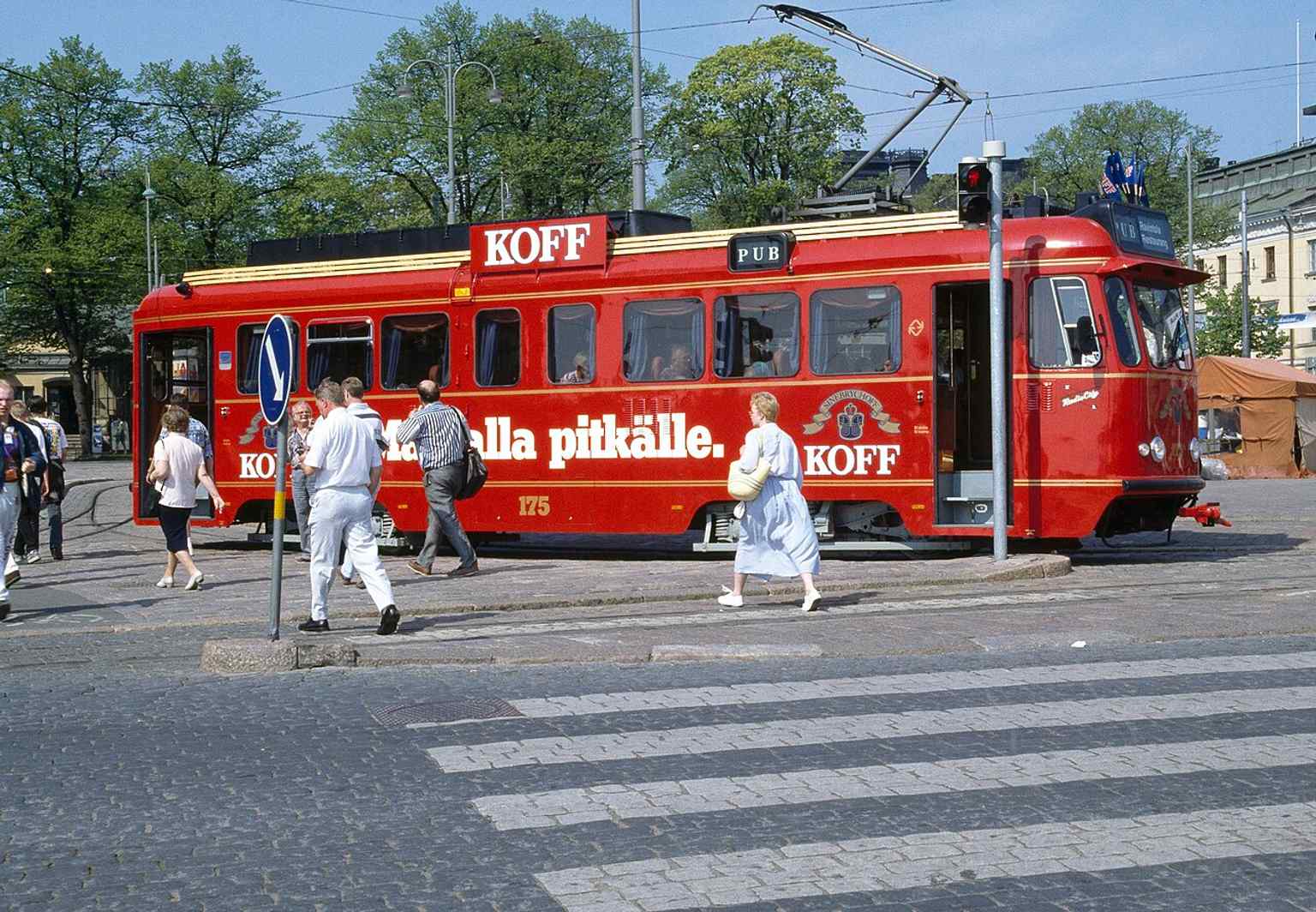
Spårakoff at Market Square in 1995, right after its conversion from an HKL tram into Helsinki’s famous rolling pub.Photo: Mika Peltonen, Wikimedia Commons, CC BY-SA 4.0. Cropped & resized. Inside, the scale is deliciously compact: about twenty square metres, twenty-four seats, a bar counter, and even a tiny lavatory so small it had to be made in a factory that builds ship cabins. For a time, it was thought to be one of the few of its kind in the world. Yet for all its playfulness, it still depends on the same serious systems as every other tram in Helsinki; when changes to the electrical network threatened its future, Sinebrychoff paid for the overhaul so it could return.
If you want to ride another time, it generally runs from two until nine in the afternoon, Monday to Saturday, and rests on Sundays. From here, Fennia House is only about a minute away.
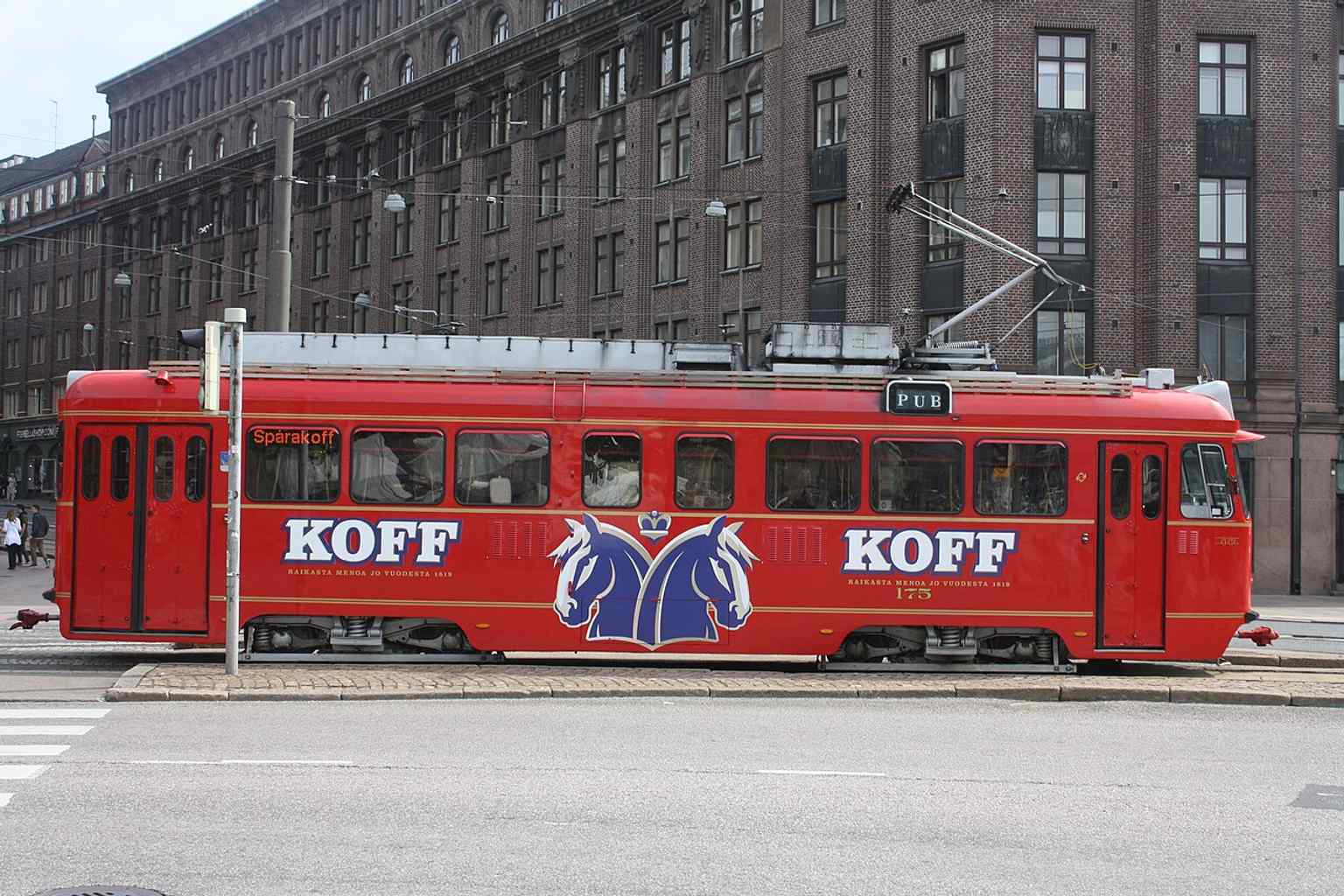
A clear side view of the red Koff tram in service, matching the landmark’s signature look with the 'PUB – Kiertoajelu' concept.Photo: AleWi, Wikimedia Commons, CC0. Cropped & resized. Fennia House is a pale stone building with a grand, slightly curved facade, tall rows of windows, and a large Finnish coat of arms set high above gilded names of European…Read moreShow less
Open dedicated page →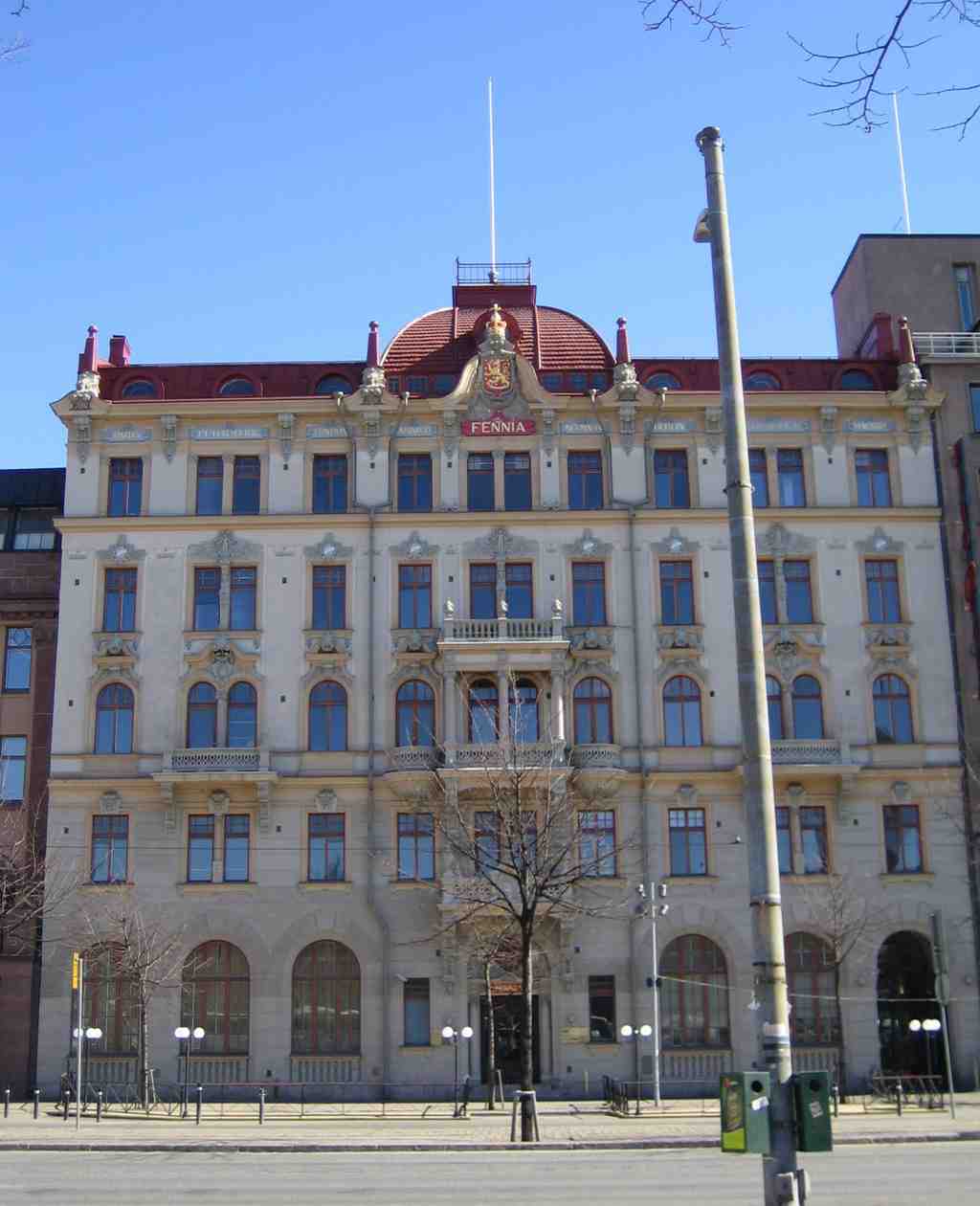
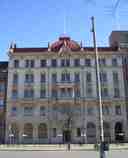
Fennia HousePhoto: Wikimedia Commons contributor, Wikimedia Commons, CC BY-SA 3.0. Cropped & resized. Fennia House is a pale stone building with a grand, slightly curved facade, tall rows of windows, and a large Finnish coat of arms set high above gilded names of European capitals.
There is something wonderfully candid about this building. It does not pretend to be modest. Completed in eighteen ninety-eight and opened as Hotel Fennia in eighteen ninety-nine, it stood on the eastern edge of Railway Square like a formal greeting to newcomers. The architects, Grahn, Hedman and Wasastjerna, gave it a Viennese-flavoured neo-baroque face - in plain terms, a style that loves theatre, ornament, and a certain metropolitan swagger. Look up, and you can still see the performance: Paris, Petersburg, London, Berlin, Stockholm, Madrid, all written in gold above the windows, with the year of completion inscribed in Latin. In that political moment, placing the Finnish coat of arms so prominently was a bold gesture too.
And yet the glamour rose from difficulty. This patch of the city had once been the muddy bottom of Kluuvinlahti bay. An earlier house here leaned so dangerously that people had to demolish it in the middle of the nineteenth century. Even Fennia’s builders wrestled with soft clay underfoot. Perhaps that is why the building feels so Helsinkian in miniature: poised, polished, and quietly defiant about what lies underneath.
The railway station had already made this district a zone of arrivals and departures. Before Fennia, a wooden hotel called Hotel de Post welcomed travellers here, and locals nicknamed it the Cuckoo Clock after the restaurant’s clock. Then a consortium of businessmen, including Paul Sinebrychoff, financed something larger and more ambitious. Fennia offered five floors of guest rooms, ceiling paintings in corridors and bedrooms, and even an electric lift - a small marvel at the time.
Its great impresario arrived later. In January of nineteen oh nine, the restaurateur Karl Edvard Jonsson reopened the place as Grand Hotel Fennia and staged the occasion with one hundred and fifty-seven waiters in dark green tails while Simon Steinberg’s orchestra played. Jonsson understood that a hotel near the station was never just a hotel; it was a declaration. He added splendour, including a winter garden under a pyramid-shaped glass roof, where a fountain sent water eight metres into the air and gardener C. T. Ward changed the flowers every week.
If you fancy a quick glimpse of how the corner transformed over more than a century, have a look at the before-and-after image in the app. Actors from the National Theatre came here after performances. Ida Aalberg’s fortieth anniversary celebration became one of the most dazzling society parties in Finland. In nineteen eighteen, during the civil war, the same building turned into a war hospital and, for a time, a headquarters. Young artists Bruno Tuukkanen and Eero Snellman even worked here on the final appearance of the Finnish flag. Later still, the Russian writer Aleksandr Kuprin arrived with his family after hardship and exile; his daughter remembered how the marble staircase and immaculate staff made their own poverty suddenly, painfully visible.
Lift your eyes once more to the gilded lettering and ask yourself what sort of city this facade was promising to the traveller stepping off a train.
Perhaps that is the final image to keep: a house of welcome standing on uncertain ground, forever changing its role yet never abandoning style. And with that, I shall leave you to the tour outro.
Frequently asked questions
How do I start the tour?
After purchase, download the AudaTours app and enter your redemption code. The tour will be ready to start immediately - just tap play and follow the GPS-guided route.
Do I need internet during the tour?
No! Download the tour before you start and enjoy it fully offline. Only the chat feature requires internet. We recommend downloading on WiFi to save mobile data.
Is this a guided group tour?
No - this is a self-guided audio tour. You explore independently at your own pace, with audio narration playing through your phone. No tour guide, no group, no schedule.
How long does the tour take?
Most tours take 60–90 minutes to complete, but you control the pace entirely. Pause, skip stops, or take breaks whenever you want.
What if I can't finish the tour today?
No problem! Tours have lifetime access. Pause and resume whenever you like - tomorrow, next week, or next year. Your progress is saved.
What languages are available?
All tours are available in 50+ languages. Select your preferred language when redeeming your code. Note: language cannot be changed after tour generation.
Where do I access the tour after purchase?
Download the free AudaTours app from the App Store or Google Play. Enter your redemption code (sent via email) and the tour will appear in your library, ready to download and start.
If you don't enjoy the tour, we'll refund your purchase. Contact us at [email protected]
Checkout securely with 






.jpg)


.jpg)


