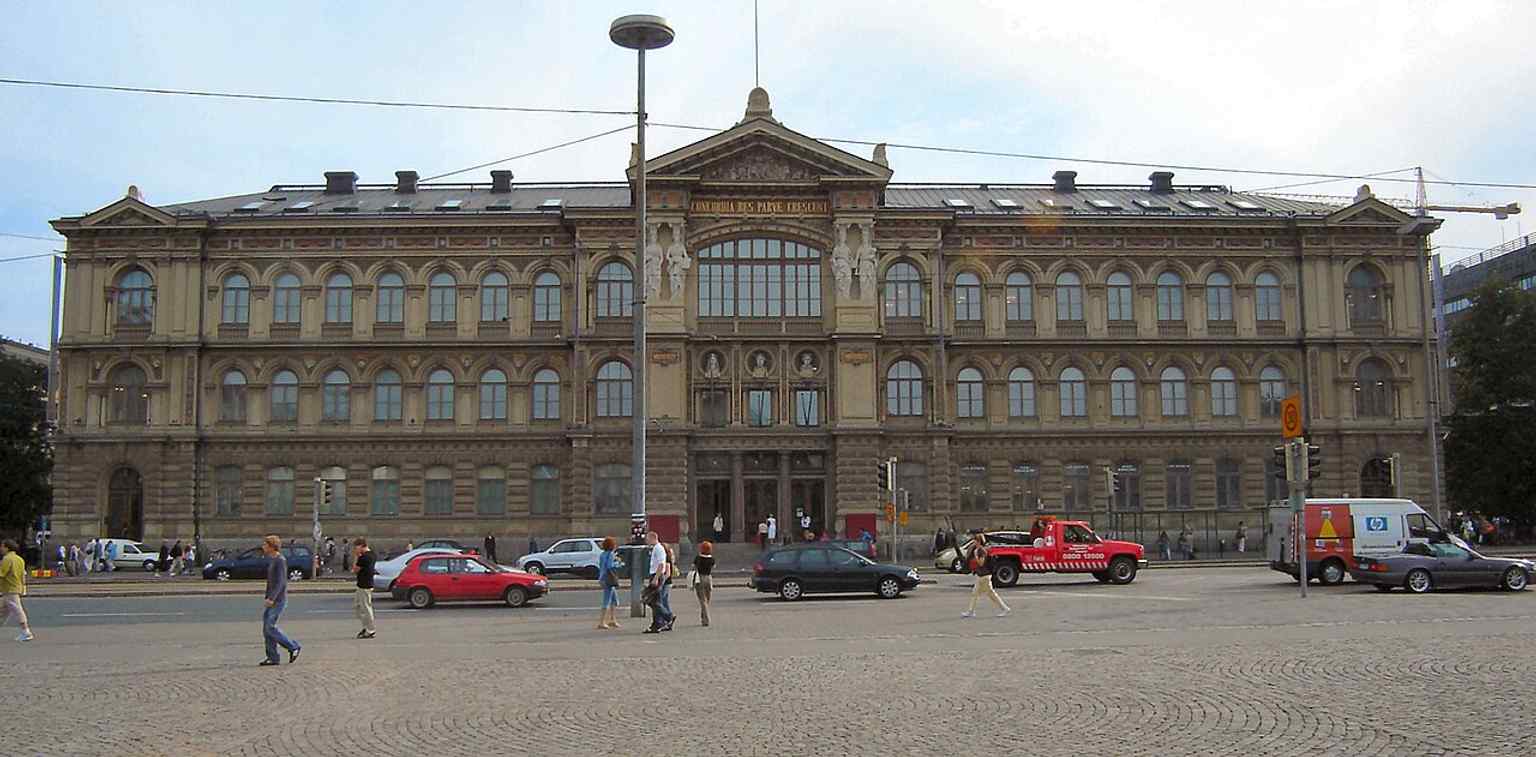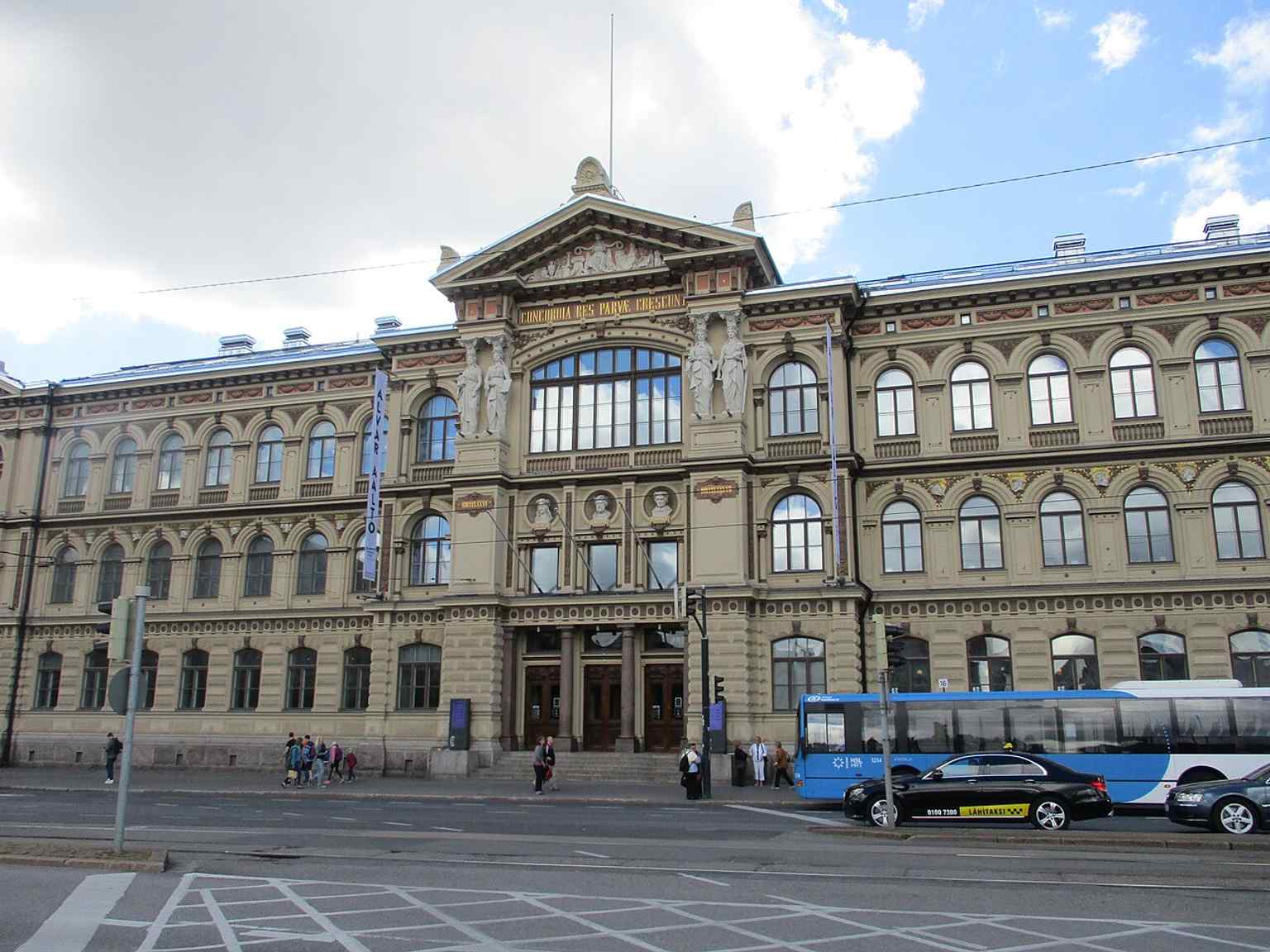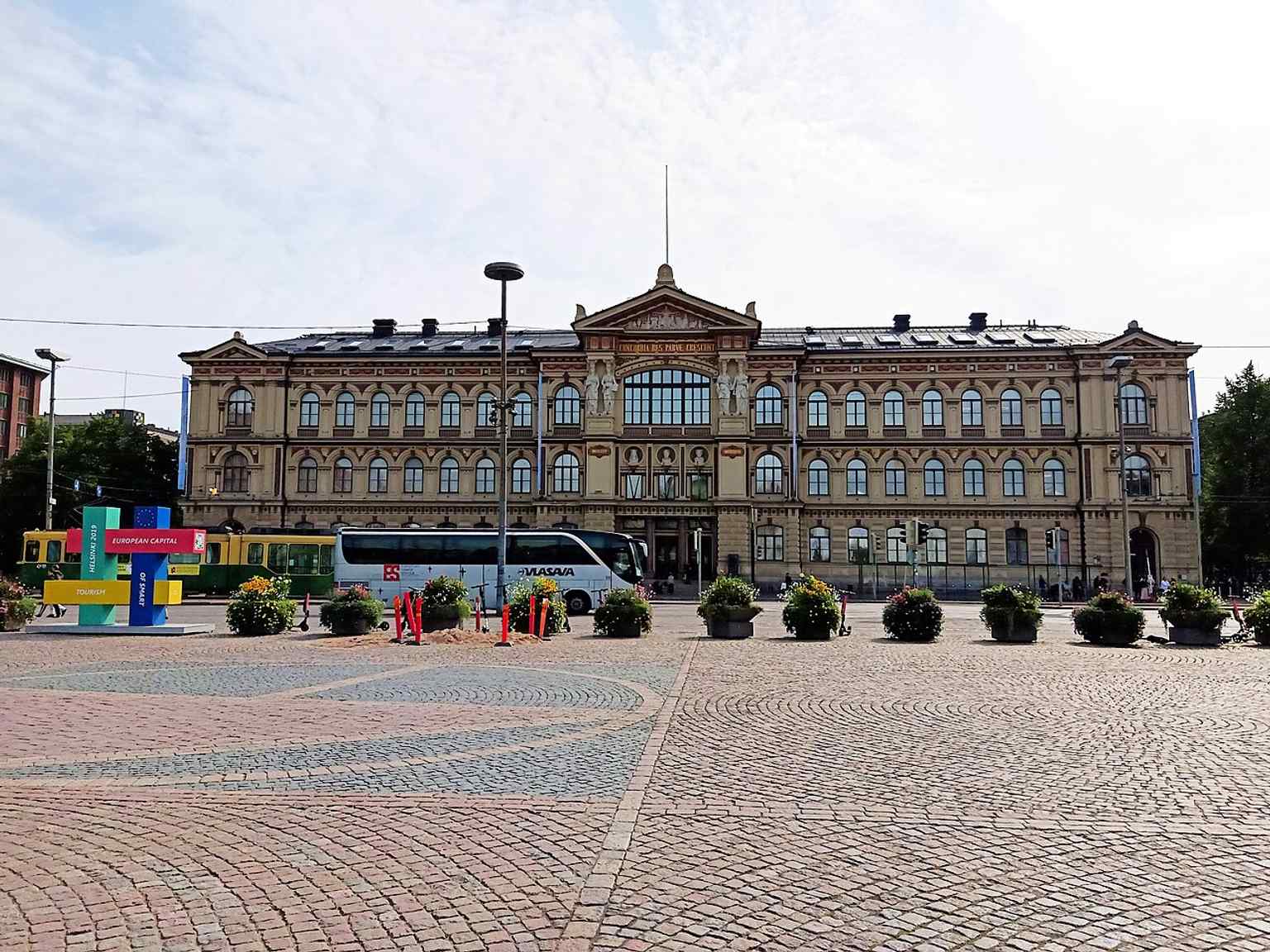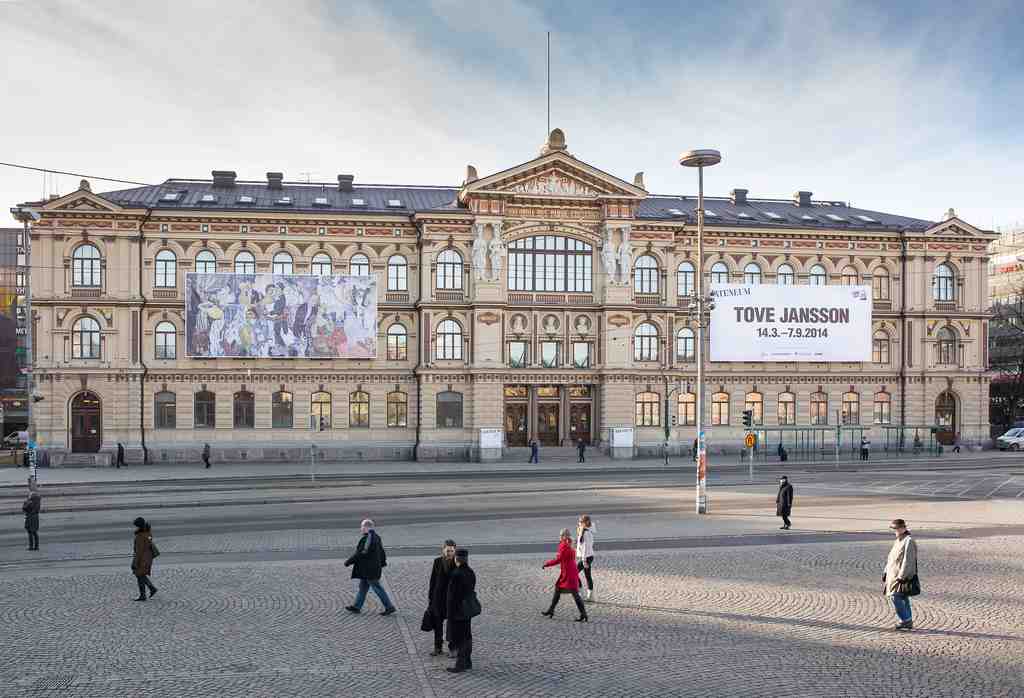
On your right stands a long pale stone façade with rows of arched windows, sculpted busts above the central doors, and a high triangular pediment carrying gold Latin lettering.
This is the Ateneum, and it feels rather like Helsinki drawing itself upright. Outside, trams, commuters, shopfronts and crossings keep the centre in motion; here, the city answers with symmetry, ceremony, and the quiet insistence that art belongs at the heart of public life.
Even the name reaches upward. Professor Carl Gustaf Estlander chose Ateneum in the eighteen seventies, borrowing from temples devoted to Pallas Athene, goddess of wisdom. He imagined an arts palace for Helsinki, where painting and design would thrive under one roof. He had hoped to gather music and literature here as well, though in the end the house devoted itself to visual art. Across the square, Aleksis Kivi gave the nation a literary voice; here, the city raised a stone case for its images.
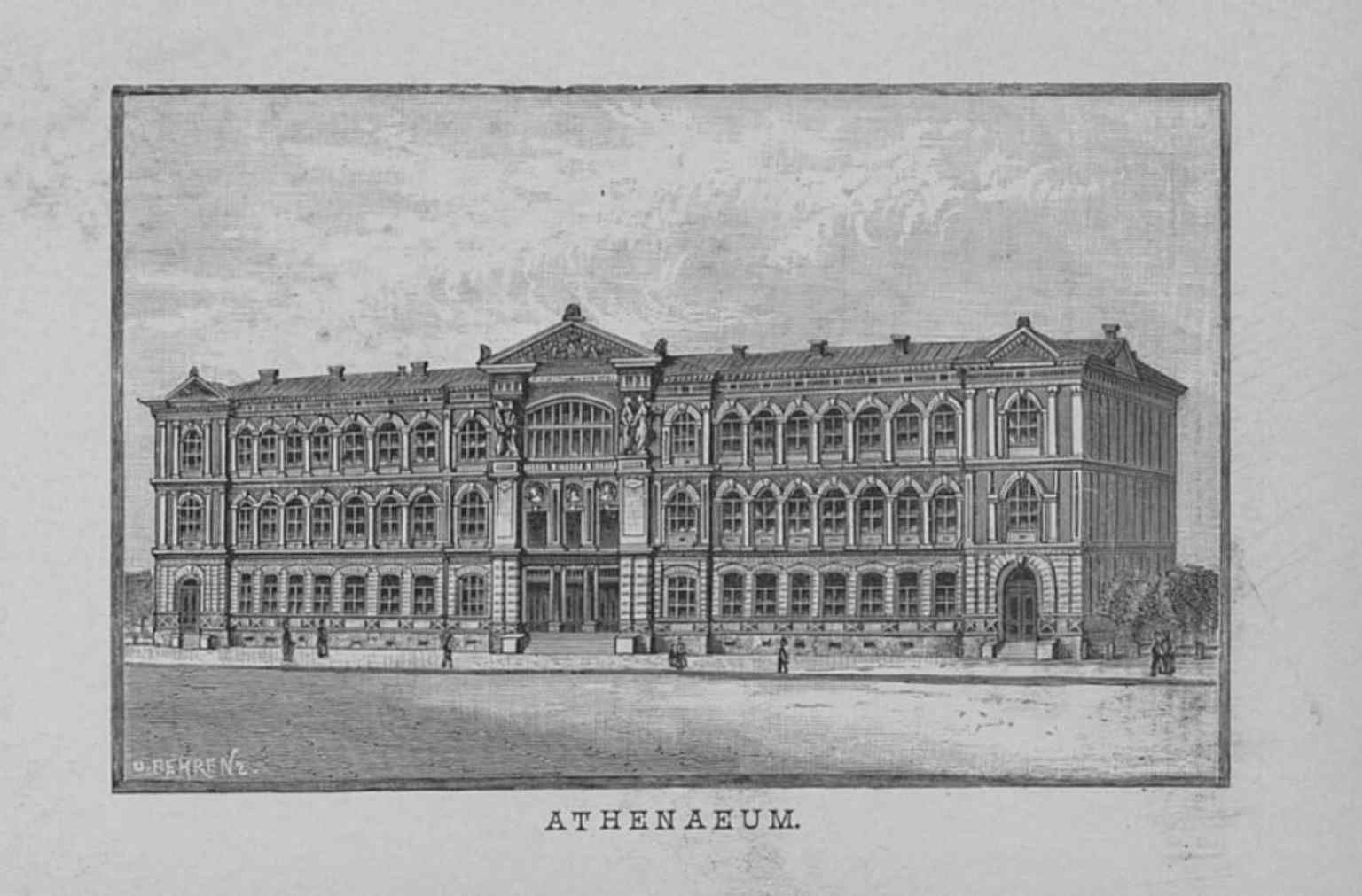
The architect Theodor Höijer completed this Renaissance revival building in eighteen eighty-seven, and he made the façade speak. Above the doors you can pick out three great figures of art: Bramante the architect, Raphael the painter, and Phidias the sculptor. Higher still stand four caryatids, female sculpted figures used as columns, representing architecture, geometry, painting, and sculpture. And in the pediment, beneath the sculpture group, the gold words read Concordia res parvae crescunt: in harmony, small things grow. Estlander chose that line with a little steel in his velvet. Helsinki’s art world had quarrelled bitterly over language, money, and whether this grand project should exist at all. The missing second half of the saying warns that in discord, even great things collapse.
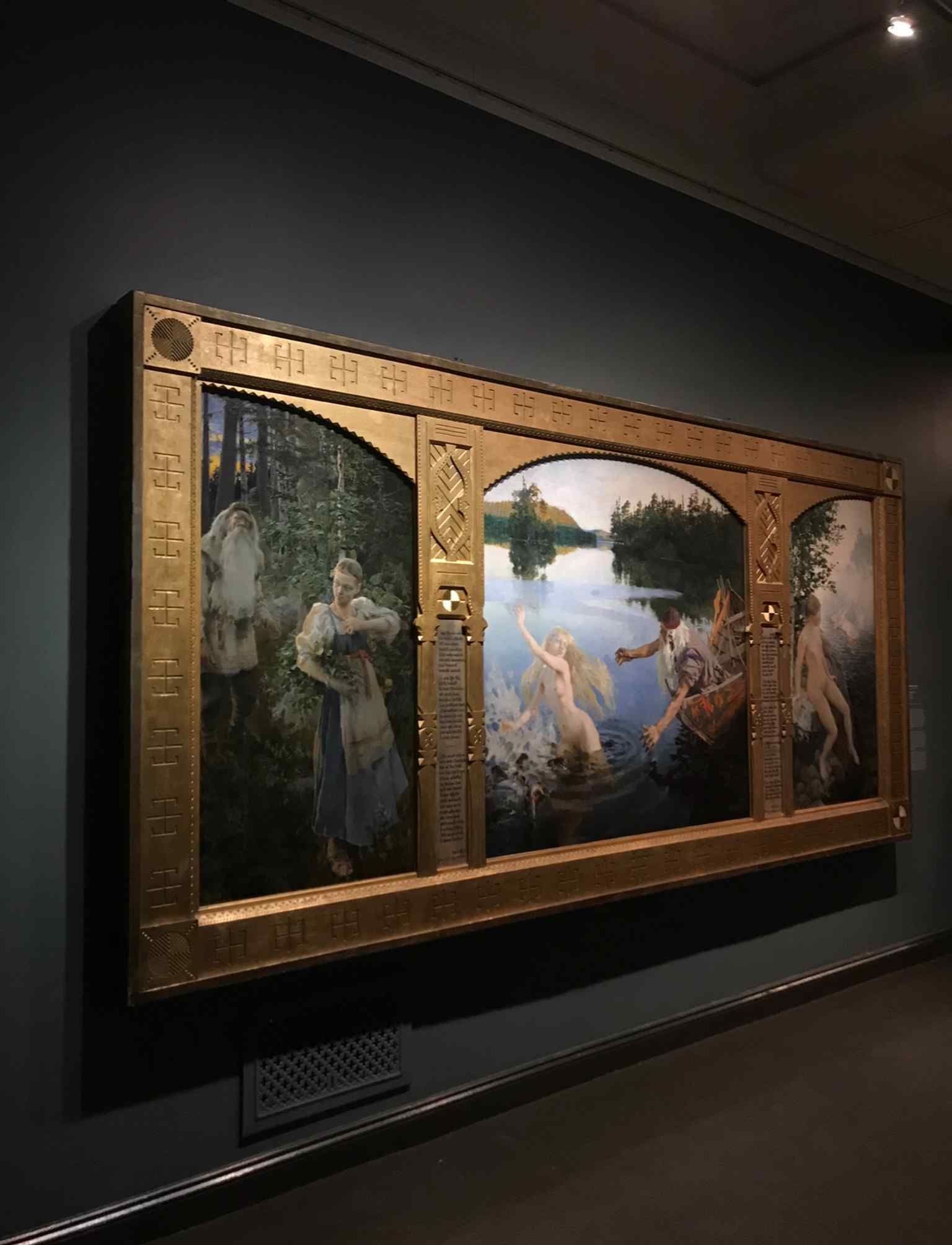
This building taught artists as well as displaying them. The Finnish Art Society’s drawing school worked here for decades, and later the School of Arts and Crafts stayed until the nineteen eighties. Young Akseli Gallen-Kallela studied in these studios and, according to the tale, painted so obsessively that he sometimes slept here in secret rather than stop. His Aino Triptych, shown in the image on your screen, shows the kind of myth, ambition, and national feeling that this house helped shape. And here is the detail locals tend to treasure: Tove Jansson studied here in the nineteen thirties, and despite the global fame of the Moomins, she always considered herself first and foremost a painter. That feels important outside this façade. The world may choose one version of an artist; the work often begins somewhere more private, more stubborn.
War nearly interrupted that continuity. In nineteen thirty-nine, staff rushed the most valuable works out to country manors and church cellars for safety. During the great bombings of February nineteen forty-four, blast waves shattered hundreds of windows and damaged the roof, yet the building survived. One student here then, the cartoonist Kari Suomalainen, later recalled watching the bombing from the roof while serving in anti-aircraft duty. In the before-and-after image, you can watch this frontage hold its poise while the street around it slips from a traffic policeman’s Helsinki into the present. Inside waits one of the nation’s most loved paintings, Hugo Simberg’s Wounded Angel, born after the artist recovered from serious illness; he refused to explain its meaning, leaving each viewer to meet it alone. That is the Ateneum’s secret, really: not a mausoleum, but a place where one generation hands its questions to the next.
Ahead, the city loosens its collar again, and art takes on wheels and a wink at Spårakoff. If you want to come back inside later, the museum is open every day except Monday, with later hours on Wednesday and Thursday.