
Look for a broad, curving concrete tunnel entrance with a pale metal-lined ceiling and a smooth, scooped opening slipping beneath the railway tracks.
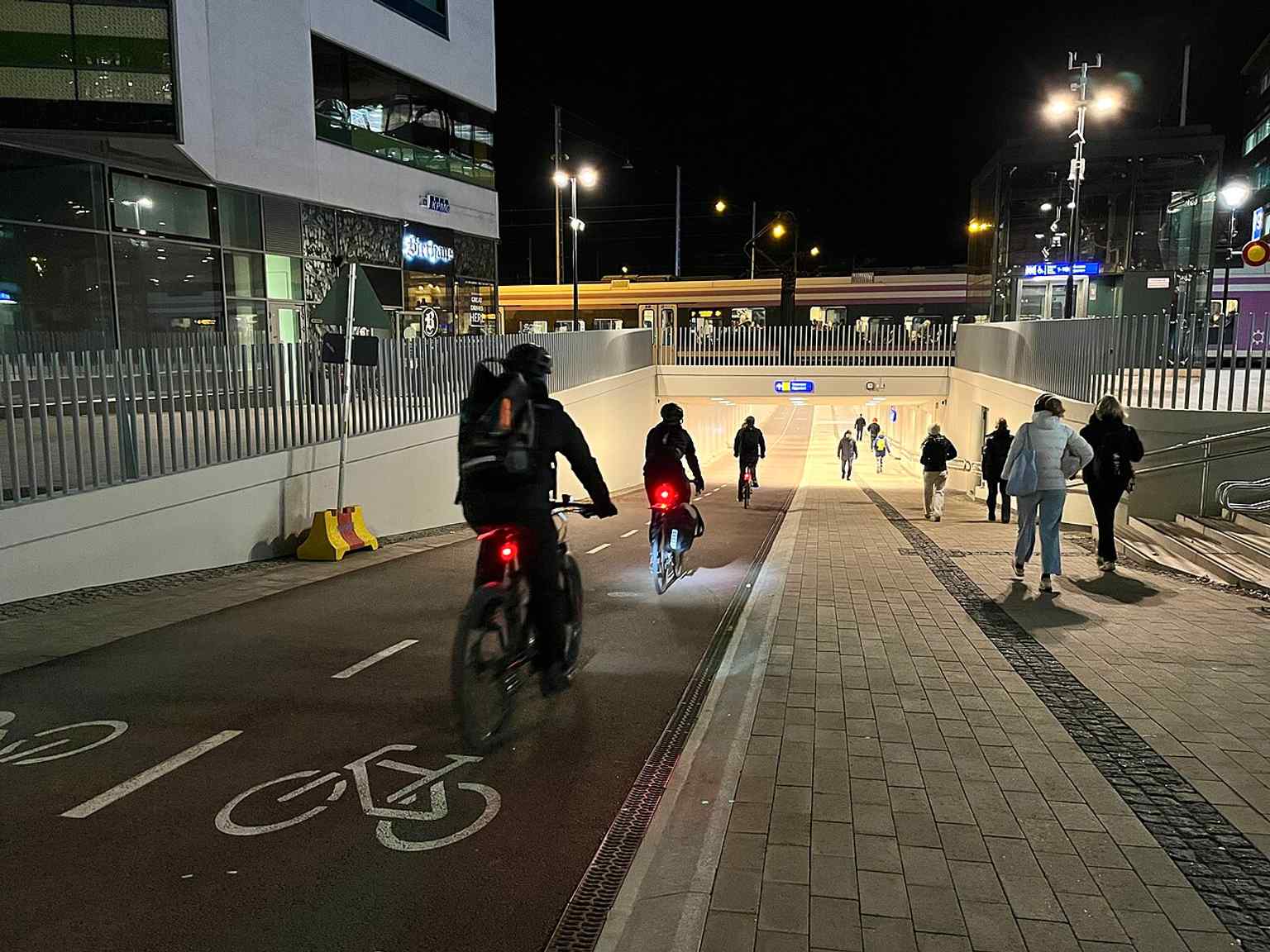
This is Kaisantunneli, Helsinki’s new shortcut: a precise, quietly confident passage for cyclists and pedestrians running under the central station between Töölönlahdenkatu and Kaisaniemi Park. It opened on the fourth of May, twenty twenty-four, but it already feels like part of the city’s deeper logic - another route in a district that has always worried about how bodies move, where they cross, and how safely they can share the same ground.
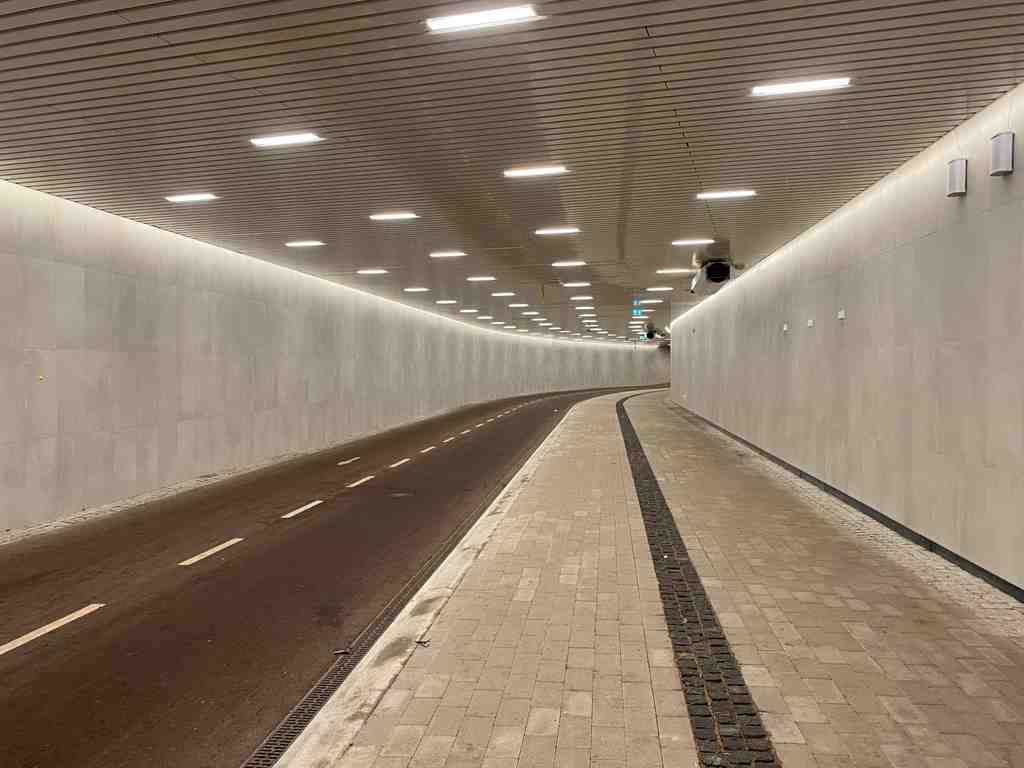
Its curve is no flourish. Designer Matti Tapaninen chose a gentle bend with a radius of one hundred and twenty metres so people could see well ahead, while the tunnel neatly avoided platform stairs and hidden underground cables. That small elegance matters. The whole passage measures about two hundred and twenty metres long and eight metres wide, with a four-metre lane for bicycles and a three-and-a-half-metre lane for walkers. In other words: separation without hostility, speed without chaos.
If you glance at the image in the app, the interior makes that intention beautifully clear. The ceiling is lined with white aluminium slats - fifteen kilometres of them, in total. Engineers made them thicker than usual to resist vandalism, and their pale surface throws light back into the space, so the tunnel feels open rather than compressed.
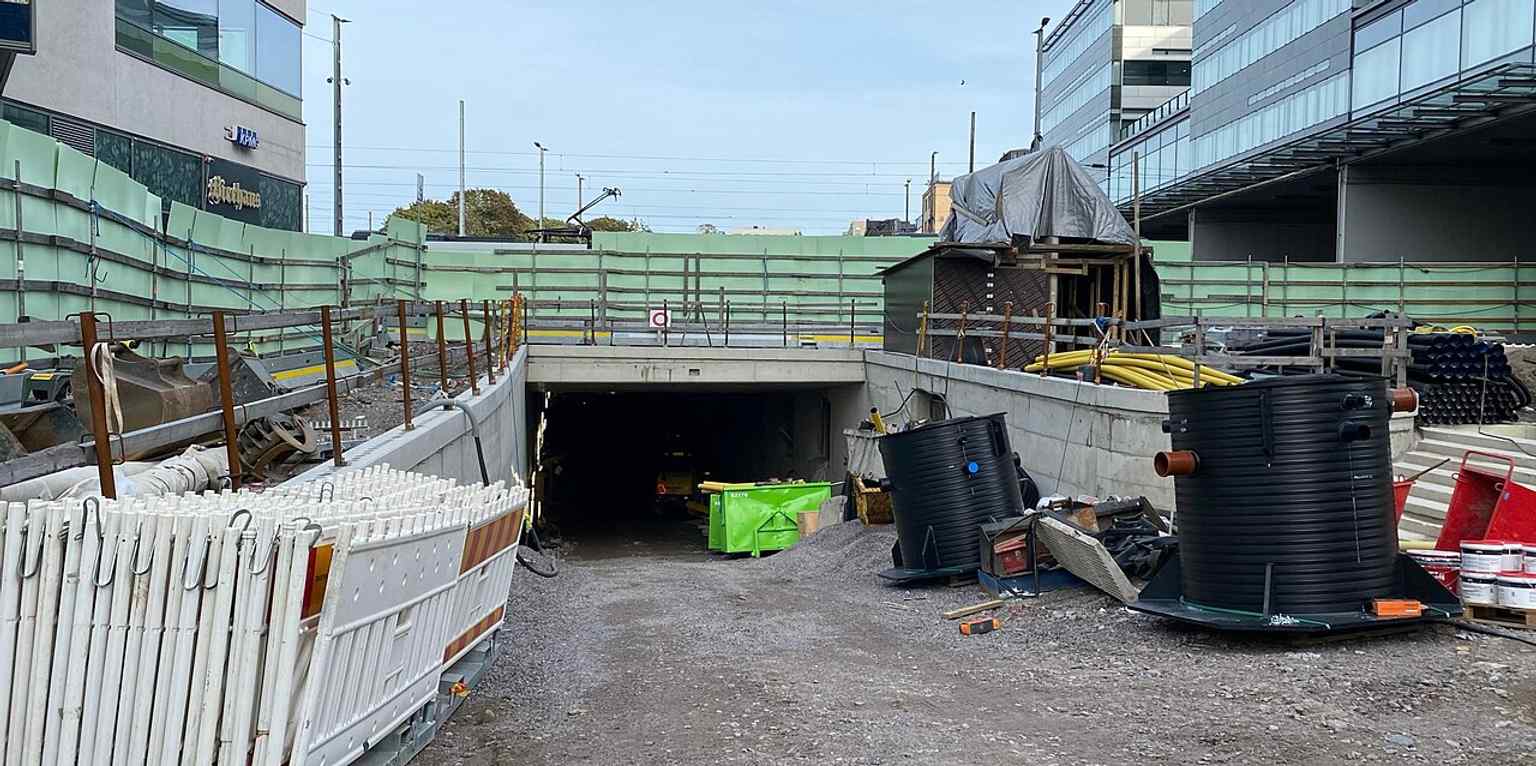
That smoothness came at a price in effort. Building here, under one of the busiest railway sites in the country, became one of Helsinki’s hardest construction jobs. Project director Juha Viitala worked with tightly timed blasting windows - one hundred and twenty-six of them - each lasting only a few minutes, just long enough to stop train traffic, clear passengers, blast, and reopen the routes. Builders dug the trench from above, then roofed it over at the end. And beneath the surface, the city revealed its older selves: unmapped walls, timber pile structures, cables no plan had fully captured. Those discoveries delayed the opening, but they also tell you something essential about central Helsinki. Nothing here arrives on blank ground.
Take a look at the construction image and you can sense that hidden struggle for yourself. Today the tunnel links directly to Baana and could carry as many as ten thousand cyclists a day, while easing the dangerous tangle that used to build on Kaivokatu and Elielinaukio.
So this polished new passage is not merely modern infrastructure. It is memory with good lighting: a new route shaped by old obstacles, buried remains, and the city’s long determination to keep people moving. In about four minutes, at the Aleksis Kivi Memorial Statue, that movement becomes something less mechanical and far more theatrical.






