
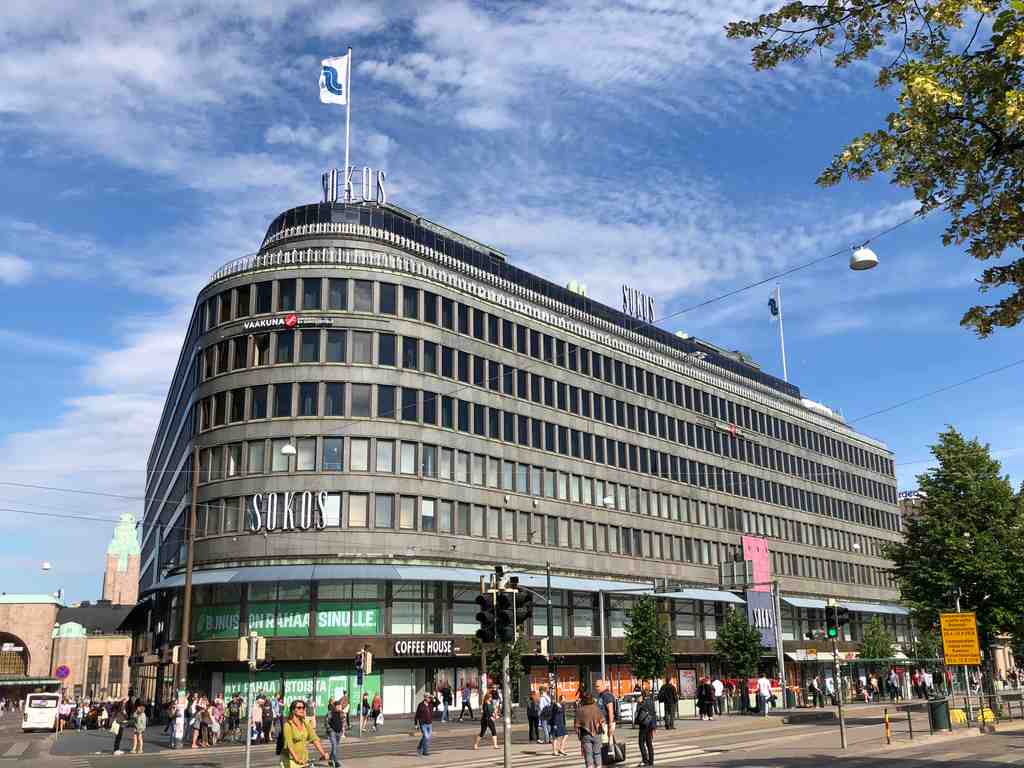
On your right stands a pale stone and glass block with long horizontal window bands and a taller hotel section rising above it, a crisp postwar facade that gives Sokos its unmistakable profile.
Sokos likes to look effortless. That, of course, is part of the performance.
Architect Erkki Huttunen began planning this building in nineteen thirty-eight, when Helsinki expected to greet the Olympic year of nineteen forty with a brand-new department store at its heart. Locals sometimes smile at that detail, because it tells you something important about this city: modernity here often arrived late. By delayed modernity, I mean a future imagined on time, designed with confidence, then postponed by war, shortages, and bureaucracy before finally appearing in stone and glass. Huttunen drew a modern capital; history made him wait more than a decade to see it standing here.
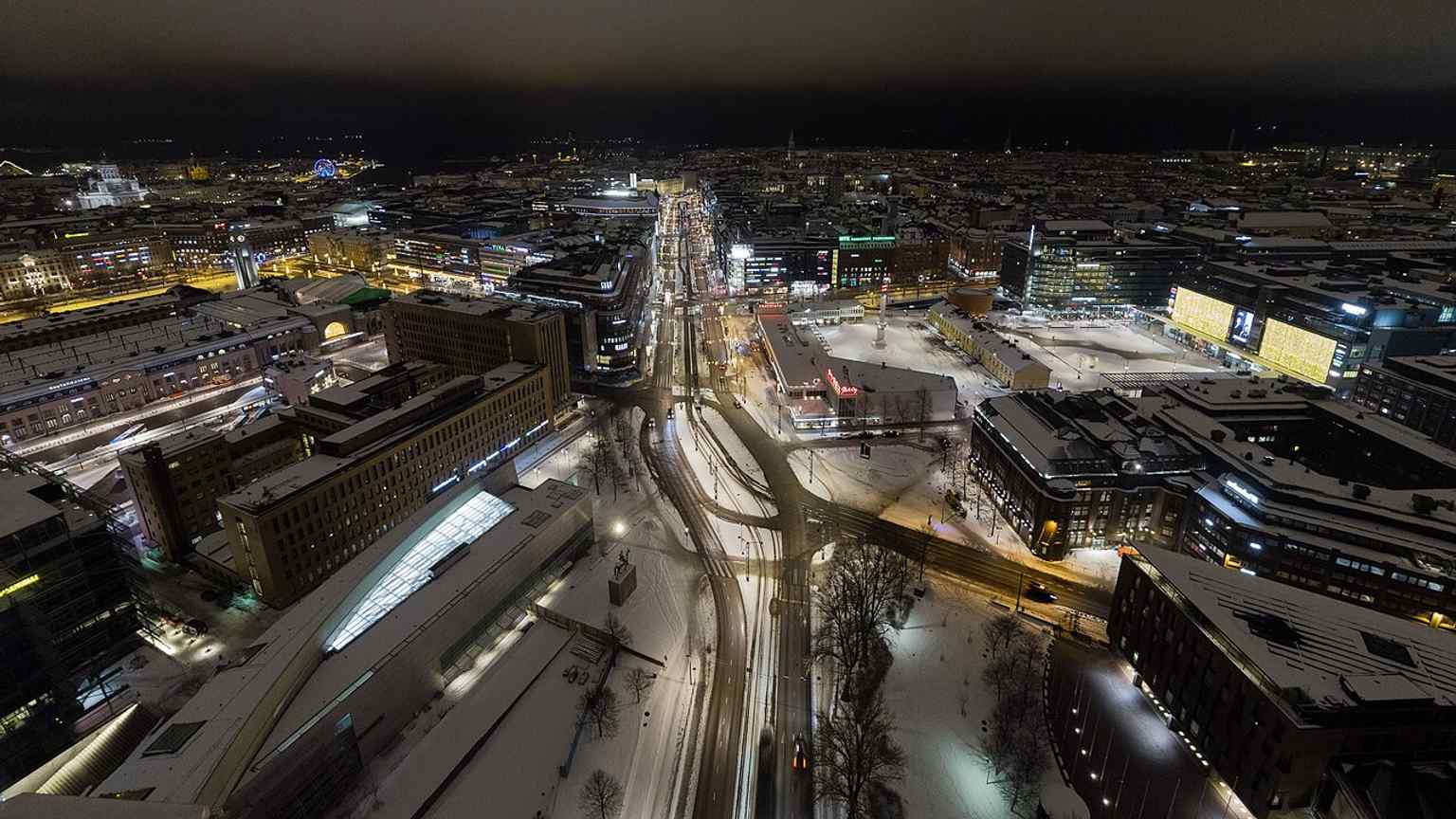
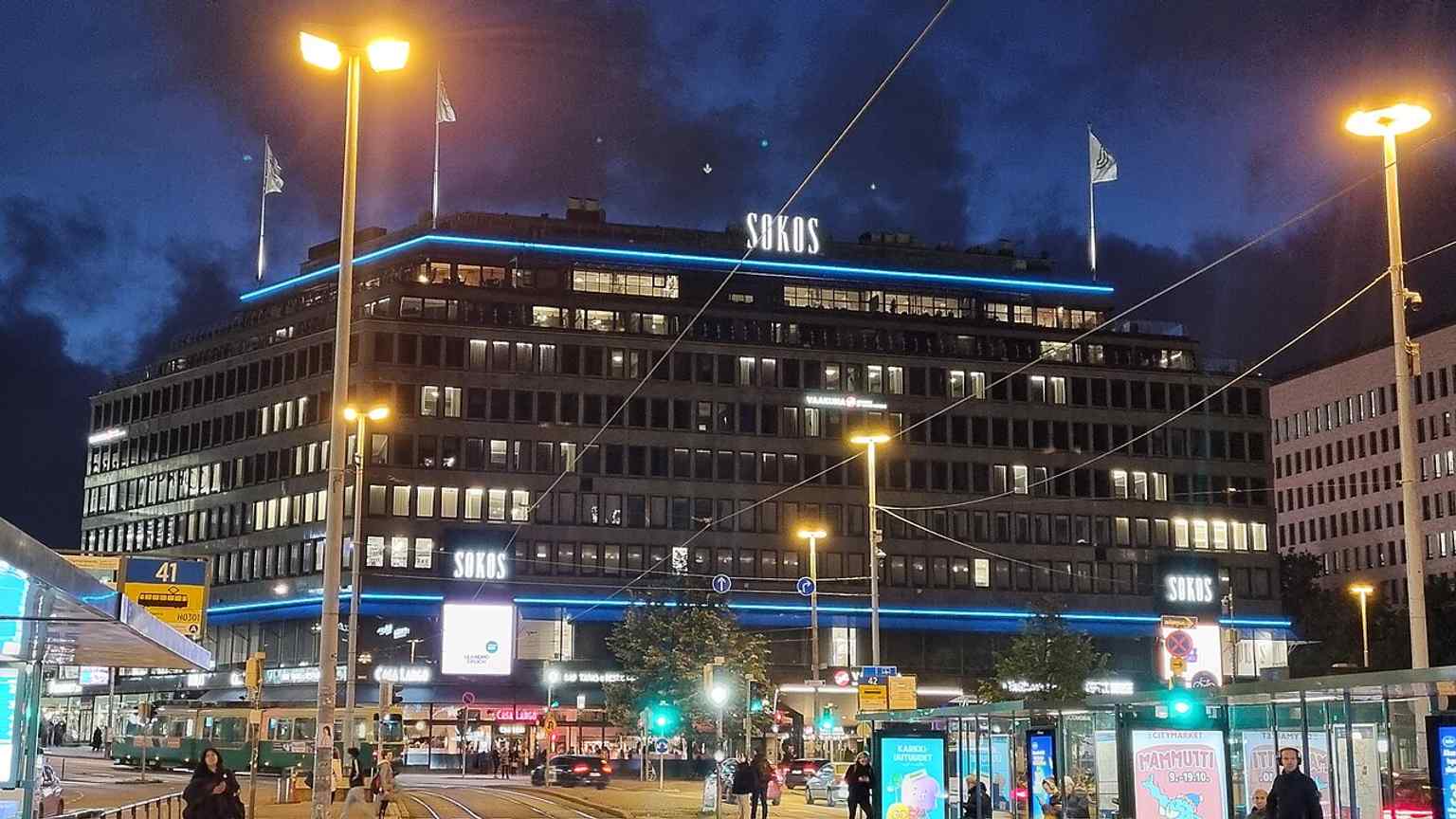
When Sokos finally opened on the seventeenth of March, nineteen fifty-two, at noon, it entered the city like a carefully timed entrance cue. The store filled the lower floors, and above it came Hotel Vaakuna, which opened that June in the same building. If you glance at the image on your screen, you can see how firmly this house sits in the middle of the city’s shopping and transport knot, exactly where Helsinki wanted to present its polished face. The glamour upstairs was not subtle. At the Vaakuna opening on the tenth of June, nineteen fifty-two, invited guests ate foie gras, caviar, and pork fillet with salsify and marmalade, while President Juho Kusti Paasikivi and other state leaders gave the occasion the air of a national premiere. A department store below, a hotel above: shopping, sleeping, dining, and status all stacked into one vertical little world.
And the selling itself felt new. Early Sokos arranged goods for speed and clarity, pushing customers toward self-service, which simply means choosing directly from open displays instead of waiting for a clerk to fetch everything for you. That was modern retail theatre in Helsinki. There were dozens of display windows, specialist departments, restaurants, and, in the lobby, even a fountain with Gunnar Finne’s red granite sculpture Grotesque at its centre, still protected today along with much of the original hotel interior.
If you look at the facade in the app image, the clean lines make perfect sense once you know Huttunen wanted this to announce a fresh era. It became his last major design before his death in nineteen fifty-six.
That is central Helsinki for you: it debuts itself with style, then lets slip that the grand entrance came after years of delay. In about three minutes, we’ll continue to the Lantern Bearers. If you plan to come back inside later, Sokos usually opens from nine to nine on weekdays, with shorter hours at the weekend.






