
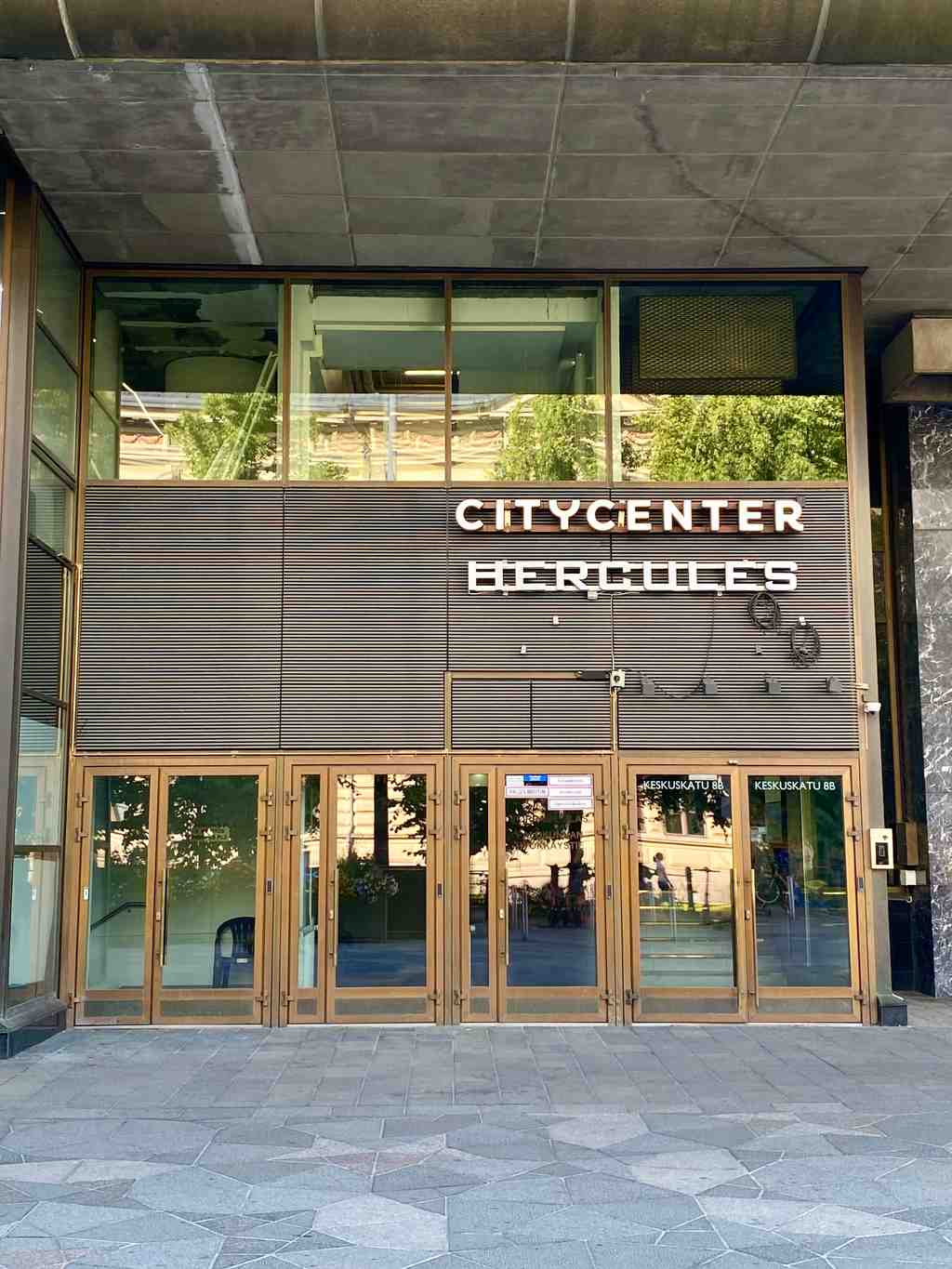
Look for a modern glass entrance cut into a pale stone frontage, a broad rectangular opening marked by the Hercules name above the doors.
Hercules matters because Helsinki’s queer nightlife community did not grow only in hidden corners; it claimed central addresses, bright entrances, and a right to be seen. Here, across from the railway station and high inside the Citycenter complex, a club became part of the city’s public face after dark.
The name is deliciously theatrical. If you glance at the image on your screen, the old artwork of Hercules grappling with the many-headed Hydra feels rather apt. This club, too, kept fighting on several fronts at once: for survival, for visibility, and for the simple pleasure of gathering without apology.
Restaurateurs Erkki Koski and Mika Olkkonen opened Hercules on the thirtieth of August, two thousand, as their third venue under Moek Trading. Before that, they had already opened Café Escale and Mann’s Street, building places for queer life in a city that did not always make room for it gladly. Koski later described the pressure that forced Escale out as homophobic discrimination. So Hercules was never just another dance floor. It was an answer.
It became popular almost at once. In fact, it grew so quickly that it briefly lost its liquor licence after exceeding capacity, and the owners responded by reworking the kitchen and staff areas to fit one hundred more people. That tells you something about the appetite for the place. Critics called it edgy, welcoming, packed, raunchy, friendly. The soundtrack leaned toward Europop, trance, and, with a wink only Finland could manage, even Finnish folk songs. The crowd ranged widely in age, but Hercules especially catered to gay men over thirty, and on weekends it barred entry to anyone under twenty-four. In a nightlife culture that often worships youth, that choice quietly redrew the social map.
And then there was the stage. Drag artists such as Barbara Blo’up, Barbi Becker, Bella RuRu, and Candy Sucker turned the room into a ritual of reinvention. Galaxy Drag Club nights mixed drag, burlesque, and live singing, making the city itself feel like a performance in which more people could finally take a speaking part. If you look at the towering heroic figure in the second image, you can see how the club borrowed that larger-than-life swagger for itself.
But the glossy surface hid bruises. Hercules moved from Kamppi when a hotel took over its first home, then struggled in Etu-Töölö. While Erkki Koski recovered in hospital from a stroke, a manager embezzled money from the business. Then came a racism scandal over a post on the club’s social media, public backlash, a costly pricing error on the terrace, water damage, and the long strain of the pandemic. Yet the club adapted, even turning its dance floor into a television studio for streamed drag revues, concerts, and talk shows when ordinary nightlife stopped.
That persistence is the real story here. A city centre often pretends to belong to shoppers, commuters, and official culture, but nightlife can change the ownership of a place without changing a single stone. Hercules helped make central Helsinki belong, visibly and joyfully, to people who had once been asked to stay discreet. When you are ready, continue to Sausage House, only about two minutes away, and if you fancy returning later, Hercules usually opens from four in the afternoon until half past four in the morning from Wednesday through Saturday.




