
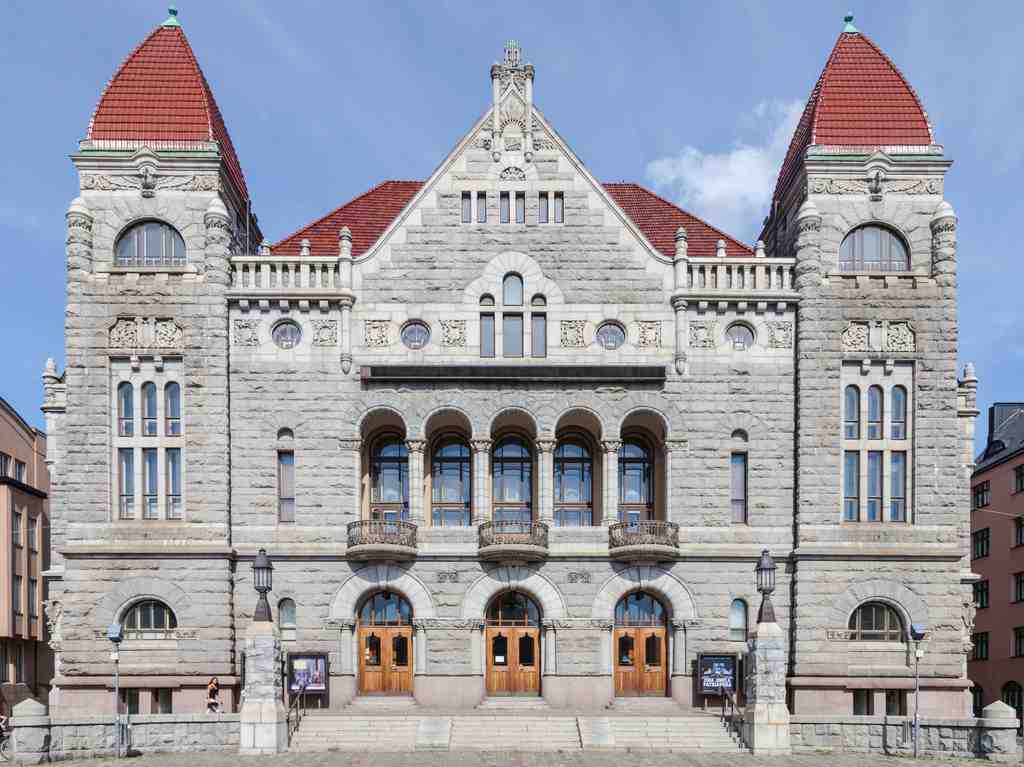
On your left rises a rugged grey-granite theatre with steep gables, tall arched windows, and a tower-like corner that makes it feel almost like a northern castle.
This is the Finnish National Theatre, and for Helsinki it has never been only a building. It is the place where Finnish stepped forward as a public language of art. The company began in eighteen seventy-two under the name Suomalainen Teatteri, the oldest professional Finnish-language theatre in the country, after thinkers like Fredrik Cygnaeus and the determined director Kaarlo Bergbom argued that the stage should speak to the whole nation, not just a cultured circle in Swedish.
And here is the first little reversal in the story: this “national” theatre did not begin grandly in the capital at all. In its early years it travelled through places such as Pori, Tampere, Turku and Viipuri, carrying plays to audiences beyond Helsinki. Even now that restlessness remains. Since two thousand and ten, its touring stage has taken performances into prisons, health care units and reception centres, reaching people who cannot easily come here themselves. So this theatre has always moved outward, even when it seems planted in stone.
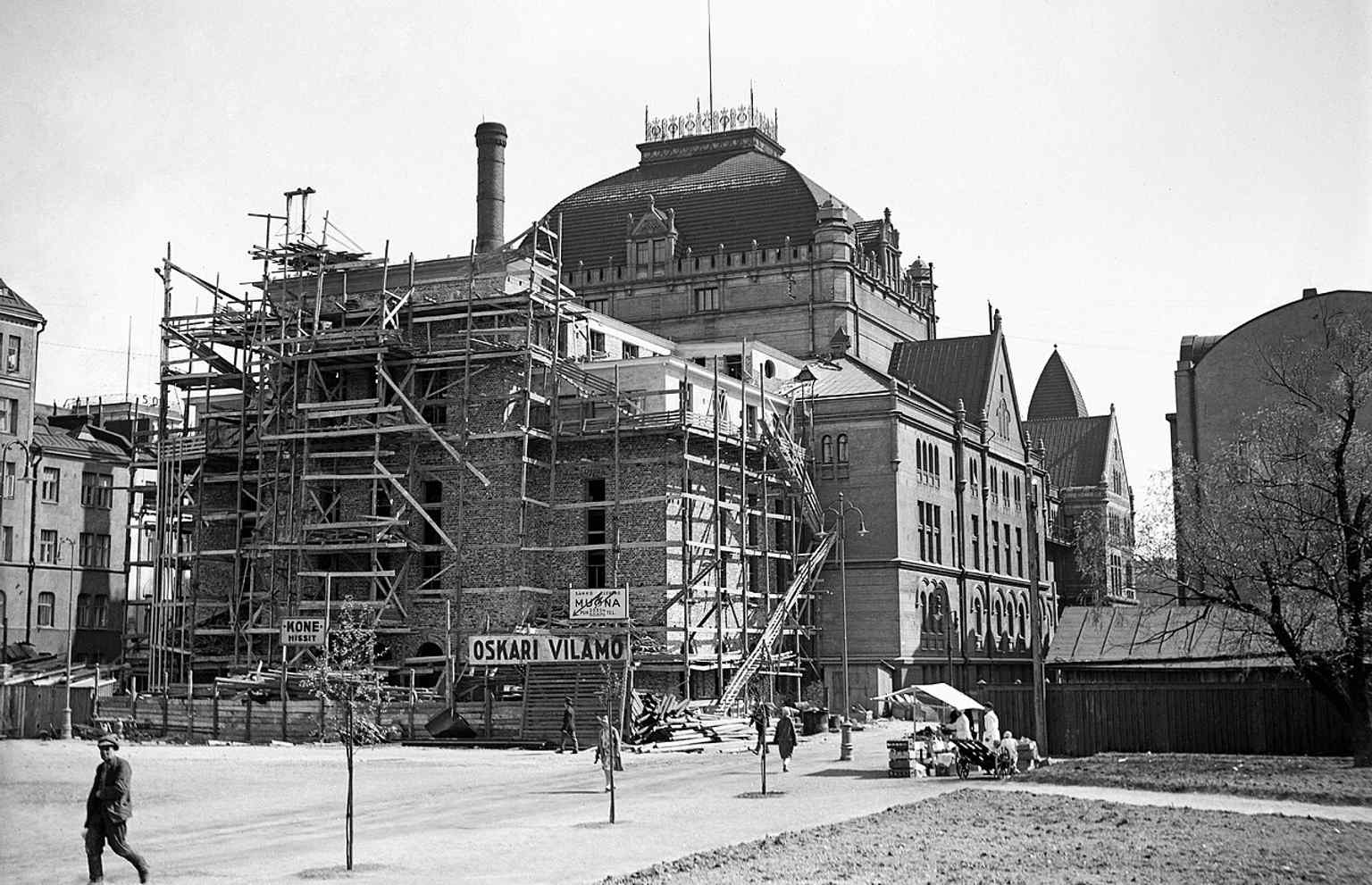
The stone came later. In nineteen oh two, architect Onni Tarjanne gave the company this great home on Railway Square in a National Romantic style, meaning architecture that used rough local materials and medieval-looking forms to make a young nation seem ancient, weighty and unmistakably its own. The granite came from Uusikaupunki, and it gives the facade that stern, almost legendary gravity. If you fancy it, have a look at the before-and-after image in the app; it shows the nineteen-thirties extension rising beside the original theatre before the whole frontage settled into the form you see now. Inside, the arguments never stopped. In eighteen eighty-five, Minna Canth’s The Worker’s Wife shocked audiences by showing urban poverty plainly and attacking a law that gave husbands control over their wives’ property. Conservatives called it indecent; reformers embraced it. That is the thing about this place: it stages the nation, but it also needles it.
And then, rather deliciously, the theatre refuses to stay entirely rational. People here still speak, quite calmly, of Urho Somersalmi. He spent years playing heroic roles, but after retirement he fell into deep depression; in nineteen sixty-two he killed his wife, the actress Aili Somersalmi, before taking his own life. Staff have long said that his ghost still wanders these corridors, sometimes with the axe in his hand. It is the building’s darkest afterimage: a man trained to live before an audience, unable to leave the stage.
He is not said to be alone. There is also the Grey Lady, drifting as if searching costume rooms or a balcony for something never found. So while trains, shoppers and office workers stream past outside, this is perhaps Helsinki’s most honest building. It admits that public life is theatre, and that some roles cling long after the applause ends.
When you are ready, head on to Railway Square Metro Station, about a minute away, and carry that small shiver with you. The theatre is generally open from ten to five, Monday through Saturday, and closes on Sunday.





.jpg)