
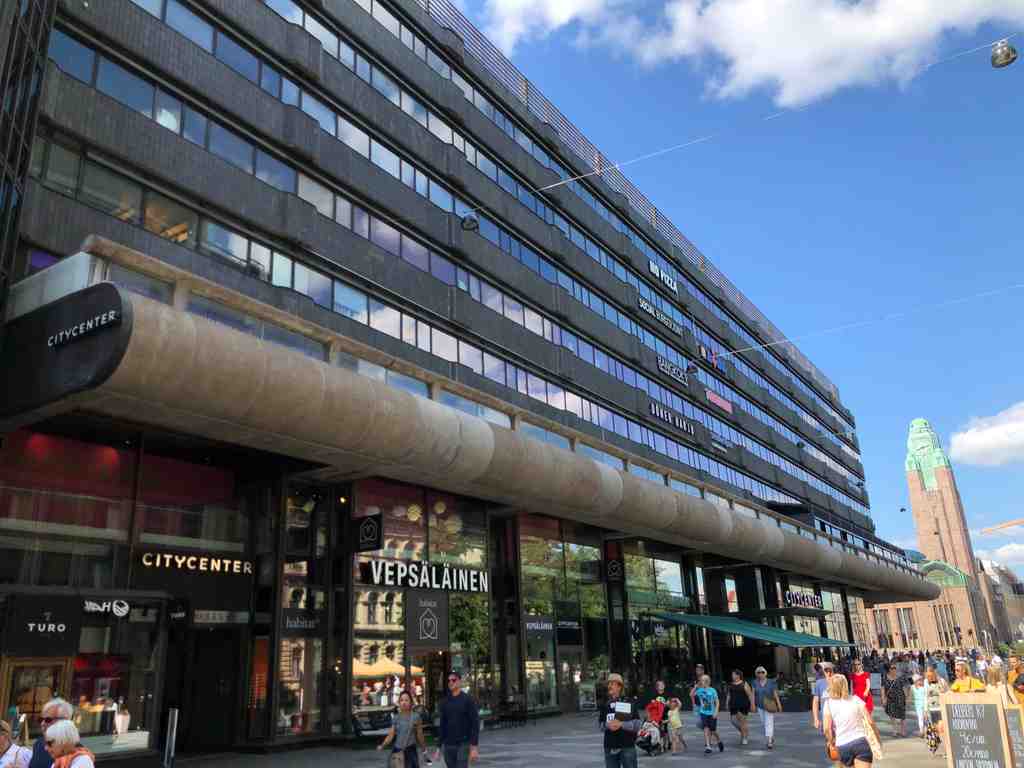
On your left, look for the broad concrete and glass building with a long curved overhang wrapping the upper level - the strange, unmistakable feature that gave Makkaratalo, the Sausage House, its name.
This is one of central Helsinki’s great arguments made solid. Viljo Revell and Heikki Castrén designed it in the nineteen sixties, and it opened in nineteen sixty-seven opposite the railway station, right where the city had begun fighting over what should be torn down, what should replace it, and who got to decide what the centre ought to become.
Before this rose here, the site held Skohan talo, a four-storey commercial building, and beside it a low bazaar with Restaurant Central. Their loss meant more than one demolition. It stripped away ordinary rooms of daily city life. Revell did not imagine this as a lone building, either. He wanted a much larger City Center complex stretching all the way to Aleksanterinkatu. Only the northern part was realised, and you are standing in front of that compromise.
If you glance at the image on your screen, you can see how the curved projection dominates the facade. That overhang circled the third-floor parking level, reached by ramps, and Helsinki promptly gave it a mocking nickname: the sausage. A cartoonist, Kari Suomalainen, helped fix that name in the public mind with a satirical drawing in nineteen sixty-six. A joke helped christen a building more permanently than any official plaque.
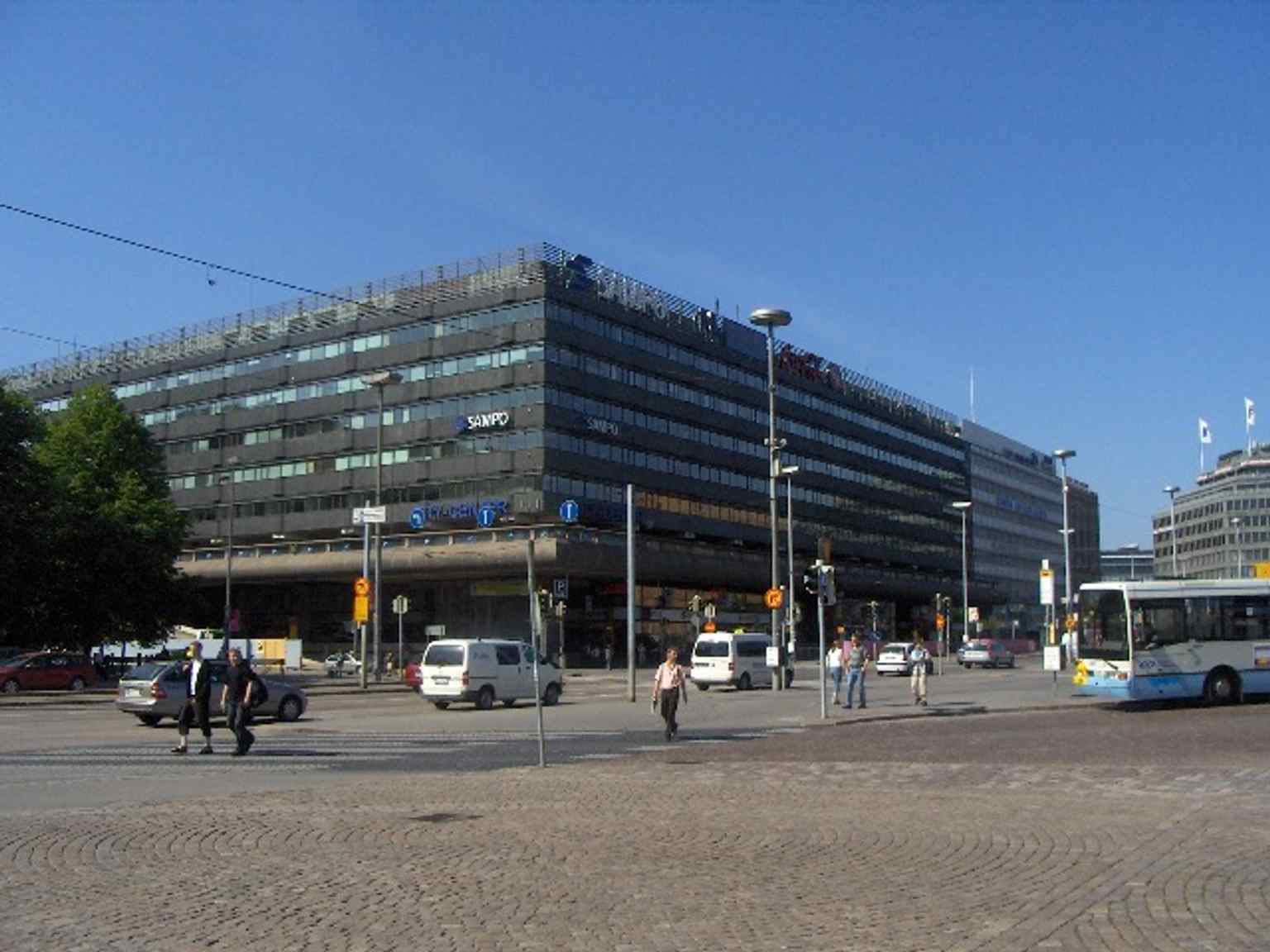
And here is the sharper question. When a disliked building replaces familiar streets and shops, what weighs more after decades: the wound it caused, the use it gave, or the memories people made anyway?
Critics called it ugly, too car-centred, even a scale error beside the station. Yet when owners tried to remake it in the two thousand and tens, the city let the Keskuskatu ramps go but protected the rest, including the very “sausage” people had once ridiculed. Look at the historical image in the app and you can feel that tension beside the station itself. Beneath the newer shopping centre, even an older building by Eliel Saarinen from nineteen ten still survives in the inner courtyard, like a secret layer the redevelopment never quite erased.
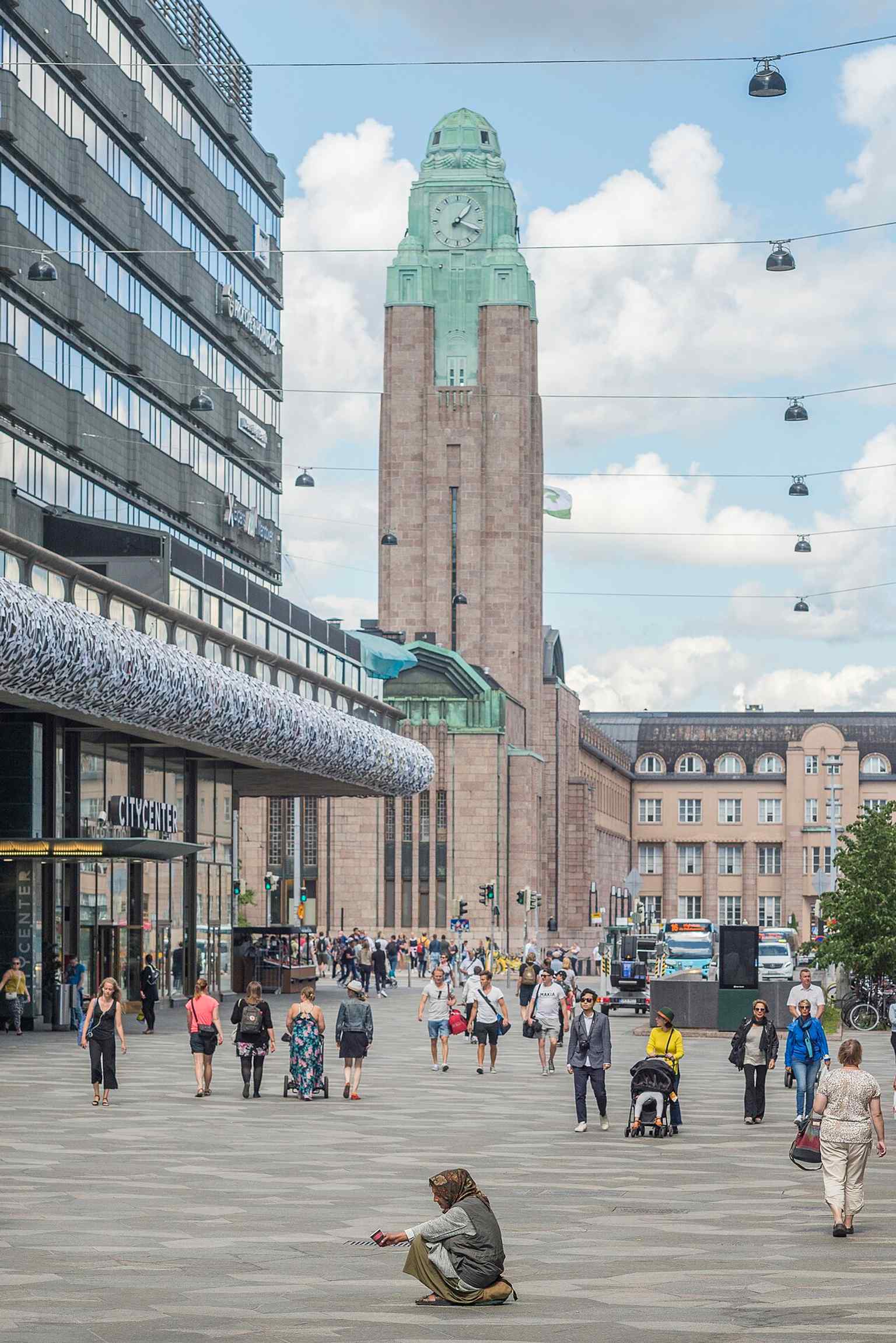
That is the discomfort of city making: what gets mocked can endure, and what gets loved can vanish. We carry that unease with us to the Ateneum Art Museum, about two minutes away. If you want to go inside later, note that it is generally closed on Mondays and Sundays.






.jpg)
