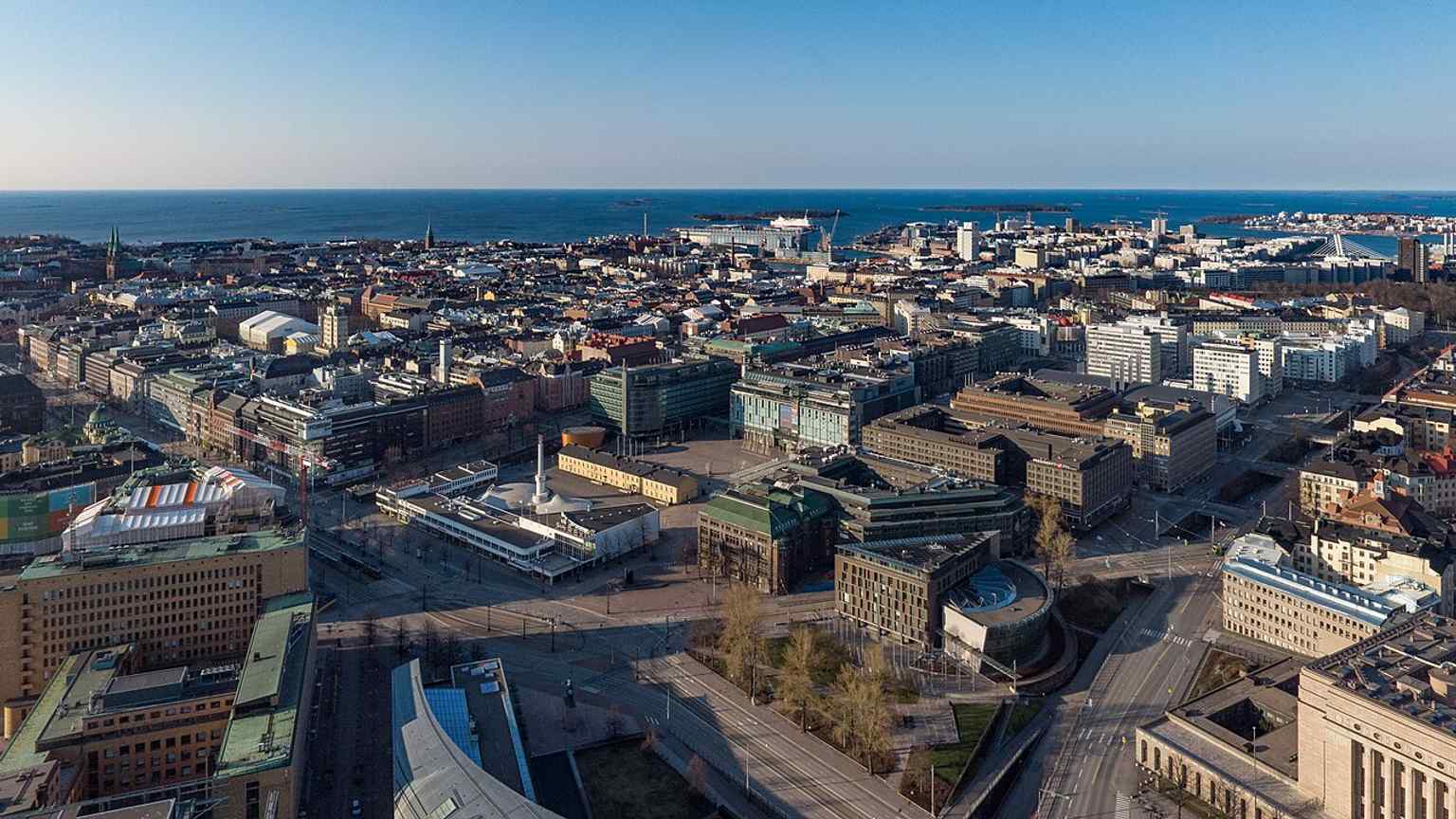
On your left stands a broad, yellow clinker-brick building with clean horizontal lines and a firm rectangular mass, its facade distinguished by the subtly postmark-patterned brick that gives Postitalo its own quiet signature.
This is Postitalo, the former headquarters of Finland’s Post and Telegraph service, completed in nineteen thirty-eight. It looks calm, almost disciplined, but that composure is slightly deceptive. This place worked like a control room for the whole city: letters, telegrams, phone traffic, staff, machinery, public counters, all arranged with the precision of a well-run stage set.
Its style is functionalism, a modern design language that prized efficiency, clarity, and speed. You can feel that in the facade from where you stand at the front-right corner: the building does not flirt, it organizes. Yet even here there is drama. In the competition of nineteen thirty-four, two ambitious young architects, Jorma Järvi and Erik Lindroos, rose above a field that included Alvar Aalto. Järvi was only twenty-six. The authorities admired their bold modernism, then promptly worried they were too young to trust with such an important building. So they brought in Kaarlo Borg, an older architect, to steady the work. That tension between youth and caution is frozen into the building itself: daring, but supervised; modern, but never reckless.
If you glance at the historic view on your screen, you can see how firmly the building holds Mannerheiminaukio, almost like a civic machine dressed as architecture.
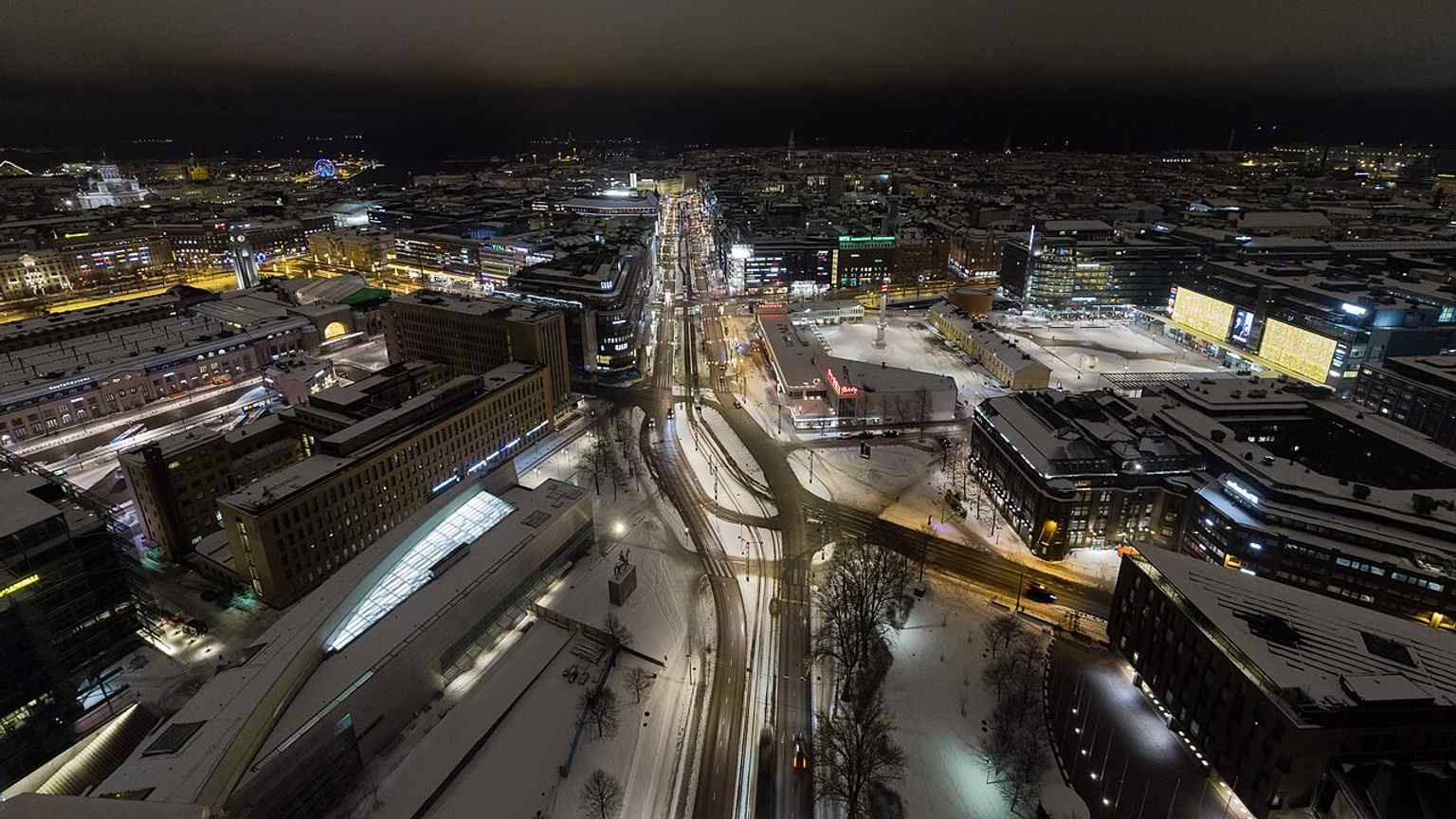
Most people look at the yellow walls and stop there. A local would tell you the real Postitalo once began below your feet. Two underground levels housed heat distribution, electrical control rooms, the ventilation centre, a backup power plant, storage, and even equipment for cleaning mail sacks. Not just sorting letters, then, but scrubbing, powering, circulating, correcting. Beneath this polished facade sat an entire hidden organism, humming away so the public saw only ease. Even the interior followed that logic: custom furniture, careful lighting by notable designers such as Paavo Tynell, and open service counters that avoided the old glass barriers between clerk and customer.
The site itself had an earlier life too. Workers cleared away old gasworks buildings before this new headquarters could rise, so once again Helsinki replaced one engine with another.
Later, the building changed with the city: extra floors arrived in the nineteen fifties, and in nineteen fifty-two the roof even served as Helsinki’s first helicopter landing pad during the Olympics. Elegant, yes. But elegance here always depended on systems, labour, and nerves hidden from view.
In about four minutes, Kaisantunneli will show you another passageway where the city keeps its movement slightly out of sight. If you want to step inside here later, the building is generally open daily, with shorter hours on weekends.