
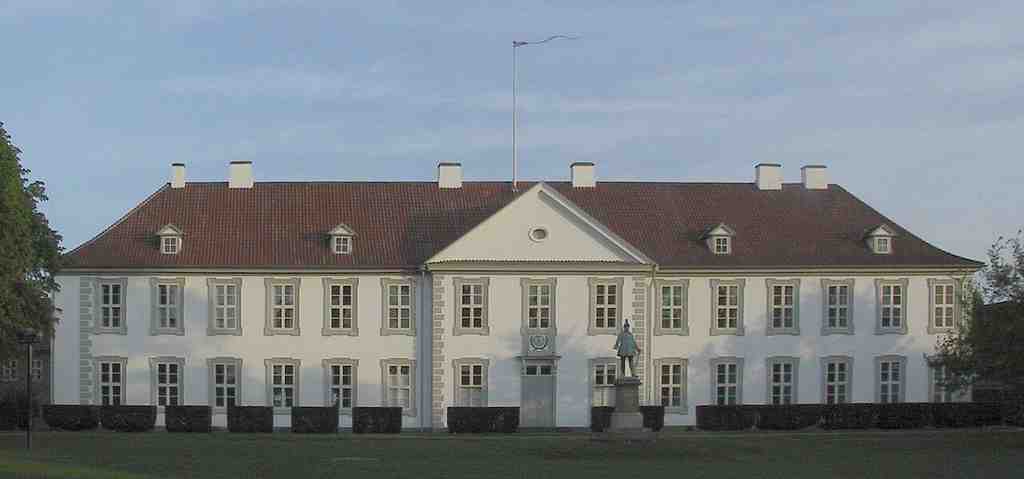
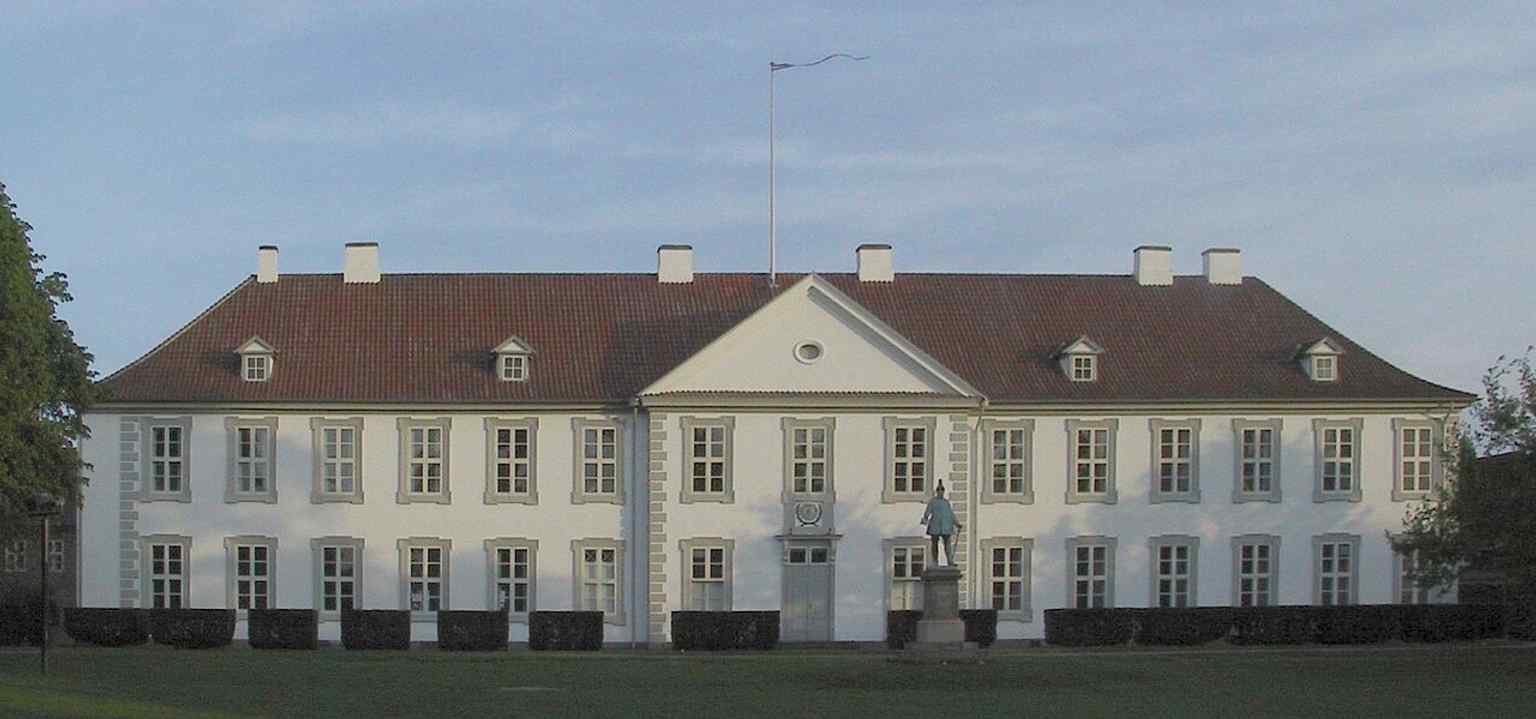
On your right, look for the long white plastered facade, the dark pitched roof, and the centered triangular pediment that gives Odense Castle its calm, official face.
This building likes to introduce itself as an eighteenth-century palace... but that is only the top layer. The story here starts much earlier, back in the thirteen hundreds and even before that, when the Johanniters of Odense began growing a religious complex on this site. The Johanniters were a Christian order with monks, property, and practical duties too, including care for the sick, and by the fifteen hundreds this had become one of the most important Johanniter centers in Denmark.
That older place is easy to miss now. Most visitors see the smooth white front and think “royal residence,” neat and simple. Local tip: the real surprise is that the familiar castle sits on the footprint of a major medieval monastery, largely invisible unless you know where to look. In the older wings, parts of the fifteenth-century growth still survive, and traces like bricked-up windows and old arches remain tucked into the building fabric like stitched scars.
After the Reformation in fifteen thirty-six, the Crown took the monastery, renamed it Odensegaard, and moved power straight into the cloister. That tells you a lot about Odense: one set of authorities leaves, another arrives, and they keep using the same ground. The last monks stayed on for a while, but they now shared space with the king’s man here, Claus Daa, the first lensmand, which means a feudal royal governor. Religion, administration, noble privilege... all packed into one address.
In the fifteen seventies, King Frederik the Second decided the old monastery needed a royal upgrade for family stopovers on the road across Denmark. Builders added an extra floor to all three wings. The west wing held royal rooms, the east wing housed the governor, and the south wing handled the kitchen. Efficient, practical, a little like turning a monastery into a state guesthouse with very important dinner plans.
Then war chewed through the place. During the Swedish wars in the seventeen hundreds, Swedish troops occupied the castle and burned the furniture for firewood. When they left, the place stood empty and stripped. Later, after absolute monarchy began in sixteen sixty, the county governor moved in, and the castle kept serving as the island’s administrative brain.
If you glance at the image in the app, you can see that white north-facing main building that King Frederik the Fourth ordered after deciding the older place was not quite grand enough for him. Architect Johan Cornelius Krieger rebuilt this front from the early seventeen twenties, with a great dining hall called Rosen and apartments for the king and queen. Frederik the Fourth liked the new garden... and in seventeen thirty he came here ill, weakened, and died in the castle on the twelfth of October.
There is another life here I like to remember. H. C. Andersen’s mother worked at the castle after her husband died. She gathered herbs for a pharmacy, helped in the kitchen, and washed clothes in brutally hard conditions. Her labor kept this polished machine running. And that thread matters. In Odense, the distance between servant’s work and a public stage could be wider than a moat... and sometimes, somehow, still crossed.
Soon we leave rooms of governors, kings, and hidden staircases for a different kind of authority: performance in the open, where a city watches itself. Odense Theatre is about a three-minute walk from here.
And one practical note: this stop is part of the cityscape all day, so you can return whenever it suits your wanderings.





