
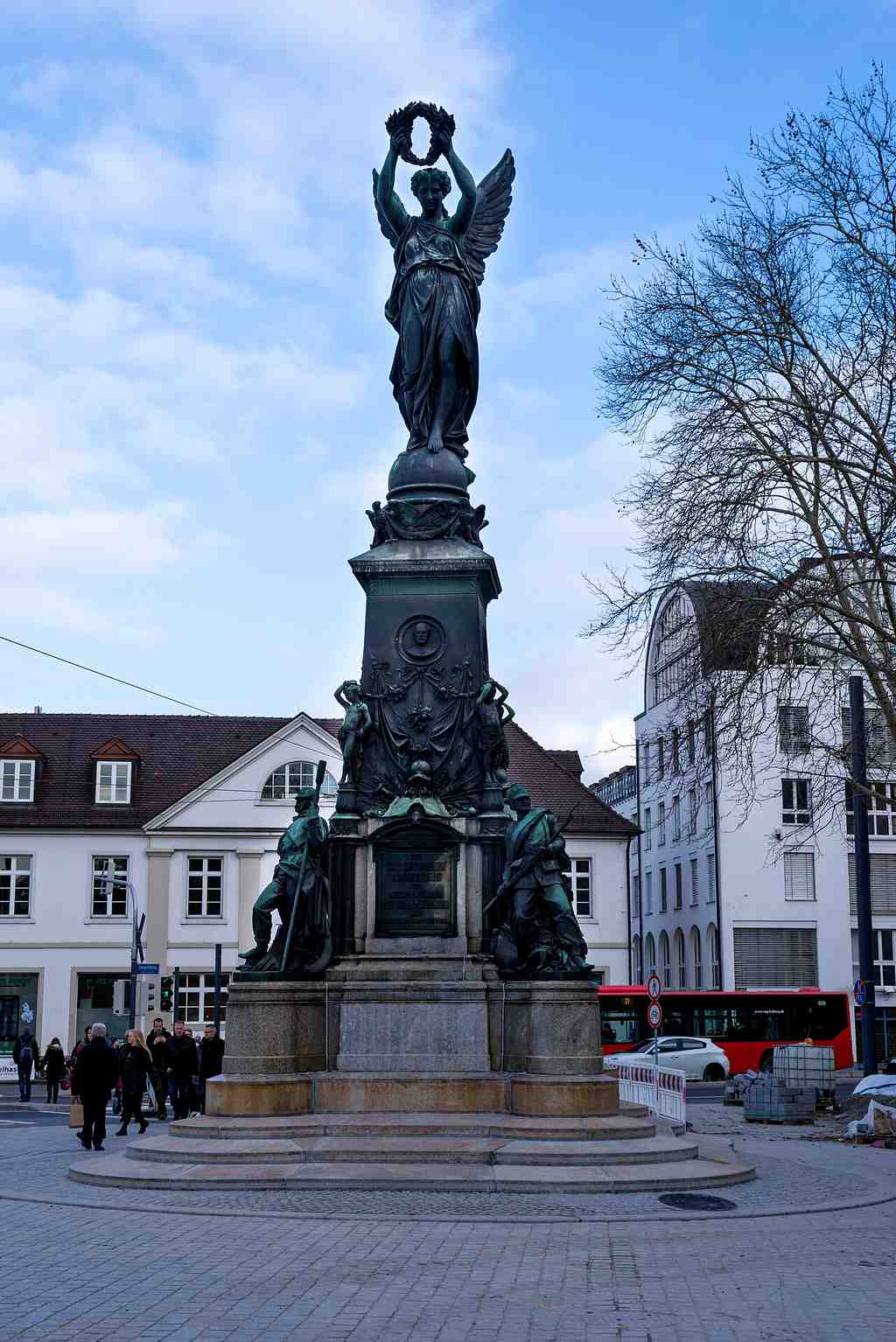
Voici la partie que la plupart des visiteurs manquent: les noms officiels des lieux autour de cette place n'ont cessé de changer. Wilhelmplatz, Kaiser-Wilhelm-Platz, puis finalement Europaplatz. Mais les habitants ont pour la plupart ignoré les documents administratifs et ont continué à appeler l'endroit Siegesdenkmal. La mémoire publique a tranquillement outrepassé le registre municipal. Le monument a également survécu au vingtième siècle autant par la controverse que par la pierre. En mille neuf cent quarante, le Gauleiter nazi, chef régional du parti, Robert Wagner, a fait pression pour qu'il soit fondu comme cadeau d'anniversaire pour Hitler. Des personnalités de la ville, dont Franz Kerber, ont résisté, et le monument est resté. Puis, lors du bombardement du dix-neuf novembre mille neuf cent quarante-quatre, la Karlskaserne voisine a été détruite, tandis que le monument est resté debout, presque indécemment intact. En mille neuf cent soixante-deux, les ingénieurs de la circulation l'ont déplacé d'environ cent mètres vers l'ouest parce qu'il gênait. Ensuite, lors de la reconstruction de la ligne de tramway, la ville l'a déplacé en deux mille dix-sept, presque à son emplacement d'origine. Ainsi, ce monument ne cesse de changer sans changer: même Victoria, même granit, nouvel environnement, nouvelles explications et regards plus sceptiques. Au Bertoldsbrunnen, le symbolisme civique se sentait confiant; ici, il porte un uniforme. Ensuite, l'histoire se resserre, passant des armées à une demeure remarquable et à un savant célèbre en exil: la Maison de la Baleine se trouve à environ trois minutes de marche. Et, en termes pratiques, cet arrêt est accessible en tout temps, jour et nuit.
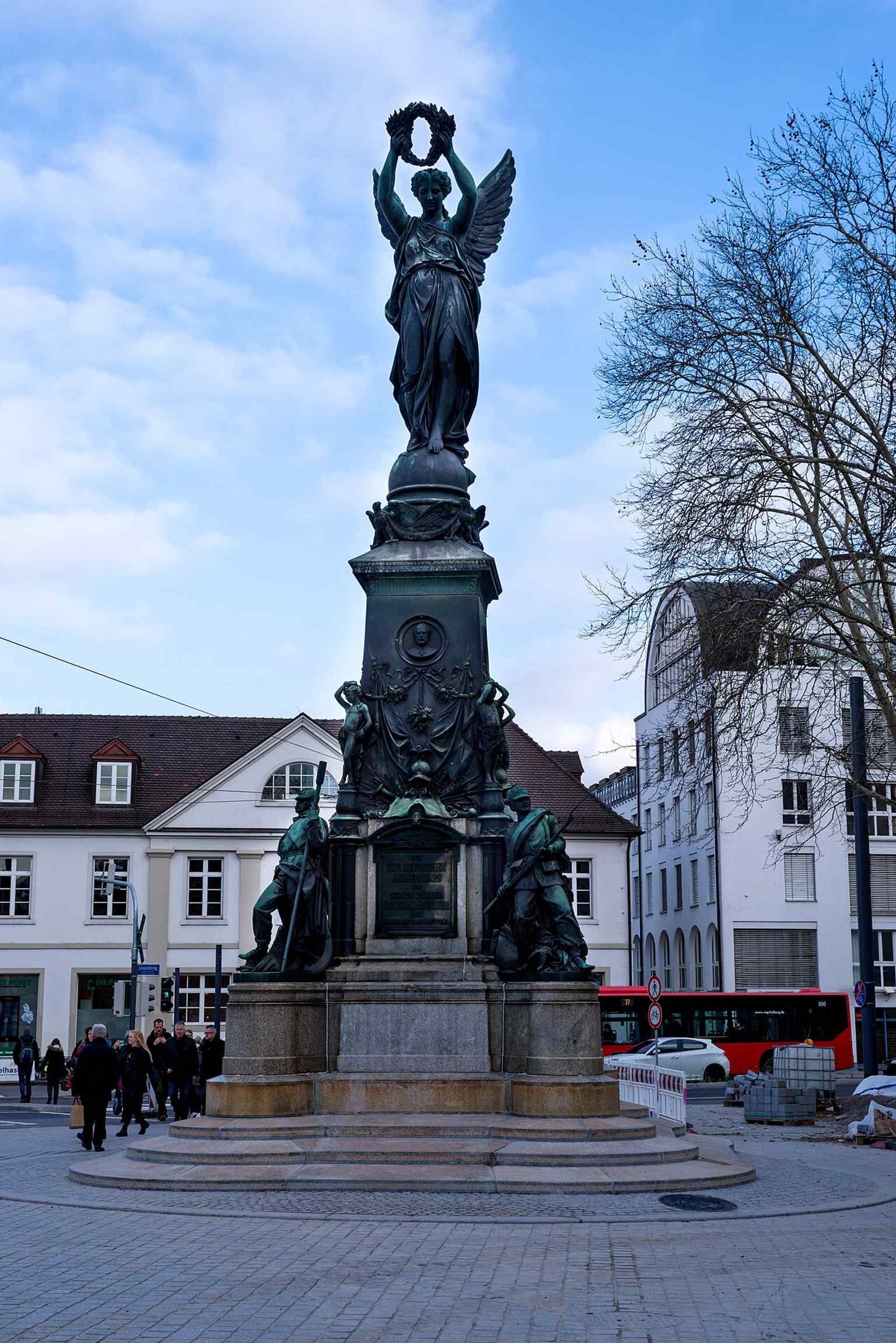
Here’s the part most visitors miss: official place names around this square kept changing. Wilhelmplatz, Kaiser-Wilhelm-Platz, then eventually Europaplatz. But locals mostly ignored the paperwork and just kept calling the place Siegesdenkmal. Public memory quietly overruled the city register.
The monument also survived the twentieth century by argument as much as by stone. In nineteen forty, the Nazi Gauleiter, the regional party leader, Robert Wagner, pushed to have it melted down as a birthday gift for Hitler. City figures including Franz Kerber resisted, and the monument stayed. Then in the bombing of November nineteenth forty-four, the nearby Karlskaserne was destroyed, while the monument remained standing, almost indecently intact. In nineteen sixty-two, traffic engineers shoved it about one hundred meters west because it was in the way. Then, during the rebuilding of the tram line, the city moved it back in twenty seventeen, nearly to where it had begun.
So this monument keeps changing without changing: same Victoria, same granite, new surroundings, new explanations, and more skeptical eyes. At Bertoldsbrunnen, civic symbolism felt confident; here it puts on a uniform.
Next, the story narrows from armies to one remarkable house and one famous scholar in exile: the House of the Whale is about a three-minute walk away.
And, in practical terms, this stop is always accessible, day and night.





%20jm59159.jpg)