
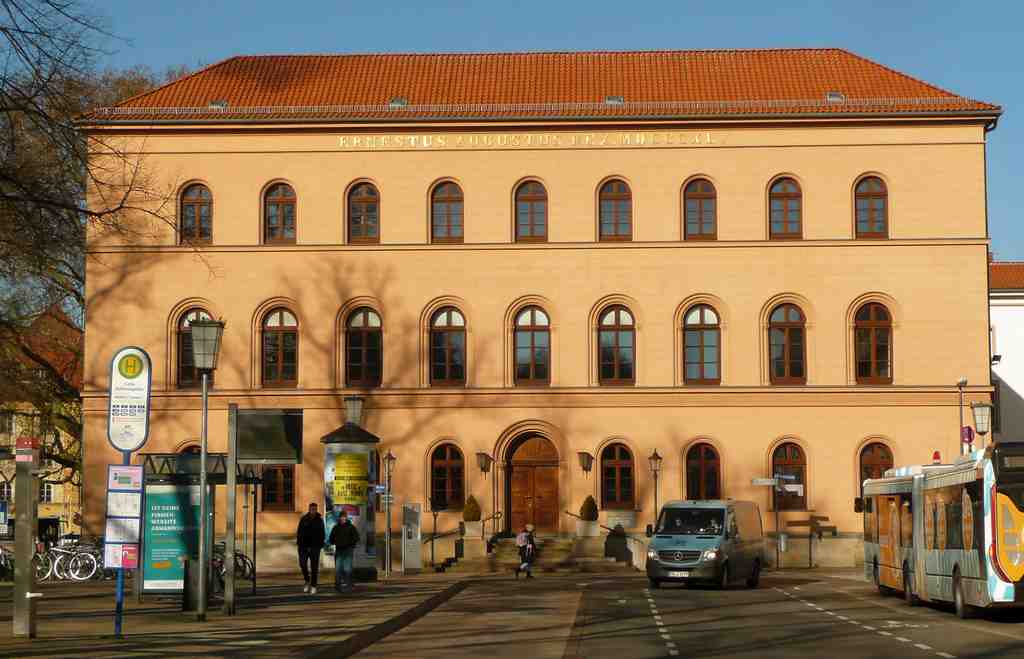
Direct your attention to the grand, peach-colored rectangular building on your left, defined by its precise rows of arched windows and a prominent arched wooden double door right in the center.
This is the Higher Regional Court of Celle, though locals just call it the OLG Celle. Built back in the 1840s, its design is inspired by the early Florentine Renaissance, bringing a little slice of historic Italy right here to Germany. Now, an Oberlandesgericht is a higher regional court, which basically means it is a major appeals court sitting just one step below the federal supreme court. And this one is a heavy hitter. It oversees a massive legal district of over four million people, making it the largest of its kind in Lower Saxony.
The roots of this court stretch way back to 1711. Back then, the local ruling family gained enough political clout that they were no longer subject to the old imperial courts, meaning they had to build their own supreme court from scratch. Since then, the law has flowed through these halls for centuries, but that history is not entirely spotless.
During the dark days of the National Socialist era in the 1930s and 40s, this court actively participated in the regime. Judges and staff pushed out their Jewish colleagues and twisted the law to align with the terrible ideology of the time. For a long time after the war, institutions across the country stayed quiet about what really went on behind their closed doors. But in 1986, the court president, a man named Harald Franzki, decided enough was enough. Under his watch, the OLG Celle became the very first higher court in Germany to completely open its records and expose its Nazi past, explicitly naming those who were involved. It was a massive, necessary step toward true justice.
Since then, the court has made a different kind of history. In 1989, Helga Oltrogge took charge, becoming the first woman ever to serve as president of a higher regional court anywhere in Germany. Today, under current president Stefanie Otte, around ninety judges work directly in this historic building, tackling everything from civil disputes to massive criminal cases, including recent high-profile anti-terror trials.
If you ever want to peek inside, the building is open to the public on weekdays from eight thirty in the morning until three thirty in the afternoon, though it closes at twelve thirty on Fridays and is shut down completely on weekends. Take a look at those massive doors, and move on when you are ready.




