
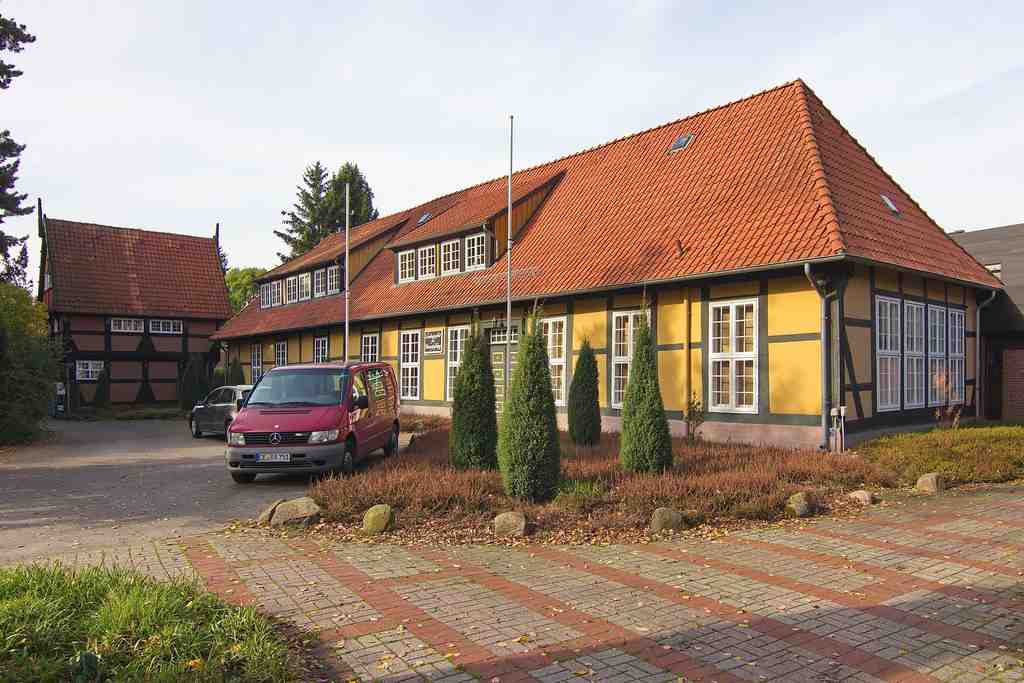
On your right, you will spot a long rectangular building featuring vibrant yellow plaster walls crossed with dark wooden timber framing, all under a sprawling red tile roof accented by small dormer windows. This is the Institute of Beekeeping Celle, though locals just affectionately call it the Bieneninstitut.
I have always loved the idea that an entire campus can be dedicated to understanding one tiny, fuzzy insect. The institute actually started way back in July of 1927. A zoologist named Albert Koch kicked things off with a grand total of four employees, including himself, a beekeeper, and a lab technician. They moved right into this area, taking over a former ducal orangery from 1677. An orangery is basically a grand, historical greenhouse where European nobles used to shelter their delicate citrus trees from the cold. It feels fitting that a place originally built to protect nature is now doing exactly that for bees.
If you look closely at the grounds, you will also notice a very different, older wooden structure. That is a Treppenspeicher from 1607. It is a traditional raised wooden storehouse with an external staircase, originally designed to keep harvested grain safe from hungry mice. They brought the structure here in 1931 to house a massive collection of vintage beekeeping gear. The institute wanted to preserve the old ways of heath beekeeping before modern technology totally erased that history.
Today, this place is completely fascinating. It is not just a historical museum, but an absolute powerhouse of apiculture, which is the formal science of beekeeping. They manage over five hundred active bee colonies across the property. In 2023, those local bees managed to produce over seventeen tons of honey. Just imagine the sheer volume of flower nectar required to make that happen.
Beyond the massive honey harvest, this is actually the only vocational school in all of Germany where someone can study to become a fully certified professional beekeeper. They train the next generation while also running a high-tech science lab. Every year, the team here analyzes almost twenty thousand samples. They track the purity of honey, monitor for devastating bee diseases, and test pollen to check for harmful pesticides.
They are also highly respected bee matchmakers. The institute breeds a very specific, calm, and productive line of queen bees called the Celler Linie. To ensure these queens mate with the right drones and keep the genetics strong, the institute even sends them out to an isolated mating station on a tiny island in the North Sea. They ship out well over a thousand of these royal bees every year to beekeepers looking to improve their hives.
If you want to poke your head in, the institute is generally open on weekday mornings and early afternoons, but it is closed on the weekends.
Take a moment to appreciate the centuries of careful cultivation happening right behind those yellow walls. When you are ready, we can make our way to our next stop.




