

Bethlehem Audio Tour: Industrial Heritage
Beneath the soot of Bethlehem’s industrial empire lies a landscape forged by fire and stained by secrets that most tourists never touch. Unlock these hidden layers with a self-guided audio tour that pulls back the curtain on a city defined by grit, steel, and divine ambition. Wander between the Cathedral Church of the Nativity and the halls of Lehigh University to uncover the stories buried beneath the iron. Did a clandestine rebellion actually threaten the foundation of this religious stronghold? What dark, industrial scandal forced the city’s elite to silence the truth forever? Why does the clock tower chime with an oddly specific rhythm that seems to mock the passing of time? Traverse the divide between sacred spires and roaring blast furnaces to experience a transformation in perspective. Leave the polished surface behind and touch the raw, unvarnished soul of a town built on shadows. Start your descent into the truth.
Tour preview
About this tour
- scheduleDuration 80–100 minsGo at your own pace
- straighten3.4 km walking routeFollow the guided path
- location_onLocationBethlehem, United States
- wifi_offWorks offlineDownload once, use anywhere
- all_inclusiveLifetime accessReplay anytime, forever
- location_onStarts at Lehigh Valley Railroad Headquarters Building
Stops on this tour
lock_open 3 free previews · 5 unlock with purchase
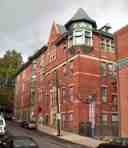
Look for the red-brick building rising from a stone base, with a stepped shape on the slope and copper bay windows marking its corners. This was the Lehigh Valley Railroad’s…Read moreShow less
Open dedicated page →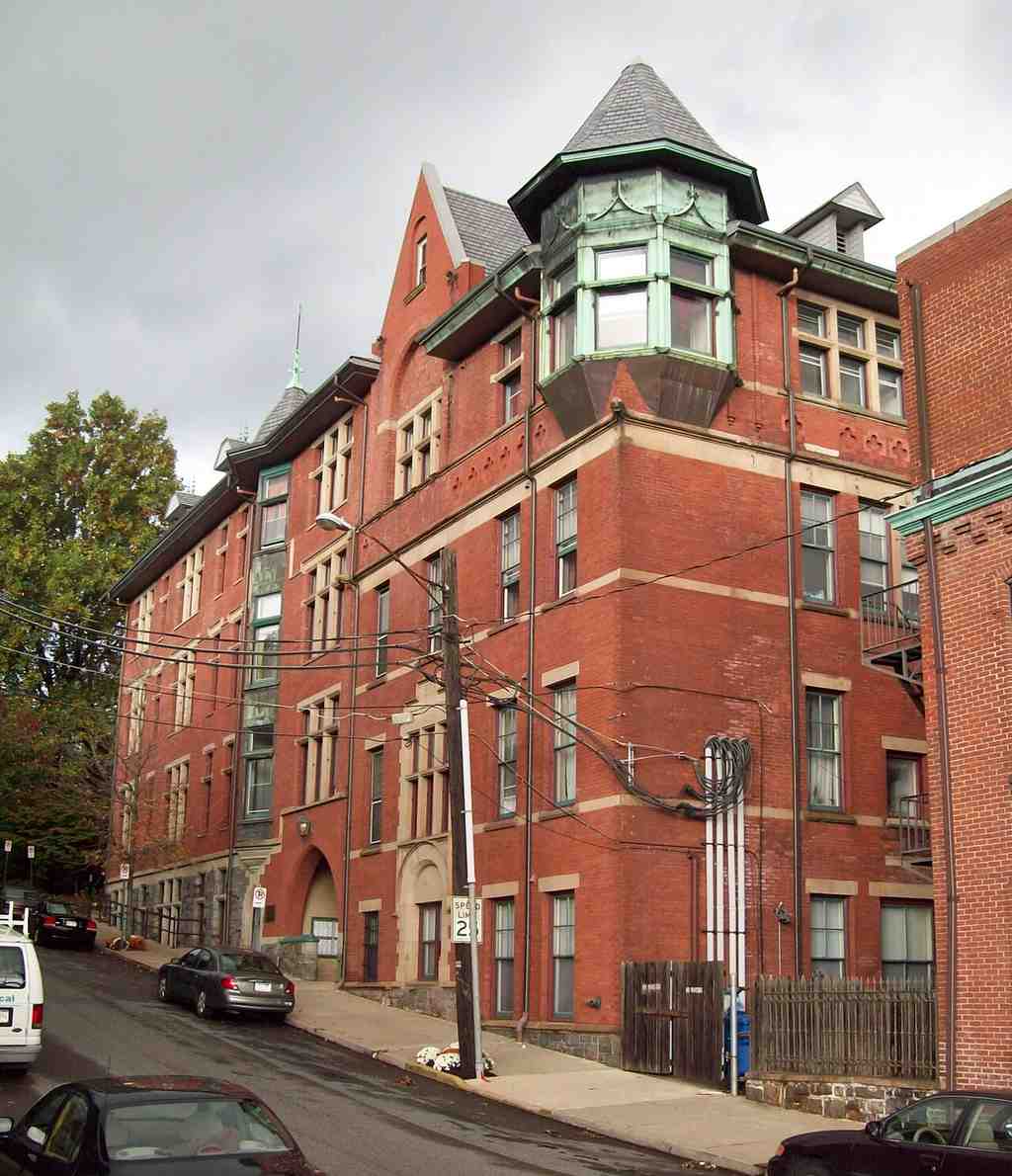
Lehigh Valley Railroad Headquarters BuildingPhoto: Pubdog, Wikimedia Commons, Public domain. Cropped & resized. Look for the red-brick building rising from a stone base, with a stepped shape on the slope and copper bay windows marking its corners.
This was the Lehigh Valley Railroad’s command post... the place where paper, money, and decisions moved as decisively as locomotives. Between eighteen eighty-five and eighteen eighty-six, crews finished the lower three floors; between eighteen eighty-nine and eighteen ninety, they added the upper floors and the west wing, giving Bethlehem a headquarters in a lively late Victorian mix of Gothic punch and Queen Anne variety. If you check the app image, you can see how firmly it claims the hillside above the tracks.
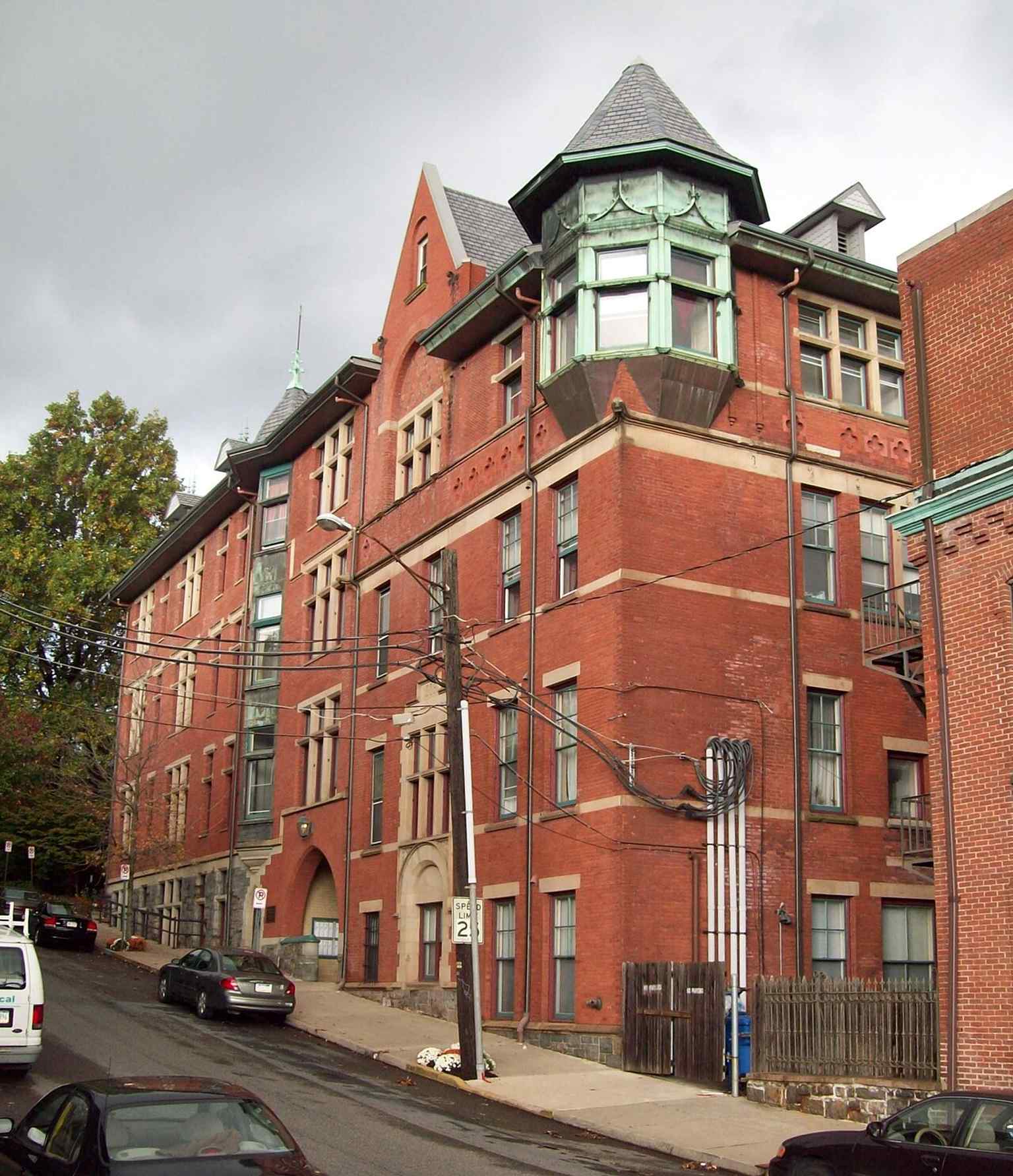
The former Lehigh Valley Railroad headquarters in Bethlehem, a red-brick landmark that once served as the company’s command center and is now used as apartments.Photo: Pubdog, Wikimedia Commons, Public domain. Cropped & resized. Here’s the trick worth remembering: a railroad power network did not run only on iron rails. It ran on ledgers, office doors, executive orders, and maps spread across desks in buildings like this one. From here, the company organized capital, territory, and local growth... and for a time, much of the company’s business passed through this address.
Robert Heysham Sayre stands near the center of that story. He was one of the railroad engineers and civic leaders who helped shape Bethlehem far beyond the station platform, and his name will keep resurfacing as we go. E. P. Wilbur, who followed Asa Packer as railroad president, pushed this place as the company’s principal office in Bethlehem.
The irony, because history enjoys one, is that the headquarters soon lost that title when the railroad sold and shifted its main offices to New York. Still, this building remained a symbol of control, and now it lives on as apartments. Next, we head uphill to Fountain Hill, where that executive world took domestic form in houses, status, and street layout... about a five-minute walk away.
On your left, look for a hillside spread of brick and stone houses with steep rooflines and towers, anchored by the cathedral’s tall bell tower. This district is less a single…Read moreShow less
Open dedicated page →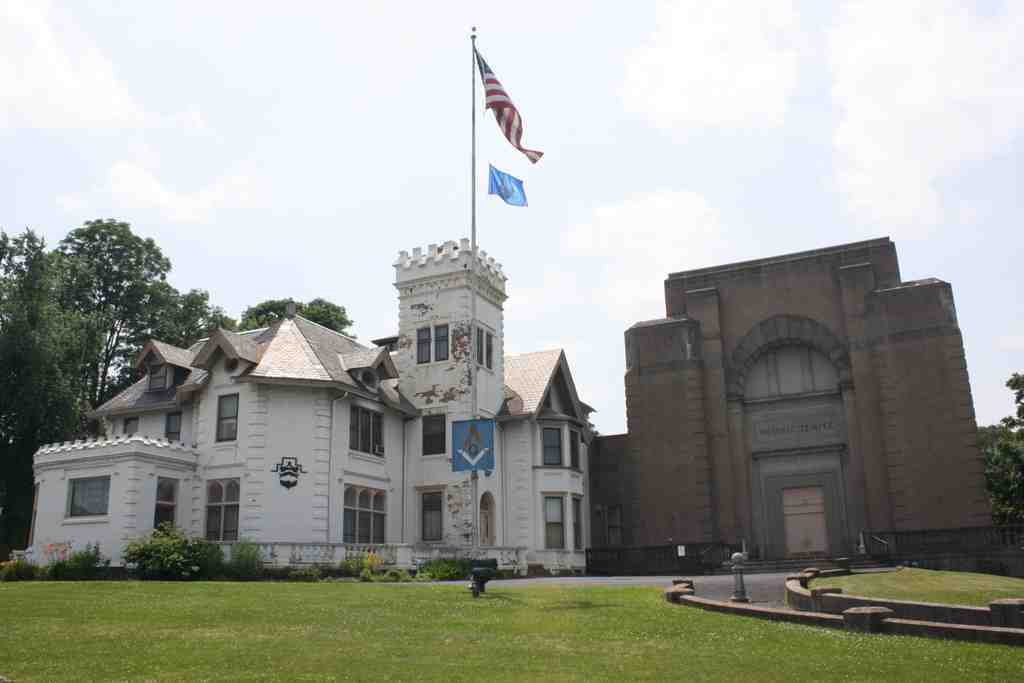
Fountain Hill Historic DistrictPhoto: Shuvaev, Wikimedia Commons, CC BY-SA 3.0. Cropped & resized. On your left, look for a hillside spread of brick and stone houses with steep rooflines and towers, anchored by the cathedral’s tall bell tower.
This district is less a single sight than a social map. Industrial power rarely went home quietly. In Fountain Hill, it went uphill. This was Bethlehem’s executive landscape: a neighborhood where railroad-era wealth turned into architecture, where status showed up in lot size, ornament, and whose carriage would have stopped at which door. The district holds forty-four contributing buildings and one contributing structure, and the National Register of Historic Places recognized it in nineteen eighty-eight.
The name is a little slippery. Most of the district actually sits outside the modern borough of Fountain Hill. But local history ties it to Tinsley Jeter’s nineteenth-century town plot, when this whole area was known as Fountain Hill, so the old name stuck... municipal boundaries, as usual, arrived later and complicated everything.
Many of these grand houses belonged to relatives and close associates of Asa Packer, the railroad magnate. Robert Heysham Sayre is a good guide to the place. Packer made him chief engineer of the Lehigh Valley Railroad, and Sayre chose this hillside carefully. Beginning in eighteen fifty-eight, he raised a Gothic Revival mansion here, a style that borrowed pointed shapes and a bit of medieval drama to signal seriousness and taste. In eighteen ninety-nine, he even added a two-story wing for his library, turning the house into both family home and working retreat. If you want a look, open the app image of Sayre’s house. After Sayre died in nineteen oh seven, the house kept changing roles: auctioned, reused, a Lehigh fraternity house by nineteen fourteen, and later the Sayre Mansion Inn. Survival here often meant adaptation, not preservation under glass.
Take a moment and scan the houses around this district... the shifts in scale, the ornament, the siting on the hill. You can almost read the hierarchy in the architecture.
Other families left their own marks. Elisha Packer Wilbur built a mansion in eighteen sixty-five for his wife and their ten children. The Linderman mansion later hosted Wilbur’s wedding reception, and under Charles M. Schwab it gained a more boisterous chapter, when he stayed here and played late-night poker with Bethlehem Steel managers. Business strategy, social climbing, and domestic life all shared the same neighborhood.
And then there’s Tinsley Jeter again. One of Fountain Hill’s most important institutions began not in a grand public building, but in his home on Mohican Street. A small gathering there grew into what would become the cathedral downtown. If you glance at the cathedral image in the app, you’re seeing the public face of something that started in a private parlor. Next, we’ll walk about three minutes to that church, where family memory, grief, and neighborhood ambition all took stone form.
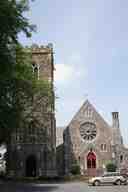
On your left, look for a gray stone church with a tall square tower, steep rooflines, and a rounded rear end that gives the whole building a solid, old-world silhouette. From the…Read moreShow less
Open dedicated page →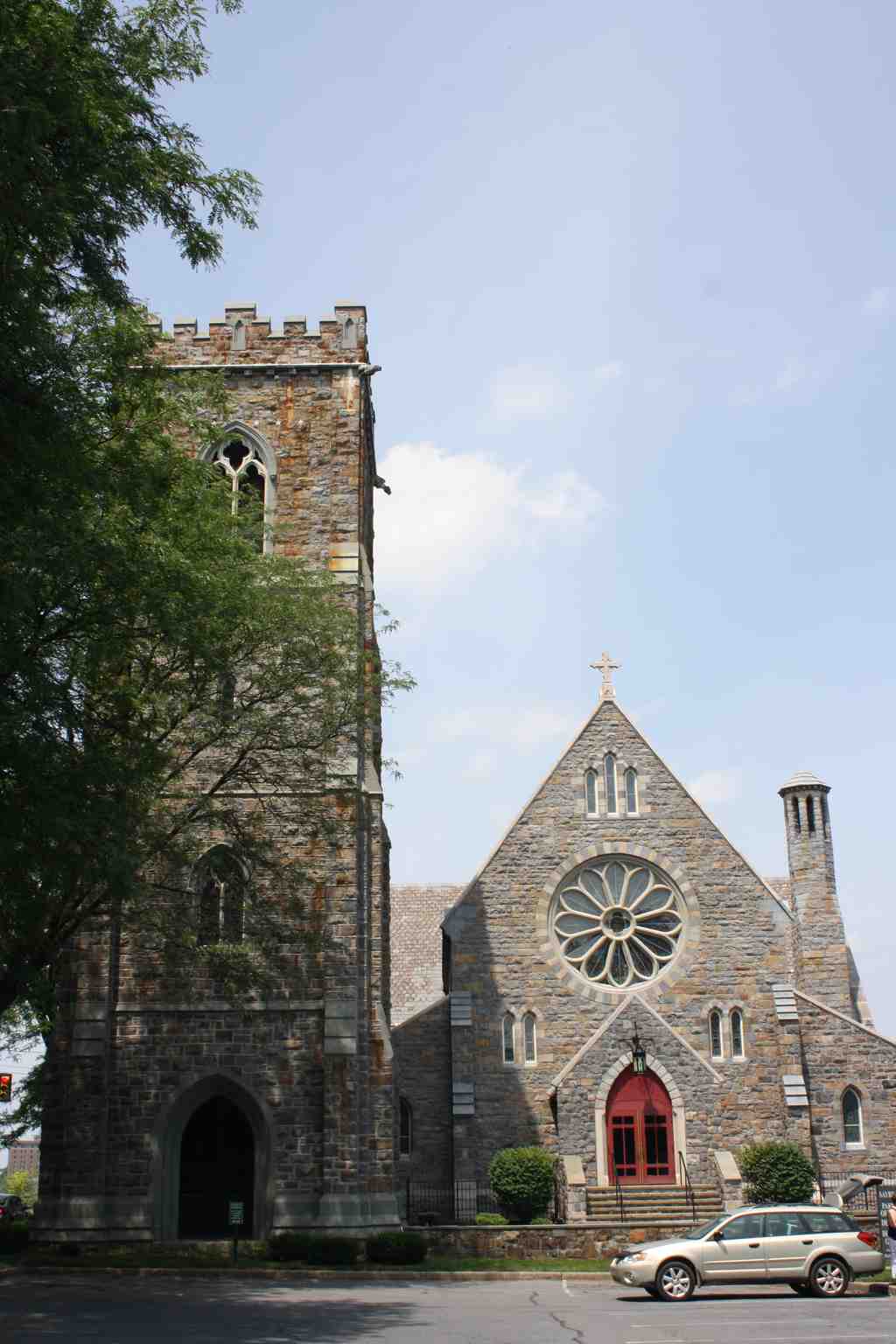
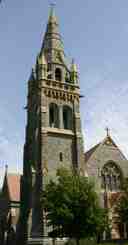
Cathedral Church of the NativityPhoto: Shuvaev, Wikimedia Commons, CC BY-SA 3.0. Cropped & resized. On your left, look for a gray stone church with a tall square tower, steep rooflines, and a rounded rear end that gives the whole building a solid, old-world silhouette.
From the sidewalk, this place looks permanent... almost inevitable. Locals know better. Before there was a grand stone church, Episcopal worship in South Bethlehem got stitched together in parlors, hotel rooms, halls, and even a railroad station. Robert H. Sayre and Tinsley Jeter hosted gatherings in their homes, and the first Episcopal service led by a clergyman here took place in Sayre’s parlor in eighteen sixty-one.
That matters, because it shows how faith and industry grew together here. The same families shaping rail lines, iron, and land deals also helped organize this parish. In eighteen sixty-two, a church school with fifty-two pupils met in the North Pennsylvania Railroad station, and that same year the young priest Eliphalet Nott Potter arrived as missionary. By November, a temporary church committee formed in Sayre’s home. Worship first, paperwork second... which is honestly how many institutions begin.
If you glance at the old photo on your screen, you can see the first church they built after all that improvising: Edward Tuckerman Potter’s eighteen sixties Gothic design, smaller and plainer than what stands here now. They laid the cornerstone in eighteen sixty-three, and by eighteen sixty-five the parish had its own stone church.
But Nativity was never just a spiritual shelter. It reflected the social order of an industrial town. Asa Packer and the Sayres joined the vestry; money, influence, and worship sat in the same pews. The congregation also included Black servants and coachmen from those elite households, and by nineteen oh one Black worshippers had built St. John A.M.E. Zion Church on Pawnee Street, creating space under their own leadership. That’s Bethlehem in one frame: devotion, hierarchy, generosity, and limits.
The building around you mostly dates to eighteen eighty-seven, when E. M. Burns enlarged it into the church you see now. A few years later, grief and gratitude got built right into the interior. If you check the sanctuary image, that carved screen behind the altar, the font, and the baptistery came as memorial gifts from the Linderman, Sayre, and Wilbur families. Even the tower bells, first rung in nineteen hundred, honored a lost wife. Private mourning became public sound.
Nativity also helped launch schools, chapels, and hospitals, which tells you something important: in Bethlehem, a parlor meeting could grow into a cathedral, and a household network could shape a whole city.
Today the cathedral describes itself as bilingual, multicultural, and fully affirming, with worship in English and Spanish and a strong neighborhood service mission. Next, head to Packer Memorial Chapel, about a fifteen-minute walk, where memory, philanthropy, and ceremony become even more deliberate. If you want to return, the cathedral is generally open weekdays from nine to five, closed Saturdays, and open Sundays from eight to four.
Show 5 more stopsShow fewer stopsexpand_moreexpand_less
On your left is a sandstone Gothic chapel with a steep roof, pointed arch openings, and a tall tower that makes the whole building read like a memorial carved into the…Read moreShow less
Open dedicated page →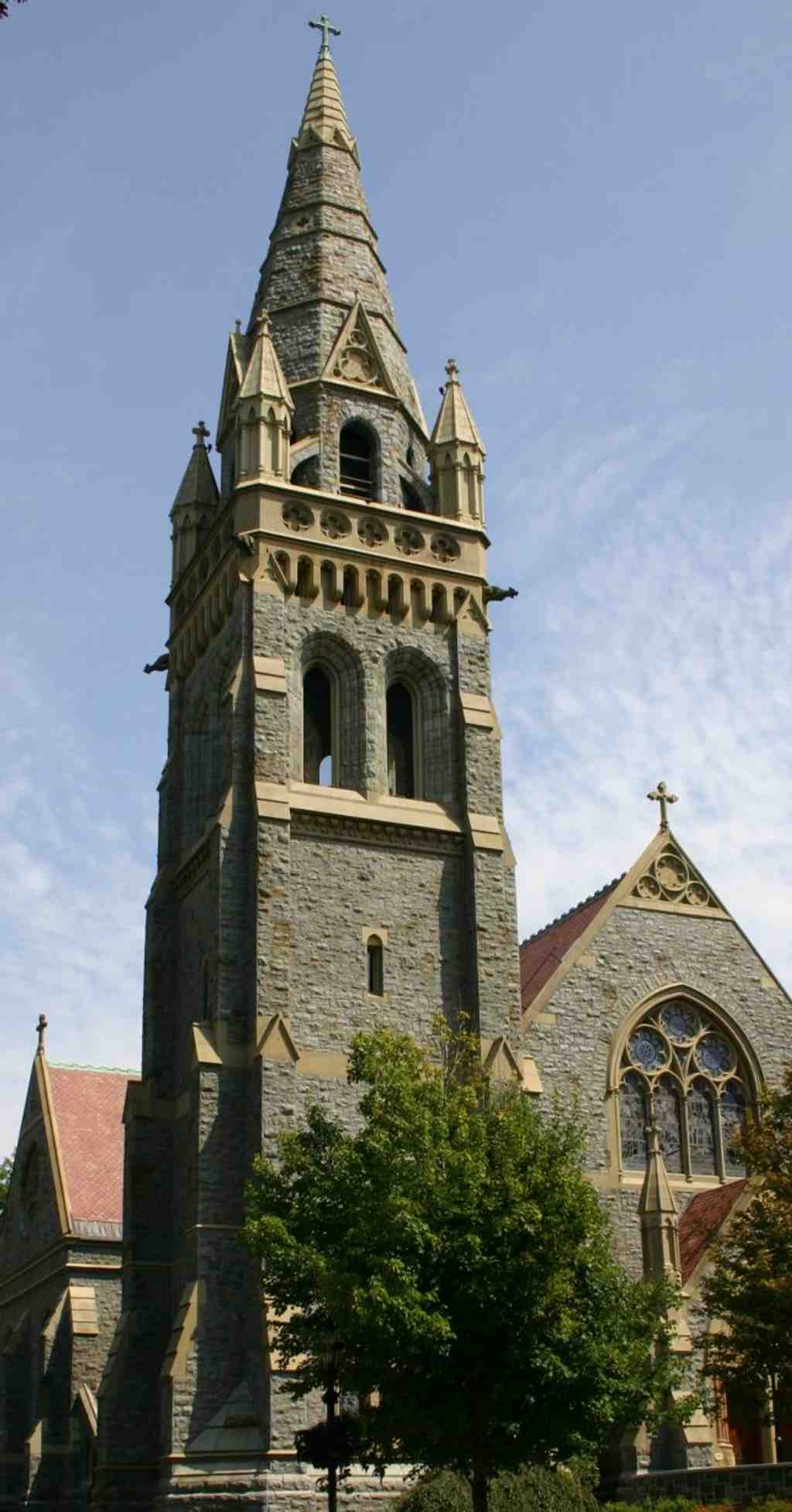
Packer Memorial ChapelPhoto: Matt Casey, Wikimedia Commons, CC BY-SA 3.0. Cropped & resized. On your left is a sandstone Gothic chapel with a steep roof, pointed arch openings, and a tall tower that makes the whole building read like a memorial carved into the hillside.
Packer Memorial Chapel began as grief made public. Mary Packer Cummings gave it in memory of her father, Asa Packer, but she was no ornamental donor smiling from the sidelines. After her brother Harry died in eighteen eighty-four, she took charge herself: she chose the Philadelphia architect Addison Hutton, supervised the construction, paid the bills, and only then turned the finished church over to Lehigh’s trustees and the Episcopal diocese for consecration.
That matters, because this place is not Asa Packer’s tomb. He lies in Mauch Chunk Cemetery in Jim Thorpe. This chapel is something more deliberate: a memorial planted at the center of the university he helped create, where remembrance could become part of campus life.
If you look at the image on your screen, the carved exterior details show how carefully this memorial was dressed for dignity, not modesty. Mary Packer Cummings understood that stone can preach almost as effectively as a pulpit.
The rituals around its construction leaned into that idea. Students first staged a mock groundbreaking in May of eighteen eighty-five, planning a burlesque of the whole affair. President Lamberton, not amused in the slightest, redirected it into a real religious service with prayers, creed, doxology, and a student oration. College humor met institutional gravity, and gravity won.
Then came the cornerstone on the eighth of October, eighteen eighty-five, during the university’s seventh Founder’s Day. The ceremony arrived in two acts. First, a Masonic rite led by Edward Coppee Mitchell, reflecting Asa Packer’s ties to the Masons, a fraternal order known for its formal symbolic ceremonies. Immediately after that, Episcopal bishops Mark Anthony de Wolfe Howe, Cortlandt Whitehead, and Nelson S. Rulison performed the church rite. Memorial and ritualized remembrance fused here in plain sight: not just mourning, but mourning with choreography, rank, and witnesses.
When a family turns sorrow into architecture, what are you really looking at... private grief, public legacy, or some uneasy blend of both?
Two years later, on the thirteenth of October, eighteen eighty-seven, the chapel was consecrated. Inside, it served campus worship, ceremony, and sometimes a little accidental comedy. In eighteen ninety-three, the water-powered organ motor failed because local washerwomen had drawn off the water for the weekly wash. The music died, the embarrassment bloomed, and President Coppee ended it with a blunt order to stop. Even solemn memorials have to survive real life.
If you check the historic interior photo, you can see the nave, the long central hall of the church, in its early years of worship. Over time the building changed too: stained glass replaced, organ rebuilt, electricity added, plaster and pews repaired. By nineteen thirty-eight, the chapel began opening beyond its Episcopal roots to other Christian groups, and today it serves as a non-denominational space, with Roman Catholic Mass and Muslim prayers among its regular uses.
So this chapel honors Asa Packer, yes... but it also frames the institution that carried his ambitions forward. As you continue toward Lehigh University, that story gets larger, less personal, and much more powerful.
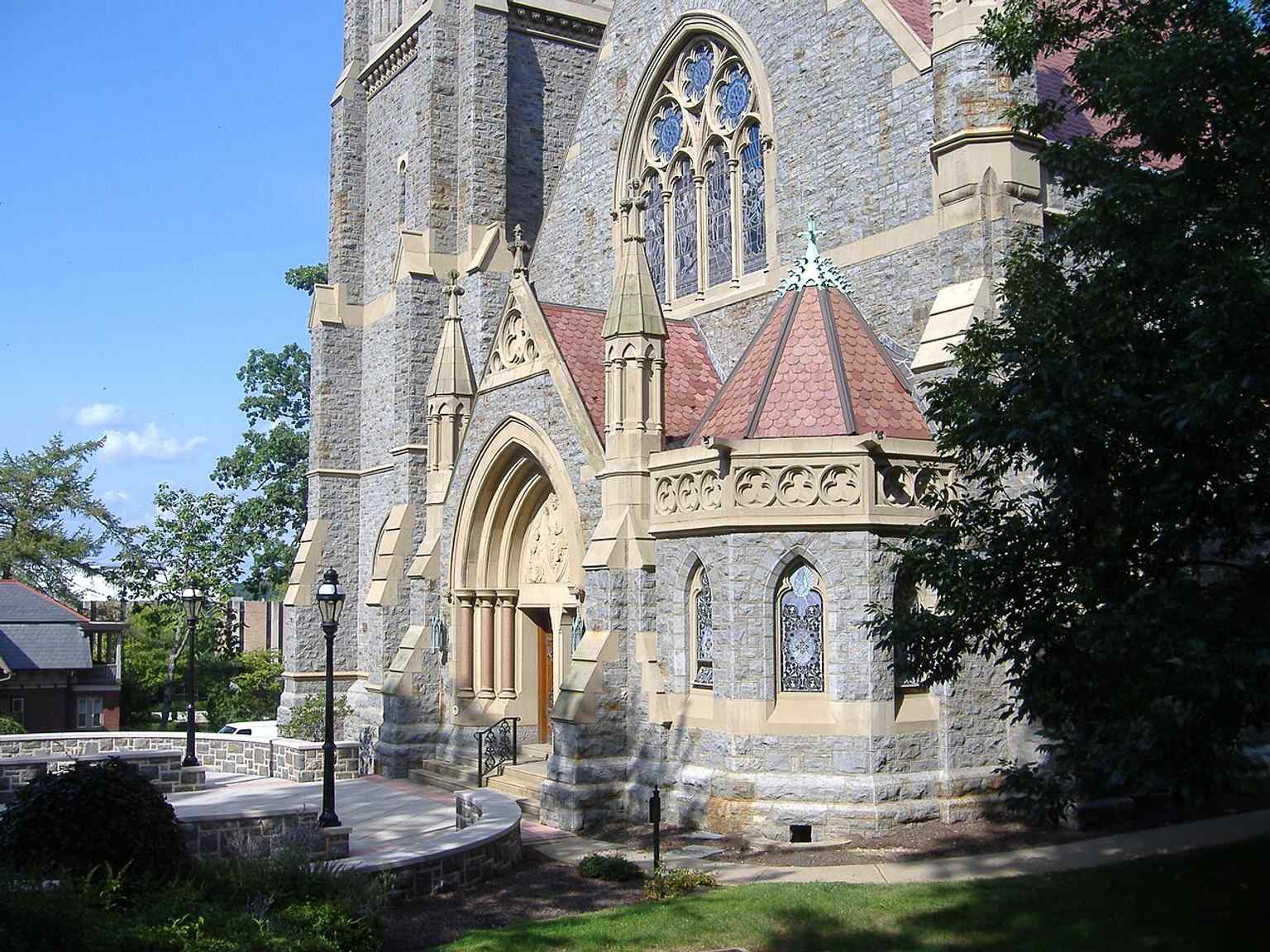
The main entrance of Packer Memorial Chapel, the Gothic campus church Mary Packer Cummings built in memory of Asa Packer.Photo: Peter L Moore, Wikimedia Commons, Public domain. Cropped & resized. 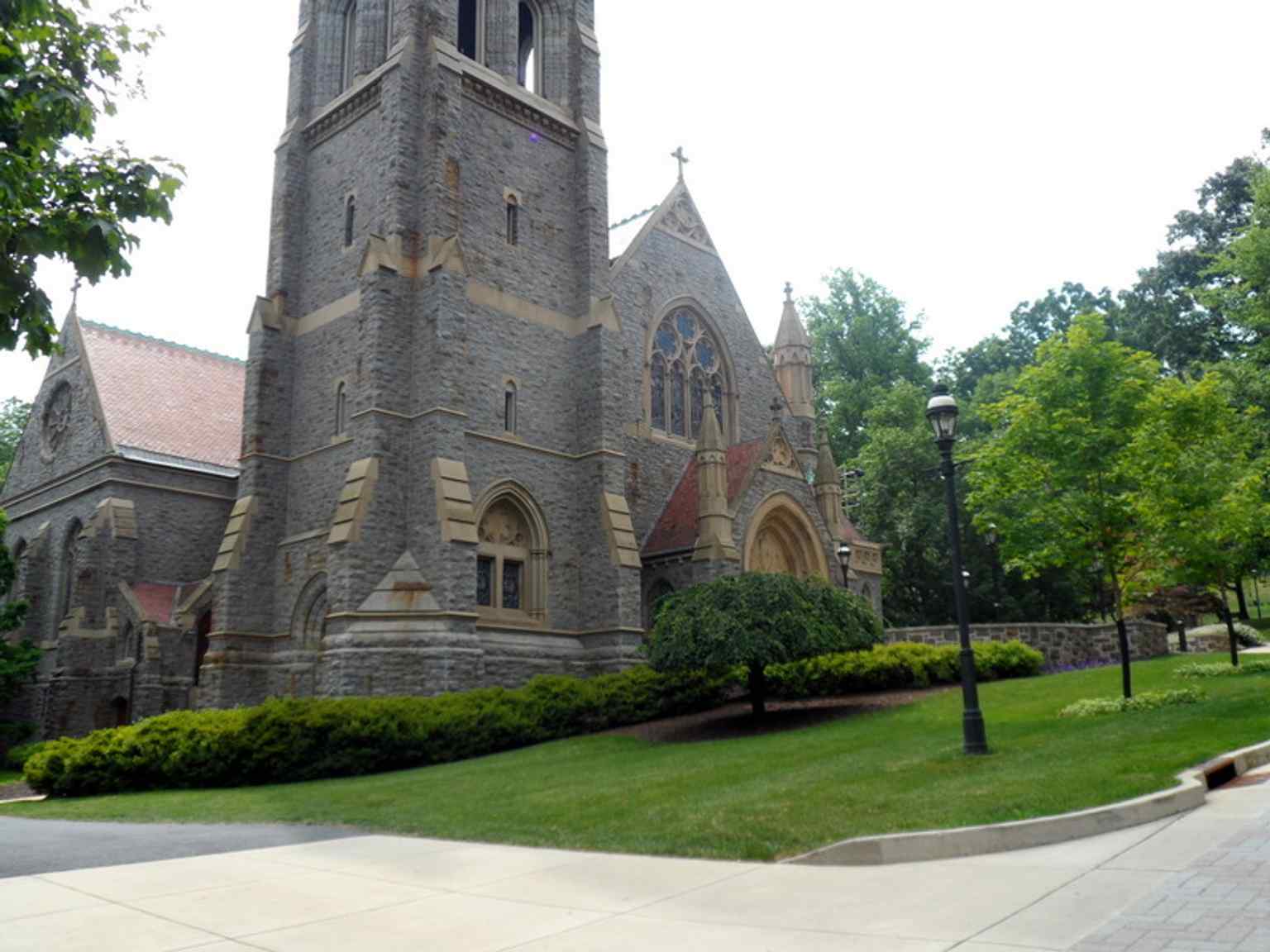
A clear front view of Packer Memorial Chapel at Lehigh University, the historic chapel added to the National Register of Historic Places in 1979.Photo: Jared Kofsky, Wikimedia Commons, CC BY-SA 3.0. Cropped & resized. Look for the blue-and-gold Pennsylvania historical marker on a metal post beside modern brick campus buildings; it marks the ground where Taylor Stadium once rose in sweeping…Read moreShow less
Open dedicated page →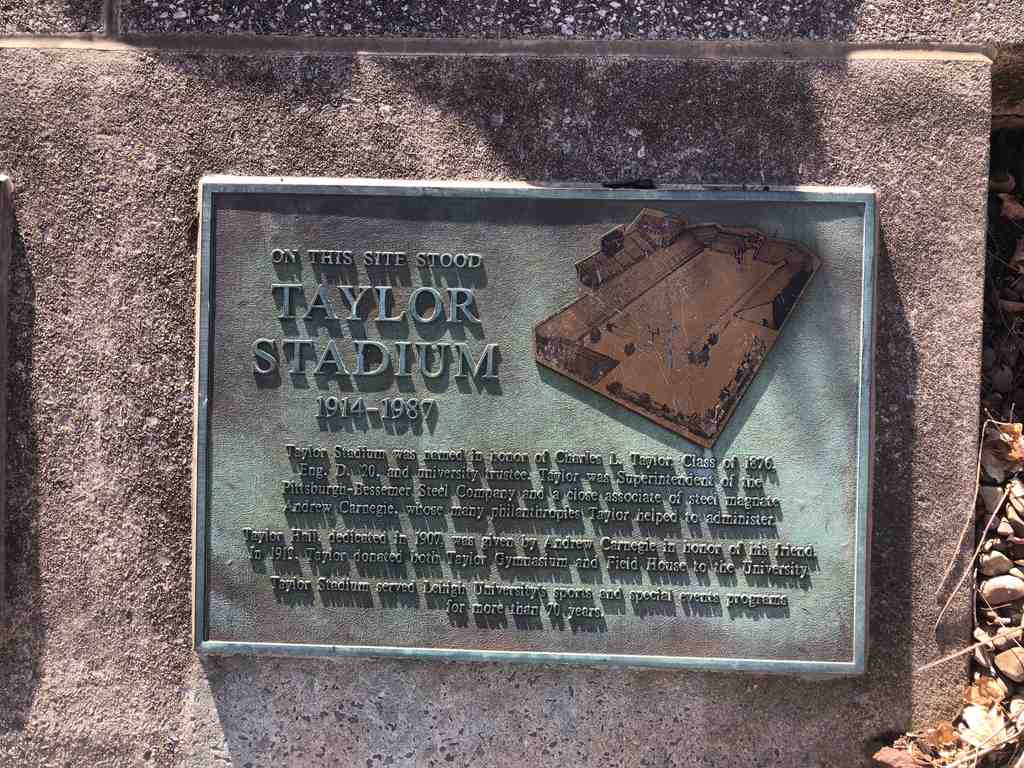
Taylor StadiumPhoto: Scu ba, Wikimedia Commons, CC BY-SA 4.0. Cropped & resized. Look for the blue-and-gold Pennsylvania historical marker on a metal post beside modern brick campus buildings; it marks the ground where Taylor Stadium once rose in sweeping concrete tiers.
This was where Lehigh turned school spirit into public theater. Before the stadium, this ground was just a practice field. Then Charles L. Taylor, class of eighteen seventy-six, pushed to give the university a real home for athletics, and alumni opened their wallets. The biggest gift came from steel titan Charles M. Schwab and his wife Emma. When Taylor opened the stadium in nineteen fourteen, Lehigh got something rare: one of the earliest concrete stadiums in the United States.
And Lehigh did not treat it like a mere sports facility. Taylor formally presented it to the university on the seventeenth of October, nineteen fourteen, in a campus-wide celebration called Taylor Day. That name tells you everything. This place was engineered for emotion as much as athletics... a gift, a stage, and a declaration that the Engineers knew how to make an entrance.
Football led the show, but not alone. Baseball, soccer, lacrosse, and track all used the stadium. Later, Bethlehem Steel donated a grandstand and pushed capacity to twenty thousand. For a campus venue, that is less “cozy field” and more “small republic of noise.”
One of the defining sounds started because James Hildebrand, class of nineteen fifty, got annoyed. In nineteen forty-seven he grew tired of Rutgers firing its cannon after touchdowns, so he convinced his father to donate the family’s brass cannon to Lehigh. It debuted before the nineteen forty-eight Rivalry game, and from then on every blast said the same thing in a louder voice: these Engineers belonged to the crowd as much as the classroom.
Alumni remembered fans packed so close behind the benches they could feel the game breathing. They remembered cheerleaders bowing on the goal line after each score, upper-deck stomping, and a press box that visibly shook. Taylor had terrible parking, not enough bathrooms, and seats that did no favors for the human spine... yet many still preferred it to Goodman, because this place sat at the heart of campus. You could walk here in minutes. That made pride easy, loud, and shared.
Its ending had its own grim drama. The last Lehigh-Lafayette game here turned into an icy ordeal. The band waited in the Physics Building before pregame, but instruments still froze, drumheads cracked, and Lehigh beat Lafayette seventeen to ten. A year later, demolition began. The university traded this ninety-thousand-dollar stadium - about two point eight million in today’s money - for the Rauch Business Center and Zoellner Arts Center.
So the stadium vanished, but not the habit it taught: turn identity into ritual, and ritual into community. From here, that energy spills downhill into South Bethlehem’s historic downtown, where school pride met shopfronts, diners, and everyday city life.
Look for a stretch of red-brick, two- to four-story storefront blocks, with broad ground-floor windows and church towers rising above the roofline. This is South Bethlehem in its…Read moreShow less
Open dedicated page →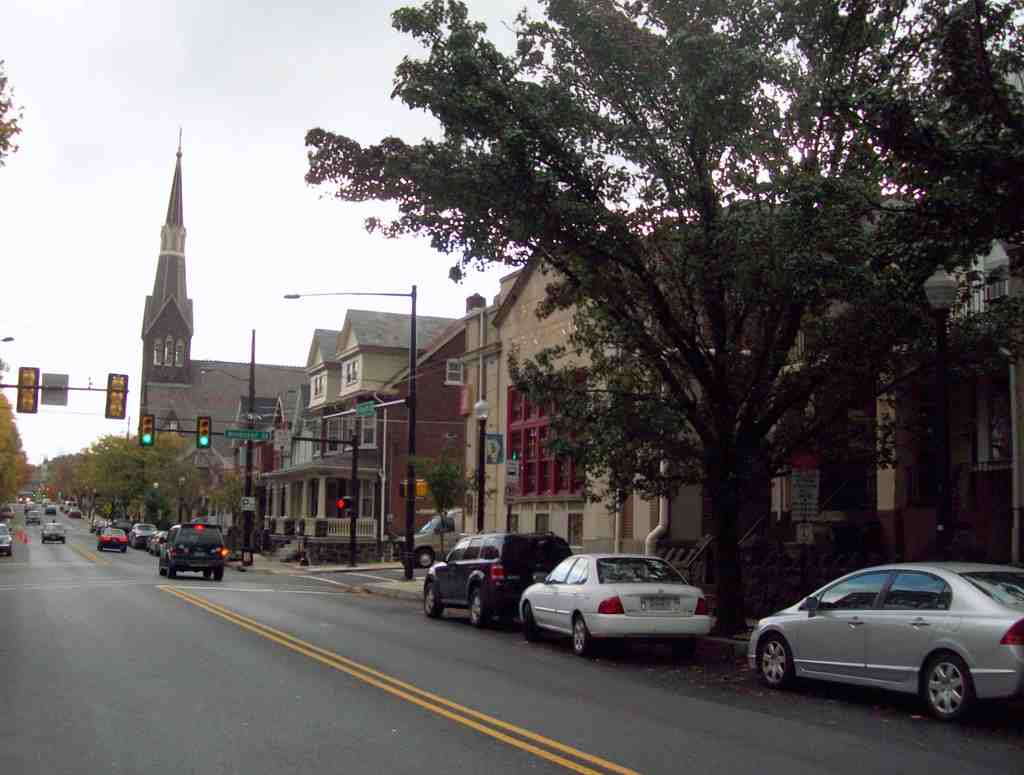
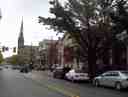
South Bethlehem Downtown Historic DistrictPhoto: Pubdog, Wikimedia Commons, Public domain. Cropped & resized. Look for a stretch of red-brick, two- to four-story storefront blocks, with broad ground-floor windows and church towers rising above the roofline.
This is South Bethlehem in its everyday form... the working city stitched together block by block. Not the boardroom version, not the ceremonial version, but the place where industrial paychecks turned into groceries, library cards, church pews, and rent.
The National Register of Historic Places recognized this district in two thousand five, and for good reason. It gathers two hundred eighty-eight contributing buildings and two smaller historic objects into one dense urban patchwork. Most date from about nineteen hundred to nineteen thirty-five, and together they hold the full cast of city life: commercial buildings, municipal services, industrial structures, and homes standing shoulder to shoulder like they’ve long since stopped asking for personal space.
If you glance at the aerial image in the app, you can see that density for yourself. Streets, roofs, church spires, and storefronts pack in tight, which tells you something basic and important: steel did not just produce beams and rails. It produced errands, neighborhoods, arguments, ambitions... and very likely a shortage of parking before anyone had the courtesy to complain online.
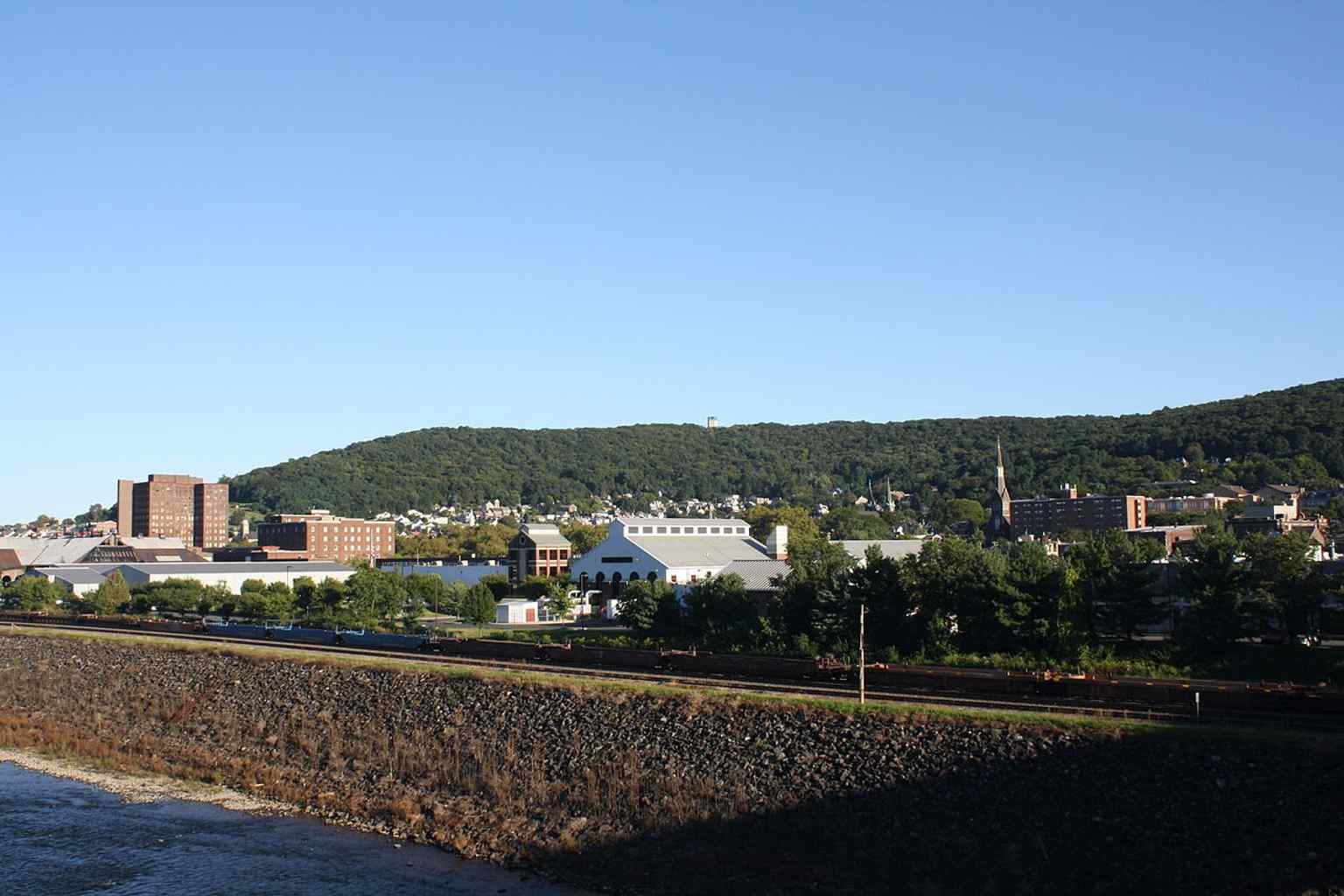
A sweeping view over South Bethlehem and the Lehigh River, showing the dense historic downtown fabric that earned the district National Register recognition in 2005.Photo: Shuvaev, Wikimedia Commons, CC BY-SA 3.0. Cropped & resized. Around this district stood places like the South Bethlehem Post Office from nineteen sixteen, the Bethlehem Public Library from nineteen twenty-nine, Holy Infancy Catholic Church, the Banana Factory, and steel-related commercial buildings that kept the local economy humming. This is where the city’s muscle had to learn manners and routines.
One name to hold onto here is Rosemarie Parham. She was fourteen. In nineteen seventy, the old Protection Firehouse, first opened in eighteen seventy-five as South Bethlehem’s original fire station, had become a youth center. On the fifth of August, a drive-by shooting and attempted firebombing hit a crowd there. The bomb failed to explode, but gunfire killed Rosemarie and seriously injured sixteen-year-old Carlos Garcia. It is a brutal moment in a district full of ordinary streets... which is exactly why it matters. History here is not only brick and cornices. It is memory with names attached.
Years later, Touchstone Theater rescued that same abandoned firehouse and turned it into a seventy-two-seat home for performance, with help from libraries, schools, city offices, Spanish-speaking groups, Holy Infancy, and neighborhood organizations. If you want to see that building on your screen, pull up the firehouse image. That reuse says a lot about South Bethlehem: people keep finding ways to make old structures serve new civic lives.
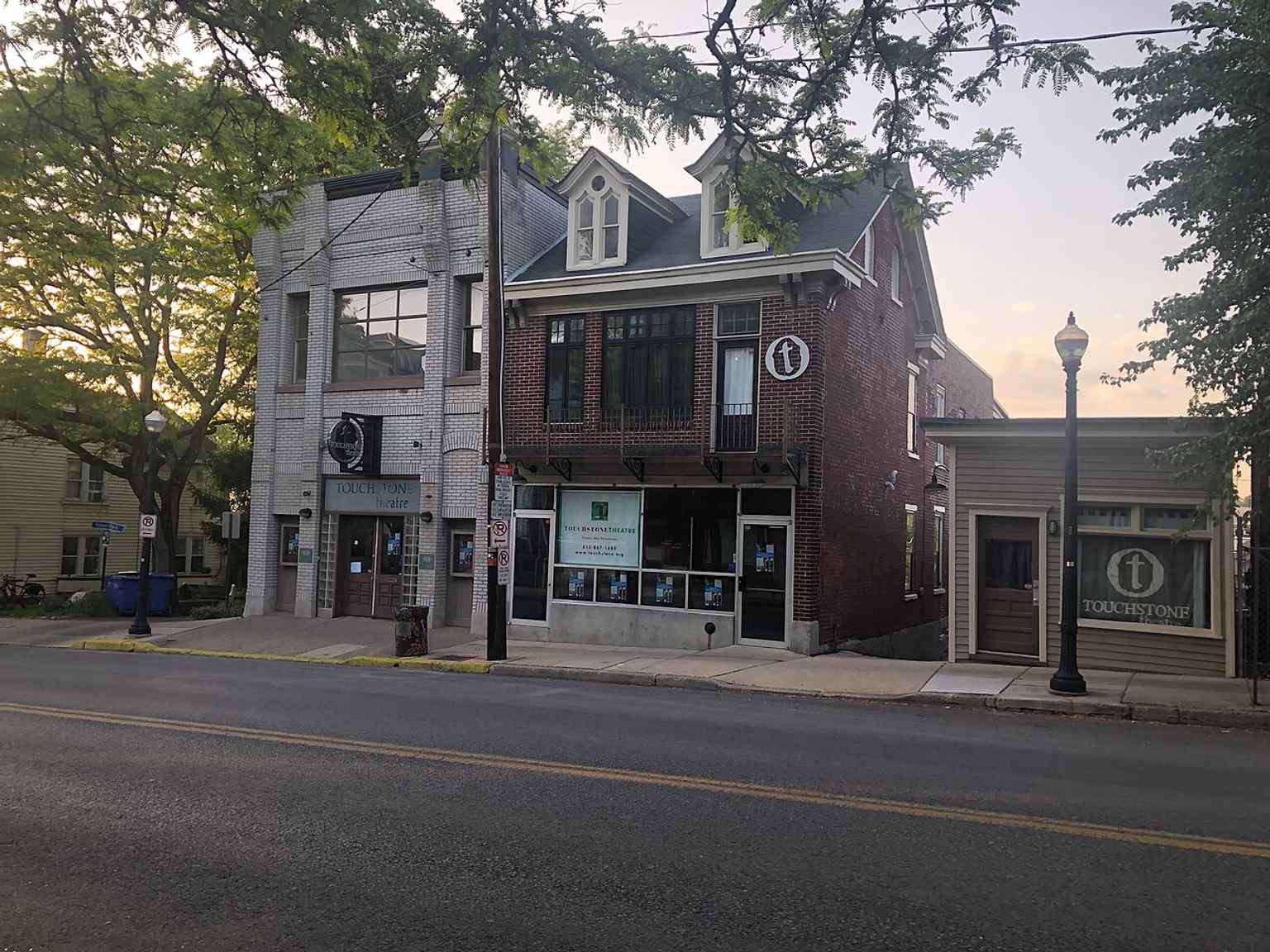
Touchstone Theater, housed in the former Protection Firehouse built in 1875 — a landmark that was transformed from the neighborhood’s original fire station into a 72-seat theater.Photo: Scu ba, Wikimedia Commons, CC BY-SA 4.0. Cropped & resized. The same pattern shows up at Saint John’s Windish Lutheran Church and nearby Windish Hall. Slovene immigrants founded them in the early nineteen hundreds after coming here for mill and factory work. Locals called them “Windish,” a rough label for the community, and the buildings became anchors for language, worship, and belonging. Even Grace House, the smaller South Side residence of Bethlehem Steel president Eugene Grace, reminds you that wealth and labor lived on the same map, just with very different square footage.
Before you head on, let your eyes wander across the facades on this block. How many layers of work, service, faith, and daily survival can you read in one streetscape?
In about six minutes, the National Museum of Industrial History will gather the machines and big forces into one place. Here, you’ve been standing in the neighborhood they shaped.
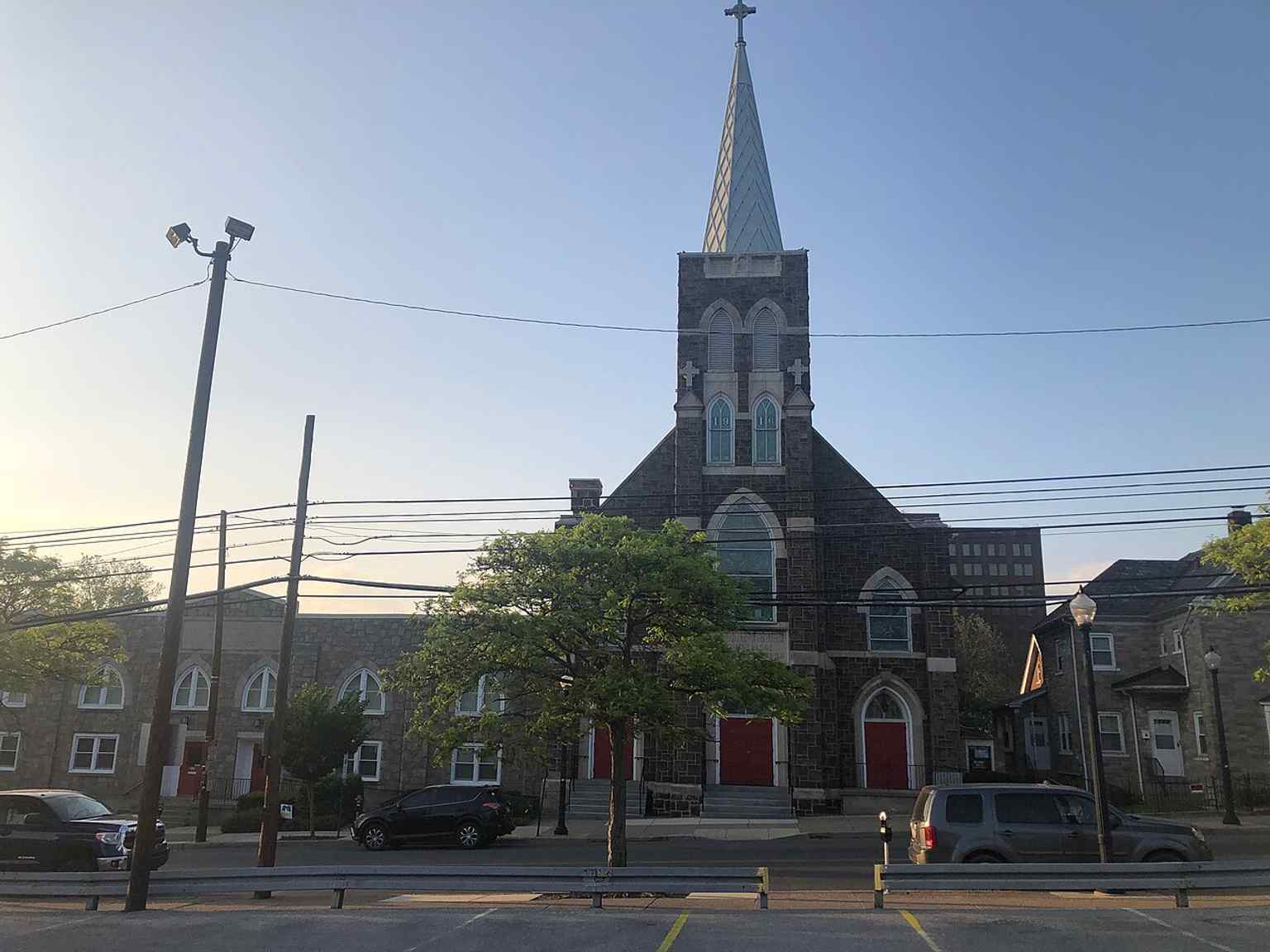
St. John’s Windish Lutheran Church, founded by Slovenes in 1910, with the adjoining Windish Hall nearby — a key reminder of the area’s immigrant and steelworker history.Photo: Scu ba, Wikimedia Commons, CC BY-SA 4.0. Cropped & resized. On your right is a long red-brick industrial building with a low rectangular shape, tall grid-like steel windows, and a square corner tower marked with the museum’s name. This is…Read moreShow less
Open dedicated page →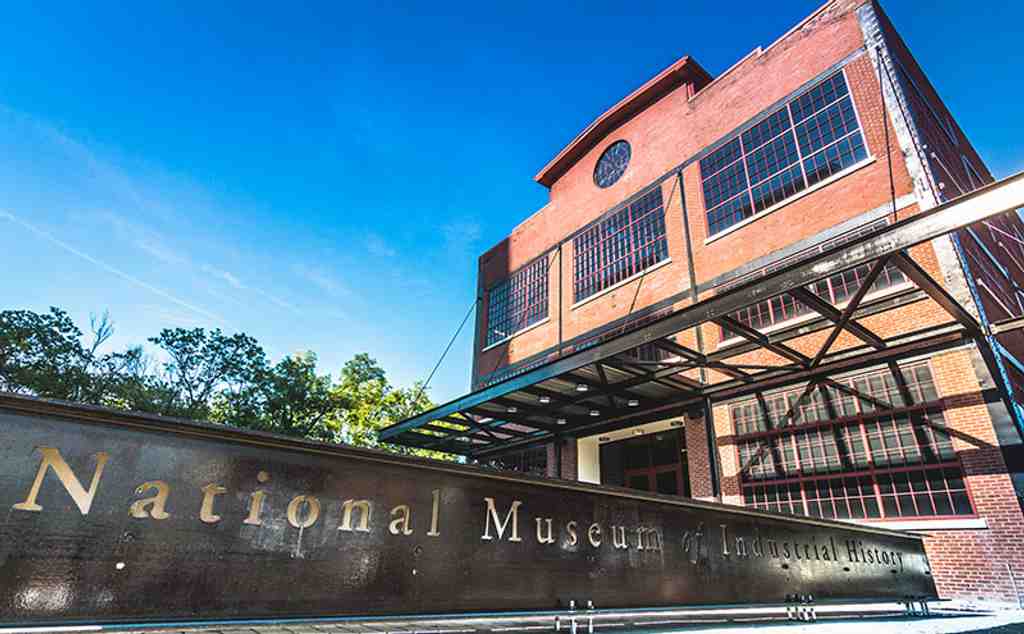
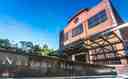
National Museum of Industrial HistoryPhoto: Glenn Koehler, Wikimedia Commons, CC BY-SA 4.0. Cropped & resized. On your right is a long red-brick industrial building with a low rectangular shape, tall grid-like steel windows, and a square corner tower marked with the museum’s name.
This is the National Museum of Industrial History, and it’s a fitting last stop because the building itself tells the story before you ever cross the threshold. You’re standing at the old Bethlehem Steel Electric Repair Shop, first put to work in nineteen thirteen, then reworked over the years as the plant changed around it. In a way, one of the museum’s biggest artifacts is the museum itself. Not every exhibit gets to be its own container.
This place embodies preservation after industry. Bethlehem chose not to treat its industrial remains as junk or as untouchable ruins, but as shared memory and future inspiration. The museum opened in August of twenty sixteen, though getting there was messy. Bethlehem Steel had helped start the idea in the late nineteen nineties, and Senator Daniel Patrick Moynihan encouraged a Smithsonian connection. Then came years of delay, legal trouble, and a grand jury report that blasted the project for waste, mismanagement, conflicts of interest, and bloated salaries. The Pennsylvania Attorney General found no criminal wrongdoing, but gave the museum a blunt deadline: open within two years or face dissolution. Construction restarted in late twenty fourteen, and the staff made it.
Inside, the story gets wonderfully mechanical. The opening core of the museum came from a long-term loan of nearly a hundred industrial machines from the Smithsonian’s collection tied to the eighteen seventy-six Centennial Exposition, linking Bethlehem to Philadelphia and to the national story of invention. If you glance at the app, you can see the giant Corliss steam engine in Machinery Hall. It weighs one hundred fifteen tons, and staff, volunteers, and community partners spent years restoring it so it could run again during special demonstrations. That’s not just display work. That’s mechanical resurrection with paperwork.
But the museum does not only celebrate steel and muscle. It also widens the lens. The iron and steel galleries trace Bethlehem Steel at its peak, when it employed thirty-one thousand people and drew workers from across Europe. The Silk Gallery tells the parallel story of women and children in the Lehigh Valley silk mills, which at one point employed even more people than steel here. On your screen, the Jacquard loom gives you a sense of that world. Children carried twenty-pound bobbin trays for hours. Industry, as usual, loved efficiency more than tenderness.
So here’s the question this building asks: when a city turns a former plant into a museum, what is it really trying to save... the machines, the labor, the power, the pride, or the identity that formed around all of them? Probably all of the above, and not always comfortably. A museum can honor achievement while still asking who held the office keys and who worked the longest shift.
That question became personal in twenty nineteen, when Glenn Koehler and other staff members helped recover artifacts from Bethlehem Steel’s former headquarters before demolition erased them. So even the command center from the beginning of our walk survives here in fragments, translated from corporate control into public memory.
And that may be the real payoff of Bethlehem. The railroad office, the patron’s chapel, the university labs, the stadium crowds, the storefronts, the parish doors... none of them stood apart from this industrial world. They were its language. Now this museum helps the city read its own handwriting.
If you go inside, the museum is open Wednesday through Sunday from ten in the morning to five in the afternoon.
Frequently asked questions
How do I start the tour?
After purchase, download the AudaTours app and enter your redemption code. The tour will be ready to start immediately - just tap play and follow the GPS-guided route.
Do I need internet during the tour?
No! Download the tour before you start and enjoy it fully offline. Only the chat feature requires internet. We recommend downloading on WiFi to save mobile data.
Is this a guided group tour?
No - this is a self-guided audio tour. You explore independently at your own pace, with audio narration playing through your phone. No tour guide, no group, no schedule.
How long does the tour take?
Most tours take 60–90 minutes to complete, but you control the pace entirely. Pause, skip stops, or take breaks whenever you want.
What if I can't finish the tour today?
No problem! Tours have lifetime access. Pause and resume whenever you like - tomorrow, next week, or next year. Your progress is saved.
What languages are available?
All tours are available in 50+ languages. Select your preferred language when redeeming your code. Note: language cannot be changed after tour generation.
Where do I access the tour after purchase?
Download the free AudaTours app from the App Store or Google Play. Enter your redemption code (sent via email) and the tour will appear in your library, ready to download and start.
If you don't enjoy the tour, we'll refund your purchase. Contact us at [email protected]
Checkout securely with 






