
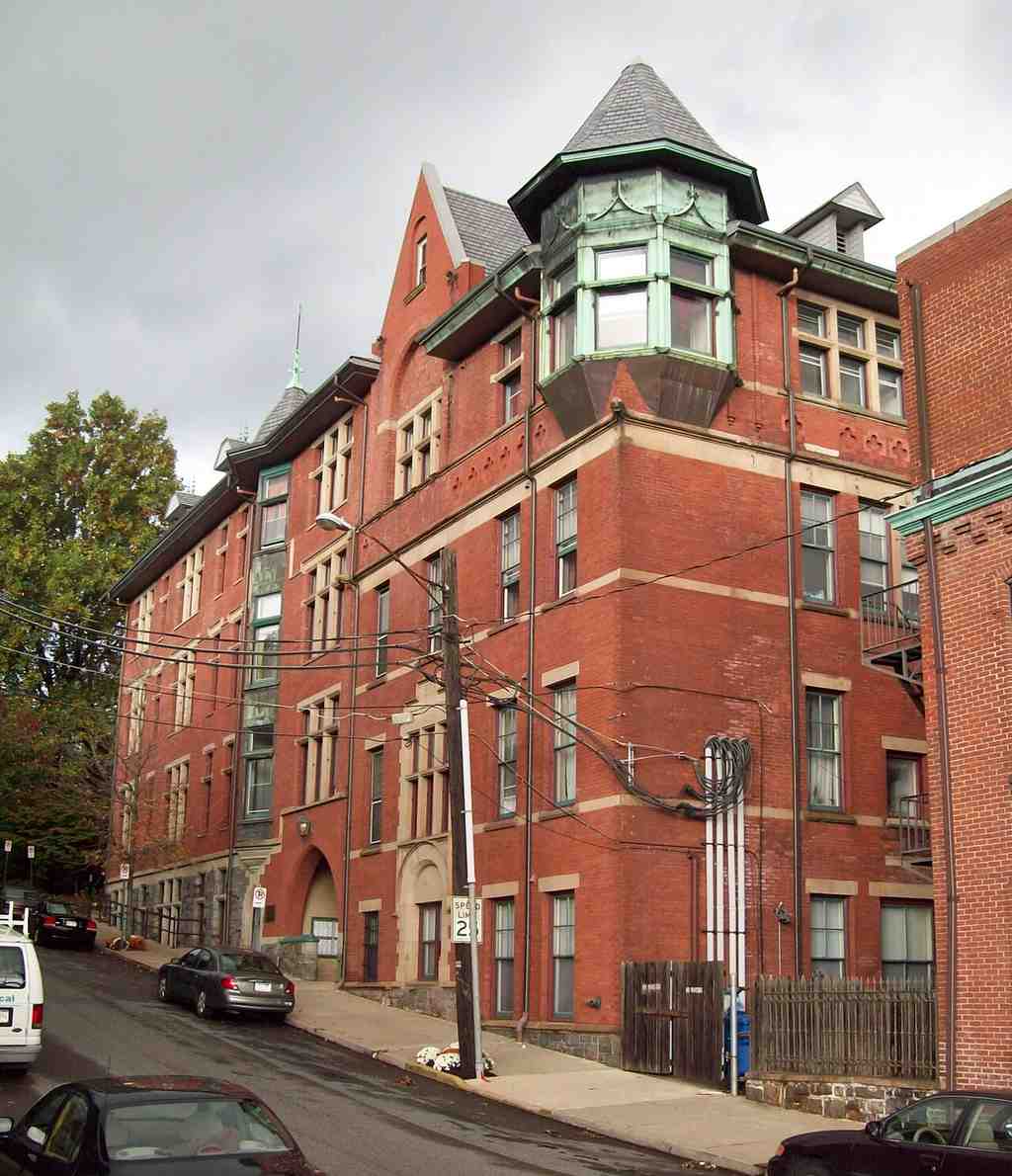
Look for the red-brick building rising from a stone base, with a stepped shape on the slope and copper bay windows marking its corners.
This was the Lehigh Valley Railroad’s command post... the place where paper, money, and decisions moved as decisively as locomotives. Between eighteen eighty-five and eighteen eighty-six, crews finished the lower three floors; between eighteen eighty-nine and eighteen ninety, they added the upper floors and the west wing, giving Bethlehem a headquarters in a lively late Victorian mix of Gothic punch and Queen Anne variety. If you check the app image, you can see how firmly it claims the hillside above the tracks.
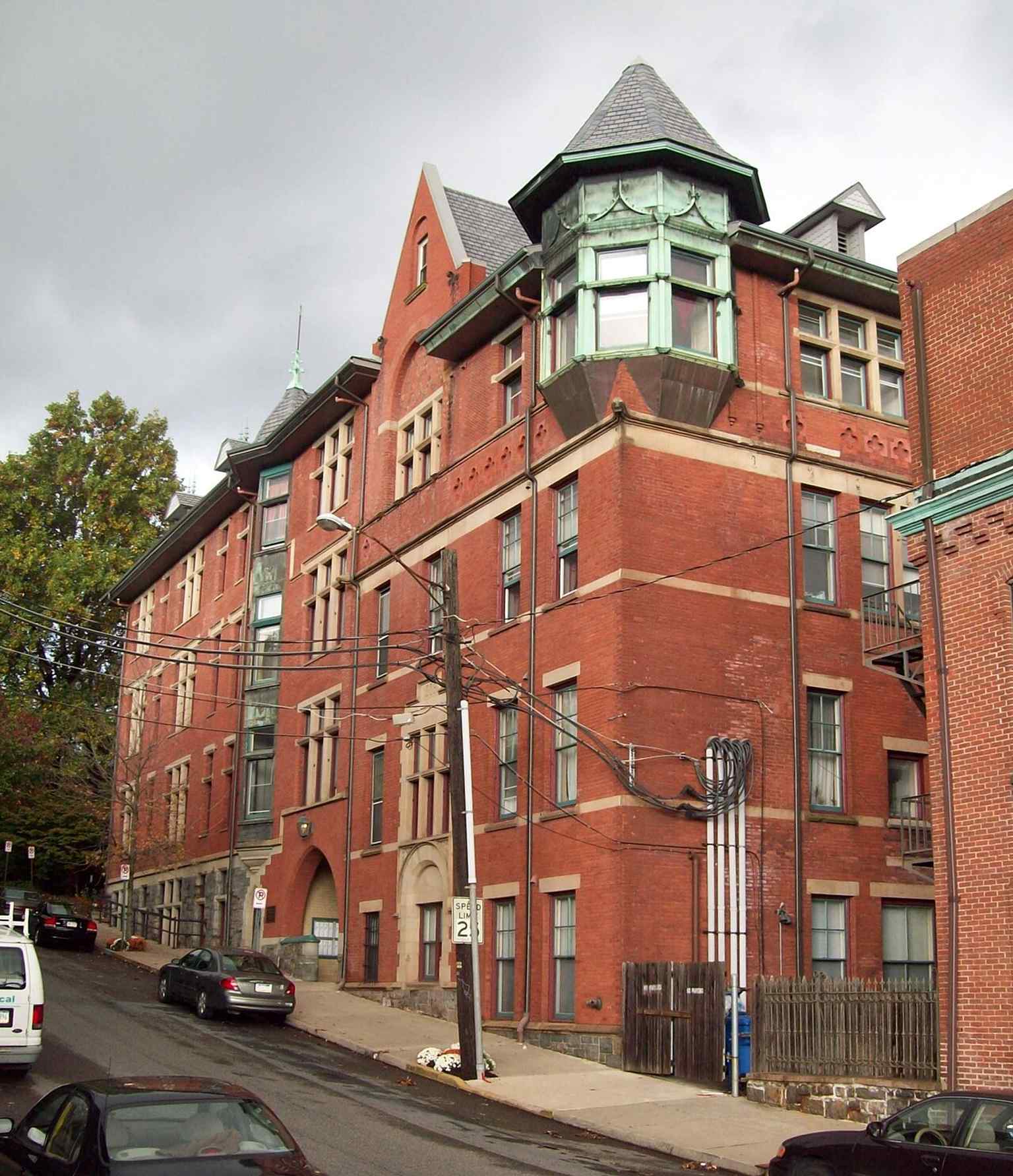
Here’s the trick worth remembering: a railroad power network did not run only on iron rails. It ran on ledgers, office doors, executive orders, and maps spread across desks in buildings like this one. From here, the company organized capital, territory, and local growth... and for a time, much of the company’s business passed through this address.
Robert Heysham Sayre stands near the center of that story. He was one of the railroad engineers and civic leaders who helped shape Bethlehem far beyond the station platform, and his name will keep resurfacing as we go. E. P. Wilbur, who followed Asa Packer as railroad president, pushed this place as the company’s principal office in Bethlehem.
The irony, because history enjoys one, is that the headquarters soon lost that title when the railroad sold and shifted its main offices to New York. Still, this building remained a symbol of control, and now it lives on as apartments. Next, we head uphill to Fountain Hill, where that executive world took domestic form in houses, status, and street layout... about a five-minute walk away.





