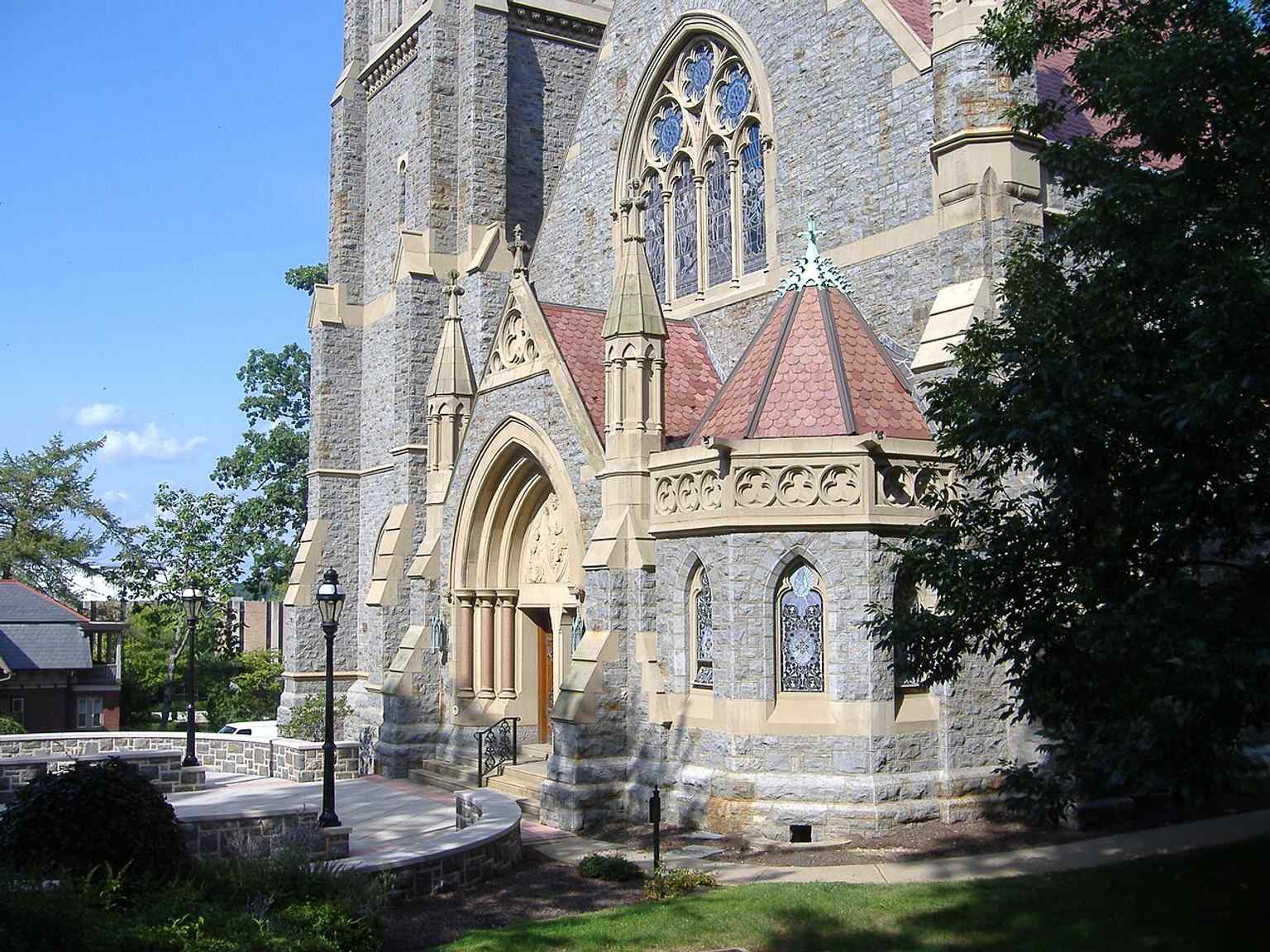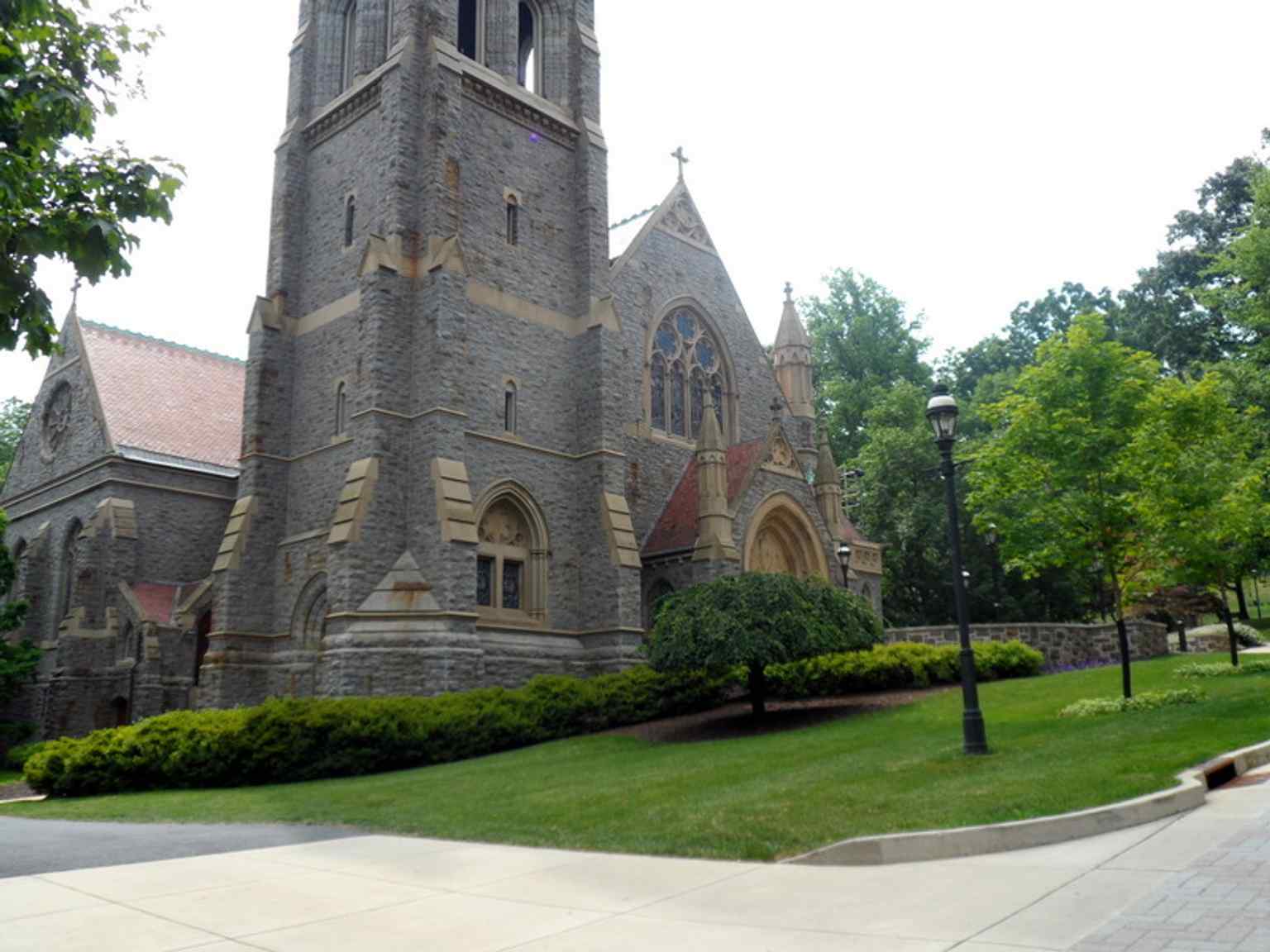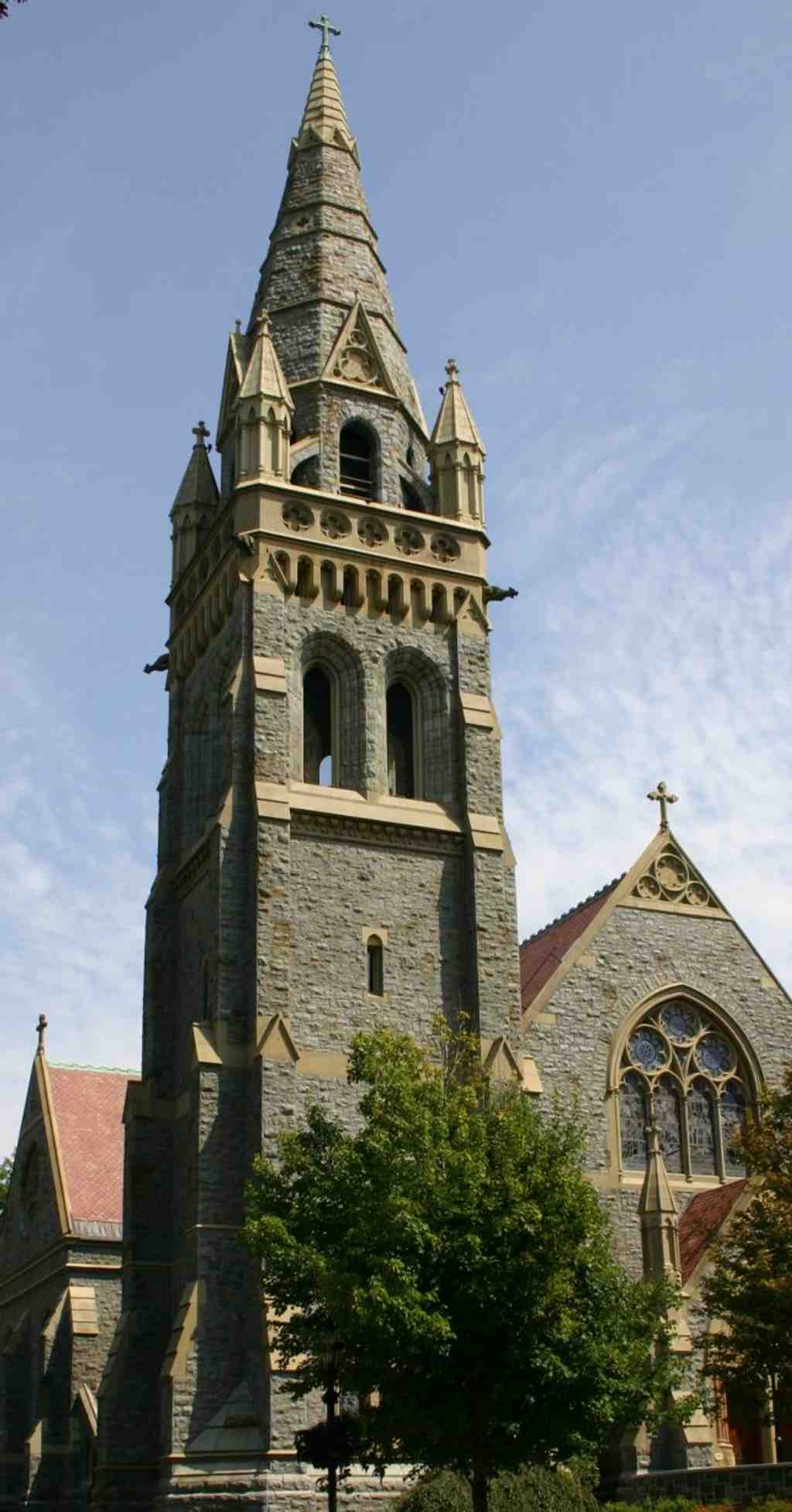
On your left is a sandstone Gothic chapel with a steep roof, pointed arch openings, and a tall tower that makes the whole building read like a memorial carved into the hillside.
Packer Memorial Chapel began as grief made public. Mary Packer Cummings gave it in memory of her father, Asa Packer, but she was no ornamental donor smiling from the sidelines. After her brother Harry died in eighteen eighty-four, she took charge herself: she chose the Philadelphia architect Addison Hutton, supervised the construction, paid the bills, and only then turned the finished church over to Lehigh’s trustees and the Episcopal diocese for consecration.
That matters, because this place is not Asa Packer’s tomb. He lies in Mauch Chunk Cemetery in Jim Thorpe. This chapel is something more deliberate: a memorial planted at the center of the university he helped create, where remembrance could become part of campus life.
If you look at the image on your screen, the carved exterior details show how carefully this memorial was dressed for dignity, not modesty. Mary Packer Cummings understood that stone can preach almost as effectively as a pulpit.
The rituals around its construction leaned into that idea. Students first staged a mock groundbreaking in May of eighteen eighty-five, planning a burlesque of the whole affair. President Lamberton, not amused in the slightest, redirected it into a real religious service with prayers, creed, doxology, and a student oration. College humor met institutional gravity, and gravity won.
Then came the cornerstone on the eighth of October, eighteen eighty-five, during the university’s seventh Founder’s Day. The ceremony arrived in two acts. First, a Masonic rite led by Edward Coppee Mitchell, reflecting Asa Packer’s ties to the Masons, a fraternal order known for its formal symbolic ceremonies. Immediately after that, Episcopal bishops Mark Anthony de Wolfe Howe, Cortlandt Whitehead, and Nelson S. Rulison performed the church rite. Memorial and ritualized remembrance fused here in plain sight: not just mourning, but mourning with choreography, rank, and witnesses.
When a family turns sorrow into architecture, what are you really looking at... private grief, public legacy, or some uneasy blend of both?
Two years later, on the thirteenth of October, eighteen eighty-seven, the chapel was consecrated. Inside, it served campus worship, ceremony, and sometimes a little accidental comedy. In eighteen ninety-three, the water-powered organ motor failed because local washerwomen had drawn off the water for the weekly wash. The music died, the embarrassment bloomed, and President Coppee ended it with a blunt order to stop. Even solemn memorials have to survive real life.
If you check the historic interior photo, you can see the nave, the long central hall of the church, in its early years of worship. Over time the building changed too: stained glass replaced, organ rebuilt, electricity added, plaster and pews repaired. By nineteen thirty-eight, the chapel began opening beyond its Episcopal roots to other Christian groups, and today it serves as a non-denominational space, with Roman Catholic Mass and Muslim prayers among its regular uses.
So this chapel honors Asa Packer, yes... but it also frames the institution that carried his ambitions forward. As you continue toward Lehigh University, that story gets larger, less personal, and much more powerful.