
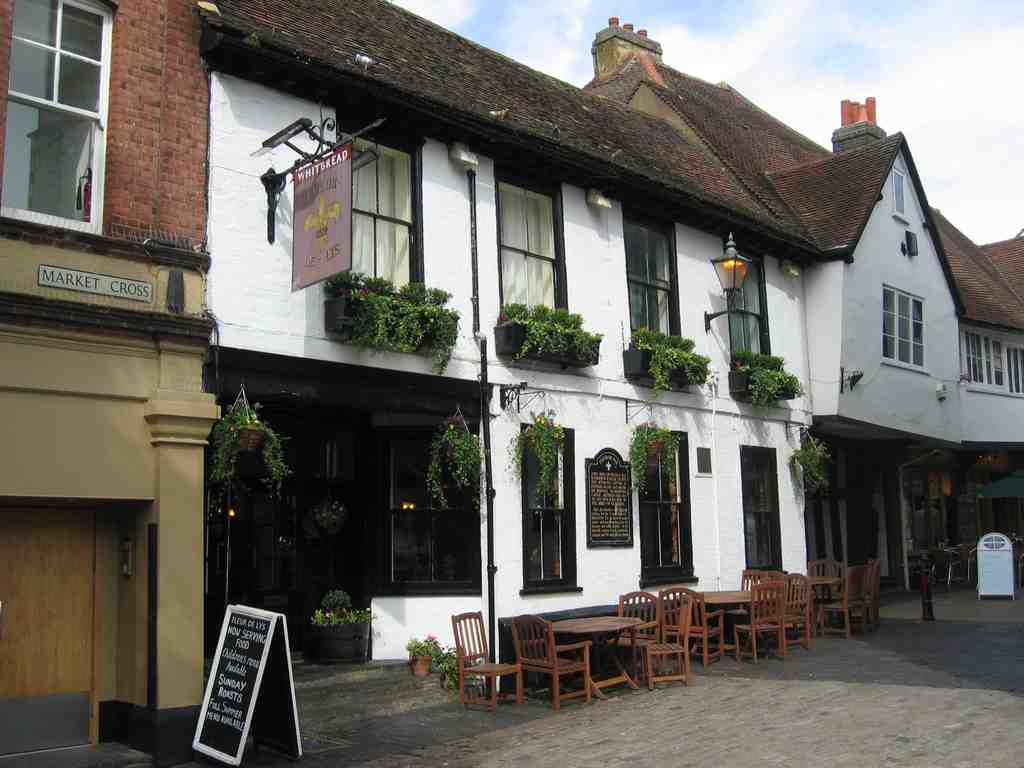
On your left, look for the brick frontage with its neat sash windows and the broad carriage arch cut through the ground floor.
This place wears an eighteenth-century face, but its story begins far earlier. In the fourteenth century, John and Matilda Pikebon left a house on this very site, so we can trace its life back long before the frontage you see now. Then, between about fourteen twenty and fourteen forty, the abbot ordered an inn and brewery here, and by the early sixteenth century the building had settled into something close to its present form. The app image shows a composed outer shell hiding a much older survivor behind it.
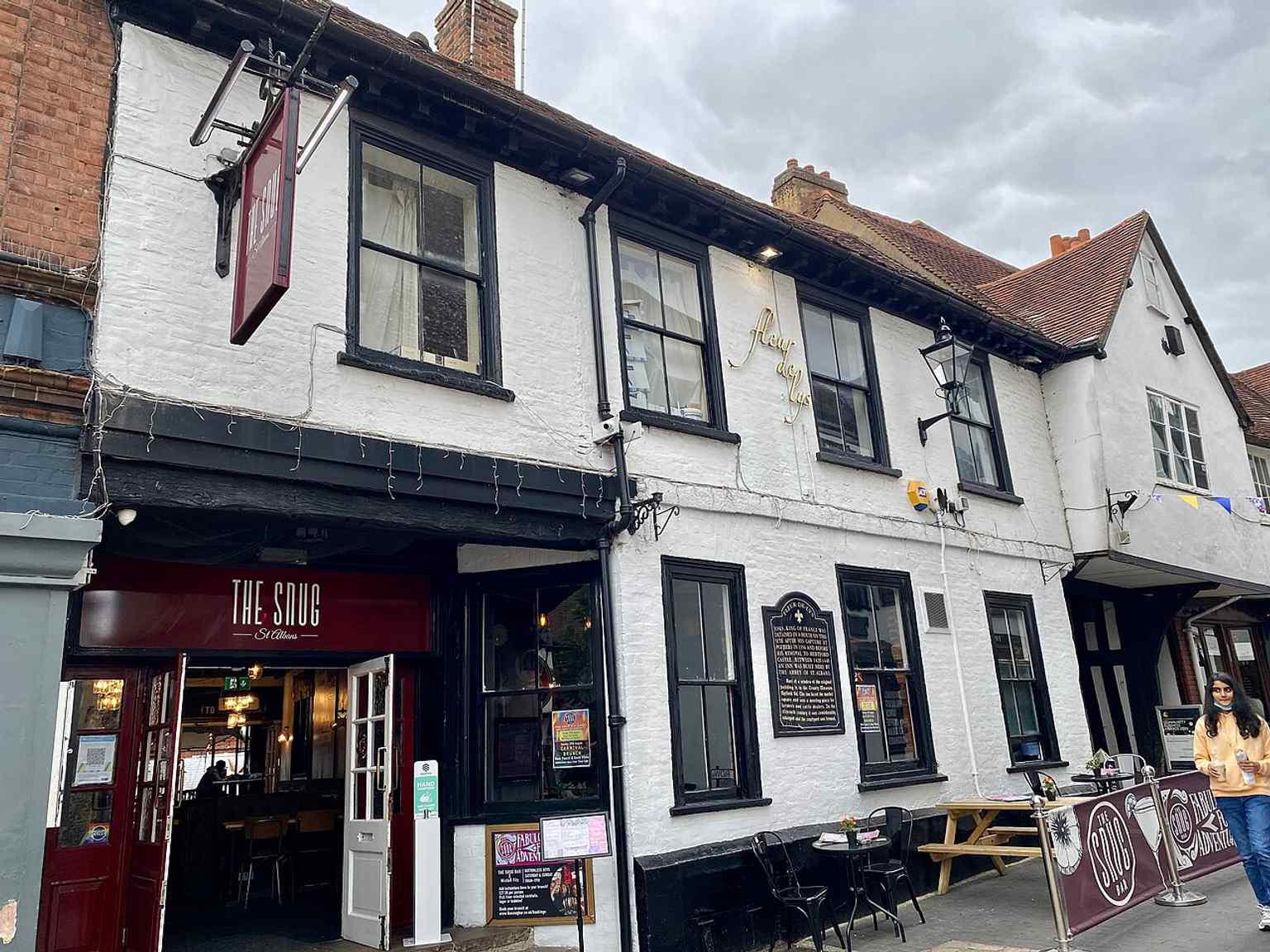
It did not remain untouched. After the Reformation, people repaired it, altered it, almost rebuilt it, and kept adapting it to the trade of the road. By the nineteenth century, a coach left daily from the Fleur de Lys and the Woolpack for London. Inside, an old kitchen once held a huge inglenook, a fireplace recess large enough to gather around.
Then comes the most delicious twist. Around seventeen forty-five, Thomas Dimsdale bought the inn. He later championed variolation, an early form of smallpox inoculation, and in seventeen sixty-eight Catherine the Great summoned him to Russia. He treated her, her son, and around one hundred and forty courtiers, and came home with a pension and a Russian barony.
A tale later claimed a captive French king slept here, but historians found that story surprisingly late and far less convincing than the legend suggests.
The Fleur de Lys reminds you how easily myth settles onto old brick. Next, make your way to The Boot.





