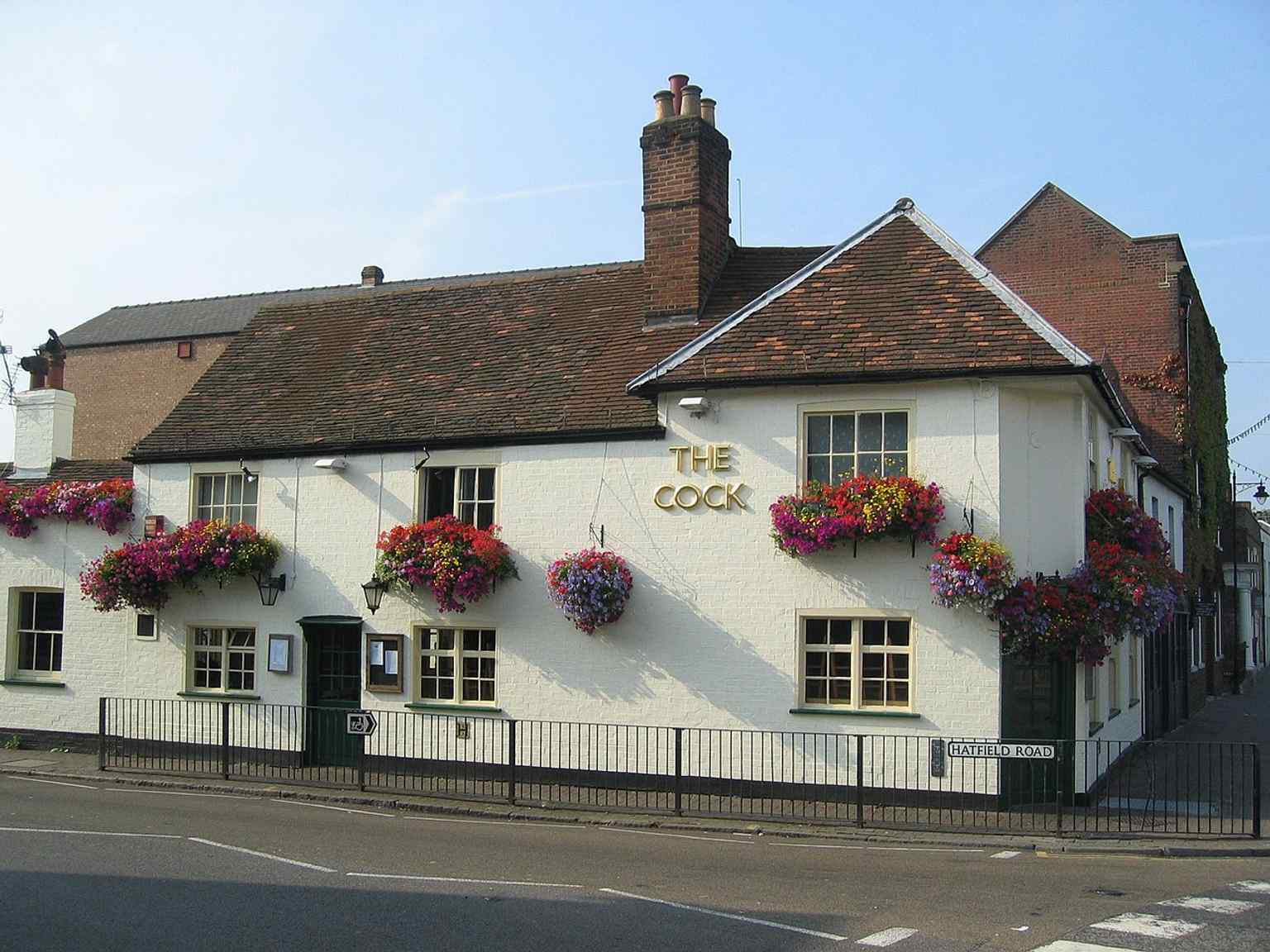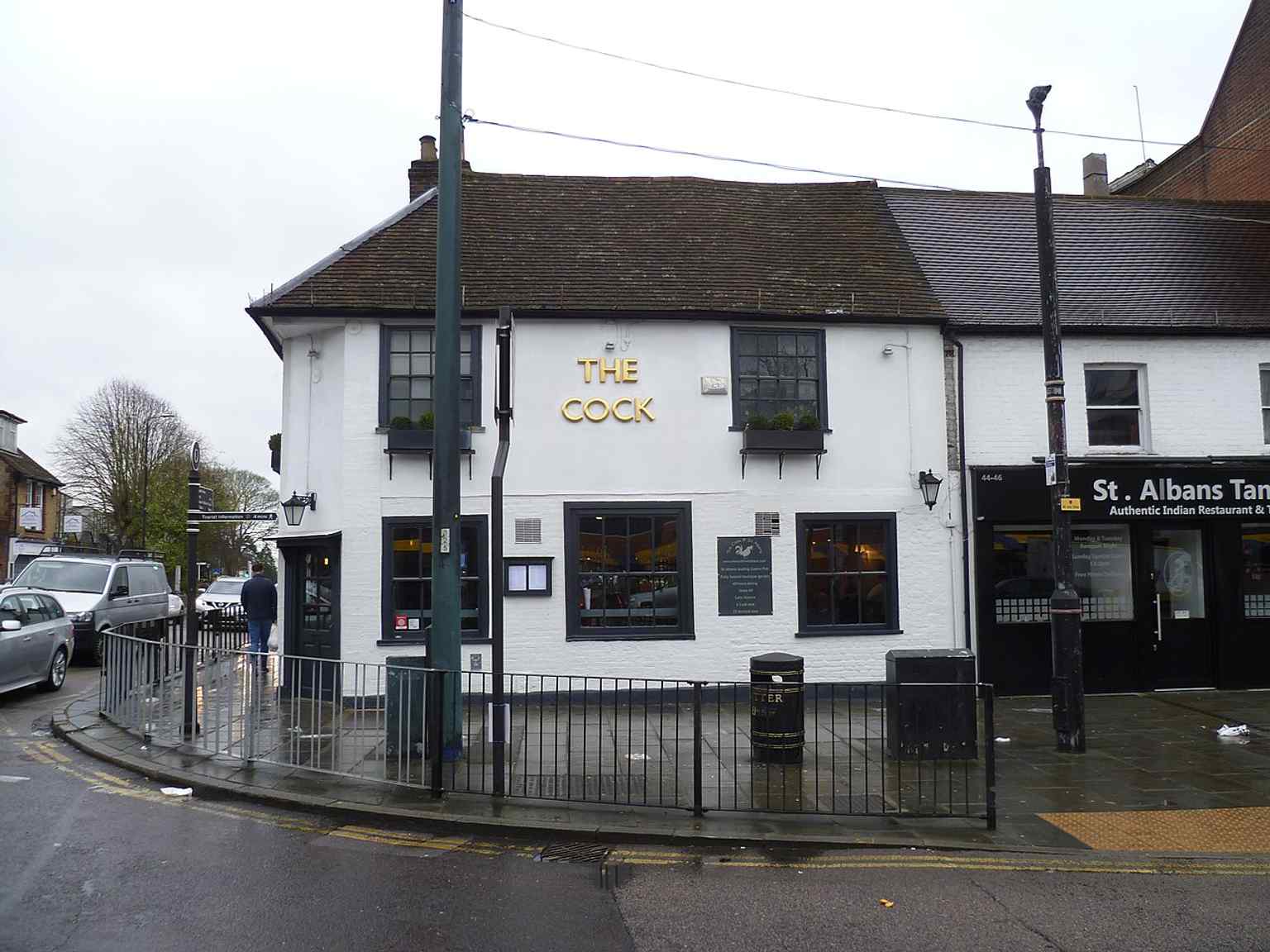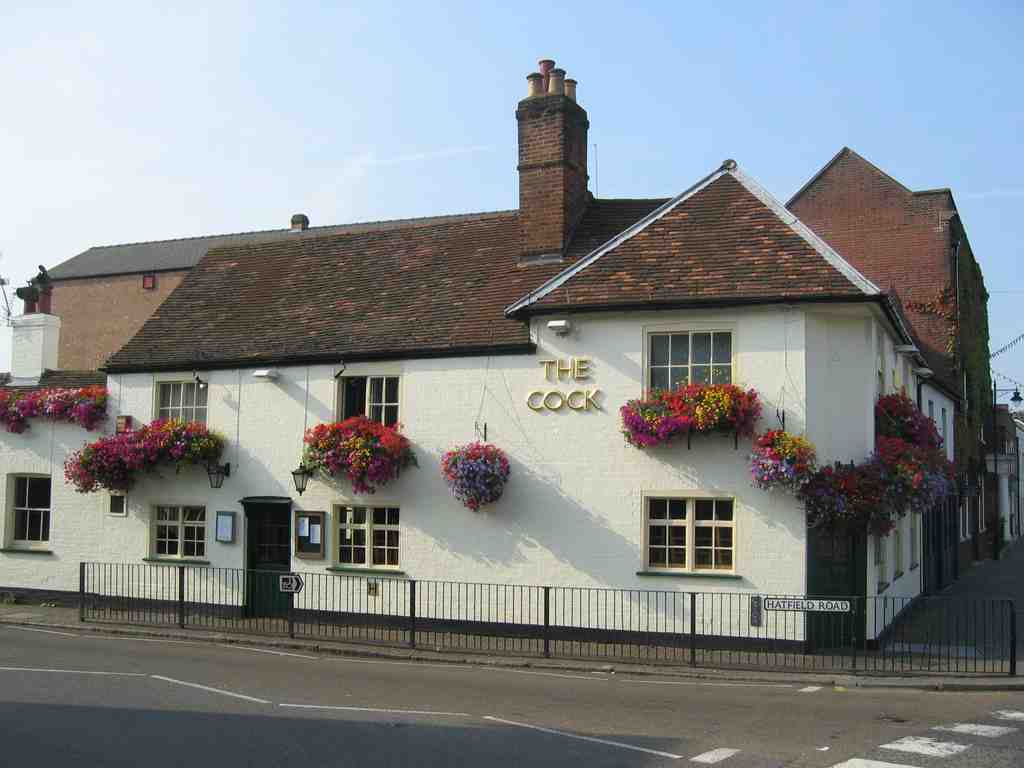
On your right, look for a low cream-plastered corner pub with a red-tiled roof and dark timber framing stitched across its upper walls.
The Cock carries itself rather modestly, but this site has a surprisingly dramatic backstory. Before the inn stood here, the ground served as a field hospital during the Second Battle of St Albans. Much later, bones turned up in the cellar, and for a moment people wondered whether they had found the battle’s dead. The museum spoiled the mystery neatly: they were animal bones, left behind by the kitchen.
Around sixteen hundred, local builders raised the timber-framed house you see now, and enough of that original frame still shows for the building to keep its early character. Then, in sixteen sixty-three, the records finally give us a name: George Barnes, the first innkeeper the museum could trace. That small fact matters. It pulls The Cock out of rumour and places it firmly in documented life as an inn.
It shaped the neighbourhood too. Hatfield Road began as Cock Lane, named for this very house, and there was even a nearby Cock pond on the green. That tells you how well known it became, serving not only local residents at the northern edge of town but also people arriving for market. The photograph still makes that corner presence feel instantly recognisable.
The Campaign for Real Ale, or C-A-M-R-A, still lists it as a working pub, with two bars, a restaurant, a heated courtyard garden and cask ales, independently run though owned by Greene King. If you’re tempted to end here, it generally opens from eleven in the morning until midnight, later on Fridays and Saturdays, and prices are moderate.