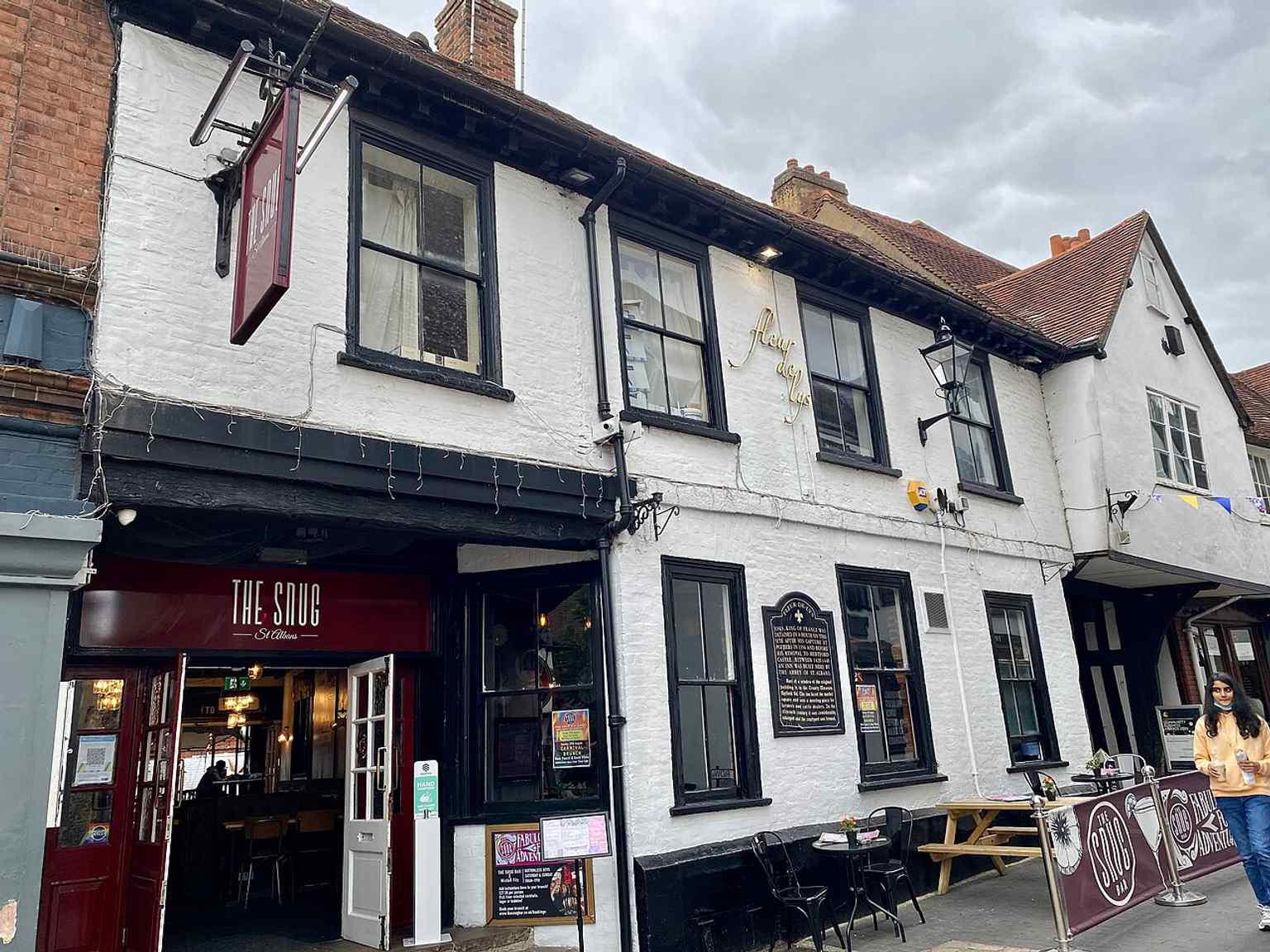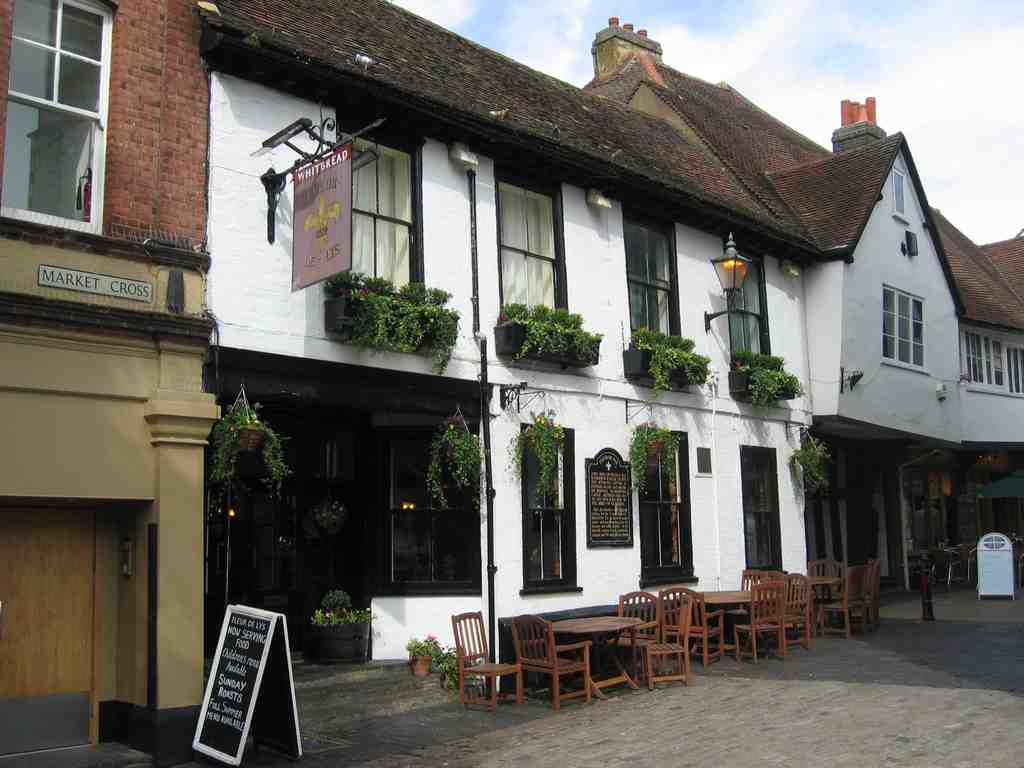
On your left, look for a long red-brick frontage with sash windows and a central carriage arch, the old Fleur de Lys concealed behind its later Georgian face.
That concealment is the real seduction here. Most people see an eighteenth-century pub front and move on. Locals know better: John and Matilda Pikebon left a house on this plot in the fourteenth century, and between the fourteen twenties and fourteen forties the abbot ordered an inn and brewery here, so the story begins long before the brick skin in front of you.
If the name Fleur de Lys seems to have slipped away, that too matters. The building was refurbished and renamed The Snug in two thousand and seven, another small victory for the present over memory. Yet the older place keeps pressing through. After the Reformation, people repaired it, then nearly rebuilt it. When builders demolished the neighbouring Great Red Lion in eighteen ninety-six, they uncovered a cusped window fragment - stone carving with little pointed curves - from this site and sent it to the county museum.
Then there is Thomas Dimsdale, who bought the inn around seventeen forty-five. He championed variolation, an early smallpox protection method using material from a mild case, and in seventeen sixty-eight Catherine the Great summoned him to Russia to treat her, her son Paul, and about one hundred and forty courtiers.
One last twist: the tale that a captured French king stayed here appears late and looks doubtful. Power decides what a building remembers. Here, religion, trade, lodging and medicine all meet at one doorway. And The Boot is right beside you.