
From across the street, this façade can look merely orderly, almost serene. But this place is really a machine room: the place where a nation decides how memory gets stored, sorted, and retrieved. Archives keep facts, certainly, yet they also shape which facts remain legible to courts, ministers, scholars, and families. Power does not live only in palaces and parliaments; it lives in indexes, shelves, catalogues, and the quiet authority to say, “Yes, the record survives,” or, just as importantly, “No, it does not.”
What most people still call the National Archives of Scotland technically disappeared in two thousand and eleven, when it merged with the General Register Office for Scotland to form the National Records of Scotland. The old name lingers stubbornly in public memory, which is rather perfect for an archive: even its own identity arrives layered, revised, and only partly erased. Before that, it had already changed its name from the Scottish Record Office in nineteen ninety-nine. The paperwork of the Scottish state has its own genealogy.
The story reaches far deeper than this building. The institution’s roots stretch back to the thirteenth century, to officials such as William of Dumfries, a clerk charged in twelve eighty-six with looking after the rolls of royal government. Since then, Scotland’s records have been hauled away by Edward the First during the Wars of Independence, seized again in the age of Cromwell, and partly lost when a ship called the Elizabeth sank off the Northumbrian coast carrying papers and parchments north. That is why the earliest surviving Scottish public record is not some vast medieval register, but the Quitclaim of Canterbury from eleven eighty-nine: a survivor, really, rather than a beginning.
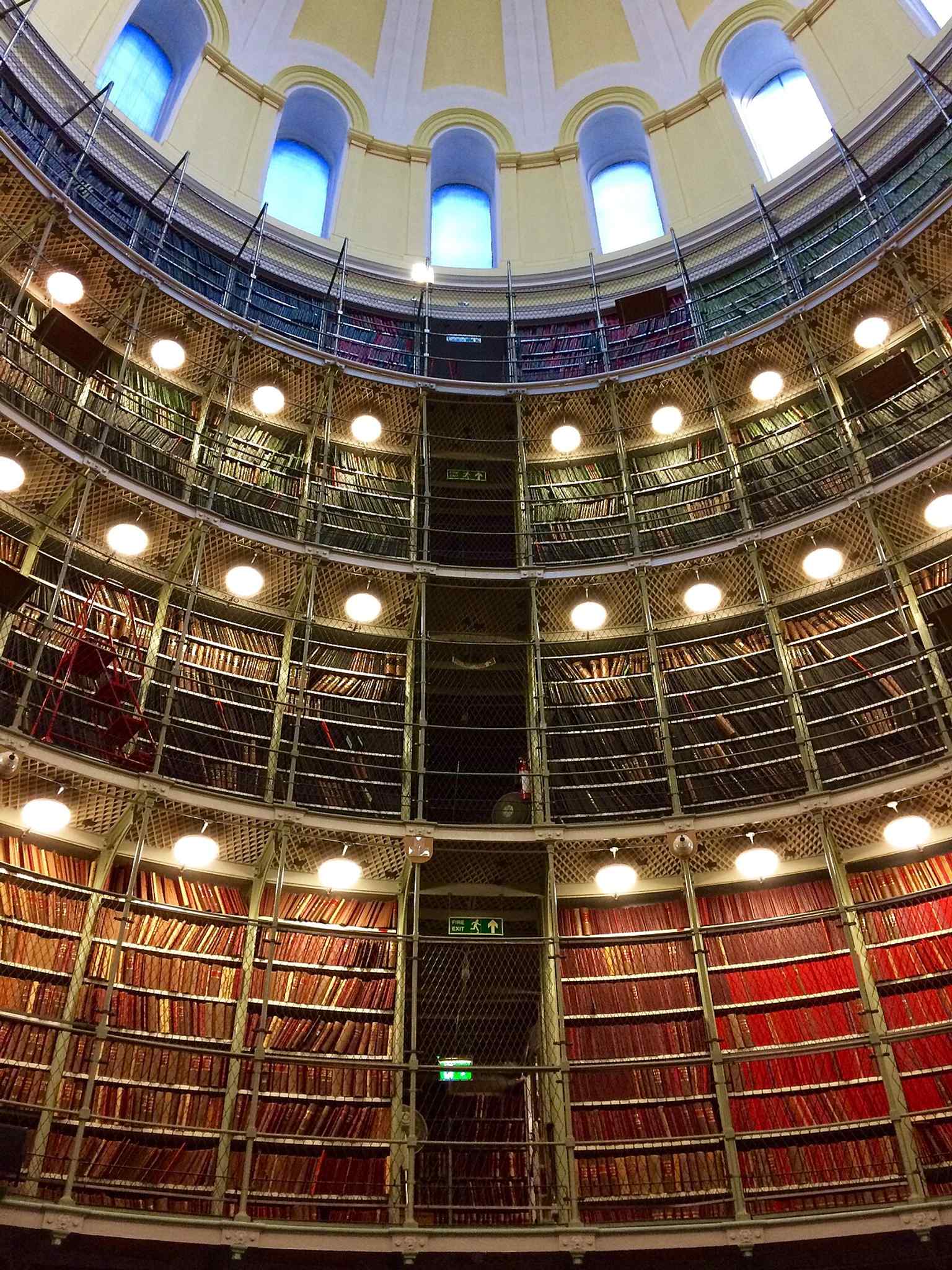
Now look at the building in front of you. General Register House gave those vulnerable records a purpose-built home at last. The foundation stone went down in seventeen seventy-four, after years of lobbying and a grant of twelve thousand pounds from forfeited Jacobite estates, a very serious sum in modern terms. Robert Adam designed it, and if you glance at the image on your screen, you can see the great circular Record Hall inside, top-lit and carefully planned to protect what earlier centuries had so casually endangered. One man deserves to linger in your mind here: Thomas Thomson, appointed Deputy Clerk Register in eighteen oh six. He did not merely guard old documents. He pushed through systematic cataloguing and repair, turning a vulnerable hoard into a working instrument of government and history. He also edited a vast twelve-volume edition of the Acts of the Parliaments of Scotland. Yet his own career ended badly: financial troubles led to his suspension in eighteen thirty-nine and dismissal in eighteen forty-one. Even the keepers of memory leave untidy files behind them.
And there is a lovely Edinburgh twist. Before completion, this unfinished shell became the launch site for James Tytler’s fire balloon on the nineteenth of July, seventeen eighty-four: the first manned flight in the British Isles. For a brief moment, the future of flight rose from the half-built house of the past.
If you want a closer sense of the exterior as it endures, there’s a useful view on your screen now. This institution still serves the wider machinery of Scottish public life: government records, court papers, church registers, maps, wills, even digital files and archived websites. The state preserves itself in law, in paper, and then, just as deliberately, in stone. We’ll see that instinct again at St Andrew’s House, about six minutes away, where government gave itself a headquarters as solid as any archive. If you plan to return inside, the public areas generally open Monday to Friday, from nine until four.





