
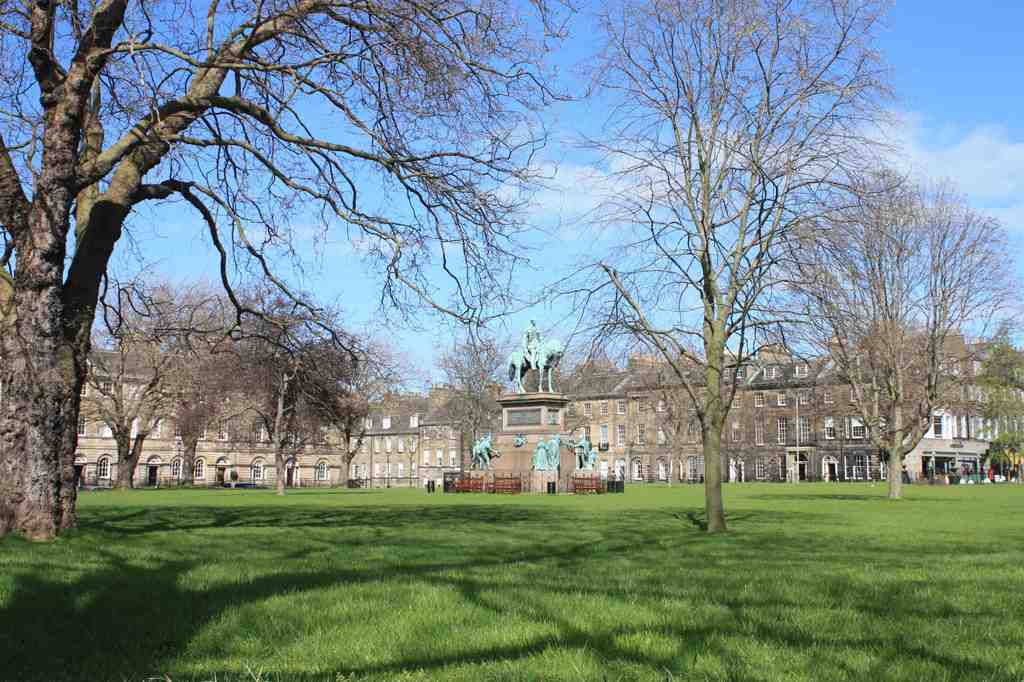
On your left, look for the pale sandstone terraces drawn into a formal square behind iron railings, with the domed former St George’s Church anchoring the far western side.
Charlotte Square is the New Town at its most self-possessed. James Craig imagined this western end as a partner to St Andrew Square in the east, and here the plan comes very close to its ideal: order, balance, calm, and a sense that stone might hold a city steady. If you glance at the image on your screen, the aerial view makes that composure beautifully clear: the square reads almost like a piece of careful drawing laid onto the ground. Yet this polished place began in a surprisingly rough mood. Craig first called it St George’s Square, but in seventeen eighty-six the city renamed it Charlotte Square, after Queen Charlotte and her daughter, partly to avoid confusion with George Square to the south. Then, just as building started in the early seventeen nineties to Robert Adam’s design, Edinburgh flared. Reformers tried to burn an effigy of Henry Dundas on King George the Third’s birthday. The authorities intervened, tempers snapped, and the quarrel turned into three days of rioting. So this elegant square, for all its poise, entered the world to the sound of civic anger.
Adam died in seventeen ninety-two, just as work began, and even this seemingly finished set piece took time to settle. It became the last major part of the first New Town phase to reach completion in eighteen twenty. That matters, I think, because Charlotte Square always carries a faint reminder that ideals do not arrive whole. They are argued over, delayed, revised.
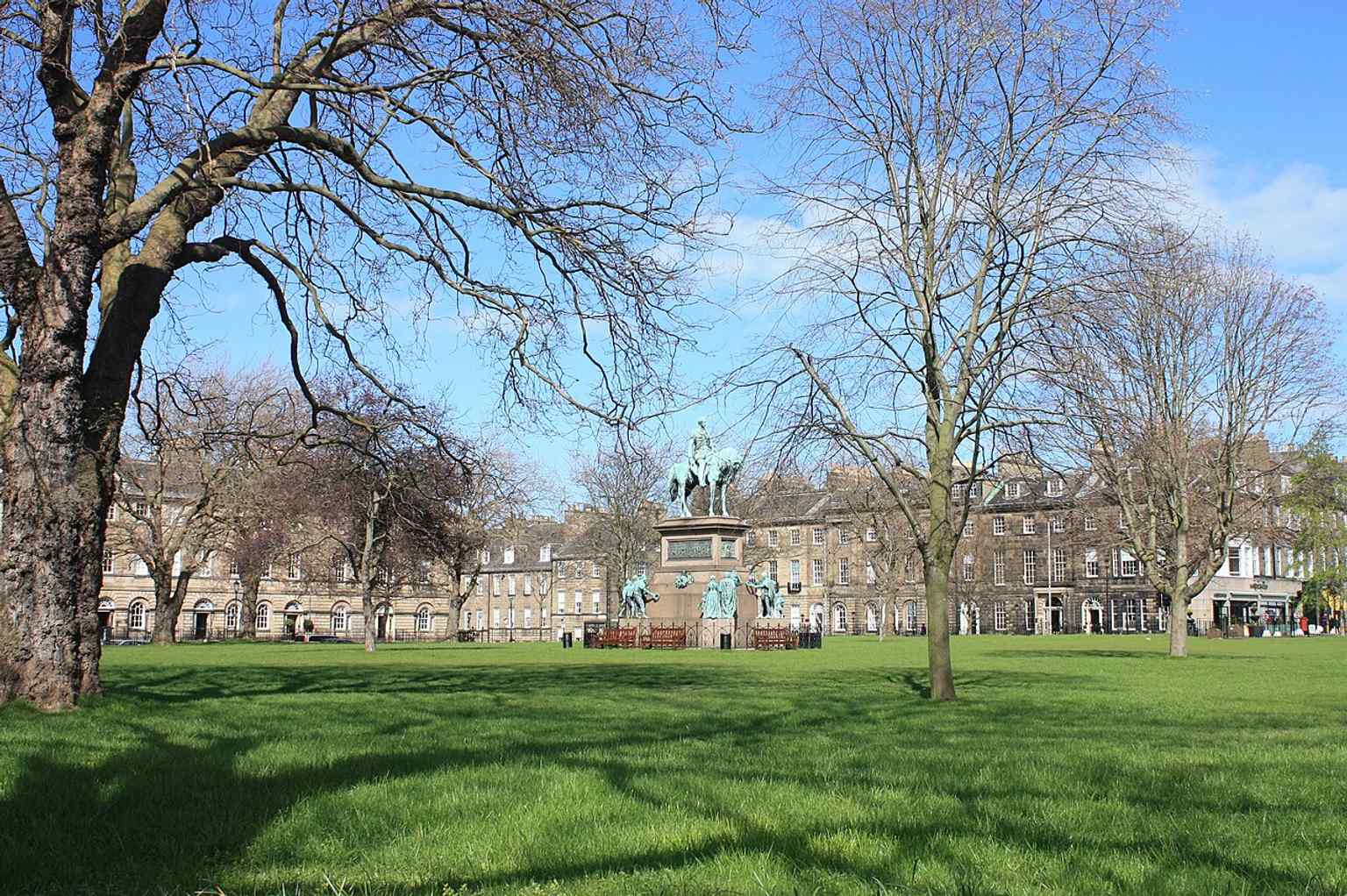
The gardens at the centre deepen that story. William Weir first laid them out in eighteen oh eight as a level circular space. Later, in the eighteen sixties, Robert Matheson reshaped them into something squarer and more ceremonial, and Queen Victoria herself unveiled the Prince Albert memorial there in eighteen seventy-six. If you look at the second image, you can see how the memorial, the garden, and West Register House compose a sort of formal stage set. But listen closely to the silence of the place, and another layer emerges. Henry, Lord Cockburn, who lived here at number fourteen, later lamented that the New Town had spread beyond the square and stolen its original green edges, quiet, and sunsets. He had watched perfection fray. Then, in nineteen thirty-nine, the city cut a very large air-raid shelter beneath the south side of these private gardens. That is the detail locals sometimes carry with them: under one of Edinburgh’s most graceful spaces, people once prepared to wait out bombs.
Even the railings tell the tale. The war effort took the originals in nineteen forty. The ones you see now date from nineteen forty-seven.
Before we move on, take a long look across the symmetry and restraint of the square, and hold in mind that hidden shelter below the grass. It changes the whole feeling, does it not? In a moment we’ll step to the house where public power now lives inside this Georgian ideal: Bute House, just ahead.





